Pompeii hits different when guided well. This private, 2-hour walk through the Pompeii Archaeological Park is led by professional local guides authorized by Campania Region authorities, so you get structure and context without wasting time. You’ll also have a mobile ticket to keep things simple on the day.
I especially like how the route includes the Forum, thermal baths, Menandro’s House, and the Lupanare (brothel) with its famous erotic frescoes—topics most self-guided visits either skip or misunderstand. I also love the stop in the uncrowded southern area where you see the plaster casts of victims from Mount Vesuvius in 79 A.D., plus a calmer stroll that can feel close to what daily life might have been.
The main downside to plan around is logistics: the Pompeii admission ticket is not included (16 euro per person), and this experience depends on good weather, since poor conditions can lead to a different date or a refund.
In This Review
- Key things I’d zero in on
- A private, guided Pompeii that stays human-sized
- Price and what you actually get for $229.28
- Meeting at Porta Marina: the start matters more than you think
- Stop by stop: what Pompeii feels like on this route
- Pompeii Archaeological Park: the guided route that connects the dots
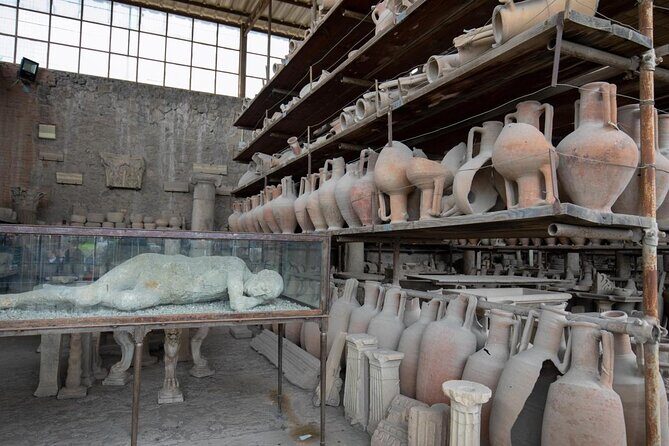
- The plaster casts in the southern ruins
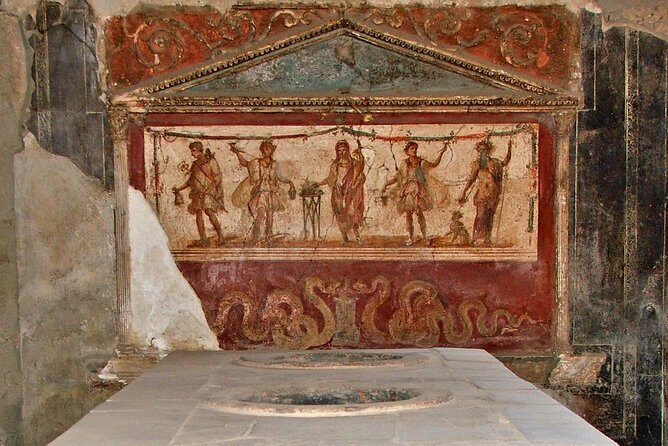
- Lupanare: the brothel and its erotic frescoes
- Houses and street life, then theaters on the north side
- Why the guide makes or breaks Pompeii
- Weather: plan for the reality, not the postcard
- What to bring (so you don’t waste your time)
- Who this tour suits best
- Should you book Pompeii the Buried City?
- FAQ
- FAQ
- How long is the Pompeii tour?
- How much does the tour cost?
- Are Pompeii admission tickets included?
- Is there free admission for children or teens?
- Where do we meet for the tour?
- Where does the tour end?
- Is this tour private?
- What time does the tour run?
- Do I need good weather?
- What kind of fitness level is needed?
- What ticket format do I get?
Key things I’d zero in on
- Authorized local guiding: Professional guides from the Campania Region network for a cleaner, more accurate visit.
- Lupanare with frescoes: A standout stop that turns a controversial theme into real historical context.
- Plaster casts in the southern ruins: Quiet, powerful evidence that makes the catastrophe feel personal.
- Forum + thermal baths + Menandro’s House: Big names, but shown in a logical walking flow.
- A private group of up to 6: Better chances to ask questions and move at a human pace.
- Comfortable timing for first-timers: About 2 hours, which is enough to see the best highlights without exhausting yourself.
A private, guided Pompeii that stays human-sized
Pompeii is not a place you can truly appreciate by sprinting. Even if you know the headline story—Vesuvius in 79 A.D.—the city becomes real only when you slow down just a bit and understand what you’re looking at.
That’s where this tour feels smart. You’re not stuck with a giant crowd charging through the same handful of rooms. It’s a private tour for only your group (up to 6), guided by an authorized professional local guide. The result is less chaos and more clarity: you’ll understand why the Forum was central, why thermal baths mattered socially, and what Lupanare reveals about everyday life in Pompeii—not just the dramatic ending.
Also, it’s built around a practical timeframe. Expect about 2 hours in the archaeological park. That’s short enough for people who don’t want a half-day ordeal, but long enough for a real sense of the city’s layout and the most important buildings.
If you like your ruins with explanation and a bit of story, this kind of structure is a good fit.
You can also read our reviews of more city tours in Pompeii

Price and what you actually get for $229.28
The price is $229.28 per group, up to 6 people. That’s how you should think about value: the cost is about the experience of guiding and pacing, not about paying extra for each person individually.
Now the one catch: the Pompeii admission ticket is not included. You’ll need to add 16 euro per person for entry. People under 18 can enter for free with a valid ID document, but the tour price itself doesn’t replace the park ticket.
So the math works like this:
- If you’re 2 people, you’ll pay the group price plus 2 admission tickets.
- If you’re 4 to 6 people, the guiding cost spreads out, and the per-person value improves fast.
When I look at a Pompeii tour, I ask: do you save time and stress compared to planning on your own? For a park as large as this, a good guide can help you avoid the “I saw a street and a wall” feeling. Here, the guided focus on recognizable, meaningful stops makes that likely.
In plain terms: if you want the best Pompeii highlights explained in about 2 hours, and you’re traveling with a group size where the per-person cost makes sense, this is a solid value.
Meeting at Porta Marina: the start matters more than you think
You meet at Pompei-Porta Marina – scavi (80045 Pompei). This is the kind of start point that helps you get into the site without extra fuss.
It also matters because Pompeii can be confusing if you’re trying to orient yourself while also reading every sign. Starting together with your guide helps you:
- get oriented quickly,
- keep your walking route efficient,
- and avoid wandering into the wrong section just because it’s closest.
The tour ends back at the meeting point, so there’s less guesswork about how to get out after you’re done.
Also, the tour runs between 9:00 AM and 1:00 PM during the listed season window (01/10/2025 to 11/30/2026, Monday through Sunday). That morning timing is useful. You’re more likely to have manageable crowds and daylight for looking closely at details.
Stop by stop: what Pompeii feels like on this route
Pompeii Archaeological Park: the guided route that connects the dots
The whole tour is centered inside Pompeii Archaeological Park, and the guide builds a route through key public and private spaces.
You’ll start with the places most people recognize or want to understand:
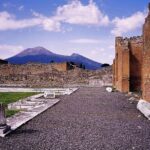
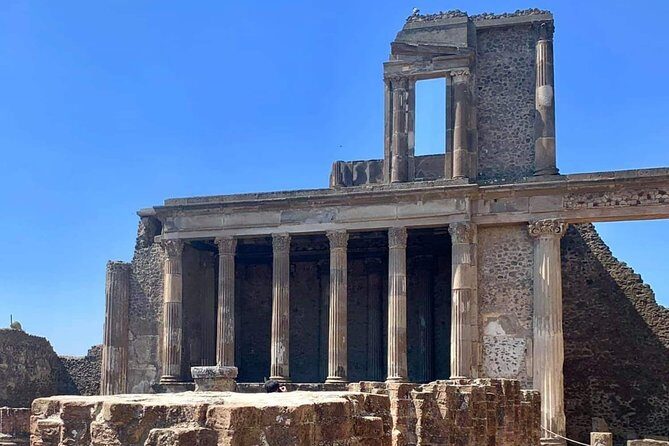
- the Forum, the civic heart of the city,
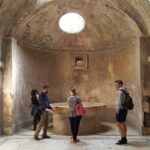
- the Thermal Baths, which were social as well as practical,
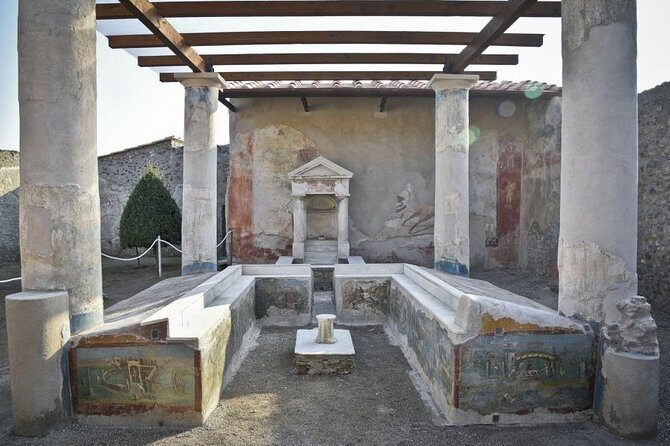
- and Menandro’s House, a private home known for its preserved details.
Then comes the part that turns a quick visit into a memory: you’ll go beyond the busiest feel and move into the uncrowded southern part of the ruins. This shift matters. Pompeii isn’t just “old stones.” It’s a city you can still read—if you’re in the right spaces and given the right prompts.




The plaster casts in the southern ruins
In the southern section, you’ll see the plaster casts of people who died during the eruption. The impact here is hard to fake. These casts transform the story from a historical fact into something immediate.
The tour framing helps. Instead of treating the casts as a generic photo stop, the guide connects them to why this area and these bodies matter in understanding how the eruption played out and how sudden the disaster was.
If you tend to learn better when a place has a narrative, this is one of the best parts of the entire route. It’s also one of those stops where you’ll want a minute to just look, not just snap pictures.
Lupanare: the brothel and its erotic frescoes
Next is one of Pompeii’s most talked-about sites: the brothel called Lupanare, with its erotic frescoes.
This stop can be awkward if you show up with curiosity but no context. The good news is that the guide approach makes it about what you’re seeing and why it existed there, in that culture. You’ll get a clearer explanation than you would from a sign alone, and that changes how you remember the building.
It also speaks to why this tour is valuable: it doesn’t sanitize Pompeii into only temples and theaters. It treats the city as it was, including the places people used for entertainment, commerce, and attraction.
If you prefer your history honest—even when it’s uncomfortable—this is a big win.
Houses and street life, then theaters on the north side
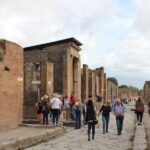
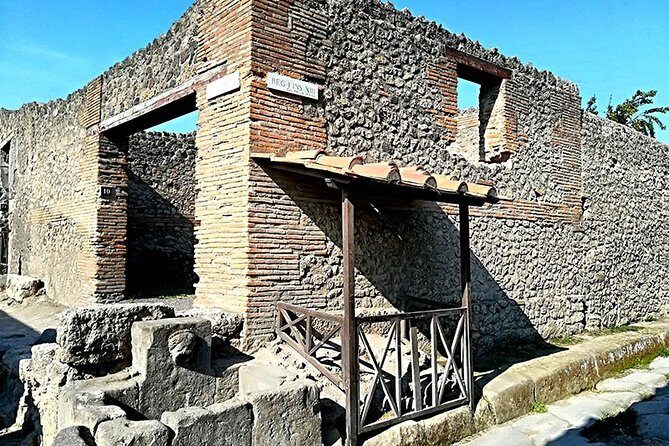
You won’t just stay in major landmarks. The route includes many other houses and buildings, which helps you understand Pompeii as a lived-in place rather than a museum display.
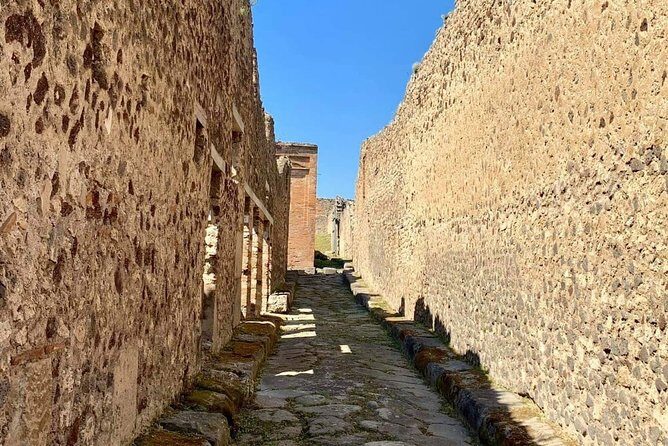
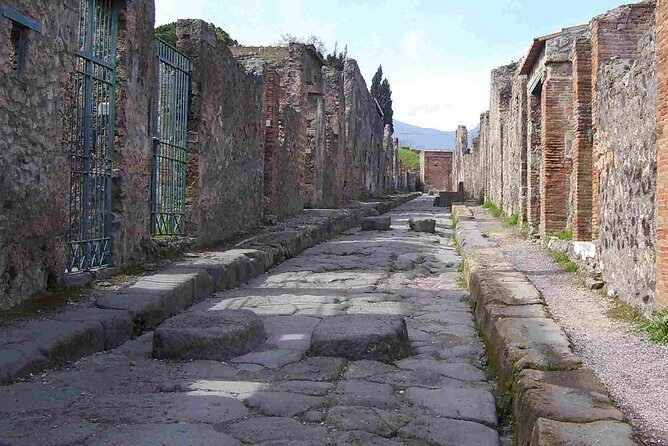
The tour then heads to the theaters and moves across streets along the north side of the ruins. This helps you picture how people traveled through the city—how you moved from civic spaces to leisure.
One thing I’d watch for: Pompeii isn’t flat. If you have any mobility limits, plan for uneven ground and stairs. The tour is marked for moderate physical fitness, and the schedule depends on walking between points.
Why the guide makes or breaks Pompeii
This experience is built around professional local guiding, and that’s not just a marketing line. In the reviews, guide Ilaria is specifically highlighted for making the experience better than expected—clear explanations, quick answers, and enthusiasm that helps the ruins click.
That matters because Pompeii is easy to misread. If you only see buildings, you may miss the social meaning: who used what, how public life worked, and how home design reflected daily habits.
A strong guide helps you:
- notice details you’d otherwise walk past,
- understand the function of each space,
- and keep your time in the park focused.
For a first visit, this is a huge advantage. For a repeat visit, it can still be worthwhile if you want deeper connections in a short time.
Weather: plan for the reality, not the postcard
This tour is listed as requiring good weather. Pompeii in rain is slippery. Rain can also make stone surfaces harder to read and can shorten the enjoyment of outdoor sections.
The experience notes that if it’s canceled due to poor weather, you’ll be offered a different date or a full refund. That’s the practical approach. I’d treat the date like part of the planning, not an afterthought.
If you’re booking around a busy schedule, consider leaving some flexibility in your itinerary. Pompeii deserves it.
What to bring (so you don’t waste your time)
The tour is short, but it’s still inside a large archaeological site with walking. I recommend you come prepared so the guide can focus on the story, not on waiting for you.
Bring:
- comfortable walking shoes (Pompeii ground can be uneven),
- water,
- sun protection (even in shoulder seasons),
- a light layer for changing weather.
Also, make sure you know your admission ticket situation ahead of time since park entry is not included in the tour price.
Who this tour suits best
This is a great fit if:
- you want Pompeii highlights in about 2 hours,
- you prefer a guided route over self-directed wandering,
- you’re traveling with a small group (up to 6) and want better value,
- and you like the idea of seeing both public buildings and private spaces, including Lupanare and the plaster casts.
It might be less ideal if:
- you want an ultra-long, slow “see everything” day,
- you need a fully accessible route (the tour calls for moderate physical fitness),
- or you’re planning for heavy rain without flexibility.
Should you book Pompeii the Buried City?
If your goal is the classic Pompeii story plus the details that make it memorable, I think this tour is worth booking. The biggest reason is the combination of time, organization, and expert local guiding—with stops that go beyond the obvious.
My practical advice: book it if you’re traveling with 2 to 6 people, because the group price makes the per-person value more attractive, and the guided stops are designed to be efficient in a short visit. Also, pick your date with weather in mind, since good conditions matter here.
If you want Pompeii to feel like a city with people in it—not just ruins you pass through—this is a strong choice.
FAQ
FAQ
How long is the Pompeii tour?
It’s listed as about 2 hours.
How much does the tour cost?
The price is $229.28 per group (up to 6 people).
Are Pompeii admission tickets included?
No. Admission tickets cost 16 euro per person and are not included in the tour price.
Is there free admission for children or teens?
Yes. Free entrance for under 18 is provided with a valid ID document.
Where do we meet for the tour?
The meeting point is Pompei-Porta Marina – scavi 80045 Pompei, Metropolitan City of Naples, Italy.
Where does the tour end?
The tour ends back at the meeting point.
Is this tour private?
Yes. It’s private, and only your group will participate.
What time does the tour run?
It’s scheduled for 9:00 AM to 1:00 PM (Monday through Sunday) during the listed season.
Do I need good weather?
Yes. The experience requires good weather, and if it’s canceled due to poor weather, you’ll be offered a different date or a full refund.
What kind of fitness level is needed?
The tour notes moderate physical fitness is required.
What ticket format do I get?
You receive a mobile ticket.