REVIEW · POMPEII
Pompeii Archaeological Small-Group tour for 15 people
Book on Viator →Operated by Askos Tours · Bookable on Viator
Pompeii can feel like a giant maze. This small-group tour keeps you oriented with a clear route and licensed archaeological guidance.
I especially like that you get the Pompei Express entrance ticket baked into the price, so you’re not juggling extra steps at the gate. I also like the pacing: short, high-impact stops that cover the forum, major houses, baths, and the famous brothel without dragging you through Pompeii all day.
One thing to consider: 2 hours is efficient, not slow. If you love lingering for photos or reading every wall, you may feel a bit rushed during the guided portion—though you can keep wandering afterward.
In This Review
- What this tour does well in 2 hours
- Key highlights I’d plan around
- Starting at Porta Marina: get your bearings before the crowd
- Vicolo delle Terme and the “everyday” Pompeii look
- Foro de Pompeya: the main square feeling in a quick snapshot
- Granaries of the Forum: where the tour gets haunting
- Walking the main street: the in-between part is the glue
- House of Menander: a rich house, fast but memorable
- Stabian Baths (Terme Stabiane): Pompeii’s thermal world
- Lupanar: the famous brothel stop you’ll remember
- House of the Faun: size and impact in 15 minutes
- Teatro Grande: the big theater moment
- Where the tour ends: keep wandering inside Piazza Esedra
- Price and value: $77.06 for a guided, ticketed loop
- Who this tour fits best
- Should you book this Pompeii small-group tour?
- FAQ
- How long is the Pompeii Archaeological Small-Group tour?
- What group size is this tour?
- Is the tour offered in English?
- Are tickets included?
- Do we get headsets?
- Where do we meet the guide?
- Where does the tour end?
- Is food or drinks included?
- Is private transportation included?
- What should I expect after the tour ends?
What this tour does well in 2 hours
The route is built around key public spaces and well-known private homes, so you get a sense of how Pompeii worked—streets, squares, community buildings, and household life—all in one compact loop.
You’ll move in an orderly way starting at the Porta Marina area and finishing inside the ruins near Piazza Esedra. Along the way, you’ll see eruption-related casts and famous sites like the theater and baths, with a guide who has an archaeological background and keeps the explanations grounded and practical.
Because the group is capped at 15 and headsets are used for groups of 10 or more, it’s easier to hear your guide even in busier sections.
Key highlights I’d plan around
- Small-group cap of 15 means you can actually follow the route without getting lost in a crowd.
- Headsets for 10+ help a lot when you’re standing near loud groups or in open courtyards.
- Pompei Express ticket included so the entry piece is handled for you.
- Eruption casts and site details show up in the Granaries of the Forum stop, not just the big headline areas.
- Big-name Pompeii buildings in a tight loop: House of Menander, Stabian Baths, Lupanar, House of the Faun, Teatro Grande.
- Ends inside the ruins so you can extend your visit at your own pace after the 2-hour walk.
You can also read our reviews of more tours and experiences in Pompeii.

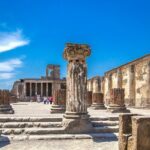
Starting at Porta Marina: get your bearings before the crowd
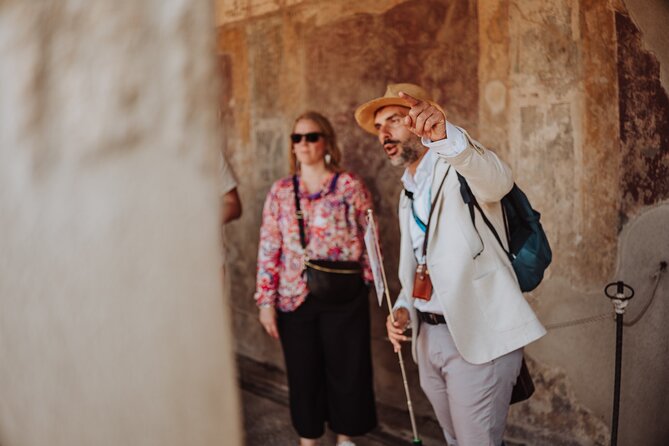
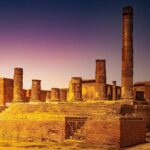
The tour meets at the main entrance of the archaeological site called Porta Marina Superiore, in front of the Hortus bar & Restaurant. The guide will hold an Askos Tours sign, so you can find them quickly and avoid the usual start-of-tour chaos.
This is a smart first move because Pompeii is not laid out like a museum with obvious one-way traffic. Beginning at Porta Marina helps you orient fast: you’re entering the site at a major entrance point and then heading into streets and spaces that connect logically to what you’ll see next.
You’ll also notice the first stop is short—about 10 minutes—and the ticket piece is handled in a simple way. Admission for this stop is listed as free, which is nice because it means your early time is mostly about orientation and explanation rather than gate-time delays.
Practical tip: arrive a few minutes early and don’t wait until the last second at the entrance. Even with a sign, Pompeii crowds can tighten the space around meeting points.
Vicolo delle Terme and the “everyday” Pompeii look
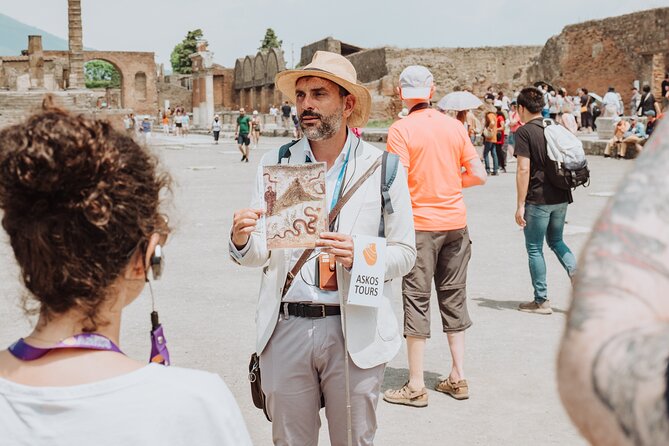
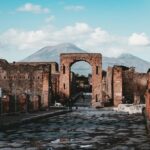
Next you’ll step into Vicolo delle Terme, 2, described as an open portico that provided shelter for merchants and other activities. This stop is only around 10 minutes, but it’s valuable because it’s not just about monuments.
It’s a reminder that Pompeii’s streets and covered areas were part of daily commerce and movement. Even in a short tour, this kind of stop helps you connect the dots between the grand forum spaces and the lived-in, practical parts of town.
What I like here is that the tour doesn’t jump instantly from entrance to big sights. It builds a baseline: covered areas, street edges, and how people would have passed through spaces like this.
Foro de Pompeya: the main square feeling in a quick snapshot
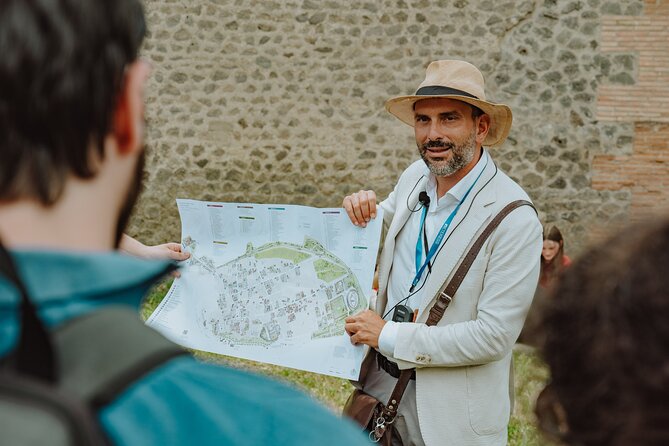
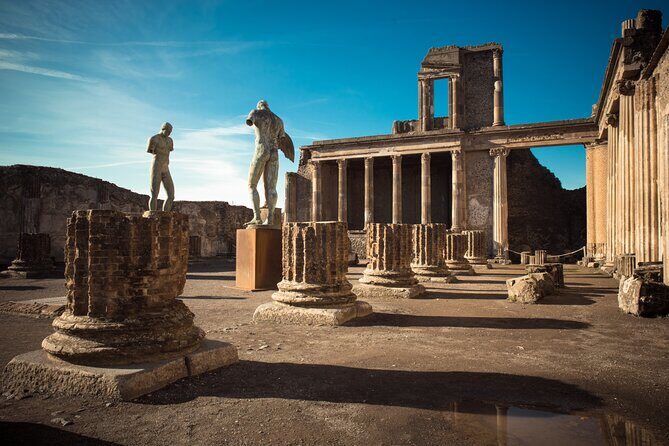
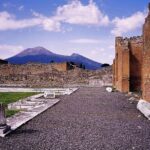
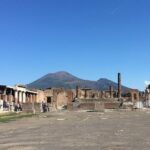
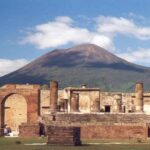
Then comes the Foro de Pompeya, Pompeii’s ancient main square. You’ll get about 10 minutes here, with admission included.
A forum stop is one of the best “big picture” moments because it gives you a reference point for everything else. When you later see houses, baths, and a theater, the forum helps you remember this wasn’t a random scattering of buildings. It was organized life—public gatherings, movement, and power all centered in shared spaces.
If you’re a first-time visitor, this is where your brain starts mapping Pompeii in your head. If you’ve visited before, it’s still a useful anchor because it gives your guide a place to connect the story of the city.
Granaries of the Forum: where the tour gets haunting
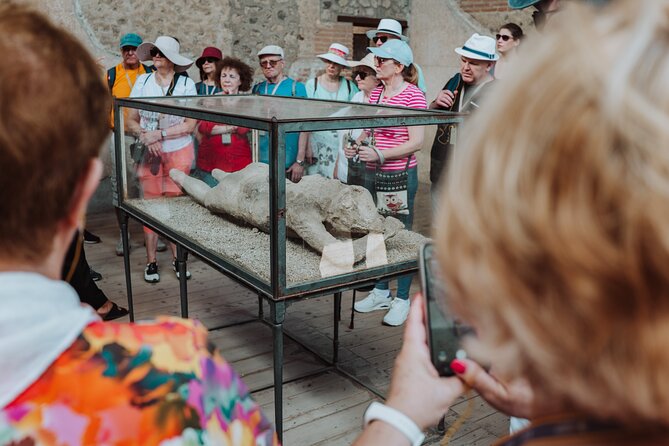
This is one of the most distinctive stops: the Granaries of the Forum. You’ll be inside a granary and you’ll see marble tables and bath-like basins for fountains at entrances of houses. It also includes casts of victims of the eruption, as well as casts of a dog and a tree.
This is around 10 minutes, with admission included. The emotional weight of this stop is why it lands so well in a condensed itinerary. In many Pompeii tours, the eruption pieces get skimmed. Here, it’s part of the route plan, not an afterthought.
If you prefer your sightseeing lighter, keep in mind this stop can feel heavy. It’s also very effective if you want context for what you’re looking at across the rest of the city—because the site isn’t only about architecture. It’s about how a moment stopped everyday life.


Walking the main street: the in-between part is the glue
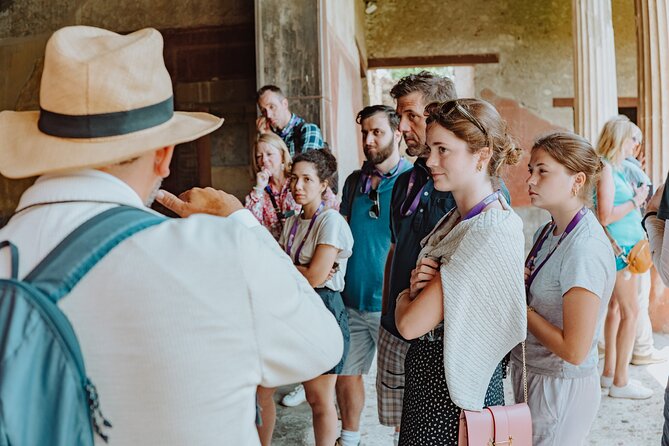
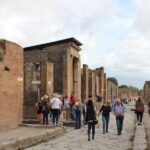
There’s also a “walk through the main street of Pompeii” segment between the indoor/major stops. This matters more than it sounds.
That street time helps you connect places so Pompeii doesn’t feel like a series of isolated postcards. It also helps your legs: instead of only quick stand-stops, you get a short transition where your eyes can adjust and your guide can keep the narrative flowing.
This is a good moment to slow down slightly and look sideways—doors, thresholds, and street edges—because those are often the details that make Pompeii feel real rather than staged.
House of Menander: a rich house, fast but memorable
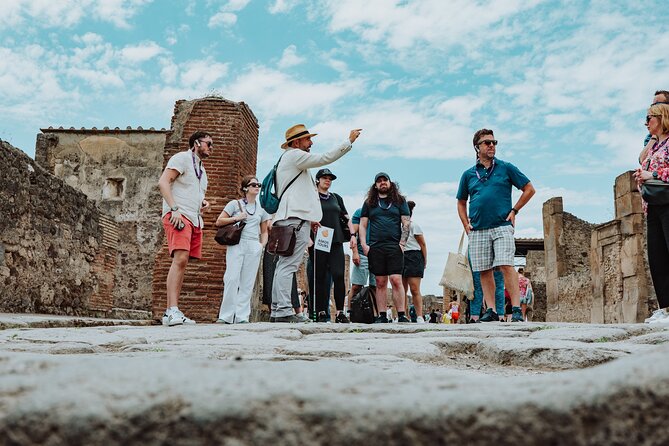
You’ll then visit the House of Menander, described as one of Pompeii’s richest and most magnificent houses in architecture, decoration, and contents. This stop is about 15 minutes, with admission included.
A house stop is where Pompeii turns from civic life into personal life. Even in 15 minutes, you can usually spot what makes a residence stand out: how it’s laid out, what kind of decoration you’re seeing, and how the space signals status.
I like this stop because it’s not just a quick glance at “old stuff.” The tour frames it as a peak example of residential wealth and design, so you’re more likely to notice the visual cues rather than just pass through.
If you’re traveling with teens or adults who want variety—public buildings plus private life—this is a strong pivot point.
Stabian Baths (Terme Stabiane): Pompeii’s thermal world
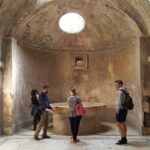
Next is the Stabian Baths (Terme Stabiane), which the tour describes as occupying a vast area and representing the oldest thermal complex in the city. Expect about 15 minutes here, with admission included.
Baths can be an easy sell when you’re on a schedule, because they’re big, varied, and visually memorable. But what makes this stop useful on a short tour is the scale: even if you can’t see everything, the space helps you understand how communal routines would have worked.
Also, baths are a great contrast after a rich house. Menander shows private display; the baths show public or shared spaces. Together they help you balance Pompeii’s social layers.
Lupanar: the famous brothel stop you’ll remember
The Lupanar is next, described as the most famous brothel in the ruined Roman city of Pompeii. This is about 10 minutes, with admission included.
This stop is often a headline reason people choose a Pompeii tour, and it fits perfectly into a 2-hour plan because it gives you a clear, identifiable place to anchor your impressions. It’s brief, but it gives you a perspective on how Pompeii served all kinds of social needs—even ones modern visitors might not expect.
If this topic isn’t your comfort zone, you can still use the stop productively: focus on what the tour highlights and keep moving. Pompeii is a big site, and the best tours help you handle the variety without turning it into awkward guesswork.
House of the Faun: size and impact in 15 minutes
Then you’ll see the House of the Faun, described as one of the largest and most impressive private residences in Pompeii. This stop is about 15 minutes, with admission included.
This is another “private life” anchor, but the emphasis is different from Menander. Menander leans into architecture, decoration, and contents; the House of the Faun leans into size and impact.
For me, this kind of pairing works because it prevents the tour from feeling repetitive. Two house visits back-to-back can blur together on a rushed itinerary, but here the tour frames each as a different kind of standout.
If you’re the type who likes comparing sites—size versus decoration, private display versus household layout—this sequence gives you built-in material to do that.
Teatro Grande: the big theater moment
After the houses and the baths, you’ll head to Teatro Grande, described as the most important theater in Pompeii. This is about 10 minutes, with admission included.
A theater stop is ideal as a closing highlight before the tour ends. It’s the kind of structure that quickly reads as a communal venue, and it helps you tie together what you learned earlier at the forum and along the streets.
If you’ve been thinking Pompeii is mostly houses and stone walls, a theater reminds you that people gathered here for performances and events. In a short tour, that context can make the entire visit feel more coherent.
Where the tour ends: keep wandering inside Piazza Esedra
The tour ends inside the ruins in Piazza Esedra, and you’re free to keep wandering on your own after the guided portion.
That matters for planning. You’re not locked into a full-day itinerary, but you still get a guided route that drops you into a strong location for self-exploration.
My advice: don’t leave immediately after the tour. Even with just another hour, you’ll be able to look at the spaces you saw earlier with fresh eyes and calmer pace.
Price and value: $77.06 for a guided, ticketed loop
At $77.06 per person for roughly 2 hours, this tour is fairly priced for a Pompeii experience that includes guided archaeological interpretation plus a specific entry ticket (the Pompei Express entrance ticket).
Where the value really shows is in the structure. You’re getting:
- A curated route through major highlights without having to plan each stop.
- Small-group handling (max 15).
- Headsets for 10+, which is a real quality-of-life upgrade in open ruins.
- Admissions included for several of the stops that matter most for your route.
The only “cost” is time efficiency. You’re trading depth for coverage. But if you want the most important sights plus a clear storyline, this is a strong way to use a short visit to Pompeii.
Who this tour fits best
This is a great match if you:
- Want a 2-hour structured introduction to Pompeii highlights.
- Prefer a smaller group over a long, crowded bus tour.
- Like learning with an archaeological background guide, not just walking with a map.
- Are okay with a faster pace during the guided portion and prefer to roam afterward.
It may be less ideal if you:
- Want to spend a long time photographing each detail inside homes and across multiple sections of the site.
- Need lots of time for rest stops (food and drinks are not included, so plan your pacing).
Should you book this Pompeii small-group tour?
Yes, if you want a guided, ticketed way to see Pompeii’s core highlights in a short time window—without getting buried by logistics. The small-group size, headsets, and archaeological focus make it feel like a thoughtful route rather than a rushed checklist.
If you’re the type who enjoys deep reading and long pauses, consider pairing this with additional self-guided time afterward. The tour ends inside the ruins on purpose, so you can control your pace once the guide route wraps up.
If you tell me your travel dates and whether you’ll be going in peak season, I can suggest a smart plan for when to arrive and how to extend your visit after the tour.
FAQ
How long is the Pompeii Archaeological Small-Group tour?
The tour is listed as approximately 2 hours.
What group size is this tour?
It’s a small-group tour with a maximum of 15 travelers.
Is the tour offered in English?
Yes, it is offered in English.
Are tickets included?
Yes. The tour includes the Pompei Express entrance ticket, and several specific stops list admission as included.
Do we get headsets?
Headsets are included for groups of 10 or more.
Where do we meet the guide?
The meeting point is Via Villa dei Misteri, 2, 80045 Pompei NA, Italy. The guide meets at the main entrance called Porta Marina Superiore, in front of the Hortus bar & Restaurant, holding an Askos Tours sign.
Where does the tour end?
The tour ends in Piazza Esedra, 80045 Pompei NA, Italy, inside the ruins.
Is food or drinks included?
No. Food and drinks are not included.
Is private transportation included?
No. Private transportation is not included.
What should I expect after the tour ends?
The tour ends inside the ruins and you are free to keep wandering on your own.