REVIEW · NAPLES
Neapolitan pasta homemade Cooking Lesson
Book on Viator →Operated by GRAND TOURS ITALY · Bookable on Viator
If you like hands-on food moments, this one fits. You’ll learn how to make egg pasta using traditional rolling methods (no machinery), then shape ravioli and fettuccine the Neapolitan way. The session also builds in tastings, including organic tomato from Vesuvio and homemade bread, so you understand what quality ingredients taste like.
What I like most is that the class doesn’t treat pasta like a prop. You get a clear, practical walkthrough of dough and shapes, and you also get real meals afterward. The lunch is simple but satisfying: your homemade pasta with wine, plus soda/pop. One possible drawback: it’s not designed for gluten intolerance, and the time is tight. You’re getting a full session in about two hours, so you won’t have an all-day slow-cook pace.
In This Review
- What the class actually feels like
- Key highlights you’ll care about
- Entering Naples pasta mode at Via delle Zite
- From pasta types to egg dough: where the lesson begins
- The rolling-pin part: Neapolitan pasta without machinery
- Shaping ravioli and fettuccine, plus a look at tagliolini and pappardelle
- Vesuvio tomato tasting, homemade bread, and lunch that follows through
- How to turn a 2-hour class into pasta you can repeat
- Price and value: does $90.76 make sense?
- Who should book this Naples pasta lesson (and who should skip it)
- Should you book this Neapolitan cooking class?
- FAQ
- How long is the Neapolitan pasta cooking lesson?
- Where does the experience start?
- What pasta will I learn to make?
- Is there a lunch included?
- Do I need to bring drinks?
- Will the class use pasta machines?
- Is this class suitable for gluten intolerance?
- How big is the group?
- Is the ticket mobile?
- What is the cancellation policy?
What the class actually feels like
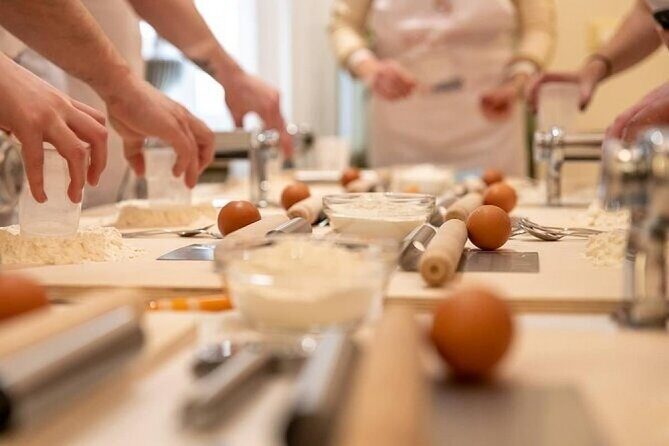
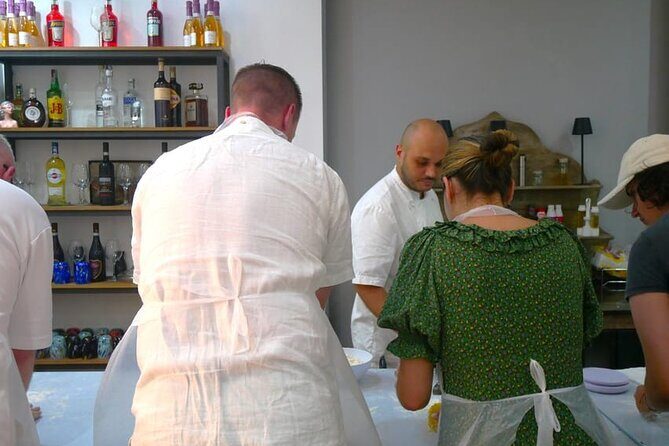
This is set up as an intensive, friendly group lesson. You’ll work with your group, roll and cut pasta, then cook it and finish it with two different sauces. As the dough rests, you’re served a local starter and you taste ingredients that matter in Neapolitan cooking, not just sauces.
You’ll also hear the difference between pasta types first, then you’ll start the dough and learn methods the instructor says have been taught down through generations. Group size tops out at 35, so it’s not a tiny private lesson, but it also shouldn’t feel like you’re watching from the sidelines. The host in the best-rated experience, Daniel, gets praised for making it fun and easy, with lots of tips.
Key highlights you’ll care about
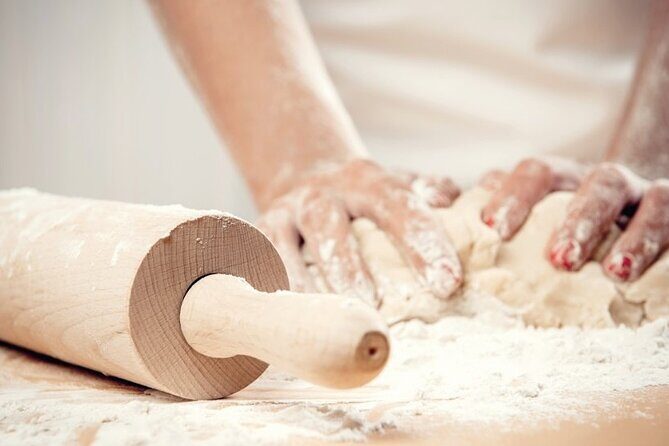
- Traditional dough + rolling pin approach with no pasta machines
- Ravioli and fettuccine focus, plus instruction for tagliolini and pappardelle
- Ingredient tastings like organic tomato from Vesuvio and homemade bread
- Cook-and-eat lunch: your pasta with wine, plus soda/pop included
- A tight 2-hour structure that rewards doing the steps right away
You can also read our reviews of more cooking classes in Naples

Entering Naples pasta mode at Via delle Zite
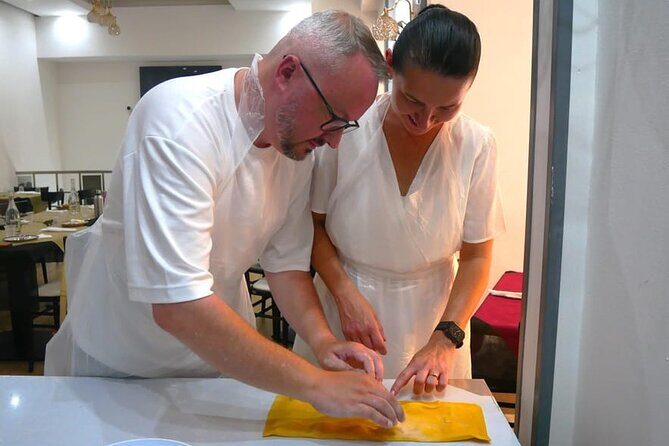
The experience starts at Via delle Zite, 30 (80139 Napoli). If you want an easy arrival, this spot is near public transportation, so you should be able to get there without drama. You’ll also get a mobile ticket, which is handy when you’re bouncing around Naples and don’t want to track paper.
Timing matters here because this is a short, packed lesson (about 2 hours). When sessions are compressed, small things like arriving on time and having your questions ready make a big difference in how much you actually take home.
From pasta types to egg dough: where the lesson begins
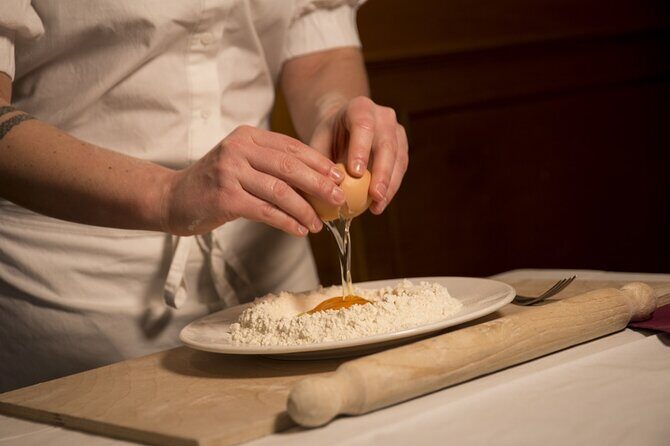
The class starts with an overview of pasta types. That sounds basic, but it’s useful. In Naples, the point isn’t just the shape. It’s how dough texture and thickness affect how pasta holds sauces and fillings.
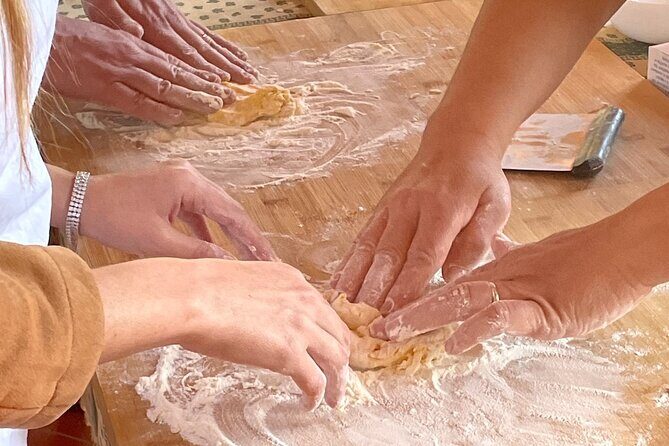
After that primer, you’ll make egg pasta based on a family recipe. You’ll get an explanation of the ingredients used in the dough, which helps when you try this later at home. And while the dough rests, you’re given a local starter and you taste what the instructor considers key—especially the tomato.
Why this matters: many home cooks can follow a recipe but struggle when dough behaves differently. A quick explanation of what you’re aiming for in dough texture (and why resting helps) gives you a real chance to repeat the results, not just mimic the method once.
The rolling-pin part: Neapolitan pasta without machinery
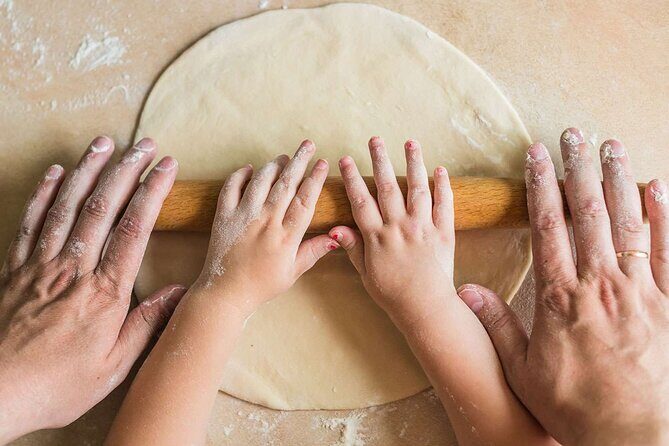
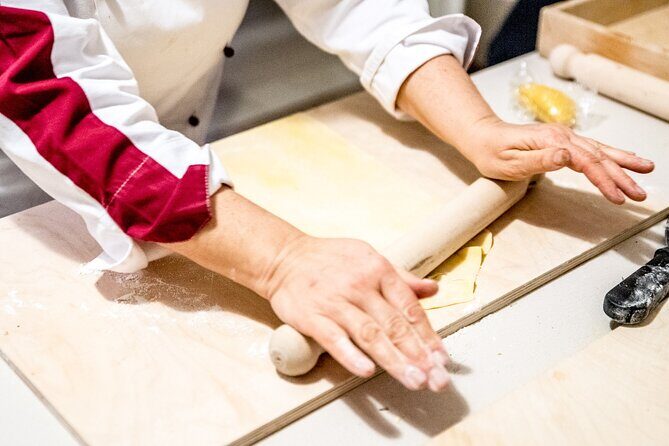
Then comes the work. You’ll roll out the dough with a rolling pin, using traditional, manual methods. The class specifically notes that you won’t rely on machinery, which is important because it changes everything:
- You learn how to manage thickness by feel and attention.
- You practice keeping dough workable while it stretches.
- You develop a rhythm for rolling, cutting, and shaping.
This is where the high ratings make sense. One person praised Daniel for turning the process into something fun and doable, with lots of tips. When a host is good at coaching, manual pasta work stops feeling like a pastry-course nightmare and starts feeling like a skill you can repeat.
Shaping ravioli and fettuccine, plus a look at tagliolini and pappardelle
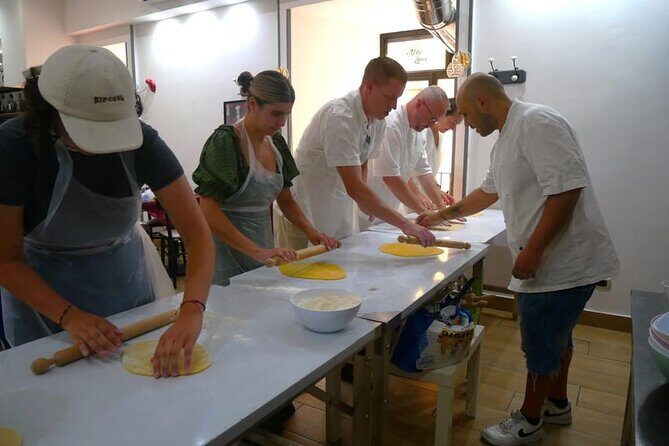
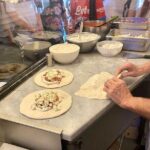
Once the dough is rolled, you cut it and make fettuccine and ravioli. You’ll also get taught how to prepare tagliolini and pappardelle, which is a great bonus if you’re the type who wants more than one “winner” recipe.
For the ravioli, the key step is the filling. You mix the filling ingredients, then combine them with the ravioli. That part is hands-on and gives you confidence about portioning and sealing so the filling doesn’t escape later.
After shaping, your pasta is cooked in water. Then you finish it with seasoning—specifically, two different sauces. This matters because it teaches you how pasta becomes a meal, not just an ingredient project.
You can also read our reviews of more tours and experiences in Naples


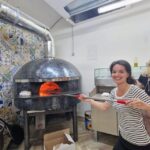
Vesuvio tomato tasting, homemade bread, and lunch that follows through
The lesson includes ingredient tasting at the right moment—while the dough rests. You’ll taste organic products, including tomato from Vesuvio, along with homemade bread. This isn’t just snack-time. It’s there so you can connect flavor to technique: the sauces you’ll eventually use sit on top of ingredient quality.
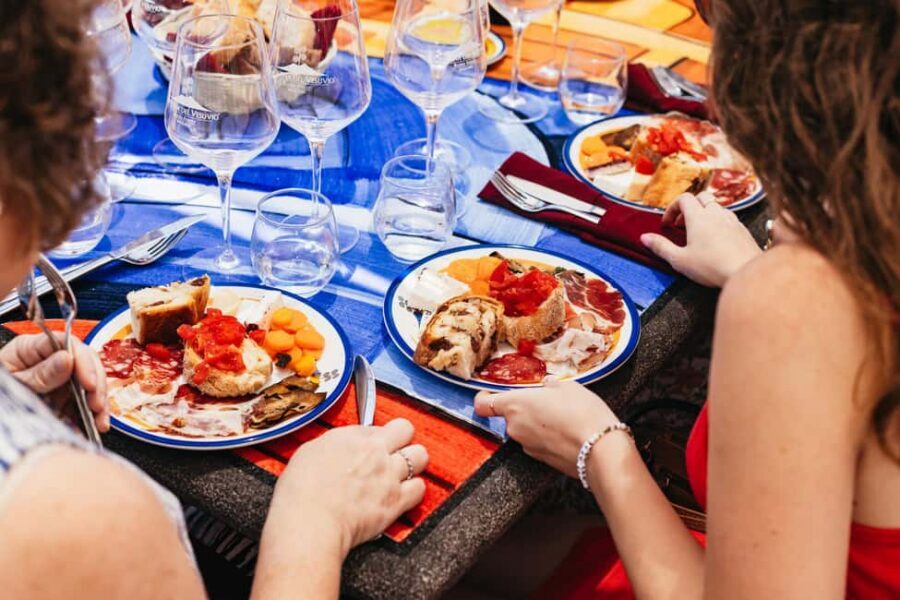
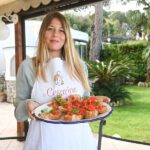
Lunch is included. You eat your homemade fettuccine and ravioli, and the meal comes with wine. Soda/pop is included too.
Two practical notes from the information provided:
- Other drinks after the first one aren’t included.
- You should expect this to be more of a real meal than a light tasting plate.
I like that the meal matches what you made. It’s the fastest way to learn whether your dough thickness, cooking time, and sauce pairing actually worked.
Also, one review mentioned tiramisu from scratch as part of the experience. The listing details don’t explicitly call out dessert, so I’d treat that as “sometimes included” based on the feedback you’re seeing. If dessert is important to you, it’s worth asking the operator what’s planned for your specific date.
How to turn a 2-hour class into pasta you can repeat
A short cooking class can be a hit or miss. This one earns its keep because the teaching is structured around repeatable steps:
- Dough understanding: you learn what’s in the dough and how resting fits in.
- Manual rolling: you learn the technique without the crutch of a machine.
- Cutting and shaping: you practice ravioli and fettuccine, with guidance on other shapes.
- Sauce finishing: you learn how the pasta is meant to be seasoned after boiling.
If you want to reproduce this at home, focus on three things: dough feel, thickness, and timing. Most pasta problems are texture problems, not sauce problems. When you’ve watched someone show you how to roll and cut without equipment, you’re less likely to freeze when your kitchen setup isn’t identical.
Price and value: does $90.76 make sense?
At $90.76 per person, this isn’t a budget activity. So let’s talk value the honest way.
You’re paying for:
- a hands-on 2-hour class,
- instruction using traditional manual methods,
- tasting time (including Vesuvio tomato),
- and a full lunch with your pasta plus wine and soda/pop.
If you compare that to the real cost of ingredients plus time plus a basic meal out, it can start to pencil out—especially if you actually cook pasta at home or want to learn a skill you’ll use repeatedly. If you’re just after a quick photo moment, then no, this price won’t feel fair.
There was also a critical review saying it felt like a tourist attraction and questioning value. That’s a reminder that a class like this works best when you show up ready to do the steps and ask questions. If you want a long, slow, theory-heavy course, you might feel the 2-hour pace is too short.
Who should book this Naples pasta lesson (and who should skip it)
This experience is a great fit if:
- you enjoy cooking with your hands and learning by doing,
- you want to make ravioli and fettuccine from scratch,
- you care about ingredient quality (not just sauce recipes),
- and you like the idea of leaving with skills you can use at home.
It’s less ideal if:
- you’re gluten intolerant. The class is explicitly not recommended for that,
- you’re expecting a long 3-hour style session,
- or you want a purely beginner-only experience with no real pace. The structure is intensive by design.
Group size is capped at 35, so it’s not a private atelier. Still, the teaching approach sounds friendly and interactive, and the best-rated comments focus on the host’s clarity and helpful tips.
Should you book this Neapolitan cooking class?
If your goal is to learn real Neapolitan pasta technique in a way that connects dough, ingredients, and eating, I think this is a solid booking. The strongest reasons to choose it are the hands-on rolling and shaping, the tasting of Vesuvio tomato and bread, and the fact that lunch is built from what you make.
I’d hesitate only if you have gluten intolerance, dislike fast-paced classes, or you mainly want a sightseeing-style activity. If that’s you, look for something more casual.
If you want, tell me your travel month and your cooking comfort level (first time ever, some cooking, or confident cook). I can suggest whether this class is the right match or if you should search for a longer pasta workshop instead.
FAQ
How long is the Neapolitan pasta cooking lesson?
It runs for about 2 hours.
Where does the experience start?
The start point is Via delle Zite, 30, 80139 Napoli NA, Italy.
What pasta will I learn to make?
You will learn to make ravioli and fettuccine, and you will also be shown how to prepare tagliolini and pappardelle.
Is there a lunch included?
Yes. Lunch includes your homemade fettuccine and ravioli with wine, plus soda/pop.
Do I need to bring drinks?
Wine and soda/pop are included with lunch. Other drinks after the first one are not included.
Will the class use pasta machines?
No. You roll out the dough using traditional methods with a rolling pin.
Is this class suitable for gluten intolerance?
It is not recommended for people who are gluten intolerant.
How big is the group?
The class has a maximum of 35 travelers.
Is the ticket mobile?
Yes, you’ll receive a mobile ticket.
What is the cancellation policy?
You can cancel for free up to 24 hours in advance for a full refund. If you cancel less than 24 hours before the start time, you won’t be refunded.