REVIEW · NAPLES
Naples: Pasta Cooking Class with Tiramisù and a Drink
Book on GetYourGuide →Operated by Luigi Marra · Bookable on GetYourGuide
Three pastas and tiramisù, in one session. This Naples cooking class puts hands-on pasta-making and dessert prep in a real restaurant kitchen, right in the busy center of town. You learn classic shapes, work with fresh ingredients, and finish with a proper meal that matches what you cooked.
I love that you get chef-led instruction in English, with plenty of hands-on time (not just watching). I also like the payoff: you eat bruschetta, your pasta, and tiramisù, with a drink and espresso to close it out.
One drawback to consider is the time and setting: it runs about 2 hours in a kitchen environment, and it’s not suitable for everyone—especially if you have motion sickness or a gluten intolerance.
In This Review
- Key things that make this class worth your time
- Why Naples Pasta Feels Different When You Make It
- Restaurant San Carlo 17: Your Naples Cooking Workshop
- The 2-Hour Flow You’ll Follow (Pasta First, Then Dessert)
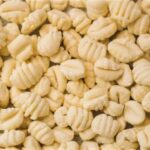
- Pasta Shapes and Dough Work You’ll Actually Do
- Sauces in the Kitchen: Nerano, Sorrentina, Potato and Provola
- Tiramisù: Coffee, Cream, and the Resting Time Lesson
- Your Included Meal: Bruschetta, Pasta, Tiramisù, Drink, and Espresso
- Price and Value: Is $71 Fair for Naples?
- Who This Is Best For (and Who Should Skip It)
- What to Do Before You Arrive (So You Enjoy the Class More)
- Should You Book This Naples Pasta and Tiramisù Class?
- FAQ
- How long is the cooking class?
- Where is the meeting point?
- What dishes will I make?
- What sauces are used with the pasta?
- What’s included with the meal at the end?
- Is there alcohol included?
- Do I get coffee at the end?
- Is the class taught in English?
- Are extra drinks included?
- What is the cancellation policy?
Key things that make this class worth your time
- Chef-supervised pasta dough work you do yourself, not a passive demo
- Multiple pasta shapes including tagliatelle nerano, ravioli alla sorrentina, or maltagliati
- Tiramisù prep with the Italian method using coffee and cream, then you eat it
- The chef’s cooking finishes the sauces so you learn the pairing without guessing timing
- A real sit-down meal: bruschetta, your pasta, tiramisù, plus espresso
Why Naples Pasta Feels Different When You Make It
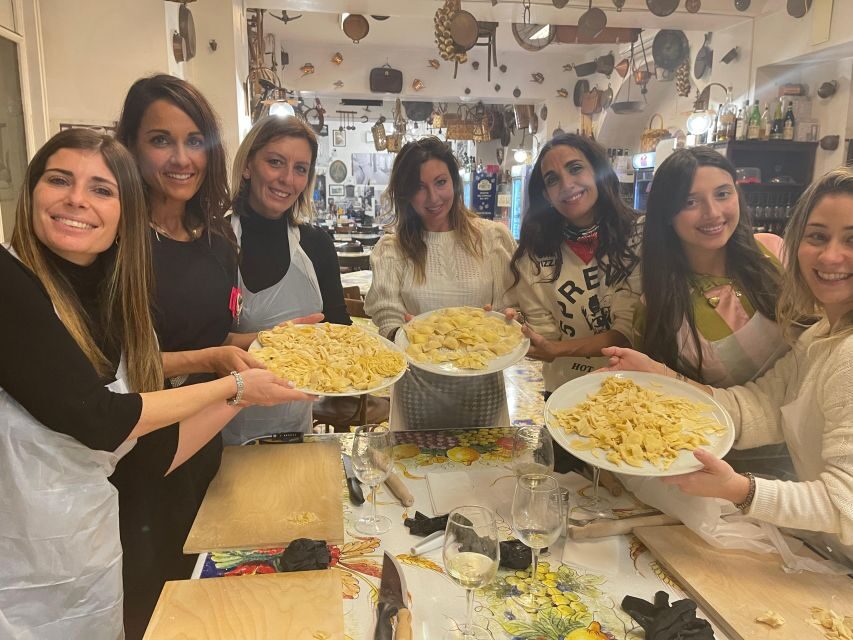
Naples has its own pasta logic. It’s not about fancy tricks. It’s about simple ingredients, good technique, and doing it the Italian way often means learning by feel.
In this class, you don’t just learn a recipe. You learn how dough behaves when it’s made with fresh ingredients, how to handle cutting and shaping, and how to keep dessert from becoming a soggy mess. The result is that you leave with skills you can actually use back home, not just a photo.
The sweet spot here is that you get guided practice and then you eat what you made. That turns the lesson into something memorable. It also helps you understand why the steps matter, because you taste them.
You can also read our reviews of more cooking classes in Naples

Restaurant San Carlo 17: Your Naples Cooking Workshop
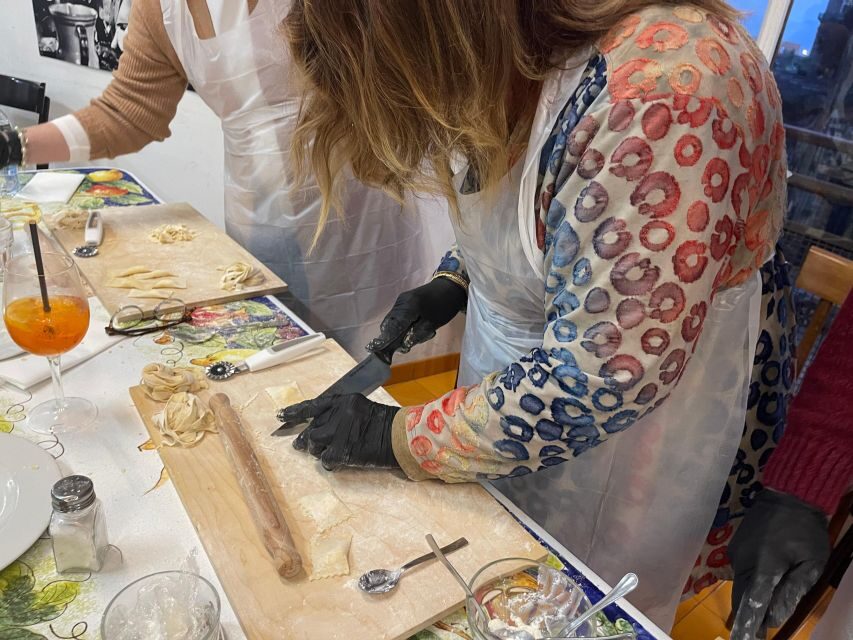
The class happens inside Restaurant San Carlo 17, with the meeting point at Via San Carlo 17 (opposite the San Carlo Theatre). It’s a short walk from major sights like Palazzo Reale, Piazza Plebiscito, and Galleria Umberto I, so this fits neatly into a day where you’re already exploring Naples.
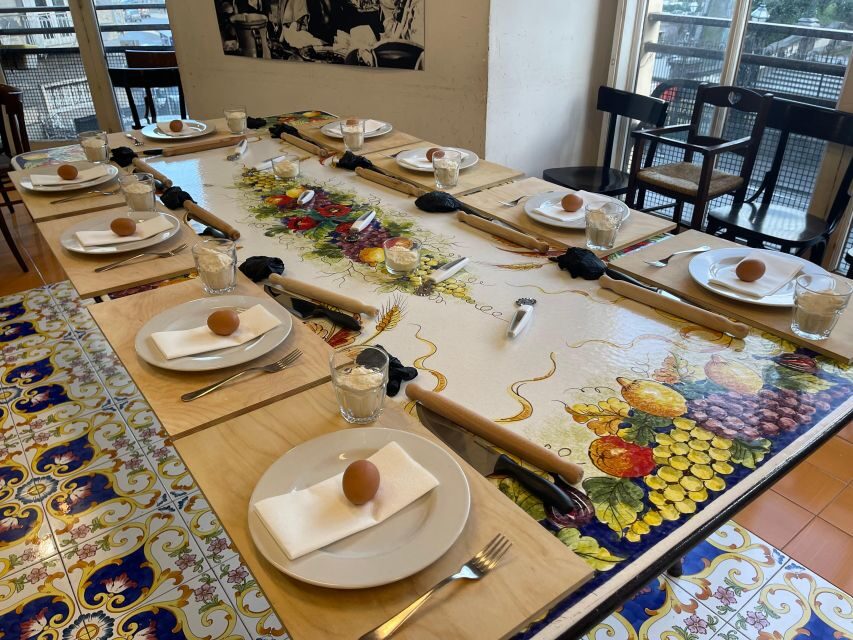
The venue is a full restaurant, not a classroom pretending to be a kitchen. That matters for comfort and flow. You start in the teaching area, then your work and the chef’s finishing all happen in the same place, which keeps the timing tight.
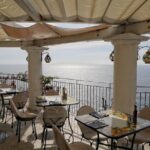
Some classes have a view element. In past sessions, people have praised the second-floor room for ocean-front and castle-adjacent sight lines. Even if you don’t get the same exact view, you’ll still be cooking in a setting that feels like part of Naples life, not a manufactured tourist room.
The 2-Hour Flow You’ll Follow (Pasta First, Then Dessert)
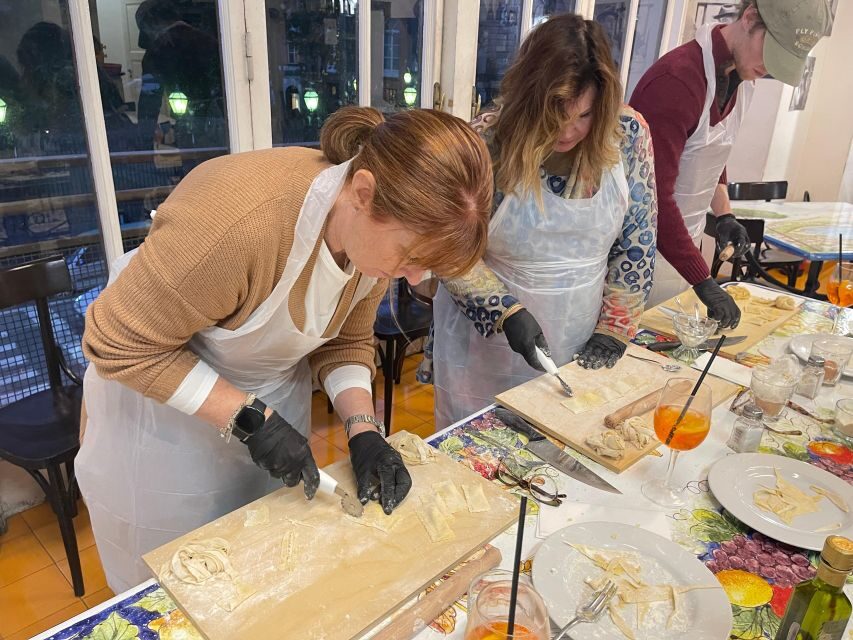
This experience is about 2 hours, and the schedule is built for momentum. You’ll start with a quick setup and then move straight into the work.
The typical flow looks like this:
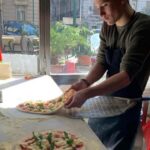
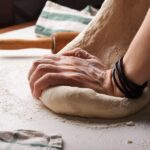
- You put on an apron and help knead the dough.
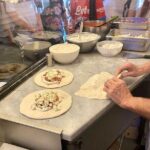
- You cut and shape pasta pieces (the exact type depends on what the class is doing).
- You prepare tiramisù ingredients, often early so it has time to rest.
- The chef handles the final cooking and sauces in the kitchen.
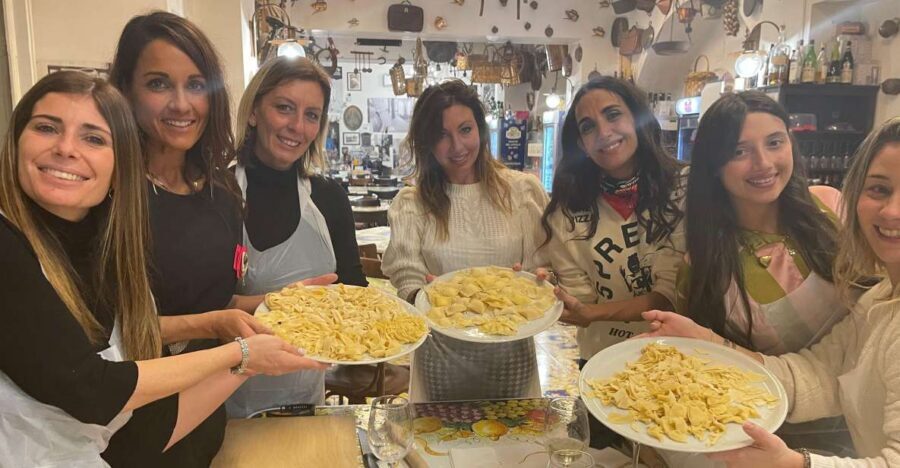
- You eat the full meal at the end: bruschetta, your pasta, and tiramisù.
- The session finishes with espresso.
This order is smart. Pasta dough needs time and attention, but dessert benefits from resting too. When the tiramisù starts early, the coffee-and-cream layers settle the right way, so dessert tastes like dessert, not like a rushed experiment.
Pasta Shapes and Dough Work You’ll Actually Do
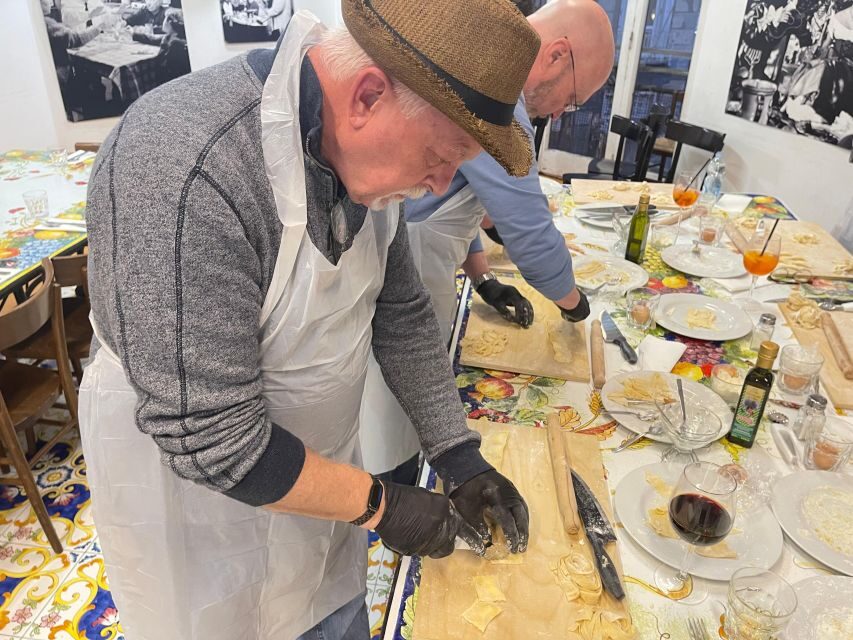
You’ll learn to make pasta by practicing real steps: mixing dough, kneading, rolling, cutting, and shaping. Several people noted that the rolling is done with a roller rather than a machine. That’s a good detail for your expectations. It slows things down just enough for you to understand texture.
Expect one of these pasta formats to be the focus:
- Tagliatelle nerano
- Ravioli alla sorrentina (filled with fresh ricotta)
- Maltagliati (irregular pieces, often a practical style that still tastes great)
One Naples-specific detail that comes up in instruction is that dough often includes eggs. If you’ve only made pasta with flour and water at home, this is a useful mental shift. Egg dough behaves differently: smoother, richer, and more forgiving once you learn the feel.
For ravioli, the key skill is handling the filling and sealing. If you get a little extra filling or your edges don’t match perfectly, don’t panic. The goal is learning the method, and the chef’s team supports the process so you still end up with a satisfying result.
Sauces in the Kitchen: Nerano, Sorrentina, Potato and Provola
You do the pasta work. The chef finishes cooking and the sauces. That’s not a shortcut—it’s good teaching.
You get to experience how different classic Naples sauces change the pasta experience:
- Nerano sauce for tagliatelle nerano
- Sorrentina sauce for ravioli alla sorrentina
- A potato and provola sauce for maltagliati
This matters because Naples cooking is often about the pairing. Pasta shape matters, but sauce matters just as much for texture and flavor. If you only learn how to roll and cut, you miss the bigger picture. Here, you see how chef-managed timing brings the dish together.
A bonus is that you’re not left staring at a stove trying to reproduce sauce consistency. The chef does the hard parts, and you learn what to look for when you taste.
You can also read our reviews of more tours and experiences in Naples


Tiramisù: Coffee, Cream, and the Resting Time Lesson
Tiramisù sounds simple, but it’s mostly about timing. If you soak too long, it collapses. If you don’t rest it, it tastes flat and unfinished.
In this class, you learn the classic components and the technique for assembling them. Multiple instructors have been praised for making the steps clear and fun, including guidance from names like Matilde, Alessia, Emanuela, and Manuela. Different instructors teach with their own style, but the method stays centered on the same idea: coffee meets cream, then dessert gets time to set.
One practical reason tiramisù is included here is that it’s a strong, repeatable home dessert. Even if your first attempt isn’t perfect, you’ll understand what should change after resting—texture thickens, flavors come together, and it stops tasting like separate components.
And yes, you do get to eat it at the end, which is the fastest way to learn what good tiramisù should feel like.
Your Included Meal: Bruschetta, Pasta, Tiramisù, Drink, and Espresso
At the end, you sit down to a full meal built from what you made:
- Bruschetta as a starter
- The pasta you prepared
- Tiramisù
- One drink (alcoholic or non-alcoholic)
- Water included (one bottle)
- Espresso to finish
This is where value becomes obvious. For many cooking classes, you’re forced to squeeze tasting into a tiny portion. Here, it’s a genuine sit-down meal. You get to taste your work while it’s still fresh and in the right form.
If you like wine with dinner, this is a convenient way to try it. If you prefer something non-alcoholic, the drink choice is flexible. Either way, you’re not scrambling for an extra stop just to satisfy hunger after the cooking part.
Price and Value: Is $71 Fair for Naples?
$71 per person for a 2-hour, chef-led class with multiple pasta types, sauces handled by the chef, bruschetta, tiramisù, a drink, water, and espresso is priced like a real meal experience—not just a souvenir activity.
Here’s what you’re paying for:
- Time with a chef who guides and supports you
- Fresh ingredients and the equipment used for pasta-making
- Multiple dishes produced in one session
- A structured end meal that includes coffee and a drink
It’s especially good value if you’re the type who wants to learn one skill you can repeat later. Pasta and tiramisù are both home-friendly subjects. Once you know the technique, the cost of making it drops fast.
The one thing to keep in mind is that extra drinks aren’t included. If you’re someone who plans to order several rounds, you’ll want to budget beyond the class price.
Who This Is Best For (and Who Should Skip It)
This class is a strong fit for:
- Food-focused travelers who want more than tasting
- Couples and friends who like shared activities
- First-timers who need clear step-by-step instruction
- People who want practical recipes to take home
It may be a tough choice if you have:
- Mobility impairments or use a wheelchair (not suitable)
- Gluten intolerance (not suitable)
- Motion sickness (not suitable)
- Very young children (it’s not suitable for children under 2 or under 3, depending on the exact age cutoff)
Also note the practical rules: no bare feet, and bikes aren’t allowed. It’s set up like a proper restaurant experience with a working kitchen environment.
If you’re a solo traveler, this can work well too. Small groups are part of the experience, and some sessions have had very small numbers, which means you can get more direct help when you need it.
What to Do Before You Arrive (So You Enjoy the Class More)
Go in with an empty stomach. The end meal is generous, and it’s hard to enjoy pasta-making while your brain is thinking about snacks.
Wear comfortable clothes. You’ll be standing, handling dough, and moving around a kitchen space. Bring your curiosity, not your perfectionism.
If you care about getting a good photo, it’s worth knowing that some instructors have helped with photos during class. You can simply ask politely once you’re settled.
Should You Book This Naples Pasta and Tiramisù Class?
If your Naples plan includes good food and you want a hands-on activity that doesn’t waste time, book it. This is the kind of class that turns into an everyday skill: pasta at home, tiramisù at home, plus sauces you now understand better because you tasted them with the right pairing.
Book it sooner rather than later if your schedule is tight, since starting times depend on availability. And if any part of the class environment could affect you—like motion sickness or mobility needs—check that it’s truly suitable before you commit.
If you’re deciding between a quick tasting and real technique, this one leans toward technique. You’ll leave full, with recipes and with the confidence that you can make at least some of this again on your own.
FAQ
How long is the cooking class?
The experience lasts about 2 hours.
Where is the meeting point?
Meet at Via San Carlo 17, Naples, opposite the San Carlo Theatre.
What dishes will I make?
You’ll make pasta (tagliatelle nerano, ravioli alla sorrentina, or maltagliati) and you’ll prepare tiramisù.
What sauces are used with the pasta?
The chef cooks the pasta with Nerano sauce, Sorrentina sauce, and a potato and provola sauce.
What’s included with the meal at the end?
You’ll eat bruschetta, the pasta you made, and tiramisù, plus you’ll have water and one included drink.
Is there alcohol included?
One drink is included, and it can be alcoholic or non-alcoholic.
Do I get coffee at the end?
Yes. The experience ends with an espresso coffee.
Is the class taught in English?
Yes, the instructor teaches in English.
Are extra drinks included?
Extra drinks are not included.
What is the cancellation policy?
Free cancellation is available up to 24 hours in advance for a full refund.