REVIEW · NAPLES
From Naples: Herculaneum Skip-the-Line Guided Tour
Book on GetYourGuide →Operated by WORLDTOURS S.r.l. · Bookable on GetYourGuide
Herculaneum hits fast. This half-day tour pairs skip-the-line access with a live archaeologist, so you spend less time queuing and more time walking the preserved streets of ancient Ercolano. You’ll see daily-life details that survived the 79 AD eruption and understand how people lived right up to the disaster.
I especially like the tight, simple structure: pick-up in Naples, priority tickets, about 1.5 hours on site, then back again. The downside is that the ruins involve walking on uneven ancient ground, and the tour is not set up for wheelchairs or mobility impairments.
In This Review
- Key reasons this Herculaneum tour is worth it
- Herculaneum in 3 hours: the Roman town that looks frozen in time
- Naples pickup and the minibus ride to Ercolano
- Skip-the-line entry: why it matters more than you think
- Your archaeologist guide: what the 1.5-hour walk is really for
- The big stops at Herculaneum: House of the Deer to the Forum Baths
- House of the Deer
- Forum Baths
- House of Neptune and Amphitrite
- Gymnasium and Forum
- The Vesuvius story: seeing terror in preserved objects
- Audio and comfort: how to get the best out of the group setup
- What to bring (and what not to bring) for a smooth Herculaneum visit
- Price and value: is $63 a fair deal from Naples?
- Who this tour suits best (and who should rethink it)
- Should you book this Naples-to-Herculaneum tour?
- FAQ
- How long is the Naples to Herculaneum tour?
- Is the Herculaneum ticket included, or do I need to buy it separately?
- What languages are available for the tour?
- What should I bring with me?
- Is food provided during the tour?
- Is this tour suitable for wheelchair users or people with mobility impairments?
Key reasons this Herculaneum tour is worth it
- Skip-the-line priority entry so you can focus on the site, not the queue
- Archaeologist-led walking route with stops like the House of the Deer and Forum Baths
- Small-group feel on some departures, with enough room to ask questions and compare notes
- Concrete Vesuvius context as you see charred wood, paintings, mosaics, and ceramics in place
- Multiple Naples pickup points including options near the port and major hotels
Herculaneum in 3 hours: the Roman town that looks frozen in time

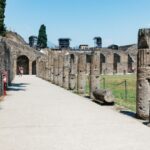
If you’ve ever visited Pompeii, you might expect the same vibe. Herculaneum is different. The town is smaller, but the preservation is so good that you get a more intimate sense of everyday life—floors, walls, and objects that still feel like someone left the room yesterday.
This tour is built for that exact effect. You’re not just ticking off ruins; you’re guided through how the place worked as a Roman neighborhood. And because entry is priority, you’re less likely to lose your momentum to lines and ticket counters.
The big promise here is that Herculaneum doesn’t stay abstract. You’ll walk the streets and connect the remains to the story: the eruption of Vesuvius on October 24, 79 AD that destroyed both Pompeii and Herculaneum. Even knowing the facts, seeing the preserved rooms and decorations makes the disaster feel immediate, not textbook.
You can also read our reviews of more guided tours in Naples


Naples pickup and the minibus ride to Ercolano
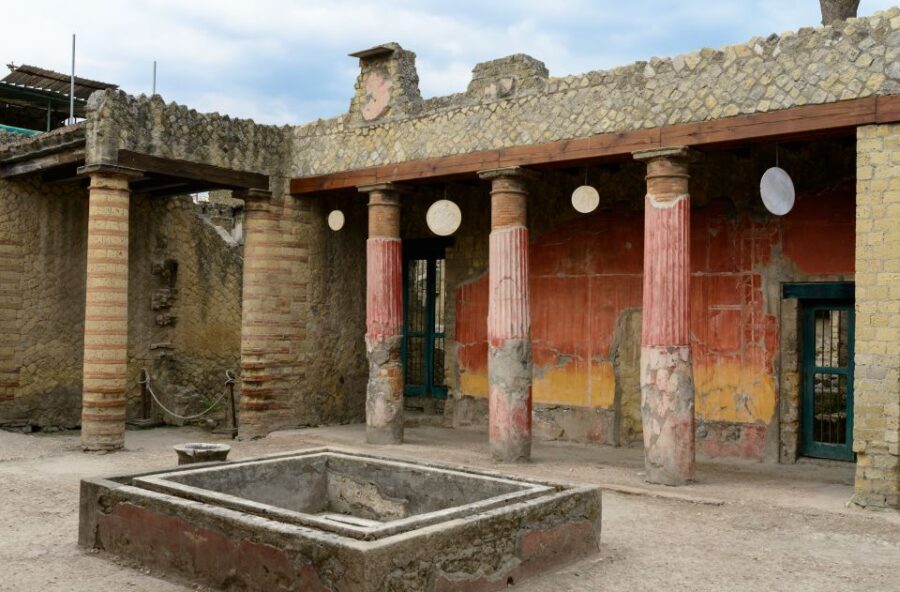
Most of the time you’ll spend on this outing is practical transport: a coach or minibus ride out to the site and back. The schedule is straightforward, with about 30 minutes each way and about 1.5 hours inside Herculaneum with your guide.
Pick-up is designed to be convenient. You’ll find options around Naples, including major hotel/area meeting points and port-side locations. The list includes places like Royal Continental Hotel, Palazzo Caracciolo Napoli – MGallery, Stazione Marittima (Molo Beverello), and Terminus (near the main station), plus Hotel NH Napoli Panorama.
One real-world tip: when the van can’t reach your exact accommodation, you’ll be directed to a nearby meeting point. On at least one departure, this meant a longer walk (around 30 minutes) to Terminus when port pickup couldn’t happen as expected. So if your day is tight, I’d double-check your pickup option and be ready to adapt if vehicle access changes.
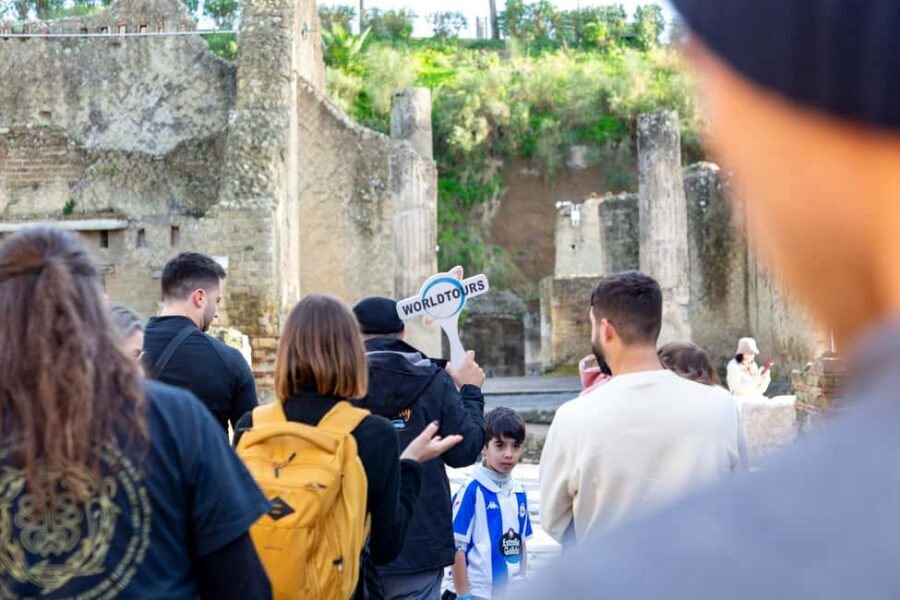
The guides and drivers are usually part of what makes the day feel easy. In past departures, drivers have helped with extra Naples context on the way, and coordinators have kept the pickup process smooth. If you see a sign with the Worldtours logo, that’s your anchor point.
Skip-the-line entry: why it matters more than you think
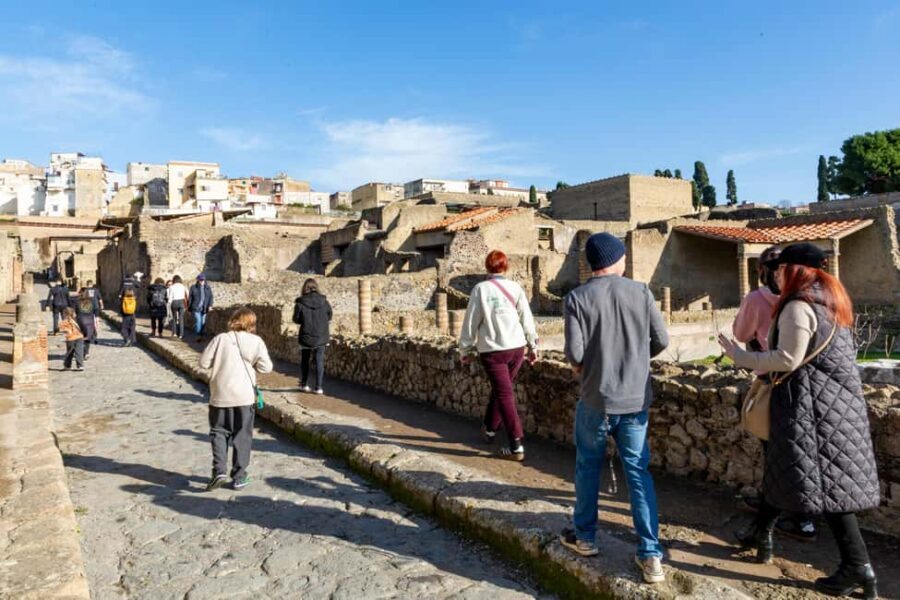
Yes, you’re saving time. But the bigger win is mental energy. When you arrive with priority access, you start the visit feeling oriented instead of rushed.
Herculaneum is not huge, but it rewards attention. You’ll want to pause at mosaics, read the layout of the houses and public spaces, and compare decorations across neighborhoods. A delayed start can shrink your time for the details that make the place special.
On this tour, the entrance ticket is included, and you’re not left figuring out where to stand or how to get through the entry process with a group.
Your archaeologist guide: what the 1.5-hour walk is really for
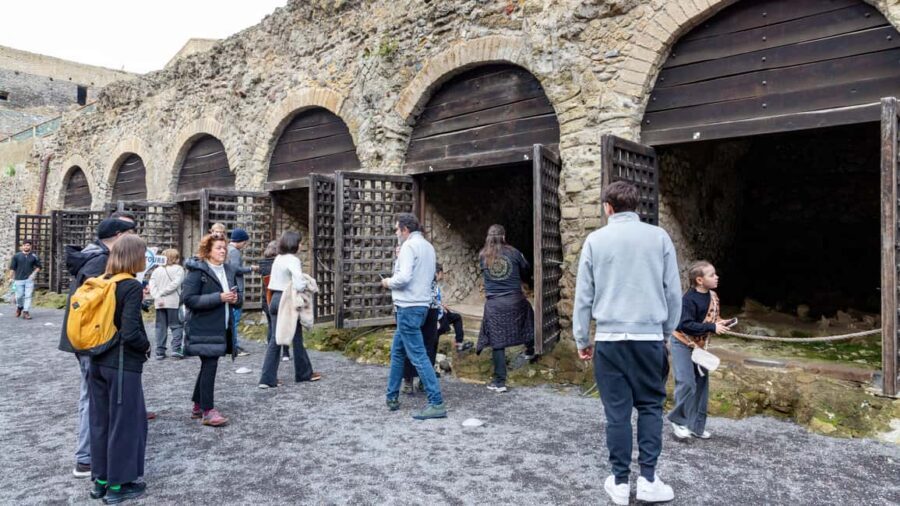
The guide is the whole point. The on-site portion is roughly 1 hour 30 minutes, and the goal is not to cover everything. It’s to show you the right places and teach you how to look at them.
You’ll get context for Roman architecture and daily life—how houses were organized, what public buildings meant, and how wealth showed up in decoration. Your guide will point out why Herculaneum’s preservation is so rare: you’re seeing materials and surfaces that were protected by volcanic ash instead of only surviving in fragments.
Guides can be bilingual on some departures, and the tour is offered in multiple languages (English, Italian, and Spanish). In low season, the format can shift inside the site: groups with at least six participants per language may get a live guide inside Herculaneum, while smaller groups up to five may receive audioguides instead. Either way, you’ll have a way to understand what you’re seeing—you just need to know the setup might not be identical year-round.
If you care about asking questions, this is a place where a live human guide can change the whole experience. On small-group days, visitors have reported plenty of room for questions and faster back-and-forth at key stops.
The big stops at Herculaneum: House of the Deer to the Forum Baths
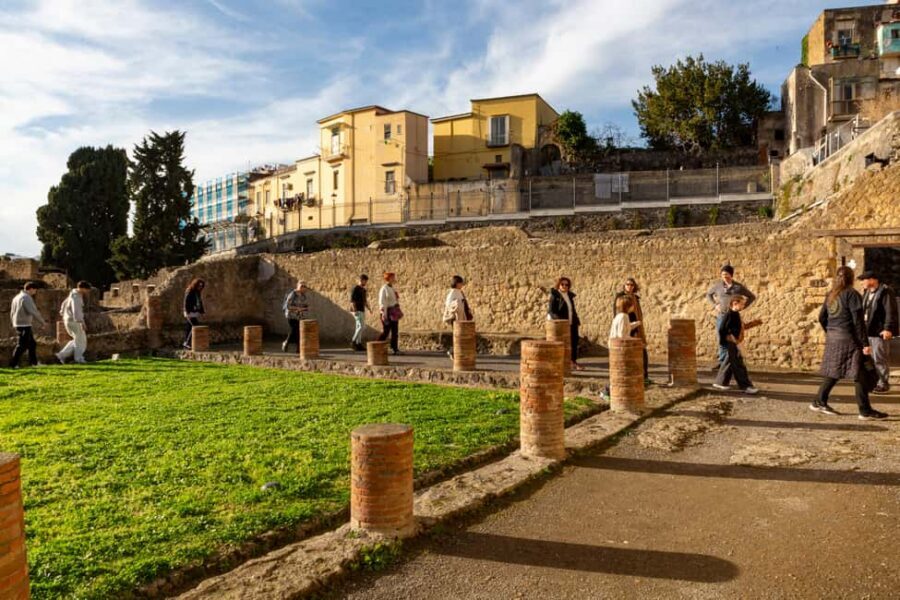
This tour follows a curated route through some of the site’s most instructive areas. Here are the stops you’ll likely focus on, and what each one does for your understanding.
You can also read our reviews of more tours and experiences in Naples
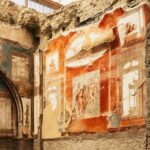

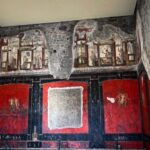
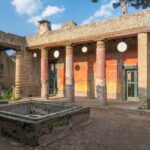
House of the Deer
This is one of the first “wow” stops because it gives you a clear view of how a Roman home could be decorated and lived in. You’ll see remains tied to everyday movement through rooms and passageways, and you’ll get a feel for how decoration wasn’t just for rich people—it was part of the home experience.
The name refers to a decorative theme, and your guide will use it to explain what mosaics and floor art meant in social life and status. If you like the feeling of being inside a place rather than looking at an outdoor exhibit, this stop delivers.
Forum Baths
Public baths were not just about hygiene. They were social hubs. In a short visit, Forum Baths are a smart choice because they show Herculaneum’s civic rhythm—people gathering, moving between rooms, and spending time as a community.
Even with less time than you might want, your guide can connect the physical layout to Roman routines. You’ll also get a better sense of why the site matters beyond shock value. This town functioned. It had public life, not just surviving houses.
House of Neptune and Amphitrite
This stop helps you understand Roman taste for myth and status. You’ll encounter decorative elements—especially mosaics—then connect them back to what wealthy residents signaled through art.
It’s also a strong place for photography, because the preservation makes colors and patterns easier to interpret than you’d expect at a ruin. Just remember: you’re walking ancient surfaces, so wear shoes you trust and give yourself time to look carefully.
Gymnasium and Forum
This part of the route brings you into the public side of the town—places tied to training, gatherings, and civic identity.
Your guide’s job here is to show you how the forum area shaped public life, then tie that to the “small town” scale you feel at Herculaneum. The forum isn’t just architecture. It’s the social engine.
And since the eruption story is never far away, these spaces work well for understanding the suddenness of disaster. When people think about Vesuvius, they imagine flight and panic. Standing in a public area helps you grasp what would have been happening around you before everything changed.
The Vesuvius story: seeing terror in preserved objects
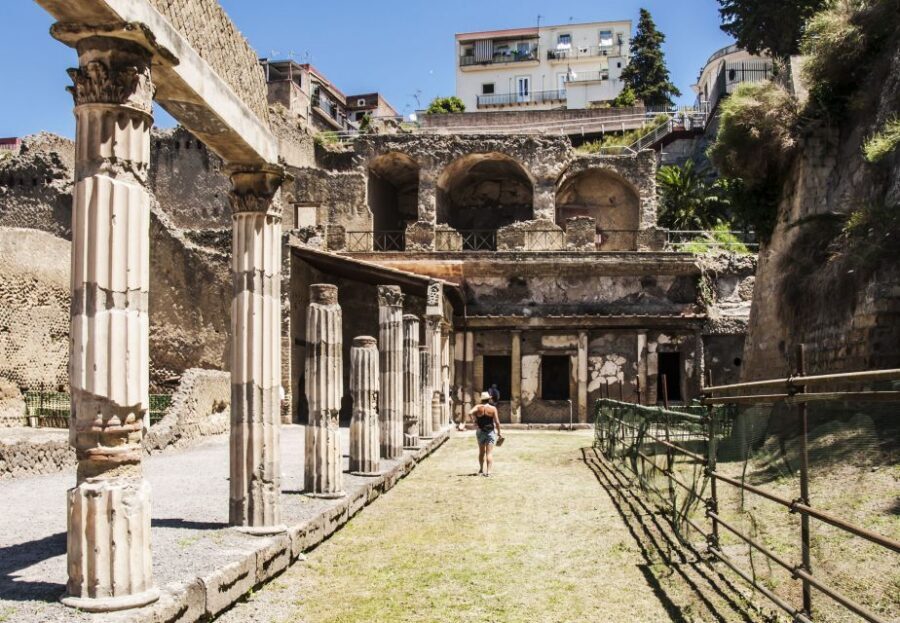
The eruption on October 24, 79 AD is the emotional center of Herculaneum. This is where the tour becomes more than a history walk.
As you move through the remains, you’ll hear how the town was buried and why its contents survived: volcanic ash protected spaces in a way that left more intact than in many other sites. You’ll also learn how the aftermath played out—how some people tried to flee toward the sea, and what the remains can suggest about that final scramble.
You’ll see preserved details tied to the disaster too: charred wood, paintings, mosaics, and ceramics that survived nearly 2,000 years. Seeing these objects in their place makes the scale feel real, not just tragic on paper.
If you’re the type who wants a straight story with dates and consequences, you’ll probably enjoy how your guide threads the eruption into the room-by-room tour. It gives your brain a timeline while your eyes do the work.
Audio and comfort: how to get the best out of the group setup
This kind of tour typically depends on bus commentary and on-site listening aids. Some departures use devices so you can hear the guide better, especially if the group has multiple languages.
Here’s the practical part: don’t assume the audio will be perfect everywhere. Some visitors have reported muffled microphone commentary on the bus and issues with the hearing devices (feedback, crackles, or volume that still wasn’t enough). The fix is simple: stand or position yourself close to the guide when you can, and don’t sit too far back if you’re trying to catch every word.
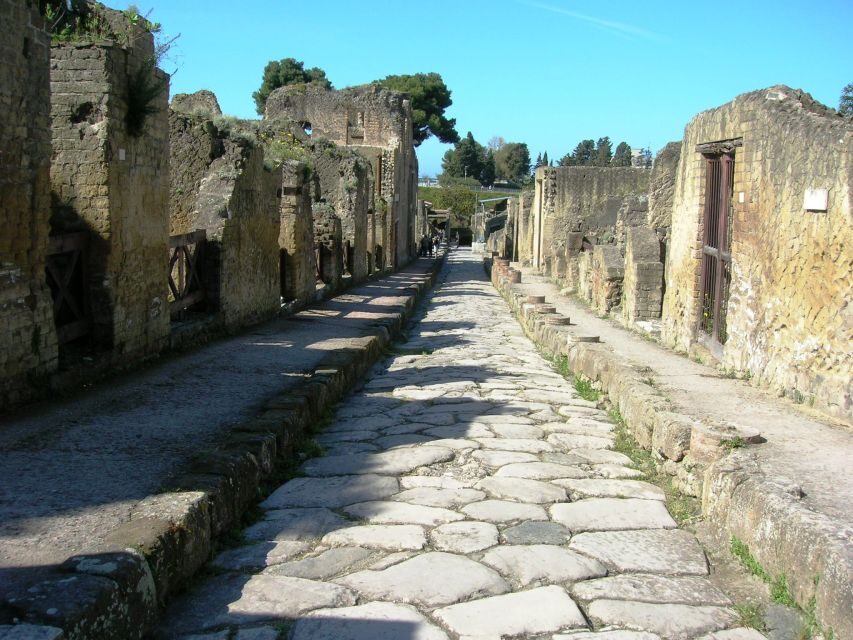
Comfort also matters because you’re on your feet for the site. Bring comfortable shoes and plan for a mix of walking paths and stone steps. A short tour is still a real walking day.
What to bring (and what not to bring) for a smooth Herculaneum visit
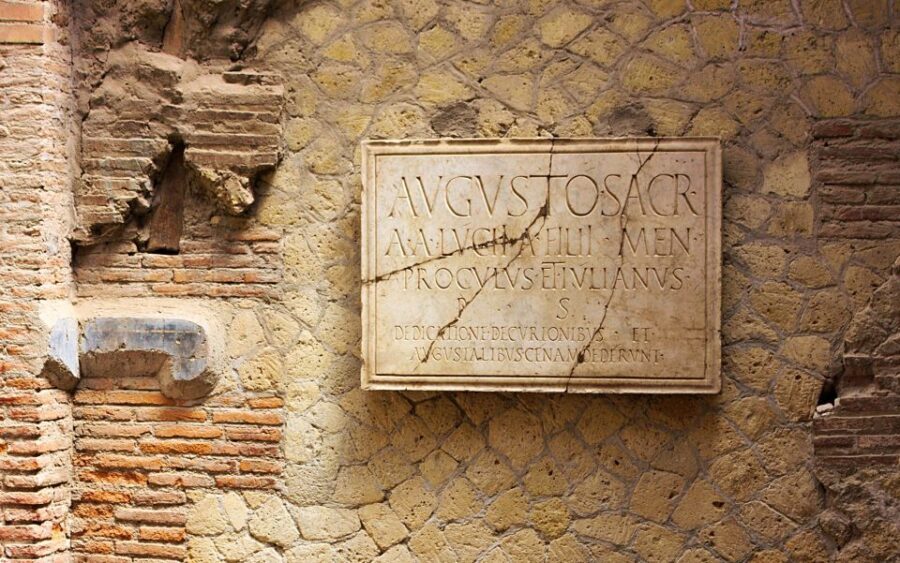
Pack like you’re going to walk through a serious outdoor museum. The basics are clear:
Bring:
- Passport or ID card
- Comfortable shoes
- Sunglasses and a hat
- Camera
- Water
- Comfortable clothes
Not allowed:
- Pets
- Luggage or large bags
- Smoking in the vehicle
- Non-folding strollers or non-collapsible wheelchairs
- Unaccompanied minors
- Food and drinks in the vehicle
You’ll also want to remember the entry rule for young visitors: Herculaneum entrance is free for people under 18, and you’ll need to show a valid passport to the ticket office.
If you’re traveling light, you’ll enjoy the ride more. Limited bus space is part of why large bags and certain items are prohibited.
Price and value: is $63 a fair deal from Naples?
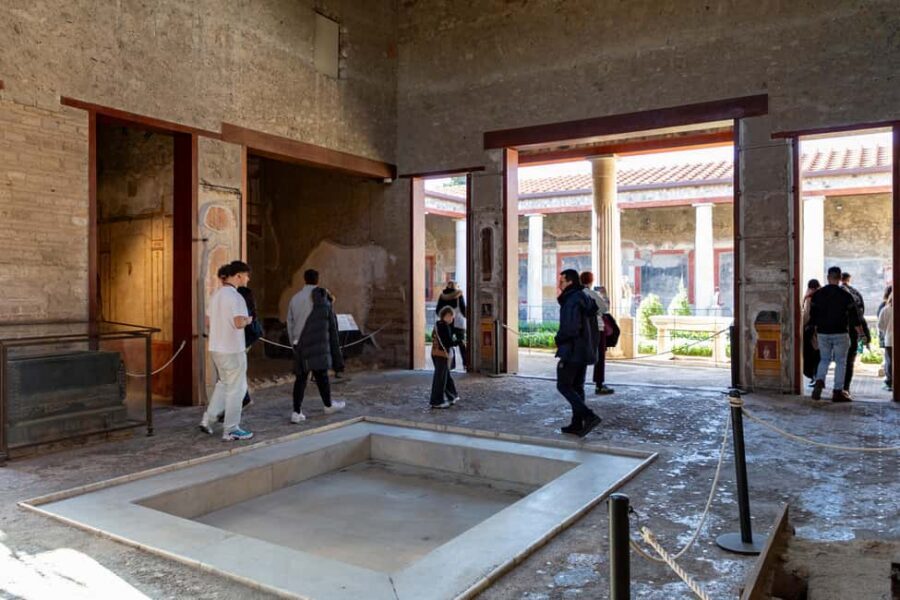
$63 per person is a reasonable price for this format because you’re not just paying for a guide. You’re getting:
- Round-trip pickup and drop-off in Naples
- Priority entry ticket to Herculaneum
- A live archaeologist guide for about 1.5 hours on site
- On-board commentary during the transfer
If you tried to DIY this, you’d be paying entry and transport costs anyway, and you’d still be dealing with timing, ticket lines, and figuring out the best route inside the site. With a guided, priority-access package, you’re buying time and stress relief.
There’s also a potential seasonal value lever: on the first Sunday of each month, the price is discounted because Pompeii’s entrance is free. Even though you’re going to Herculaneum, that discount can make the package feel like a better deal than a normal date.
Food isn’t included, so plan a snack or meal outside the vehicle. The tour itself is short enough that you can usually handle it with a lunch buffer before or after.
Who this tour suits best (and who should rethink it)
This is a great fit if you want a focused Roman ruins outing without getting stuck on logistics. You’ll probably enjoy it most if you:
- Prefer a short day with a clear route through the highlights
- Like learning with a guide who can connect architecture and objects to daily Roman life
- Want priority entry so the day starts fast
It’s not a good fit if you have mobility impairments or you use a wheelchair. The route and the site environment aren’t set up for that, and you’ll be better off looking for an accessibility-focused alternative.
Also think about audio sensitivity. If you rely heavily on hearing a guide from anywhere in the group, you’ll want to keep close to the guide during the walk in case devices have issues on your departure.
Should you book this Naples-to-Herculaneum tour?
I think you should book if you want the best shot at Herculaneum with minimal hassle. Priority access plus an archaeologist-led walk is the right formula for a short trip, and the stops you’ll cover (House of the Deer, Forum Baths, House of Neptune and Amphitrite, and the Gymnasium and Forum) are strong choices for learning how the town worked.
I’d be a little more cautious if your pickup location is very specific. Because the van might not reach every accommodation, you should confirm your pickup point and be ready for a meeting-point change. And if you’re tall or sensitive to comfort, keep in mind some buses may feel tight on longer drives.
If you’re deciding between doing it yourself and booking this tour, the package wins on one simple point: you get a plan. In Herculaneum, that matters, because the best parts are the details—and they’re easier to catch when someone guides your eyes.
FAQ
How long is the Naples to Herculaneum tour?
The total experience is about 3 hours, with roughly 30 minutes of driving each way and around 1.5 hours exploring Herculaneum with your guide.
Is the Herculaneum ticket included, or do I need to buy it separately?
The skip-the-line entrance ticket to Herculaneum is included in the price, along with pickup and drop-off in Naples and the guided visit.
What languages are available for the tour?
The live tour guide is offered in English, Italian, and Spanish. The tour may be bilingual depending on the group.
What should I bring with me?
Bring your passport or ID card, comfortable shoes, sunglasses, a hat, a camera, and water. Comfortable clothes also help.
Is food provided during the tour?
No. Food and drinks are not included, and you’re not allowed to eat or drink in the vehicle.
Is this tour suitable for wheelchair users or people with mobility impairments?
No. The tour is listed as not suitable for people with mobility impairments and wheelchair users.