REVIEW · NAPLES
Tour of the Archaeological Museum of Naples
Book on Viator →Operated by Raphael Tours & Events · Bookable on Viator
Pompeii comes indoors in Naples. This guided visit to the Museo Archeologico Nazionale di Napoli makes Roman and Greek remains feel readable, not just dusty—especially with the reopened Egyptian section on the route. You’ll also see rare finds excavated from Pompeii and Herculaneum, plus other regional sites like Stabiae and the wider Bay of Naples area. Guides such as Anna, Fiorenza, and Maria are highlighted for turning objects into stories you can actually picture.
Two things I really like: the small group (up to 8 travelers) keeps the pace flexible and gives you room to ask questions, and the guide-led structure helps you focus on the right pieces instead of wandering. One possible drawback: two hours is tight for a museum as big as this, so you should expect a smart highlights route rather than seeing everything in full depth.
In This Review
- Key highlights you’ll care about
- Naples Archaeological Museum in Two Hours: The real value
- Entering the Museo Archeologico Nazionale di Napoli: what your guide will do
- Pompeii and Herculaneum artifacts: the stories behind the objects
- The Egyptian section reopened: why it’s a must-see stop
- Greek-Roman statues and the Farnese donation
- How the small-group format actually changes the visit
- Price and timing: when this tour is a smart move
- What kind of traveler should book this?
- Should you book this Naples Archaeological Museum tour?
- FAQ
- How long is the tour?
- What is the price per person?
- Is the tour offered in English?
- How many people are in the group?
- What’s included with the tour?
- What areas and themes does the museum visit cover?
- Are children allowed to join?
Key highlights you’ll care about

- Up to 8 people means more attention and fewer time-pressured stops
- Admission tickets included, so you’re not doing extra ticket math mid-trip
- Pompeii and Herculaneum finds put excavation context around the objects you’ll see
- Egyptian section reopened is a true must-see feature on this tour
- Guides with art-historical insight help explain construction and use, not just names and dates
Naples Archaeological Museum in Two Hours: The real value
This tour is built for a simple goal: help you make sense of a museum that can overwhelm you fast. In just about two hours, you get a guided path through major sections tied to Naples and its archaeological zones. The guide’s job isn’t to recite labels; it’s to point out what to look for and what those objects likely meant in daily life and status.
At $223.75 per person, it’s not the cheapest way to see the museum. But the price is doing work for you. You’re paying for a professional guide plus admission tickets included in the booking. Add the small group size and the fact that the tour is offered multiple times throughout the day, and the value starts to make sense—especially if you care about context and want less guesswork.
One more practical reason this works: it fits nicely into a Naples itinerary around Pompeii. If you’ve already visited Pompeii, this tour helps you understand what was removed for preservation and why those objects ended up here. If you’re heading to Pompeii next, it can prep your eye so you’ll recognize themes and artifact types when you’re there.
You can also read our reviews of more museum experiences in Naples


Entering the Museo Archeologico Nazionale di Napoli: what your guide will do
You start at the National Archaeological Museum of Naples, and the guide sets you up for the rest of the visit. This is where the structure matters. Instead of treating the museum like a checklist, the guide helps you build a mental map of where each category fits—Roman and Greek sculpture, artifacts from different excavation zones, and the museum’s special sections.
One detail worth noting: the tour can involve headsets, which makes a huge difference in a museum setting. You can actually hear explanations without craning your neck or losing the guide when crowds move through. That alone makes the experience feel smoother and more “guided” than the typical quick walk-through.
Pompeii and Herculaneum artifacts: the stories behind the objects

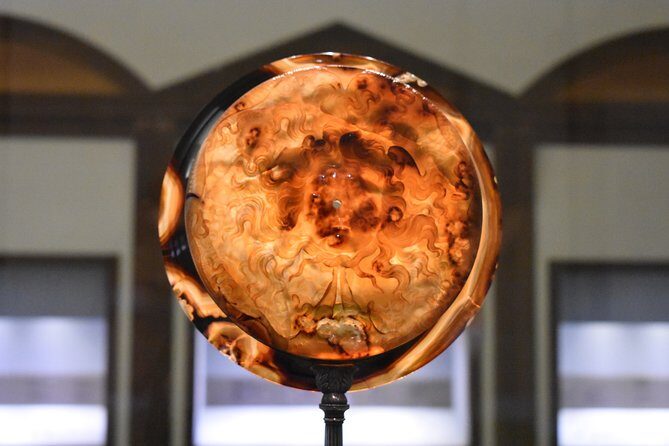
The heart of the visit is the set of rare finds excavated from Pompeii and Herculaneum. These objects are fascinating, but also easy to misunderstand if you only read the wall text. The guide instead helps you connect what you’re seeing to how people lived and what the objects were used for.
What I love about this part of the route is how it changes your reading of the collection. You’re not just seeing preserved remnants; you’re seeing evidence of a place that was uncovered through excavation. When the guide explains construction and use, it turns a statue or household object into something closer to a real item with a real job.
You’ll also see that the museum’s scope reaches beyond those two sites. The collection includes pieces from Stabiae, plus finds from Bacoli, Cumae, Baia, and the Flegreian fields area. That matters because it shows Naples wasn’t a one-site story. The region has multiple archaeological “sources,” and the museum is how you compare them in one sitting.
A small-group route helps here. If one object catches your eye—maybe because it looks like something you saw elsewhere—the guide can adjust your attention without derailing the whole tour. That flexibility is exactly what the reviews point to, with guides like Fiorenza described as staying extra time to cover highlights at a comfortable pace.
The Egyptian section reopened: why it’s a must-see stop
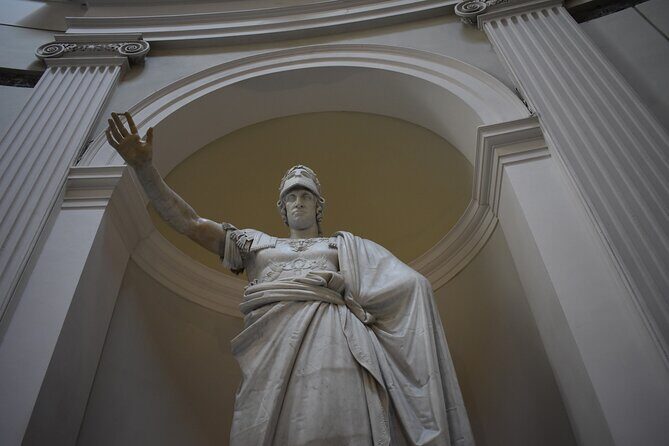
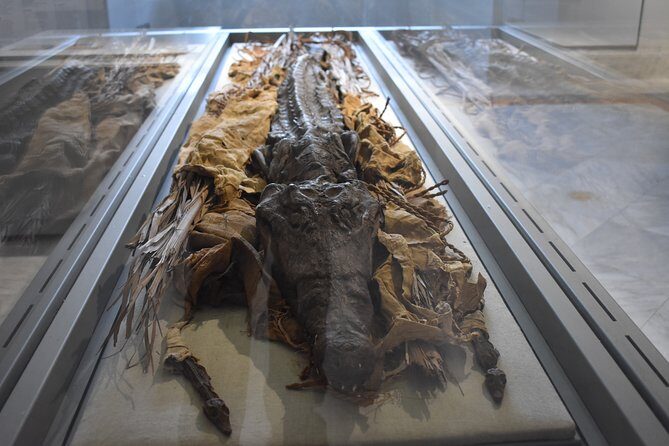
If there’s one feature that makes this tour feel current, it’s the Egyptian section, recently reopened to visitors. This is the kind of stop that’s easy to miss if you visit on your own, because it can be hard to plan around what’s reopened and what’s actively accessible.
On the tour, the Egyptian wing becomes more than a quick look. The guide’s explanations help you connect the section to broader ancient fascination with cultures beyond Rome and Greece. Even if Egypt-themed material isn’t usually your first pick, I’d still treat this as the highlight of the tour, because it adds variety and momentum to your visit. Two hours sounds short until the tour gives you that strong change of pace.
Greek-Roman statues and the Farnese donation
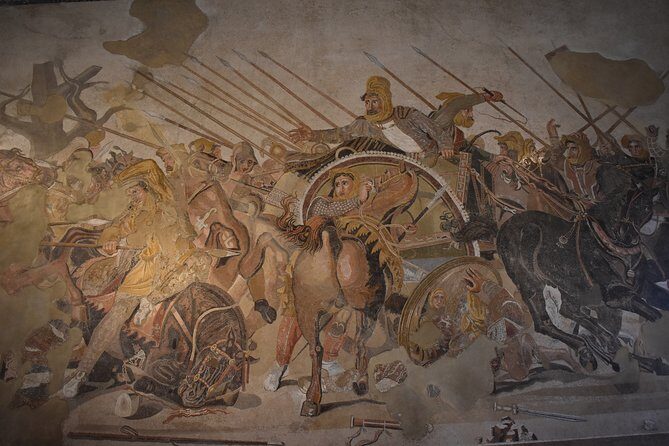
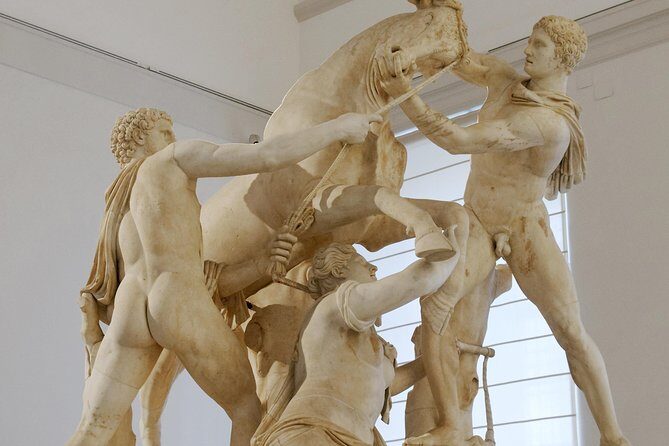
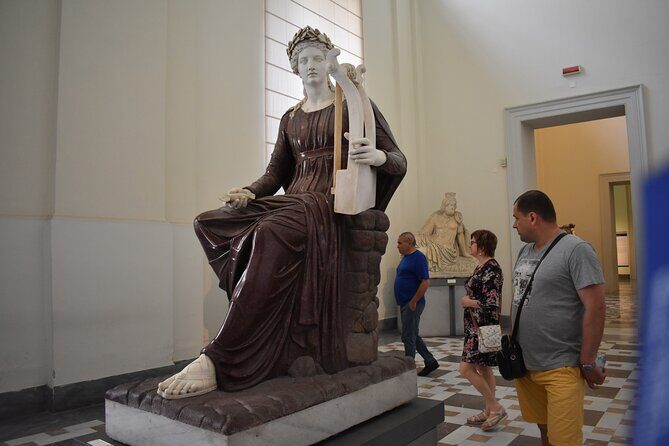
Another major draw is the museum’s collection of Greek-Roman statues, described as a donation from the Farnese family. Statues can feel intimidating if you don’t know what to look for—poses, proportions, attributes, and the cues that tell you why a figure mattered.
With a guide who can talk through construction and use (and who can place objects in context), statues become easier to read. You start noticing details instead of just recognizing that something is “a statue.” This is where the art-historical approach shows up clearly: the tour focuses on how to interpret what you’re seeing, not just what it is.
It also helps if you’ve got a taste for art history. If you like the way a good docent can explain symbolism without turning it into a lecture, this part is likely to feel satisfying rather than rushed.




How the small-group format actually changes the visit
This tour caps at 8 travelers, and that changes how the museum feels. Big tours force a march. Small tours let you breathe. You can ask questions and get answers without the group constantly being held back—or the guide constantly moving forward to catch everyone.
The other practical perk: pacing is flexible. One of the guides mentioned in feedback, Fiorenza, was described as staying extra time to cover highlights while still working within the overall visit structure. That kind of responsiveness matters in a museum, because what you find interesting may not match what a standard script assumes.
And if you’re doing this around Pompeii—either right before or right after—that flexibility helps even more. The guide can connect objects you see in Naples with what you’re likely to encounter in Pompeii. That’s how the museum visit can become preparation rather than a standalone stop.
Price and timing: when this tour is a smart move
Let’s be honest: $223.75 per person is a serious line item. So I’d only book it if you’re the type who benefits from an expert walking you through what to notice.
Here’s where the math leans in your favor:
- Admission tickets included, so you’re not paying extra on arrival
- A professional guide changes the quality of the visit compared to self-guided wandering
- Small group helps you actually hear and ask questions (headsets help too)
- Multiple daily offerings give you options to fit your schedule
If you have one day for Naples and you also want Pompeii, I see this tour as a high-impact choice. It anchors you in the museum context so you don’t just “see Pompeii,” you understand what preservation and excavation mean for the objects you encounter.
If you have more time and you’re okay with less guidance, you could do the museum on your own. But if you want the best return for a limited schedule, guided is where this tour shines.
What kind of traveler should book this?
This tour fits well if you:
- want a structured museum experience without feeling rushed
- care about understanding what you’re seeing (construction, use, context)
- are traveling between Naples and Pompeii and want that storyline to connect
- appreciate art-historical explanations, not just basic facts
It may feel less perfect if you:
- want to spend long hours exploring with no plan
- prefer total freedom to choose every gallery at your own speed
- expect a comprehensive museum sweep—this is a focused route in about two hours
Should you book this Naples Archaeological Museum tour?
Yes, if you want a guided highlights route that helps you read the collection instead of just looking at it. The combination of Pompeii and Herculaneum finds, the reopened Egyptian section, and the museum’s Greek-Roman statues gives you variety without losing focus. Add the small group size and the way guides like Anna, Fiorenza, and Maria are described as organized, flexible, and art-informed, and it becomes easy to justify the price.
I’d say book it when you want maximum learning per hour—and when your schedule is tight enough that you need the guide to steer you toward the best stops.
FAQ
How long is the tour?
The tour runs for about 2 hours.
What is the price per person?
The price is $223.75 per person.
Is the tour offered in English?
Yes, it’s offered in English.
How many people are in the group?
This experience has a maximum of 8 travelers.
What’s included with the tour?
The tour includes a professional guide and admission tickets.
What areas and themes does the museum visit cover?
You’ll focus on rare finds excavated from Pompeii and Herculaneum, and the museum’s broader collections tied to the Naples region, including a reopened Egyptian section and Greek-Roman statues.
Are children allowed to join?
Children can participate, but they must be accompanied by an adult.