REVIEW · NAPLES
Private Herculaneum Tour – Top Experience with Local Guide
Book on Viator →Operated by Leisure Italy · Bookable on Viator
A real Roman town, with real stories. This private Herculaneum tour hits the part of the Naples area that most people rush past. You walk calmer, smaller ruins than Pompeii, but the preservation is wild: frescoes, mosaics, bathhouses, even carbonized everyday life shows up in the rooms and on the shoreline. The private local guide is the main reason it feels human instead of just archaeological.
Two things I love about it are the way the guide gets you oriented fast (you don’t wander) and how the itinerary balances big emotional scenes with elegant houses and daily street details. One possible drawback: the tour involves moderate walking across uneven archaeological areas, so you’ll want comfortable shoes and a day that isn’t overly packed.
If you want a focused day near Naples with meaning, this is a great pick. If you are looking for a super-short stop, plan for at least a couple hours, and know you can choose the optional vineyard lunch if you have extra time.
In This Review
- Key highlights worth your attention
- Herculaneum: Why this ruin feels different than Pompeii
- Starting at the Parco Archeologico di Ercolano and letting the guide set the tone
- The Antiquarium first: get oriented before you walk into the city
- Boat Pavilion: the shoreline in its final hours
- Beach and vaulted boat houses: the scene that makes the tragedy personal
- Elegant waterfront homes: Casa dei Cervi and Casa di Nettuno
- The Palestra: sports, training, and social life rolled into one
- Women’s Baths: Roman engineering you can actually see working
- Street commerce and household faith: Ad Cucumas and the small shrine details
- Sacello degli Augustali: imperial cult in a provincial town
- Casa del Tramezzo di Legno and the House of the Skeleton: privacy and interruption
- Optional Cantina del Vesuvio: trade volcanic ruins for volcanic wine
- Price and what makes it worth the money
- Who this private tour suits best
- Practical tips before you go
- Should you book this Herculaneum private tour?
- FAQ
- How long is the Private Herculaneum Tour?
- Is admission included?
- Is this a private tour?
- Do I need to meet the guide at the park?
- Does the tour include hotel pickup?
- What language is the tour in?
- How much walking is involved?
- Is there an optional lunch?
- Can I bring service animals?
- Can kids travel for free?
- What is the cancellation policy?
Key highlights worth your attention
- Private guide, not a headset tour: You set the pace and can ask questions as you move house to house.
- Herculaneum is smaller and better preserved: It often feels easier to process than Pompeii.
- Boat Pavilion and charred timbers: You see the shoreline story in physical evidence, not just background.
- The beach and boat houses with remains in place: The eruption becomes personal in a hard-to-forget way.
- Top-tier Roman details: From a sea-god mosaic to an ancient wine advertisement on a tavern wall.
- Optional Vesuvius winery lunch: A relaxed way to turn the volcanic theme into something you can taste.
Herculaneum: Why this ruin feels different than Pompeii
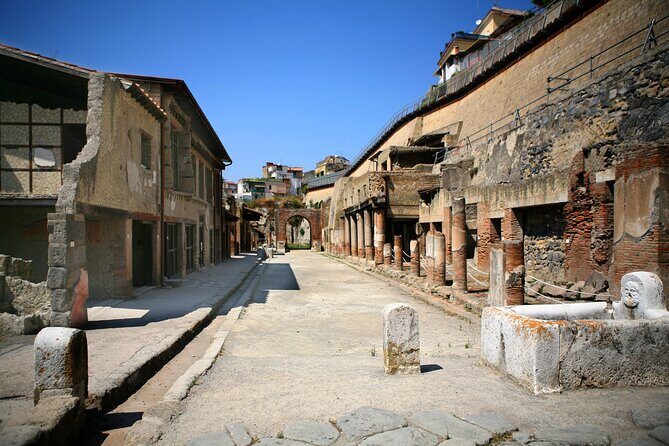
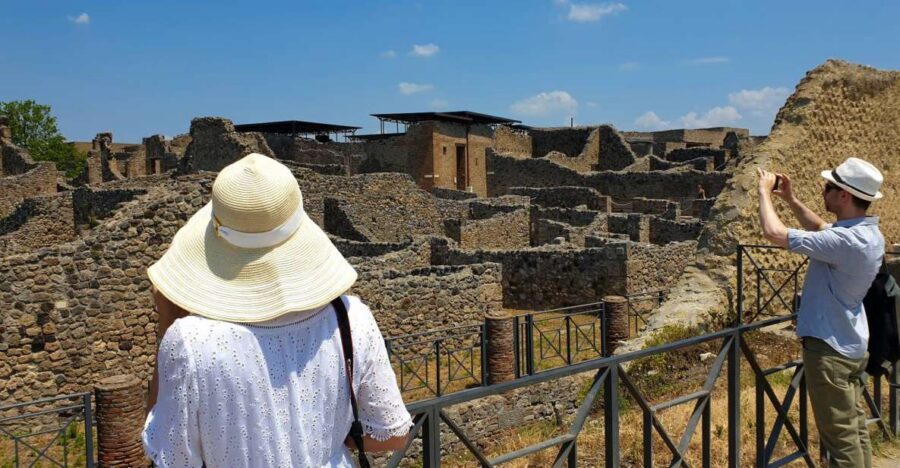
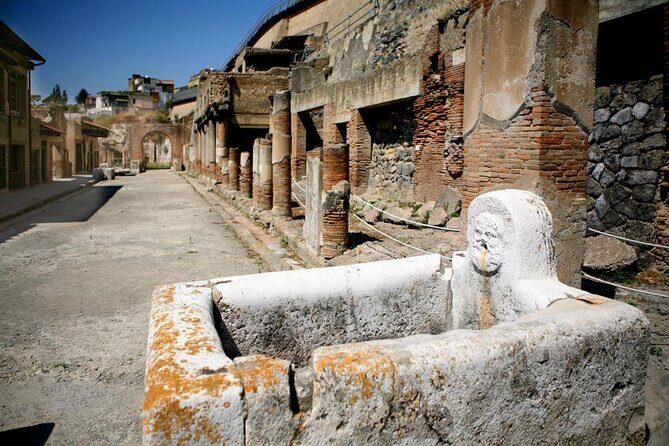
Herculaneum can be the Naples-area history fix that feels more doable. Pompeii gets the hype, sure, but Herculaneum tends to land differently. The site is smaller and quieter, and that matters because you spend less time dodging crowds and more time noticing patterns: how rooms were laid out, how people moved through streets, and how everyday routines show up in the preserved spaces.
What really makes this tour click is that the guide treats the ruins like a place you can understand. You are not just seeing famous spots; you’re following a story from the town’s indoor life to the waterfront. When the guide connects objects to rooms, the site stops being a list of buildings and becomes a functioning town that happens to be frozen in a volcanic moment.
And yes, the emotional parts are intense. The shoreline scenes and remains are not subtle, but that’s also why Herculaneum works. It turns “history” into a real human event.
You can also read our reviews of more guided tours in Naples
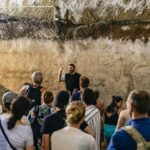

Starting at the Parco Archeologico di Ercolano and letting the guide set the tone
Your tour begins at the Archaeological Park of Herculaneum at Corso Resina 187, in Ercolano. Depending on your pickup choice, you either meet the guide onsite or get driven from Naples or Sorrento. Either way, the start matters: the guide helps you understand what you are looking at before you wander deeper.
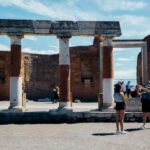
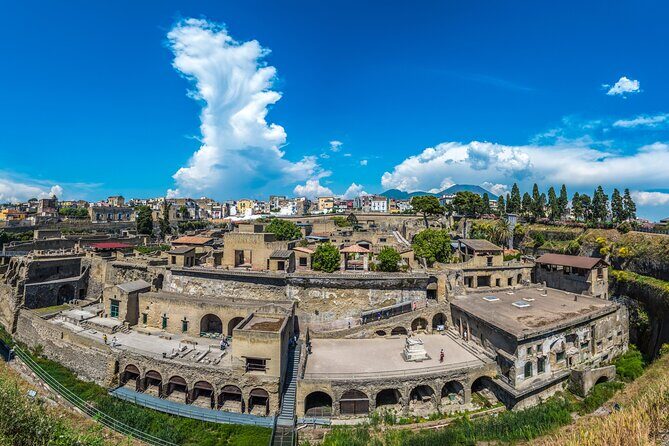
At the Parco Archeologico, you’re walking through a Roman city where many surfaces stayed in place under volcanic material. You can still make out the feel of daily life: street layouts, household spaces, and the kind of decoration that tells you who lived where. Frescoes, mosaics, and shop-like spaces help you picture the town beyond disaster—merchants, bathers, family life, and people doing their jobs right up to the eruption.
The duration you’ll spend at the park varies (the tour is listed at about 2 to 6 hours overall), but the guide approach keeps it from feeling rushed. This is especially useful if you love history but don’t want a full day of only ruins.
The Antiquarium first: get oriented before you walk into the city
One of my favorite moves in this tour is starting with the Antiquarium before you go deeper into the open-air spaces. The small museum acts like your translator. Instead of trying to guess what you’re seeing in ruins, you get original artifacts in hand: household items, statues, inscriptions, and personal belongings.
This orientation step is practical. When you later see rooms and structural fragments in the park, you understand what those objects mean in daily life. The guide ties the pieces together so that charred, preserved materials don’t feel random. It becomes easier to see what this town valued, how it worked, and what people carried with them.
If you tend to get overwhelmed in big archaeological parks, this is the part that helps your brain click into place.
Boat Pavilion: the shoreline in its final hours
Then comes the Boat Pavilion, one of Herculaneum’s most striking stops. Here you get carbonized remains of ancient boats and waterfront structures, preserved under volcanic debris. The impact is immediate because you’re not just looking at buildings; you’re looking at transport, work, and trade.
This part also gives you the “why” behind the town’s seaside life. Fishermen, merchants, and officials would have depended on that shoreline. When the guide explains how archaeologists use these preserved vessels to reconstruct activity near the water, the maritime side of Herculaneum becomes concrete.
It’s one of those locations where science and storytelling overlap. Even if you only remember a few details afterward, you’re likely to remember the boats.
Beach and vaulted boat houses: the scene that makes the tragedy personal
Next, you reach the ancient beach area, guided to one of the most sobering spots in the park. Archaeologists uncovered the remains of hundreds of people who gathered at the water’s edge, hoping to be rescued from the sea.
Seeing remains in place changes the tone of the whole day. It’s not the same as looking at distant disaster photos in a book. You’re in the original setting, and you can feel the timeline the eruption created: how quickly the pyroclastic surge overtook the waterfront.
Also, this stop helps you understand the town’s geography. You begin to grasp how close Herculaneum was to the sea and how the waterfront shaped daily life before the eruption. If you want your visit to stay grounded in what people faced, this is essential.
You can also read our reviews of more private tours in Naples




Elegant waterfront homes: Casa dei Cervi and Casa di Nettuno
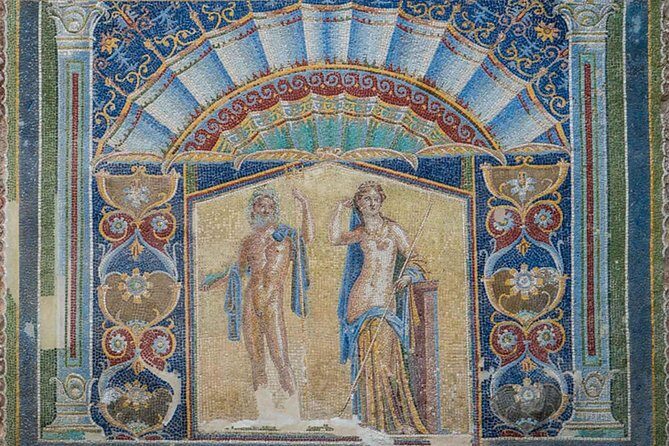
After the waterfront tragedy, the tour shifts gears to the quieter power of elite domestic life. Two of the standout houses are right near the waterfront zone: Casa dei Cervi and Casa di Nettuno e Anfitrite.
At Casa dei Cervi, your guide shows you a luxurious waterfront home with marble floors, colonnaded garden areas, and rooms that once held fine frescoes. This is where you can see social status in architecture. It’s not just space—it’s the kind of space wealthy residents expected to have.
The house takes its name from marble statues of stags being attacked by hunting dogs, found in the garden and shown separately. The guide’s job here is to connect art to the setting so you understand why that theme mattered to a household.
Then you move to Casa di Nettuno e Anfitrite, where the centerpiece is a dazzling wall mosaic. The sea-god Neptune and nymph Amphitrite appear with marine motifs, rendered in tiny glass tesserae. Even after two thousand years, the colors and detail can still register as impressive.
This stop is valuable because it shows how Romans blended prestige into everyday space. Food, hosting, and decoration weren’t separate from routine. Your guide will point out how decorative rooms and features relate to water and garden traces.
The Palestra: sports, training, and social life rolled into one
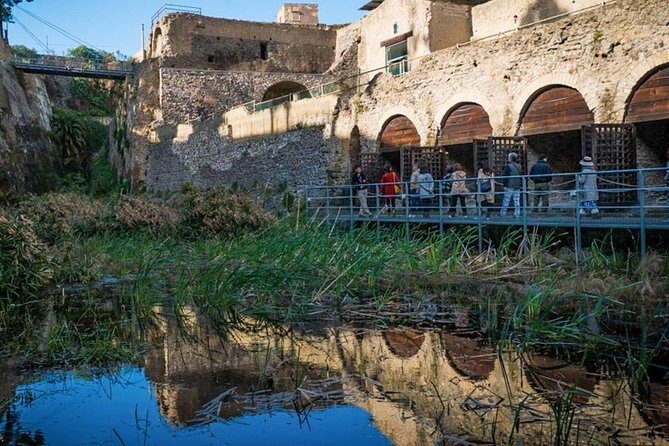
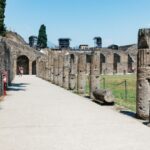
From luxury homes, you go to the Palestra, a Roman sports and social club. The structure includes an open courtyard framed by porticoes, and the scale tells you this wasn’t a casual exercise spot.
As you walk through the space, the guide helps you picture young men training, wrestling, running drills, and then relaxing in the shade after. There’s also a civic angle here. Roman sports spaces weren’t only for fitness; they were identity and community.
This stop is a good pressure release after the emotional beach section. It reminds you that Herculaneum wasn’t only about disaster or wealth—it was also about routine and social rhythms.
Women’s Baths: Roman engineering you can actually see working
The Women’s Baths are one of the best places to understand Roman engineering in real life. You move from changing areas into heated spaces, and the clever design becomes obvious: hollow floors and wall pipes once carried hot air to warm rooms.
What I find most useful is how the guide connects function to comfort and social space. The baths had marble benches, mosaic floors, and refined decoration with geometric patterns and marine themes. This isn’t a gym or a steam room only—it’s also conversation and relaxation, hinted at by the beauty of the setting.
If you like when architecture explains behavior, this stop will land hard.
Street commerce and household faith: Ad Cucumas and the small shrine details
Then you get the kind of evidence that makes you feel like you’re walking through the same everyday concerns as the ancients. One standout is Ad Cucumas, an advertisement painted directly on a wall of a tavern promoting wine by the jug. The text lists prices for different quantities, still legible after all this time.
It’s a small detail, but it changes your mental map. You start noticing how commerce shaped street life—selling, bargaining, and grabbing attention long before paper menus or app coupons.
Another place your guide helps with is the Casa del Bicentenario, where vivid wall paintings, wooden partitions, marble thresholds, and a small shrine with frescoes show how religion and domestic life intertwined. Excavations here also found carbonized wooden writing tablets connected to property and inheritance disputes, adding a legal-civic layer that many people don’t expect to see in a town like this.
Sacello degli Augustali: imperial cult in a provincial town
At the Sacello degli Augustali, the tour adds a political and religious layer. This small temple-like building was dedicated to the imperial cult, where local elites honored the emperor as a living symbol of Rome’s power.
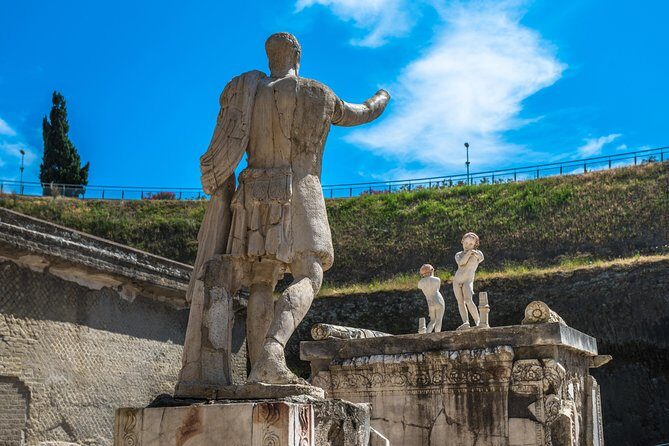
Inside, you can still make out fragments of frescoes pairing Hercules with members of the imperial family. The meaning is clear: local identity and imperial propaganda got linked together in a way that reinforced loyalty and status.
This stop is quietly important because it explains why Herculaneum felt connected to the wider Roman system. It wasn’t off on a side street of the empire.
Casa del Tramezzo di Legno and the House of the Skeleton: privacy and interruption
Two of the most memorable parts of the visit are domestic details that make Roman life feel close.
At Casa del Tramezzo di Legno, you see an exceptionally rare preserved wooden partition wall. It once separated a reception area from more private quarters. Walking through, you can sense social choreography in the room layout—where guests were welcomed, where business may have happened, and where family life retreated from view.
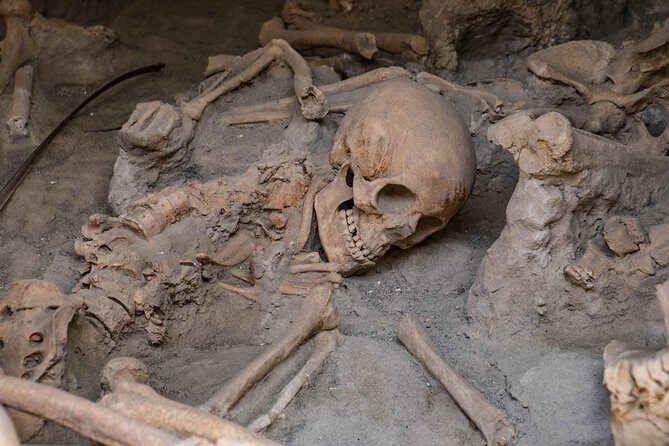
Then comes Casa dello Scheletro, the House of the Skeleton. This is one of the most powerful spots in the park. As you enter, you’re confronted with skeletal remains of a resident discovered there, interrupted suddenly and preserved by the eruption. Around the bones, architectural fragments and room divisions help you sense the rhythm of daily life immediately before catastrophe.
This is where the tour earns its emotional weight without turning it into spectacle. The guide’s role is key: they help you read the space with respect, so it feels like a person’s home rather than a label on a map.
Optional Cantina del Vesuvio: trade volcanic ruins for volcanic wine
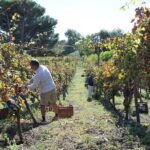
If you want to extend the day, you can add a visit to Cantina del Vesuvio, a family-run winery on the slopes of Mount Vesuvius. This stop lasts about 1 hour 30 minutes and includes a vineyard stroll with an enologist who explains how volcanic soils shape grape growth.
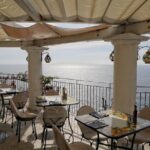
You’ll learn how the terroir influences native varietals used to produce Lacryma Christi wine. After that, there’s a relaxed lunch and tasting with local dishes and the estate’s bottles. From the terrace, you get sweeping views over the Bay of Naples toward Vesuvius, which ties the volcanic theme together in a way that feels more pleasant than just looking at stone.
This optional add-on is a solid choice if you want your day to end with comfort and flavor. Just note you’ll spend more time away from Herculaneum if you add it.
Price and what makes it worth the money
The price is $142.82 per person, and what you’re paying for is not just entry into ruins. You’re paying for a private guide and the way the visit is structured so you don’t lose time guessing.
Admission is included for the Herculaneum portion, and the itinerary is designed to move through major interpretive spaces—museum orientation, maritime evidence, elite homes, everyday commerce, and the domestic sites where preservation is unusually vivid. That matters because guide time at a smaller site often feels more efficient than squeezing big-ticket stops into a tight schedule.
Pickup is optional. If you choose it, you can be picked up anywhere in Naples or Sorrento. That can save you time and stress, especially if you don’t want to fight local transport logistics at the start of your day.
Value check: if you care about understanding what you’re seeing, a private guide at Herculaneum can be money well spent. If you only want the quickest overview possible, you might feel the cost more than the time you get.
Who this private tour suits best
This tour is a great fit if you:
- Want a focused Herculaneum visit rather than cramming Pompeii and everything else into one day
- Like small-town ruins where preservation lets you see everyday life
- Enjoy guided interpretation, especially for mosaics, bathhouses, and domestic architecture
- Want the option to add a relaxed Vesuvius winery lunch at the end
It may be less ideal if you:
- Have limited walking tolerance and can’t handle moderate terrain
- Are looking for a very short, low-effort stop
Practical tips before you go
Wear comfortable shoes—this is a site where you’ll be on uneven ground. If you get cold easily, consider a light layer even in warmer months, because some areas can feel cooler and shade varies a lot through the ruins.
If you’re choosing pickup, decide early whether you want the convenience of being driven from Naples or Sorrento. It can shape the entire day by removing transit friction.
And if you add Cantina del Vesuvio, plan your timing so you’re not rushing back. The winery portion is meant to feel relaxed, not like a sprint.
Should you book this Herculaneum private tour?
Yes—if your goal is to understand Herculaneum, not just photograph it. The private guide pacing is the difference between seeing buildings and actually getting it. The combination of the Antiquarium for orientation, the Boat Pavilion and beach for context and emotion, and the houses where Roman daily life shows up in preserved rooms is a smart way to spend a Naples-area day.
I’d book this especially if you’re already thinking about Pompeii and want a calmer complement. Herculaneum rewards attention, and the structure here helps you give it without feeling overwhelmed.
If you want, tell me your travel dates and whether you’re staying in Naples, Sorrento, or farther away. I can help you map the best timing for pickup and whether the Vesuvius winery add-on fits your schedule.
FAQ
How long is the Private Herculaneum Tour?
It lasts about 2 to 6 hours, depending on the option you choose.
Is admission included?
Yes. An admission ticket for the Herculaneum park is included in the tour.
Is this a private tour?
Yes. Only your group will participate.
Do I need to meet the guide at the park?
If you choose the walking tour only option, you meet the guide at the archaeological site of Herculaneum. If you select the pickup option, you can be picked up from Naples or Sorrento.
Does the tour include hotel pickup?
There is an optional pickup. Private transportation can pick you up anywhere in Naples or Sorrento.
What language is the tour in?
The tour is offered in English.
How much walking is involved?
The tour involves a moderate amount of walking, so it’s best if you have moderate physical fitness and wear comfortable shoes.
Is there an optional lunch?
Yes. You can add an optional vineyard lunch and tasting at Cantina del Vesuvio.
Can I bring service animals?
Yes. Service animals are allowed.
Can kids travel for free?
People under 18 enter for free with a valid ID.
What is the cancellation policy?
You can cancel for free up to 24 hours in advance for a full refund. Changes made less than 24 hours before the start time aren’t accepted.