REVIEW · NAPLES
Naples: San Gaudioso Catacombs Guided Tour
Book on GetYourGuide →Operated by Catacombe di Napoli · Bookable on GetYourGuide
St. Gaudiosus waits underground. The San Gaudioso Catacombs guided tour is a straight shot into early Christian burial life beneath Naples, with frescoes and tombs that feel eerie in a real, historical way. You’ll also get a quick look at the church above ground, so the whole stop makes more sense than just staring at dark tunnels.
Two things I really like: the storytelling. Guides like Nello, Antonella, and Claudia tend to make the rituals and artwork click, not just recite dates. And I like the value angle: this visit doesn’t feel like a random tourist detour. The money supports projects in the Sanità area, including work connected to Don Antonio Loffredo and the community regeneration effort people refer to as La Paranza.
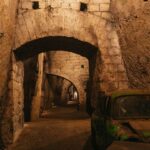
One consideration: this is an underground site, and some passages can feel tight. If you’re claustrophobic or have mobility concerns, you might find parts of the catacombs challenging.
In This Review
- Key things worth knowing before you go
- San Gaudioso Catacombs: St. Gaudiosus and the layers under Naples
- How the 45-minute guided route works (and why the guide matters)
- Frescoes, mosaics, and the early Christian motifs you’ll spot
- The 17th-century noble burials: skulls, ambulatory walls, and power
- Santa Maria della Sanità: why the church stop isn’t a throwaway
- Naples’ Sanità neighborhood impact: why this tour feels rooted
- Free entry to San Gennaro catacombs: stretch your money
- Price, timing, and who should book this tour
- Should you book the Naples San Gaudioso guided tour?
- FAQ
- How long is the San Gaudioso Catacombs guided tour?
- What’s included besides the catacombs?
- Do I get free entry to another catacomb?
- Where do I meet for the tour?
- When does the ticket office open, and when should I arrive?
- What languages are the guides available in?
- Is the ticket valid for any time I choose?
- Is the tour suitable if I’m claustrophobic or have mobility issues?
- What are my options for cancellation and payment?
Key things worth knowing before you go
- St. Gaudiosus (451–453 AD) drives the story of how the cemetery expanded and took on deeper meaning
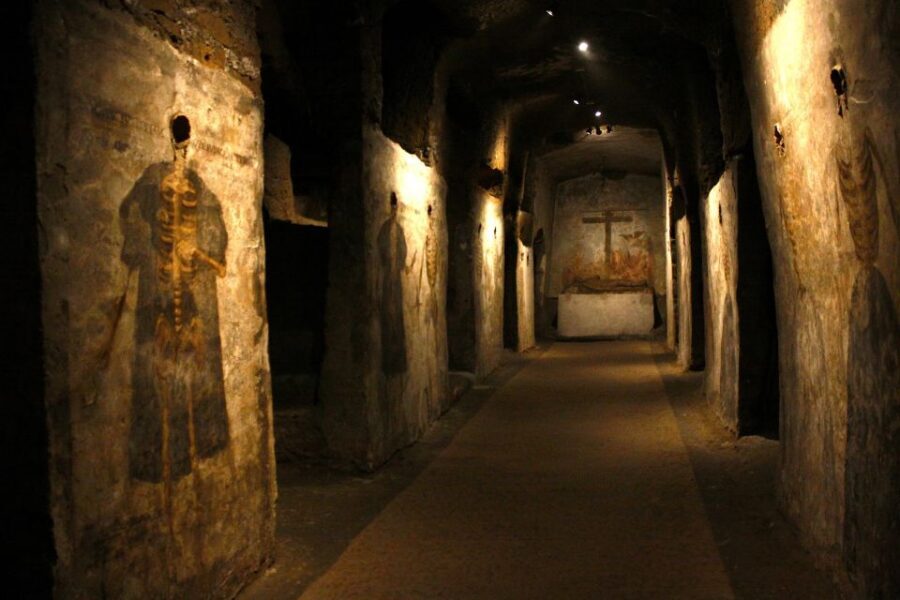
- 5th- and 6th-century frescoes and mosaics show early Christian motifs in a way you can actually see up close
- 17th-century noble burials bring a more elaborate, later chapter to the catacombs
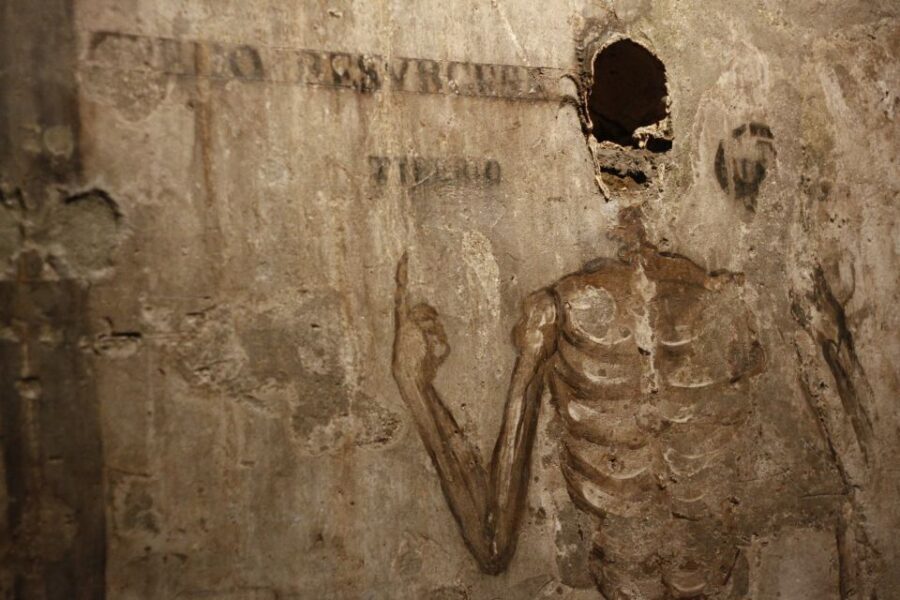
- Skulls displayed on walls (ambulatory area) turn memento mori into physical architecture
- Giovanni Balducci’s burial choice adds a human twist to the aristocratic section
- The same ticket unlocks San Gennaro catacombs free entry later, which stretches your value
San Gaudioso Catacombs: St. Gaudiosus and the layers under Naples
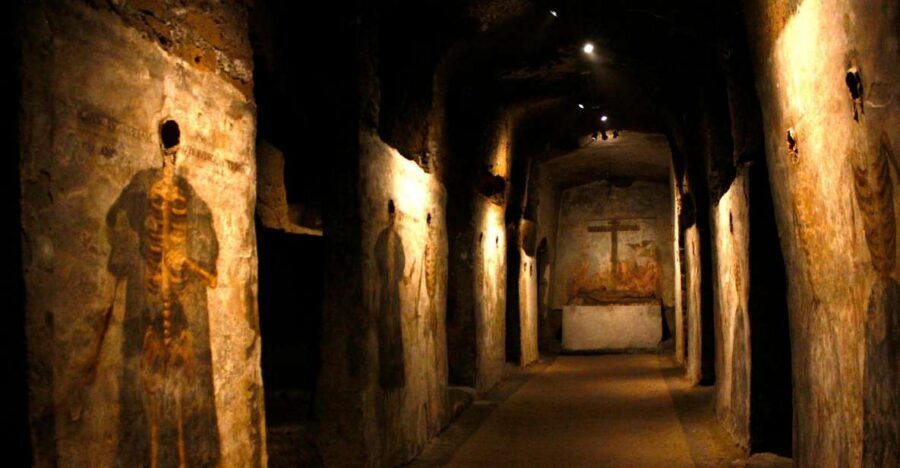
Naples has always been a city of layers: old streets, old churches, and old stories pressed into the ground. San Gaudioso is one of the places where that layering becomes visible. You’re entering an early Christian cemetery that grew in importance after the burial of St. Gaudiosus, a North African bishop, in the mid-5th century.
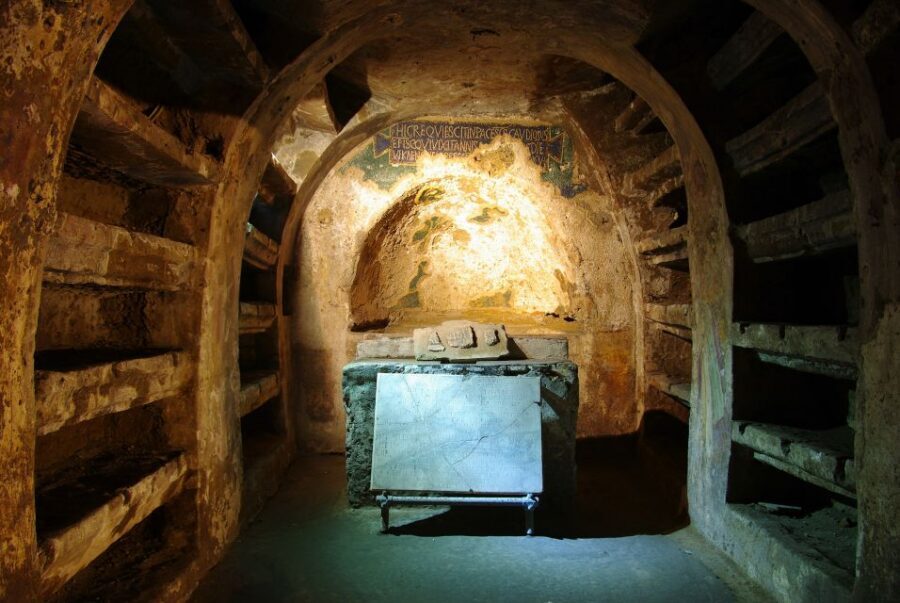
What makes this site more than a spooky stroll is the way it keeps changing. You’ll see elements connected to the earliest phase—like the saint’s tomb and 5th- and 6th-century frescoes and mosaics—then later additions that reshape the space. In the 17th century, the catacombs resumed a burial function for higher-status families, and that later chapter comes through in the design and decoration.
If you’re into symbolism, this is a helpful stop. Early Christian burial art isn’t just decoration. It’s a visual language for hope, identity, and memory—placed where people already lived with death as a constant reality.
You can also read our reviews of more guided tours in Naples


How the 45-minute guided route works (and why the guide matters)
This is a 45-minute guided tour focused on the catacombs and the Basilica di Santa Maria della Sanità. The time is short enough that you stay moving, but long enough for your guide to connect the dots between Christian burial practices and what you’re seeing on the walls.
The guides I’m seeing highlighted by name—like Nello, Emanuele, Lisa, Valentina, Flavia, and Ricardo—share a common theme: they don’t treat it like a museum script. They tend to explain what you’re looking at, then pause so you can ask questions. Several people also mention small groups, which usually helps you hear the guide clearly and not feel lost in the crowd.
Practical tip: plan your pace. Catacombs aren’t big, bright spaces. Expect steps, tight corners, and a steady flow of viewing spots. If you arrive ready to listen, you’ll get more out of the visit than if you try to read everything solo.
Frescoes, mosaics, and the early Christian motifs you’ll spot
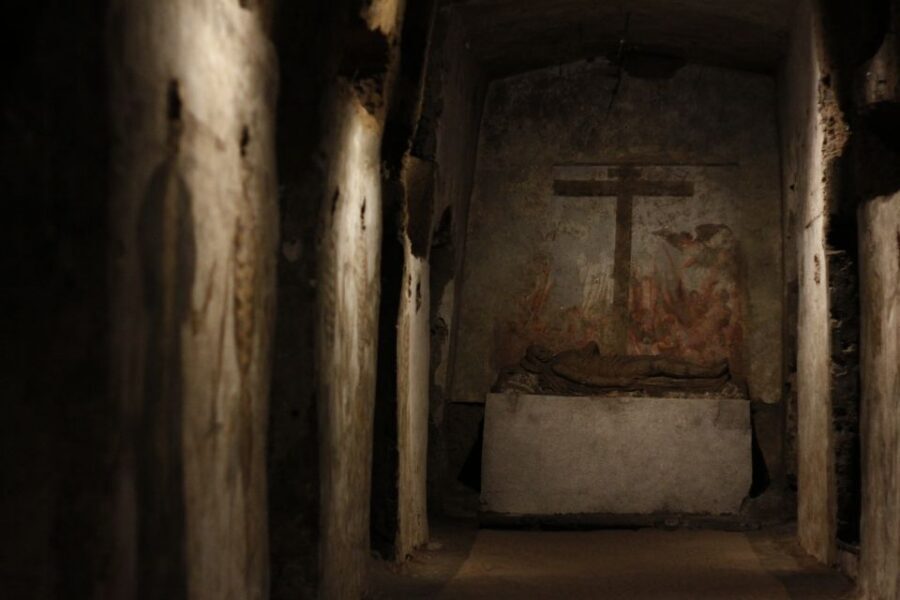
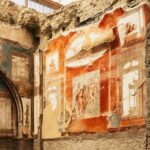
One of the best parts of the San Gaudioso visit is that the artistry isn’t random. Your guide points out 5th- and 6th-century frescoes and mosaics with typical early Christian motifs, so you start recognizing patterns instead of just seeing paint.
Look for the way images and symbols work together: they guide your eye and give meaning to the space. Even if you don’t know the theology, the visual system helps you understand why these walls mattered to the people using them.
Also, don’t skip the saint’s tomb when it comes up. The site’s identity is tied to St. Gaudiosus, and hearing how the cemetery expanded around that moment makes the rest feel more coherent. You’re not just walking through an old underground room—you’re tracing a lived history.
The 17th-century noble burials: skulls, ambulatory walls, and power
The catacombs don’t stop at early Christianity. The 17th-century section is where the mood shifts. The graves reserved for nobles are a later use of the same underground space, when the cemetery resumed its role as a burial site for people with means.
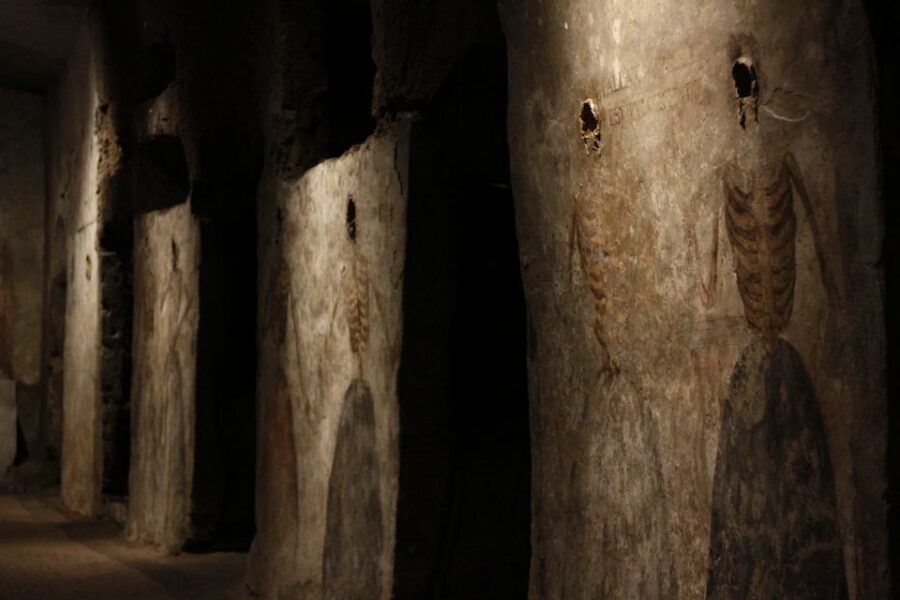
This is where you’ll see skulls placed on display in the walls of the ambulatory area. It can feel unsettling at first, but the idea is older than shock value. In many Christian contexts, skull imagery acts as a reminder of mortality—an emotional and spiritual checkpoint built into the physical environment.
You’ll also hear names and stories that humanize the aristocratic chapter. One standout detail tied to the nobles’ area is Giovanni Balducci, described as someone who refused payment to be buried among Naples’ aristocrats. Whether you take that as legend or hard fact, the story adds a layer of personal conviction to what might otherwise be only decorative symbolism.
Another detail you may hear from your guide: the Dominicans are often connected with how the organized burial spaces were arranged in this later phase. That kind of context matters. It turns the underground “decor” into a window on how institutions shaped burial culture.
Santa Maria della Sanità: why the church stop isn’t a throwaway
Most people come for the tunnels, which is fair. But the Basilica di Santa Maria della Sanità visit helps you put the catacombs in perspective. The contrast is immediate: cool, dim underground passages versus a church space where the meaning of the burial rites and the saint’s role land more clearly.
The church also adds local texture. Some guests specifically mention beautiful presèpi (Nativity displays) during their visit, which is a nice reminder that Naples’ religious life didn’t end underground. It keeps evolving above ground, too.
This stop can also be a breather. If you’re trying to pace the day, the church gives you a place to slow down, reset your eyes, and understand what you just learned before moving to your next Naples plan.




Naples’ Sanità neighborhood impact: why this tour feels rooted
There’s a difference between a tourist attraction and something tied to a living neighborhood. This tour has that neighborhood connection built in, and guides often bring it up in the conversation.
You’ll see repeated praise for how the tour supports local efforts in the Sanità area. Mentions include background on Don Antonio Loffredo, support for youth, and cultural development tied to the district. People also reference La Paranza, a local regeneration project connected with broader community change.
Even if you don’t care about the nonprofit angle, it still affects the tour experience. When guides talk about community work alongside burial rites and art, the site feels less like an isolated “attraction” and more like part of a place with ongoing stories.
That’s also why the ticket feels better value than a plain catacombs entry. It’s still your choice, but you’re supporting the people who keep the doors open.
Free entry to San Gennaro catacombs: stretch your money
Here’s the value move that turns this from a one-off visit into a mini two-stop plan. Included with your ticket is free entry to the Catacombs of San Gennaro, valid for 12 months.
Why that matters: Naples catacombs are different from each other. When you return later, you can compare what you see—without paying full price twice right away. Several people specifically mention using the voucher for San Gennaro after the San Gaudioso visit and finding it worth the follow-up.
If you’re short on time in Naples, consider this simple strategy: do San Gaudioso first, then book San Gennaro later when you’re not rushing. The second visit tends to feel more personal because you know what to look for now.
Price, timing, and who should book this tour
At $15 per person, this tour is priced like a quick cultural ticket, not a half-day production. And you’re getting more than entry: you get a live guide, a catacombs experience, a church visit, plus the San Gennaro voucher.
The 45 minutes underground also makes it realistic for people who don’t want a long, slow tour. You can fit it into a day of Naples sightseeing without turning your schedule upside down.
Who it fits best:
- First-time Naples visitors who want a strong “under the city” experience fast
- History and religious art lovers who like symbolism and stories
- People comfortable with underground spaces and tight viewing areas
- Anyone who wants an excellent guide-driven experience instead of reading everything solo
Who might skip it:
- If you’re very sensitive to tight spaces or have mobility limits, you may find parts difficult
- If you hate guided tours and prefer total self-direction, you might want something else (this experience is guide-led by design)
- If you’re expecting a long wandering visit, note that the guided catacombs portion is short
One more practical point: the ticket office opens at 9:30 AM, and you’ll need to be there early—your ticket is tied to a specific day and time. Arrive about 15 minutes before your booked time so you don’t risk missing your group.
Should you book the Naples San Gaudioso guided tour?
Yes, if you want a compact but story-rich Naples experience. The combination of St. Gaudiosus, early Christian frescoes and mosaics, and the more dramatic 17th-century skull imagery gives you a full range of what makes these catacombs memorable. Add in the Basilica di Santa Maria della Sanità stop and the free San Gennaro entry, and it’s a strong value.
I’d skip or reconsider if underground spaces make you nervous, or if you’re looking for a long, unguided walk. Otherwise, this is exactly the kind of guided visit that helps you leave with real understanding, not just photos.
FAQ
How long is the San Gaudioso Catacombs guided tour?
The guided tour takes about 45 minutes.
What’s included besides the catacombs?
The tour includes a visit with a guide to the Catacombs of San Gaudioso and also includes the Basilica di Santa Maria della Sanità.
Do I get free entry to another catacomb?
Yes. Your ticket includes free entry to the Catacombs of San Gennaro, valid for 12 months.
Where do I meet for the tour?
Meet at the ticket office of the Catacombs of San Gaudioso.
When does the ticket office open, and when should I arrive?
The ticket office opens at 9:30 AM. You need to arrive about 15 minutes before your booked tour time.
What languages are the guides available in?
Live guides are available in English and Italian.
Is the ticket valid for any time I choose?
No. The ticket is valid only for the day and time purchased.
Is the tour suitable if I’m claustrophobic or have mobility issues?
Some guests note that parts of the catacombs may be difficult if you are claustrophobic or have mobility issues.
What are my options for cancellation and payment?
You can cancel for a full refund up to 24 hours in advance. There’s also a reserve now & pay later option, so you can book without paying right away.