REVIEW · ERCOLANO
Herculaneum: Entrance tickets + audioguide
Book on GetYourGuide →Operated by Tempio Transfer by Luigi · Bookable on GetYourGuide
Herculaneum feels like a time capsule.
This self-guided package lets you walk through a Roman town preserved after the 79 AD eruption of Mount Vesuvius, with an audioguide that explains what you’re seeing as you move through the streets and alleys. I like that it’s at your pace, and I also like that you get a map to help you find your way without turning it into a scavenger hunt. One thing to think about: you’ll need to have the right setup for audio since earphones are not included.
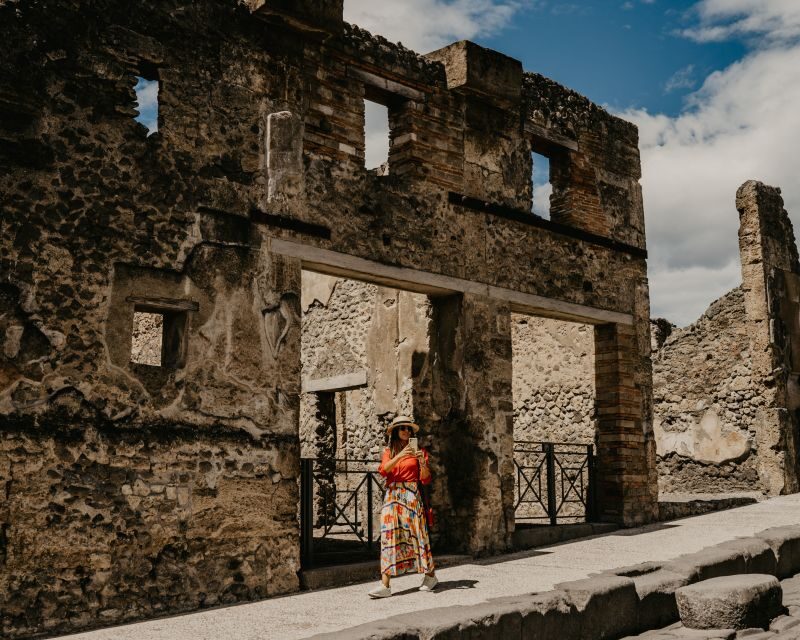
The two moments I’d plan for are the well-preserved houses and villas and the chance to notice how daily life worked in an ancient Roman town. In many ruins, you just see walls. Here, you get enough structure and detail to understand the routine behind them.
The main drawback is simple: this is self-guided, not a guided tour. If you really want a person to answer questions on the spot, you may wish you had a live guide instead. And if you’re relying on last-minute plans, know that the audioguide device has to be returned before office closing time.
In This Review
- Key highlights
- Herculaneum in about 3 hours: the value of audio on-site
- Where you pick up the audioguide: Entrance + Audioguide Desk
- How a self-guided visit actually works inside the ruins
- What you’ll see: houses, villas, and mosaics that feel lived-in
- Positano and Ravello mentions: what to double-check before you go
- When the audioguide is most useful (and when it’s not)
- Price and value: what $41 buys you (and why it can be worth it)
- Who this works best for (and who might want a different option)
- What to bring: ID, shoes, and one small audio detail
- Should you book? My honest take
- FAQ
- Where is the meeting point for picking up the audioguide?
- How long does the Herculaneum visit take?
- What’s included with this experience?
- Are earphones included?
- What ID do I need to hire the audioguide?
- Can I skip the ticket line?
- Does the visit happen rain or shine?
- Do I have to return the audioguide device?
- Is free cancellation available?
Key highlights
- Skip the ticket line and start your visit faster
- Audioguide + map means you can navigate the alleys without guessing
- Roman everyday life comes through in houses, villas, and mosaics
- Self-guided pacing lets you linger where you care most
- Rain or shine keeps your plan steady
Herculaneum in about 3 hours: the value of audio on-site
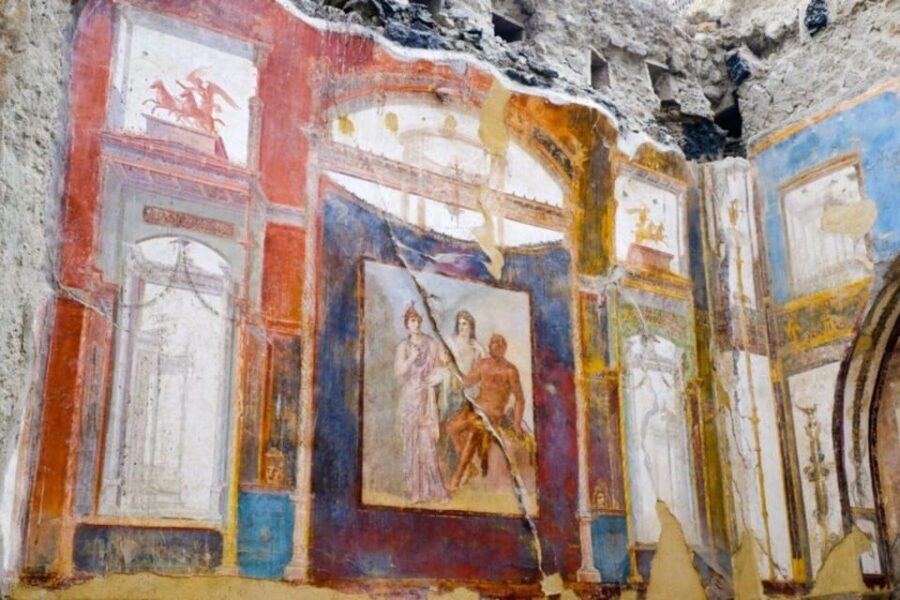
This ticket-and-audioguide setup is built for the sweet spot of ruins touring: long enough to make it feel real, short enough that you won’t get fried by museum fatigue.
In Herculaneum, the big challenge is usually orientation. The site is a maze of streets and corners, and it’s easy to walk past the most interesting bits if you don’t have context. That’s where the audioguide earns its keep. As you move, you’re not just seeing stone. You’re getting explanations tied to what’s around you, so the place starts to make sense.
Also, Herculaneum isn’t just impressive because it’s old. It’s impressive because it was buried, not just weathered. The 79 AD eruption of Mount Vesuvius preserved an entire town—so you’re looking at a living environment from ancient Rome, not a scattered set of monuments. That makes the experience feel unusually direct.
If you’re the type who likes to understand what you’re looking at (even casually), this format is a good match.
You can also read our reviews of more tours and experiences in Ercolano
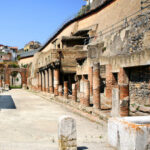


Where you pick up the audioguide: Entrance + Audioguide Desk
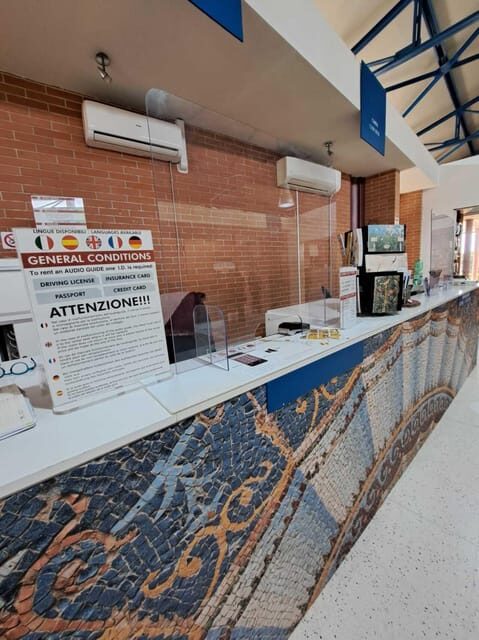
The practical part matters here. You don’t meet at some random office far away. You go to the Entrance and look for the Audioguide Desk.
Why that matters: you’ll waste less time trying to decode directions once you arrive. The package also says you can skip the ticket line, so using that early window effectively can turn a stressful arrival into a smooth start.
Plan to arrive with a clear head and shoes ready for uneven ground. Comfortable shoes are not a suggestion at Herculaneum—you’ll thank yourself after you’ve spent an hour walking through lanes and slopes.
How a self-guided visit actually works inside the ruins
Here’s the core idea: the visit is self-guided, so you explore at your own pace within opening hours. That means there’s no group forcing you forward on a tight leash. If you’re someone who likes to stop often—great. If you tend to sprint through places—this format still works, but you’ll want to slow down for the best details.
You’ll get a map, and the audioguide is paired with it so you can keep your bearings. As you follow the route, the audio helps you connect each area with what it was in everyday Roman life.
One helpful mindset: treat it less like a checklist and more like following a story. You’re moving through a town—houses, villas, rooms and surfaces—so listen as you reach a cluster of features. Then, take a breath and look again without the audio. You’ll often notice more on the second glance.
What you’ll see: houses, villas, and mosaics that feel lived-in
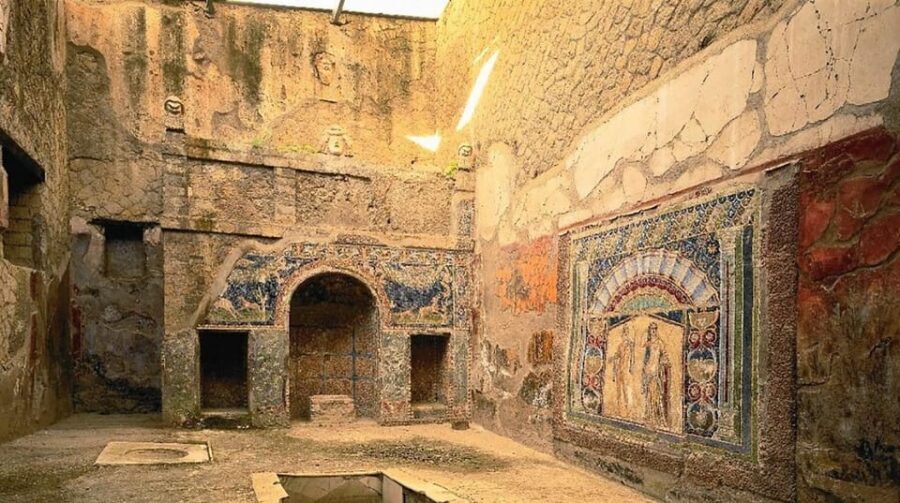
The ticket description focuses on the essentials you should expect at Herculaneum: well-preserved houses, villas, and mosaics. That combination is powerful.
- Houses and villas: These aren’t just architectural leftovers. They help you understand how people organized space—where they lived, how rooms related to each other, and how a home functioned as a system.
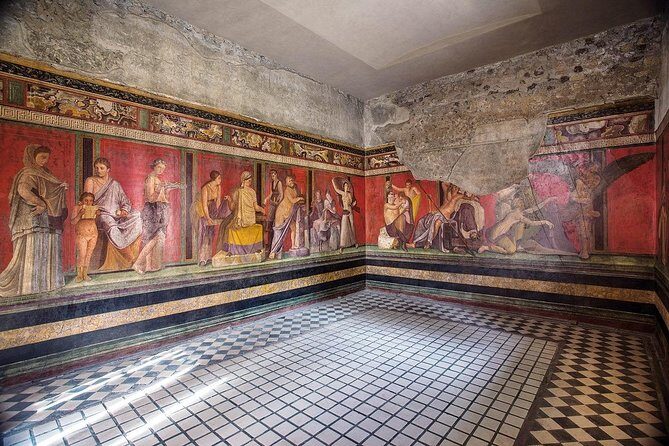
- Mosaics: When mosaics are preserved, they do more than decorate. They show taste, wealth, and the way the floor was treated as part of the whole room experience.
- Streets and alleys: These are what make it feel like a town. The connections between spaces are just as important as the individual buildings.
You’ll also be walking through remnants of Roman daily life in a way that feels almost conversational. The descriptions and audio are the difference between seeing “old building parts” and understanding daily routines.
If you’re a history person, you’ll enjoy the storyline. If you’re not, you’ll still get something: a sense of how normal it all used to be.
Positano and Ravello mentions: what to double-check before you go
One confusing part of the experience info is that the highlights name Positano narrow streets and artisan workshops, and also Ravello gardens and the Terrace of Infinity.
But the practical details you get with this package—entry ticket, audioguide, and a map—are for Herculaneum itself. In other words, your time will be spent in the archaeological park.
So if you’re hoping for Positano or Ravello as part of this specific experience, I’d treat that as a red flag for confusion and double-check what’s actually included with your booking. Don’t arrive counting on extra stops that aren’t supported by the clear “what to expect” details.
The good news: even if those towns are not part of your day, Herculaneum is still a strong destination on its own.



When the audioguide is most useful (and when it’s not)
The audioguide is strongest when you need context fast. If you arrive and immediately start wandering, you’ll still be able to find your way thanks to the map. Then the audio turns each area into something you can understand.
It’s also helpful when the site layout makes you second-guess yourself. Roman sites can be tricky—walls don’t always mean what your brain first thinks they mean. The audio fills in that gap.
But there’s one practical caution: audio equipment has rules. Devices must be returned before office closing time, and you’re responsible if the device is lost or damaged. That doesn’t mean it’s stressful. It just means you should treat the audioguide like a rental car key: not priceless, but not disposable either.
Price and value: what $41 buys you (and why it can be worth it)
At about $41 per person, you’re paying for three things:
- entry to Herculaneum
- an audioguide
- a map to navigate the site
For a self-guided ruin experience, that’s a pretty clean deal. You’re not paying extra for a group schedule, but you are paying for interpretation you’d otherwise miss or have to bring from a phone app.
The biggest “value” lever here is time. With skip-the-line entry, you start earlier and lose less energy at the beginning. For a 3-hour visit, shaving off even 20–30 minutes can be the difference between “we saw highlights” and “we got the whole story arc.”
Is it expensive? It depends on your style. If you hate audio and want only silence and wandering, you might feel like you paid for something you won’t use. If you like explanations while walking, this package matches that style really well.
Given the mix of feedback and the nature of the experience, I’d treat it as a strong buy for independent explorers—especially if you’re comfortable moving at your own rhythm.
Who this works best for (and who might want a different option)
This experience fits best if you:
- want independent exploring without a fixed tour pacing
- like learning as you go
- can handle 3 hours of walking through a historic park
- don’t mind managing a rental audioguide device
It may be less ideal if you:
- want a live guide to answer questions
- need full hand-holding for navigation
- plan to stop and start frequently in ways that would make device logistics annoying
One more reality check: the experience takes place rain or shine. So if you’re visiting when weather is unpredictable, you’ll want a plan for comfortable walking in wet conditions.
What to bring: ID, shoes, and one small audio detail
You’ll want the basics:
- a passport or ID card (driving licence also works per the audioguide requirement)
- comfortable shoes
- comfortable clothes
For the audioguide specifically, the info is clear: you need a valid passport, identity card, or driving licence to hire the audioguide device. Don’t show up without it and expect to improvise.
Also note: hearing phones (earphones) are not included. That’s an easy thing to forget. I’d make sure you have your own earphones ready so you don’t lose time at the desk trying to solve a small problem.
Should you book? My honest take
Book this if you want a well-supported way to see Herculaneum without locking into a group schedule. The combination of skip-the-line entry, an audioguide, and a map is exactly what you need for a self-guided site where context matters.
I would not book it if you’re mainly looking for a guided, question-answering experience, or if you assume the day includes Positano and Ravello stops. Based on the information provided, this is designed around Herculaneum itself.
If you’re flexible, comfortable walking for a few hours, and you like the idea of learning as you go, this is a solid value use of time in Campania.
FAQ
Where is the meeting point for picking up the audioguide?
You need to go to the Entrance and look for the Audioguide Desk.
How long does the Herculaneum visit take?
The duration is 3 hours. Starting times depend on availability.
What’s included with this experience?
It includes an entry ticket for Herculaneum, an audioguide, and a map.
Are earphones included?
No. Hearphones are not included.
What ID do I need to hire the audioguide?
You need a valid passport, identity card, or driving licence.
Can I skip the ticket line?
Yes, the experience includes skipping the ticket line.
Does the visit happen rain or shine?
Yes, it takes place rain or shine.
Do I have to return the audioguide device?
Yes. Devices must be returned before office closing time, and you’re responsible if the device is lost or damaged.
Is free cancellation available?
Yes. You can cancel up to 24 hours in advance for a full refund.