REVIEW · NAPLES
Walking Tour of the Neapolitan Superstition
Book on Viator →Operated by APSIS Tour Napoli · Bookable on Viator
Naples has rituals for everything. This walking tour turns everyday street corners into a living story of Neapolitan superstition, mixing faith, humor, fear, and street songs into one focused route.
I love the way the guide brings the topic to street level, with a traditional lover and cantor helping set the mood. I also love the small group size and the tight, 1 hour 45 minute format—enough time to connect the dots without dragging. One possible drawback: it depends on good weather, and the themes (death, the underworld, and purgatory stories) are not exactly lighthearted.
In This Review
- Key highlights to expect
- Neapolitan superstition: sacred, profane, and street-level Naples
- Price and what you actually get for $72.56
- Meeting point and route flow: Piazza Bellini to San Domenico Maggiore
- Piazza Bellini: charms, death beliefs, and the city’s sacred-profane mix
- Busto di Pulcinella: the simple ritual with a big backstory
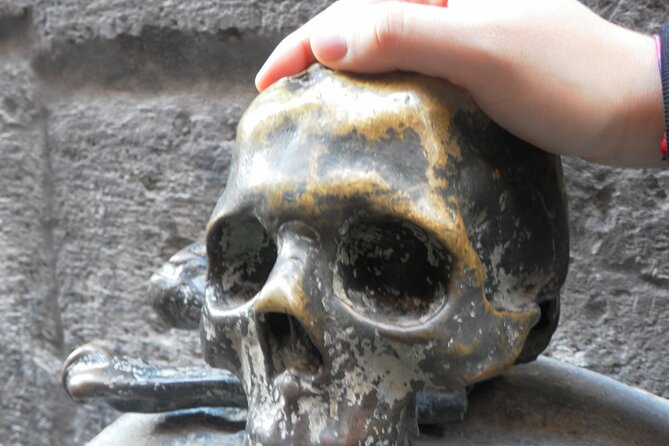
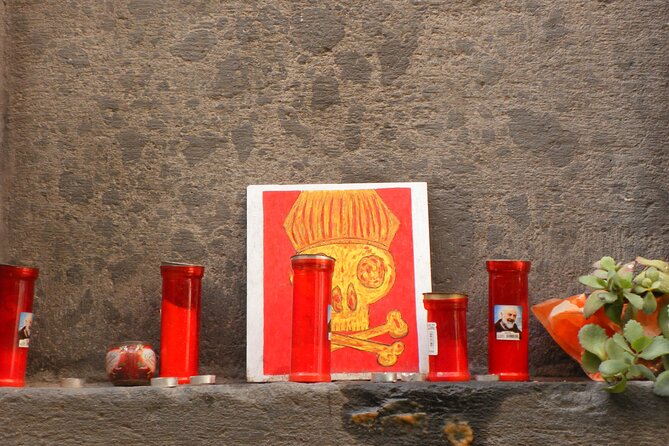
- Santa Maria delle Anime del Purgatorio ad Arco: pezzentelle souls and death rituals
- Piazza San Gaetano: munaciello stories and the Marianas
- Via San Gregorio Armeno: shops, rituals, and the lottery saints link
- Spaccanapoli to Piazza San Domenico Maggiore: closing the loop with a final ritual
- Who should book this walk (and who might not)?
- Should you book the Walking Tour of the Neapolitan Superstition?
- FAQ
- FAQ
- Where does the tour start and end?
- What time does the tour begin?
- How long is the walking tour?
- What language is the tour offered in?
- How big is the group?
- Is the ticket mobile?
- What’s included in the price?
- Are there any admission fees at the stops?
- What happens if weather is poor?
- Can I get a full refund if I cancel?
- Are service animals allowed?
Key highlights to expect
- Piazza Bellini as the launch point for charms, death beliefs, and the city’s relationship with sacred and profane
- Pulcinella’s nose ritual explained through the local figure you see in Naples culture
- Santa Maria delle Anime del Purgatorio ad Arco and the pezzentelle souls cult tied to death and consolation
- Munaciello in Piazza San Gaetano, plus the story of the Marianas
- Via San Gregorio Armeno with superstition-linked shop areas and lottery-saint references
- Spaccanapoli and Piazza San Domenico Maggiore closing with one last local ritual
Neapolitan superstition: sacred, profane, and street-level Naples
If you want Naples in its real skin, this is a smart way to get it. The city is famous for art and food, sure. But it also has a long-running tradition of using gestures, prayers, jokes, and music to handle worry—especially fear, bad luck, and death.
What makes the tour interesting is that it treats superstition as more than weird trivia. You connect symbols to everyday behavior: touches, sayings, and stories that Neapolitans repeat because they believe repetition matters.
The guide frames everything as an ambiguous mix. Sacred themes show up right next to profane ones. Ghost talk sits beside lively local culture. If you like folklore, street history, and the way people cope, you’ll probably enjoy this route a lot.
You can also read our reviews of more tours and experiences in Naples.

Price and what you actually get for $72.56
At $72.56 per person for about 1 hour 45 minutes, you’re paying for a guided walk with themed storytelling and added local flavor. The tour is offered in English and uses a mobile ticket, which is handy if you want to travel light.
You also get a typical gadget included. The specific item isn’t described in the details here, but it’s clearly part of the experience’s charm-based theme.
One value check: every stop is marked as free admission ticket, so you’re not stacking entry fees on top of the tour price. That matters in Naples, where costs can add up fast.
A final practical note: it requires good weather. If it gets canceled for poor weather, you’ll be offered a different date or a full refund.
Meeting point and route flow: Piazza Bellini to San Domenico Maggiore
You meet at Piazza Bellini (80138 Napoli NA) at 3:00 pm. The tour ends at Piazza San Domenico Maggiore (80134 Napoli NA). This is a walking route through central neighborhoods, and the pacing is built for short, story-based stops rather than long museum-style viewing.
The group max is 10 travelers, which usually means you get clearer attention and fewer distractions. It’s also a smart size if you like asking questions without feeling lost in a crowd.
Also worth noting: the start and end points are in areas that should be easy to reach with public transportation. Service animals are allowed, and most travelers can participate.
Piazza Bellini: charms, death beliefs, and the city’s sacred-profane mix
Piazza Bellini is where the tour sets its tone. You start with the idea that Neapolitans are often described as superstitious—and the guide uses that to open up a deeper look at rituals that aim to push away negative influence.
This first stop is where you get the big themes: where some typical charms come from, how locals relate to death, and why the lottery game matters in Neapolitan culture. You also hear about the cunto of pezzentelle souls and the history and importance of newsstands, all told with stories, anecdotes, songs, and nursery-rhyme style material.
The other thing I like about starting here: it’s central enough that you can orient quickly before the tour breaks into smaller, more specific legend zones. Expect the guide to connect cultural details into a simple storyline you can follow across the whole walk.
Tip: arrive a few minutes early so you can settle in before the guide starts the “why Naples does this” part.
Busto di Pulcinella: the simple ritual with a big backstory
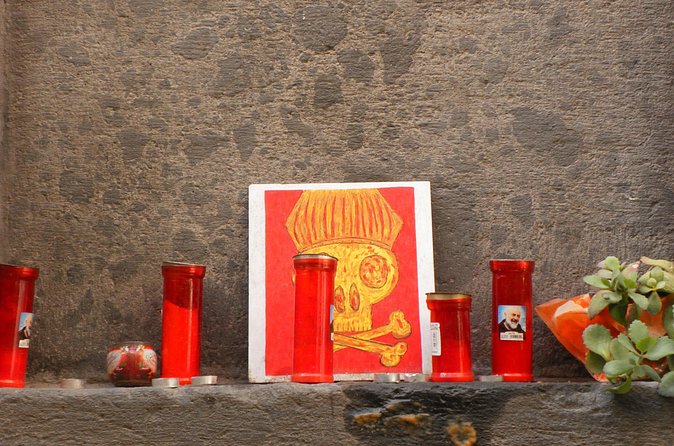
Next up is the Busto di Pulcinella, and the tour zooms in on one specific gesture: why people touch Pulcinella’s nose.
This is the kind of superstition lesson that clicks fast. You’re looking at a recognizable Naples figure, and the guide explains what the action means and where the idea comes from. Even if you’ve seen the statue before, you’ll walk away with a clearer understanding of why the gesture persists.
This stop is short—about 5 minutes—but it plays an important role. It gives you a “how to read” lens for the rest of the walk. After this, you’ll start noticing how objects and figures become shortcuts for belief.


Santa Maria delle Anime del Purgatorio ad Arco: pezzentelle souls and death rituals
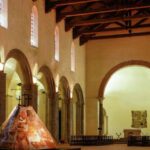
Then you reach Complesso Museale Santa Maria delle Anime del Purgatorio ad Arco. Here, the tour shifts from general superstition to a specific, darker theme: the cult of pezzentelle souls and what death looks like in Neapolitan tradition.
You’ll get the history of the church and the way the pezzentelle souls cult is tied to death beliefs. The time for this stop is about 15 minutes, which is enough to cover context without turning it into a long lecture.
What makes this stop valuable is that it gives meaning to the folklore you heard earlier. It’s one thing to hear about charms. It’s another to see how religious storytelling and the fear of what comes after connect to everyday life.
If you prefer your history lightweight and sunny, this part may feel heavier. But if you want to understand how Naples thinks and feels, it’s a key moment.
Piazza San Gaetano: munaciello stories and the Marianas
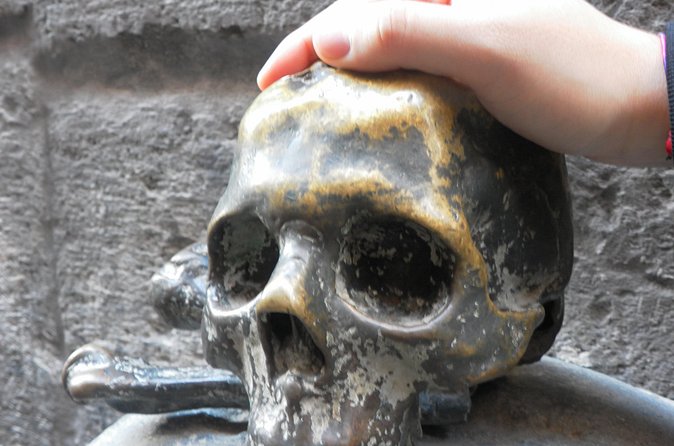
Piazza San Gaetano is described as the center of the ancient city, and that matters. It’s the kind of place where legends feel plausible, because the streets and corners already look like they’ve been telling stories for centuries.
Here, the tour focuses on the munaciello: one of the most famous figures in Neapolitan superstition. You’ll also hear about the beautiful Marianas and how that story ties into local belief.
This stop runs about 15 minutes. You should expect a mix of narrative and explanation—enough to help you track how the munaciello fits into the larger superstition world rather than feeling like a random ghost story.
If you love folklore characters (the kind that feel half-spiritual and half-social), this is likely one of the more fun segments.
Via San Gregorio Armeno: shops, rituals, and the lottery saints link
Via San Gregorio Armeno is where Naples’ superstition moves closer to commerce and everyday culture. This stop lasts about 15 minutes and leans into the history of the shops and the origin of the Sanctuary.
You also connect superstition to luck and chance through the reference to dissolution of the blood and San Pantaleone, described here as the saint of the lot. That’s a clear sign you’re not just hearing ghost tales—you’re seeing how Naples links luck, religion, and public rituals into one system.
One practical plus: this is a street where people can actually browse and observe. Even though it’s a guided story segment, you’ll likely notice how the shop culture keeps superstition visible in plain sight.
If you’re the type who likes to understand the “why” behind what you’re seeing, this stop will click.
Spaccanapoli to Piazza San Domenico Maggiore: closing the loop with a final ritual
Spaccanapoli is the road that seems to split the city in two, and it’s a great transition point. The tour uses it to carry you toward Piazza San Domenico Maggiore, with about 15 minutes allocated to this segment.
Then you finish at Piazza San Domenico Maggiore, with one last superstitious ritual. The tour ends after about 10 minutes here, bringing the story full circle: charms and rituals introduced at the start, characters and death beliefs placed in context, and a final concluding gesture that leaves you thinking about how superstition works socially.
This ending is brief, so don’t expect a grand send-off. Instead, it’s built like a closing line—short, specific, and themed. If you pay attention during the earlier stops, the final ritual will likely feel earned rather than tacked on.
Who should book this walk (and who might not)?
This experience is best for you if you like folklore, street culture, and the way people use stories to manage fear and uncertainty. You’ll also enjoy it if you’re curious about Naples beyond food and postcard views—this is a culture-watching tour.
It’s also a good pick if you want something structured but not stiff. The route breaks into small blocks, so you can absorb ideas without being stuck in one long site.
You might want to think twice if your travel style is strictly about big visual sightseeing with little narrative. This tour is story-first. Also, the themes include death and purgatory-related beliefs, so it’s not a light comedy walk.
Should you book the Walking Tour of the Neapolitan Superstition?
Yes, if you want a real Naples angle fast. The price feels reasonable because it’s a guided route (English, mobile ticket) with short, focused stops, and the key sites are marked as free of admission fees. The small group size makes the experience feel personal, and the format with a traditional lover and cantor adds genuine local texture.
I’d book it earlier in your trip. The tour is often scheduled about 40 days in advance on average, so slots can go early. If you’re flexible on dates and the weather looks good, this is a smart use of one afternoon to get the cultural logic behind Naples superstitions.
FAQ
FAQ
Where does the tour start and end?
It starts in Piazza Bellini, Naples and ends in Piazza San Domenico Maggiore, Naples.
What time does the tour begin?
The start time is 3:00 pm.
How long is the walking tour?
The duration is approximately 1 hour 45 minutes.
What language is the tour offered in?
The tour is offered in English.
How big is the group?
The tour has a maximum of 10 travelers.
Is the ticket mobile?
Yes, you get a mobile ticket.
What’s included in the price?
A typical gadget is included.
Are there any admission fees at the stops?
The stop notes indicate free admission tickets for the listed locations.
What happens if weather is poor?
The experience requires good weather. If it’s canceled due to poor weather, you’ll be offered a different date or a full refund.
Can I get a full refund if I cancel?
Yes. You can cancel up to 24 hours in advance for a full refund.
Are service animals allowed?
Yes, service animals are allowed.