REVIEW · NAPLES
Castellammare di Stabia: Mount Vesuvius & Pompeii Ruins Trip
Book on GetYourGuide →Operated by MOTORENT S.R.L. · Bookable on GetYourGuide
Vesuvius and Pompeii in one day is the real deal. This tour pairs Mount Vesuvius (mainland Europe’s only active volcano) with the enormous archaeological site of Pompeii, so you get both the drama of the mountain and the everyday life of 79 AD. I like that it starts and ends in Castellammare di Stabia, which keeps logistics simple.
Two big things I love: the round-trip bus makes the day run on rails, and you’re not spending your limited time figuring out trains, transfers, or tickets. The one thing to consider is the Vesuvius walk: you’re dropped off around 1,000 meters and then head down toward the crater, which can feel like a workout even if it’s manageable.
In This Review
- Key details that matter before you go
- From Castellammare di Stabia to Vesuvius: easy start, clear timing
- The Vesuvius crater walk: views worth the effort
- Pompeii Archaeological Park: choose your route with an audio guide
- What to look for at Pompeii: frescoes, street life, and the lupanar
- Herculaneum as a weather backup: what happens if Vesuvius closes
- Timing and energy: how to plan your day like a pro
- Value and what you’re really paying for
- Who this tour suits best (and who might want another plan)
- Should you book the Castellammare di Stabia Vesuvius and Pompeii day trip?
- FAQ
- How long is the trip?
- Where do I meet the tour?
- What’s the schedule like?
- Is the Mount Vesuvius ticket included, and is it refundable?
- Do I need to buy tickets or stand in line?
- How hard is the Vesuvius walk?
- What do I get at Pompeii?
- What happens if Vesuvius National Park is closed?
Key details that matter before you go
- Skip-the-line entry helps you spend more time walking and less time waiting.
- Crater descent starts from ~1,000 meters, so bring comfortable shoes and plan for some uneven ground.
- Free time at Vesuvius is about 1.5 hours, which is enough for views plus a paced walk.
- Pompeii includes an audio guide and you can choose from different walking itineraries once you’re inside.
- Audio guide languages include Chinese, Dutch, English, French, German, Hebrew, Italian, Portuguese, Russian, and Spanish.
- Plan B if Vesuvius closes: the tour swaps to the Herculaneum excavations when conditions force closure.
From Castellammare di Stabia to Vesuvius: easy start, clear timing
You begin at Piazza Papa Giovanni XXIII, at the bus stop near these coordinates: 40.6954345703125, 14.47964859008789. It’s a straightforward meeting point, and the whole day is built around bus transfers: about 40 minutes to Mount Vesuvius, another 40 minutes to Pompeii, then roughly 30 minutes back to your starting point.
That matters because Vesuvius and Pompeii are both major draws, so the single biggest risk on a self-planned day is wasting time. Here, the rhythm is built in. You ride, you get dropped off, you walk, you return. No hunting for the right bus in the heat, no guesswork about when you need to be back.
One practical advantage: the driver speaks English and Italian, which helps if you have quick questions about timing or what to expect at each stop. Also, the tour includes skip-the-ticket-line handling, so you’re not stuck behind a slow-moving queue right when you’re most ready to get out and look around.
You can also read our reviews of more tours and experiences in Naples.
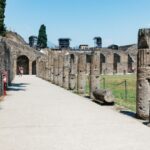


The Vesuvius crater walk: views worth the effort
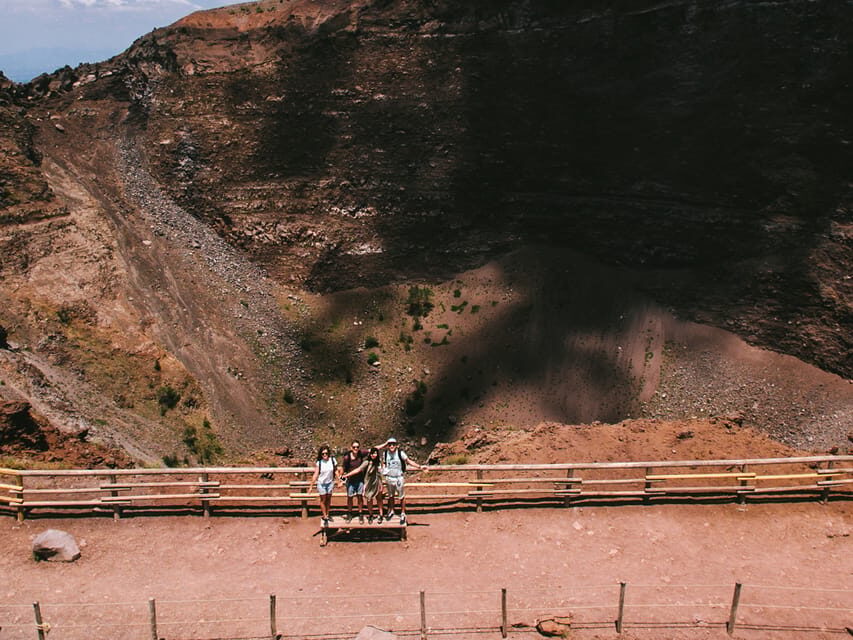
The main event on Vesuvius is simple: you disembark at about 1,000 meters elevation, then walk down toward the crater. You’re given free time for about 1.5 hours, which is where you can make the experience match your pace.
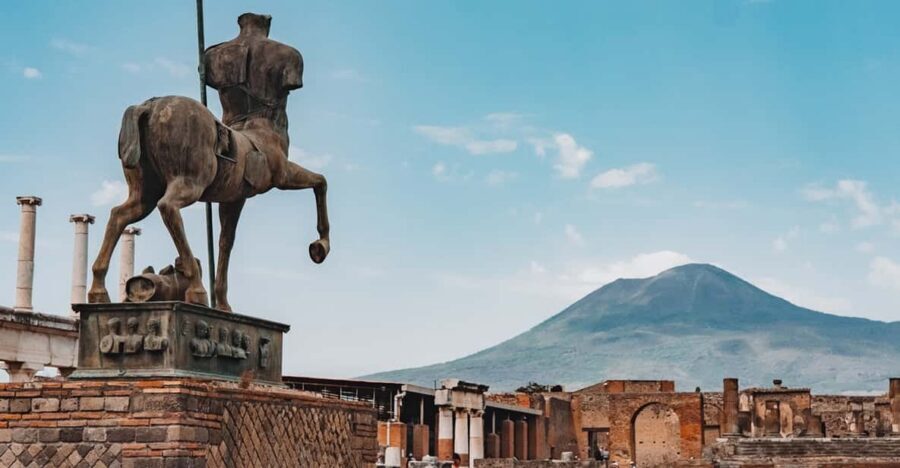
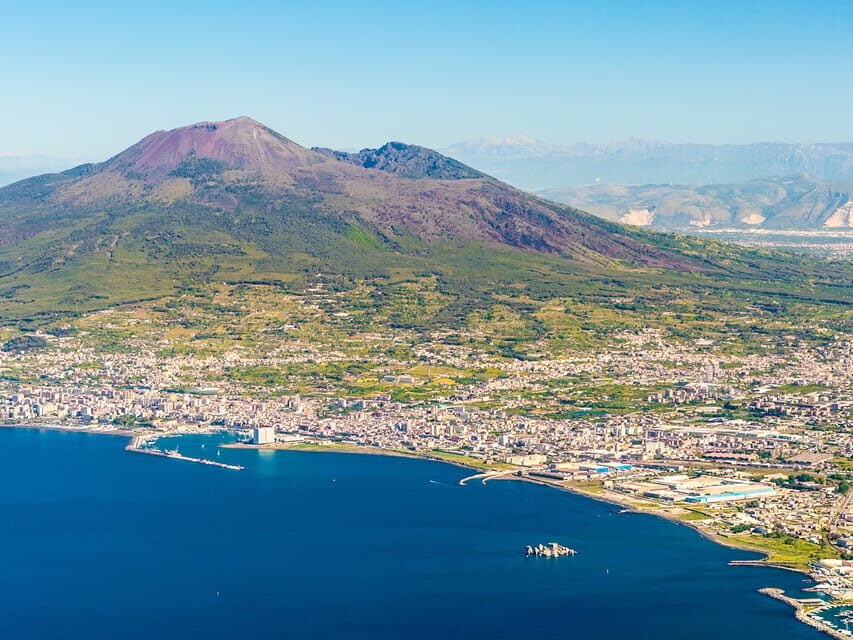
What you’ll love here is the payoff. Even though you’re walking on volcanic terrain, the best part isn’t the trail itself. It’s the way the whole coast opens up in front of you. From the top, you can take in sweeping views over the Gulf of Naples, the Sorrento Coast, and more. It’s the kind of viewpoint that makes you understand why people built their lives around this dramatic piece of geology.
A few practical notes so you’re comfortable:
- Wear real walking shoes. The path can be rocky and uneven, and you want grip when the ground changes texture.
- Pace yourself on the crater approach. Going down can feel easier at first, then your legs will notice the return. Even if you don’t rush, it’s still physical.
- Use your free time intentionally. If you spend it all on photos early, you’ll wish you had more time for the crater area and the viewpoint breathing room.
Also keep in mind this tour is designed around a shared schedule. That means you should aim to re-board when the group is expected back, not when you personally decide the views are perfect. The mountain is great, but buses are better at keeping time than volcanoes are.
Pompeii Archaeological Park: choose your route with an audio guide
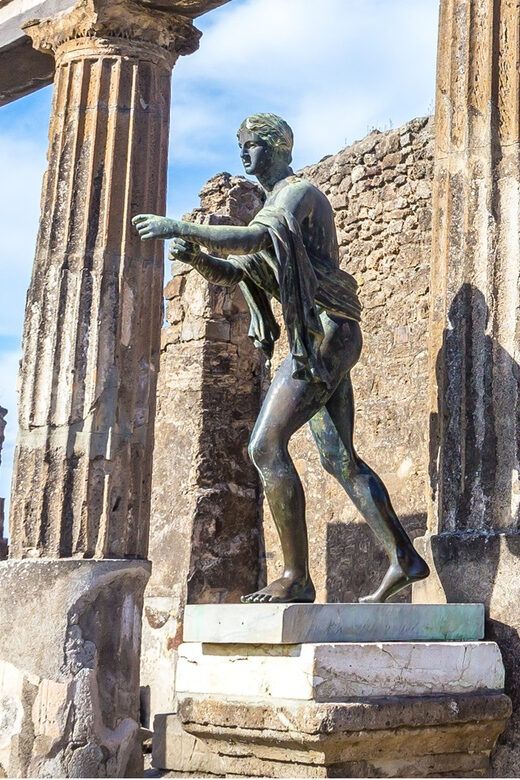
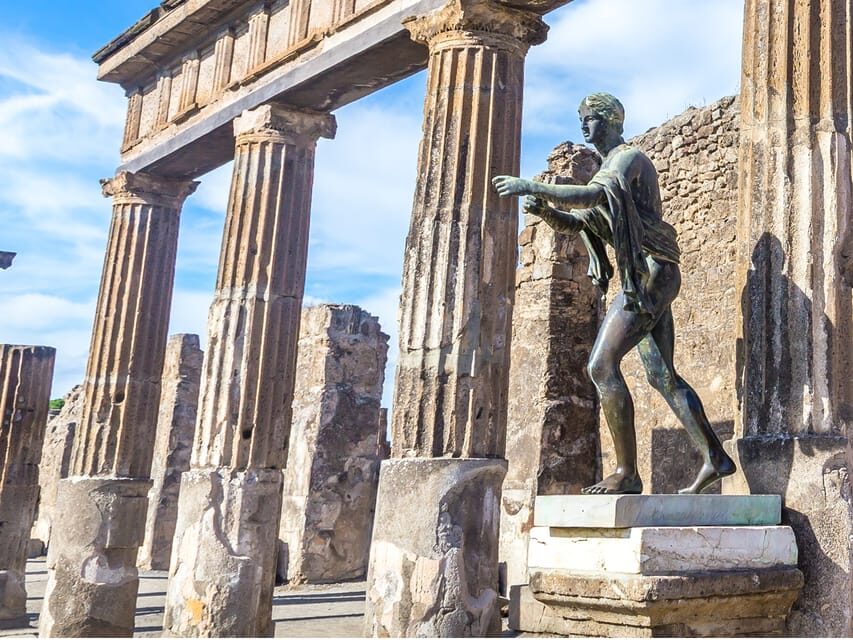
Next you head to Pompei, Campania by bus. Once you arrive at the Pompeii Archaeological Park, you get an audio guide and can choose from different walking itineraries before entering.
That choice is valuable because Pompeii can be overwhelming. The site is huge, and without structure you can end up zig-zagging through highlights while missing context. The audio guide gives you a path (or paths) that make the ruins easier to follow and connect. It’s also included across a wide range of languages: Chinese, Dutch, English, French, German, Hebrew, Italian, Portuguese, Russian, and Spanish.
Your time in Pompeii is about 2 hours. That’s enough for a meaningful loop if you pick a route that focuses on key neighborhoods and major sights. It’s not enough to wander at random for every street and wall. So treat it like a curated sprint: fast enough to see a lot, slow enough to actually understand what you’re looking at.
A nice bonus: the way the tour is paced typically keeps you from arriving at Pompeii thinking you must see everything. You can focus on what the audio guide route highlights, then let the rest be a reason to come back. Pompeii has a way of doing that.
What to look for at Pompeii: frescoes, street life, and the lupanar
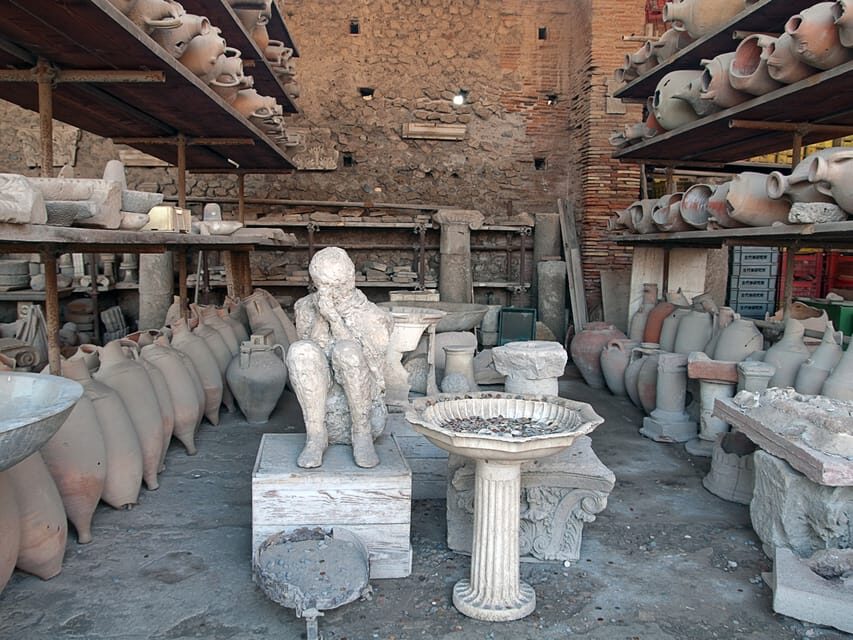
When you walk Pompeii with audio support, the ruins stop feeling like disconnected stones. You start noticing patterns: the way rooms relate to streets, the way wealth and everyday life showed up in decoration, and how different parts of town functioned.
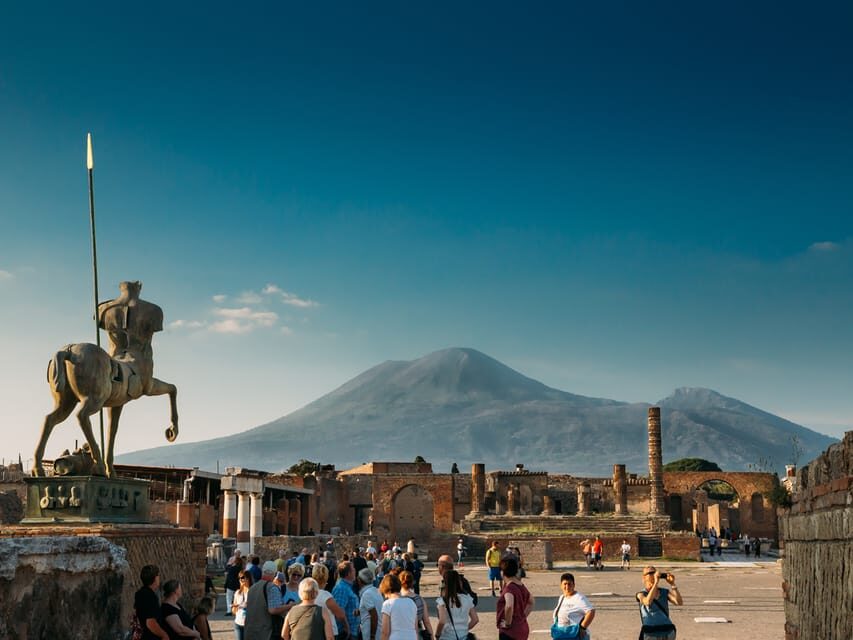
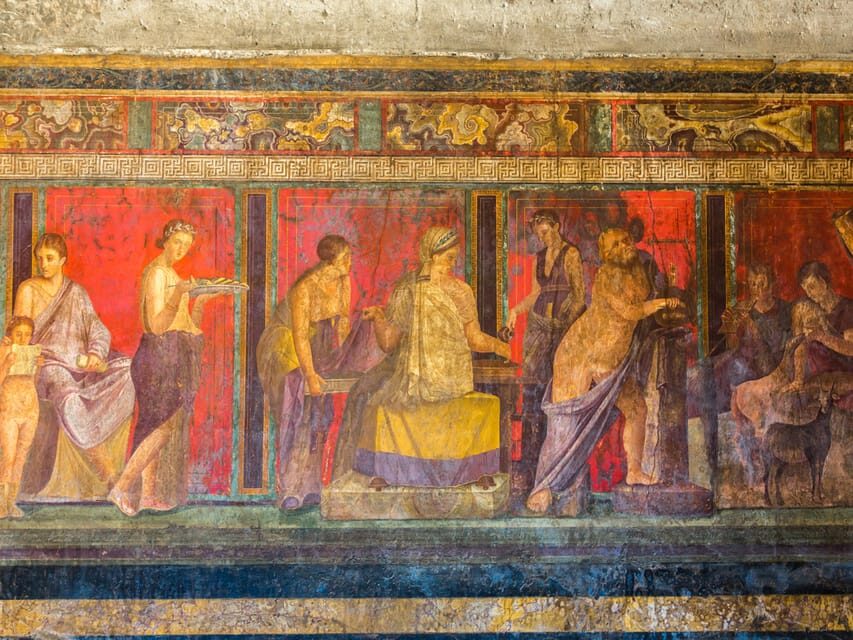
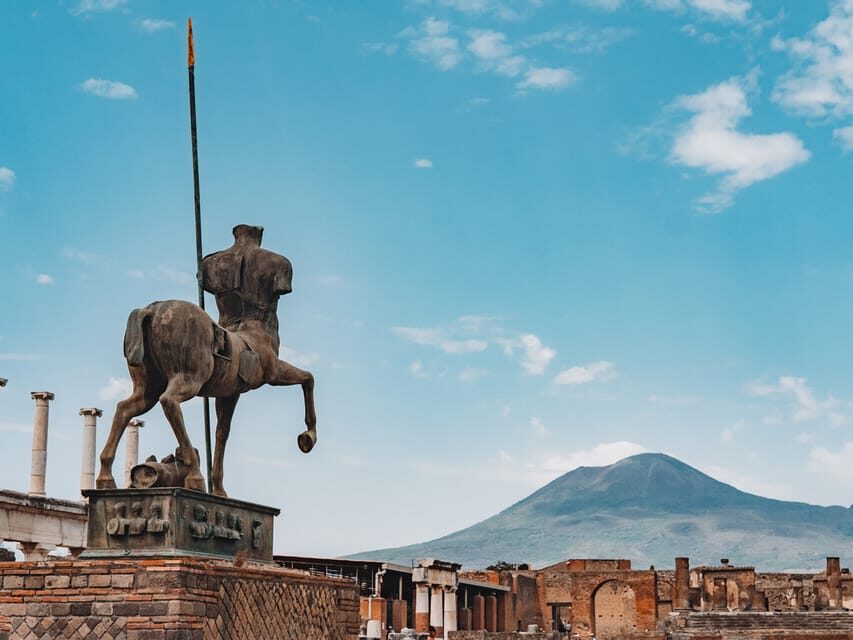
Some of the specific sights to watch for include ancient frescoes and major landmarks such as the lupanar, Pompeii’s city brothel. This isn’t just a weird trivia stop. It’s one of the most direct ways to understand the social and commercial reality of the city. You’ll see how businesses were built into everyday streets, and you’ll get context for why the lupanar is significant in the first place.
You’ll also be dealing with the scale of Pompeii. Two hours means you’ll likely experience it like a highlight reel, not a slow museum visit. That’s not a flaw. It’s how you best use time on a combined Vesuvius-and-Pompeii day.
My advice: as you move, keep checking for a few things:
- Signs of wealth vs. everyday practicality (decoration, room layout, and what’s preserved)
- How the streets connect the big sites (so you don’t feel lost inside the grid)
- Any audio prompts about what you’re about to see next (they help you spot details you’d otherwise overlook)
If you’re the kind of person who gets bored when ruins feel silent, an audio guide route helps a lot. It turns walking into a sequence with meaning, not just sightseeing.
Herculaneum as a weather backup: what happens if Vesuvius closes
Weather can be the wild card on Vesuvius. If the Vesuvius National Park is closed due to inclement weather, the tour doesn’t leave you empty-handed. The plan changes to include a visit to the Herculaneum excavations instead.
This is a smart safety feature. Vesuvius conditions can change fast, and a closure can throw off whole days. Here, you’re not just stuck waiting around. You keep your day full with a different—yet closely related—ancient site.
You’re still dealing with excavations and preserved stories of Roman life, just in a different location and with different preservation characteristics. If Vesuvius is shut, I’d treat Herculaneum as your chance to see the impact of the same catastrophe through another lens.


Timing and energy: how to plan your day like a pro
A six-hour tour sounds short until you factor in travel time plus two major walking components. You’re basically doing one big mountain moment and one big ruin moment, back-to-back.
Here’s how the day tends to feel:
- Vesuvius transfer and arrival: you get there, then you start moving right away.
- Vesuvius free time (~1.5 hours): this is where your legs matter most. It’s not a stroll.
- Pompeii visit (~2 hours): you’ll walk enough to get your bearings, then follow your chosen audio route.
- Return bus: you’re done and ready to relax.
So plan your personal gear accordingly:
- Shoes you can trust for uneven ground.
- Water and basic sun protection, since both the crater area and Pompeii can mean long stretches under open sky.
- A light layer if you’re sensitive to wind on higher ground.
Also think about your photo strategy. At Vesuvius, it’s tempting to stop constantly. If you do, you may still get the crater views, but you’ll be rushing the closer you get to re-boarding. At Pompeii, the audio route will often guide you to specific spots. If you take too many side detours, you can end up missing the sequence that makes the site click.
Value and what you’re really paying for
There’s one detail in the fine print that can help you understand the value. If you cancel, the Vesuvius National Park entry ticket fee is not refundable (listed as €12). That doesn’t mean the experience is “not worth it.” It means the costs tied to the volcano are locked in by the park.
What you’re paying for, practically, is the combination:
- transport that links Castellammare di Stabia → Vesuvius → Pompeii → back
- organization that reduces the mess of getting two headline attractions in one day
- audio guidance inside Pompeii
- skip-the-line help so you lose less time to logistics
Since time is the scarce resource on this kind of combo trip, that organization adds up. If you were to DIY this day, you’d likely spend extra time coordinating transport and ticketing, and you’d still have to manage the crater walk and Pompeii walking endurance.
So the “value” here is less about a bargain price and more about buying back time and mental energy. When the goal is Vesuvius plus Pompeii in one shot, that’s exactly what makes sense.
Who this tour suits best (and who might want another plan)
This trip fits you best if you:
- want a first-time plan that covers both Vesuvius and Pompeii
- like structure and would rather follow a route than build one
- appreciate audio explanation as you walk
- have limited time in the area and don’t want to split this into separate days
It might not fit you as well if you:
- want a slow, museum-style Pompeii visit with long stops in every room
- dislike any hiking component and prefer fully flat walking
- need a very flexible schedule (because the tour is paced around specific drop-off and re-board times)
If you’re on the fence, think about your travel personality. If you like being told where to go next, you’ll enjoy this. If you want to wander freely without a plan, Pompeii might feel more satisfying on your own or with a dedicated guide for longer time.
Should you book the Castellammare di Stabia Vesuvius and Pompeii day trip?
I’d book this if your priority is getting the core experiences of the area in one calm, organized day: Vesuvius crater views plus Pompeii’s highlights with an audio guide.
Do it if you’re okay with a real walking day—especially the Vesuvius descent from around 1,000 meters—and you want the convenience of round-trip bus transport. It’s also a good pick if you appreciate having a structured Pompeii route, since two hours can turn chaotic fast without guidance.
Skip it if you already know you want a deep, unhurried Pompeii experience. In that case, you might prefer more time on-site. But for many visitors—especially those using the west coast as a base—this is a practical, high-impact day with the logistics handled.
FAQ
How long is the trip?
The total duration is about 6 hours.
Where do I meet the tour?
You meet at the bus stop at Piazza Papa Giovanni XXIII (coordinates: 40.6954345703125, 14.47964859008789).
What’s the schedule like?
You travel by bus to Mount Vesuvius, have free time there (about 1.5 hours), then continue by bus to Pompeii for a visit (about 2 hours), and return to the same meeting point.
Is the Mount Vesuvius ticket included, and is it refundable?
The Vesuvius National Park entry ticket fee is listed as €12, and it is non-refundable in case of cancellation.
Do I need to buy tickets or stand in line?
The tour includes skip-the-ticket-line handling.
How hard is the Vesuvius walk?
You are dropped off at around 1,000 meters and you walk down to reach the crater. It can feel like a workout, but it is described as manageable.
What do I get at Pompeii?
Pompeii includes an informative audio guide, and you can choose from different itineraries before exploring the park.
What happens if Vesuvius National Park is closed?
If Vesuvius is closed due to inclement weather, the tour will instead include a visit to the Herculaneum excavations.