REVIEW · NAPLES
Skip the Line Ancient Herculaneum Walking Tour with Top Rated Guide
Book on Viator →Operated by Herculaneum Tours · Bookable on Viator
A walk through Herculaneum goes fast.
This skip-the-line guided tour keeps your time aimed at the ruins, not the entrance shuffle. You get professional art historian-style context while moving through key houses and public spots, so the place doesn’t just look old—it starts to feel lived-in.
I especially love how the guide helps you picture ordinary Roman routines in the spaces themselves: doorways, shop areas, and the thermal baths. I also like that the group stays small, so questions don’t get lost in the back row, and the pacing feels calm rather than rushed.
One thing to consider: this is a walking tour with a moderate physical fitness level and all-weather operation, so you’ll want good shoes and be ready for uneven ground and outdoors time.
In This Review
- Key things I’d bank on
- Skip the line at Ercolano Scavi and start smarter
- What the small-group format really means for you
- Your 2-hour route: the ruins in the order that makes sense
- Parco Acheologico di Ercolano: where the story begins
- Casa di Nettuno e Anfitrite: a Roman home you can almost read
- The College of the Augustales: public life with a human scale
- La Terrazza di M. Nonio Balbo: why terraces matter
- Casa del Rilievo di Telefo: the detail stop that sticks
- Guide style: when context feels vivid, not heavy
- Admission included means your time stays focused
- Price and value: $215.05 for about 2 hours
- Best for families, history-lovers, and practical planners
- Should you book Skip the Line Ancient Herculaneum?
- FAQ
- How long is the tour?
- Is skip-the-line access included?
- Are admission tickets included?
- What language is the tour offered in?
- Does the price include a guide?
- Is hotel pickup and drop-off included?
- Does it run in bad weather?
Key things I’d bank on
- Guaranteed skip-the-line entry so you don’t lose your best morning hours at the gate
- Small-group attention that keeps the tour conversational and question-friendly
- Focus on high-impact stops like Casa di Nettuno e Anfitrite and Casa del Rilievo di Telefo
- Time built around major ruins areas, including the thermal baths
- A guide who frames details in a way that makes the city feel human, not just “ancient stuff”
Skip the line at Ercolano Scavi and start smarter
If you’ve ever waited at a major ruins entrance, you know how quickly “tour time” evaporates. This tour is built around avoiding that. With the skip-the-line setup, you can spend your limited time actually inside Parco Acheologico di Ercolano, where the experience matters.
You also use a mobile ticket, which is handy on a day when you’re juggling a map, water, and probably a camera that never seems to work when you need it. The meeting point is Ercolano Scavi (80056 Ercolano), and the tour ends back at that same spot.
No hotel pickup is included. That’s not a problem if you’re staying in the Naples area and can get yourself to Ercolano. It’s just one more reason to plan your start time and transportation the night before.
You can also read our reviews of more walking tours in Naples



What the small-group format really means for you
This is described as a private tour/activity with only your group participating. Translation: you’re not competing with a big bus crowd for the guide’s attention. Even on a site where paths are tight, that smaller feel usually helps the tour stay organized and easier to follow.
You’re also on a schedule that’s short enough to stay sharp—about 2 hours total. That matters at Herculaneum, because if you spend too long without context, ruins can start to blur together. Here, the guide keeps nudging you toward the “why this matters” parts—how people actually used these places.
And based on what you’ll experience on the ground, the tour is designed to be not rushed. You get enough time to look, ask, and understand, without the guide feeling like they’re speed-running a checklist.
Your 2-hour route: the ruins in the order that makes sense
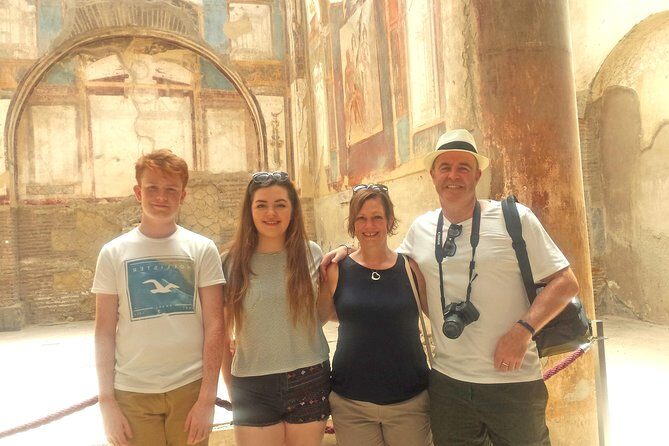
The best way to enjoy Herculaneum is to let the guide connect spaces into a story. That’s what this walk does. You start with the main archaeological area, then move through standout homes and civic-religious sites, ending with additional highlights that show different sides of daily life.
Even though each stop is relatively short, the guide’s role is to give you the mental map: what you’re seeing, what it suggests, and what kinds of Roman behavior were happening there.
Expect a walking pace that works for a moderate fitness level. You’ll be outside and operating in all weather, so bring the basics—rain layer, sun protection, and shoes you can trust on uneven ground.
Parco Acheologico di Ercolano: where the story begins
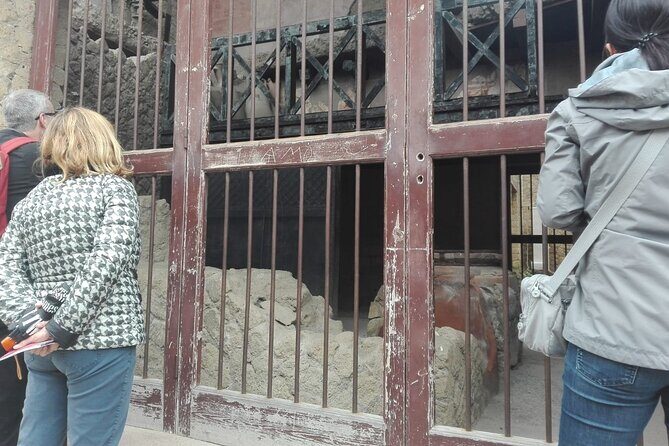
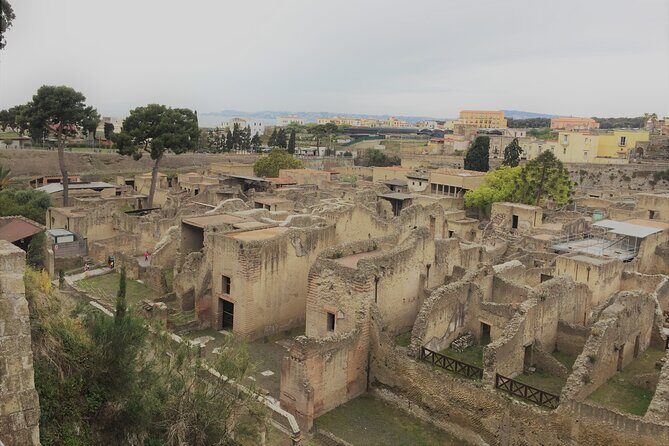
Stop 1 is the heart of the outing at Parco Acheologico di Ercolano. You get about 1 hour here with your guide, and admission is included.
This is where you get the big-picture grounding: how Herculaneum reads as a whole city rather than random rooms. The guide’s job is to put the ruins into context so your eyes know what to look for next.
A couple of details you should watch for during this first stretch:
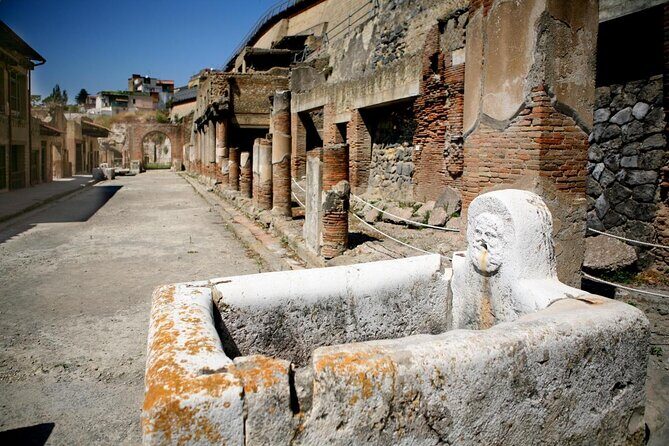
- The feel of Roman streets and house entrances, which helps you understand how close daily life was to the public parts of town
- Unique preserved elements, including original doors and original furnishings in shops, which are the kinds of specifics that make the place feel startlingly concrete
You’ll also hear about the thermal baths—a major part of the city’s routine. Even if you’ve never cared about archaeology before, baths are relatable. Everyone understands the idea of going somewhere to clean up, socialize, and reset.
Casa di Nettuno e Anfitrite: a Roman home you can almost read
Next comes Casa di Nettuno e Anfitrite, a highlight where the guide leads you to key features. This stop is about 10 minutes, and admission is included.
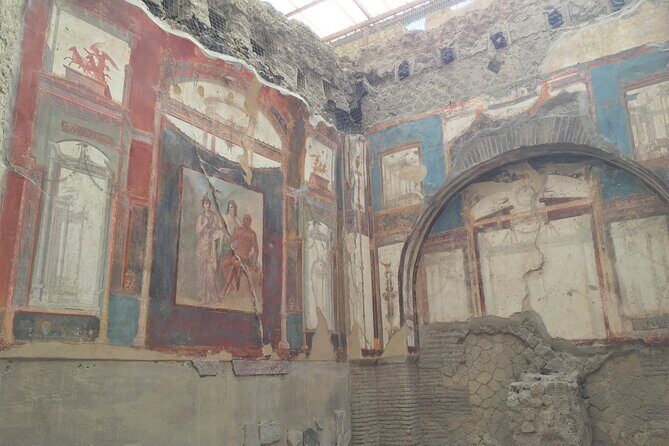
What’s valuable here isn’t just seeing a building ruin. It’s learning what that space likely meant for the people who lived there. The guide helps you connect household design and decoration to everyday life—who used what rooms and how a home was organized for social moments and private time.
If you like houses, you’ll enjoy this stop because it’s focused and pointed. You’re not wandering. You’re moving with a plan, guided toward the most meaningful elements so you leave with something to remember.
You can also read our reviews of more guided tours in Naples



The College of the Augustales: public life with a human scale
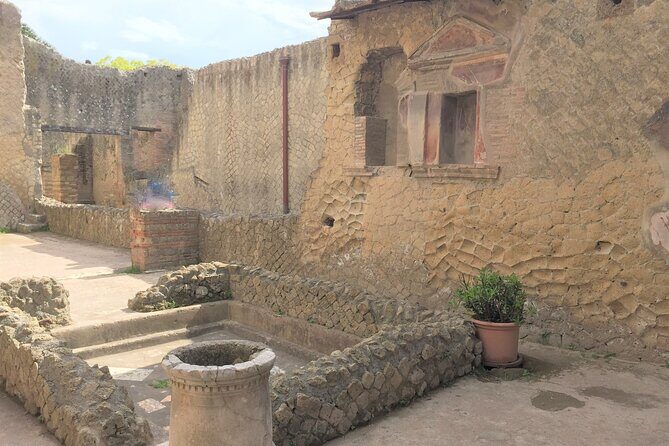
Then you’ll visit the College of the Augustales, another short highlight (around 10 minutes, admission included).
This is the kind of stop that helps prevent the tour from feeling like it’s only about wealthy homes. A civic or religious-related site adds balance. It also helps you understand that Herculaneum wasn’t only domestic life—there were organized roles, ceremonies, and community identity baked into the town’s layout.
Since the guide frames the context as you walk, this stop works well even if you’re not a “lecture person.” You’ll get the short, clear explanations, then you’re on your feet again.
La Terrazza di M. Nonio Balbo: why terraces matter
You’ll also see La Terrazza di M. Nonio Balbo, another highlight visit (about 10 minutes, admission included). Terraces can sound like a bonus view stop, but in Roman terms they usually connect to how people lived with light, air, and space.
Here’s what I’d look for while you’re there: clues that the architecture was designed for real use, not just aesthetics. The guide’s descriptions help you link the terrace’s function to the routines of the household and the status signals people could send through where they gathered.
It’s brief, but it adds variety. If your favorite part of travel is noticing how everyday design shapes behavior, this is a good stop.
Casa del Rilievo di Telefo: the detail stop that sticks
Finally, you reach Casa del Rilievo di Telefo. Expect about 10 minutes, admission included.
This is one of those places where the guide’s explanations make your photos better, even if you don’t take many. A “relief” site tends to reward attention—forms and figures that mean something in context. With the guide walking you through what you’re seeing, you don’t end the tour with a fuzzy memory of “a cool carving.” You leave with an idea of why it’s important to the story of this home.
If you’ve ever wished a tour had at least one moment where the details feel personal, this is usually it. It’s short, but it lands.
Guide style: when context feels vivid, not heavy
The biggest strength of this tour is the way the guide turns ruins into scenes. In particular, Italo is mentioned as a guide who answers questions easily and keeps explanations clear. That’s the sweet spot: you can ask anything, and the response actually helps you see the place better.
You’ll likely notice the pacing too. The tour is designed so you’re not sprinting and not stuck staring silently while everyone else catches up. The best moments come when the guide helps you imagine what the city felt like—how people might have moved through doorways, interacted in shop areas, or used spaces like the thermal baths.
The overall vibe from this kind of guided format is: you get transported back in time, without the tour turning into a performance. It stays practical and grounded.
Admission included means your time stays focused
Admission is included for the stops listed in the tour flow. That matters because it removes one common headache: dealing with tickets while you’re already in a rush mode.
You also get a guided route that helps you see more than you’d likely see on your own in the same time window. For me, that’s the core value of a guided ruins visit—saving mental energy. You’re not trying to figure out what matters while you’re hungry, tired, and trying not to trip on history.
Price and value: $215.05 for about 2 hours
At $215.05 per person, this isn’t the cheapest way to visit Herculaneum. So the value question is fair.
Here’s why I think the pricing can make sense:
- Skip-the-line access can protect your limited time on-site
- You’re paying for guided interpretation, not just entry
- You get a small-group feel with attention that supports questions
- Admission is included, at least across the featured stops
If your goal is a fast self-guided stroll, you might pay less elsewhere. But if your goal is to understand what you’re looking at—especially in standout homes like Casa di Nettuno e Anfitrite and Casa del Rilievo di Telefo—this tour is built for that.
Also, the tour is offered in English, which helps if you don’t want to rely on translations or guesswork when the guide is explaining why details matter.
Best for families, history-lovers, and practical planners
This tour is described as suitable with moderate physical fitness and operating in all weather. It also notes that children must be accompanied by an adult.
So who should book it?
- Families who want something structured and not too long
- People who like ruins but want the story stitched together for them
- Visitors who value time and hate waiting in lines
- Anyone who prefers a guided plan that feels paced, not frantic
If you’re very sensitive to walking on uneven ground, think carefully. There’s no mention of step-free access in the provided details, so base your decision on your own comfort level.
Should you book Skip the Line Ancient Herculaneum?
I’d book this tour if you want the best shot at understanding Herculaneum in a short visit—without losing time at the entrance. The combo of skip-the-line entry, included admission, and a guide who explains clearly (including guides like Italo) is exactly the kind of setup that turns ruins from scenery into something you can talk about later.
Skip it only if:
- you’re set on doing everything on your own with no guide voice
- you’d rather spend more hours wandering freely than getting a focused, guided route
- you know you’re not comfortable with a moderate walking pace and outdoor time
If you fall in the first group, this is a strong choice for a first or second visit to Ercolano. It’s short enough to fit cleanly into your day, and guided enough to make the place click.
FAQ
How long is the tour?
It runs for about 2 hours.
Is skip-the-line access included?
Yes. The tour is guaranteed to skip the long lines.
Are admission tickets included?
Yes. Admission tickets are included for the listed stops.
What language is the tour offered in?
The tour is offered in English.
Does the price include a guide?
Yes. You get a local guide and professional guidance.
Is hotel pickup and drop-off included?
No. Hotel pickup and drop-off are not included.
Does it run in bad weather?
It operates in all weather conditions, so you should dress appropriately.