REVIEW · SALERNO
Share your Pasta Love: Small group Pasta and Tiramisu class in Vietri sul mare
Book on Viator →Operated by Cesarine: Cooking Class · Bookable on Viator
Fresh pasta in a real Amalfi kitchen.
This is a small-group Cesarine home cooking class where you’ll learn two kinds of pasta and tiramisù with real teaching, not a demo you watch from afar. I love the hands-on format, and I also love the way the evening feels like dinner at someone’s family table, starting with an aperitivo and ending with what you made. One thing to plan for: the exact address can be a little messy if you rely on what shows up in an app—get the correct location ahead of time so you don’t lose cooking time.
You’ll spend about 3 hours cooking, tasting, and chatting in Vietri sul Mare (near Salerno). The class is offered in English, and your host provides the setup for hygiene basics, including sanitizer and hand-washing supplies. It’s capped at 12 travelers, which is a big deal when you’re learning dough, sauce, and assembly.
If you hate steps, timing, and getting flour on your hands, this probably won’t be your kind of fun. But if you like doing it yourself—and going home with recipes you can actually use—this one is built for you.
In This Review
- Key highlights worth marking on your map
- A Cesarine home class in Vietri sul Mare
- What you’ll cook: pasta pairs and tiramisù
- The class flow: aperitivo, hands-on dough, and tasting
- Small-group size (max 12) and one-on-one attention
- Location and timing: walking, cruise ports, and exact addresses
- Host hospitality: learning like family (and remembering names)
- Recipes you can actually use after the class
- Weather, sanitation, and home-kitchen reality
- Who this pasta and tiramisù class suits best
- Price and value: $118.95 for a hands-on Amalfi meal
- Should you book Pasta Love in Vietri sul Mare?
- FAQ
- How long is the Pasta Love pasta and tiramisù class?
- Where does the class start and end?
- How many people are in the group?
- Is the class offered in English?
- What will I make during the class?
- What’s the cancellation policy?
Key highlights worth marking on your map
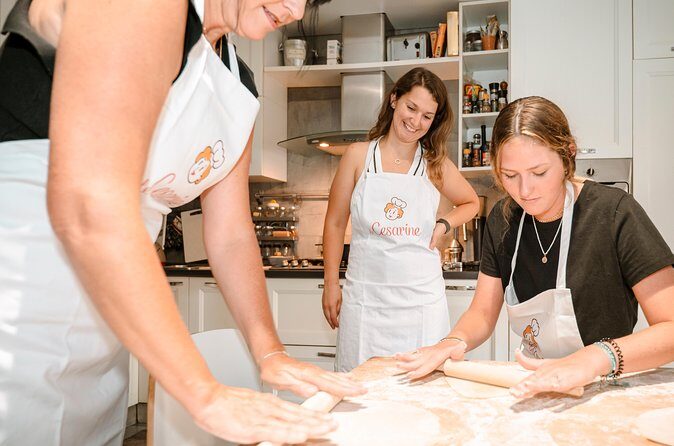
- Cesarine home cooking in Vietri sul Mare, not a crowded classroom
- Two pasta types plus tiramisù, with real instruction while you work
- Aperitivo to start and a tasting finish with what you made
- Max 12 people, so you can ask questions and get corrections
- Recipes after the class so you can recreate the meal at home
A Cesarine home class in Vietri sul Mare
Vietri sul Mare is the kind of town where you can feel the Amalfi Coast rhythm without the big, loud show. This class leans into that. You’re not learning Italian cooking in a studio. You’re learning it in a local home, hosted by a Cesarine cook who’s used to sharing their kitchen secrets.
The real value here is the context. When you learn how to roll dough, make a sauce, or assemble tiramisù in someone’s home, you pick up small habits—like how they handle timing, portioning, and the texture checks—that you’ll miss in most “just watch” classes. You also get conversation. Several hosts (like Silvia, Antonia, Carmen, and Ana and Luigi from past classes) are known for welcoming people like family and teaching patiently, even when English is involved through a translator or a gentler, slower pace.
One more practical note: the class ends back at the meeting point, so you’re not dealing with a complicated “drop-off” scenario afterward. It’s designed to be a clean, self-contained evening or morning of cooking.
You can also read our reviews of more tours and experiences in Salerno

What you’ll cook: pasta pairs and tiramisù
The menu is simple on paper: pasta and tiramisu. The twist is that you’ll prepare two types of pasta, and the exact choices can vary depending on season and your host’s family favorites.
From past classes, you might get styles like ravioli or gnocchi, and you may also see regional options (one guest described a Campagna-style pasta and a stuffed pancake dish). That variation is good news for you if you already think you know Italian cooking. It means you’re not paying to repeat the same basic pasta trick you can learn from a cookbook.
For tiramisù, you’ll learn the build—layering, texture, and how to assemble so it tastes right at serving time. This is the part that often looks easy until you’re doing it. Having a host guide you step-by-step is what makes the difference between a dessert that’s tasty but sloppy and one that actually looks like the version you see in Italian homes.
If you have dietary needs, be sure to mention them when you book. At least one previous participant appreciated vegetarian accommodation, so it’s worth raising it early.
The class flow: aperitivo, hands-on dough, and tasting
Expect a clear rhythm that keeps you moving from cooking tasks to eating.
First, you’ll be welcomed and start with an aperitivo—small bites and drinks that get the evening rolling. This matters more than it sounds. It softens the “everyone watching me cook” nerves, and it gives you a relaxed start before flour and sauce take over.
Then comes the main work: making pasta (two types) from scratch with your Cesarine. The teaching style is hands-on. You’ll chop, mix, knead, shape, and assemble parts of the meal. One thing I really like about this format is that it doesn’t treat cooking like a talent contest. Hosts give corrections in the moment—things like dough texture checks or how to handle shaping—so you leave knowing what to aim for next time.
Finally, you get to taste everything you made. The class ends with a meal you created, not just a few bites. Past participants called it one of the best meals of their trip, and I can see why: there’s extra satisfaction when you’ve spent hours making it. You also get a chance to talk about what you learned while you’re actually eating, not after you’ve rushed out the door.
Small-group size (max 12) and one-on-one attention
A class capped at 12 is a sweet spot. Large groups can be chaotic during kneading, rolling, and sauce timing. Smaller groups mean you get feedback when you need it, not after you’ve already finished the step wrong.
In practical terms, small-group size helps with:
- faster questions (“Is my dough too sticky?” “How thick should this be?”)
- better pacing (you’re not stuck waiting for the whole group)
- more personal corrections from your host
One of the best parts of these home classes is that instruction is tied directly to what you’re doing. You’re more likely to remember a texture tip when you’re using it immediately. And if you’ve never worked with fresh dough before, that kind of correction can turn frustration into confidence quickly.
Location and timing: walking, cruise ports, and exact addresses
This part can make or break your experience.
The start point is 84019 Vietri sul Mare, SA, Italy, and you return to the meeting point at the end. That means the class is anchored locally. But here’s the caution: one previous participant noted the address shown in an app wasn’t correct and that the host sent the correct location by email the day before.
So do this: once you book, double-check the exact address details you receive from the operator or host, and save it on your phone. If you’re arriving from a cruise port, also plan for time.
In one example, the walk from the cruise area was about 30 minutes, and a cab was around €20 each way (around a 10-minute ride). You may not want to gamble with extra walking time if you’re on a tight schedule, especially since you need to be there ready to cook.
Also, the class is near public transportation. That’s helpful if you want to avoid expensive rides. Just don’t assume you can find the exact door easily without the corrected address.




Host hospitality: learning like family (and remembering names)
The word that keeps coming up is welcoming.
Different hosts have different styles, but the common thread in the experiences shared is warmth plus teaching. People have described hosts like Silvia as passionate and kind, Carmen and her family as gracious, Antonia as patient and informative (even while talking through the history of Italian cooking), and Ana and Luigi as friendly and hands-on. Marco and Amelia were described as making ravioli and sharing the meal together.
Even when the host speaks limited English, the class still works. In at least one past class, a translator helped, and another participant mentioned that knowing at least a bit of Italian made the experience even better. Either way, you’ll still benefit because cooking has its own language: demonstration, touch, correction, and timing.
The practical takeaway for you: show up curious, ask questions early, and don’t worry if you’re slow at first. In a home kitchen, the host’s goal is usually not perfection—it’s getting you comfortable enough to recreate the meal at home.
Recipes you can actually use after the class
Here’s a big reason to book a class like this instead of just grabbing dinner: you want to bring the skills home.
Past participants said they received recipes after the class, sometimes printed out. That’s the best kind of souvenir. Photos are nice, but recipes let you repeat the exact steps without guessing.
Also, because you’re making the meal in a real kitchen, you’ll understand what matters in the process. For example: how sauce consistency changes with cooking time, how dough should feel before shaping, and how tiramisù becomes creamy (or stays too firm) depending on how it’s assembled.
If you like hosting friends back home, this class becomes your dinner-party secret weapon. Even if you don’t become an Italian nonna overnight, you’ll be able to serve something impressive that’s also genuinely delicious.
Weather, sanitation, and home-kitchen reality
This is one of those experiences where the details are simple, but the conditions are real.
The activity requires good weather. The operator also notes that Cesarine hosts follow sanitary rules and provide equipment like paper towels, hand sanitizer, and related supplies. They also request that you maintain a 1 meter distance, and if that’s not possible, you should wear masks and gloves.
Because this is in a home, the space may feel more “real” than “tour-ready.” That’s part of the charm. It’s also why you should dress for comfort—things like closed-toe shoes and clothing that can handle spills. You’re cooking. Not touring a museum.
And if you’re sensitive to crowds, the max 12 helps. Less crush, easier spacing, and more room for you to work.
Who this pasta and tiramisù class suits best
This class is a strong fit if you:
- want an Amalfi Coast experience that goes past photos
- like practical learning, not just eating
- enjoy small group settings with conversation
- want a meal you can recreate later
It’s also a great choice for couples. Some past participants even booked it for a honeymoon, and it’s easy to see why: you’re sharing a “together time” activity that ends with a proper sit-down meal. Families with teens can work too—one group included two daughters and described the class as an enjoyable week-long interlude with real hands-on cooking.
If you’re traveling solo, you’ll still get plenty of attention in a group capped at 12. If you’re a foodie who wants techniques, you’ll likely appreciate the step-by-step style.
If you’re short on time and need something fast, this isn’t it. It’s a full 3-hour cooking and eating experience.
Price and value: $118.95 for a hands-on Amalfi meal
At $118.95 per person, this isn’t a cheap snack. But the value makes sense because you’re buying more than food.
You’re getting:
- an actual home kitchen setup
- instruction while you cook (two pasta types + tiramisù)
- aperitivo at the start
- the meal you made at the end
- recipes afterward (in most cases, based on past participants)
A restaurant dinner gives you flavor. A cooking class gives you skill. If you plan to recreate tiramisù and fresh pasta again, the cost stops feeling like “paying for a meal” and starts feeling like “paying for a learned skill plus a great evening.”
This also performs well for travelers who dislike wasting time. A 3-hour slot in Salerno’s area can beat hunting for a great meal where you don’t know what you’ll get.
Should you book Pasta Love in Vietri sul Mare?
I think you should book this class if you want an Amalfi Coast experience that’s genuinely about making food, not just watching. The small-group size, the home-host hospitality, and the hands-on pasta + tiramisù combination are the big wins. If you like learning by doing, you’ll leave with techniques you can use—and recipes that save you from guessing later.
Just don’t treat it like a “show up anywhere and find it” activity. Confirm the correct location details you’re sent, especially if you’re coming from a cruise port or doing time math in your head. Build in a little buffer, arrive hungry, and wear clothes you don’t mind getting a bit messy.
If you’re on the fence, one simple test helps: do you want to eat pasta and tiramisù, or do you want to learn how to make them? This one is for the second answer.
FAQ
How long is the Pasta Love pasta and tiramisù class?
It lasts about 3 hours.
Where does the class start and end?
It starts at 84019 Vietri sul Mare, SA, Italy and ends back at the meeting point.
How many people are in the group?
The class has a maximum of 12 travelers.
Is the class offered in English?
Yes, it’s offered in English.
What will I make during the class?
You’ll prepare pasta and tiramisù, including cooking two types of pasta and the tiramisù dessert.
What’s the cancellation policy?
You can cancel for a full refund up to 24 hours in advance of the experience start time. Free cancellation is available, and it requires canceling at least 24 hours before the local start time.