REVIEW · POSITANO
Positano Private Walking Tour With A Professional Guide
Book on Viator →Operated by Global Guide Services · Bookable on Viator
Positano makes sense faster with a guide. In about two hours, you’ll get oriented and still feel like you found the town, not just passed through it. This private walk is built around history you can see and a route that starts at Chiesa di Santa Maria Assunta and ends at Fornillo Beach, with a local helping you skirt the worst crowd pressure and skip the map.
I love two things most: it’s private for your group only (so you’re not packed in with strangers), and the guide can tailor the pace and what you spend time on. Names that come up often in this experience are Floriana, Gabriella, and Celia—each praised for a mix of strong Positano love and practical guidance that keeps the walk feeling personal.
One consideration: communication can vary by guide. One person noted the guide spoke very fast and very softly, making parts hard to follow—so if you’re sensitive to audio, set that expectation at the start and ask for a slower pace when needed.
In This Review
- Key highlights to know before you go
- Getting your bearings in Positano without the maze
- Route feel: from Chiesa di Santa Maria Assunta to Fornillo Beach
- The big story: first-century BC to the Amalfi Republic
- Church of Saint Mary of the Assumption: the anchor stop
- Villa Romana viewpoint: seeing the Roman past in plain sight
- Positano Downtown, artisan shops, and art galleries (without aimless wandering)
- Don Catello: where character, culture, and food energy meet
- Fornillo Beach finish: a softer ending to the walk
- Private pacing, customization, and the guide’s speaking style
- Price and value: what $307.07 per group buys you
- Who this tour is best for (and who should look elsewhere)
- Should you book this Positano private walking tour?
- FAQ
- How long is the Positano private walking tour?
- Is this tour private?
- Where do we meet, and where does the tour end?
- What language is the tour offered in?
- Can the guide customize the tour during the walk?
- What is the cancellation policy?
Key highlights to know before you go
- Private time with a local guide who stays with your group only
- Start at Chiesa di Santa Maria Assunta and finish down at Fornillo Beach
- A timeline from first-century BC to the Amalfi Republic (woven into real stops)
- Iconic sights like Church of Saint Mary of the Assumption and Villa Romana viewpoints
- Artisan shops and art galleries built into the walk, not tacked on later
- On-the-spot customization so the route matches your interests
Getting your bearings in Positano without the maze
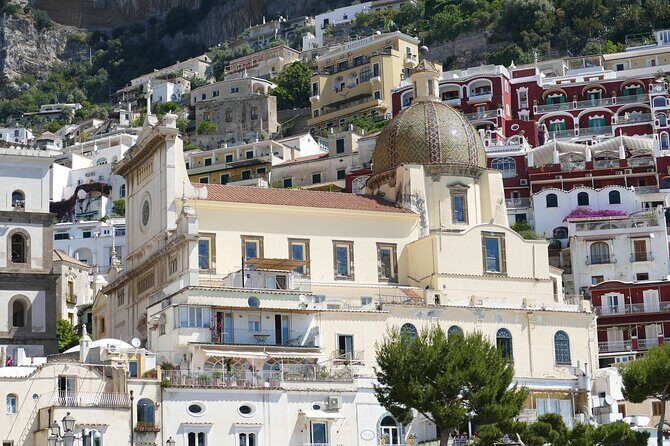
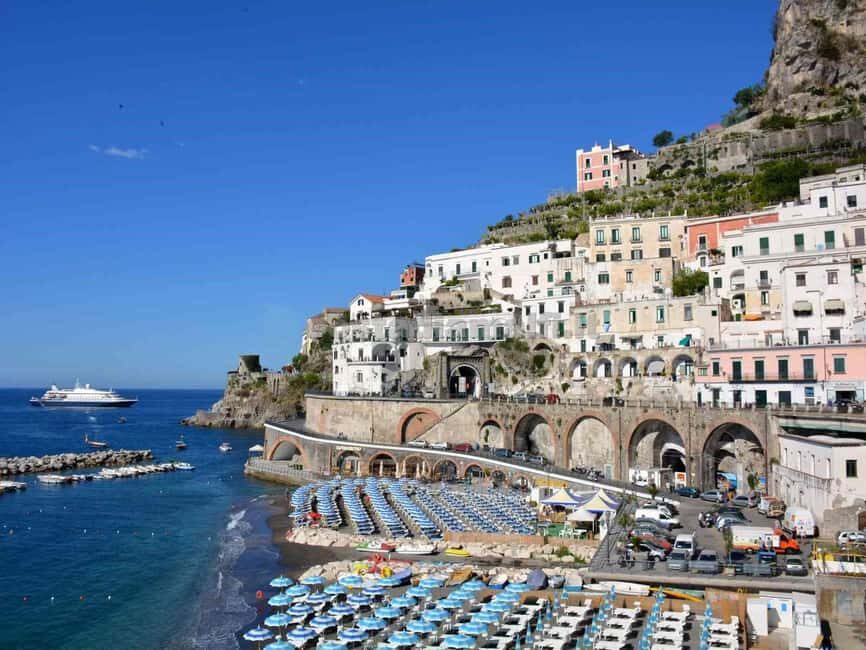
Positano can feel like a postcard that got busy. The streets layer on top of each other, viewpoints pop up suddenly, and it’s easy to walk for an hour and realize you still don’t know where you are. This kind of private walking tour helps because the guide acts like your town translator—connecting the photos you’ve seen with the places you’re standing in front of.
What you’ll notice right away is that the walk is designed for speed without feeling rushed. In roughly two hours, you cover the highlights and learn the story behind them. Instead of stopping randomly, you’ll move with a plan: historic anchors first, then the town textures—churches, shops, art spaces, and scenic viewpoints.
I also like the vibe of “practical plus pretty.” You’re not just taking pictures; you’re learning what makes these spots matter. Positano’s origins are traced back to the first century BC, and the guide ties that early story to later chapters like the Villa di Positano and the era of a wealthy market port.
You can also read our reviews of more walking tours in Positano



Route feel: from Chiesa di Santa Maria Assunta to Fornillo Beach
The tour has a clear beginning and ending, which makes it easier to fit into a day. You meet at Chiesa di Santa Maria Assunta in Piazza Flavio Gioia, then the walk finishes at Fornillo Beach. That means you’re not zigzagging all over the hillside just to return to the same starting point.
This start/end flow is also a smart way to experience a change of pace. Early on you’re in the heart of town, where you’ll see the church landmark and downtown energy. Later you shift toward the beach area, where the mood cools down and you can cap the tour with a real destination instead of just another viewpoint.
You should expect real walking time—Positano is famous for stairy connections, and one of the most praised parts of the experience is how guides adjust to the pace needed for busy streets and stairs. If you want a slower rhythm, that’s part of what you’re paying for.
The big story: first-century BC to the Amalfi Republic
The history is not presented like a lecture that floats above your head. It’s anchored to specific places you pass. The guide walks you through origins going back to the first century BC, then connects that to the Villa di Positano, the idea of Positano as a wealthy market port, and later the Amalfi Republic chapter.
This matters because it changes how you read the town. A church façade becomes more than a photo backdrop—it becomes a marker in a long timeline. A viewpoint stops being just scenic. It turns into a clue about why people settled, prospered, and built the way they did.
There’s also a film angle woven in. Positano is described as being featured in several films, and that shows up as you visit the recognizable corners. You get to see how the cinematic Positano look is rooted in real streets and specific view lines—not vague “movie magic.”
Church of Saint Mary of the Assumption: the anchor stop
One of the core sights you’ll spend time with is the Church of Saint Mary of the Assumption. Even if you’re not the type to do long museum hours, church architecture and placement matter in towns like Positano. Here, the church acts like an organizing point: it’s a landmark you can remember later, and it gives the walking route structure.
The guide’s job is to help you look beyond the obvious. You’ll get context on origins and the evolving role of the town, so the church visit feels tied to the broader story you’re hearing. If you’re shopping or wandering afterward, you’ll also appreciate having the church in your mental map.
A small note from a practical standpoint: expect the church area to be busy. The advantage of doing it with a private guide is that you can keep things moving at a pace that works for you instead of getting trapped in crowd delays.
Villa Romana viewpoint: seeing the Roman past in plain sight
Another standout stop is the View of Villa Romana. The appeal here is simple: you’re hearing about ancient Positano while standing close to the physical reminder of it. The tour ties the long timeline to the Villa di Positano idea, and that makes the “first century BC” part feel less abstract.
I like viewpoint stops on walking tours because you can reset your bearings mid-route. You’re not just walking through streets—you’re pausing to orient. That’s especially valuable in Positano, where it’s easy to feel like every turn looks similar until you’re told what you’re actually looking at.
If you enjoy art and history, this is where it clicks: the tour shows how Positano’s prestige has always been linked to its location and view corridors. You can then connect that to what you’ll see next around downtown and the artisan areas.
You can also read our reviews of more guided tours in Positano






Positano Downtown, artisan shops, and art galleries (without aimless wandering)
After the anchor sights, the walk shifts into town texture. You’ll spend time in Positano Downtown, with stops that reflect the town’s artisan and art side—art galleries and artisan shops come into the route.
This is not a shopping tour with a sales script. It’s more like a curated walk where the guide points out what’s worth noticing and how to enjoy it without losing time. If you’re trying to fit Positano into a packed itinerary, you want someone to help you avoid the “we’ll just look for a bit” trap.
One reason people rate this tour highly is the practical kind of guidance that can come out naturally during the walk. For example, Celia is specifically mentioned as pointing out good restaurant ideas and how to get around the town. That’s the sort of value that pays off later, when you’re hungry and don’t want to waste an hour searching.
Don Catello: where character, culture, and food energy meet
A distinctive stop on this walk is Don Catello. In a town like Positano, names like this often mean more than a marker on a map; they signal local culture and familiar gathering rhythms. The guide weaves it into the overall story and uses it as a way to keep the walk feeling grounded in the living town, not just landmarks.
This part is especially useful if you’re the type who likes to understand what people do day to day in a place. You’ll see how the town’s identity shows up in places you might otherwise treat as just another corner shop stop.
If your top priority is photos, this stop also helps you keep momentum. A good guide turns stops like this into something to look at, not something to rush past.
Fornillo Beach finish: a softer ending to the walk
The tour ends at Fornillo Beach, and that matters more than you might think. Ending at a beach gives you a built-in decompression zone. Instead of finishing back in the most crowded streets, you close the walk where you can actually exhale.
Fornillo is a great “capstone” location because it’s a physical destination you can remember. After you’ve heard about Roman-era origins, the Villa di Positano, Positano’s market-port days, and the Amalfi Republic period, ending at the coast feels like the right final note.
Also, beach endings make it easier to plan what comes next. If you have lunch nearby, a swim, or just time to sit and watch the sea, you’re already in the right area instead of restarting your day from square one.
Private pacing, customization, and the guide’s speaking style
The promise of a private walking tour is control: you control how long you linger and what you care about. Here, the guide can customize on the spot based on your interests. That’s why this can work well for different styles—history-first folks, art and shop explorers, or anyone who just wants the best way through Positano without burning daylight.
The best version of this tour is when the guide matches tempo. One highlight that shows up is adjusting for the pace needed for busy streets and stairs. That’s not just “nice”—it’s key to making two hours actually feel comfortable instead of constantly apologizing to yourself for moving too slowly.
One caution comes from a less-perfect experience: a guide who spoke very fast and softly made it hard to understand much of the story. That doesn’t mean the tour is always like that, but it does mean you should be proactive. If you want things slower or clearer, say so early. A private guide can usually respond better than a group setting.
Price and value: what $307.07 per group buys you
The price is $307.07 per group, sized up to 15 people, for about two hours. That pricing structure is the big value lever here: it can be reasonable if you split it, and it stays flexible if your group size is larger.
Here’s how to think about it. If you’re a couple, this can look high compared to per-person group tours. But you’re not paying only for walking time—you’re paying for a guide who tailors the route, keeps you from getting stuck in crowd chaos, and gives you context for major sights like the church and Villa Romana viewpoint.
If you’re a small family or a friend group, it often feels like a smart trade. For the cost of a couple of guided experiences in smaller towns, you get one coherent two-hour narrative of Positano, plus practical guidance you can use after the tour—like where to eat or how to move efficiently through town.
One more value point: you’ll often book private tours farther out—this one is noted as averaging around 75 days in advance. That tells you demand is real. If your dates are fixed, don’t wait until the last week.
Who this tour is best for (and who should look elsewhere)
This is a great match if you want Positano highlights in a short window and you enjoy understanding the “why” behind what you see. It also fits well if you prefer not to rely on figuring things out with a map on the go.
You’ll especially like it if you care about history in a grounded way—first-century BC origins, Villa di Positano, and the Amalfi Republic thread—while still having time for artisan shops and art galleries. If your idea of a good day is “a plan, but not rigid,” this private walk hits that balance.
Consider alternatives if you’re extremely price-sensitive and want a per-person bargain, since private group pricing can be higher. And if audio clarity is a big deal for you, go in ready to ask for a slower, clearer pace if needed.
Should you book this Positano private walking tour?
I’d book it if you want a fast, high-signal way to understand Positano without wasting your first day getting your bearings. The route choice—from Chiesa di Santa Maria Assunta to Fornillo Beach—gives you both the historic anchor and a relaxed ending, which is a rare combo.
You’re also getting real control: your guide can adjust pace and focus as you walk. That’s what turns two hours into something you remember, not just something you completed.
My practical advice: message your priorities when you book (history, shopping/art, or food tips), and at the start ask for a speaking pace you can comfortably follow. If you do that, you’re set up for a smooth, confidence-building introduction to the town.
FAQ
How long is the Positano private walking tour?
It lasts about 2 hours.
Is this tour private?
Yes. It’s a private tour/activity, and only your group participates. The group size can be up to 15.
Where do we meet, and where does the tour end?
You meet at Chiesa di Santa Maria Assunta in Piazza Flavio Gioia, Positano. The tour ends at Fornillo Beach.
What language is the tour offered in?
The tour is offered in English.
Can the guide customize the tour during the walk?
Yes. There can be possible customizing on the spot with your local guide based on your interests.
What is the cancellation policy?
You can cancel for free up to 24 hours in advance for a full refund. If you cancel less than 24 hours before the start time, the amount paid isn’t refunded.