REVIEW · POSITANO
Guided tour of the history and tradition of the Sorrento lemon
Book on Viator →Operated by Vivaio Ruoppo - Lemon Tour Sorrento · Bookable on Viator
Lemons here feel like local history. This guided stroll through Sant’Agnello blends the Sorrento lemon story with real orchard time, and you finish with a terrace tasting overlooking the ocean. I like that it stays practical and story-driven, with specific lemon varieties you can see on the walk. I also like the food and drink at the end, especially the homemade limoncello and the extras served with it. One possible drawback: it depends on good weather, so a rainy or rough day can throw off your plans.
You’ll meet at Viale dei Pini, 31 in Sant’Agnello, and the group stays small (up to 20). The guiding can be excellent and human; one guide named Pia is highlighted for being clear, detailed, and genuinely enthusiastic. Bring comfortable shoes, because you’re walking among grove paths and estate grounds for about 1 hour 15 minutes.
In This Review
- Key highlights you should know before you go
- Lemon history in Sant’Agnello: why this tour feels different
- Starting at Viale dei Pini: quick setup, easy day
- Pizzo Garden: the 19th-century context that makes the lemons make sense
- Walking the grove: the lemon varieties you can actually spot
- The terrace tasting: what’s included and how to enjoy it
- The take-home Old grandma’s limoncello recipe
- Practical timing and weather: plan your afternoon around the sky
- Value check: what you’re paying for, and what you actually get
- Who should book this tour (and who might want something else)
- Should you book the Sorrento lemon history tour?
- FAQ
- How long is the Sorrento lemon history and tradition tour?
- What does the tour include at the end?
- Where do I meet for the tour?
- How much does it cost?
- Is it a small group?
- Will I see different types of lemons?
- Is there a take-home item included?
- Can I cancel for free, and what’s the weather policy?
Key highlights you should know before you go

- Small-group feel (max 20 people) so you’re not lost in a crowd.
- Pizzo Garden, a historic 19th-century estate that sets the context for the lemon tradition.
- You’ll see named lemon types, including Ovale di Sorrento, Sfusato di Amalfi, and cedar.
- A sea-view terrace tasting with bread, orange and lemon marmalade, fresh lemonade, and homemade limoncello.
- Take-home value: you’re given an Old grandma’s limoncello recipe at the end.
- Guides explain traditional cultivation techniques as you walk the grove, not just at a distance.
Lemon history in Sant’Agnello: why this tour feels different

If you think of lemons as just a citrus fruit, you’re going to learn fast that in this part of Italy they’re also identity. The Sorrento lemon isn’t presented as a product; it’s presented as something people tended over generations, tied to land, labor, and the view itself. You’ll be walking where the fruit grows, then eating and drinking what that fruit becomes.
What makes this experience click is the flow. You start with place (a historic estate), move into the grove (rows, varieties, and growing methods), and end with a terrace that looks out toward the sea. That last part matters. When you taste something sour-sweet like limoncello with a horizon in front of you, it stops being a novelty and turns into a memory.
The “exclusive lemon grove” setting also helps you slow down. You’re not doing a quick photo stop. You’re learning why certain trees are planted and how they’re cared for, then you get to taste the result.
You can also read our reviews of more guided tours in Positano



Starting at Viale dei Pini: quick setup, easy day
Your meeting point is Viale dei Pini, 31, 80065 Sant’Agnello NA, Italy, and the tour ends back there. That matters if you’re basing yourself along the Sorrento coast or in Positano and you want a straightforward return plan.
You’ll use a mobile ticket, and service animals are allowed. It’s also near public transportation, which gives you flexibility if you don’t want to worry about parking. And since the tour is about 1 hour 15 minutes, it’s built for a normal afternoon schedule rather than a long day commitment.
Small-group size (up to 20) keeps the pacing humane. You should be able to ask basic questions and get real answers as you walk, especially when the guide is the kind of person who takes the topic seriously without making it feel like a lecture.
Pizzo Garden: the 19th-century context that makes the lemons make sense
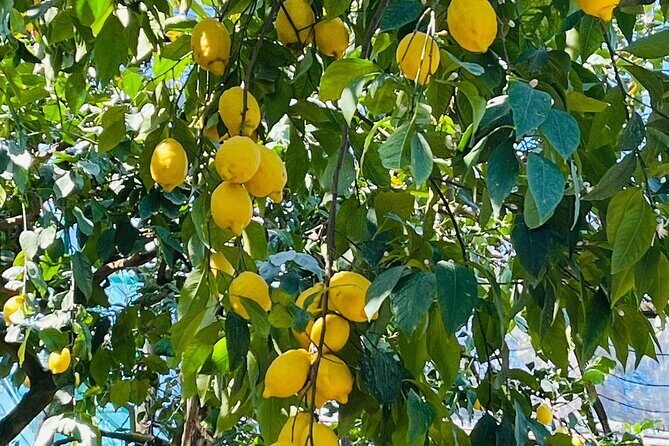
The tour starts with a guided look at the Pizzo garden, described as a historic estate dating back to the 19th century. This isn’t just scenery. It’s your timeline.
Why that matters: lemon cultivation in the region didn’t become “a tradition” by accident. Historic estates like this help explain why citrus took hold here and why people invested in cultivating it consistently. The setting also gives you something to anchor your understanding to, so the grove walk doesn’t feel like random fruit spotting.
In practical terms, you’ll get a sense of how this area developed and why lemon growing became part of local life. Even if you only catch a few details, it gives your tasting at the end a stronger background. Instead of thinking, That’s good limoncello, you’ll think, This is what they were trying to protect and preserve.
Walking the grove: the lemon varieties you can actually spot
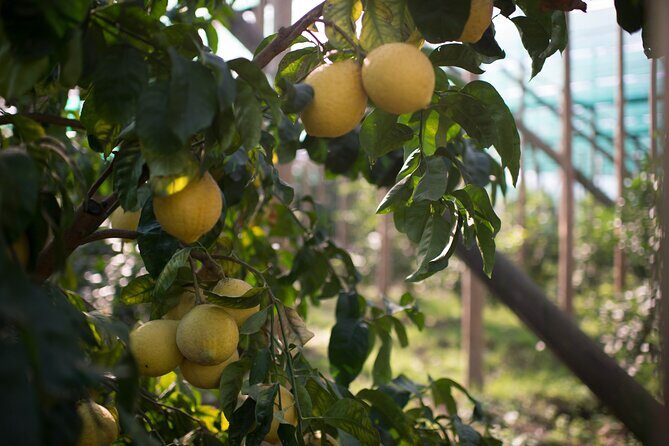
After the estate intro, you head into the exclusive lemon grove in Sant’Agnello. This is where the tour becomes hands-on: a walking route through different varieties of centuries-old lemon trees.
You can expect to see:
- Ovale di Sorrento
- Sfusato di Amalfi
- cedar
Even if you don’t know the differences yet, seeing named varieties in one place makes it easier to learn. The guide’s job is to connect what you’re seeing (tree types, grove layout, and cultivation methods) with what you’re tasting later.
This is also where the tour’s storytelling earns its keep. Traditional cultivation technique is explained alongside the walk. That’s a smart approach, because growing methods aren’t abstract here. They affect fruit quality, harvest timing, and ultimately how flavors show up in lemonade and limoncello.
If you’re the type who likes to look closely, this part is for you. Take a moment to notice tree shapes, how fruit hangs, and how the grove feels in different spots. The location is framed as suspended between land and sea, and you’ll feel that geography while you walk—light, breeze, and the sense that the view isn’t just decoration.
Tip: pace yourself on the walk. You’ll likely want to stop and listen when the guide points something out. Comfortable shoes help a lot, because orchard ground and estate paths can be uneven.
The terrace tasting: what’s included and how to enjoy it

The grand finale is a tasting on a terrace with a breathtaking view. This is not only the best photo opportunity; it’s also the part that turns information into flavor.
The tasting includes:
- bread
- marmalade made from oranges and lemons from their production
- fresh lemonade
- homemade limoncello
This mix is clever because it covers a range. Marmalade tends to feel more rounded and sweet, lemonade keeps the brightness, and limoncello brings the concentrated lemon essence. Starting with bread and marmalade helps you reset your palate before the more intense flavors.
Sipping lemonade first is a good move if you want to stay sharp and avoid surprises. Then you can taste limoncello with a clear sense of what it is: not just lemon-flavored, but lemon-forward and stronger than you expect. If you prefer milder drinks, you can still enjoy the limoncello while keeping it slow. The terrace setting encourages lingering, and the tour is short enough that you won’t feel rushed.
One more detail that can matter if you have dietary needs: gluten-free bread has been arranged in at least one reported case. So if you eat gluten-free or have other restrictions, bring it up when you book or right at the start. Don’t wait until the end.
And yes, the view helps. The ocean horizon makes the whole tasting feel like more than a sample platter. It’s the payoff for walking through the grove and hearing how it all connects.






The take-home Old grandma’s limoncello recipe
At the end, you receive the Old grandma’s limoncello recipe. For me, that’s what makes the tour feel complete. You taste, you learn, and then you take the tradition home in writing.
Even if you never make it exactly as directed, the recipe gives you a way to remember the tour later. It’s also a useful conversation starter when you’re back in your rental or home kitchen, because it ties your trip to a specific local item rather than a generic souvenir.
Practical note: since it’s handed to you at the end, plan to keep your phone and camera charged and your bag ready. You don’t want to scramble after the tasting.
Practical timing and weather: plan your afternoon around the sky
This experience runs about 1 hour 15 minutes. That timing is ideal if you want something meaningful that doesn’t swallow your whole day. You can pair it with a longer sightseeing block nearby without stress.
The tour also requires good weather. That doesn’t mean it’s cancelled instantly at the first cloud, but it does mean the organizers are sensitive to conditions since the tasting and parts of the walk rely on outdoor setting. If you’re traveling in shoulder season or a week with unpredictable storms, keep your expectations flexible.
Group size and pace are your friend here. With a max of 20 people, the walk doesn’t feel like cattle handling. If you’re hoping for more personal attention, a small group increases your chances—especially if you’re comfortable speaking up when something piques your curiosity.
And because the tour ends where it starts, it’s easy to continue your day afterward—grab gelato, take a short stroll, or head back to wherever you’re staying.
Value check: what you’re paying for, and what you actually get
At $59.29 per person for roughly 1 hour 15 minutes, you’re not paying just for a walk. You’re paying for:
- a guided explanation of the lemon tradition
- time in an exclusive grove and a historic estate
- a structured tasting (bread, marmalade, lemonade, homemade limoncello)
- a take-home recipe
In plain terms, the price makes more sense because the tasting isn’t an add-on you have to buy separately. You’re getting the core lemon products in one session, and you’re doing it with context. That’s different from buying limoncello on a street corner with no story attached.
If you’re visiting the Sorrento coast and you want one citrus-focused experience that feels grounded, this is a strong value choice. The sweet spot is that it’s short, but not shallow. You leave with a stronger understanding of how Sorrento lemons fit into local tradition, not just a sip and a photo.
Who should book this tour (and who might want something else)
This is a great fit if you:
- like food experiences tied to place and history
- want a guided walk without committing to an all-day itinerary
- enjoy citrus and want to taste multiple lemon-based products
- value a small group and a clear, talkative guide
It may be less ideal if you:
- dislike outdoor walking or have limited mobility and haven’t checked your comfort level
- only want large-ticket sights and would rather spend time in museums or major landmarks
- are traveling on a day when weather looks likely to turn bad
Also, if you’re the type who likes learning details, you’ll probably appreciate the specificity—named lemon varieties and traditional cultivation technique are part of the deal.
Should you book the Sorrento lemon history tour?
I think you should book this if you want a compact afternoon that feels local and intentional. The combination of orchard walk, historic estate context, and a sea-view tasting with homemade limoncello is exactly the kind of experience that gives your trip texture.
Book with confidence if you care about food traditions and you enjoy guided storytelling that points to real trees and real flavors. Skip it only if you know you won’t enjoy outdoor walking or you’re hard-locked into a weather-dependent schedule.
If you’re trying to choose one lemon-focused outing along the Sorrento side, this one is built around the full package: the grove, the explanation, and the taste.
FAQ
How long is the Sorrento lemon history and tradition tour?
The tour lasts about 1 hour 15 minutes.
What does the tour include at the end?
You’ll have a terrace tasting with bread, marmalade made from oranges and lemons, fresh lemonade, and homemade limoncello.
Where do I meet for the tour?
You meet at Viale dei Pini, 31, 80065 Sant’Agnello NA, Italy. The tour also ends back at this meeting point.
How much does it cost?
The price is $59.29 per person.
Is it a small group?
Yes. The tour has a maximum of 20 travelers.
Will I see different types of lemons?
Yes. The grove walk includes lemon varieties such as Ovale di Sorrento, Sfusato di Amalfi, and cedar.
Is there a take-home item included?
Yes. At the end of the tour, you receive the Old grandma’s limoncello recipe.
Can I cancel for free, and what’s the weather policy?
You can cancel for a full refund up to 24 hours in advance. The experience requires good weather, and if it’s canceled due to poor weather, you’ll be offered a different date or a full refund.