REVIEW · NAPLES
Pompeii Guided Walking Tour – Skip-the-Line Priority Access
Book on GetYourGuide →Operated by Napoli Official Tour · Bookable on GetYourGuide
Pompeii can swallow a whole day. This guided walk keeps you focused on the Forum-area highlights while still explaining what you’re actually looking at.
You get two things that make it worth doing: a professional, authorized guide who ties the ruins to Roman daily life, and a smart, walkable route that covers the big public spaces plus standout houses and even the Lupanar. One caution: Pompeii is enormous, so you’ll only see a slice of the city, not the full site.
That’s still a good trade. If you want the clearest first-time understanding of Pompeii without getting lost in a sea of streets, this 2-hour format is a practical way to start.
In This Review
- Key Takeaways Before You Go
- Why This Pompeii Walk Works for First-Time Visitors
- Getting Started at Porta Marina Inferiore in Piazza Esedra
- Skip-the-Ticket Line: What Priority Access Actually Means
- Walking From the Harbor Gateway to the Forum
- Forum Baths or Stabian Baths: Social Life in Public
- Via dell’Abbondanza: Shops, Bakeries, and Every-Day Streets
- House of the Faun: Elite Power, Mosaics, and Size
- The Lupanar: Leisure, Social Customs, and What People Did
- Recently Excavated Areas: New Findings That Change the Story
- The Pace and Group Reality: Two Hours Is Tight
- What I Think You’ll Like Most (and Who Might Want More)
- Should You Book This Pompeii Guided Walking Tour?
- FAQ
- How long is the Pompeii guided walking tour?
- Where do I meet the guide?
- What does skip-the-line priority access mean here?
- What is included in the $47 price?
- What languages are offered?
- What should I bring?
- Is it free to enter Pompeii on the first Sunday of the month?
Key Takeaways Before You Go
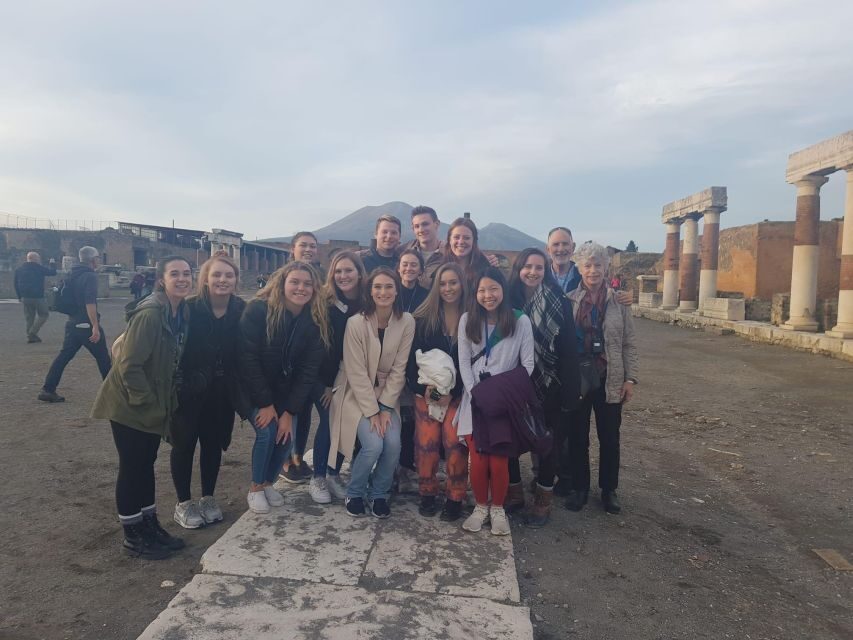
- Priority access to buy your entrance ticket saves time on one of Pompeii’s usual bottlenecks
- A 2-hour central-route walk hits the Forum, major baths, Via dell’Abbondanza, and a top elite residence
- You’ll pass through both public life (forum and baths) and more personal Roman topics like leisure and the Lupanar
- The route includes elite architecture and mosaics plus streets linked to shops, bakeries, and taverns
- There are recently excavated areas and fresh findings to help explain the final days before 79 AD
- Plan for the reality that Pompeii is huge and this tour won’t cover everything
Why This Pompeii Walk Works for First-Time Visitors
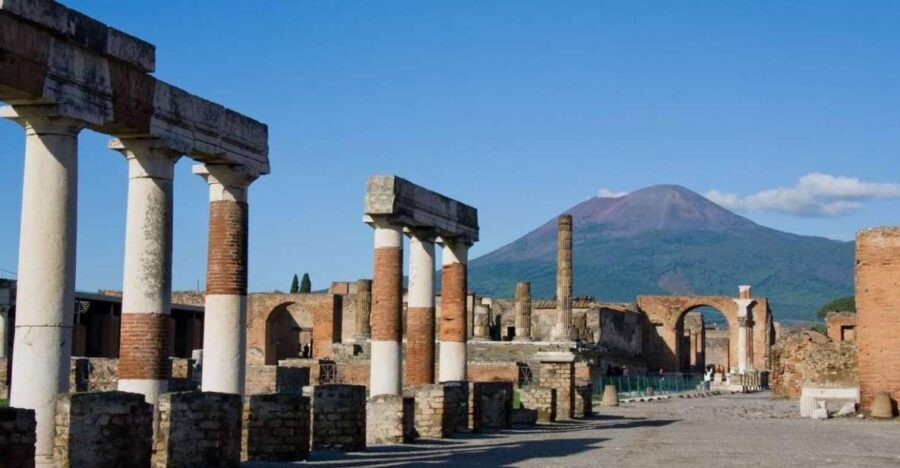
Pompeii ruins are powerful, but they’re also messy. Streets split, buildings repeat in form, and it’s easy to stare at stones without knowing what role each place played in daily life.
This tour is designed for understanding, not speed-running the whole site. You’re guided through the core areas, so the stops connect like a story: you enter the city, move from political and religious power into social spaces, then shift to neighborhoods and homes that show status and routines.
The best part for most people is that it balances structure with breathing room. Even with a guided route, the pacing is built so you can keep your own eyes open and later wander on your own with better context than when you arrived.
You can also read our reviews of more walking tours in Naples


Getting Started at Porta Marina Inferiore in Piazza Esedra
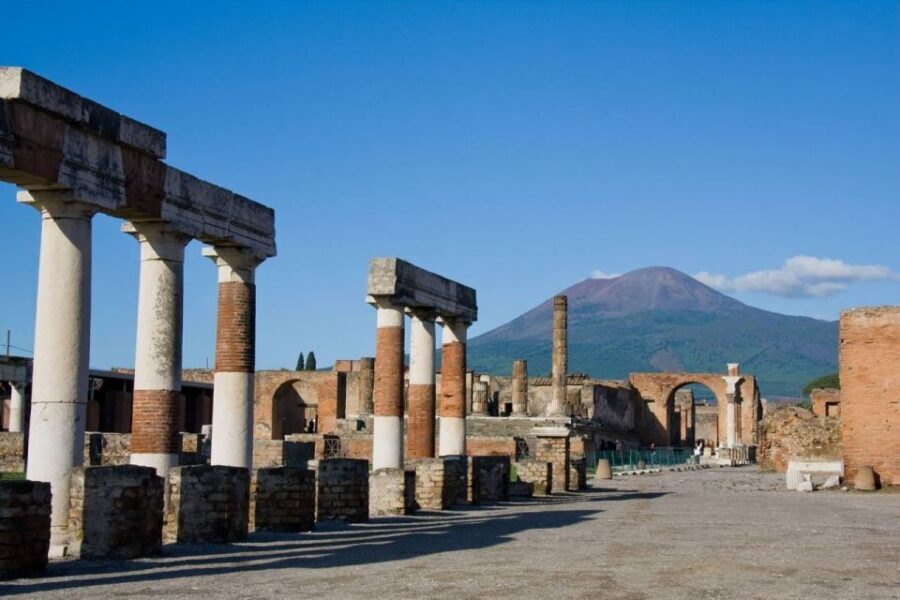
Your guide meets you at Porta Marina Inferiore, in Piazza Esedra. You’ll spot them by a board with a local tour operator logo, so keep an eye out when you arrive.
This is the one logistics detail I wouldn’t casually wing. Some visitors have had trouble finding the meeting point quickly, even when they booked ahead. Arriving a bit early helps—give yourself time to orient, compare signs, and locate your guide without stress.
Practical tip: if you’re going during a busy time of day, treat the meeting point like an airport gate. Once the group starts moving, you don’t want to be sprinting through the entrance area trying to catch up.
Skip-the-Ticket Line: What Priority Access Actually Means
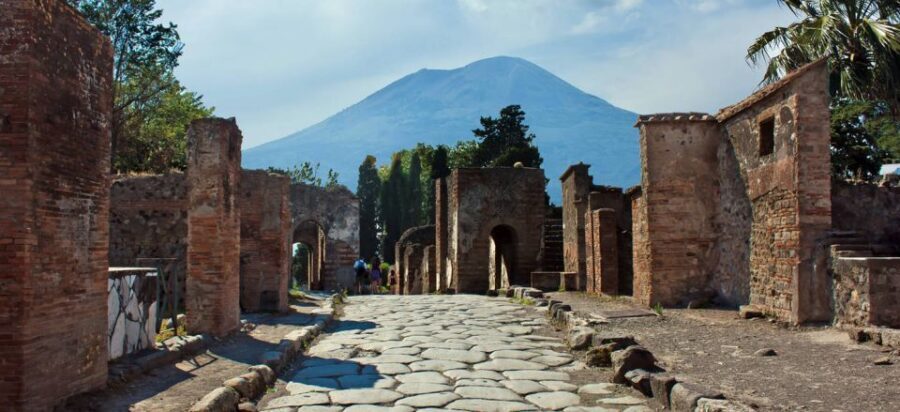
The price includes priority access to buy the entrance ticket, plus the entrance fee. That matters because Pompeii ticketing can get slow, and standing around while your time slips away is the last thing you want.
This isn’t a magic teleport that removes every line everywhere. It’s more direct than that: priority helps you handle the ticket step faster so you can spend your limited tour time walking and learning.
Here’s the value angle: at about $47 per person for a 2-hour guided tour, you’re paying for three things at once—an authorized guide, priority handling for the entrance ticket, and the entrance admission itself. If you were to piece it together yourself, you’d still need a guide for interpretation, and you’d likely lose time waiting to buy tickets.
Also note a special case that can change your expectations. On the first Sunday of each month, entrance is free. But tickets can’t be reserved ahead of time, so entry isn’t guaranteed. If that date matters for your trip, plan with flexibility.
Walking From the Harbor Gateway to the Forum
You start by stepping through Porta Marina Inferiore, the ancient gateway that connected Pompeii to its harbor. It’s a strong mental switch: you’re not just looking at ruins—you’re moving along a real route people used.
From there, you head toward the Forum, Pompeii’s political, religious, and commercial center. This is where the city’s “who mattered” becomes visible. The Basilica anchors the civic side, while the Temple of Jupiter and the Temple of Apollo signal religious power and public ceremony.
As you walk, look beyond the postcard view. Try to picture a Roman day: officials discussing matters of state, merchants operating in the commercial rhythm, and crowds gathering for public events. The guide helps you connect those roles to the surviving architecture, so you’re not just ticking off names.
One more practical note: the Forum area is the core, so crowds can happen. The guided pace gives you a better way to read the space without getting stuck waiting for a clear angle.
Forum Baths or Stabian Baths: Social Life in Public
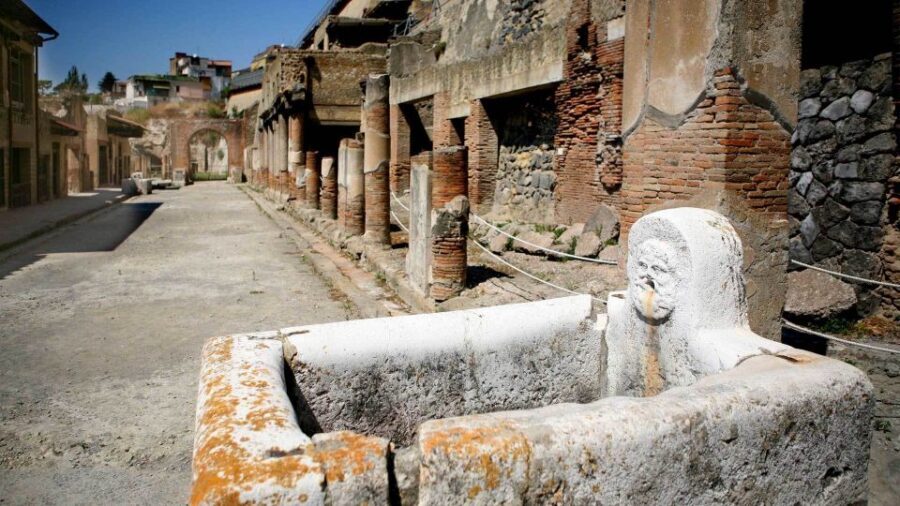
After the Forum, the tour turns toward public relaxation and socializing in the baths—either the Forum Baths or the Stabian Baths (depending on the guide’s exact route). Bath complexes were everyday institutions, not special-occasion monuments.
This stop is where Pompeii shifts from big-power buildings to human routines. Baths were about hygiene, sure, but also about meeting people, exchanging news, and spending time.
Here’s what I like about including this kind of place on a short tour: it’s one of the few ways you can learn daily life without needing to guess. Even with ruins, the layout points to how people moved, where they gathered, and how the space functioned.
If you want Roman life to feel real, baths are a smart choice. They also break up the heavy political and religious stonework with a more lived-in story.
You can also read our reviews of more guided tours in Naples


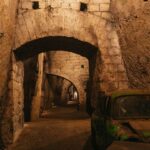

Via dell’Abbondanza: Shops, Bakeries, and Every-Day Streets
Next comes one of the most useful “reality checks” on the tour: Via dell’Abbondanza. This street is lined with ancient shops, and it’s easy to understand why it’s such a highlight.
This isn’t just about looking at walls. The guide’s job is to translate storefront spaces into a working neighborhood—bakeries, taverns, and the kind of daily errands that filled ordinary Roman life.
I like this stop because it helps you stop treating Pompeii like a museum. You start thinking about what people actually did before 79 AD: buying food, running errands, grabbing a drink, and walking the same streets over and over.
If you’re a photo person, just remember that streets and shopfronts create a natural temptation to pause constantly. Some people find they have to keep up to stay with the group. Your best move is to take photos quickly while you’re passing and then do a slower look when the group stops.
House of the Faun: Elite Power, Mosaics, and Size
Pompeii’s elite homes are the payoff for anyone who wants to see status in stone. The tour includes the House of the Faun, one of the largest and most luxurious private residences in Pompeii.
What makes this stop valuable is how it reframes the whole city. Up to this point, the buildings you’ve seen emphasize public power. Now you’re looking at the domestic side of Roman society—how wealth showed up in architecture and decoration, and how elite life was shaped by space.
You’ll also hear about refined details like mosaics, which are hard to appreciate without guidance. The guide helps you understand why these features mattered and how they reflect the tastes and habits of the residents.
This is also a good moment to slow down mentally. Even if you’re physically moving, aim to notice changes in materials, layout, and the feel of how the home is organized.
The Lupanar: Leisure, Social Customs, and What People Did
Yes, the tour includes the Lupanar, Pompeii’s brothel. It’s not there for shock value. It’s there because Roman leisure and social customs were part of everyday reality, just like public baths and shops.
A guided explanation helps you avoid reading it through modern assumptions. You can learn how citizens spent leisure time, what this kind of business suggests about the city’s social structure, and how even morally complicated topics fit into the broader picture of daily life.
If you want Pompeii to feel human, this stop does that. It also gives context for how public and private life overlapped—something you won’t get if you only look at the most dramatic monuments.
That said, this is also where personal preference matters. If you’d rather keep your tour focused only on major temples and grand architecture, you may find this stop less comfortable. If you do go with an open mind, it’s one of the most direct ways to connect the ruins to real social behavior.
Recently Excavated Areas: New Findings That Change the Story
One advantage of a guided walk is that it can include notes about what’s new. This tour includes opportunities to see recently excavated areas and new archaeological findings.
That matters because Pompeii isn’t a frozen snapshot. The eruption of Vesuvius in 79 AD preserved the city, but archaeologists keep uncovering details that refine what we think we know.
The guide’s role here is crucial: they connect the fresh evidence to the larger story so you’re not just hearing random facts. You’re learning how each new excavation helps explain what life looked like right up to the final days.
If you’ve visited other ruins before, you’ll appreciate this. Pompeii benefits when your visit includes a sense of discovery, not just sightseeing.
The Pace and Group Reality: Two Hours Is Tight
This is a 2-hour guided experience focused on the central area of Pompeii. That design is great for first timers, but it comes with an honest tradeoff: you won’t see the entire site.
Some people come away feeling like they covered less than a quarter of Pompeii. That’s not a complaint with bad intent—it’s just scale. Pompeii spreads out in ways that make “full coverage” unrealistic in a short tour, even with skip-the-line help.
So here’s how I suggest you think about it: treat this as your orientation tour. Get the meaning, learn the layout, and then use your time after the guided portion to wander where your interests pull you—whether that’s more streets, more residences, or the areas you missed.
If you’re the type who wants every major stop, you may need a longer tour or add self-guided time. If you want a clear overview without burning the whole day, this length is a sweet spot.
What I Think You’ll Like Most (and Who Might Want More)
You’ll probably enjoy this most if:
- You’re visiting Pompeii for the first time and want a guide to turn ruins into context
- You want a mix of public spaces (Forum and baths) and life-in-the-street details (Via dell’Abbondanza)
- You like standout monuments such as the House of the Faun and the more human Roman topic of the Lupanar
If you lean hard toward everyday life, you might feel the emphasis is sometimes more about monuments and how they connect than about minute daily routines. The tour does include everyday anchors like shops and taverns, but if you’re specifically chasing details about daily habits, you’ll likely want to continue exploring on your own after the guide finishes.
Also, if you’re very photo-driven, plan to move with the group. The stop-and-shoot rhythm may feel quick at times, especially during busy stretches.
Should You Book This Pompeii Guided Walking Tour?
I’d book it if you want the best use of limited time in Pompeii and you like learning on your feet. With priority access, a live authorized guide, and an itinerary that strings together the Forum, baths, key streets, elite homes, and the Lupanar, you’ll leave with a much clearer sense of how the city worked.
Skip booking only if you’re expecting to see the whole site in two hours. Pompeii is too large for that, and this route is intentionally concentrated. If you do want more ground coverage, pair the guided walk with extra independent wandering afterward.
FAQ
How long is the Pompeii guided walking tour?
It lasts 2 hours.
Where do I meet the guide?
Meet at Porta Marina Inferiore in Piazza Esedra. The guide will have a board with a local tour operator logo.
What does skip-the-line priority access mean here?
You get priority access to buy your entrance ticket.
What is included in the $47 price?
The tour includes a 2-hour guided tour with an authorized professional guide, priority access to buy the entrance ticket, and the entrance fee.
What languages are offered?
The live tour guide is available in English and Italian.
What should I bring?
Wear comfortable shoes. If traveling with children, bring a passport or ID card for them.
Is it free to enter Pompeii on the first Sunday of the month?
Yes, entrance is free of charge on the first Sunday of each month. However, tickets cannot be reserved ahead of time, so entry is not guaranteed.