REVIEW · NAPLES
Naples: The Holy Mile 3-Hour Guided Tour
Book on GetYourGuide →Operated by Catacombe di Napoli · Bookable on GetYourGuide
Naples goes underground for three unforgettable hours. The Holy Mile traces a sacred route from St. Gennaro’s tomb toward his Treasure, but it’s not a stuffy history lesson. I like that the tour pairs catacombs with underground basilicas, plus the chance to see important frescos and mosaics up close. I also like that you then shift back to street level in the Sanità district, where the buildings still carry memories of popes, kings, and cardinals. The main drawback is simple: there’s walking, and some parts are inside and underground, so comfortable walking shoes are non‑negotiable.
What you’re paying for feels fair: it’s 3 hours with a live guide in Italian and English, and entry tickets are included for stops 1 through 7. You start at Catacombe di San Gennaro and end at Piazza Cavour near the Archaeological Museum—an easy place to regroup and decide what you want next.
In This Review
- Key things to know before you go
- The Holy Mile concept: why Naples becomes a “route,” not a list
- Starting at Catacombe di San Gennaro: the part that makes people pause
- San Gennaro extra Moenia Basilica: sacred layers and a change in scale
- Santa Maria della Sanità Basilica: where frescos and mosaics do the talking
- Presepe Favoloso: a surprising pivot inside the same story
- Rione Sanità streets: the neighborhood walk that explains the buildings
- Palazzo San Felice and Palazzo dello Spagnuol: architecture with personality
- Via Vergini and Piazzetta Crociferi: the small streets that make the route real
- Ending at Piazza Cavour: smart positioning for what comes next
- Price and value: why $22 often feels like a bargain
- Walking reality: pace, shoes, and comfort in underground spaces
- Guides, language, and how much you’ll actually get out of it
- Who should book this Holy Mile tour
- Should you book the Naples Holy Mile tour?
- FAQ
- How long is the Naples Holy Mile tour?
- What does it cost?
- Where does the tour start?
- Where does the tour end?
- Is hotel pickup included?
- Are entry tickets included?
- What languages is the tour offered in?
- Do I need special shoes?
- Is free cancellation available?
- Is reserve now and pay later available?
Key things to know before you go
- A sacred route, not just sightseeing: from St. Gennaro’s tomb to his Treasure.
- Catacombs plus underground basilicas: you’ll see important religious art like frescos and mosaics.
- Rione Sanità on foot: you’ll walk an ancient neighborhood shaped by many cultures.
- Several stops, one clear story: basilicas, palazzi, and the Presepe Favoloso all connect.
- You can ask questions: guides are praised for answering thoroughly and with real care.
- Pace includes walking time: expect enough steps that good shoes matter.
The Holy Mile concept: why Naples becomes a “route,” not a list
The Holy Mile is built around a simple idea. You’re not wandering randomly. You’re following a path that feels spiritual, historical, and local at the same time. You begin with the tomb of St. Gennaro and move toward what the route calls his Treasure. Along the way, the guide helps you connect the dots between devotion underground and everyday life above ground.
I like this format because it keeps you oriented. Naples can feel like a city of movement and noise, and this gives you a reason for the chaos. You understand why you’re seeing catacombs one moment and street corners the next. And you get a strong sense that Rione Sanità isn’t just a backdrop—it’s a neighborhood with ongoing meaning.
One more practical point: the tour is also tied to the revival of Rione Sanità. That means the experience isn’t only about what’s old; it’s about what locals are trying to preserve and restore now. That gives the art, the architecture, and even the side streets extra weight.
You can also read our reviews of more guided tours in Naples

Starting at Catacombe di San Gennaro: the part that makes people pause
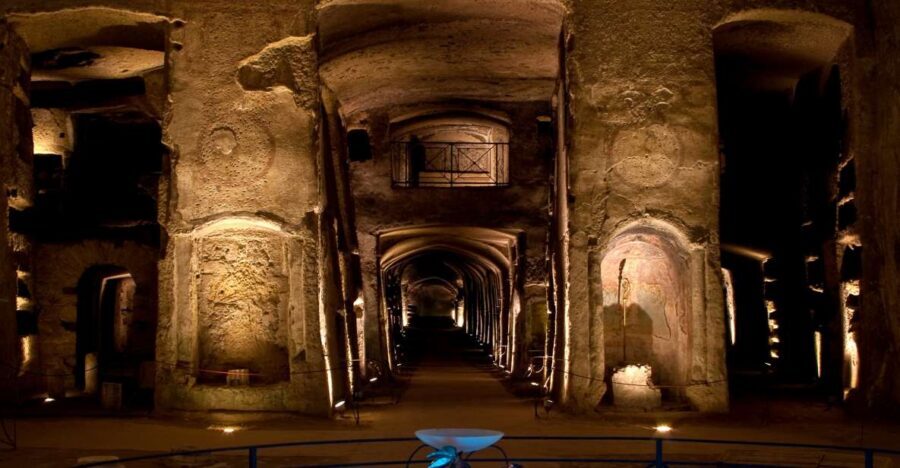
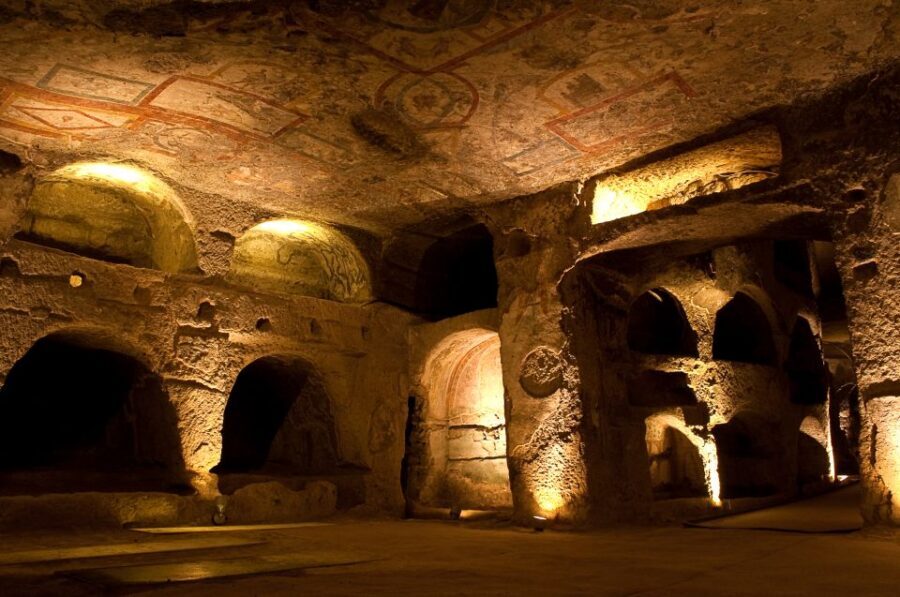
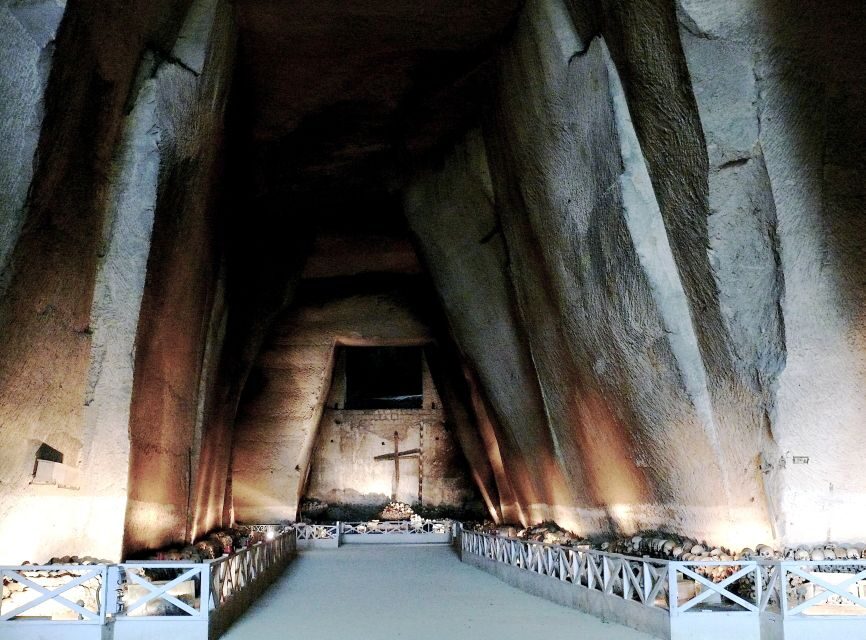
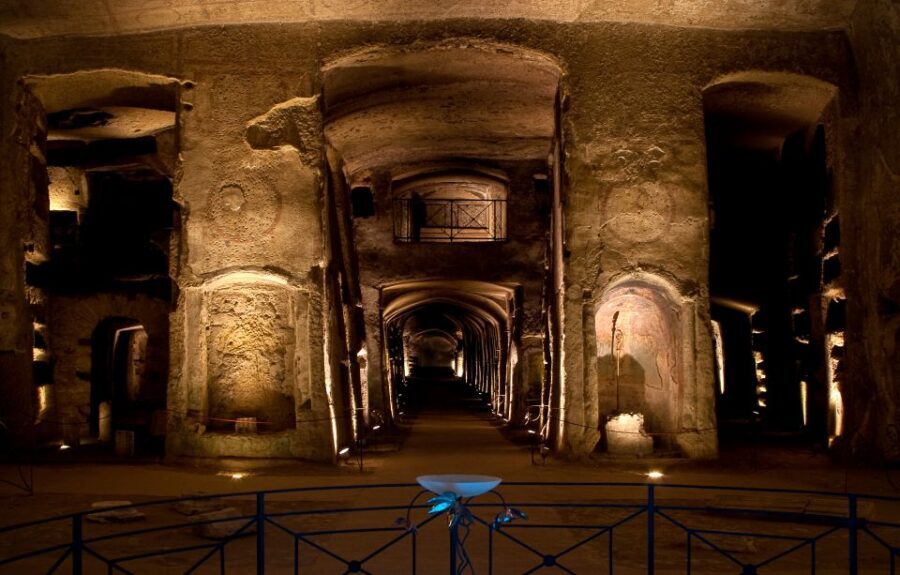
Your tour starts at Catacombe di San Gennaro. From the beginning, the mood shifts. You’re headed underground into one of Naples’s most important catacombs, and the guide sets the context so the spaces don’t just look like caves.
This stop is guided for about 50 minutes. That’s a good amount of time: long enough to understand what you’re looking at, and short enough that you’re not stuck staring at stone while everyone else moves on.
The standout feature here is atmosphere. You’re walking through a sacred space that has survived for generations, and the walls and corridors help you feel what “route” means—movement with purpose, not just a quick photo stop. People consistently highlight the catacombs as stunning, and I can see why. This is the part where the tour feels most out of the ordinary.
San Gennaro extra Moenia Basilica: sacred layers and a change in scale
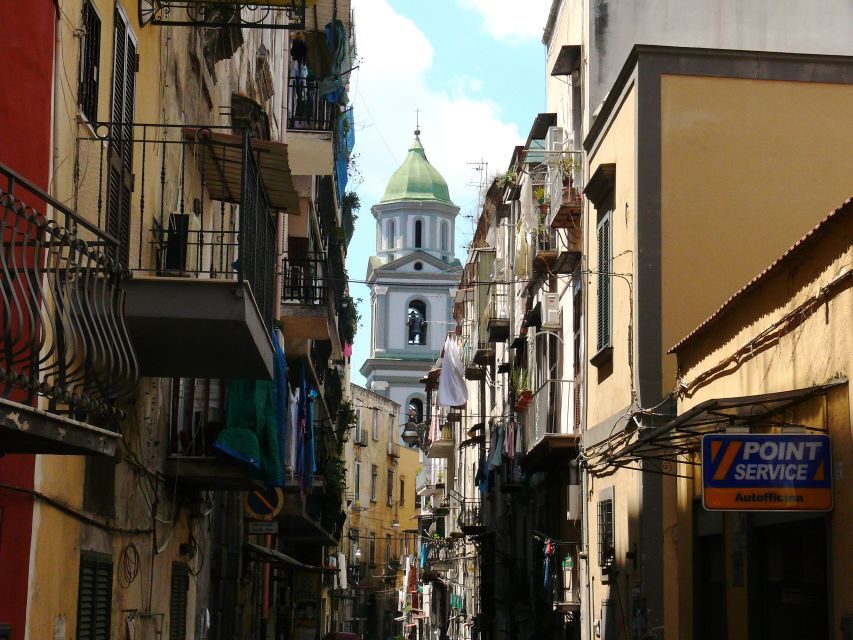
After the catacombs, you move toward the Basilica of San Gennaro extra Moenia. The phrase extra Moenia hints at a location outside the city walls, and the point for you is what the guide helps you notice: the sacred story doesn’t live in one place. It changes scale and setting.
Even though this stop fits into a broader 3-hour plan, it’s important because it bridges underground and above-ground Naples. If the catacombs give you the route’s foundation, the basilica helps you see how devotion translates into architecture and space you can stand in.
A practical note: basilicas can be cooler than the street, and the lighting can be dim. If you’re the kind of person who likes taking photos, plan on slower looking and less fast shutter-burst energy.
Santa Maria della Sanità Basilica: where frescos and mosaics do the talking
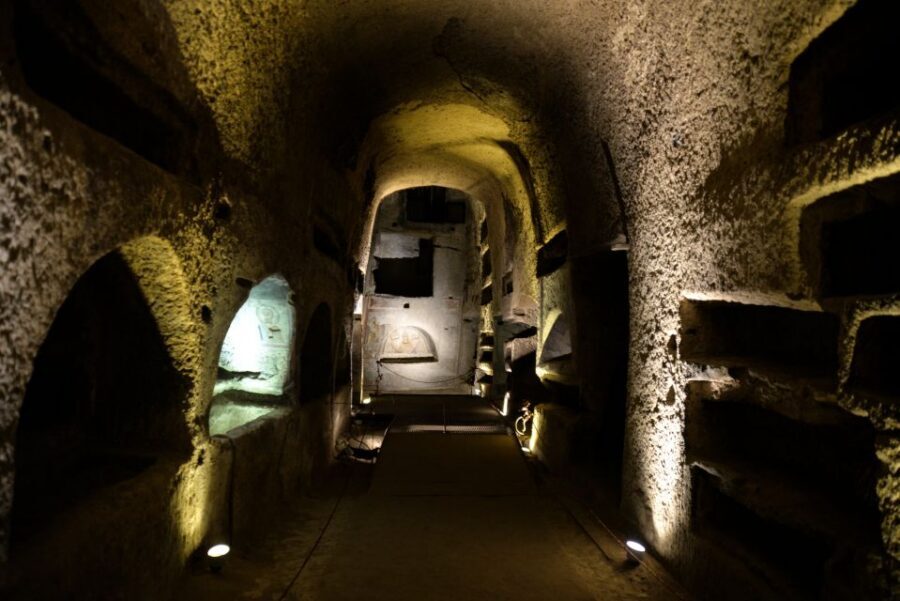
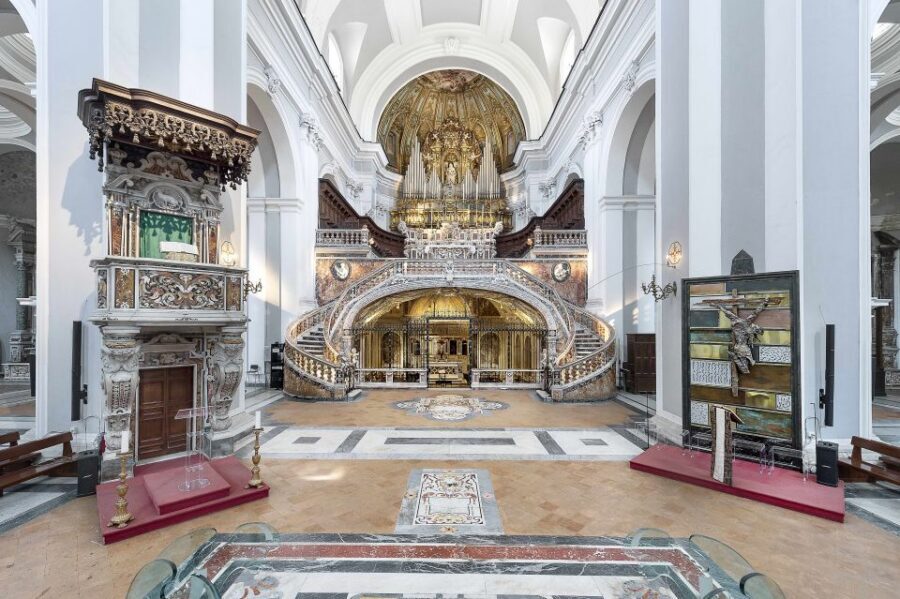
Next up is Basilica of Santa Maria della Sanità. This is one of the big visual stops and it’s guided for about 40 minutes. The experience focuses on underground basilicas and important frescos and mosaics, so you’re not just hearing facts—you’re seeing how religious art shapes belief.
This is also where the tour’s neighborhood story becomes clearer. Sanità isn’t only about big monuments. It’s about how communities expressed faith through decoration, craftsmanship, and the careful use of space. People who love this tour tend to highlight the way the guide connects the basilicas decoration to early Christian roots—so you’ll often leave with a clearer sense of how the art language developed over time.
Then there’s a short break afterward (about 15 minutes). That matters more than you’d think. You’ll get a chance to step back from the details, reset your eyes, and ask yourself what you actually remember. It makes the walking portions feel less like a blur.
Presepe Favoloso: a surprising pivot inside the same story
After the basilicas, the tour includes the Presepe Favoloso. This is a stop that adds a different flavor to the route. The catacombs and basilicas are solemn and historical. The Presepe Favoloso shifts toward a more intimate, scene-based way of experiencing faith.
I like this kind of pivot on a guided tour because it prevents “information overload.” You’re still learning, but your brain gets a fresh entry point. It’s also a reminder that Naples doesn’t treat religion only as museum material. Visual storytelling still matters here.
Even if you’re not normally into presepi, the value is in how the guide uses it to connect the neighborhood’s identity to what you’ve already seen.
You can also read our reviews of more tours and experiences in Naples


Rione Sanità streets: the neighborhood walk that explains the buildings
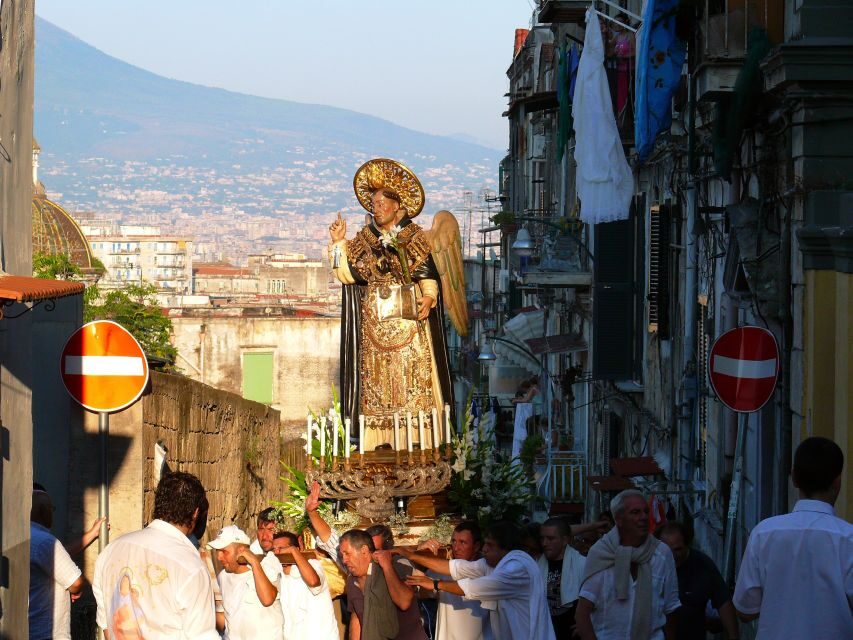
Here’s the part that many people end up remembering most: the walking through the Sanità district. You’ll spend time moving through the neighborhood and soaking up the mix of sounds, colors, and faces. The guide explains how this area has been shaped by many cultures over the centuries.
This is where you start understanding why the tour is called Holy Mile. You’re not just passing landmarks; you’re seeing the setting that made those landmarks matter. The streets preserve memories of popes, kings, and cardinals from more prosperous times. That line can sound poetic, but on the street it becomes practical. You notice how grander moments are still visible in stonework, layouts, and scale.
If you want to feel Naples as a living city (not only a postcard city), this neighborhood segment is the heart of that. Just keep in mind that it’s a guided walk. That means you’ll want to stay close enough to hear what the guide is saying, even when the street scenes are doing their best to steal your attention.
Palazzo San Felice and Palazzo dello Spagnuol: architecture with personality
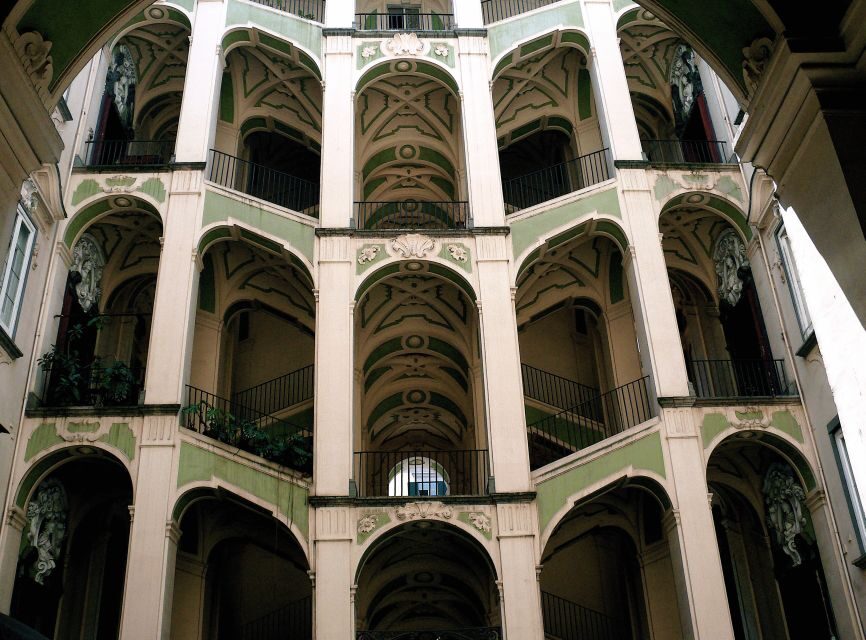
The tour continues with a walk to Palazzo San Felice and then Palazzo dello Spagnuol. These palace stops add a different dimension to what you’ve been seeing. Catacombs and basilicas are about devotion and sacred space. Palazzi are about power, wealth, and social presence in the city.
The value for you is contrast. You’ll see how the area’s story isn’t one-track. It includes religious influence and also the influence of political and social elites. And because you’re moving on foot from stop to stop, you’ll feel how the neighborhood’s layers are connected rather than separated.
These are also the kinds of stops where a good guide earns their money. If you get a guide like Fabrizio, Giuseppe, or Nello (names that come up often in people’s experiences), you’ll likely appreciate how they explain why details matter and how questions fit into the narrative. More than one person notes that asking questions leads to direct, thoughtful answers.
Via Vergini and Piazzetta Crociferi: the small streets that make the route real
Between major stops, you’ll walk along streets like Via Vergini and end up around Piazzetta Crociferi. These in-between segments are not filler. They’re how you experience the route as Naples, not as a sequence of rooms.
This matters because Naples is not only about major monuments. It’s about the in-between places that feel lived in: narrow streets, small squares, and a sense that the city’s past and present overlap. The guide’s job here is to give you something to look for while you’re moving—so you don’t just walk and then forget everything fifteen minutes later.
If you’re someone who likes street-level detail, these segments are satisfying. If you’re only interested in the biggest named sights, you might treat them as context. Either way, they’re part of why the Holy Mile feels like a route rather than a bus ride.
Ending at Piazza Cavour: smart positioning for what comes next
The tour ends at Piazza Cavour, near the Archaeological Museum. This is a good landing spot because it gives you options immediately. You’re not dropped into some random industrial edge of town. You’re placed near a major cultural area, so it’s easy to keep moving with your day.
It also helps you decompress. After walking, standing, looking, and listening for hours, you’ll be glad for a public square where you can sit, check your map, and plan. And because the end point is a recognizable place, you’re not left guessing how to get back.
Price and value: why $22 often feels like a bargain
At about $22 per person for a 3-hour guided tour, this price lands in the “good value” zone for Naples. Here’s why, in practical terms.
You get a live guide for the full route, not only for the indoor stops. You also get entry tickets included for stops 1 through 7. That inclusion matters, because catacombs and basilicas can add up once you start buying tickets separately.
On top of that, you’re getting two types of experiences in one: underground sacred spaces and above-ground neighborhood walking. That combination usually costs more when you book pieces separately. If you’re short on time and want one coherent plan, this is the kind of tour that makes sense.
The real question is whether you enjoy guided walking. If yes, the price looks even better.
Walking reality: pace, shoes, and comfort in underground spaces
This is not a “sit and listen” tour. You’ll walk between stops, including multiple short transfers through the neighborhood. People also flag that the tour involves quite a bit of walking, and the catacombs add a different kind of effort—time underground, steady movement, and looking at details that require you to slow down.
Bring comfortable walking shoes. That’s the one clear instruction you should follow. Also consider practical items like a light layer if you run cold indoors, because basilicas and catacombs can feel cooler than the street.
If you’re limited on mobility or you hate walking in older neighborhoods, you might find the route harder than expected. The tour is only three hours, but the structure still includes real movement.
Guides, language, and how much you’ll actually get out of it
The tour is offered in Italian and English, with a live guide. That matters because the places you’re visiting can be hard to interpret on your own. Catacombs and basilicas aren’t just “pretty rooms.” They’re complex spaces where the meaning changes depending on context.
People who love this tour often emphasize the guide’s ability to connect past and present in a way that feels clear. Names like Fabrizio, Giuseppe, and Nello show up in accounts of what makes the experience work. The praise isn’t only for facts; it’s for the way explanations land—plus the willingness to answer questions.
If you like learning while moving, and if you want Naples explained in human language (not a rushed audio track), you’ll likely get a lot out of the tour.
Who should book this Holy Mile tour
Book it if you want:
- Catacombs plus basilicas in a single afternoon plan
- A guided walk through Rione Sanità with context
- A route tied to community revival, not only sightseeing
- A tour that makes you ask questions and then get answers
Skip or think twice if:
- You want minimal walking or you avoid underground spaces
- You’re looking only for big, famous monuments with long optional photo time
This works especially well for couples, friends, and solo travelers who like structured wandering. It’s also a strong choice if you’re already planning other Naples sights and want something that feels truly different from the usual surface-only itinerary.
Should you book the Naples Holy Mile tour?
Yes, if you’re the kind of person who likes your travel stories to have a spine. The Holy Mile gives you structure: starting in Catacombe di San Gennaro, moving into basilicas and art, then shifting into Rione Sanità’s streets and palazzi before ending at Piazza Cavour. For the $22 price tag, the mix of guided interpretation and included entry tickets is hard to beat.
If you’re unsure, use this simple test: do you like walking through neighborhoods while a guide gives you reasons to look? If the answer is yes, you’ll probably feel rewarded by the whole route.
FAQ
How long is the Naples Holy Mile tour?
The tour lasts 3 hours.
What does it cost?
The price is $22 per person.
Where does the tour start?
It starts at Catacombe di San Gennaro.
Where does the tour end?
The tour ends at Piazza Cavour, near the Archaeological Museum.
Is hotel pickup included?
No, hotel pickup and drop-off are not included.
Are entry tickets included?
Yes. Entry tickets are included for stops 1 through 7.
What languages is the tour offered in?
The tour is guided in Italian and English.
Do I need special shoes?
You should wear comfortable walking shoes.
Is free cancellation available?
Yes. Free cancellation is available up to 24 hours in advance for a full refund.
Is reserve now and pay later available?
Yes. You can reserve your spot and pay nothing today.