REVIEW · NAPLES
Naples: LAPIS Museum Guided Visit in Italian
Book on GetYourGuide →Operated by Campania Overland · Bookable on GetYourGuide
Naples runs on water underground. In this 75-minute LAPIS Museum guided visit, you’ll follow an Italian-speaking guide through the Greco-Roman cisterns and the illuminated underground route inside the Basilica of Pietrasanta. I especially like the way the lighting makes the vaults and volumes easy to understand, and the 35-meter elevator descent turns the site into a real time-machine. One important consideration: it’s not suitable for wheelchair users or people with mobility impairments.
This is also a practical tour format. You’re in a small group of up to 10, and the pace is built around seeing the main spaces without wasting time—so you finish with a clear picture of how this underground system worked. You’ll start in the Museo dell’Acqua di Napoli hub area and then move through the basement spaces of the historic complex, including the Submerged Decumanus.
In This Review
- Key highlights before you go
- What you’re really seeing in the LAPIS Museum
- Basilica of Pietrasanta’s underground route, the Submerged Decumanus
- The highlight ride: the archaeological elevator down to 35 meters
- Museo dell’Acqua di Napoli: why the hub works
- How the lighting changes what you notice
- Pace, group size, and what makes it feel well run
- Price and value: is $15 for 75 minutes a good deal?
- Who should book this LAPIS Museum tour
- Should you book this LAPIS Museum guided visit?
- FAQ
- How long is the Naples LAPIS Museum guided visit?
- What is the price per person?
- Is the tour guide available in Italian?
- How many people are in the group?
- What is the main underground feature besides the museum areas?
- Where does the tour take place?
- Is it suitable for wheelchair users or people with mobility impairments?
- Can I get a refund if my plans change?
- Can I reserve now and pay later?
- FAQ
- What is the latest time I can book this experience?
- Who runs the experience?
Key highlights before you go
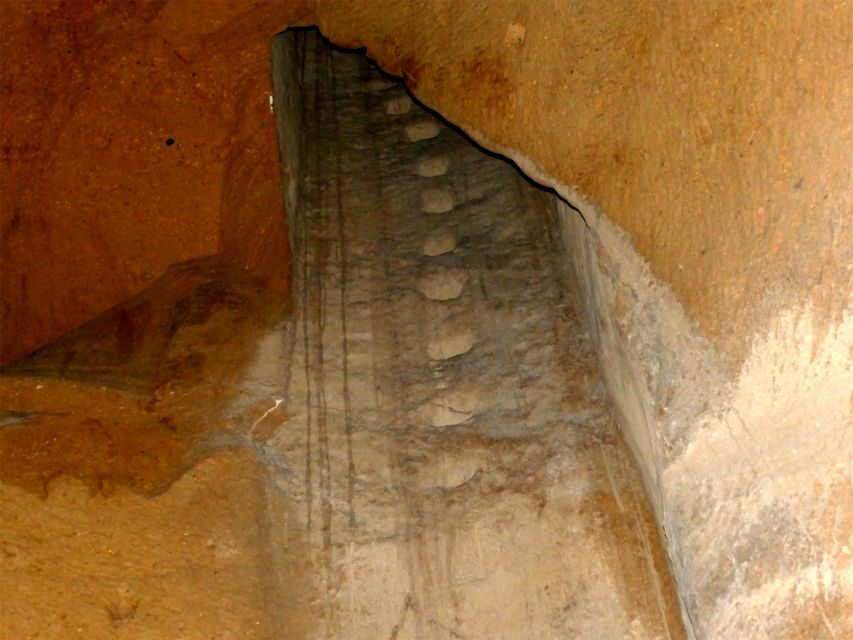
- Underground views inside the Basilica of Pietrasanta: see the site from the basement level, not street level
- Museo dell’Acqua di Napoli included: a focused look at how Naples’ water system connects underground spaces
- The Submerged Decumanus path: an underground route where runoff and water still play a role
- A historic hydraulic setting, reused for today: Greco-Roman cisterns put back into operation with modern technical lighting
- The archaeological lift ride: a descent to 35 meters deep in about 20 seconds
What you’re really seeing in the LAPIS Museum
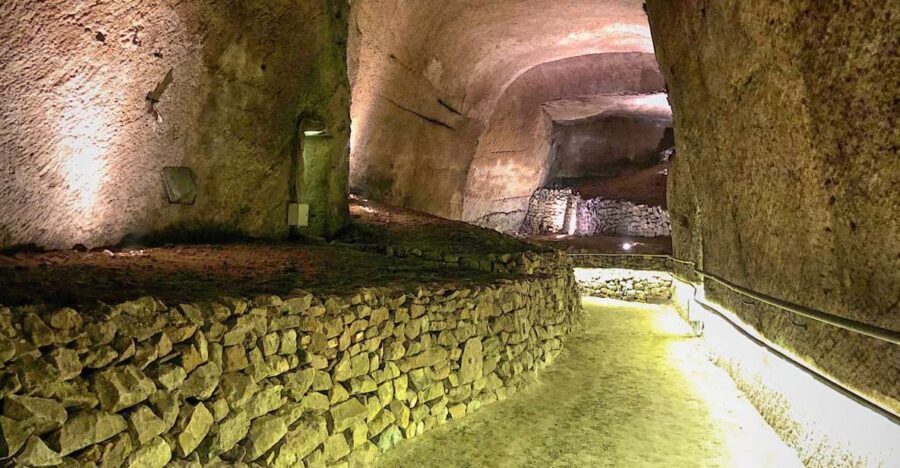
The LAPIS Museum visit centers on an underground water story. In Naples’ historic center, the Museo dell’Acqua di Napoli acts like the hub for the underground path of the Basilica of Pietrasanta. You’re not just looking at old stone—you’re walking through a hydraulic engineering concept that brought ancient cisterns back into use.
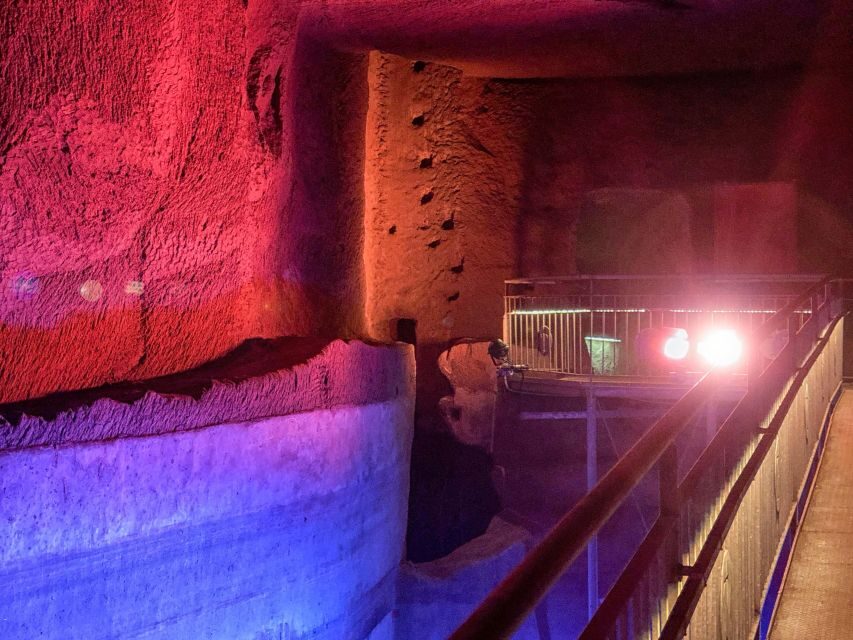
Here’s what makes it click fast: the Greco-Roman cisterns aren’t shown as scattered ruins. They’re presented through a designed route where technical lighting helps you read the architecture—vaults, volumes, and the way the space is shaped. The lights and colors aren’t there just for drama. They’re meant to help your eye understand the underground geometry, which is exactly what you want in a short, guided experience.
You’ll also learn that the basilica complex was built in the mid-seventeenth century by architect Cosimo Fanzago, using the remains of an Ancient Temple dedicated to the goddess Diana. That blend of eras matters. It explains why the underground spaces feel layered: you’re looking at reuse, not just preservation.
You can also read our reviews of more guided tours in Naples



Basilica of Pietrasanta’s underground route, the Submerged Decumanus
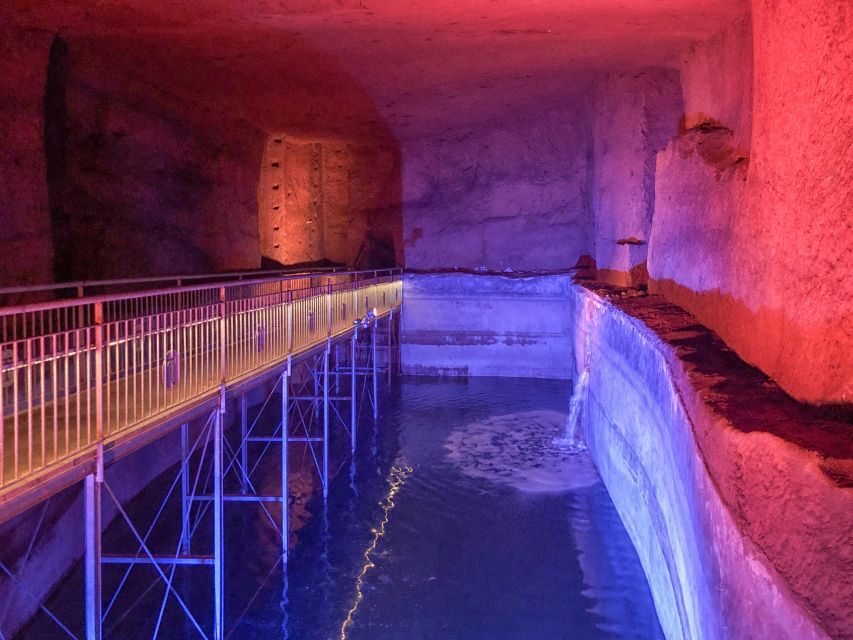
The tour’s “main event” is the underground path called the Submerged Decumanus. You move through what feels like a guided walk in the basement of the basilica, where the cistern system finds water and runoffs.
That phrase—cisterns finding water and runoffs—helps you understand why this place was built and why it’s still a living system. It’s not only about where water was stored. It’s about how water was managed underground, then routed through the complex in a way that supported the city above.
And because you’re in a guided format, you’re not left guessing what you’re looking at. The tour is set up so you can connect:
- the architecture around you (vaults, levels, passages),
- the purpose of the spaces (storage and management),
- and the modern interpretation (lighting and access).
If you like “how it works” explanations—especially in places where engineering meets archaeology—this route is a strong match.
The highlight ride: the archaeological elevator down to 35 meters
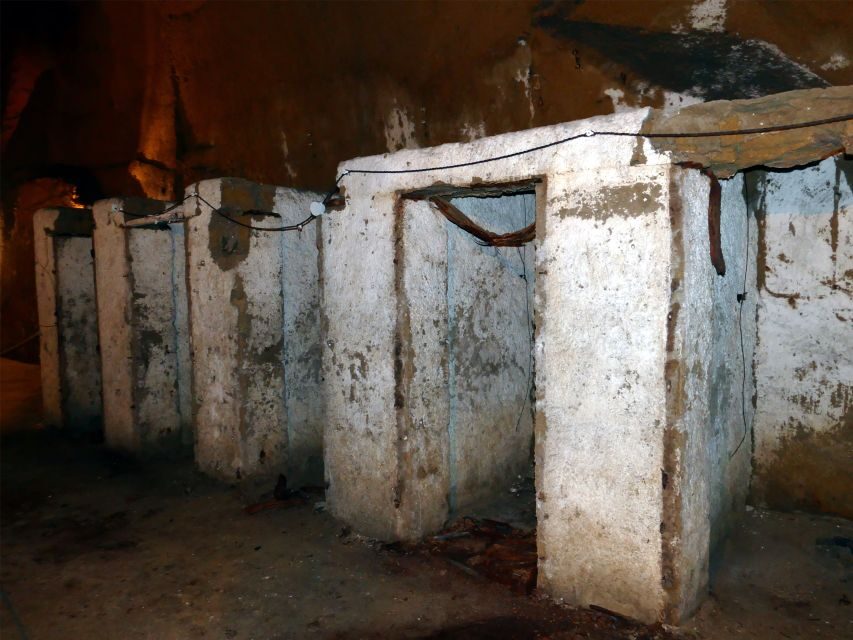
One of the most memorable parts is the ride in the archaeological lift. This is the first lift of its kind in the historic center area, designed to connect the crypt environment with the subsoil. The descent happens in about 20 seconds, and it takes you down to a depth of 35 meters.
Why this matters for your visit: the lift turns what could be a static museum stop into something more like a guided transition through time. The setup is meant to connect what you’re seeing now with the ancient subsoil context—about 2,000 years back in time.
Practically, the elevator also helps you experience the site efficiently. In a 75-minute guided visit, you need access that doesn’t eat up the whole schedule. This mechanism is a big part of how the tour can stay focused on the key underground spaces without dragging.
Museo dell’Acqua di Napoli: why the hub works
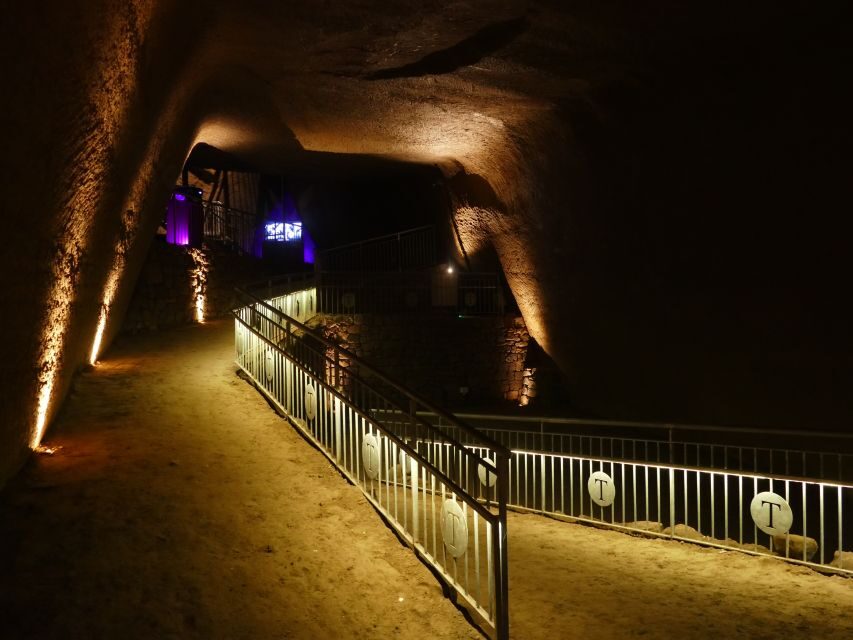
You’ll spend time in the Museo dell’Acqua di Napoli area, which is described as the hub of the underground path. I like that the tour starts with context instead of throwing you straight into the dark and hoping you catch on.
The museum portion supports what comes next. It frames the hydraulic engineering project that brings the ancient cisterns back into operation. Then, when you move into the underground route, you’re not just looking at rock. You’re watching a system get explained through the space itself.
Think of it like this: Naples can be overwhelming at street level. This tour gives you a different handle on the city. It helps you understand that Naples’ past wasn’t only art and buildings—it was also infrastructure, water management, and smart use of underground space.
How the lighting changes what you notice
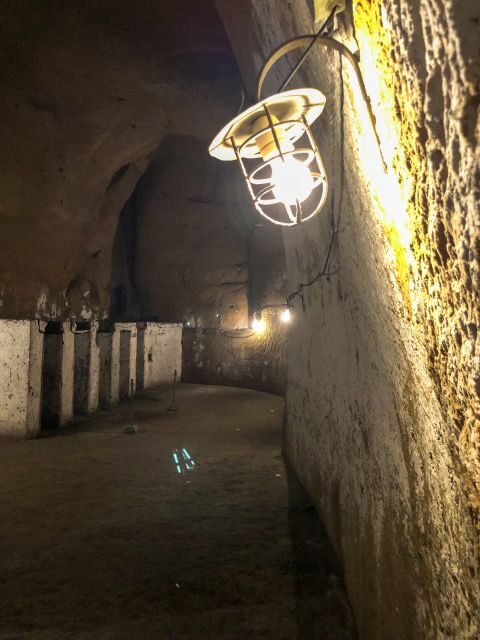
In many underground sites, lighting is just practical. Here, it’s part of the interpretation. The cisterns and vaults are enhanced with a technical lighting system that emphasizes volumes and vaults using lights and colors.
That sounds like museum-speak until you’re standing in the space. Then it becomes useful. The lighting guides your attention along the shapes you might otherwise miss in low light. It also helps you compare areas of the cistern system and understand the structure as a coherent environment.
This is one of the reasons the tour works well for short attention spans. You don’t have to do a lot of mental work to figure out what matters. The space is arranged so you can see what the guide is explaining.
You can also read our reviews of more museum experiences in Naples





Pace, group size, and what makes it feel well run
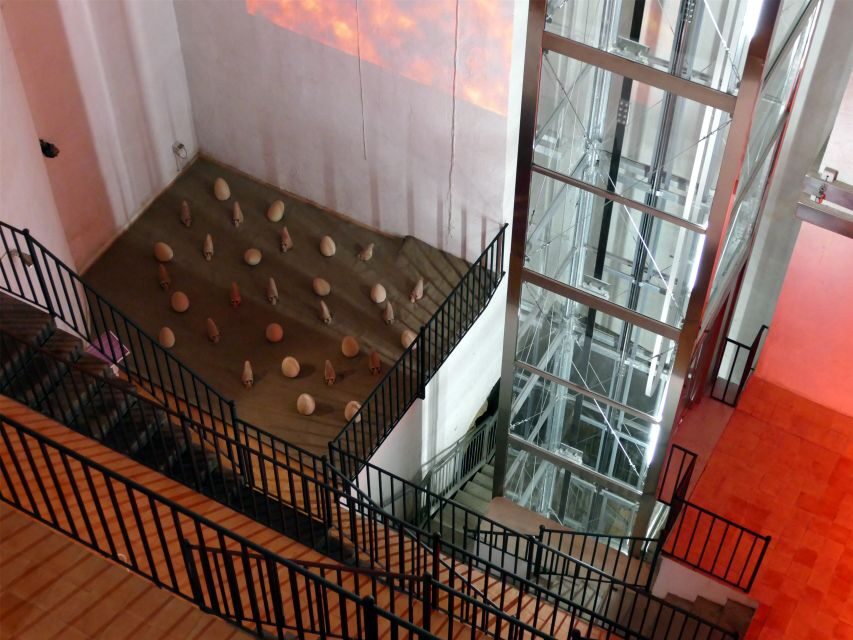
The visit lasts 75 minutes and is limited to 10 participants. That small group size is a big deal. It usually means you’ll spend less time waiting and more time actually moving through the spaces you paid to enter.
It’s also an Italian-speaking tour with a live guide. Even if your Italian isn’t perfect, you’ll get value from the structure: the guide is there to connect what you see with what it means in water engineering terms and how the historic basilica complex was built and reused.
From what the experience emphasizes, the route is designed to keep momentum. You’ll also likely appreciate that it focuses on a few key spaces rather than trying to cover every corner of the complex. In a city like Naples, that kind of focus is a practical luxury.
Price and value: is $15 for 75 minutes a good deal?
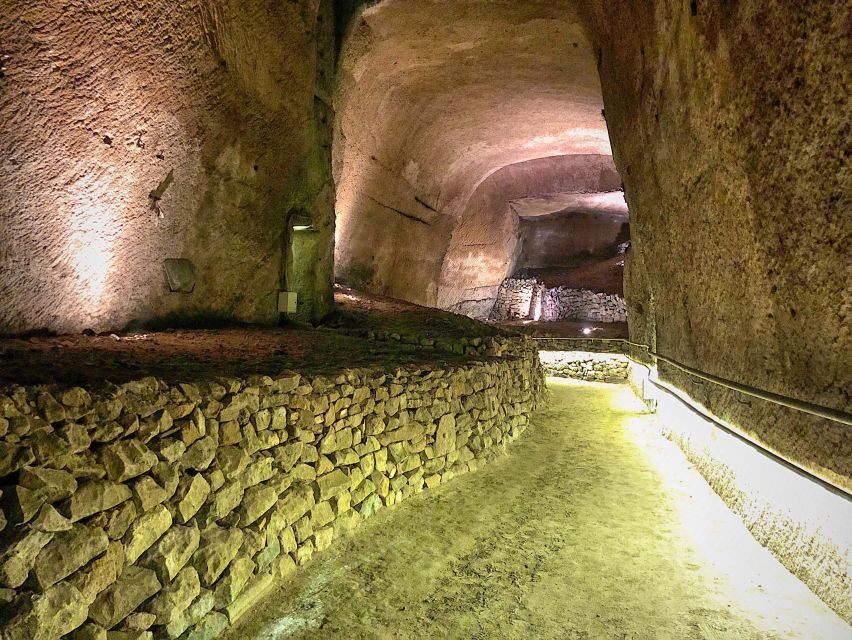
At $15 per person for a 75-minute guided visit, this pricing feels reasonable when you look at what’s included: an admission ticket plus an Italian-speaking tour guide, and access to a site with a specialized underground route and a lift descent to 35 meters.
If you’ve ever paid entry fees where the guide contribution is minimal, this one makes more sense on paper. You’re paying for both access and interpretation. And the lift component is not something you typically get with a standard museum ticket.
Is it pricey compared with a free street-level walk? Sure. But the point here isn’t sightseeing overhead. It’s getting Naples from underneath, in a structured way, in less than two hours.
Who should book this LAPIS Museum tour
This tour is a great fit if you want:
- a guided underground experience in Naples’ historic center,
- a clear explanation of hydraulic engineering using real physical spaces,
- and a chance to see Naples in a different way than you’d get from the street.
It’s especially well suited for people who like architecture and infrastructure. You’ll probably enjoy it more if you read spaces visually—vaults, routes, levels—and like learning how engineering shapes daily life.
If you have mobility limitations or use a wheelchair, it’s not suitable based on the tour’s stated limitations.
Should you book this LAPIS Museum guided visit?
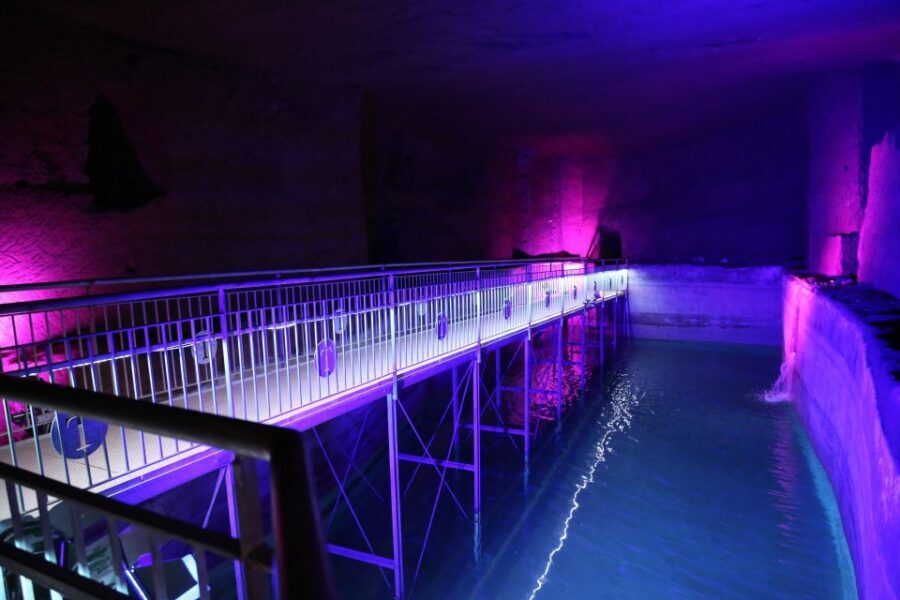
Yes, I’d book it if you want one focused, high-impact Naples experience that uses access and lighting to make an underground system understandable. The mix of the Museo dell’Acqua di Napoli hub, the Submerged Decumanus route, and that 35-meter lift ride gives you a strong return on your time—and it’s hard to replicate on your own without the guided explanation.
If you prefer only large outdoor landmarks or you’re hoping for a long, wandering tour, this may feel short. But at 75 minutes with a small group and a clear underground focus, it’s built to leave you with real takeaways.
FAQ
How long is the Naples LAPIS Museum guided visit?
The tour lasts 75 minutes.
What is the price per person?
The price is $15 per person.
Is the tour guide available in Italian?
Yes. The tour is with a live guide in Italian.
How many people are in the group?
The group is small, limited to 10 participants.
What is the main underground feature besides the museum areas?
You ride an ancient elevator down to 35 meters deep.
Where does the tour take place?
It’s in Campania, Italy, focused on the underground spaces connected to the Basilica of Pietrasanta and the LAPIS Museum.
Is it suitable for wheelchair users or people with mobility impairments?
No. It is not suitable for people with mobility impairments and wheelchair users.
Can I get a refund if my plans change?
Yes. There is free cancellation up to 24 hours in advance for a full refund.
Can I reserve now and pay later?
Yes. You can reserve your spot and pay nothing today.
FAQ
What is the latest time I can book this experience?
You can book it no later than 24 hours before your desired visit.
Who runs the experience?
The provider is Campania Overland.