REVIEW · NAPLES
Hypogeum of the Crystallines Standard Visit
Book on GetYourGuide →Operated by Ipogeo dei Cristallini · Bookable on GetYourGuide
Naples has a secret level.
This short visit takes you into the underground Neapolis of the 4th century BC, where you walk an ancient street and see remarkably preserved Greek-painted tombs. I love that you get the story behind the site as well as the artwork, including the chance discovery in 1889 by Baron Giovanni di Donato.
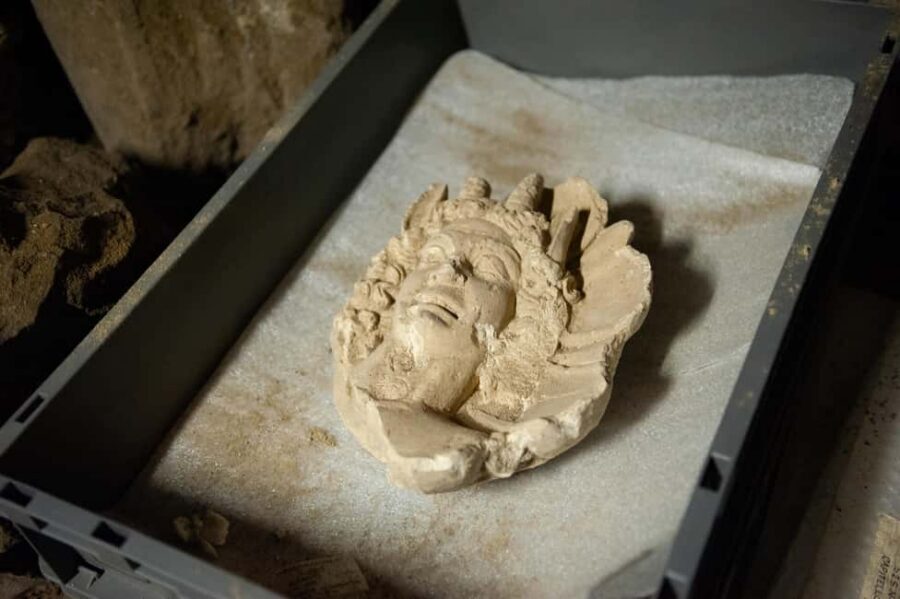
My other favorite part is the Medusa, carved and painted by the ancient Greeks and described as a one-of-a-kind find. One thing to plan for: the Hypogeum has architectural barriers, so if you have mobility needs or accessibility concerns, you should contact the team before going—and the visit is only 25 minutes, so it moves with purpose.
In This Review
- Key Things You’ll Notice
- What You See Underground: Neapolis, Street-Level, and Frescoed Tombs
- The 25-Minute Structure: How the Visit Fits Into a Day
- Walking the Ancient Road: Where the Architecture Does the Talking
- Greek Myths on the Walls: Fresco Details and Painted Tombs
- The Medusa You Can Actually See: Carved and Painted Greek Artwork
- Greek Origins Meet Roman Additions: What That Fusion Means
- The 1889 Discovery Story: Baron Giovanni di Donato and a Chance Find
- How the Video Helps: Virtual Reconstruction in a Real Space
- Rione Sanità Power: History, and the Idea of Redevelopment
- Price and Value: Is $11 a Good Deal?
- Accessibility and Kids: Plan Around the Site’s Limits
- Who This Tour Suits Best
- Should You Book This Hypogeum Visit?
- FAQ
- How long is the Hypogeum of the Crystallines standard visit?
- Do the tours run at fixed times?
- How much does the visit cost?
- Is there a guide included?
- What languages are offered?
- What will I see during the visit?
- Are children allowed?
- Is the site accessible for visitors with disabilities?
Key Things You’ll Notice
- 12-meter descent into the underground world of Naples and Neapolis
- 2400-year-old street and four Hellenistic tombs with painted details
- A striking, Greek carved and painted Medusa described as a unique example
- The 1889 discovery story of the Hypogeum, credited to Baron Giovanni di Donato
- Greek origins mixed with Roman artistic additions, visible in the artwork
- Small-group format capped at 10 participants for a smoother experience
What You See Underground: Neapolis, Street-Level, and Frescoed Tombs
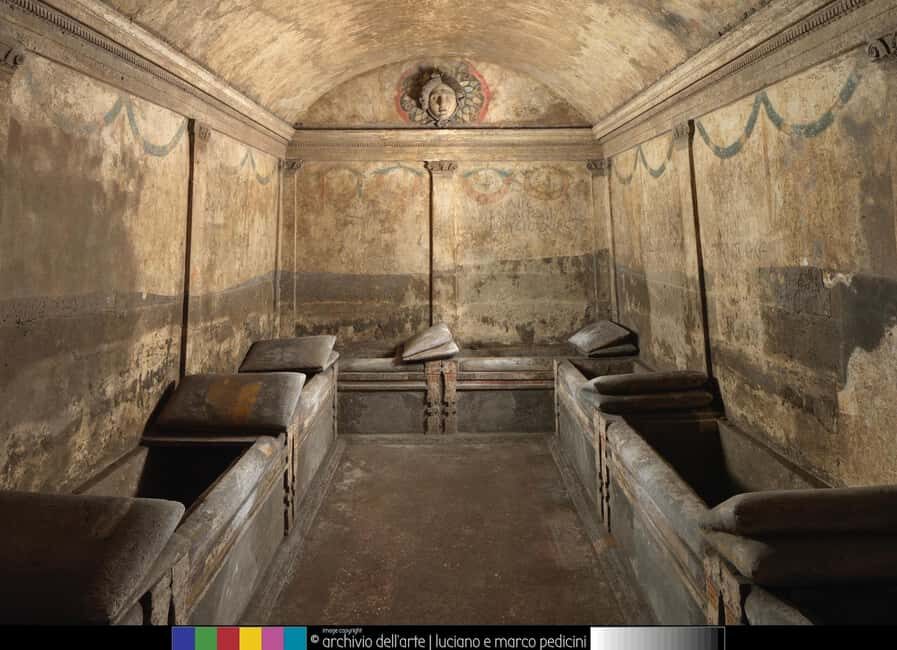
The Hypogeum of the Crystallines is a rare kind of stop: you are not just looking at artifacts behind glass. You’re walking through an underground space tied to the ancient city of Neapolis, with an emphasis on the feel of place—street, architecture, and the painted tomb environment that helped people make sense of life and death.
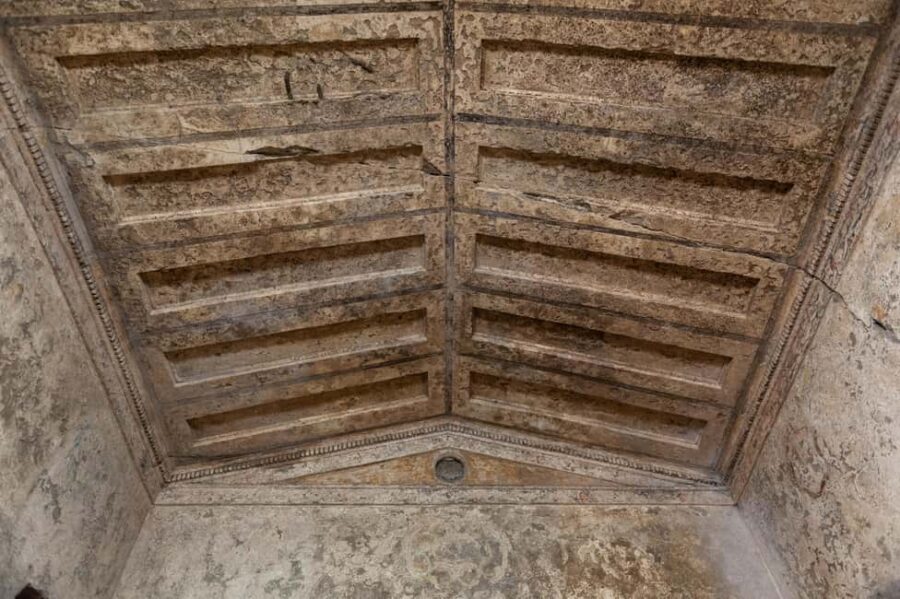
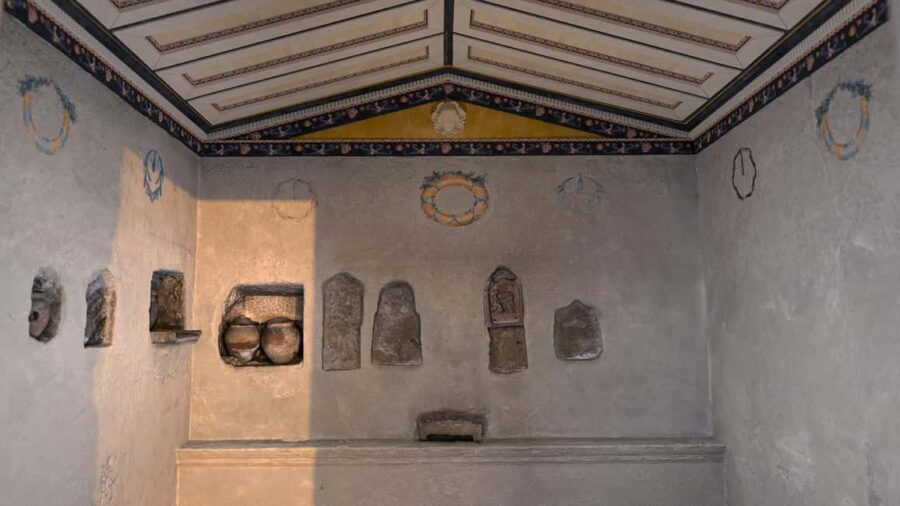
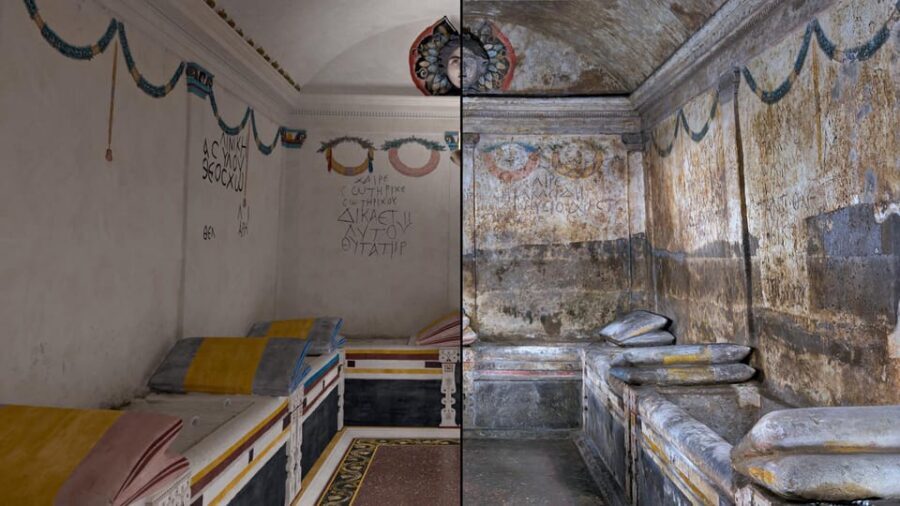
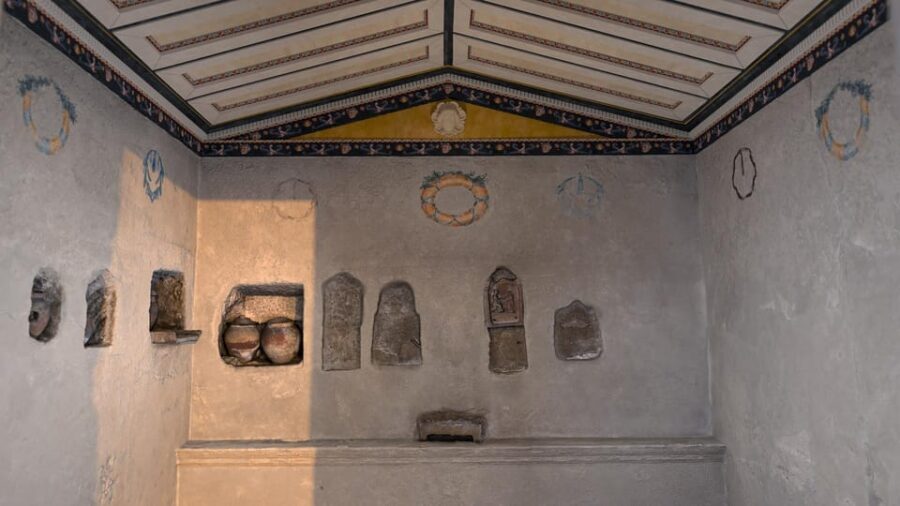
The core experience is a descent of 12 meters, then a guided look at what survives from the 4th century BC Neapolis. You’ll move along the original road and then focus on four Hellenistic tombs. The details matter here. You get frescoes, carved architectural elements, and the kind of myth-filled imagery that turns archaeology into a story you can actually see.
I like that the visit frames the art as Greek thought made visible—myths, symbols, and the cultural logic around burial and memory. Even if you only have a little time, you end up understanding why these spaces were built the way they were.
You can also read our reviews of more tours and experiences in Naples.


The 25-Minute Structure: How the Visit Fits Into a Day
This tour runs about 25 minutes. That may sound fast, but it’s actually one of the reasons it works well. You get a guided, concentrated experience without it dragging, and you can pair it with other Naples plans without feeling stuck underground all day.
The timing is built around starting times you select through availability, so don’t assume it fits any random hour. Plan your schedule with the idea that you’ll descend, see the key areas, and wrap up. If you’re the type who likes to linger for long photo sessions, you may want to arrive a little early so you’re not scrambling to catch the group’s pace.
A small-group format helps too: you’re capped at 10 participants, which keeps the visit from feeling like a conveyor belt. It also means the guide can point out details instead of rushing only the big highlights.
Walking the Ancient Road: Where the Architecture Does the Talking
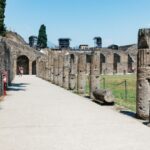
One inclusion that’s genuinely important is walking on the ancient road of Neapolis. It changes the whole experience. Instead of viewing the site from one fixed spot, you’re moving through the same kind of circulation the space was designed for. That physical element helps you understand scale and layout—how people might have approached, passed, and connected to burial spaces.
The underground environment also makes the preservation feel more immediate. You’re seeing painted and carved surfaces that have lasted through centuries in a setting that’s still atmospheric and real, not recreated. When a site like this remains well preserved, it lets the artwork and craftsmanship speak more clearly, especially with myth scenes and architectural patterns.
If you like architecture that’s both functional and symbolic, you’ll likely enjoy the mix of structure and narrative. The site doesn’t just look old; it looks made—carefully made.
Greek Myths on the Walls: Fresco Details and Painted Tombs
The visit centers on frescoes, ancient myths, and architecture. That mix is what makes it more than a quick look at pretty decoration. The murals and painted elements connect to stories—myths and ideas that helped ancient people explain their world.
In practical terms, you’ll be guided through the details of frescoes and carved areas, so you’re not left guessing what you’re looking at. You get a sense of how the imagery fits the space. Even if you don’t know a lot about Greek myth going in, the guide’s framing helps the visuals make sense as you see them.
This is where the 2400-year-old feeling becomes real. The “underground Neapolis” concept isn’t just a label; the art supports the idea that people lived with these symbols close to their daily logic of death and memory.
The Medusa You Can Actually See: Carved and Painted Greek Artwork
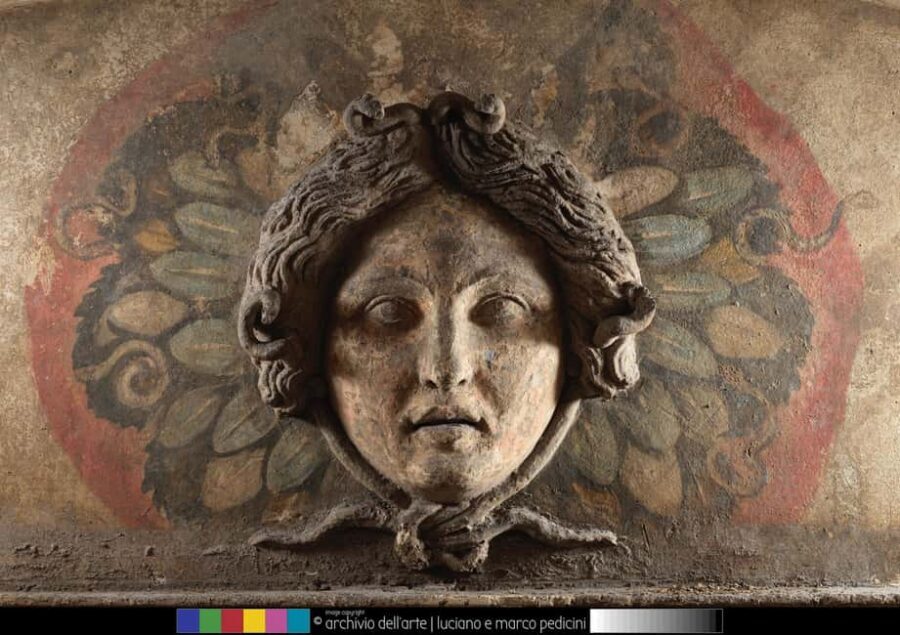
Let’s talk about the headline moment: the Medusa. This is described as a Medusa carved and painted by ancient Greeks, and the experience calls it a unicum in the world.
What makes this so compelling is the idea that the Medusa isn’t treated as a random figure. It’s tied to a wider visual language—myth, identity, protection, and cultural meaning. When you see it in context within the painted tomb environment, it feels like more than an illustration. It feels like part of an ancient communication system.
Also, because the site is small and guided, the focus doesn’t get diluted. You’re not hunting for the Medusa across a huge museum floor. You’re led to the moment, and the guide helps you take it in as a specific artwork, not just a stop on a checklist.


Greek Origins Meet Roman Additions: What That Fusion Means
One of the most interesting parts of this visit is the cultural overlap: Greek origins meeting Roman artistic additions. That fusion matters because it tells you the story didn’t freeze in time after the Greeks. Layers of influence can show up in how art is handled, how spaces are used, and how later creators interpreted existing forms.
In the Hypogeum, you’ll see that mix through the artwork and how different elements coexist. It’s a visual reminder that ancient places were rarely “single-culture snapshots.” Instead, they changed—politically, socially, and artistically—over time.
If you like seeing history as continuous rather than broken into separate chapters, this element gives you a satisfying answer to the question: how can something look Greek but feel later too? Here, you’re shown the blending.
The 1889 Discovery Story: Baron Giovanni di Donato and a Chance Find
A lot of archaeological sites come with a discovery narrative that’s almost as dramatic as the findings. Here, the story is that the Hypogeum was discovered by chance in 1889, credited to Baron Giovanni di Donato.
That detail gives the visit a human angle. You’re not only seeing ancient work; you’re also learning that what survives sometimes survives because someone stumbled onto it at the right moment—then people recognized its value.
And once you know there’s an 1889 “how did this get found?” story behind the walls, the visit feels more layered. The site becomes a timeline you can touch: ancient creation, long concealment, and then rediscovery.
How the Video Helps: Virtual Reconstruction in a Real Space
You also get a video with a virtual reconstruction of the archaeological site. This is one of those add-ons that can make a short experience feel complete.
In a place like this, it’s easy to wonder what the space looked like in its fuller original context. The reconstruction video helps you connect the preserved areas you see now to the broader idea of how the site may have functioned or looked. It also supports the guide’s narration so the tombs, road, and architectural elements form a clearer mental map.
For me, it’s a smart pairing: you get both sensory reality (you’re underground) and a visual aid that helps you understand what you’re looking at.
Rione Sanità Power: History, and the Idea of Redevelopment
The Hypogeum ties into the broader story of the Rione Sanità, and the visit includes a look at the powerful history of the area and the process of sociocultural redevelopment.
This part can feel abstract if you only think of archaeology as ancient-only. But here it works because the site is presented as part of a living neighborhood story. You’re learning that the “past” isn’t just locked away. It can shape how communities reclaim spaces, renew identities, and keep history from becoming isolated.
If you like travel that connects art to people, this is a good sign. You’ll leave thinking about more than fresco pigments—you’ll think about how communities choose what to protect and why.
Price and Value: Is $11 a Good Deal?
$11 per person for a guided visit with skip-the-ticket-line access is strong value, especially because you’re seeing multiple high-impact elements in a short time: the ancient road, four Hellenistic tombs, fresco details, myth imagery, and the Medusa.
What makes it feel fair isn’t just the price tag—it’s the structure. A small group (up to 10) plus a guide from Rione Sanità means you’re getting interpretation, not just entry. Add in the virtual reconstruction video, and the 25 minutes becomes a focused package rather than a rushed peek.
You can also keep plans flexible: the experience includes free cancellation up to 24 hours in advance and a reserve now & pay later option. Those policies won’t matter if you’re locked in, but they’re genuinely useful if you’re juggling Naples transit, other bookings, or changing weather.
Accessibility and Kids: Plan Around the Site’s Limits
The site has architectural barriers because of its historical nature. If you have mobility challenges or accessibility questions, the key move is simple: contact the team before your visit to check the possibility of access.
For families, there’s a clear age rule: children aged 8 to 12 are free, while children under 8 are not permitted. So if you’re traveling with younger kids, you’ll need a different plan.
Because it’s underground and designed as a historical space, it’s worth being realistic about pacing and footing. The best approach is to treat the visit like a short, guided walk through a preserved environment—not a stroller-friendly attraction.
Who This Tour Suits Best
This is a great fit if you want a compact Naples experience with real substance. You’ll likely enjoy it if you:
- care about archaeology you can actually see up close
- love myth-based art and want help understanding what you’re looking at
- want a small-group visit instead of a crowd experience
- enjoy “story + site” tours where discovery and meaning are part of the package
It may not be ideal if you need a long, slow museum-style browse. The visit is 25 minutes, and the format is built for a quick guided circuit with emphasis on the major highlights.
Should You Book This Hypogeum Visit?
Yes, you should book it if you’re even slightly curious about how Greek culture showed up underground in Naples, and if you want to see the Medusa artwork in context. At $11, the value is hard to beat, especially with skip-the-line access, a small group, and a guided explanation of frescoes, architecture, and myths.
I’d hesitate only if accessibility barriers are a dealbreaker for you, or if you need a more relaxed pace than 25 minutes allows. Otherwise, this is the kind of stop that makes Naples feel bigger than the usual surface-level sights. You’ll come away with images you can’t easily forget—especially that painted, carved Medusa.
FAQ
How long is the Hypogeum of the Crystallines standard visit?
The duration is 25 minutes.
Do the tours run at fixed times?
Starting times vary, so you need to check availability to see when tours begin.
How much does the visit cost?
It costs $11 per person.
Is there a guide included?
Yes. You’ll be welcomed to the archaeological site by a guide from Rione Sanità.
What languages are offered?
The visit is available in Italian, English, Spanish, and French.
What will I see during the visit?
You’ll see the underground Neapolis area, walk on the ancient road, view four Hellenistic tombs with carved and painted details, and see the Medusa. A video with a virtual reconstruction is also included.
Are children allowed?
Children aged 8 to 12 are free. Children under 8 are not permitted.
Is the site accessible for visitors with disabilities?
The Hypogeum has architectural barriers due to its historical nature. Visitors with disabilities are invited to contact the organizers before their visit to assess access possibilities.