REVIEW · NAPLES
From Naples: Pompeii & Herculaneum with Archaeologist Guide
Book on GetYourGuide →Operated by Askos Tours · Bookable on GetYourGuide
Pompeii and Herculaneum tell the same story. Twice. This Naples shore-style day trip links the two sites with an expert, archaeologist-led guide, so you’re not just walking ruins—you’re learning why they look the way they do and what daily life was like before Mount Vesuvius buried it all. I love the small-group setup (about 20 people) and how the tour zooms in on the most meaningful sights at both locations, including Herculaneum’s preserved details.
Two things I really like: first, you get skip-the-line entry, so your time goes toward the streets and houses, not standing around. Second, the guide’s archaeology focus turns highlights like mosaics, thermal baths, and forums into clear, human-scale scenes. One possible drawback: this is a walking-heavy day with stairs and slopes, so it may be too taxing if you have mobility limits.
If you’re the kind of traveler who wants the highlights without chaos—and you like learning while you walk—this tour fits well. Just plan your footwear and snacks with the day’s pace in mind.
In This Review
- Key things to know before you go
- Meeting in Naples: Starhotels Terminus and a smooth start
- Why an archaeologist guide changes Pompeii and Herculaneum
- Herculaneum: the preserved town under 20 meters of mud
- Pompeii after lunch: a focused 2-hour walking route
- Skip-the-line entry: where the time savings actually goes
- How the sites connect to one fate: Vesuvius in AD 79
- Lunch and logistics: what to plan so the day feels easy
- Price and value: what $168.79 buys you
- Who this tour is best for (and who should skip it)
- Should you book this Pompeii and Herculaneum day trip?
- FAQ
- How long is the tour from Naples to Pompeii and Herculaneum?
- Where do I meet the guide in Naples?
- Is skip-the-line entry included?
- Is the tour guide in English?
- What group size should I expect?
- What’s included in the price?
- Is lunch included?
- Is this tour suitable for people with limited mobility?
- What should I bring, and can I bring luggage?
Key things to know before you go
- Skip-the-line tickets keep your day moving at both Pompeii and Herculaneum
- Archaeologist guide focus means you get explanations tied to the finds, not random facts
- Small group size (up to 20) helps you hear the guide and stay together
- Two different ruins, two different “feelings”: one town is more preserved, the other more sprawling
- Weather-proof touring: it runs rain or shine, so bring a light rain layer if needed
Meeting in Naples: Starhotels Terminus and a smooth start
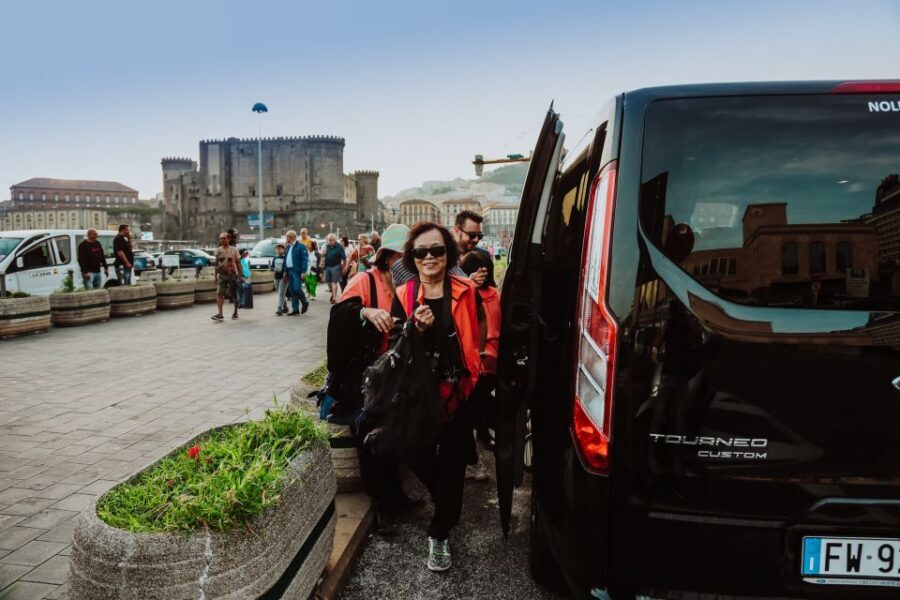
This trip starts right by the train action. You meet the guide in front of Starhotels Terminus, on the opposite side of the station. Look for an ASKOS TOURS sign, and you’ll connect with the driver and guide for the group transfer.
Once you’re loaded into the modern minibus, the rhythm of the day clicks into place. You’ll spend about 45 minutes heading toward the first site area, which helps you beat the feeling of rushing immediately into crowds. The minibus ride is also where you get your bearings for the day.
A couple practical notes matter here. You can’t bring luggage or large bags, and the tour is not recommended for people with limited mobility. If you’re running late, the driver waits up to 5 minutes, so try not to tempt that clock.
You can also read our reviews of more guided tours in Naples


Why an archaeologist guide changes Pompeii and Herculaneum
Pompeii and Herculaneum are popular for a reason, but they can also feel like a blur if you’re wandering on your own. The best part of this tour is the guide’s archaeology angle—how they explain what you’re looking at and why it matters.
You’ll notice it most in the way preserved objects are treated. In Herculaneum, the tour points out details tied to the disaster and the conditions of burial, like carbonized wooden objects, intact paintings, and mosaics that are still preserved. That matters because these aren’t just pretty visuals. They show what materials survived and what daily life looked like when the town stopped.
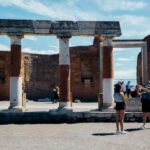
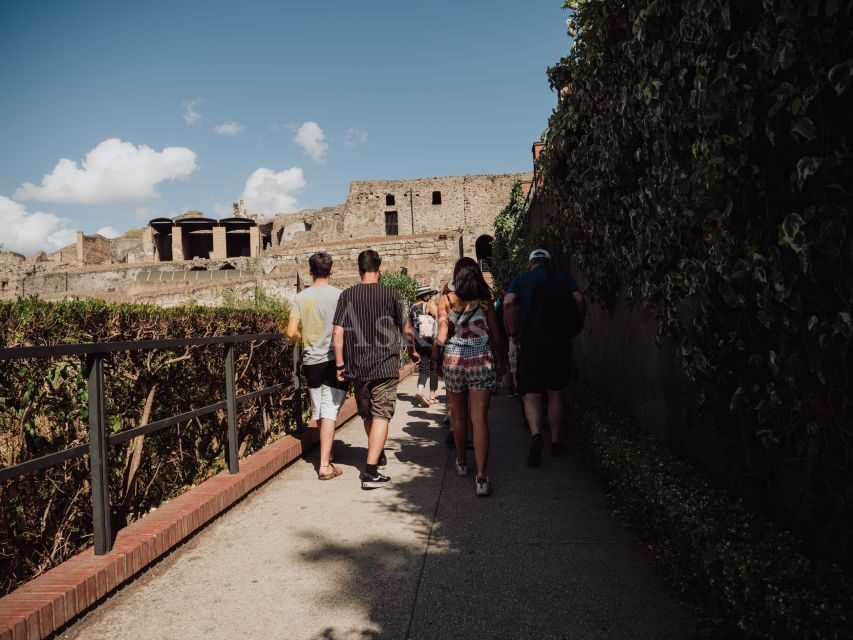
In Pompeii, the guide helps you connect public buildings and private houses to Roman life. You’ll walk through major landmarks like the Basilica and the Forum, then see house spaces and streets that explain how people ate, shopped, worked, and socialized. The guide also flags the difference between what you can see instantly (a main street, a big public space) and what takes a sharper eye (house layout, use of rooms, and small clues about routine).
The tour also runs with a group size that stays manageable. Many people appreciate that the day doesn’t feel like herding cats, and in past groups you might even get headsets so you don’t miss the explanations while you walk.
Herculaneum: the preserved town under 20 meters of mud
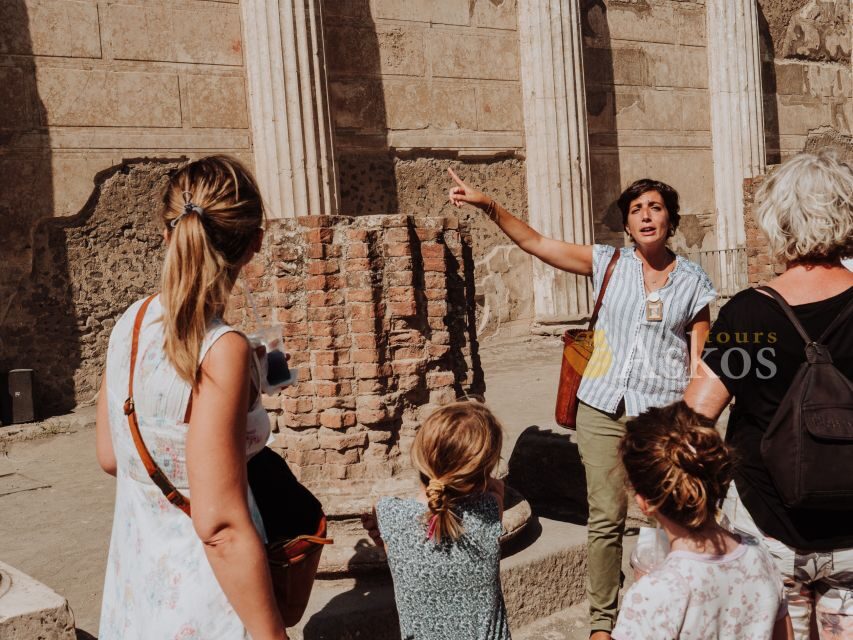
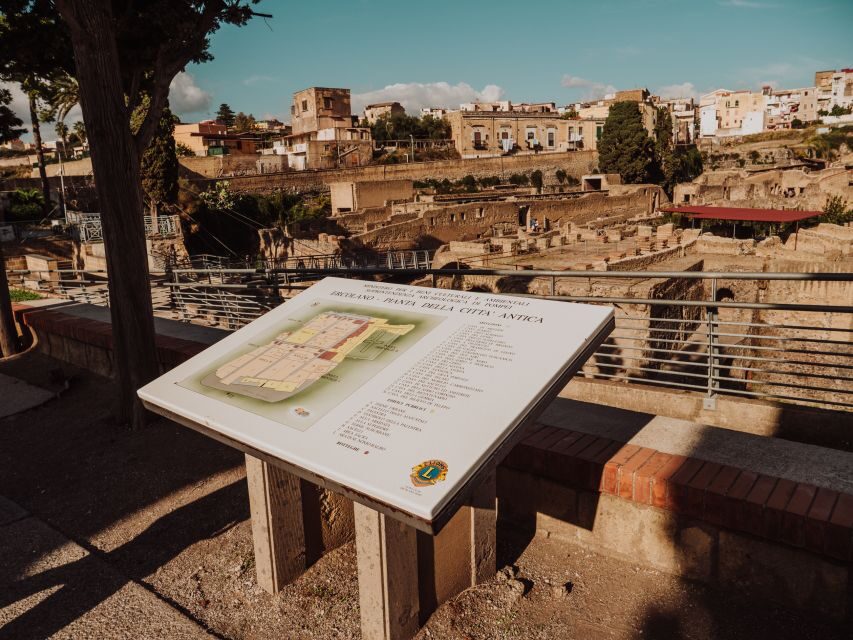
Herculaneum is the first big stop, and it’s a smart opening move. The guide-led portion lasts about 2 hours, which is enough time to get oriented and still enjoy the details without feeling rushed.
When you arrive, you enter with skip-the-line tickets, which is huge here. Herculaneum can feel quieter than Pompeii, but the site still gets busy, and skipping the worst waiting keeps your momentum.
What makes Herculaneum feel different is the kind of preservation you see. This town was buried by a landslide and mud—described as about 20 meters deep—and that change in conditions is why you’ll encounter objects and surfaces that seem shockingly intact. The tour highlights mosaics and wall paintings, plus finds like carbonized wooden items, which are the kind of details you’d miss without guidance.
The itinerary also hits major named sights:
- Temple of the Augustali
- the beach where more than 300 skeletons were found
- the Thermal Baths
- the Forum
- Samnite House
- Gymnasium
- House of the Dears
Two things to keep in mind while you’re in Herculaneum. First, the terrain includes stairs and grades, so wear shoes with solid grip. Second, the site is so detail-heavy that you may want to slow down at each stop—but your guide keeps the flow so you can cover the main highlights in a set time.
Pompeii after lunch: a focused 2-hour walking route
After Herculaneum, you transfer by bus for about 30 minutes. Then you get a break for about 40–45 minutes for lunch or a quick reset before Pompeii.
Pompeii is the larger, more sprawling one. The tour’s Pompeii portion is about 2 hours, and that time is used for a guided walk through the core scenes that help you understand how the city worked.
Like the first site, you enter with skip-the-line tickets. That’s one of the highest-value parts of the day, because Pompeii is famous for long lines, and waiting cuts the joy out of the experience.
Once you start walking, expect a route that covers both public and private spaces. The guide points out stops such as:
- Marina Gate
- the Basilica
- the Forum
- Forum Baths
- the Lupanar (brothel)
- the Bakery
- House of Faun
- Termopolium Capuano
- House of Tragic Poet
- plaster casts
That last one is worth noting. Plaster casts are part of how Pompeii communicates what happened when bodies and spaces were lost or damaged over time. The tour uses them to help you picture the eruption’s aftermath without turning the site into pure shock-value.
A real-world drawback is simple: two hours sounds like a lot until you’re surrounded by streets and buildings you could study for days. If you’re the kind of traveler who wants to linger at every doorway, you’ll have to resist the urge to wander off-route. The payoff is that you’ll still see the most important public buildings and standout house interiors without turning the day into a marathon.
Skip-the-line entry: where the time savings actually goes
This tour includes skip-the-line entry for both sites. That’s not a small perk. It’s the difference between “ruins that feel rushed” and “ruins you can actually enjoy.”
In practice, here’s what it means for your day:
- You arrive, scan in faster, and start walking sooner.
- Your guide can keep a steady pace without losing time to queues.
- The structured timing still leaves you a lunch break that isn’t eaten alive by waiting.
Herculaneum also benefits from this because the experience depends on seeing preserved surfaces and objects while you’re fresh. Pompeii benefits because the main draw is your guided walk through key landmarks. The less time you spend waiting, the more time you spend understanding.
If you’re traveling on a cruise-style schedule or you want to catch a train connection afterward, this is a very practical advantage. The day ends back at the meeting point, which also lines you up for onward departure.




How the sites connect to one fate: Vesuvius in AD 79

One of the most satisfying aspects of doing Pompeii and Herculaneum together is how clearly the eruption theme ties them. Both towns are connected by the catastrophe of Mount Vesuvius in 79 AD, but their outcomes weren’t the same.
The guide shows how Herculaneum’s burial conditions (mud and landslide) led to the kind of preservation you can still see—paintings, mosaics, and certain organic materials. Pompeii, buried under volcanic ashes, becomes more about the urban layout and how the city’s spaces survived in a different way.
This is where the archaeologist approach shines. Instead of treating the two ruins like two separate checkboxes, you get a shared timeline: daily life, the eruption, and what remained. You’ll walk away with a clearer sense of how Romans lived and how quickly routine stopped.
Lunch and logistics: what to plan so the day feels easy
Meals are not included, and you’ll have a break of around 40–45 minutes during the Pompeii segment. That’s useful, but it also means you should plan how you’ll eat.
If you’re trying to keep costs down, I’d pack a snack or bring something simple for the lunch window. Some meals right near the action can cost more than you expect once you’re hungry and walking already takes energy. On the flip side, if you’d rather sit down for a proper meal, use that Pompeii break for it.
Other practical details help too:
- You’ll be on your feet for hours, so comfortable walking shoes matter.
- It runs rain or shine, and you’ll want a raincoat if weather looks iffy.
- Baby seats are available upon request.
- The tour is not suitable for wheelchair users or people with mobility impairments.
At the end, you return by bus and get dropped back at the meeting point area in time for your next leg.
Price and value: what $168.79 buys you
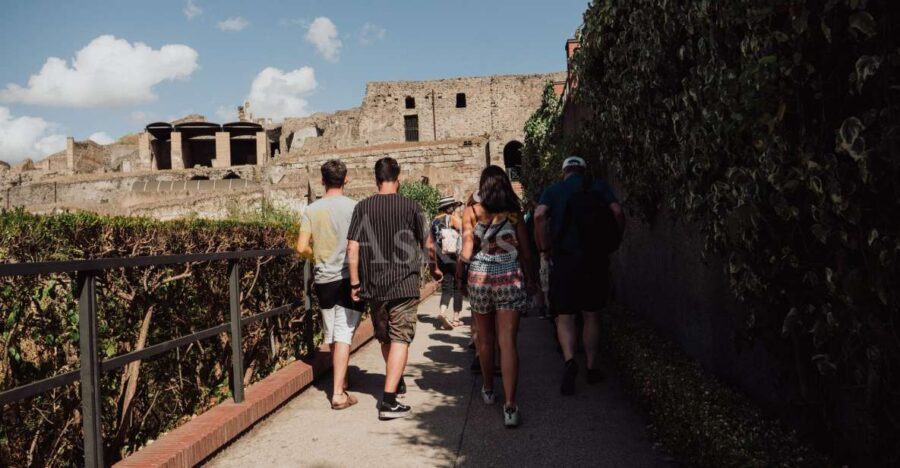
At about $168.79 per person, this isn’t the cheapest way to see Pompeii and Herculaneum. But it’s also not trying to be. You’re paying for a tight package that includes:
- shared minibus transportation
- an archaeologist guide
- skip-the-line entry tickets
- parking and tolls
- the Herculaneum entrance ticket (listed as €16 each)
- a Pompeii entrance ticket labeled Pompei Express
Here’s the value logic. If you try to do this independently from Naples, you’d spend time solving transport, ticket lines, and site routing—then you’d still need a plan to make sense of what you’re seeing. This tour pays for coordination and interpretation.
And the small-group size helps. A group around 20 people means the guide can keep the walk organized and the pacing doesn’t collapse into chaos. Several guides have earned praise for good English and for pointing out small details that you’d overlook without help.
Balanced note: some people wish they had more time in either Herculaneum or Pompeii. That’s the tradeoff for seeing both in one day. If you want slow travel and lots of lingering, you might prefer separate half-day or multi-day plans. If you want the best highlights with a strong explanation and minimal waiting, this fits well.
Who this tour is best for (and who should skip it)
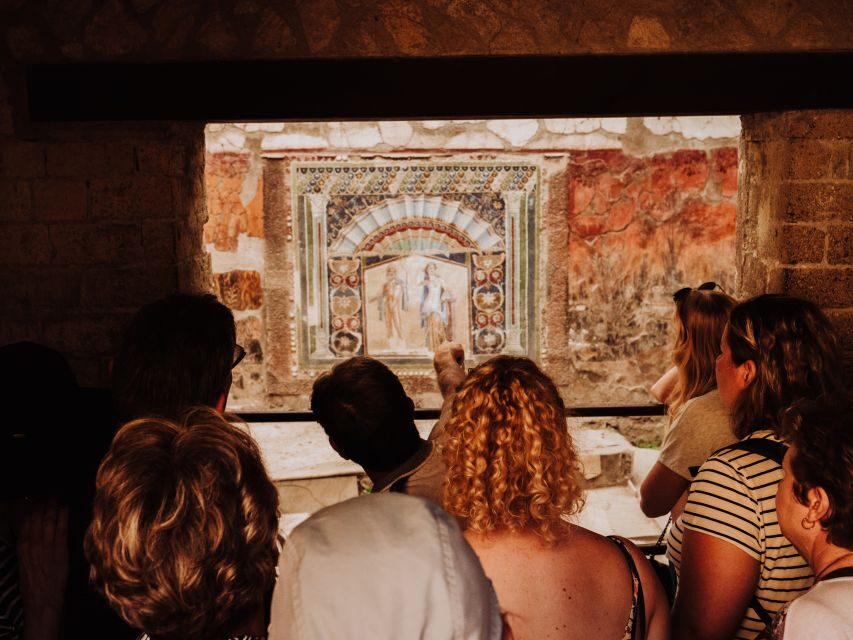
This day trip is a strong match if you want:
- a guided experience with an archaeology-focused perspective
- the key highlights in both towns without spending days planning
- skip-the-line entry so the schedule stays sane
- a group size that doesn’t feel overwhelming
It’s also a good fit if you like humor and lively explanations. Guides in this program have been praised for being engaging and for answering many questions while keeping the day moving.
You might want to think twice if:
- your mobility is limited (stairs and grades are part of both sites)
- you need long breaks or step-free access
- you prefer to wander freely with no set route
For most people with normal walking ability, it’s a very efficient way to see two UNESCO-level sites in one day.
Should you book this Pompeii and Herculaneum day trip?
If your goal is the biggest hits plus meaningful context, I’d book it. The combination of skip-the-line entry, small group pacing, and an archaeologist-led walk is the sweet spot for a one-day Pompeii plan.
Do it especially if you’re short on time and you want your visit to feel guided rather than just scenic. If you’re mobility-limited or you want a slow, no-rush pace with lots of time to linger, you may feel squeezed by the schedule.
FAQ
How long is the tour from Naples to Pompeii and Herculaneum?
The tour lasts about 7 hours, with timing that varies by departure.
Where do I meet the guide in Naples?
Meet the guide in front of Starhotels Terminus, located opposite the station. Look for the guide holding an ASKOS TOURS sign.
Is skip-the-line entry included?
Yes. You get skip-the-line entry tickets for Pompeii (Pompei Express) and skip-the-line entry for Herculaneum.
Is the tour guide in English?
Yes. The tour includes a live guide in English.
What group size should I expect?
The tour is limited to small groups of up to 20 participants.
What’s included in the price?
Included are shared minibus transportation, an archaeologist guide, the Pompeii entrance ticket, the Herculaneum entrance ticket, and tolls/parking expenses.
Is lunch included?
No meals are included. You’ll have a break for lunch during the day.
Is this tour suitable for people with limited mobility?
It is not recommended for people with limited mobility, and it is not suitable for wheelchair users. There are stairs and grades.
What should I bring, and can I bring luggage?
Bring a passport or ID card. Luggage or large bags are not allowed, and the tour runs rain or shine, so a raincoat can help.