REVIEW · NAPLES
Spaccanapoli tour of the historical center of Naples
Book on Viator →Operated by Insolitaguida - Naples city tours · Bookable on Viator
Naples feels sharper when you walk it. This Spaccanapoli historical center tour is built for people who want the big sights without wrestling a map, and it’s guided by a local, professional guide so you can ask questions as you go. I like the way the route stays focused while still feeling flexible, so you can adjust the pace and what you linger on.
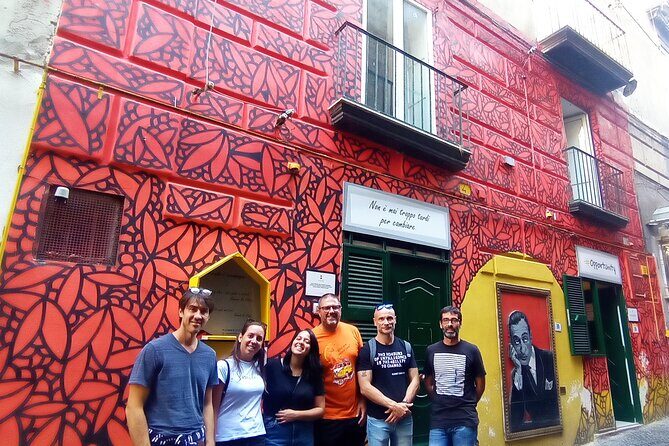
Two things I really like: you’ll stroll the city’s famous spine, Spaccanapoli, and you’ll also get hands-on culture on Via San Gregorio Armeno, the Christmas-street workshops for nativity scene craftsmen (open year-round). One practical consideration: it’s about 2 hours of walking, with short stops where you’ll stand around or enter churches briefly, so wear comfortable shoes and plan to move steadily.
In This Review
- Key highlights you will care about
- Why Spaccanapoli works so well as a walking tour
- Piazza del Gesù Nuovo: UNESCO right at street level
- Practical note for your first 10 minutes
- Chiesa del Gesù Nuovo: Baroque art you can spot fast
- Santa Chiara: a monumental monastic complex in one stop
- Piazza San Domenico Maggiore: where Spaccanapoli meets the city’s plan
- Via San Gregorio Armeno: Naples and its nativity workshop street
- How long you’ll want to linger
- Duomo di Napoli: layers of style and the San Gennaro connection
- Price and value: what you’re really paying for
- Who this tour suits best
- What to expect on the day
- What I’d do to get the most out of each stop
- Should you book the Spaccanapoli historical center tour?
- FAQ
- How long is the Spaccanapoli tour?
- Where does the tour start?
- Is this tour private or group-based?
- What language is the tour offered in?
- Are entrance tickets required for the stops?
- Do I need to tip the guide?
- What’s the cancellation policy for a full refund?
Key highlights you will care about
- Walk the famous Spaccanapoli line through the lively center without guessing your way around.
- UNESCO context at Piazza del Gesù Nuovo tied directly to what you’re seeing in front of you.
- Baroque art focus at the Chiesa del Gesù Nuovo, including where St. Giuseppe Moscati is housed.
- Santa Chiara monastery complex in a single, efficient stop so you get the feel without rushing.
- Nativity craftsmanship at Via San Gregorio Armeno, including how shops make figures both canonical and creative.
- Duomo di Napoli essentials, including the oldest baptistery of the West and San Gennaro’s preserved relics.
Why Spaccanapoli works so well as a walking tour
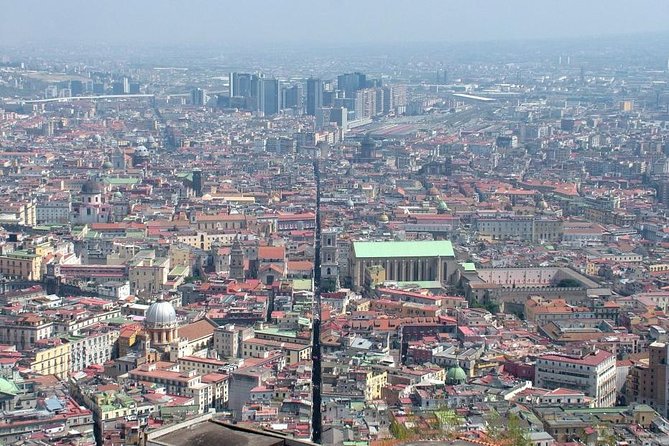
Spaccanapoli is the kind of street that makes Naples snap into focus. It runs through the historic core like a backbone—busy, layered, and packed with landmarks—so a walking route gives you something buses can’t: the street-level rhythm of everyday city life. You’re not just seeing monuments from the outside. You’re also learning how the city organized itself around axes and squares.
The tour lasts about 2 hours, which is a sweet spot in Naples. Long enough to cover major stops, short enough that you don’t feel like you’re burning a whole day in one neighborhood loop. The guide is the difference-maker here. With a local, you get the “why this matters” story, not just a list of what exists.
And since it’s offered in English and your group stays private, you’ll move as one unit. In practice, that means fewer waits, fewer awkward pauses, and more room to ask questions—especially if something in the churches or the street craft shops makes you curious.
You can also read our reviews of more tours and experiences in Naples.

Piazza del Gesù Nuovo: UNESCO right at street level
The tour starts at Piazza del Gesù Nuovo (25, Napoli), and that matters because this piazza is built like a stage. You immediately get an anchor point: the obelisk of the Immacolata, a white and bardiglio marble monument sitting in the open space.
What I like most is how quickly you get context. On the church façade, there’s a UNESCO plaque explaining why Naples’s historic center is recognized. Instead of treating UNESCO like a distant label, you’re standing in the exact setting connected to the idea—so the designation becomes tangible. You’re basically learning while you’re looking.
Also note the “shape” of the area. This isn’t a dead-end square where you just take a photo and leave. It’s a hub: important landmarks cluster nearby, so it’s easy for the guide to point out connections to what you’ll see next.
Practical note for your first 10 minutes
The first stops are designed for momentum. Plan to arrive a few minutes early so you can settle in without rushing.
Chiesa del Gesù Nuovo: Baroque art you can spot fast
Right by the obelisk, you’ll head to the Chiesa del Gesù Nuovo, also known as the Trinity Major. This is one of Naples’s major churches, and the guide’s job is to help you read what you’re seeing without getting lost in details.
Here’s what makes this stop worthwhile: the church is famous for dense Baroque painting and sculpture, including work tied to influential artists of the Neapolitan school. That matters because Baroque art can feel busy if you don’t know what to focus on. A guide helps you pick out themes, styles, and standout artworks as you walk through.
You’ll also learn about St. Giuseppe Moscati. His body is preserved here, and he was canonized by Pope John Paul II in 1987. That’s the kind of specific detail that changes a church stop from sightseeing to a real story about Naples’s Catholic life.
Admission is free for this stop, so the value is mostly in your time and the guidance—perfect if you want maximum payoff without paying museum-style entry fees.
Santa Chiara: a monumental monastic complex in one stop
After the baroque impact, the tour shifts to Complesso Monumentale di Santa Chiara. Santa Chiara is a huge worship and monastic presence in Naples—big enough that it can feel intimidating if you try to handle it alone.
With a guide, you get the essentials in a controlled amount of time: what the complex is, why it’s important, and what to look for as you move through the space. Even if you can’t spend hours here, this kind of focused stop gives you the “architecture and atmosphere” sense that helps the whole day click.
As with many of these stops, admission is listed as free. So again, you’re paying for direction and interpretation, not ticket costs.
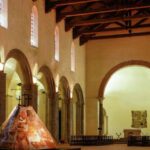


Piazza San Domenico Maggiore: where Spaccanapoli meets the city’s plan
Next comes Piazza San Domenico Maggiore, one of the key squares in Naples’s historic center. This square is more than a wide open pause. It sits along the lower decumanus—one of the city’s important street lines—and it becomes a crossroads point.
The guide will connect two streets you’ll feel all day long:
- Spaccanapoli, running east-west as that decumanus line
- Via Mezzocannone, acting like a hinge cutting south-north
That city-grid explanation helps a lot. When you understand how streets intersect, the wandering part of Naples stops feeling random. It starts feeling like a map that you’re actually reading.
This stop is also a good reset. You get a breather in a meaningful place, and then you step back onto the street-level action.
Via San Gregorio Armeno: Naples and its nativity workshop street
Now you hit one of the most distinctive experiences on the route: Via San Gregorio Armeno, the famous street for nativity scene workshops. If you’ve ever seen Naples figurines in shops elsewhere, this is where the craft energy comes from.
This street is known for artisan stores that make figurines for nativity scenes both in traditional forms and more original styles. The most interesting detail is that the shops often produce figures that reflect the year—sometimes eccentric, sometimes topical—based on the characters that show up in public life.
The big advantage of this stop on a guided tour is you don’t just look at what’s for sale. You understand why the place matters culturally: it’s an ongoing production world, not just a one-season market. The information you get helps you interpret what you see as part craft and part storytelling.
Admission is free for this portion too, so it’s another low-cost, high-satisfaction highlight—especially if you like watching how craftspeople work.
How long you’ll want to linger
The stop is timed, but it’s the kind of street where people naturally want to slow down. If you’re into the detail of the figurines, don’t be shy about asking the guide what to look for first.
Duomo di Napoli: layers of style and the San Gennaro connection
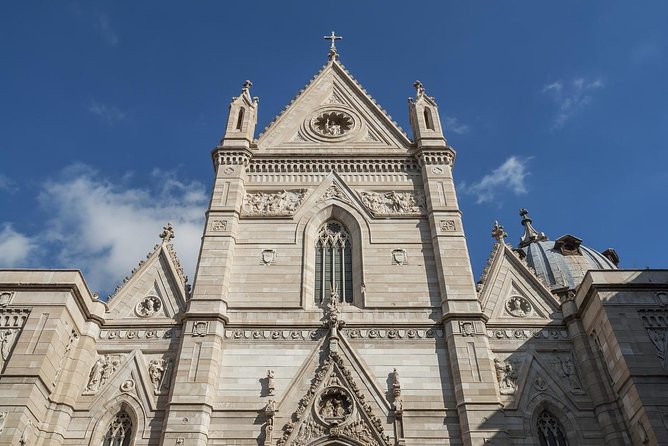
The final major landmark is Duomo di Napoli. This cathedral rises along the east side of its namesake street, in a small square surrounded by arcades—so even before you enter, you get that protective, enclosed feeling typical of older city centers.
What’s really compelling here is that the cathedral includes other religious buildings that grew alongside it, not as separate random extras. You’ll be shown these key elements:
- Basilica of Santa Restituta, which houses the oldest baptistery of the West
- San Giovanni in Fonte
- The royal chapel of the Treasury of San Gennaro, where relics of the city’s patron saint are preserved
Then the guide connects the art history to the building itself. The cathedral is described as a superimposition of styles, including Gothic from the 14th century and 19th-century neo-Gothic. That layering is what makes this stop feel different from a simple “one period” church visit. It’s like standing inside Naples’s long timeline.
There’s also a San Gennaro ritual element that the tour mentions: the rite of the dissolution of the blood of San Gennaro happens three times a year. Even if you’re not there on one of those dates, knowing that this is tied to living tradition helps you see the cathedral as part of Naples’s ongoing identity, not just a landmark.
Admission is listed as free for this stop as well, so the real value again is what you learn while you stand in front of the architecture and artifacts.
Price and value: what you’re really paying for
The tour costs $89.87 per person and runs about 2 hours. On paper, that can sound like a lot for a walking tour—until you look at what’s included.
You’re paying for:
- A professional local guide who can explain what you’re seeing in real time
- Multiple major historic stops, including major churches and the craft street that most people can’t fully “read” alone
- A route that avoids map guesswork, which in Naples can save time and energy
Because the listed admissions at the key stops are free, you’re not also paying for ticketed attractions during the walk. So the cost is basically your guided interpretation and time.
One more value point: the experience notes mention group discounts. If you’re traveling with friends or family, it may be worth asking how the pricing works for your exact group size. Also, it’s a mobile ticket, which makes it easier to manage on a day when you’re also juggling crowds and church schedules.
Who this tour suits best
This is a good match if:
- You want structure in the historic center without turning it into a museum marathon
- You care about meaning—UNESCO context, specific saints, and how craft traditions work
- You like asking questions while you walk, not after you’re back at your hotel
It also works well for people who prefer a private pace. The tour is set up so only your group participates, which is great if you’re traveling with kids who can stay with an adult, or if you simply want a calmer experience than a large mixed tour.
What to expect on the day
Expect a walking-focused experience. Churches and squares are the anchor points, but your time between them will be spent moving along the streets of the historic center.
A few tips that will help you enjoy it more:
- Wear comfortable shoes; even short church entries mean you’ll stand and walk more than you think.
- Bring a layer; stone buildings can feel cooler or drafty.
- If you’re into details, you’ll likely want a bit extra attention during the church stops and the figurine street.
And if plans change, the experience includes free cancellation, with a full refund if you cancel at least 24 hours before the start time.
What I’d do to get the most out of each stop
Use the guide as your filter. Instead of trying to photograph everything, pick a couple of anchor things per stop:
- At Piazza del Gesù Nuovo, focus on the obelisk and the UNESCO idea tied to it.
- In Chiesa del Gesù Nuovo, focus on the Baroque art style and the St. Giuseppe Moscati connection.
- At Santa Chiara, focus on what makes a monastic complex feel like a city inside a city.
- In Piazza San Domenico Maggiore, listen for how the street lines explain the layout of Naples.
- On Via San Gregorio Armeno, watch for the mix of traditional and original figures that reflect the year.
- In the Duomo, focus on the layered styles plus the San Gennaro tradition link.
This is how you keep a walking tour from becoming random. You start seeing patterns.
Should you book the Spaccanapoli historical center tour?
I’d book it if you want an efficient, guided way to understand Naples’s historic spine. The biggest selling point isn’t just the landmarks—it’s the way the guide turns them into stories you can connect: UNESCO context, specific saints, Baroque art, monastic presence, and the nativity craft street that keeps working all year.
Skip it only if you’re trying to do Naples at a slow, lounge-style pace. This one is for walking, looking, and moving from church to street to square with purpose.
If your priority is value—high-impact sights with free admissions at the stops plus a local guide who can answer your questions—this is a smart choice for a 2-hour slice of Naples.
FAQ
How long is the Spaccanapoli tour?
It lasts about 2 hours.
Where does the tour start?
It starts at Piazza del Gesù Nuovo, 25, 80135 Napoli NA, Italy.
Is this tour private or group-based?
It’s private. Only your group participates.
What language is the tour offered in?
The tour is offered in English.
Are entrance tickets required for the stops?
Admission tickets are listed as free for the stops included in the tour.
Do I need to tip the guide?
Tips are optional.
What’s the cancellation policy for a full refund?
You can cancel up to 24 hours in advance for a full refund. If you cancel within 24 hours of the start time, the amount paid is not refunded.