REVIEW · GUIDED
Herculaneum Private Guided Tour Led by a Local Top-rated Guide – All inclusive
Book on Viator →Bookable on Viator
Seeing ancient rooms survive under volcanic ash is the whole point here. This private guided walking tour takes you through Herculaneum, a UNESCO site, while a local top-rated guide helps you connect the ruins to everyday Roman life. You’ll spend about 2–2.5 hours moving through the city plan and the famous houses, with special attention on what’s unusually well preserved—mosaics, thermal baths, and even carbonized everyday objects from the moment the eruption hit.
What I like most is how the format stays practical: you get skip-the-line entry and a guide who can point out the small visual clues that most people would miss on their own. One thing to consider: it’s a walking tour with a moderate fitness level requirement, so bring comfortable shoes and expect uneven, archaeological surfaces.
In This Review
- Key highlights you shouldn’t miss
- Why Herculaneum feels different from Pompeii
- Meeting at Ercolano Scavi: fast start, easy logistics
- Skip-the-line tickets and how the guide keeps things moving
- Forum, Basilica, and Thermal Baths: the city’s daily rhythm
- Amphitheater and Decumanus: reading the city like a map
- Houses by the water: mosaics, carbonized finds, and seafront life
- House of the Mosaic Atrium: where decoration tells a story
- House of Neptune and Amphitrite: color and status in one scene
- Your guide matters: from Italo to Anna to Roberta and Loretta
- Price and value: is $207.11 per person a fair deal?
- Who should book this Herculaneum private tour?
- Should you book this Herculaneum private guided tour?
- FAQ
- What is the duration of the Herculaneum private guided tour?
- Where does the tour meet, and when does it start?
- Is this a private tour?
- Is admission included, and do I need to buy tickets separately?
- What language is the tour offered in?
- Do I need hotel pickup?
- What should I bring or consider for comfort?
- What documents do I need on the day of travel?
- What is the cancellation policy?
Key highlights you shouldn’t miss
- Skip-the-line entry so you waste less time at the ticket office
- Mosaics in multiple houses, including the House of the Mosaic Atrium and House of Neptune and Amphitrite
- A guide who can explain the site’s layout, not just list monuments
- Thermal Baths, Forum, Basilica, and the amphitheater, tied to how Romans lived
- Well-preserved details like carbonized furniture and iconography such as angel symbols (yes, really)
Why Herculaneum feels different from Pompeii
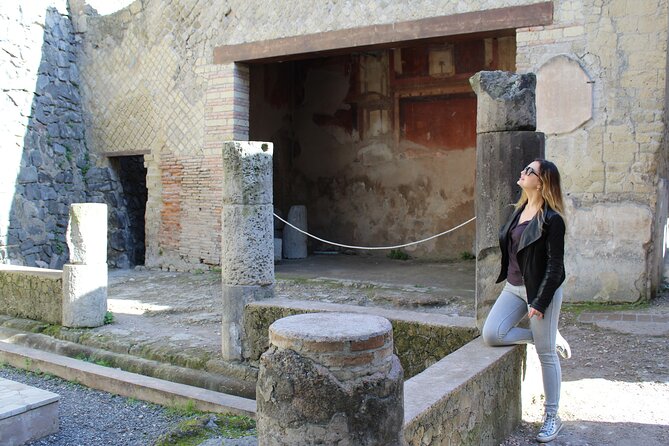
If you’re comparing it in your head to Pompeii (most people do), here’s the simple takeaway: Herculaneum feels more “lived-in” and more intimate. Many structures and decorative elements survived in a way that makes the city easier to visualize. Instead of standing in a field of broken walls, you often get to see rooms, floors, and decorative surfaces as they once worked.
That’s exactly what makes a guided visit pay off. You’re not just looking at stone. You’re learning how the Roman city was organized—roads, public buildings, then private homes along the seafront—and what daily routines likely looked like before Mt. Vesuvius buried everything.
Meeting at Ercolano Scavi: fast start, easy logistics
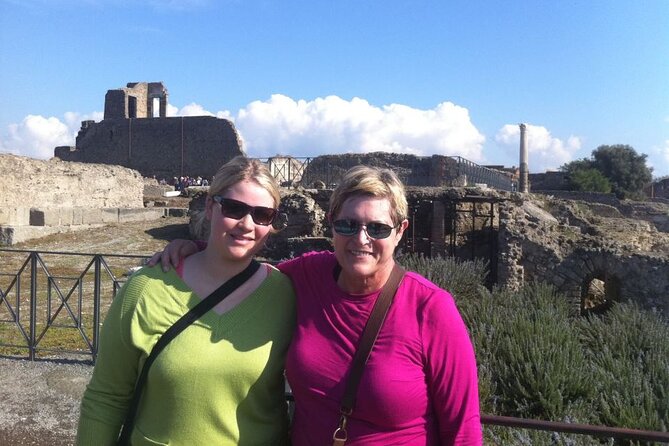
This tour starts at Ercolano Scavi (80056 Ercolano), and you’ll meet your guide there at either 8:30am or 12:30pm depending on your option. There’s no hotel pickup, so you’ll want to plan your local transportation so you arrive with time to check in and get your bearings.
A useful detail: the experience is near public transportation, which matters in Naples’ orbit where rides can be hit-or-miss. Wear comfortable shoes. The terrain in archaeological areas isn’t designed for thin-soled sneakers, and you’ll be moving continuously for close to the whole tour.
Skip-the-line tickets and how the guide keeps things moving
The biggest “time saver” isn’t just skipping lines. It’s what you do with the extra time after you get in. Since admission is included and your tour includes guaranteed skip-the-long-lines access, your guide can keep the walk flowing instead of losing momentum to wait times.
It’s also a smart setup because the site is big enough that self-guided visits can become a blur. With a guide, you’re given a route and a narrative: what you’re seeing, why it matters, and how different parts of the city connect. That’s where the value shows—especially if this is your first serious visit to ancient Roman ruins.
Forum, Basilica, and Thermal Baths: the city’s daily rhythm
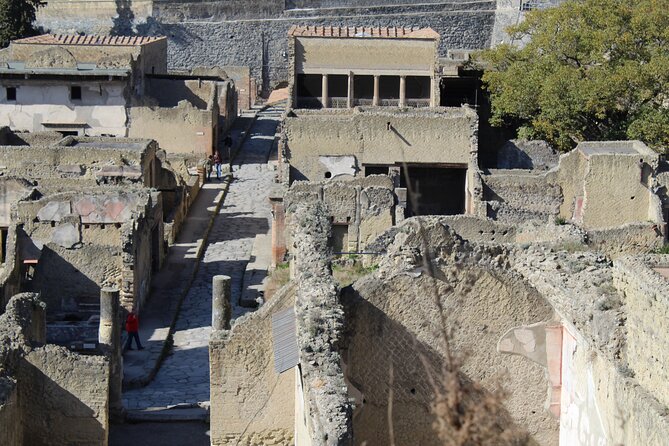
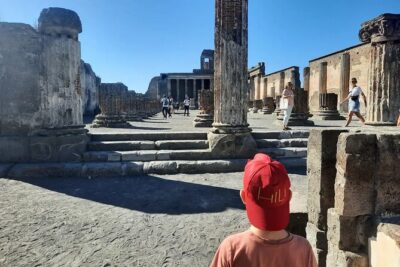
As you walk, you’ll get a clear sense of public life. The Forum and Basilica are central to that story. Even if you don’t know Roman architecture terms, a good guide translates the geometry into human behavior: where people would meet, where civic activity took place, and how monumental spaces supported everyday movement through the city.
Then comes the Thermal Baths, including opportunities to peek into the gymnasium and bath areas. Roman baths aren’t just “spa rooms.” They’re social hubs—exercise, conversation, relaxation—built into the daily schedule. A guide’s job here is to point out functional clues: how spaces transition from one activity to another and what the layout suggests about time spent there.
One practical drawback: bathrooms and service areas in archaeological sites may not be modern. You’ll do best by managing your expectations and planning water and breaks around the tour pace rather than expecting frequent stops.
Amphitheater and Decumanus: reading the city like a map
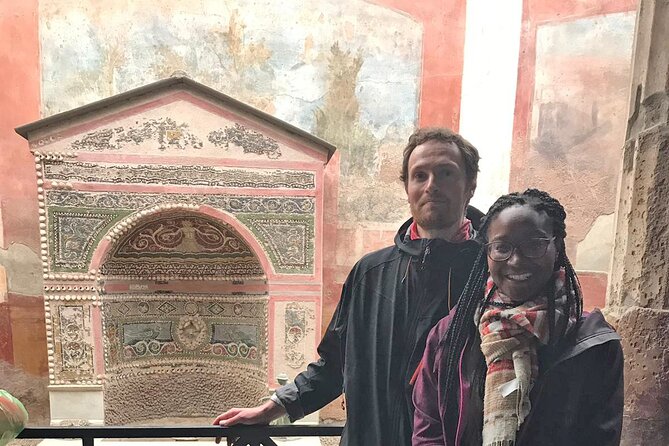
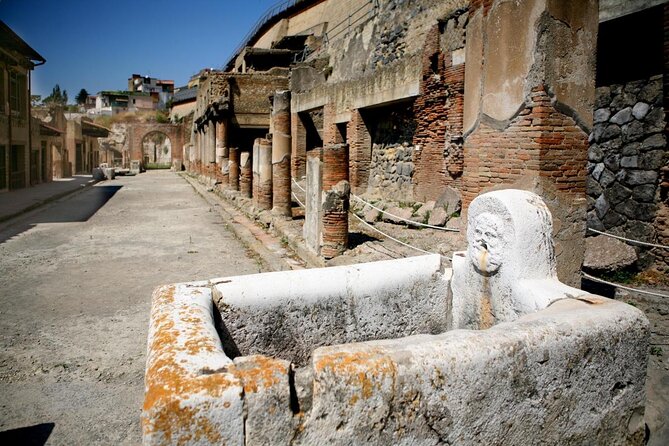
Herculaneum’s amphitheater gives you a chance to grasp entertainment and civic pride in one sightline. From there, you’ll walk along the Decumanus, the main east-west street that helps you understand how the city’s major zones lined up.
This is where a private tour can feel especially worthwhile. When you’re walking in a group, people tend to slow down at the “pretty spots” and rush past the connecting areas. With a guide tailoring the pace, you can slow down for the layout details and still keep a steady flow to the houses and mosaics.
Also, since the city was buried by the AD79 eruption of Mt. Vesuvius, the ruins can feel like instant snapshots—especially when the guide explains how the ash preserved structures and interiors. That framing turns a stroll into a timeline you can actually follow.
Houses by the water: mosaics, carbonized finds, and seafront life
The highlight sequence often moves toward the grand seafront villa area, where the homes and decorations make the city feel close to its former self. You’ll see major residences such as the House of Neptune and Amphitrite, plus others like the House of the Deer and the House of the Mosaic Atrium.
What makes these houses powerful is the combination of beauty and evidence. The walls and floors weren’t meant to be museum pieces; they were designed for real daily use. Guides can help you spot the visual logic—where people likely gathered, how movement through rooms worked, and what decorative choices meant socially.
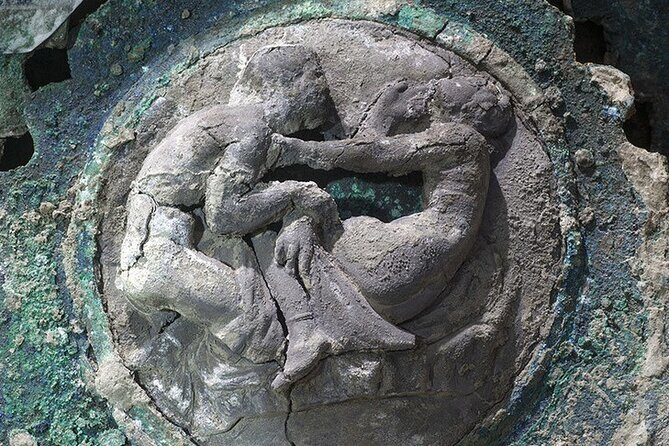
You’ll also learn about preservation details such as carbonized furniture and the surviving mosaic artwork. Those aren’t just shocking facts. They’re a way to understand the suddenness of the eruption and how a house can turn into a sealed record overnight. If you’re the kind of person who likes seeing how art, architecture, and real life tie together, this part is a strong payoff.
House of the Mosaic Atrium: where decoration tells a story
The House of the Mosaic Atrium is one of the best stops for people who enjoy art details. The atrium setting matters because it shows how homes were organized around light, circulation, and visible display.
A great guide will point out more than the obvious patterns. One review mentioned guide Italo showing details that weren’t immediately obvious, like angel symbols. That’s the sort of moment you’ll hope for when you book a guided experience. It transforms the mosaics from “pretty floor” into meaningful messaging—religious, cultural, and stylistic signals meant for visitors inside the home.
If you’re hoping to take photos, keep in mind that some areas may have restrictions depending on the day and site rules. A guide can help you figure out where you can pause without blocking other visitors.
House of Neptune and Amphitrite: color and status in one scene
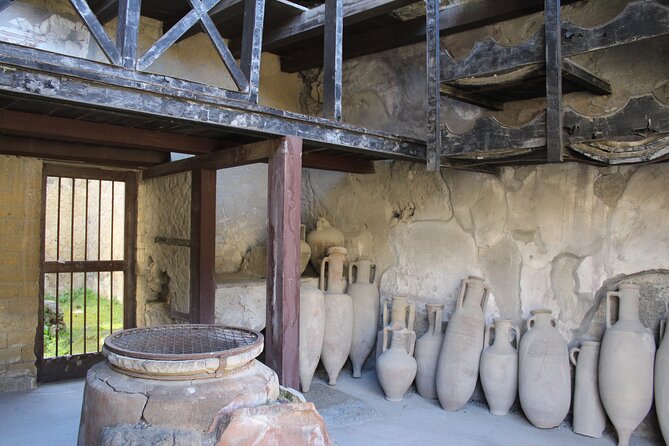
In the House of Neptune and Amphitrite, expect mosaics to take center stage again, paired with the sense that these were high-status spaces. This is where the tour’s art-historian angle matters. The tour includes a professional art historian guide, so you’re not just getting a general history lecture. You’re getting context for why certain scenes were chosen and how mosaics functioned inside Roman domestic life.
You’ll also get a sense of how a wealthy home treated views and position. Since this villa zone is tied to the seafront layout, the homes feel positioned for both privacy and display. Again, you don’t need a classics degree. The guide should make the connections clear.
Your guide matters: from Italo to Anna to Roberta and Loretta
This tour is private, and the guide quality shows up in the details. Several guides have strong reputations, including names like Italo, Anna, Loretta, Lelo, and Roberta. Across these experiences, the common theme is explanation that goes beyond surface viewing.
One archaeologist-guide reviewer noted that the guide had actually worked on site, and explained things in detail in a way you simply won’t get from reading plaques. Another highlighted Anna’s ability to answer questions and make the site feel lively. If you care about understanding what you’re seeing—why something is where it is, what the art might mean, and how the city functioned—private guiding is the difference between a quick sightseeing loop and a real learning walk.
And yes, there’s room for humor too. Lelo, for example, was described as helpful, friendly, and funny, which matters because a 2–2.5 hour walk can either feel stiff or feel fun depending on pacing and personality.
Price and value: is $207.11 per person a fair deal?
At $207.11 per person for about 2 hours (approx.), the cost isn’t “cheap,” but it’s also not wild if you compare what you get: a private tour, skip-the-line access, plus both local guiding and an art historian guide component.
Here’s how I’d think about value:
- If you’d pay for a guided experience anyway, this gives you structured access to the best areas without wasting time.
- If you’re traveling as a family or with teens who can engage with explanations, the private format can prevent the usual boredom fade.
- If you’re a history-and-art person, the mosaic focus and interpretive commentary likely justify the price more than a basic ticket-only visit.
If you’re on a strict budget and you’re comfortable walking the site on your own, you might decide to self-guide. But if you want the site to “make sense,” pay attention to the guide component and how much time you save.
Also consider group size. It’s private for your group only, so the value can rise when the cost is split across travelers who actually want a guide.
Who should book this Herculaneum private tour?
Book this if you:
- Want a guided walk that explains Roman daily life through public spaces and homes
- Care about mosaics and visual details like iconography (not just general history)
- Prefer morning or afternoon flexibility and like having a plan
- Want skip-the-line entry so your time goes to the ruins, not the line
You might choose something else if you:
- Don’t like walking for 2–2.5 hours on uneven archaeological ground
- Prefer audio-only guidance
- Want a low-cost, flexible visit where you control every pause
Should you book this Herculaneum private guided tour?
If you’re serious about seeing the site with meaning—public buildings, household life, and the art that survived—the private guided approach is the best match. The combination of skip-the-line access and expert interpretive guidance helps you get more out of a short visit, and it keeps the story coherent as you move from the Forum and baths to the villas by the water.
If you’re the kind of traveler who hates standing around waiting and loves those small “I would never notice that” details in mosaics and symbols, this is a smart use of your time in the Naples area.
FAQ
What is the duration of the Herculaneum private guided tour?
The tour is listed at about 2 hours, with the visit running around two and a half hours as you explore the main areas.
Where does the tour meet, and when does it start?
The meeting point is Ercolano Scavi 80056 Ercolano, Metropolitan City of Naples, Italy. Departures are at 8:30am or 12:30pm depending on the option you choose.
Is this a private tour?
Yes. It is private, so only your group participates.
Is admission included, and do I need to buy tickets separately?
Admission to Parco Acheologico di Ercolano is included, and you get skip-the-line access.
What language is the tour offered in?
The tour is offered in English.
Do I need hotel pickup?
No. Hotel pickup and drop-off are not included, so you make your own way to the meeting point.
What should I bring or consider for comfort?
Wear comfortable shoes. The tour requires moderate physical fitness, and children must be accompanied by an adult.
What documents do I need on the day of travel?
A current valid passport is required on the day of travel.
What is the cancellation policy?
You can cancel for a full refund if you cancel at least 24 hours before the experience’s start time.