REVIEW · SALERNO
Private Tour: Explore Paestum with an Expert Archaeologist
Book on Viator →Operated by Tours with an archaeologist · Bookable on Viator
Paestum makes sense fast when it’s guided. This private tour strings together the Greek-and-Roman layers of the site and then finishes in the museum, so you’re not just looking at ruins—you’re understanding them. I like that it’s private for up to 8 and led by an expert local archaeologist, not a rushed walk-by.
My favorite part is how the tour is paced: you get the big outdoor hits at Parco Archeologico di Paestum e Velia, then you shift inside to the Museo Archeologico Nazionale di Paestum. In the museum, you’ll get focused explanations for the stone frieze tied to the temple of Hera and the offerings and Roman fighting gear on display—exactly the stuff that’s easy to miss on your own.
One consideration: you’ll need to plan for weather and bring money for the entrance tickets. The tour fee does not include the Paestum Archaeological Park entrance (listed as €15 per person), and the experience depends on good conditions since part of it is outdoors.
In This Review
- Key highlights you can actually use
- Paestum and Velia in 2 hours: why this format works
- Finding the right starting point at the park
- Stop 1: Paestum e Velia—temples, the Heroon, and the Roman layers
- Ruins of the temples
- The Heroon (tomb of the mythical founder)
- The Roman Forum
- The Roman residential area
- Possible drawback at Stop 1
- Stop 2: Museo Archeologico Nazionale di Paestum—turning stones into objects
- The stone frieze connected to the temple of Hera
- Offerings for gods
- Armor and weapons of Roman warriors
- Painting tombs
- The “why this museum stop matters”
- Price and value: what $313.07 covers (and what you must pay separately)
- Booking timing and what it means for your day
- Who this private archaeologist tour suits best
- Should you book this Paestum with an expert archaeologist?
- FAQ
- What’s included in the Paestum private tour?
- How long is the tour, and what are the main stops?
- What entrance fees should I expect to pay?
- Where do we meet, and how does the tour end?
- Is this tour private, and how many people can be in the group?
- What’s the cancellation and weather policy?
Key highlights you can actually use
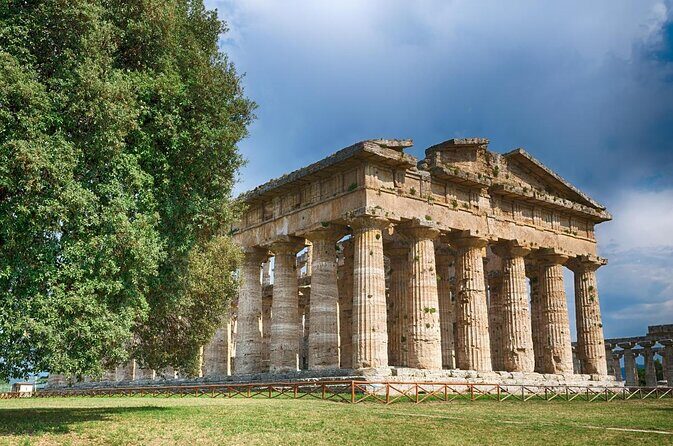
- Greek founder + Roman layers in one sweep at Paestum e Velia: temples, the Heroon, the Roman Forum, and a Roman residential area
- Museum explanations that connect to what you saw outside, including the frieze decorated the temple of Hera
- Tight timing that still covers the highlights, with about 1 hour 30 minutes in the park and 30 minutes in the museum
- English that stays clear and practical, with guidance that helps you stay oriented without slowing the group
- Outdoor comfort matters, since explanations can be adjusted to keep things easier in the shade when needed
Paestum and Velia in 2 hours: why this format works
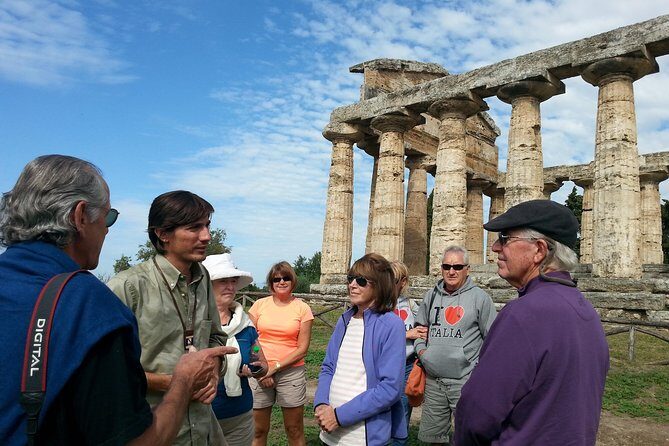
Paestum is the kind of place where the layout can feel intimidating at first. You see temples, walls, and separate sections, but without a guide you may not know what you’re looking at or why it matters. This tour is built for clarity: it gives you a guided route through the archaeology, then backs it up with objects in the museum.
You’ll start at the Archaeological Park of Paestum, and the tour stays intentionally short—about 2 hours total. That matters because Paestum can be a lot of walking under the sun, especially in warmer months. The best version of this experience is when you treat it like a focused orientation session, then decide if you want to go deeper afterward on your own.
Also, this is private (only your group), which usually means your guide can tailor pacing and questions to you. With a group of up to 8, you’re not fighting for attention at the most important stops.
You can also read our reviews of more private tours in Salerno

Finding the right starting point at the park
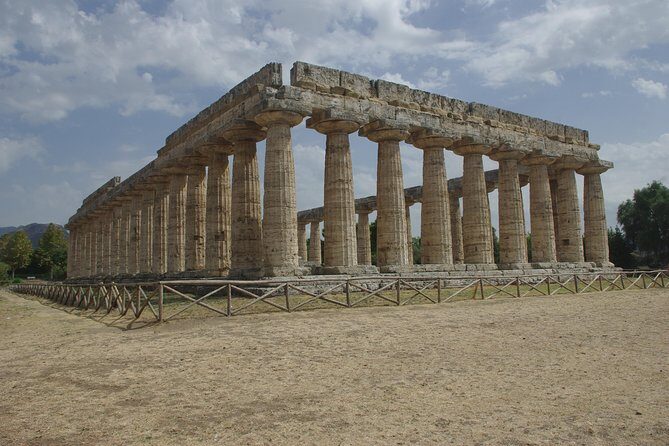
The meeting point is at Via Magna Graecia, 919, 84047 Capaccio Paestum SA, Italy, at the Archaeological Park of Paestum. Having a fixed start at the park is a plus, because you’re not piecing together transfers and meeting logistics in the middle of a sightseeing day.
From there, the tour immediately shifts into interpretation mode. You’re not waiting around; you’re standing in the archaeology and learning how to read it. Even if you’re not a formal museum person, this approach helps you connect shapes and fragments to the bigger story your guide is explaining.
The tour is offered in English, and the format is simple: you follow your archaeologist between the park and the museum, with a set amount of time at each stop. That structure is a real form of value, because it reduces decision fatigue. You won’t be wondering what to prioritize first.
Stop 1: Paestum e Velia—temples, the Heroon, and the Roman layers
You’ll spend about 1 hour 30 minutes at Parco Archeologico di Paestum e Velia. This is the outdoor heart of the tour, and it’s where you get the most visual “wow” moments. What makes this stop especially useful is that your guide isn’t treating the ruins like a checklist. They connect different areas into a layered picture of how the site evolved.
Here’s what you’ll be shown:
Ruins of the temples
Temples are easy to stare at, but hard to place without context. You’ll see the ruins of the temples while your guide explains what you’re looking at and how the space fits together. This is where a strong guide earns their fee: they help you notice details you’d otherwise skip.
The Heroon (tomb of the mythical founder)
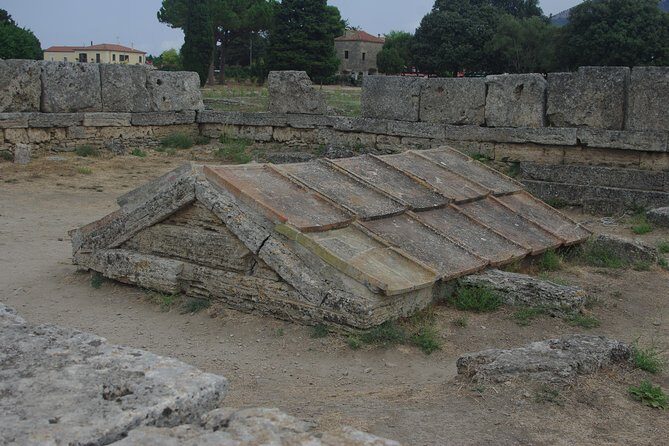
The tour includes the Heroon, described as the tomb of the mythical founder of the Greek city. This is a good stop because it moves you beyond “ancient buildings” into belief, identity, and storytelling. When you understand the purpose of a structure like this, even damaged remains feel purposeful.

The Roman Forum
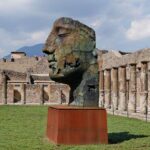
Next comes the Roman Forum. The key value here is contrast. You’re shifting from Greek framing (like the Heroon) to Roman civic life, and the guide helps you see what changes—and what stays readable—when one culture uses older spaces.
The Roman residential area
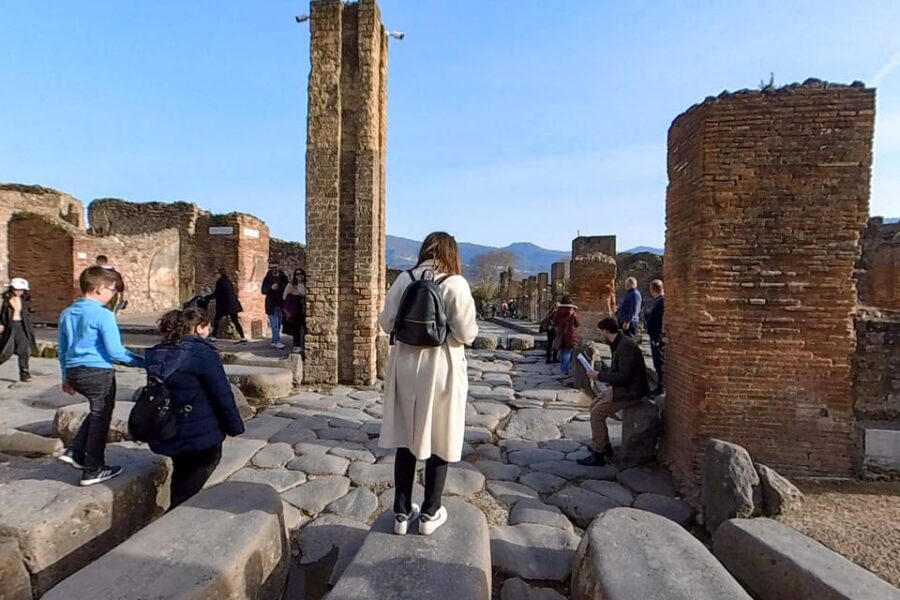
The last outdoor segment is the Roman residential area. This is often the least visited corner of sites like this, but it’s also one of the most human. You get to understand that the archaeology isn’t only about monuments; it also reflects everyday living and the practical use of buildings over time.
Practical tip: wear shoes that can handle uneven ground and plan to use the shade whenever you can. In the provided feedback, one guide named Lucia was praised for keeping explanations comfortable by doing them in the shade when possible. That’s not just nice—it helps you stay focused for the whole route.
Possible drawback at Stop 1
Because this is an outdoor archaeology park, you’re dependent on conditions. The experience explicitly requires good weather, and the timing is tight, so if it’s brutally hot or unpleasant you’ll feel it more than on a longer tour with breaks built in.
Stop 2: Museo Archeologico Nazionale di Paestum—turning stones into objects
After the park, you’ll move to the Museo Archeologico Nazionale di Paestum for about 30 minutes. This part is short on purpose, but it’s where the guide can make the visit click. Outdoors you’re working with ruins and space. Inside you’re given objects that explain what those spaces were for.
Here are the museum highlights you’ll focus on:
The stone frieze connected to the temple of Hera
You’ll hear about the stone frieze that decorated the temple of Hera. Even if you’re not sure what to look for, a guide can show you how details on a decorative element relate to the building it came from. This is one of those moments where the museum stops being passive and starts doing real work for your understanding.
Offerings for gods
You’ll also see artifacts produced as offerings for gods. These items help explain the religious side of what you saw outside. When your guide ties these objects back to the temple environment, it helps you stop treating the site as separate compartments.
Armor and weapons of Roman warriors
The museum includes armor and weapons of Roman warriors. This is another smart link to the Roman Forum and Roman residential area in the park. Instead of just hearing the word Roman, you get physical evidence that shows how military life and power were represented.
Painting tombs
The tour also mentions painting tombs. That’s an excellent closing note because it brings emotion and ritual into focus. Tomb imagery tends to feel more personal than stone architecture, and it’s a strong way to end a guided session without dragging on.
The “why this museum stop matters”
If you do Paestum only on foot, you may walk away with great photos and weaker understanding. This museum stop gives your brain something concrete to attach to what you saw outside. The result is a cleaner memory: ruins matched with frieze details, Roman civic areas matched with Roman military objects, and belief systems matched with offerings and tomb art.
Price and value: what $313.07 covers (and what you must pay separately)
The listed price is $313.07 per group for up to 8 people, for an approximately 2-hour private tour with an expert local archaeologist. That structure can be good value if you’re traveling with others who share your pace. In a full group, you effectively split the guide cost across more people.
The catch is that you’ll still need to pay the entrance ticket for the Paestum Archaeological Park—listed as €15.00 per person. Entrance fees are not included, and the same applies to any other entry costs mentioned as not included. So your real all-in cost depends on headcount.
Here’s a practical way to think about it:
- If you can fill the group size, the per-person guide portion becomes easier to justify.
- If you’re booking for fewer than 8, it can still be worth it if you really want interpretation and you’re not trying to cram everything into self-guided chaos.
The other value factor is time. At 2 hours, you’re not losing half a day to transit and indecision. You’re getting a compact, guided “decode” of the most important pieces.
Booking timing and what it means for your day
This tour is typically booked about 26 days in advance on average, which suggests it’s popular enough that you shouldn’t wait too long if your dates are fixed. Since the confirmation is received within 48 hours of booking (subject to availability), you’ll want to plan your Paestum day with a little patience and flexibility.
The tour includes a mobile ticket, which is handy once you arrive. And because it’s private, you can generally treat the day as a smoother flow: you meet, walk the route with your guide, go to the museum, and then end back at the meeting point.
Who this private archaeologist tour suits best
This is ideal for you if you want archaeology that feels explained, not just observed. If you like seeing major highlights but also want context to understand what you’re looking at, this format matches that goal well.
It’s also a good fit if you’re traveling as a group that benefits from staying together. With a private setup (only your group participates), you avoid the common problem of getting separated from explanations or missing key details while trying to corral a wandering group.
In the provided details, the experience notes that most travelers can participate and that service animals are allowed. The route includes outdoor walking and museum time, so comfortable shoes matter more than anything else.
Should you book this Paestum with an expert archaeologist?
Yes, if your priority is understanding. The tour is built around a logical pairing: the ruins in Paestum e Velia first, then the National Museum objects that help decode them. That makes it less likely you’ll leave with only photos and more likely you’ll leave with a clear mental map.
Book it especially if you’re the type who wants crisp, practical guidance. The strongest signal from the provided feedback is about how much the guide makes the difference, including an example of Lucia being praised for engaging English explanations and smart pacing that includes using shade.
Skip or rethink if you’re allergic to entrance fees on top of tour cost, or if weather is unpredictable for your dates. Since the experience requires good weather and part of it is outdoors, you’ll want a plan for alternatives.
If you’re aiming for a focused, high-value introduction to Paestum and Velia in just a couple hours, this is a solid choice.
FAQ
What’s included in the Paestum private tour?
The tour includes an expert local archaeologist. Entrance tickets are not included, and you’ll buy the Paestum Archaeological Park ticket separately.
How long is the tour, and what are the main stops?
It’s about 2 hours total. You’ll visit the Paestum e Velia archaeological area for about 1 hour 30 minutes, then the Museo Archeologico Nazionale di Paestum for about 30 minutes.
What entrance fees should I expect to pay?
The Paestum Archaeological Park entrance fee is listed as €15.00 per person, and it is not included in the tour price.
Where do we meet, and how does the tour end?
You start at the Archaeological Park of Paestum, Via Magna Graecia, 919, 84047 Capaccio Paestum SA, Italy. The activity ends back at the meeting point.
Is this tour private, and how many people can be in the group?
Yes. It’s a private tour/activity, and only your group participates. The price is per group for up to 8 people.
What’s the cancellation and weather policy?
The experience is non-refundable and cannot be changed for any reason. It requires good weather, and if it’s canceled due to poor weather, you’ll be offered a different date or a full refund.