REVIEW · SALERNO
Paestum: Private Tour of Greek Temples and Archaeological Museum
Book on Viator →Operated by Askos Tours · Bookable on Viator
Paestum feels like a walk through stone. This private tour brings Greek temple architecture and the Paestum museum into focus with a certified archaeological guide, in time you can actually fit into a day on the Amalfi coast. I like that the key sites are timed well for a 2-hour walking tour, and admissions for the main stops are handled for you.
You also get real flexibility: you can pick the time of day that suits your schedule, and the experience runs as just your group (up to 15 people). The main thing to consider is simple—this is moderate walking and standing, so comfortable shoes matter if your legs aren’t up for a couple hours outdoors.
Guides vary, but the tour’s strongest ingredient is how they teach the stones. Some named guides like Maria, Mario, Ivan, Carmen, Sergio, and Silvia have been praised for clear English, pacing that feels easy, and stories that turn monuments from outlines into places.
In This Review
- Key highlights that make this Paestum tour worth it
- Why Paestum’s Greek Temples Feel Different
- What the Private Tour Covers (4 Stops in About 2 Hours)
- Stop 1: Archaeological Park of Paestum and Its Best-Preserved Feel
- Stop 2: Tempio di Hera II (and the Poseidon/Neptune Name Confusion)
- Stop 3: Temple of Athena (Temple of Ceres) Near the Basilica
- Stop 4: Museo Archeologico Nazionale di Paestum and the Tomb of the Diver
- Price and Value: What $202.14 Per Person Buys You
- Meeting Point, Timing, and Day Planning That Actually Works
- Who This Tour Fits Best
- Should You Book This Paestum Private Tour?
- FAQ
- How long is the Paestum private tour?
- Is this tour private or shared?
- What language is the tour offered in?
- What’s included in the price?
- Which admissions are included, and which are free?
- Is transportation included?
- Where do we meet the guide?
- What physical level is needed?
- Are service animals allowed?
- Can I cancel for a full refund?
Key highlights that make this Paestum tour worth it
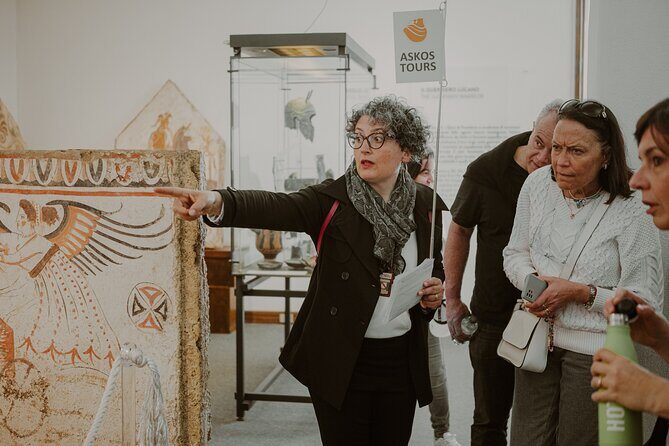
- Certified archaeological guide with attention to the details that usually get missed
- Two main ticketed stops included: the Archaeological Park and the National Archaeological Museum
- Free temple visits at Tempio di Hera II and Temple of Athena, so you focus on the interpretation
- A time-of-day choice so you can plan around heat and your other plans
- Small private group size (up to 15) that keeps questions from feeling rushed
Why Paestum’s Greek Temples Feel Different
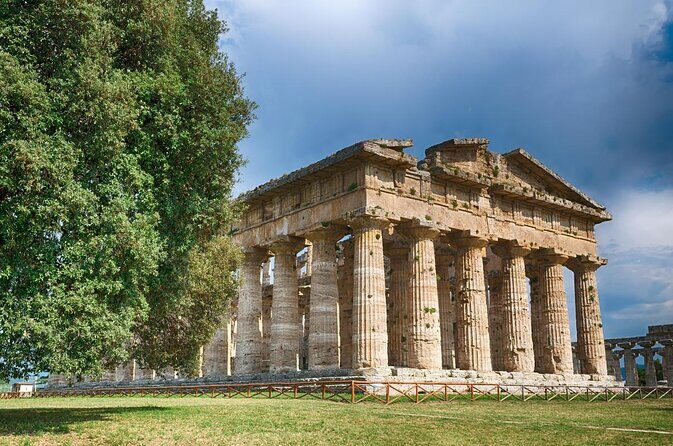
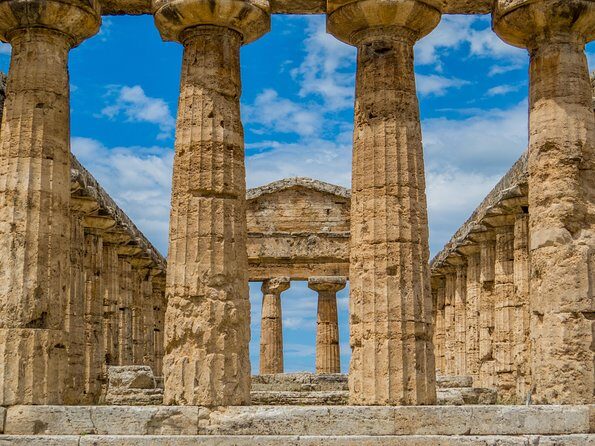
Paestum is one of those places where the scale still hits, even if you’ve seen lots of Roman stuff. The temples here are massive, but what makes them memorable is how they sit inside an archaeological park you can walk through at a human pace.
And you don’t just look at columns. With a guide, the site makes sense—where you are in the city, what the structures are, and why the famous names can be confusing. That matters because Paestum’s temples have gone through a few identity mix-ups over time, and a good guide helps you sort the signals fast.
The private format is also practical. If you care about the difference between Greek and Graeco-Roman elements, you’ll want room for questions without joining a big group funnel.
You can also read our reviews of more private tours in Salerno


What the Private Tour Covers (4 Stops in About 2 Hours)
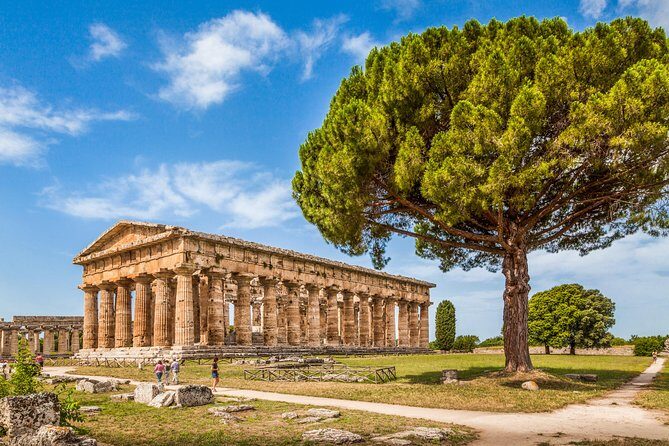
This is a focused itinerary built around walking and interpretation, not a long day of transfers. Expect around 2 hours total, with the group starting and ending back at the meeting point on Via Magna Graecia.
The tour’s structure is nice because each stop has a job:
- The archaeological park gives you the city-scale view.
- Two temple stops sharpen your understanding of what you’re actually looking at.
- The museum seals the deal with artifacts and standout wall paintings.
Since admission is included for the park and museum, you spend less time hunting tickets and more time in the zones that connect the temples to the people who built them.
Stop 1: Archaeological Park of Paestum and Its Best-Preserved Feel
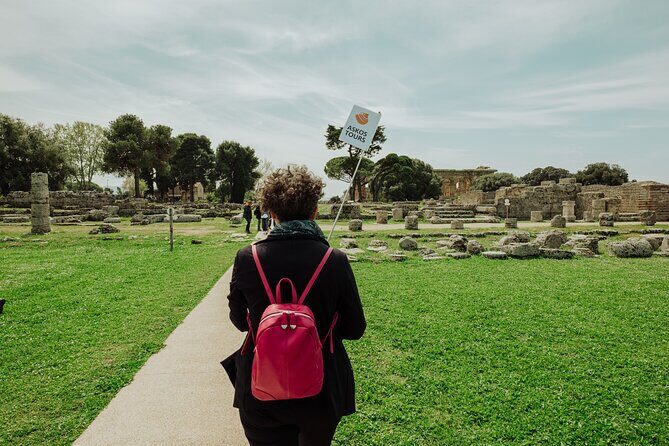
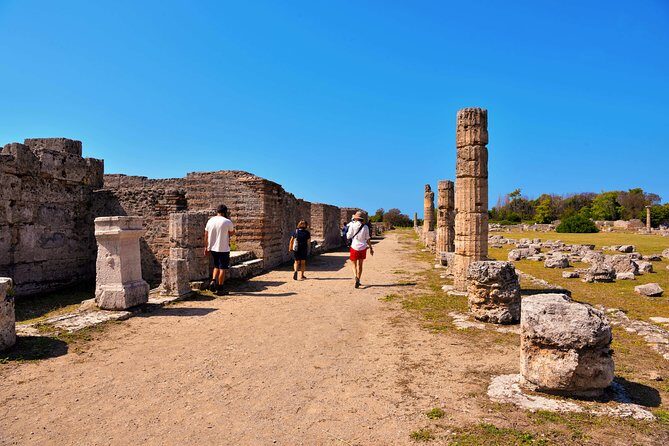
Your first stop is the Archaeological Park of Paestum, often described as the best preserved Greek or Graeco-Roman city on this side of Italy. You’ll spend about 30 minutes walking it with a licensed archaeological guide.
In a short window, what you’re really doing is getting your bearings. A good guide helps you read the ruins like a map: which areas matter most, how the layout connects, and what makes Paestum’s preservation so striking after all these centuries.
One practical advantage here is time. You’re not stuck for hours in the open with no structure. The park portion is long enough to matter, but short enough that you’re ready for the temple stops without feeling fried.
Stop 2: Tempio di Hera II (and the Poseidon/Neptune Name Confusion)
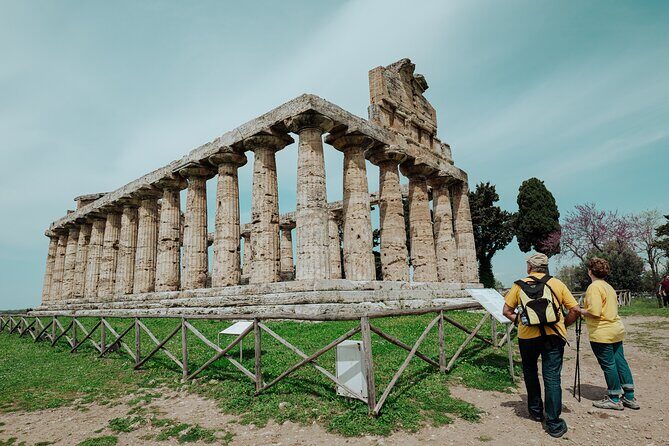
Next up is Tempio di Hera II. It’s about 15 minutes, and admission is free, so the guide’s explanation becomes the whole point.
Here’s a detail that’s worth paying attention to: Tempio di Hera II is earlier-and-still often called the Temple of Poseidon or Temple of Neptunus from older misidentification. A guide will help you understand why that label stuck, and why it’s now treated as a temple to Hera.
You’ll also be dealing with a second clue: it’s described as the more northern and younger of the two Hera temples at Paestum. So even if you already know the name of the building, the context changes how you interpret the structure.
If you like history that comes with footnotes, this stop is satisfying. It shows how archaeology corrects old stories, and how names can mislead if you don’t check them.
Stop 3: Temple of Athena (Temple of Ceres) Near the Basilica
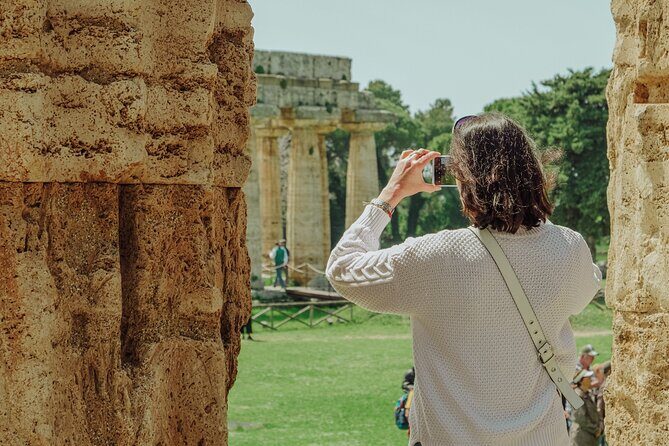
The third stop is the Temple of Athena (sometimes called the Temple of Ceres). You’ll get about 15 minutes, and admission is free here too.
This is the stop that works well if you enjoy comparing scales and positions. The temple is built near the much larger Basilica area, so it’s easier to understand how religious and civic spaces sat side by side. The timing also helps: you’re not asked to linger, but you’re given enough time to connect what you just learned at Hera II to a different temple form and era.
If you’re the type who likes to ask why one temple gets all the attention, this is a good moment to do it. A good guide can point out what this temple adds to the bigger picture of Paestum.
You can also read our reviews of more museum experiences in Salerno

Stop 4: Museo Archeologico Nazionale di Paestum and the Tomb of the Diver
After the temples, you shift gears to the National Archaeological Museum. This is about one hour, with admission included.
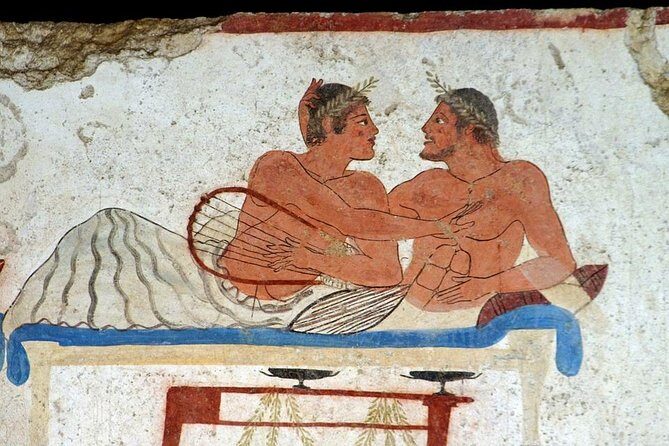
If the outdoor stones are the headline, the museum gives you the supporting cast. The museum holds local Greek artworks dating back to around the 7th century BC, and one major highlight is the frescoes from the Tomb of the Diver.
This is the kind of artifact moment that makes a temple tour feel real. Temples tell you what communities built. Frescoes and tomb imagery help you understand how people thought, what they valued, and what stories they imagined—so you get more than architecture.
One more reason this stop is valuable: it balances the day. After walking in open air, a museum hour is a clean mental reset. You’re still learning, but you’re not battling sun, wind, and uneven footing.
Price and Value: What $202.14 Per Person Buys You
At $202.14 per person, this tour isn’t the cheapest way to see Paestum. The value comes from the parts that usually cost time or hassle when you travel on your own.
First, you’re paying for a certified archaeological guide and the guided pacing that turns scattered ruins into a coherent story. Second, admissions are included for the archaeological park and the national museum, which reduces friction at the gates.
Also, this is private, not semi-private. The pricing can make sense if you’re traveling with a small group of adults who want control over questions and timing. The group option up to 15 also means you can sometimes arrange a comfortable size without the experience turning into a herd.
If you’re the lone adventurer type, you might still find it worth it if you genuinely care about archaeology interpretation. If you’re just chasing quick photos, you could probably do it cheaper on your own—but you’d miss the “why” that makes Paestum click.
Meeting Point, Timing, and Day Planning That Actually Works
You’ll meet at Via Magna Graecia, 919, 84047 Santa Venere SA, Italy. The end point is the same place, so you don’t have to worry about a complicated drop-off.
A map link is provided for the meeting point, which is helpful because finding the start matters when you’re on a schedule. If you’re taking taxis, I’d plan to confirm timing in advance so you arrive with a buffer.
Duration is about 2 hours, and you can choose the time of day. I’d pick a slot when you can keep your energy up for outdoor walking and then switch to the museum without rushing.
Transportation and meals aren’t included, so plan that part yourself. Once you finish the temples, you’ll likely want lunch nearby, and there are restaurants around the edge of the site. In fact, one lunch option that gets mentioned for being less congested is La Basilica Cafe Paestum, located behind the parking area.
Who This Tour Fits Best
This one works especially well if:
- You want interpretation, not just sightseeing.
- You care about how archaeology corrects older stories and labels.
- You prefer a calm private group where questions are easy.
- You like a mix of outdoor ruins plus a museum stop.
It’s also a good fit for adults who don’t want a huge time commitment but still want something structured. The activity level is listed as moderate, and travelers are advised to have moderate physical fitness.
If your plan is mostly about fast photos, you might find the guide-focused format unnecessary. But if you want the site to make sense as you walk, this is the right style.
Should You Book This Paestum Private Tour?
I’d book it if you’re willing to pay for a certified guide and you want the temples plus the museum in a tight, well-paced package. The included admissions for the park and museum also make the experience easier to manage.
Don’t book it if you’re chasing a low-cost, self-guided stop with zero walking time. Also, if you can’t handle outdoor walking and museum time, the moderate fitness requirement is something to take seriously.
If you’re planning Paestum as a highlight day (not an afterthought), this tour gives you a strong return on time. It turns a site you might otherwise skim into a place that stays with you after you’re gone.
FAQ
How long is the Paestum private tour?
It runs for about 2 hours.
Is this tour private or shared?
It is private. Only your group participates.
What language is the tour offered in?
The tour is offered in English.
What’s included in the price?
A certified archaeological guide provides guidance for the full duration, and admission fees are included.
Which admissions are included, and which are free?
Admission is included for the Archaeological Park of Paestum and the National Archaeological Museum. Admission is free for Tempio di Hera II and Temple of Athena.
Is transportation included?
No. Transportation is not included.
Where do we meet the guide?
The meeting point is Via Magna Graecia, 919, 84047 Santa Venere SA, Italy. A map link is provided.
What physical level is needed?
The tour is listed as moderate, with a recommendation for moderate physical fitness. Comfortable shoes are recommended.
Are service animals allowed?
Yes, service animals are allowed.
Can I cancel for a full refund?
Yes. You can cancel for a full refund up to 24 hours in advance of the experience’s start time.