REVIEW · SALERNO
Private Cooking Class at a Cesarina’s Home in Salerno
Book on Viator →Operated by Cesarine: Cooking Class · Bookable on Viator
Cooking at a neighbor’s table feels personal. This private Cesarina cooking class in Salerno lets you learn Italian regional flavors in a real home setting, not a studio. I especially love the private home experience and I love that all food and drink, including alcohol, are included.
One thing to consider: this is time focused on cooking and eating, inside a local home. If you’re looking for big sightseeing stops, you’ll want to pair this with a separate walking plan.
Key highlights you’ll care about
- A true home-cooking feel: you’re welcomed into a Cesarina’s house and taught in her kitchen
- Everything is included: food, drinks, and even alcoholic beverages come with the class
- Hands-on pasta time: you’ll knead, shape, and cook, not just watch
- Regional Campania flavor: menus are built around local-style dishes and sauces
- Dietary flexibility: vegetarian and gluten-free options can be arranged
- English instruction: offered in English, with help from an interpreter when needed
In This Review
- Salerno in a Cesarina’s home: why this class feels different
- Your 4-hour flow: from warm welcome to pasta dough
- The menu you’ll make: regional pasta, sides, and a real dessert
- Pasta and fillings (what you’re actually learning)
- Starters and sides (how Campania flavors show up)
- Dessert (the part you’ll remember)
- Wine, limoncello, and what the meal teaches you
- Private format details: translators, family energy, and comfort
- What the price includes (and how to judge the value)
- Should you book the Cesarina home cooking class in Salerno?
- FAQ
- Where does the cooking class start?
- How long is the private cooking class?
- What’s the price per person?
- Is the class offered in English?
- Is it private?
- What’s included with the class?
- Can they accommodate vegetarian or gluten-free diets?
- Is confirmation provided after booking?
- Is there free cancellation?
Salerno in a Cesarina’s home: why this class feels different
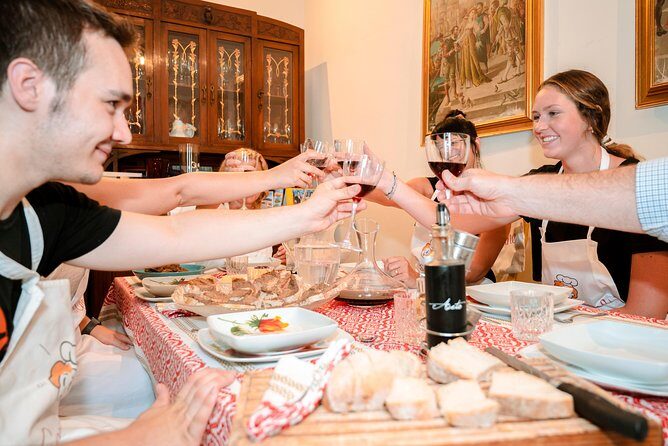
This isn’t “learn to cook” in the classroom sense. You show up to a local home in Salerno, get welcomed properly, then roll up your sleeves with a qualified Cesarina chef. In the best cases, you’ll feel like part of the family network for the afternoon, not like you’re renting a cooking lesson.
In at least some classes, you’ll also meet the support team who helps make sure nothing gets lost—like interpreter/assistant Angela, or translation help from Anna. That matters because Italian cooking can be full of tiny technique cues, and you’ll get those cues in plain language.
You’ll likely start with a quick sit-down welcome (sometimes with espresso), then move right into the work: ingredients, aprons, and a menu that’s built around what the region does well.
Your 4-hour flow: from warm welcome to pasta dough
The day moves in a logical rhythm: you’re guided through prep steps, then you eat what you helped create. With about 4 hours total, it’s enough time to actually learn technique, not just taste finished dishes.
A typical flow looks like this:
- Welcome and setup: you’re greeted, get direction for the day, and usually receive aprons and a clear plan of what you’ll cook.
- Starter prep and sauce building: you may start with a salad or a vegetable dish while the main dough comes together.
- Kneading and resting: you get hands-on with pasta dough—often with semolina and farm-fresh eggs in the style of the region.
- Shaping the pasta: you work on fillings and assembling dishes like ravioli (in some classes, you might even see more than one shaping method).
- Cooking and finishing: your pasta and sides come together while you finalize dessert.
- Eating together: you sit down for the meal with drinks from the table.
One practical note: this class happens in a residential building. In at least one experience, there’s an elevator available if stairs are an issue, and you’ll be met at the entrance. If you want to travel without hassle, plan for a short ride from the city center area to the neighborhood.
You can also read our reviews of more private tours in Salerno


The menu you’ll make: regional pasta, sides, and a real dessert
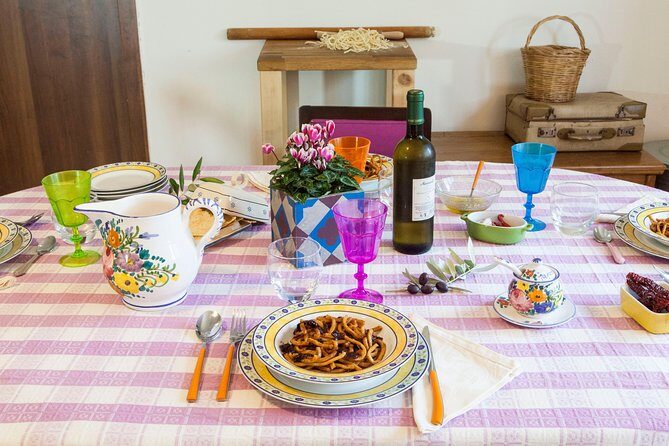
The “sample menu” is simple on paper: a seasonal starter, pasta, and a typical dessert. In real life, the menu can be more layered, with multiple sides and extra dishes that the host has prepared ahead.
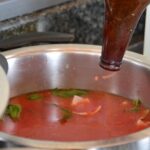
From the way these classes are described, expect to do at least one major pasta project. In one well-detailed class, I could see how much craft goes into the dough and filling: you knead the pasta dough thoroughly, then let it rest while you prepare other components. Later, tomato puree gets turned into a sauce with olive oil and smashed garlic—exactly the kind of “simple but precise” technique that changes the flavor in a big way.
Pasta and fillings (what you’re actually learning)
You’ll work with a dough base and a filling concept, then assemble and cook. In one class example, participants made:
- Ravioli with a spinach and multi-cheese filling
- ravioli shaped using both a hand crimper and a mold
- and a dumpling-like dish using the same filling concept, wrapped in a boiled flour shell
Even if your exact dishes differ, this is the core skill set you’ll take home: making dough, managing rest time, portioning filling, and understanding how sauces and pasta match.
Starters and sides (how Campania flavors show up)
While the pasta is in progress, you might prepare vegetable dishes and salads. In one detailed menu, there were elements like tomato salad and grilled-pepper side dishes. There was also mention of dishes prepared earlier that fed the table, such as eggplant parmigiana made in thin layers and a potato fritata with cheese and accents of Italian dried meat.
The key value here is that you’re not just learning a recipe. You’re watching how a home cook builds a full meal: something fresh, something rich, something crisp, and a sauce that pulls it together.
Dessert (the part you’ll remember)
Dessert in this class is “typical,” and in at least one experience it was tiramisu made in a traditional way. The nice part about dessert here is that it gives you a full circle moment: you sweat over pasta dough, then you finish with something sweet that feels genuinely Italian and not like a generic “tour dessert.”
And yes, the meal is structured so you actually eat what you made, not just nibble.
You can also read our reviews of more cooking classes in Salerno

Wine, limoncello, and what the meal teaches you
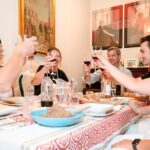
If you drink wine, you’ll like the setup. The class includes local wine, and alcoholic beverages are part of the experience. In at least one described table, there were also spirits like limoncello and fennel liqueurs, plus espresso and other drinks that kept the pace relaxed.
This matters for your enjoyment because a cooking class can feel stressful if it’s all work and no social time. Here, you’re cooking with the group, then you settle in to eat at the end with the same people who taught you.
There’s also a quieter education happening in the food choices. One detailed class described ingredients coming from neighbor and local provider networks—things like focaccia, olive oil, aged cheeses, and locally sourced vegetables. When a Cesarina builds that kind of table, it teaches you how Italians think about shopping and sourcing: it’s about relationships and quality, not just a recipe list.
Private format details: translators, family energy, and comfort
This is a private tour/activity, so it’s only your group. That’s a big deal if you don’t want the “watch someone else work” vibe. You’ll get more time with the chef, more room for questions, and less pressure if you need an extra explanation of technique.
In several accounts, the host treated people with warmth that went beyond the kitchen. Hosts like Silvia and her team made it clear you’re welcome in the home, not hovering in the doorway like a visitor. In one experience, someone even had time to interact with a tiny family dog, which is a very real-life reminder that you’re stepping into someone’s daily world.
Comfort-wise, you’ll want to think about how you move. Residential buildings can mean stairs, but elevator access can exist if needed. If mobility is a concern, it’s worth reaching out before you go so you can match your route to what your host can offer.
Also, bring an appetite for handwork. Pasta-making takes effort—kneading, shaping, and assembling are physical steps. Most people can participate, but if you have limitations, you’ll get a better outcome by flagging them early.
What the price includes (and how to judge the value)
At $174.60 per person, this isn’t a cheap “food stop.” It’s closer to paying for a private dinner plus hands-on teaching. The value comes from three places:
First, all food and drink are included, including alcoholic beverages. That shifts the cost math, because many other food experiences have you pay separately for drinks or end up as a tasting only.
Second, you’re paying for a qualified home chef and a full 4-hour experience. That’s time you can’t recreate easily at home: technique coaching, guidance on dough and sauce, and the chance to learn multiple steps.
Third, you’re getting a meal that’s more than a plate. In the classes described, you could see multiple components showing up at the table: starters, pasta with sauce, sides, and dessert. Even when your class menu follows the sample format, it still tends to feel substantial because it’s designed for sharing.
If you like cooking and you want regional Italian food the way locals build it, this tends to be worth it. If you only want a quick taste, you might decide you’d rather spend less time and money elsewhere.
Should you book the Cesarina home cooking class in Salerno?
Book it if you want a hands-on, regional Italian meal taught in a real home. You’ll get practical pasta skills, a full menu experience, and the kind of hospitality that turns a cooking class into a story you can tell later.
Skip it if your day is tightly planned for sightseeing and you don’t want a 4-hour block focused on cooking. Also consider your mobility and comfort with a residential building setting, even though elevator access can be available in some cases.
If you’re traveling with food in mind and you enjoy learning through doing, this is the sort of experience that makes Salerno feel personal.
FAQ
Where does the cooking class start?
The experience starts in Salerno, SA, Italy, and it ends back at the meeting point.
How long is the private cooking class?
It runs for about 4 hours.
What’s the price per person?
The price is $174.60 per person.
Is the class offered in English?
Yes, the experience is offered in English.
Is it private?
Yes. It’s a private tour/activity, and only your group participates.
What’s included with the class?
You get all food and drink, including alcoholic beverages.
Can they accommodate vegetarian or gluten-free diets?
Vegetarian and gluten free options can be made available.
Is confirmation provided after booking?
Yes. Confirmation will be received at time of booking.
Is there free cancellation?
Yes. Free cancellation is available if you cancel at least 24 hours in advance for a full refund.