REVIEW · NAPLES
Pompeii & Herculaneum Group Tour with tickets
Book on GetYourGuide →Operated by Di Sarno Tours · Bookable on GetYourGuide
One day, two cities buried in ash. I love the Pompeii focus on daily life details and the included tickets that let you walk the sites without hunting for entry. I also like the hotel pickup setup in Naples and the included lunch break. One real heads-up: the day moves from bus to guides to audio, and understanding some English accents can be tricky.
In the morning you get a guided walk through Pompeii’s biggest sights, then you’re free to recharge at lunch. In the afternoon you head to Herculaneum, where the volcanic cover preserved the city in a way that makes everyday life feel close and clear. It’s a long 8 hours, so comfortable shoes matter more than you think.
In This Review
- Key points that make this tour worth your time
- From Naples to Pompeii: bus pickup that keeps the day moving
- Pompeii with a guide: daily life through big monuments
- The lunch break between ruins: take your time
- Herculaneum in the afternoon: audio-guided walking in a city preserved by ash
- Tickets, timing, and how the group actually flows
- What you should bring (and what will make your feet happier)
- Price and value: what $175.59 buys you in real terms
- Who this tour suits best
- Should you book this Pompeii and Herculaneum group tour?
- FAQ
- How long is the Pompeii and Herculaneum tour?
- Where are the pickup locations in Naples?
- Do I get a guide at both Pompeii and Herculaneum?
- What languages are available?
- Is lunch included?
- What entrance tickets are included?
- Is the tour suitable for wheelchair users or people with mobility impairments?
Key points that make this tour worth your time
- Pompeii guided time (about 2 hours): You’ll see major landmarks like the theater, necropolis, thermal baths, and grand houses.
- Herculaneum via audio-guided walk: You explore on your own, letting you linger where the city feels most real.
- Tickets for both UNESCO sites: Entrance to Pompeii and Herculaneum is included, so there’s less friction on the ground.
- Lunch included (1 hour): A real break in the middle, with time to eat before the second site.
- Multiple Naples pickup and drop-off options: Pickup and drop-off are offered at selected meeting points around the city.
From Naples to Pompeii: bus pickup that keeps the day moving
This is a full-day excursion designed for one big goal: maximize your time at Pompeii and Herculaneum without the stress of buses, tickets, and transfers on your own.
The day starts with a pickup in Naples from one of the listed meeting points, including Hotel Naples, Bar Picnic, Hotel NH Napoli Panorama, Terminus, UNAHOTELS Napoli, and Grand Hotel Saint Lucia. You’ll ride in a modern coach, and there’s a tour assistant on the bus during the Pompeii transfer. There’s also comment on board, which is useful because it primes you for what you’re about to see.
What I like about this kind of setup is simple: it gets you from Naples to the ruins without wasting hours figuring logistics. What can add friction is the handoff moments. You get out of the bus, then meet the Pompeii guide, then later switch again for Herculaneum. Give yourself a little extra attention at each transition and make sure you know where your group is supposed to gather.
You can also read our reviews of more tours and experiences in Naples


Pompeii with a guide: daily life through big monuments
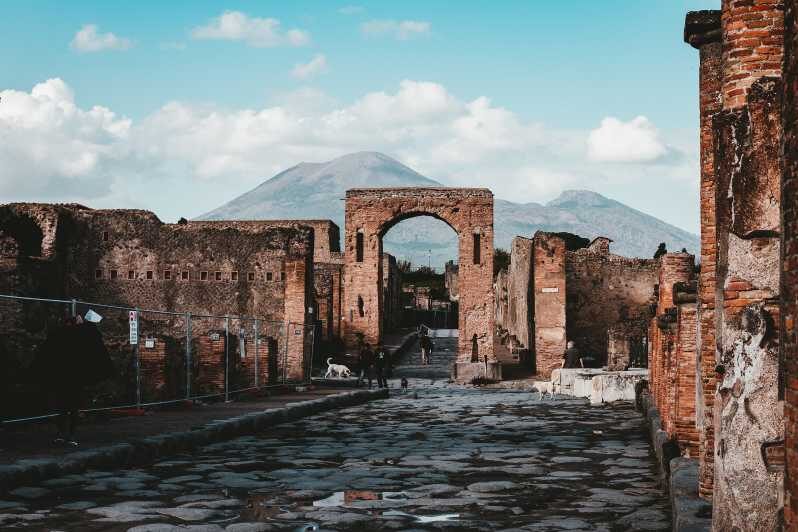
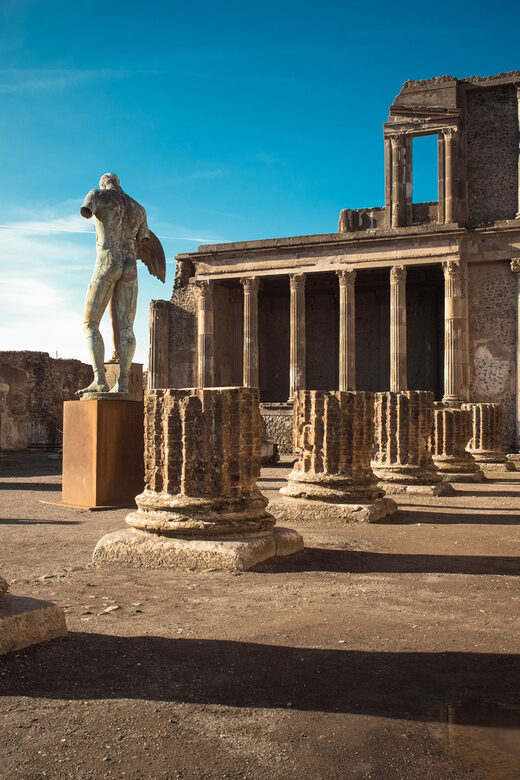
Pompeii is where the tour earns its reputation. You meet your Pompeii guide and explore for about 2 hours. The emphasis isn’t only on famous buildings; it’s on traditions and daily life—how people lived, worked, shopped, and gathered.
During this time, you’ll pass some of the site’s major anchors, including:
- the large theater
- the necropolis
- the thermal baths
- and impressive houses connected with the richest residents
This matters because Pompeii can feel like a museum of stone if you just wander. A guide helps you connect parts of the city to human routines. You’re more likely to notice what makes sense for daily living—spaces for public gathering, areas linked to bathing and health, and neighborhood-scale life around wealthier homes.
One important note: the Pompeii guide is available only in high season with a minimum of 6 participants per language. If your group is smaller (up to 5 participants), you’ll get an audio guide for Pompeii instead of a live guide. Either way, you’ll still have the entrance ticket included, so you’re not stuck trying to sort entry on the spot.
Also, if you’re picky about spoken English, plan for real-world listening challenges. One experience noted that some English accents were hard to catch clearly, and that they missed some details. If you want the most accurate experience, try to book in a language you feel comfortable following closely.
The lunch break between ruins: take your time
After Pompeii, you get about 1 hour for lunch. This is built into the flow, so you’re not forced to eat while rushing between entrances.
In practice, you’ll want to use this break for two things:
- refuel with food (lunch is included)
- reset before Herculaneum, which rewards a slower pace
Drinks at lunch aren’t included, so keep that in mind if you like water, coffee, or anything extra. I’d also suggest using this hour to buy what you’ll need for the afternoon—especially if you tend to run warm. This is an outdoor-heavy day, and you’ll be walking around ancient surfaces that aren’t designed for modern comfort.
Herculaneum in the afternoon: audio-guided walking in a city preserved by ash
Then it’s on to Herculaneum for about 1.5 hours. This is where the tone shifts. Instead of a live guided walk at this site, you get a walking tour of the ruins using audio guides, so you explore at your own pace.
Why Herculaneum feels different: the city was covered by mud and volcanic debris. That covering preserved structures and artifacts in a way that can make everyday life feel even more readable than Pompeii. You’re not just seeing grand public buildings; you’re observing daily life with a more intimate scale.
The audio format can be a big advantage here. It lets you slow down around details that catch your eye, without the pressure of keeping step with a group. It also helps you stop for photos or to reorient if you want to understand what you’re looking at.
The main trade-off is the lack of a live guide to answer questions in real time. If you like interaction and immediate clarification, you may find yourself depending on the audio and your own curiosity. Still, for many people this becomes the best part of the day because you control your pace.
Tickets, timing, and how the group actually flows
The tour is set up as a managed group day: modern coach for transportation, comment on board, entrance tickets to both sites, and a guided component in Pompeii (or audio there in smaller groups). For Herculaneum, the ruins walk is audio-guided.
Duration is listed as 8 hours, but starting times depend on availability. That matters because the whole rhythm depends on when you’re picked up and how long you spend walking. If you’re someone who hates late-day fatigue, aim for an earlier start when you can.
Group size affects your experience most in Pompeii:
- In high season, with a minimum of 6 participants per language, you’ll have a Pompeii guide.
- In groups up to 5 participants, you’ll get an audio guide for Pompeii instead.
So you’re not guaranteed a live guide for Pompeii in every departure. I’d treat that as normal for a large UNESCO site with seasonal staffing. The upside is that you still get the same access via the included Pompeii ticket.
The day also includes waiting and transfer time, which is why the 8-hour duration should be respected as a full outing, not a quick side trip. Plan your whole day around it.


What you should bring (and what will make your feet happier)
Because this is a walking-focused ruins day and the tour is not suitable for people with mobility impairments or wheelchair users, the practical comfort checklist matters.
Bring:
- comfortable shoes
- sun hat
- sunscreen
Add what’s not explicitly listed if you know your habits: water (since only lunch is included, and drinks at lunch aren’t), and a small layer if the morning feels cool. I’d also suggest wearing clothes you can move in. Pompeii and Herculaneum are outdoor sites, and you’ll cover a lot of ground in one day.
The easiest way to improve the experience is to make sure you can look around calmly. Good shoes mean fewer rushing moments, and fewer rushed moments mean you catch more of what makes these cities special.
Price and value: what $175.59 buys you in real terms
At $175.59 per person, this isn’t a bargain-basement deal. But it also isn’t just a bus to the ruins.
What you’re paying for, bundled together:
- modern coach transportation for the full trip
- entrance tickets to Pompeii and Herculaneum
- lunch included
- guided Pompeii in high season, or audio Pompeii when smaller
- audio-guided walking at Herculaneum
- comment on board
- a tour assistant on the bus during the Pompeii transfer
For many visitors, the value comes from removing the “friction tax” of DIY travel. You’re not coordinating Naples transport, lining up tickets, or trying to figure which entrance gets you where. With both site tickets included and a structured day, your time goes to walking and learning instead of planning.
If you can visit Pompeii and Herculaneum only once in your trip, this kind of package makes a lot of sense. If you’re an independent traveler who loves building your own schedule, you might be able to recreate a similar day on your own for less. But you’d need to handle tickets, timing, and on-the-ground wayfinding.
Who this tour suits best
This is a strong match if you:
- want to see both Pompeii and Herculaneum in one day
- like structured storytelling in Pompeii (especially when a live guide is available)
- don’t mind switching from guided to audio formats
- prefer hotel pickup convenience in Naples
It’s less ideal if you:
- need step-free access (the tour is not suitable for wheelchair users or people with mobility impairments)
- strongly dislike listening to audio without a live guide to clarify details
- need very clean, easy-to-follow English narration (accents can be hard for some people)
Should you book this Pompeii and Herculaneum group tour?
I’d book it if you want a smooth one-day route that already includes the expensive pieces: two entrance tickets, transport, and lunch. The blend of Pompeii guided structure and Herculaneum self-paced audio walking is a practical way to get both “big sight” context and intimate daily-life detail.
I’d pause and choose carefully if you’re sensitive to language clarity or if your ideal plan depends on always having a live Pompeii guide. The seasonal guide rules mean you could end up with audio instead—still good, but not the same as a live person guiding you through daily life and monuments.
If you’re flexible and you want to make this day count, this tour is a solid, value-focused way to experience two UNESCO sites without turning your trip into a logistics project.
FAQ
How long is the Pompeii and Herculaneum tour?
The tour lasts 8 hours. Starting times vary based on availability.
Where are the pickup locations in Naples?
Pickup is available from selected Naples meeting points, including Hotel Naples, Bar Picnic, Hotel NH Napoli Panorama, Terminus, UNAHOTELS Napoli, and Grand Hotel Saint Lucia.
Do I get a guide at both Pompeii and Herculaneum?
You get a guide in Pompeii only in high season when a minimum of 6 participants is reached per language. If the group is smaller (up to 5 participants), you’ll receive an audio guide for Pompeii. Herculaneum is explored using audio guides.
What languages are available?
The tour offers English, Italian, and Spanish. It can also be bilingual.
Is lunch included?
Yes, lunch is included as part of the itinerary, with a 1-hour lunch break. Drinks at lunch are not included.
What entrance tickets are included?
Entrance tickets to the Pompeii Archaeological Site and the Archaeological Site of Herculaneum are included.
Is the tour suitable for wheelchair users or people with mobility impairments?
No. The tour is not suitable for wheelchair users or people with mobility impairments.