REVIEW · NAPLES
Pompeii and Mount Vesuvius excursion from Naples
Book on GetYourGuide →Operated by Askos Tours · Bookable on GetYourGuide
Crater views and Roman ruins, in one run. This full-day tour pairs a Vesuvius crater hike (with an audioguide and an expert leader on hand) with a guided Pompeii walk led by a live English professional. I like that the pickup is set up at Starhotels Terminus by Naples Central Station and that the day flows in a way that removes a lot of planning headaches.
Two things I really like: the all-in transport and skip-the-line style setup, so you’re not wrestling with schedules or ticket queues, and the way Pompeii gets handled by a guide who points you to the big stories and the key buildings without turning it into a speed run. One consideration: lunch and the Vesuvius experience are part of the tour format, so you may spend midday at a shopping stop rather than in a more traditional-feeling lunch setting, and the volcano portion is led via audioguide rather than a fully scripted live guide the whole time.
In This Review
- Key highlights to look for
- Naples pickup: Starhotels Terminus makes the day start easier
- Vesuvius hike: what 1.5 hours to the crater feels like
- Audioguide + expert leader: getting the volcano story without the script
- The Bay of Naples views: where the timing actually matters
- Pompeii in two hours: how the guide chooses your best stops
- The “quick hits” inside Pompeii: why this route works
- Lunch and downtime: MaxiMall stop vs. eating closer to the ruins
- Getting the timing right: buses, small group flow, and delays
- What to bring: shoes, layers, and the luggage question
- Who should book this tour (and who shouldn’t)
- Price and value: what you’re really paying for
- Should you book this Pompeii and Vesuvius day trip?
Key highlights to look for
- Up to 16 people keeps the day calmer than big-bus tours
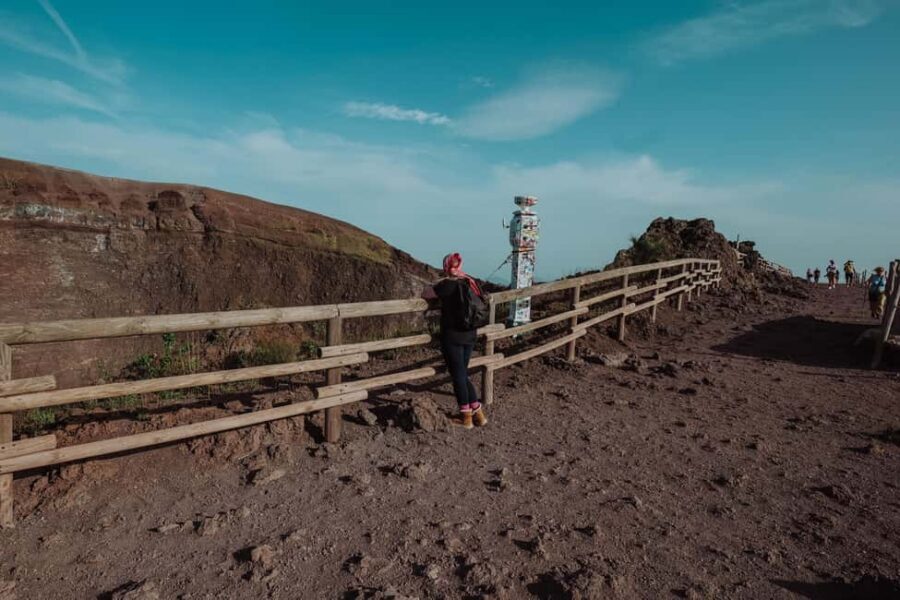
- Crater edge hike plus Bay of Naples views
- Live English guide in Pompeii across the must-see ruins
- Vesuvius audioguide setup supported by an expert leader
- Pompeii highlights in a tight window including houses and public spaces
- Midday break near Pompeii that can be practical (and sometimes less charming)
Naples pickup: Starhotels Terminus makes the day start easier
Your day begins at Starhotels Terminus, right outside, opposite Naples Central Station. The tour leader meets you holding an ASKOS TOURS sign, so you’re not guessing which van is yours. If you’re coming in on a train (or you’re already near the station), this is one of the simplest meeting points you could hope for in Naples.
The first leg is by coach/minibus, about 20 minutes before you reach Mount Vesuvius. That matters because the rest of your time is locked into walking and visiting ruins. In other words, you’re using your energy where it counts, not spending it on getting lost or waiting for the next bus.
You can also read our reviews of more tours and experiences in Naples.


Vesuvius hike: what 1.5 hours to the crater feels like
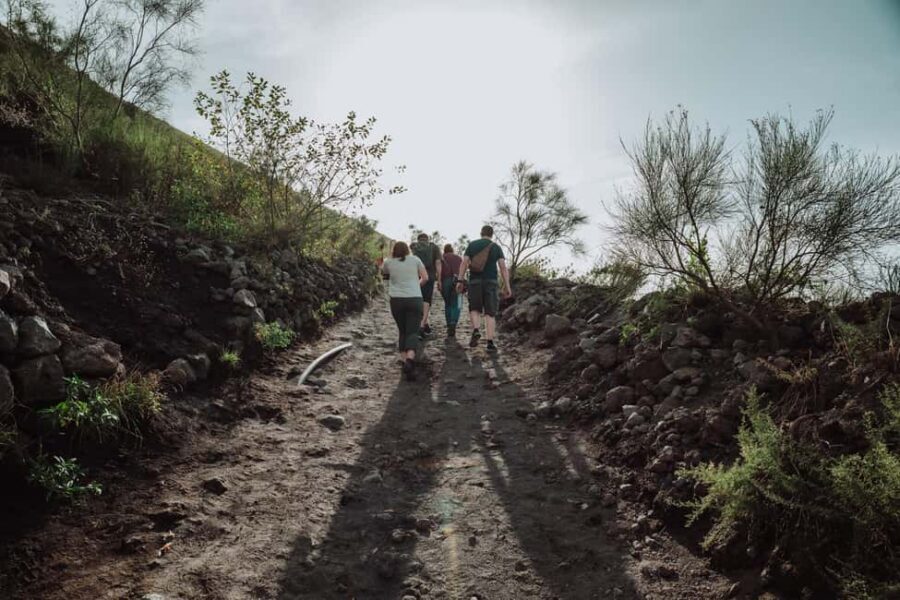
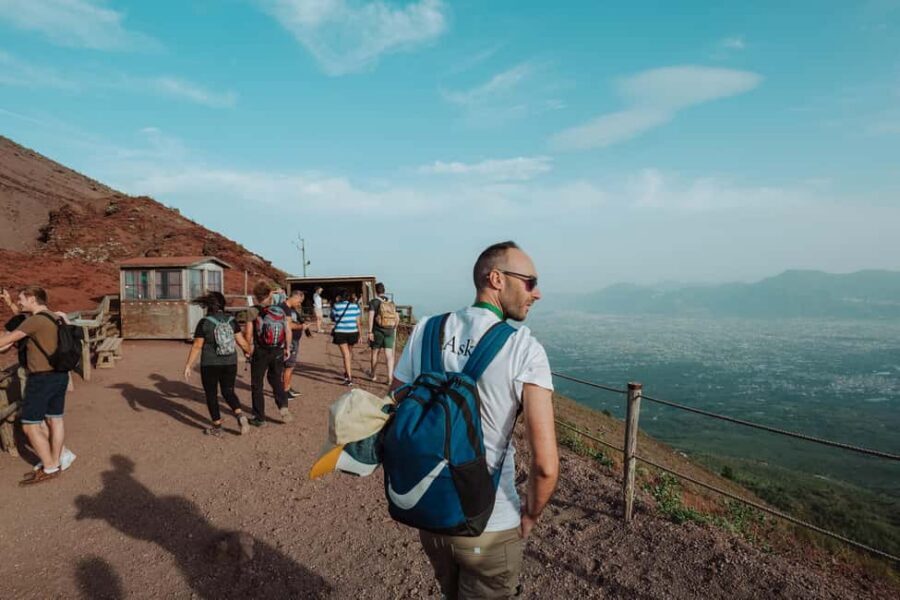
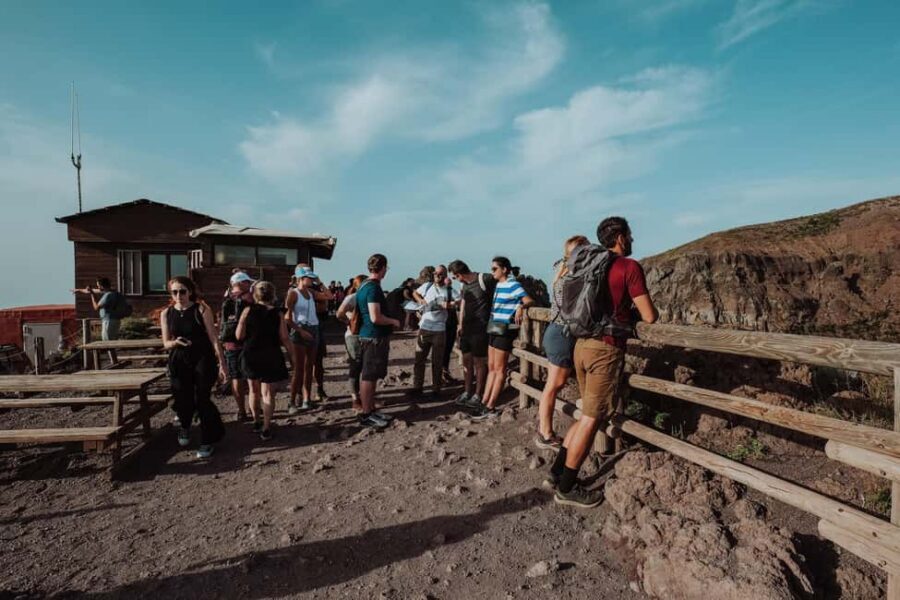
Once you’re dropped near Vesuvius, you’ll start the climb to the crater area with a total hiking time around 1.5 hours. This is not a technical hike, but it is still uphill and you’ll want closed-toe shoes and a steady pace. The reviews show a range of visitors making it work, including people who said it wasn’t too challenging even for younger travelers, but it can still be tiring if you’re not used to walking on uneven ground.
The tour’s approach here is sensible: you get the climb, you get the payoff, and you get back down on schedule. One review noted the summit time can feel a little rushed for photos, especially if you’re enjoying the views and cloud breaks. If you’re the type who takes lots of pictures (I am), plan on a “enough time to enjoy, not an endless hangout” vibe at the top.
Audioguide + expert leader: getting the volcano story without the script
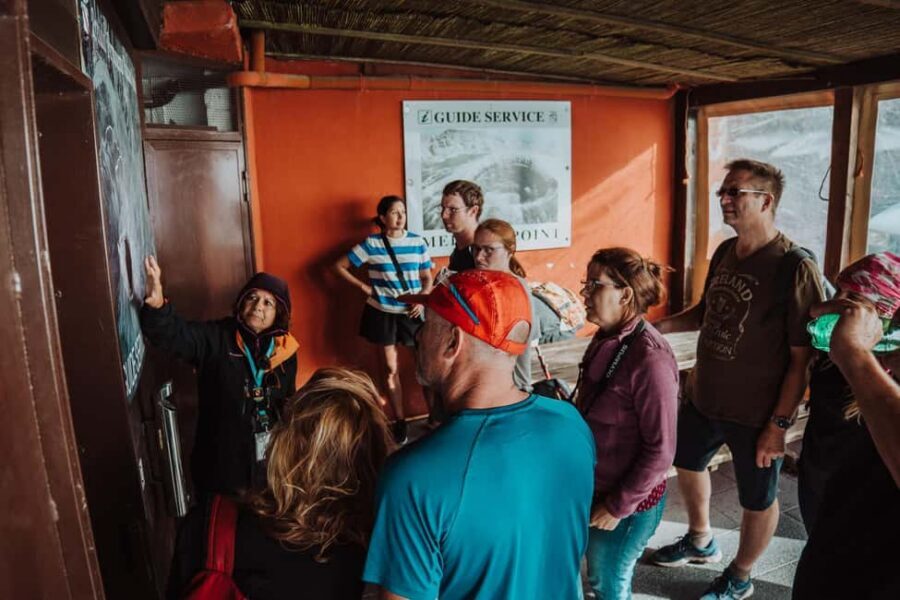
On Vesuvius, the tour uses an audioguide to enrich your hike, with an expert tour leader assisting you through it. That setup is a good fit for a volcano site: you move through different viewpoints and the app helps connect what you see to what you’re learning.
Here’s the practical catch: one traveler found the audioguide app a bit dull, which can happen when you’re standing in wind and thinking about snacks. My advice is to treat the audioguide like a menu, not a sermon. Use it when it’s interesting, then let your attention drift back to the crater rim and the view.
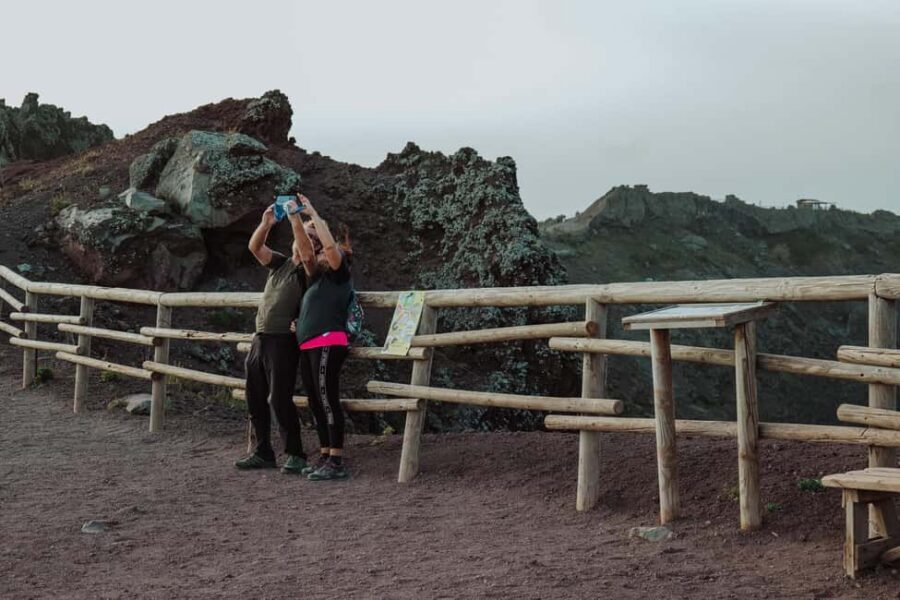
Weather can make or break your experience at Vesuvius. Multiple reviews point out it can be chilly and windy at the top, and one day had enough cloud clearing to reveal great panorama. Bring warm layers even in mild seasons, and don’t assume you’ll get a perfectly clear sky.
The Bay of Naples views: where the timing actually matters
The best part of Vesuvius is obvious once you’re there: the crater edge looks out over Naples and the Bay of Naples. That wide horizon helps Pompeii’s story click into place. You’re seeing the region that supported that ancient city, not just reading about it.
This is also why the tour timing is built the way it is. After the hike, you’re not left wandering for hours. You descend, catch the ride, and head for Pompeii while the day still feels organized. If you have one day in Naples and you want both landmarks, this structure is a big advantage.
Pompeii in two hours: how the guide chooses your best stops
Pompeii is enormous, and two hours is a compromise. The good news is the tour doesn’t pretend you’ll see everything. Instead, you get a smart, guided sweep of the places that make Pompeii feel like a real city, not just a collection of stones.
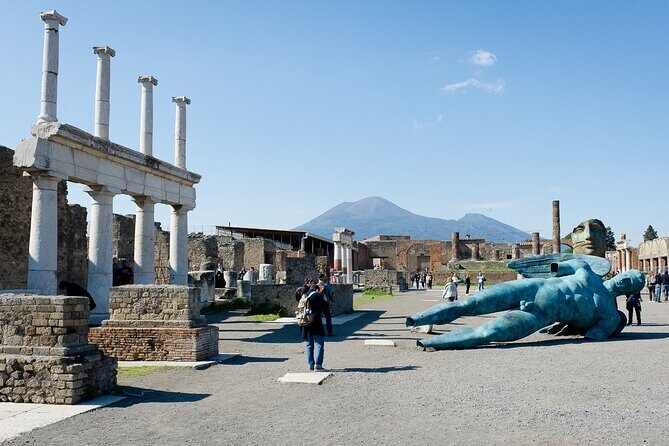
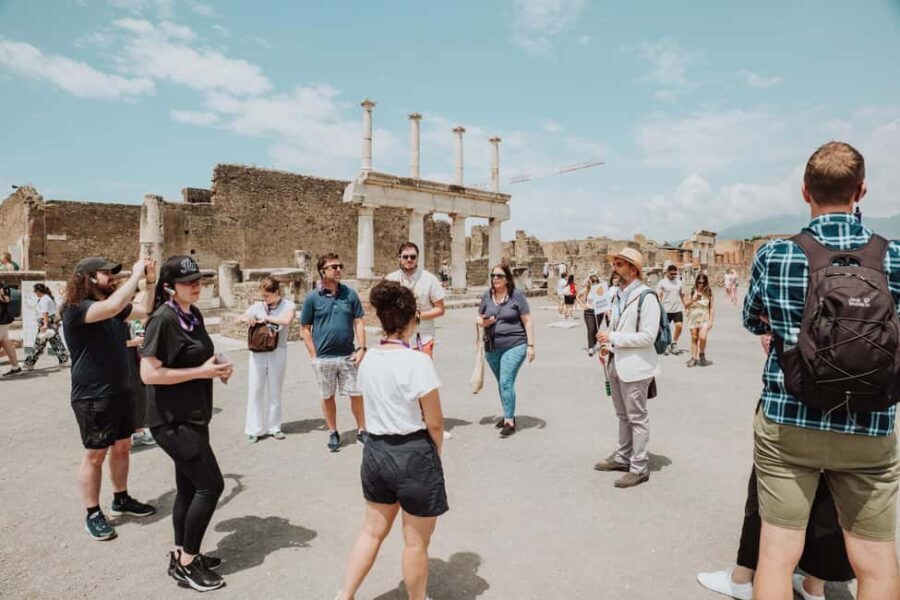
Before the main walking begins, there’s a short buffer time at the site. Then the guided portion starts with key locations, including Porta Marina, followed by stops like the Basilica, the Temple of Apollo, and the Foro Civile di Pompei (the civic forum). These locations matter because they cover the city’s public life: entry and movement, religion, governance, and daily commerce.
From there, your guide shifts you into the lived-in side of Pompeii with houses and neighborhood spaces. On this tour, you’ll see a sequence of famous homes such as:
- House of Menander
- House of the Vettii
- House of the Faun
And you’ll also visit places tied to business and social life, including the Macellum (market area) and spots like the Lupanare (a famous example of a commercial entertainment space).
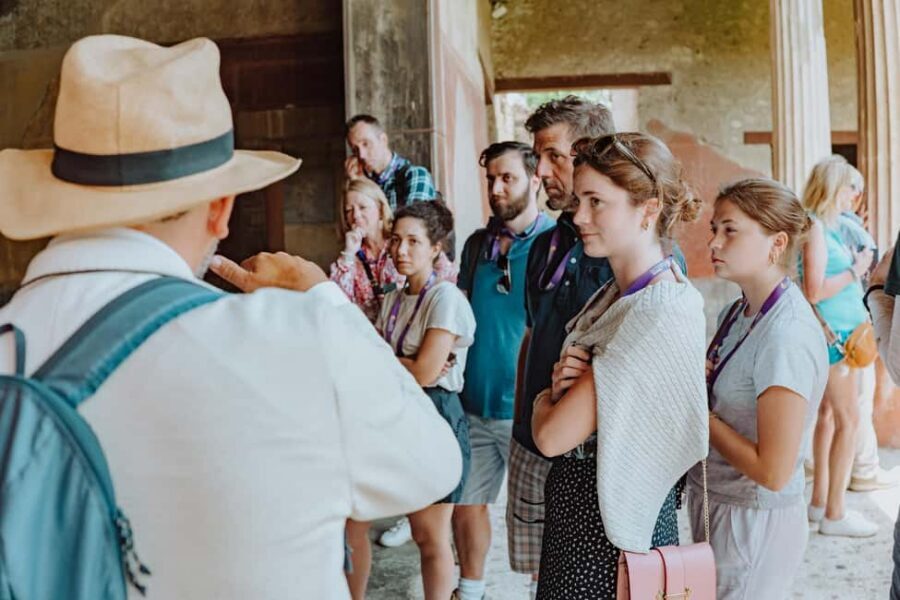
A couple of reviews mention guides who were especially engaging and even described as archaeologists with hands-on experience. Names that came up include Pablo, Julia, Nicoletta, and Antonio, each praised for making the ruins feel understandable and human. If your guide is in this top tier, Pompeii moves fast in the best way: you’re not memorizing trivia, you’re getting story connections.


The “quick hits” inside Pompeii: why this route works
The tour also includes several smaller-but-impactful stops that help you see variety in a short day. You’ll pass by the Thermopolium (a type of fast-food stop from Roman times), Terme Stabiane (baths), Teatro Piccolo (smaller theater), and the Large Theatre.
Those stops are not random. They show the range of daily life: eating and drinking, public bathing, entertainment, and the social structure that sat behind it all. You leave with a better sense of how a Roman day might have felt, from morning errands to evening crowds.
The big drawback of Pompeii is always the same: you can’t fit enough time. The tour handles this by being selective. If you want a slower pace, more time in one neighborhood, or deeper museum-style explanations, you’d need a longer plan than a single-day highlight tour. But for first-timers, this works very well.
Lunch and downtime: MaxiMall stop vs. eating closer to the ruins
Between Vesuvius and the deeper Pompeii time, you’ll get a break for food. One practical lunch pattern on this tour is a stop at a mall area near Pompeii (people referenced it as MaxiMall), with quick restaurant and snack options. That’s convenient if you want speed, variety, and easy bathrooms.
The downside is that some people wished for something more authentic and Italian-feeling. If that matters to you, you can often choose a simpler takeaway approach at Pompeii’s cafés and keep your walk rhythm. Either way, go in with the right mindset: lunch here is logistics-first, not an elegant “sit in the square” moment.
If you’re hungry after the climb up Vesuvius, build in that you’ll want something substantial. One traveler also mentioned a limoncello add-on stop on the way down, organized by their host/guide. If it’s offered on your departure, it’s a fun, local-flavored stop. If it isn’t, it shouldn’t change the core value of the day.
Getting the timing right: buses, small group flow, and delays
This tour runs as a coordinated schedule: a short ride to Vesuvius, the crater hike, another ride to Pompeii, and then return to Naples. The small group size (up to 16) helps a lot because the meeting points are easier to manage and fewer people means fewer “where did everyone go” moments.
Most departures run smoothly. Still, one review mentioned a delay due to a technical issue with the bus. If you have a strict dinner reservation or a connection to catch later that night, give yourself some buffer time. That’s simply good planning anywhere, especially around busy roads near Naples.
What to bring: shoes, layers, and the luggage question
You’ll do two physical parts: the Vesuvius hike and a walking circuit through Pompeii ruins. Pack for that. The essentials:
- Comfortable shoes with grip
- Closed-toe shoes (not sandals)
- Comfortable clothes
- Warm layers for the volcano top (it can get chilly and windy)
If you’re traveling with suitcases, the tour notes you may need to use a luggage deposit (for example at the station or a facility you choose). Not all vehicles have luggage compartments, so don’t count on being able to keep bags with you in the minibus.
Also, consider bringing a light snack and water. The tour provides planned stops, but having your own small backup keeps you comfortable if the day gets a little tight on timing, especially at the volcano viewpoint.
Who should book this tour (and who shouldn’t)
This is a strong pick if:
- You want Pompeii and Vesuvius in one day from Naples
- You like small group tours with a real guide at Pompeii
- You prefer organized transport over figuring out trains, buses, and ticket logistics
It’s not suitable if you have mobility limitations. The tour specifically lists it as not suitable for wheelchair users and people with mobility impairments, and it’s also not for children under 6. The crater hike and Pompeii’s uneven ground are the practical reasons.
If you’re going mainly for a calm, museum-style Pompeii day, you might be happier with a slower schedule. But if you want an efficient first look that still feels guided and meaningful, this day trip hits the right balance.
Price and value: what you’re really paying for
Even without seeing a single all-in number here, you can judge value by what’s included. This tour provides round-trip transportation from Naples, help with tickets (including skip-the-ticket-line style access), and a live English guide in Pompeii for a set guided route.
You should also note the one extra cost mentioned: Mount Vesuvius entry ticket costs 11.00 euros. That’s normal for volcano access, and it’s the kind of fee you’d likely pay on your own too. The real value is that you don’t need to coordinate multiple providers and timings across two major sites.
One more practical value point: guides can make a huge difference at Pompeii. Reviews specifically praise guides like Davido (as a host/tour leader) and Pompeii guides including Pablo, Julia, Nicoletta, and Antonio for being engaging and for choosing the best “in the time you have” sequence.
Should you book this Pompeii and Vesuvius day trip?
Book it if you want a well-run, efficient day that covers the two big Naples-adjacent must-dos, with Pompeii guided in English and volcano access structured so you’re not stressed about logistics. It’s especially worth it if it’s your first time in Pompeii and you want to leave with a clear sense of the city’s layout, key public spaces, and famous houses.
Skip it or choose a different format if lunch authenticity matters a lot to you, if you need a fully live-guided experience on Vesuvius (this uses an audioguide), or if mobility limitations make the crater hike and Pompeii terrain a problem.
If you’re flexible and dressed for a chilly, windy crater top, you’ll likely come back with that rare combo: the drama of an active volcano and the eerie everyday life of a Roman city frozen in time.