REVIEW · NAPLES
Pompeii: Private Tour with an Archaeologist
Book on GetYourGuide →Operated by Askos Tours · Bookable on GetYourGuide
Pompeii feels personal with the right guide. This private tour focuses on the western side of the city and keeps the story grounded in what Romans actually did each day, not just what the ruins look like. I especially liked the archaeologist-guide approach and the skip-the-line entry so you spend more time walking and less time waiting.
Two things make this tour work well: you get a structured route through major sights, and you also get the small details that turn stone into routine. I like how the tour is designed like a walk in a still-living town, where public buildings and private homes are explained as connected parts of real life. One consideration: Pompeii is a lot of walking on uneven ground for 3 hours, so comfortable shoes are not optional.
You’ll start at Porta Marina Superiore, then move through iconic stops like the Forum, the Basilica, major houses, bath areas, and both the Large Theatre and the Amphitheater. Expect human stories tied to the 79 A.D. eruption and the way the city was preserved in volcanic ash and later excavated. If rain hits, the tour runs anyway, and you’ll want to follow the umbrella rules and bring a rain layer.
In This Review
- Key highlights at a glance
- Porta Marina Superiore: your starting point, your bearings
- The western-route plan: 3 hours that actually covers the essentials
- What walking feels like (and why it matters)
- Skip-the-line entry: time you can spend where it counts
- Temple stop(s) and religious life: how worship shaped daily routine
- Forum and civic buildings: where politics and public life played out
- House of Menander and other homes: private life you can actually picture
- Baths and street-level culture: daily life, not just monuments
- The Lupanare stop: a blunt look at social life
- Theatres and amphitheater: how entertainment shaped the city
- A note on the guide experience: why private feels worth it
- Price and value: when $508.15 makes sense
- Who this Pompeii tour fits best
- Should you book this Pompeii private archaeologist tour?
- FAQ
- FAQ
- How long is the Pompeii private tour with an archaeologist?
- Where do we meet the guide?
- Who leads this tour?
- What is included?
- Is the admission line skipped?
- What languages are available?
- Is this tour wheelchair accessible?
- Can I bring an umbrella or pets?
- What should I wear or bring?
Key highlights at a glance
- A certified archaeologist-guide gives context behind each turn, not just dates and names
- Western Pompeii route covers the big public spaces plus standout private homes
- Roman daily life themes: work, worship, baths, entertainment, and even the Lupanare
- Major photo-stops on foot: Forum, Basilica, theatres, amphitheater, key houses
- Skip-the-line admission helps you keep the momentum of the 3-hour walk
Porta Marina Superiore: your starting point, your bearings
The tour begins at the Pompeii main gate called Porta Marina Superiore, in front of the bar-restaurant Hortus, the one with lemons and oranges hanging outside. Starting at a gate matters more than it sounds. It helps you orient fast, so when you reach later monuments, you can understand where things sit inside the city grid.
Porta Marina is the kind of entry you notice immediately. It frames Pompeii as a functioning place—streets, movement, and entrances—rather than just a set of isolated ruins. From there, the tour keeps you walking through the western highlights, giving you a clear sense of how the city unfolded as you moved from public spaces into residential neighborhoods.
If you’re the type who hates getting lost in a crowd of ruins, this start-and-route design is a big plus. You’ll know what you’re looking at before the stones start to blur.
You can also read our reviews of more private tours in Naples



The western-route plan: 3 hours that actually covers the essentials
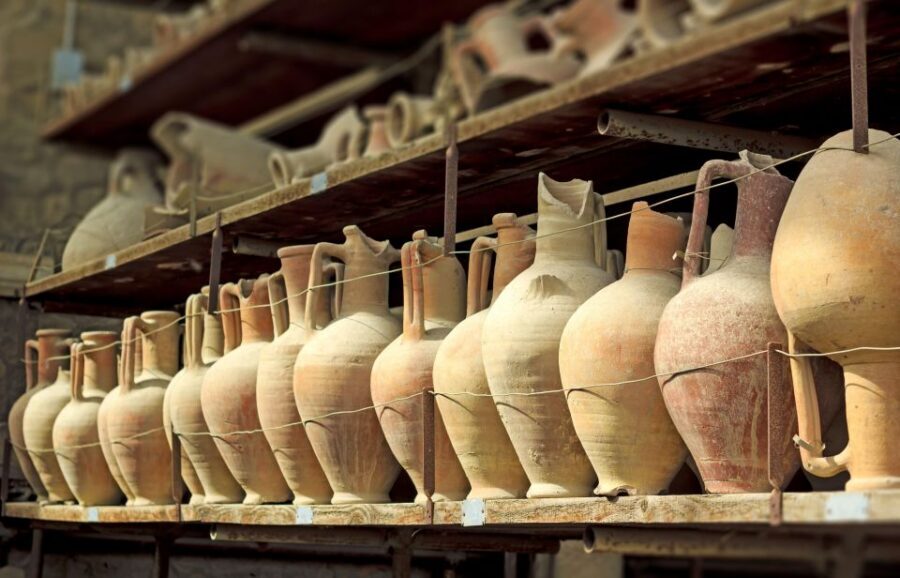
This is a 3-hour private walk, so the goal isn’t to sprint. It’s to cover the most important areas without the usual group-tour problem of being herded from one spot to another with no time for questions.
Pompeii’s size is the main challenge on your own. Even if you have a guidebook, you’ll end up spending most of your time trying to connect one street corner to the next. This tour tries to solve that by organizing stops around major public buildings and signature houses, plus a few “life-and-culture” stops that explain how people lived.
Also, you’re not just looking outward. The tour leans into the idea that Pompeii is a whole city: religious spaces, bath culture, entertainment venues, shops, and residences. That matters because Pompeii is best understood as a system, not as a scrapbook of monuments.
What walking feels like (and why it matters)
The tour description makes one thing clear: a Pompeii walk is intense. You’ll feel like you’re wandering in a town that’s paused mid-day. That’s partly because so many building layouts are still readable, and partly because you’re moving continuously through the site rather than stopping only at the loudest attractions.
Bring comfortable shoes. The rest is up to the weather. The tour takes place in any condition. In rain, it’s recommended to bring a small umbrella and/or a raincoat. Just note that umbrellas are listed as not allowed—so if rain is likely, a raincoat is the safer bet for staying within site rules and keeping your hands free.
Skip-the-line entry: time you can spend where it counts
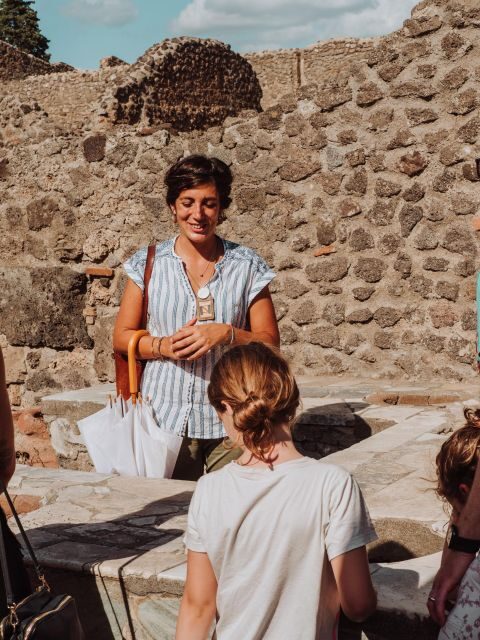
One of the best practical features here is skip-the-line admission fees included in the tour. Pompeii can turn waiting into dead time, especially when you arrive around peak hours. When entry moves faster, you keep your energy for the walking part, and you get to start seeing details sooner.
You’ll likely use your time well during the first stretch. Early in the tour, your brain is still fresh for orientation. That’s when the guide’s explanations can sink in, and when later details start to click—doorways, street layouts, and how different buildings relate.
This is one of those “small” logistics perks that actually changes the experience.
Temple stop(s) and religious life: how worship shaped daily routine
The itinerary includes a stop at the Temple of Apollo. In Pompeii, religion wasn’t a separate category of life. Temples and civic space showed up right where people lived, walked, shopped, and gathered.
Even if you’re not a classical scholar, the guide approach helps you connect the architecture to what people needed—public ritual, identity, and community rhythm. Religious spaces also help you understand why Pompeii felt so organized and rule-based. The eruption froze that order in time, which is why Pompeii can feel eerily readable.
Also, the tour’s highlights mention the Temple of Jupiter as part of the big religious story. So you’ll get a broader sense of how major gods fit into civic life, not just one isolated temple stop.




Forum and civic buildings: where politics and public life played out
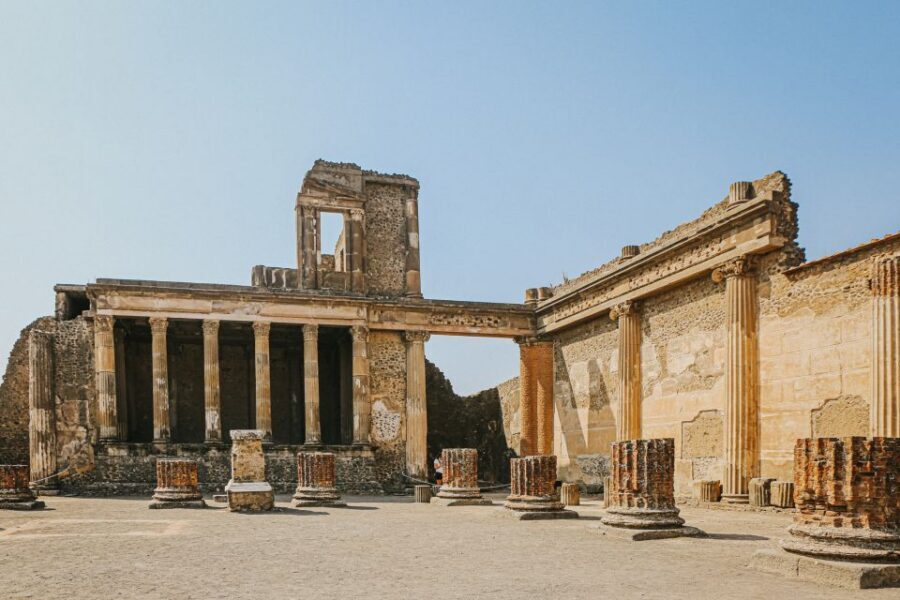
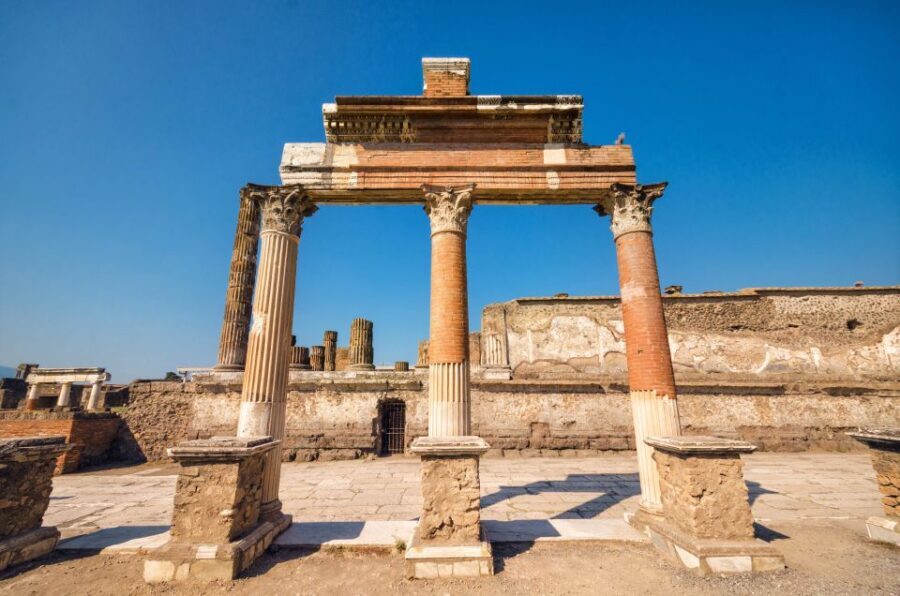
You’ll hit the civic heart with the Foro Civile di Pompei and then the Basilica. If you’ve ever wondered why ancient cities feel like they were built for crowds and decisions, the Forum areas answer that.
This section of the route is valuable because it shows Pompeii as a working public city. The guide can connect what you’re seeing—meeting spaces, formal architecture, and public flow—to how people moved, argued, conducted business, and maintained social order.
In particular, the Basilica is a key “read” for Pompeii. It’s one of those buildings that helps you imagine weather, schedules, and everyday errands. Instead of just admiring columns, you can understand the function. That’s what makes a guided approach matter here. Pompeii’s public spaces are impressive, but they become meaningful when you know what they were for.
House of Menander and other homes: private life you can actually picture
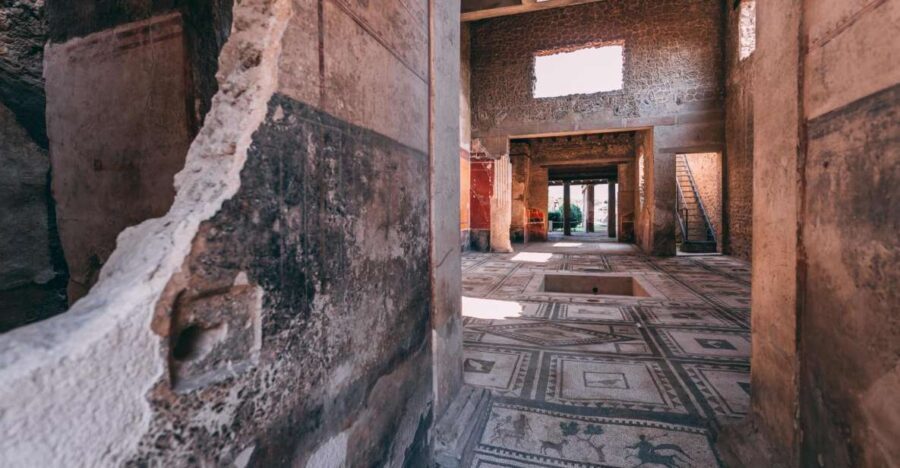
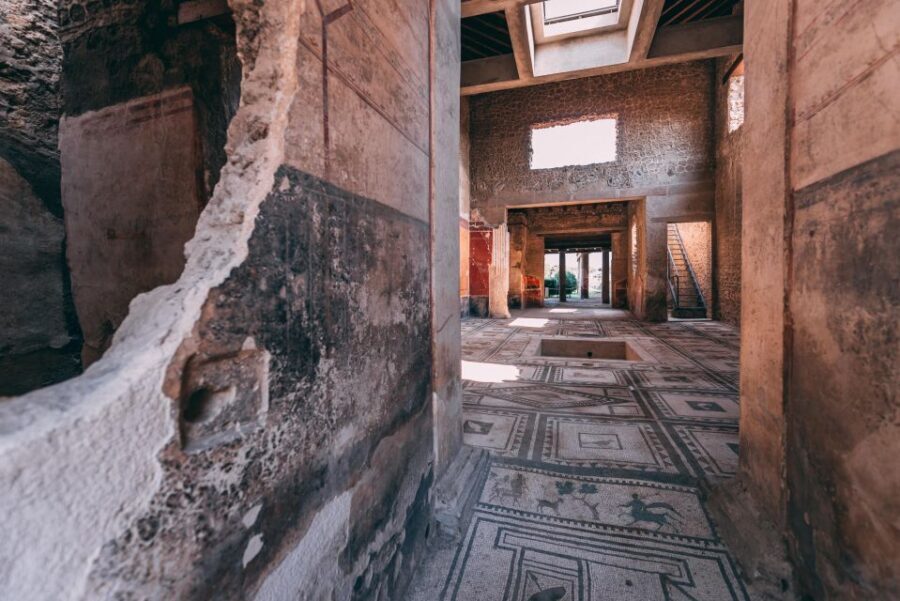
The itinerary includes the House of Menander. Then later you’ll also see more standout residences, including the House of the Faun and the House of the Vettii. These house stops are a major reason this tour feels different from a basic “ruins tour.”
Here’s why houses matter: Pompeii was once a place where people slept, ate, entertained, and worked. Houses reveal what mattered inside a family’s world—layout, social expectations, decoration, and how daily tasks were organized.
The House of Menander is a great anchor stop because it represents the residential side of Pompeii’s architecture. The guide’s job is to translate those layouts into lived habits. You start to see connections like the way people moved from outside streets into private courtyards, and how rooms were positioned around light, air, and gathering space.
The later home visits deepen the picture:
- The House of the Faun helps broaden the scale and ambition of domestic spaces.
- The House of the Vettii pushes the “wow” factor, while still fitting into the story of ordinary life around the eruption.
This is one of the tour’s strongest values: you don’t just learn Pompeii as history—you learn it as a place people lived.
Baths and street-level culture: daily life, not just monuments
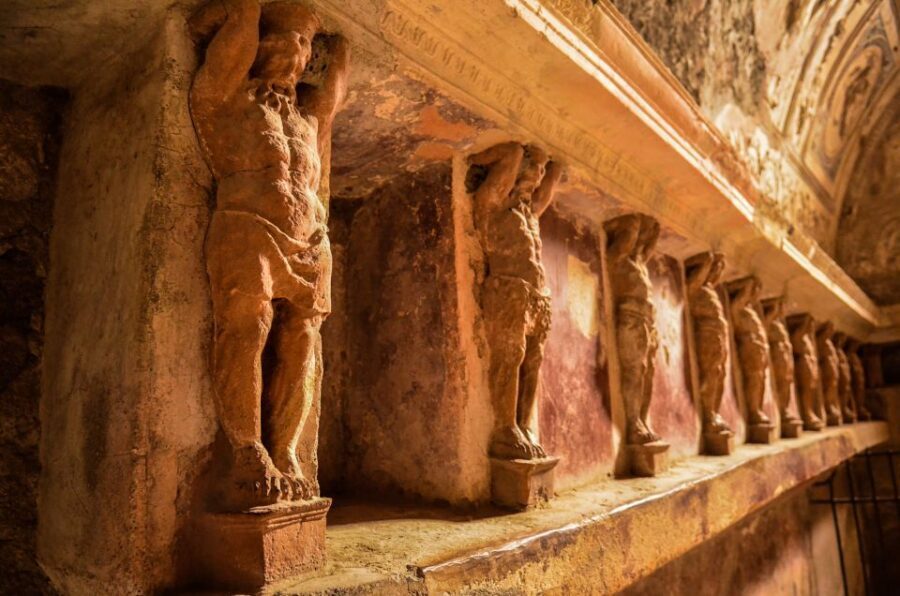
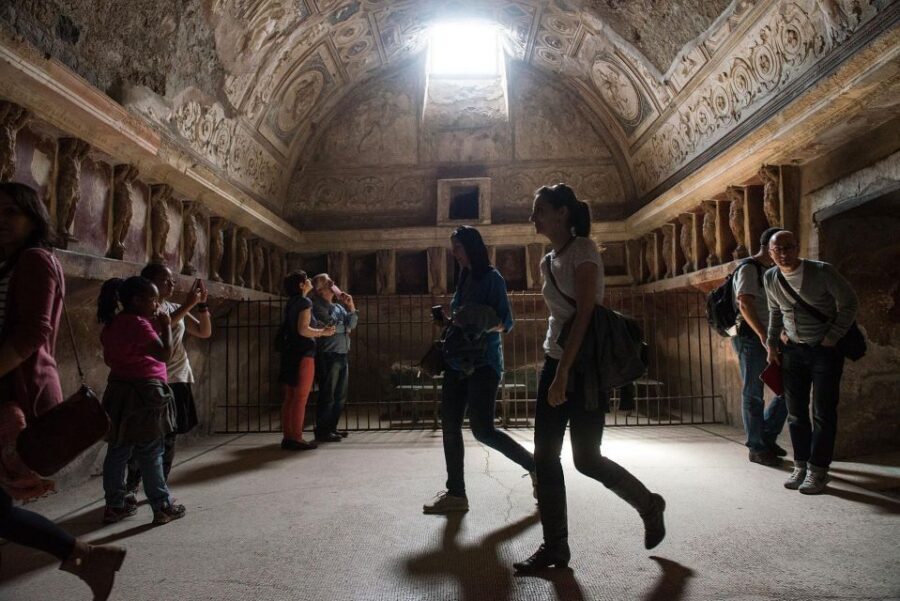
Baths show up with the Forum Baths stop. Pompeii’s bath culture isn’t a side quest; it’s a big part of how people socialized and relaxed. When you see baths explained in context, the architecture stops feeling abstract and starts feeling like a system for routine.
The tour highlights also point to Stabian Baths as part of the larger bath story, so you’ll get that wider framing even when the route focuses on specific stops. Either way, the key is that baths act like a lens. They help you understand how public life and personal comfort intertwined.
You’ll also pick up street-level culture details—shops, fountains, and other everyday touches. This is where the tour’s “still-living town” feeling becomes real. When the guide ties these features together, Pompeii stops being a list of sights and becomes a believable place.
The Lupanare stop: a blunt look at social life
One of the itinerary stops is the Lupanare, Pompeii’s famous brothel. This is not the kind of stop where you want to tune out. It’s where Pompeii’s everyday, sometimes uncomfortable realities show up.
This stop is valuable for balance. It reminds you that Roman society included complicated social structures and real economic behavior, not just grand buildings and polite speeches. The guide can explain the space and how it fit into the broader city fabric—important if you want a full picture rather than a sanitized one.
If you prefer only uplifting, family-friendly topics, this might be the section that feels most intense. It’s still part of Pompeii’s truth, and it’s part of why a guided tour helps: you’ll get context instead of guesswork.
Theatres and amphitheater: how entertainment shaped the city
You’ll visit the Large Theatre and then the Amphitheater of Pompeii. These stops are the payoff for anyone who wants to understand Pompeii as a social engine. Entertainment wasn’t occasional—it was built into the rhythm of city life.
The Large Theatre helps you see how gatherings worked for large audiences in a built environment designed for sound and visibility. Then the amphitheater shifts the tone, showing another style of spectacle and crowd energy.
With the guide’s explanations, you’re not just staring at seating. You start picturing the flow of people, where they would have entered, and what kind of day this would have created in the city.
This is also a good section for questions. Ask how Romans used these spaces, or what the guide thinks people valued most about these entertainments. The private format means you’re not stuck in a one-answer-per-group script.
A note on the guide experience: why private feels worth it
This tour is led by a certified archaeologist-guide, and the languages listed include English, Japanese, Spanish, Italian, German, French, Portuguese, Chinese, Russian. You’re getting a specialist, not a general museum guide.
Many of the guide names that come up—like Nicoletta, Patrizia, Jasmine, Silvia, Serenella, Annalisa, Laura, Diego, Andrea, Paola, Michele, Monica, and Antonella—give you a sense of the range of teaching styles people appreciate. You might meet one of these guides, or you might not. Either way, the key pattern is consistent: the best experience here is interactive.
I’d treat this tour like a conversation with a teacher. Ask why the guide thinks certain places matter, or what daily routine the architecture suggests. The private format is made for that.
Also, if the group is larger at any point, you’ll have disposable earphones available, which helps you keep hearing clearly in open outdoor spaces. That’s a small comfort that prevents missing details when the site gets noisy.
Price and value: when $508.15 makes sense
The price shown is $508.15 per group up to 1, for a 3-hour private guided tour. Private Pompeii isn’t cheap, and it shouldn’t pretend to be. But it can still be good value depending on your situation.
Here’s how I think about value:
- If you’re going solo, you pay for the whole private setup. In that case, ask yourself whether you’ll use the guide’s time well. If you’re excited to ask questions and go deeper than the basics, the cost can feel justified fast.
- If you’re traveling with someone—partner, friend, family—private often becomes a smarter deal because you split the guide time.
- You’re also getting skip-the-line admission and the guide’s expertise, which can add up when you consider how long Pompeii is and how easy it is to miss key features without help.
In plain terms: this tour earns its price when you want depth and you want to reduce guesswork. If you only want broad highlights in a casual, slow way, you might choose a less expensive option. But if you want your time in Pompeii to feel organized and meaningful, this is the kind of private experience that can pay off.
Who this Pompeii tour fits best
This is a strong match if you:
- want a structured walk through major western highlights without getting lost
- care about how Romans lived, not just what erupted and when
- like asking questions and adjusting the pace to your interests
- want the experience to feel human, with explanation attached to daily life
It’s less ideal if you:
- dislike long outdoor walks on uneven ancient surfaces
- want a light, low-content stroll with minimal explanation
- have trouble managing weather exposure, since the tour runs in any weather condition
Should you book this Pompeii private archaeologist tour?
If you’re torn, I’d book it when your top priority is understanding Pompeii as a real city. The mix of public buildings, standout houses, baths, theatres, and the Lupanare gives you breadth, while the private archaeologist format gives you context. That combination is hard to recreate on your own, especially in a site this big.
One decision rule: if you’re going to spend time in Pompeii anyway, this tour helps you spend it smarter. You’ll come away with a city layout in your head, not just a stack of photos.
FAQ
FAQ
How long is the Pompeii private tour with an archaeologist?
The tour lasts 3 hours.
Where do we meet the guide?
Meet your guide at Porta Marina Superiore, in front of the bar-restaurant Hortus with lemons and oranges hanging outside. The tour ends back at the meeting point.
Who leads this tour?
It’s guided by a certified archaeologist-guide.
What is included?
You get a guided tour by the archaeologist-guide, disposable earphones (for bigger groups), and skip-the-line admission fees.
Is the admission line skipped?
Yes, skip-the-line admission fees are included.
What languages are available?
The live guide is available in Japanese, English, Spanish, Italian, German, French, Portuguese, Chinese, and Russian.
Is this tour wheelchair accessible?
Wheelchair accessibility is mentioned, but the activity also states it is not suitable for wheelchair users. It’s best to check with the provider before booking.
Can I bring an umbrella or pets?
Pets are not allowed. Umbrellas are listed as not allowed, though in rain the tour recommends bringing a small umbrella and/or a raincoat.
What should I wear or bring?
Wear comfortable shoes. For weather, the tour runs in any condition; consider bringing a raincoat, and follow the site rules about umbrellas.