REVIEW · NAPLES
From Naples: Phlegraean Fields 5-Hour Fiat 500 or 600 Tour
Book on GetYourGuide →Operated by NapolinVespa Tour · Bookable on GetYourGuide
The Phlegraean Fields (Campi Flegrei) are one of those places where history and geology shake hands. This 5-hour private Fiat 500 or Fiat 600 tour turns that mix into a smooth, guided loop around Pozzuoli and the coast, with stops built around Roman remains, volcanic lakes, and myth-flavored storytelling.
Two things I really like about this experience are the format and the vibe. First, you’re in a classic Fiat with a private, expert driver, so the day feels human-scaled instead of “bus-and-breathe-through-a-crowd.” Second, you get a real guide experience in the car, using myths and legends to connect the ruins to the place you’re actually standing in. One possible drawback: you’re covering a lot of ground in just five hours, so comfortable shoes matter, and you’ll want to keep your expectations on the “see a lot” side, not “wander for hours at one single site.”
In This Review
- What the tour feels like in real life
- Key points to know before you go
- Phlegraean Fields: Roman ruins powered by volcano energy
- Riding a classic Fiat 500/600: the transport is part of the experience
- Pickup in Naples and a private day that fits your schedule
- Pozzuoli Port: getting your bearings in the right order
- Serapide Temple: Roman scale you can actually take in
- Anfiteatro Flavio: the theatre of power in Pozzuoli
- Volcanic lakes and Monte Nuovo: why Campi Flegrei feels different
- Bacoli’s Bay and Baia Castle: coastal history with breathing room
- Terme di Baia: Roman baths, real-world comfort
- Bacoli and Cape Miseno: a coast drive with time to look
- Lake Fusaro and Casina Vanvitelliana: the day’s calm ending
- Price and value: is $339.86 per person fair?
- Who this tour suits best (and who should tweak expectations)
- Should you book this Phlegraean Fields Fiat 500/600 tour?
- FAQ
- How long is the Phlegraean Fields Fiat 500 or 600 tour from Naples?
- Where does pickup and drop-off happen?
- Is this a private tour?
- What car will we ride in?
- What languages are offered for the live guide?
- Which entrance tickets are included?
- Does the tour skip the ticket line?
- How many people is recommended for the tour?
- What should we bring for the day?
- Is free cancellation and pay-later booking available?
What the tour feels like in real life
You start with pickup in Naples—hotel, or even a station/port for cruise days—and then you’re guided through a string of stops that most people can’t easily piece together by public transport. In one guide pairing that stands out from recent experiences, Alberto served as the guide while Luigi drove, and the combination was praised for feeling safe and well looked after, plus the ride itself being a day highlight.
Key points to know before you go
- Vintage Fiat 500/600 gives you a built-in Naples memory before you even reach the ruins
- Private guide + expert driver means less waiting and more time absorbing each stop
- Included tickets for key sights like Anfiteatro Flavio, Terme di Baia, and Casina Vanvitelliana
- Skip-the-line access helps you spend time looking, not waiting
- Campi Flegrei’s volcanic lakes connect the myths to the physical setting
- Hotel or port pickup/drop-off makes it workable for cruise passengers
You can also read our reviews of more tours and experiences in Naples.
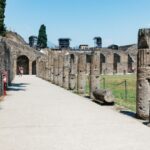

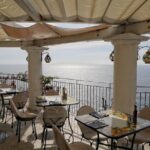
Phlegraean Fields: Roman ruins powered by volcano energy
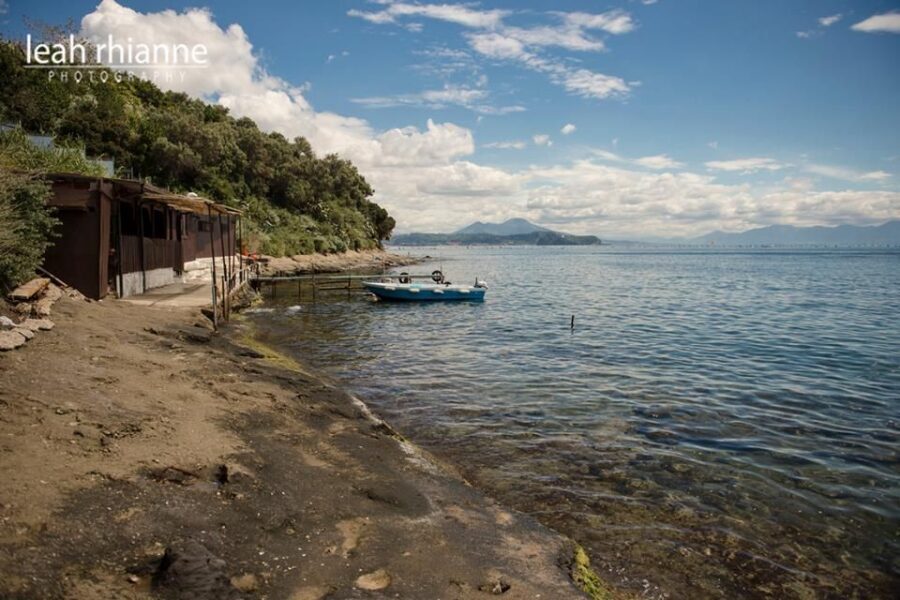
Phlegraean Fields—Campi Flegrei—is basically a story written in stone and steam. You get Roman-era sites popping up across an area shaped by volcanic forces. That matters, because it changes how you read the places. Instead of seeing ruins as random “old rocks,” you start noticing how the ground itself seems to set the stage for what was built, believed, and revisited over time.
On this tour, the guide approach is what makes it land. The day isn’t just dates and facts. It’s a walking-and-driving rhythm where myths and legends sit next to what you can see, so you’re always answering a simple question: why would people care about this spot so much?
Riding a classic Fiat 500/600: the transport is part of the experience
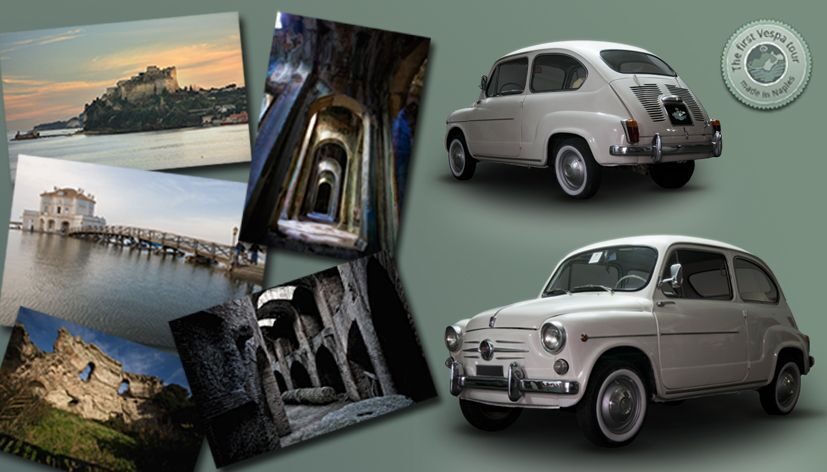
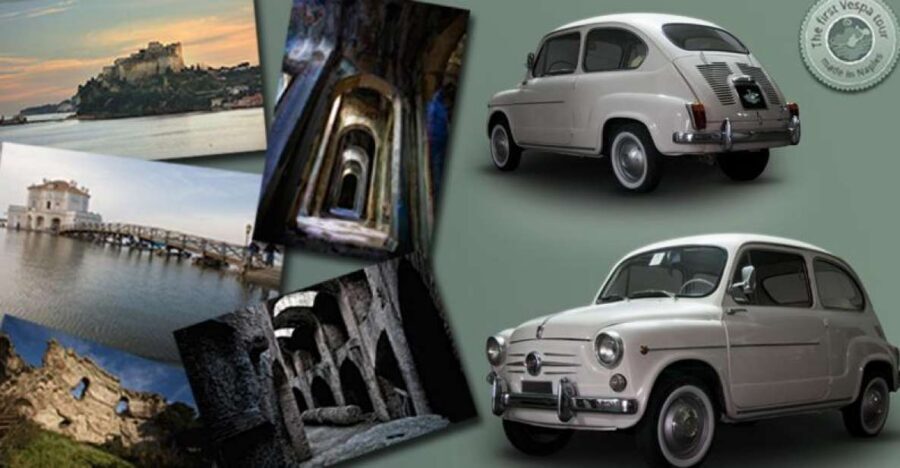
A big part of the value here is not just that the cars look good. They change the pace. In a small vintage Fiat, you’re close to your guide and driver, and you can actually hear explanations as you move between stops. The tour also leans private: it’s designed as a dedicated group experience rather than a shared cattle line.
The Fiat 500 and Fiat 600 also carry a real cultural signal. The tour info points out the Fiat 600 as a symbol of economic growth in the 1960s, with design work credited to engineer Dante Giacosa. That’s helpful because it frames the car as more than a novelty—it’s part of Italian modern history too.
If you’re the kind of person who enjoys details, you’ll notice how often other people glance at the Fiat as you pass. It’s a small moment, but it adds to the feeling that you’re doing something distinctly Naples, not just following a checklist.
Pickup in Naples and a private day that fits your schedule
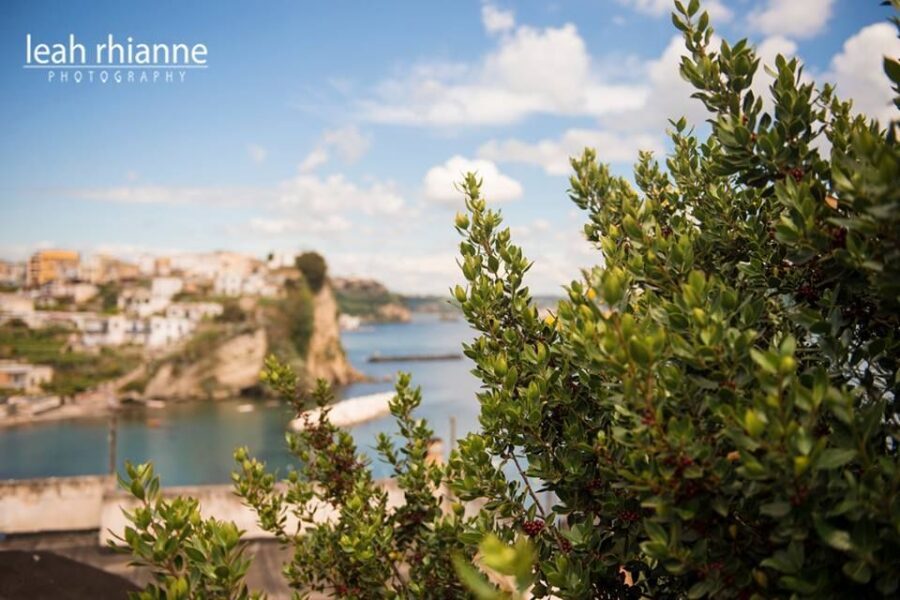
This tour includes pickup and drop-off in Naples, at your hotel or wherever you prefer. That’s a practical win if you’re staying in the city center, or if you’re in on a cruise day and need a plan that starts at the port and ends back where you need to be.
Another practical point: it’s a private group experience with a recommended group size of 2 people, available up to 3. That matters because it keeps the car dynamic relaxed—less jostling, more conversation, and a better chance your guide can tailor pacing to your questions.
Pozzuoli Port: getting your bearings in the right order
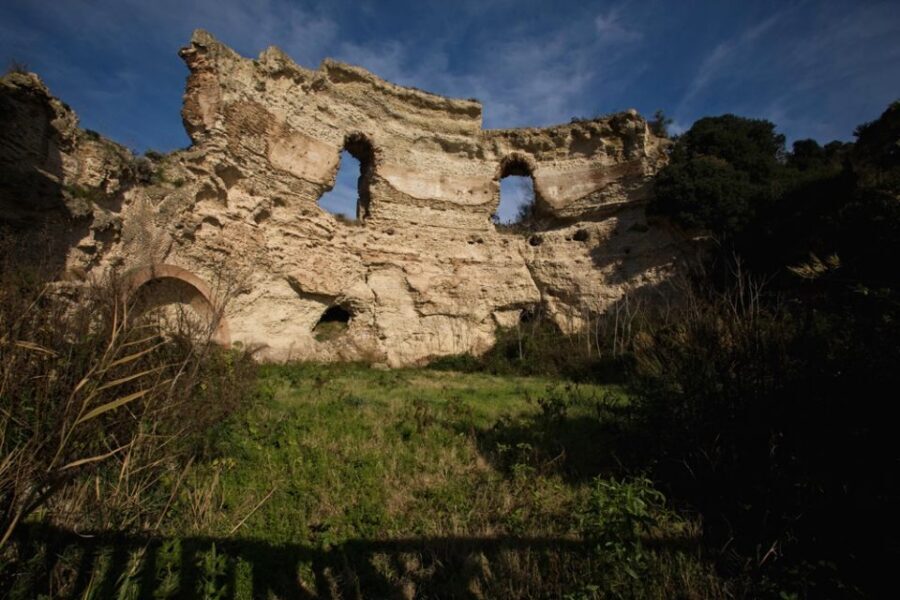
Your day starts near Pozzuoli Port, and that opening stop does a clever job. It helps you get oriented before the ruins and lakes start layering on top of each other. Instead of jumping straight into archaeology, you ease into the Phlegraean theme.
This is also where you start learning how the tour’s “volcanic + Roman” concept ties together. Even without long museum-style explanations, your guide can point out what you’re about to see next and why it fits. That makes the rest of the day click faster.


Serapide Temple: Roman scale you can actually take in
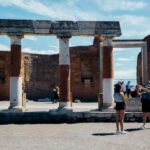
Next comes the Serapide Temple. This stop is one of those “stop and look twice” places. From the outside, you get an immediate sense of Roman ambition—big, designed, purposeful. As your guide talks through the myths and legends tied to the area, the temple stops feeling like a distant artifact and starts feeling like a piece of how people once understood the world around Campi Flegrei.
One thing to watch: depending on how the day is paced, you may not have unlimited time. But for most people, that’s fine. The guide style here is about guiding your attention—what to notice, what to photograph, and how to connect this site to the others you’ll see later.
Anfiteatro Flavio: the theatre of power in Pozzuoli
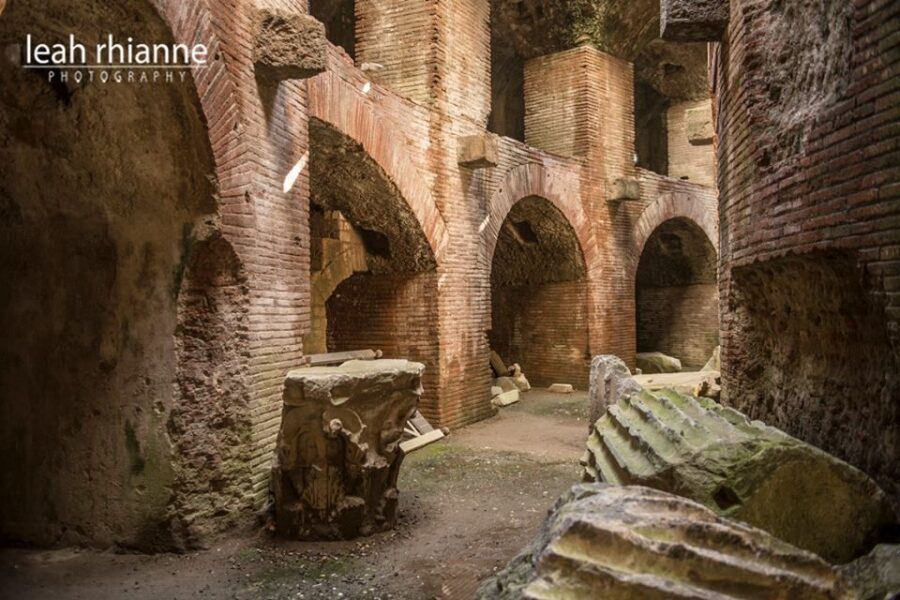
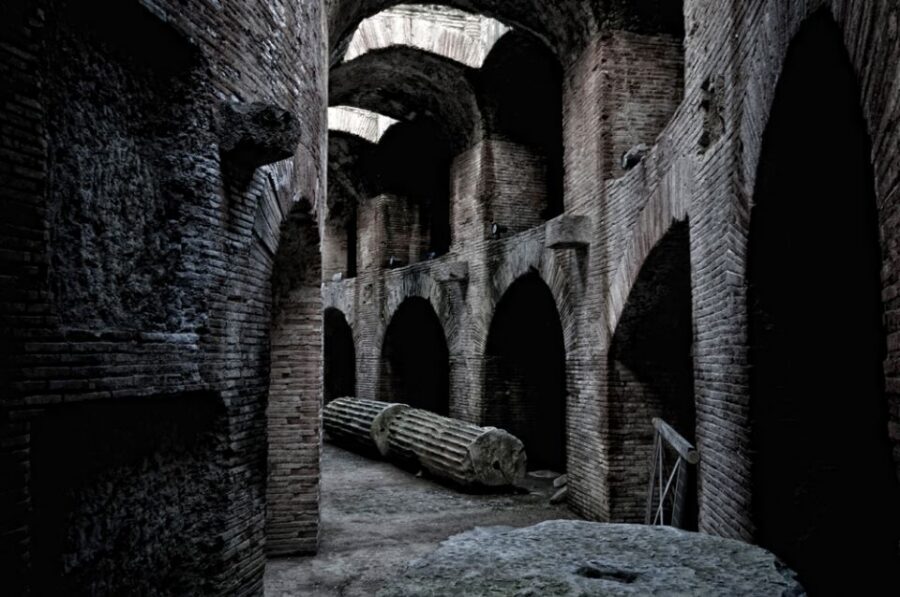
The Anfiteatro Flavio is the kind of Roman structure you can’t help but respect. You see how built the place was for public life and spectacle. And since entrance tickets are included, you’re not stuck budgeting time for ticket lines.
The best way to enjoy this stop is simple: slow down at the details your eyes naturally skim. Look at how the seating space frames the view. Think about noise, crowds, and movement—your guide will help you do that mentally with the myths-and-legends storytelling thread running in the background.
Volcanic lakes and Monte Nuovo: why Campi Flegrei feels different
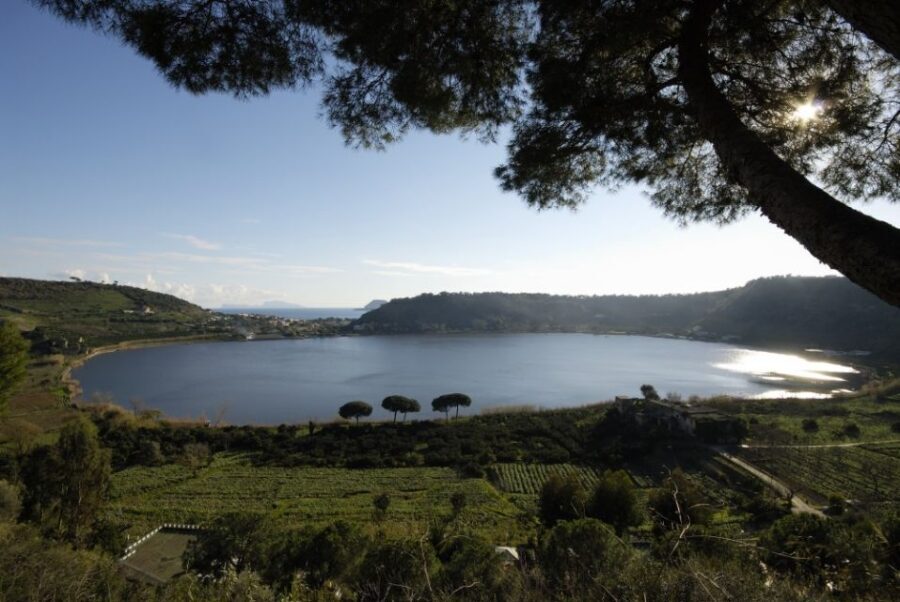
A huge theme of this tour is moving through volcanic country. You’ll spend time around Lake Lucrino and Monte Nuovo, and then continue toward Lake Avernus. These aren’t just pretty viewpoints. They help you understand why the region got loaded with meaning—because the ground itself looks and behaves like a place that can change.
The volcanic lakes also give you variety. You’re not only dealing with stone ruins. You’re dealing with water and terrain shaped by volcanic origins. That shift is what keeps the day from becoming a long archaeology lecture.
Practical note: bring sunglasses and expect some glare. If the light is strong, you’ll be glad you have them for stopping, looking, and photographing without squinting.
Bacoli’s Bay and Baia Castle: coastal history with breathing room
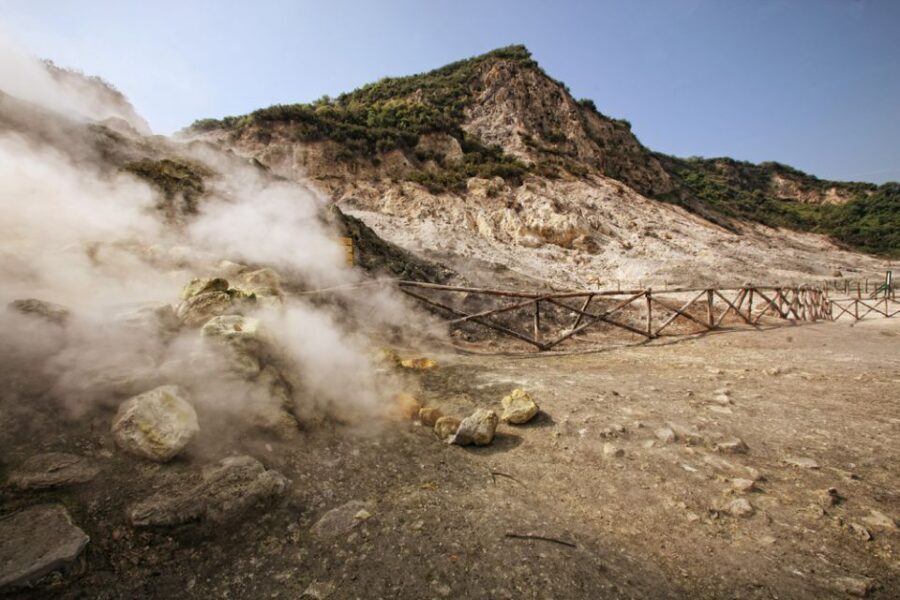
From the lakes, the route moves toward Bacoli’s Bay and Baia Castle. These stops are where you get a more open, coastal feel. It’s not just “ruins on a hill.” It’s a sense of how the sea and the land interacted—where people would look, gather, and build.
Baia also shows you why this area matters beyond the main Naples center. Your guide can connect the myths and legends to the visual cues you can see along the coast, so the stories feel anchored instead of generic.
Terme di Baia: Roman baths, real-world comfort
Then you reach Terme di Baia, and yes, the included entrance ticket here is a big deal for value. It’s the kind of site that makes you think about daily life, not just impressive architecture. The idea of baths—public, social, and part of the routine—gives the Roman layer a human scale.
If you’re the sort of person who likes to stand back for a minute and imagine what it was like, this stop rewards that habit. The guide also helps you focus on what connects this site to the surrounding volcanic context.
Bacoli and Cape Miseno: a coast drive with time to look
The itinerary continues through Bacoli and toward Cape Miseno, keeping the coastal rhythm going while you travel between key viewpoints. This portion is important because it breaks up the day. After a couple of heavier ruin stops, you get space to look and reset.
If you want photographs that feel more “place” than “postcard,” this is where you’ll get them. The sea edge, the volcanic setting, and the Roman overlay all show up in one frame.
Lake Fusaro and Casina Vanvitelliana: the day’s calm ending
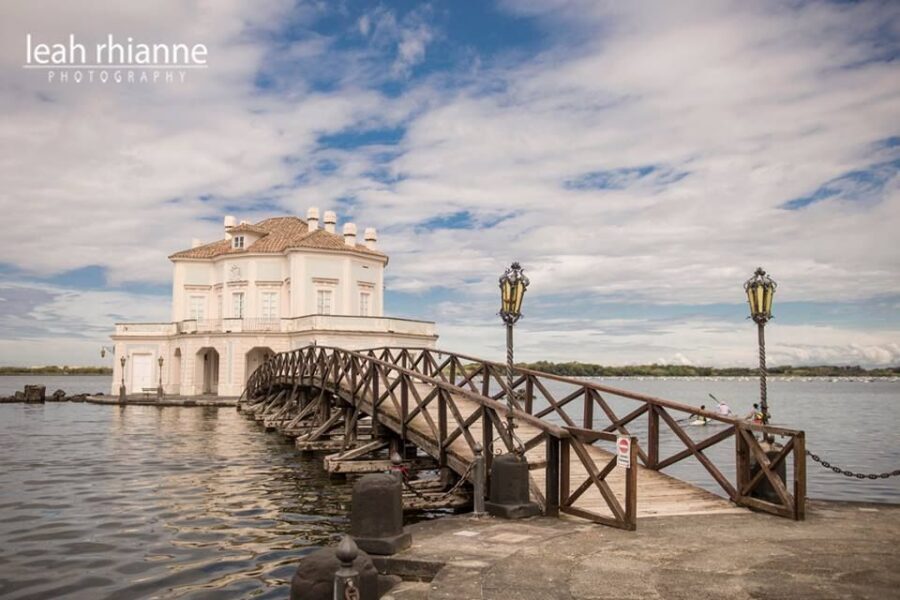
Finally, you reach Lake Fusaro and then Casine Vanvitelliana (entrance included). This is a good end-of-tour stop because it gives your brain time to shift from ruins mode into view mode. The day’s heavy history part has been set up already, so you can enjoy this last segment as a slower landing.
And based on real examples of how the day can close, it’s common to wrap with a simple food moment—like espresso and a sfogliatella—which makes the whole outing feel complete instead of just “we saw things and left.”
Price and value: is $339.86 per person fair?
At $339.86 per person for a private 5-hour drive, the value depends on what you compare it to. Here’s what helps this price make sense:
- You’re getting a private authorized tour guide and expert driver
- You’re riding in a classic Fiat (which isn’t just cosmetic; it supports the guided pacing)
- Entrance tickets are included for multiple major stops (Anfiteatro Flavio, Terme di Baia, Casina Vanvitelliana)
- You get pickup and drop-off in Naples, including port/station pickup that’s useful for cruise days
- Fuel and third-party insurance are included, which reduces the “extra costs” feeling
If you’d otherwise pay for separate tickets and figure out transport across scattered sites, the private car format often works out better emotionally, not only mathematically. You lose less time, and you’re not stressed about getting from one edge of Campi Flegrei to the next.
The one tradeoff is time. Five hours is enough to see a lot of key points, but it won’t feel like a slow, “sit for an hour” kind of day. If you like lingering, you’ll want to choose a priority and be okay with moving on.
Who this tour suits best (and who should tweak expectations)
This Fiat tour of the Phlegraean Fields is ideal for you if:
- you want a private day without car logistics
- you like history but also enjoy myths and storytelling that connects to what you see
- you’re comfortable with walking a bit and keeping a steady pace
It may be less ideal if:
- you hate time limits and prefer long stops without moving
- you’re sensitive to a day that mixes driving viewpoints with multiple sites
Should you book this Phlegraean Fields Fiat 500/600 tour?
I’d book it if you want a smart Naples-area day that mixes the volcanic setting of Campi Flegrei with Roman sites, using a guide to stitch it all together—plus the charm of a vintage Fiat ride that turns transit into part of the memory. The included tickets for several major locations and the private pickup/drop-off are the practical reasons it’s worth it, not just the cute car.
If your goal is only one thing—like seeing a single ruin in deep detail—you might feel rushed. But if your goal is a full, coherent Phlegraean Fields introduction that’s enjoyable from start to finish, this is exactly the right kind of outing.
FAQ
How long is the Phlegraean Fields Fiat 500 or 600 tour from Naples?
The tour runs for 5 hours. Starting times depend on availability.
Where does pickup and drop-off happen?
Pickup and drop-off are included at your hotel or wherever you desire in Naples, and pickup can also be arranged at the train station, port, or other convenient Naples locations.
Is this a private tour?
Yes, it’s a private group experience.
What car will we ride in?
You’ll ride in a classic Fiat 500 or Fiat 600 in perfect working conditions.
What languages are offered for the live guide?
Live guide language options include Spanish, English, French, and Italian.
Which entrance tickets are included?
Entrance tickets are included for Anfiteatro Flavio, Terme di Baia, and Casina Vanvitelliana.
Does the tour skip the ticket line?
Yes, it includes skip-the-ticket-line access.
How many people is recommended for the tour?
The recommended number of participants is 2 people, and it’s available for up to 3 people.
What should we bring for the day?
Bring comfortable shoes and comfortable clothes, plus sunglasses and a camera.
Is free cancellation and pay-later booking available?
Free cancellation is available up to 24 hours in advance for a full refund, and there is a reserve now & pay later option.