REVIEW · NAPLES
THE WONDERS OF ANTIQUES: The Archaeological Museum of Naples
Book on Viator →Bookable on Viator
Neapolitan antiques move fast in your head. This is a guided visit through the Museo Archeologico Nazionale di Napoli that links Roman-Greek art to Pompeii objects and then lands on the masterpieces of the Farnese collection. I love how the tour explains the art with clear comparisons between ancient Greek and Roman styles, and I also love that it gives you a practical way to see the Pompeii highlights, including the mosaics, instead of getting lost in a huge museum.
One thing to plan for: you’re paying for the guide, but you still need to buy entrance tickets for the museum. It’s also a tight loop for 1 hour 45 minutes, so if you want extra time to linger in one room, you’ll have to decide what matters most to you.
In This Review
- Key highlights at the Museo Archeologico Nazionale di Napoli
- Why this Naples museum tour is a smart Pompeii “second act”
- The Roman-Greek, Pompeii, and Farnese sections—what each one is for
- Roman-Greek collection: the style “before” Pompeii
- Pompeian collection: everyday life shown through what survived
- Farnese masterpieces: the grand finale
- What the guide adds (and why it matters in an art museum)
- If you get Fabio as your guide
- Timing your day: how to make a 9:00 am start work
- Price and value: what $193.24 covers (and what doesn’t)
- Who should book this tour (and who might skip it)
- Great fit for
- Might not be the best fit if
- Should you book the Wonders of Antiquity: Naples Archaeological Museum tour?
- FAQ
- Where does the tour start?
- What time does the tour start?
- How long is the guided tour?
- Is the museum entrance ticket included?
- What’s included in the tour price?
- Is this tour private?
- What group size is this for?
- What language is the tour offered in?
- Is full cancellation available if plans change?
Key highlights at the Museo Archeologico Nazionale di Napoli

- Roman-Greek to Pompeii to Farnese: a storyline, not random gallery hopping
- English guiding with humor: easier understanding, especially for art comparisons
- Pompeii follow-up focus: great if you already visited Pompeii
- Mosaics get attention: a good chance to see the pieces people remember
- Private group feel: only your group participates
- Works for families: kids can stay engaged with question-style moments
Why this Naples museum tour is a smart Pompeii “second act”
If you’re doing Pompeii (or Herculaneum) while you’re in the Naples area, this museum is the place where the story starts to make sense. The Archaeological Museum doesn’t just show objects. It helps you connect what you saw outside—houses, everyday life, and decorative style—to what survived and what was recovered.
I like that the tour is built around three major blocks: the Roman-Greek collection, the Pompeian collection, and then the Farnese masterpieces. That structure is surprisingly helpful. It gives you a mental map, so you’re not just collecting random impressions. You’re learning why the art looks the way it does and how Roman tastes absorbed Greek ideas.
And if you’re the type who enjoys a guided route—someone giving you the “here’s what to look for” cues—this kind of museum tour is exactly your speed. Several people mentioned that the guide’s stories make the museum feel alive, not like a quiet warehouse of artifacts. That’s the difference between reading labels and actually understanding the art.
You can also read our reviews of more tours and experiences in Naples.


The Roman-Greek, Pompeii, and Farnese sections—what each one is for
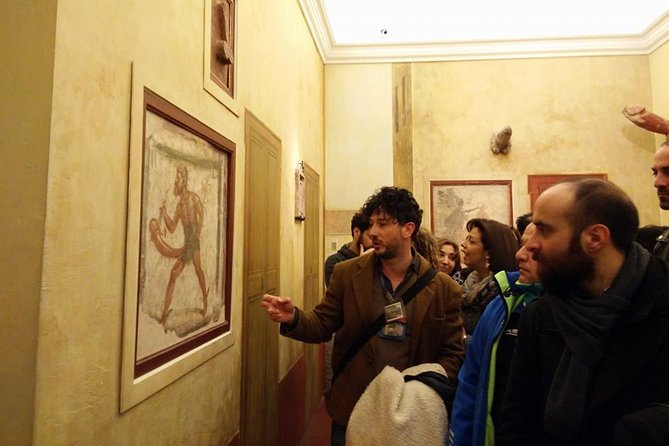
The tour’s main stop is the Museo Archeologico Nazionale di Napoli, and that’s where the real value is: you get to watch the guide walk you through big art categories with a purpose.
Roman-Greek collection: the style “before” Pompeii
The Roman-Greek part is a useful warm-up. It sets up the artistic language behind what you’ll later see in Pompeii-era material. You’re not just looking at objects; you’re learning how Greek and Roman approaches can look different, and then how they blend.
I especially like this segment if you care about comparisons. One of the strongest comments about the guiding is that the explanations highlight the relationship between ancient Greek and Roman art. When you understand that relationship, it’s easier to spot why certain details feel Greek while others feel Roman.
Pompeian collection: everyday life shown through what survived
Then comes the Pompeian collection—this is the big emotional connection for many visitors. It’s where you see recovered objects tied to Pompeii, and the guide’s direction helps you avoid museum “scan-mode.” You’ll get a path through the material, which matters in a collection like this where attention can wander.
A standout detail from what people said: they made time for the mosaics early, then continued on to the rest of the Pompeii objects. If mosaics are your thing, you’ll want to say so on the day. When the guide knows your priority, your visit can feel twice as focused.
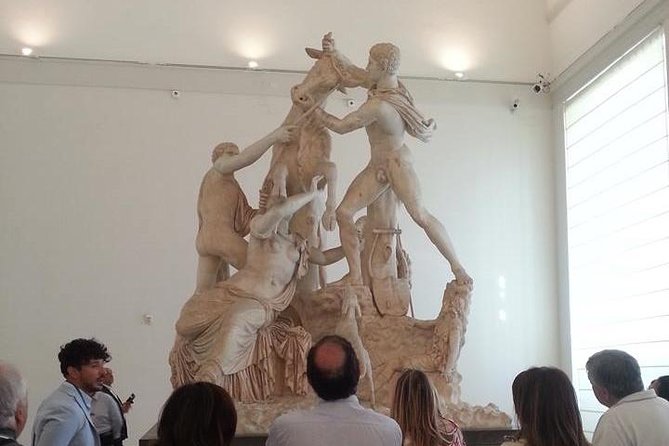
Farnese masterpieces: the grand finale
Finally, you reach the masterpieces of the Farnese collection. This is the closing chapter that tends to stick in people’s memories. It’s a moment where the museum stops feeling like “museum-time” and starts feeling like high-stakes art history.
I recommend treating this as your reset point. By the time you arrive here, you’ve already learned the visual vocabulary from the earlier sections. That makes the Farnese works land harder, because you’ll recognize more of what you’ve been told to look for.


What the guide adds (and why it matters in an art museum)
This is a guided tour, and that’s not fluff. In a museum of this size and scope, a guide does two things you can’t easily replicate alone: selection and translation.
Selection means you’re not trying to decide in real time what’s worth your energy. A good guide steers you toward the best examples within each collection. People specifically praised the way the guide pointed out stand-out pieces and helped them understand what kinds of buildings and art the recovered objects connect to.
Translation means you’re not just reading labels. The guide’s explanations come with context and story. One strong theme in the feedback is that the guiding includes humor and keeps the material readable. That matters, because ancient art can feel distant until someone shows you how the ideas work.
There’s also a practical side. If you’re traveling with friends, you’ll appreciate the “organized meeting point” help people described—like when the guide assists someone in finding where to meet after the tour. That kind of small problem-solving is part of why guided tours feel smoother.
If you get Fabio as your guide
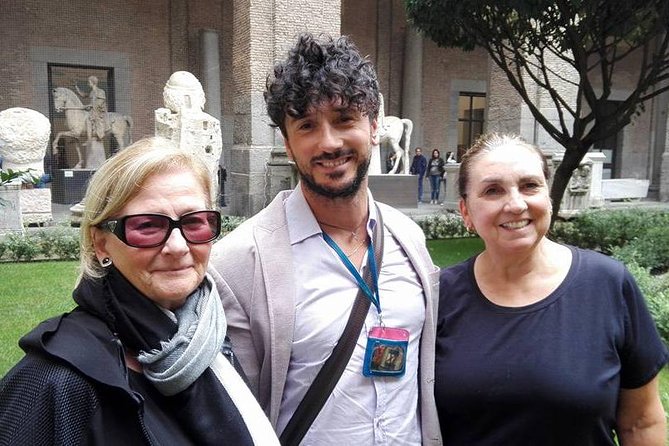
Several comments highlighted a specific guide, Fabio, and his style. The takeaways that matter for your planning:
- His English is described as excellent, with clear explanations.
- He explains and compares ancient Greek vs Roman art in a way that clicks.
- He can tailor pacing toward what you want to see—especially mosaics.
- He’s engaging with kids, including quiz-style moments for younger travelers.
If you want maximum payoff from a 1 hour 45 minute museum visit, you’ll do best by telling the guide your top priorities at the start—especially if mosaics are on your shortlist.
Timing your day: how to make a 9:00 am start work
The tour starts at 9:00 am and runs about 1 hour 45 minutes. Meeting point is the Museo Archeologico Nazionale di Napoli at Piazza Museo, 19, 80135 Napoli. The activity ends back at the meeting point, so you’re not wandering off into uncertainty afterward.
Here’s my practical advice: treat the tour like a focused museum “spine.” Before you arrive, decide what you want most:
- Pompeii connections (especially mosaics)
- Greek vs Roman art comparisons
- Farnese masterpieces as a grand finish
With limited time, that choice keeps you from doing the common mistake: admiring everything and understanding almost nothing.
Also, since it’s near public transportation, you can build your route efficiently around it. That’s helpful if you’re moving between sites in Naples and don’t want to fight parking or last-minute detours.
Price and value: what $193.24 covers (and what doesn’t)
The price is $193.24 per group for up to 15 people, and it includes a guided tour. Entrance tickets are not included, so you should budget for the museum admission on top of the tour cost.
Here’s how I’d think about value:
- If your group fills closer to the maximum, the per-person cost drops fast.
- If your group is small, the per-person cost rises—but you still get a private group experience and a guide who can tailor focus.
- The tradeoff is that you’ll pay museum admission separately, no matter the group size.
Also note the format: it’s a private tour/activity, meaning only your group participates. That matters if you have people in your group who like questions, need slower pacing, or want the guide to emphasize specific art.
Finally, the “book 116 days in advance on average” detail signals that this is popular. If you’re traveling in peak season or have a specific date in mind, it’s smart to lock it in early.
Who should book this tour (and who might skip it)
This tour makes the most sense if you want structure. If you like museum visits where someone helps you choose what matters, you’ll probably enjoy the way this one follows a clear storyline.
Great fit for
- People who already visited Pompeii and want the museum to act as a follow-up
- Art lovers who enjoy Greek vs Roman comparisons
- Anyone who cares about seeing mosaics without wasting time searching
- Families with kids who respond well to games, questions, and energetic explaining (the guide style described for Fabio suggests this can work well)
Might not be the best fit if
- You prefer completely self-paced museums with zero guidance
- You don’t want to buy separate entrance tickets and prefer one all-in price
- You’re hoping for a long, slow visit where you can sit with every room—this one is about 1 hour 45 minutes
Should you book the Wonders of Antiquity: Naples Archaeological Museum tour?
I’d book it if you want your time in Naples to feel purposeful. This is the kind of guided visit that helps you connect Pompeii-style art and recovered objects to the bigger story of Greek and Roman influence, then end with the Farnese masterpieces.
I’d also book it if you’re traveling with kids or a mixed-interest group. The guiding style described—clear English, humor, and engagement—seems well suited to keeping attention on track.
The main reason to hesitate is simple: tickets aren’t included. If you’re already set on buying museum admission yourself and you’re good with that extra step, the tour still looks like strong value, especially with a private group and a focused, 1 hour 45 minute plan.
FAQ
Where does the tour start?
The tour starts at Museo Archeologico Nazionale di Napoli, Piazza Museo, 19, 80135 Napoli, NA, Italy.
What time does the tour start?
The start time is 9:00 am.
How long is the guided tour?
The duration is approximately 1 hour 45 minutes.
Is the museum entrance ticket included?
No. Entrance tickets are not included, and you will need to purchase them separately.
What’s included in the tour price?
The guided tour is included.
Is this tour private?
Yes. It’s a private tour/activity, and only your group participates.
What group size is this for?
The tour is priced per group and is up to 15 people.
What language is the tour offered in?
The tour is offered in English.
Is full cancellation available if plans change?
Free cancellation is available. You can cancel up to 24 hours in advance for a full refund.