REVIEW · AMALFI
From Amalfi Coast: Pompeii Herculaneum skip-the-line
Book on GetYourGuide →Operated by SUNLAND VIAGGI E TURISMO AMALFI COAST · Bookable on GetYourGuide
A day with Pompeii and Herculaneum feels like time travel. I like the skip-the-line tickets (so you don’t burn your morning waiting) and the small-group feel with an expert archaeological guide. One thing to consider: it’s a long day with a lot of walking on uneven excavation paths, so it’s not a great match if mobility is limited.
I also like that the route is built around a clear storyline: the Vesuvian night that froze these places in 79 A.D. and the very different worlds inside the ruins. You’ll get guided time in Pompeii, then a second guided visit in Herculaneum, plus free time for lunch. The guide also adds Roman-life context while you explore, including stops connected to public bathing and gym life.
In This Review
- Key highlights to know before you go
- Why Pompeii and Herculaneum in One Day Works
- The Amalfi Drive Transfer: Comfort, Timing, and Real Views
- Pompeii: A Commercial City Frozen by 79 A.D.
- Where the Guided Time Feels Most Useful
- Lunch Break: Expect a Real Pause, Not a Soft Landing
- Herculaneum (Ercolano): A Residential Coastal Town in Ash
- Roman-Life Stops Inside the Experience
- The Cameo Atelier Stop on the Return
- Skip the Line Tickets, Plus Free Entrance Timing
- Price: Is $169.93 Good Value?
- Who This Tour Is Best For (And Who Should Skip It)
- Practical Tips to Get More Out of Your Day
- Should You Book This Pompeii and Herculaneum Day Trip?
- FAQ
- How long is the Pompeii and Herculaneum skip-the-line tour?
- Are skip-the-line tickets included for both sites?
- Is lunch included in the price?
- What’s included in the tour besides entry tickets?
- Where does pickup happen?
- Is this tour suitable for people with limited mobility?
Key highlights to know before you go
- Skip-the-line tickets included for both Pompeii and Herculaneum
- Small group, expert archaeological guide (English live guide)
- Two guided blocks (about 2 hours each) plus lunch break time
- Pompeii then Herculaneum with different city vibes: commercial vs. residential
- Cameo atelier stop on the way back
Why Pompeii and Herculaneum in One Day Works
Doing both ruins in a single outing is usually the sweet spot on the Amalfi Coast. Two separate visits can add travel time and extra logistics, while this plan keeps everything inside one long day with one round-trip coach ride.
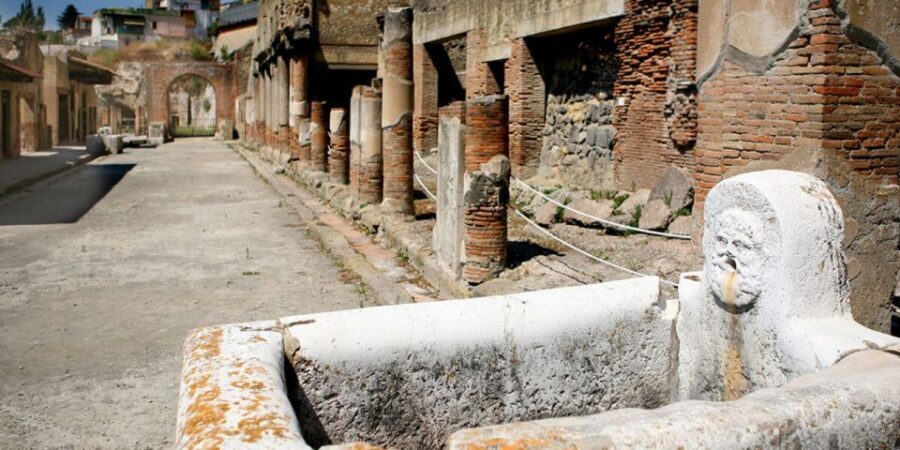
The bigger win is context. Pompeii and Herculaneum were both buried by the same Vesuvius eruption, but they weren’t the same kind of place. Pompeii was a busy commercial center, while Herculaneum reads more like a quiet coastal residential town. Seeing them back-to-back helps your brain notice how daily life changed city by city, and street by street.
The day runs roughly 8–9 hours, so you’re not rushing through both sites in a chaotic blur. You get guided time first, then you get enough free time to reset and grab lunch before the second site.
You can also read our reviews of more tours and experiences in Amalfi
The Amalfi Drive Transfer: Comfort, Timing, and Real Views
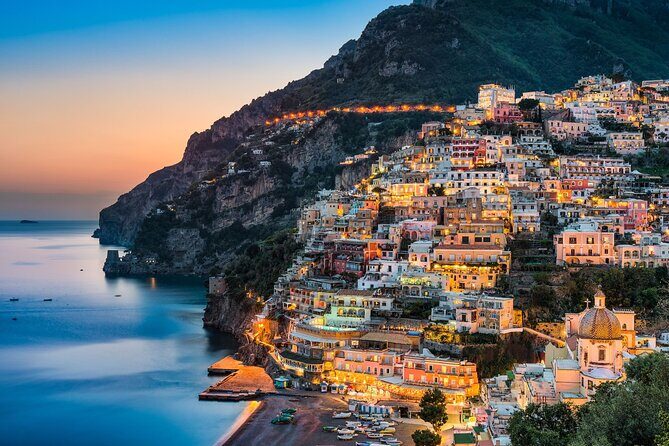
You start with pickup meeting points that vary by booking option, then you meet your local guide and board the coach for the ride toward Pompeii. The route includes the classic Amalfi Drive scenery, so even before the ruins, you get that coast-to-history build-up.
Transportation is air conditioned, which matters because Pompeii and Herculaneum afternoons can get hot fast. And because it’s a single-day plan, the coach schedule helps you avoid the awkward problem of finding your own transit between sites.
One logistics note I’d plan around: for some options, there’s a return shuttle minibus to Amalfi to board the small coach (for instance, when you start from Praiano and Positano options are offered). But the tour notes that on the return, due to traffic regulation, no minibus service is available and the drop-off will be Amalfi. So if you’re building the rest of your day, don’t assume you’ll end up back at your exact starting village.
Pompeii: A Commercial City Frozen by 79 A.D.
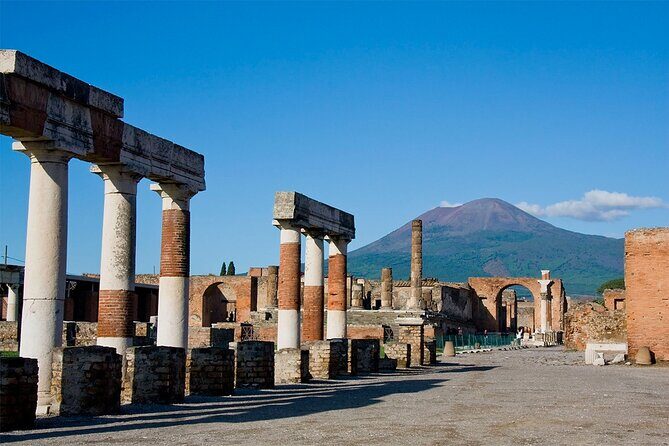
Your Pompeii portion includes about 2 hours guided time in the archaeological excavations. This isn’t a quick “see the highlights and go” stop. The guide’s job is to give you the conditions and the setting of ancient life, and the tragic interruption caused by the eruption.
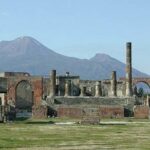
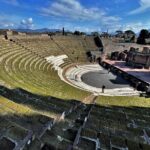
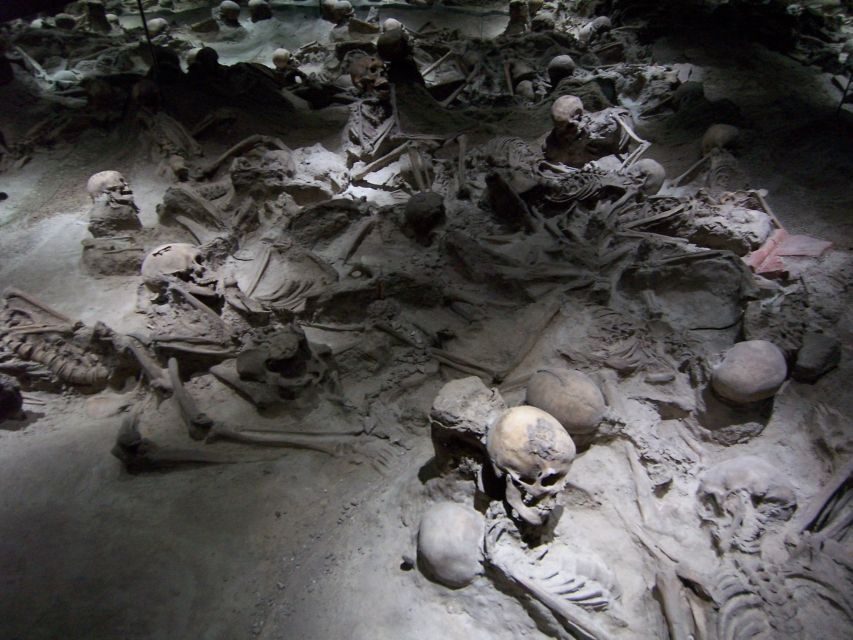
Pompeii is fascinating because it’s not just ruins—it’s a whole city layout with recognizable rhythms: streets, public spaces, and buildings that show how people worked, shopped, and socialized. The guide frames the eruption as the night between 24 and 25 August 79 A.D., when around 5 meters of lapilli and ash buried the city. That detail matters. It explains why so much is preserved and why the excavations can feel eerily complete.
Where the Guided Time Feels Most Useful
Two guided hours can sound short on paper. In practice, it’s enough time for a good guide to help you read what you’re seeing.
Here’s why that matters: without help, you might walk past a building and miss what makes it special—why a doorway matters, what a layout suggests, or how a street corner fits into daily movement. With guidance, you start noticing patterns faster, and your free-time wandering (or museum time) becomes more meaningful.
One practical thing: the Pompeii segment is followed by free time for lunch. That free time is on you. You’ll want comfortable shoes and a plan for water and snacks, because after a guided block, you don’t always want to hunt for food while also trying to manage heat and crowd flow.
Lunch Break: Expect a Real Pause, Not a Soft Landing
The tour gives you time for lunch between the Pompeii and Herculaneum visits. The description doesn’t promise a shuttle ride to a specific restaurant, and one experience issue you should treat as a possibility is that you may be walking back out after Pompeii ends.
If you’re the type who gets cranky after 3 hours of uneven walking, this is your cue to prepare. I’d bring a refillable water bottle and consider wearing breathable layers. Choose lunch near where you exit the Pompeii area, so you don’t waste time relocating.
Also, remember food and drinks aren’t included. So budget for lunch rather than assuming it’s folded into the tour price.


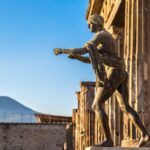

Herculaneum (Ercolano): A Residential Coastal Town in Ash
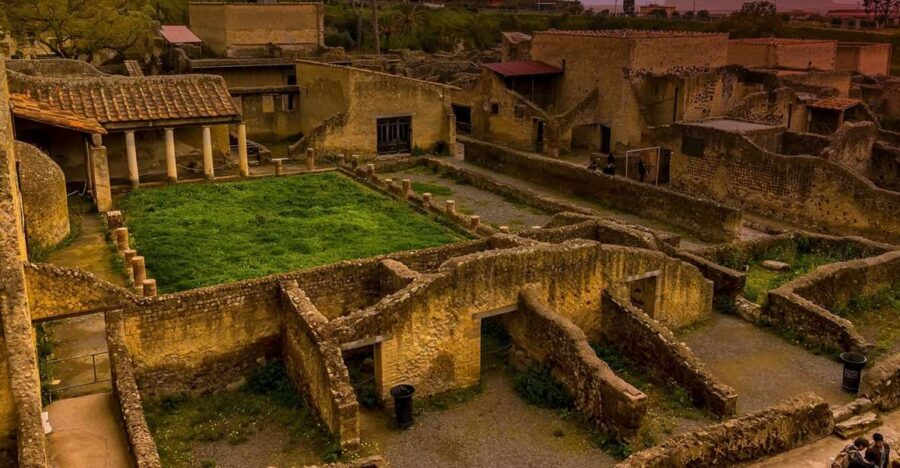
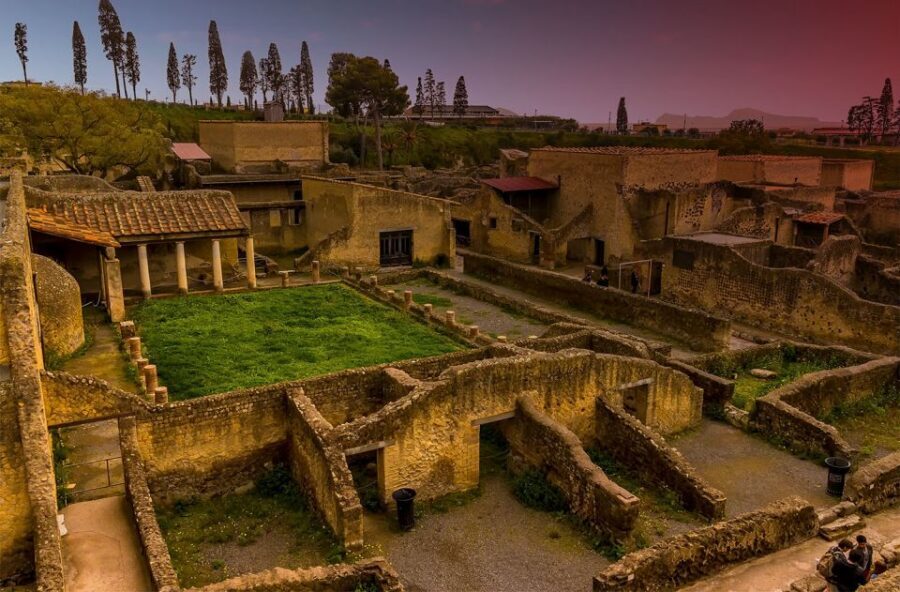
After Pompeii, you continue on to Ercolano (Herculaneum). Your Herculaneum visit is also about 2 hours with guided access to the excavations.
The vibe shifts. Pompeii is the loud, commercial city. Herculaneum is the more intimate residential coastal town. You’ll likely feel that difference in the way streets and buildings are organized and in the kinds of daily-life scenes the guide points out.
Herculaneum is especially compelling for how it can feel human-scale. In a place where you expect a city, you get something closer to how people lived when the disaster hit—homes, routines, and everyday spaces.
Roman-Life Stops Inside the Experience
The tour also includes exploration of notable sites in the town to give insight into Roman life. In particular, you’ll see references to public baths and a gymnasium.
That kind of stop is valuable because it connects the ruins to habits you can understand. Roman bathing wasn’t just cleanliness—it was social life, status, and routine. A gymnasium ties into exercise, meeting spaces, and education-style culture. When your guide points to these areas, you start to see the city as something people used, not just something they built.
One more sound-related reality check: there’s a chance you could find it harder to hear the guide at Herculaneum if the group doesn’t have communicators or audio. The good news is that an optional audio guide (English) is listed as available, so if that option is offered when you book or on the day, consider taking it. It can make the guided parts feel smoother.
The Cameo Atelier Stop on the Return
On the way back, the tour includes a stop at a well-known cameo atelier.
This is one of those add-ons that can be either fun or just “time filler,” depending on your interests. Since it’s included, I’d treat it as a short cultural-and-practical break rather than a must-see museum moment. If you like crafts and want a peek at how cameos are made or sold, it’s a decent last stop before you return to the coast.
Skip the Line Tickets, Plus Free Entrance Timing
The tour price includes skip-the-line tickets for the ruins of both Pompeii and Herculaneum. In practice, skip-the-line is about protecting your day from wasting your limited daylight hours.
There’s also a pricing twist worth timing your trip around:
- On the 1st Monday of each month, you can save money with free entrance to State sites.
- The tour also notes Special Sundays with free entrance.
If your dates line up, this can improve the value even further. If they don’t, you’re still paying for speed and simplicity, which is often the main reason skip-the-line matters on this route.
Price: Is $169.93 Good Value?
The listed price is $169.93 per person, with a duration of about 8–9 hours.
For a day trip that includes:
- round-trip coach transport from the Amalfi Coast area,
- an expert archaeological guide in English,
- and skip-the-line tickets for both major sites,
…it’s not a bargain price. But it’s also not an out-there splurge for this region. You’re paying for the combination of time savings (skip-the-line), interpretation (the guide), and convenience (one organized route instead of coordinating separately).
Where value can go up for you:
- If you’re traveling with limited time and want both sites in one day.
- If your schedule hits a free entrance window (1st Monday) or a Special Sunday.
Where value may feel less strong:
- If you prefer roaming without structure, because guided time is a big part of what you’re buying.
- If the walking level will be a struggle for you, since the tour notes it isn’t suitable for limited mobility.
Who This Tour Is Best For (And Who Should Skip It)
This is a great fit if you want a guided, organized day that still leaves room for lunch and self-paced breathing.
It’s also a good choice if you:
- like archaeology but don’t want to spend your day figuring out where to go inside giant sites,
- want Roman-life context like baths and gym spaces,
- and appreciate that the day is paced into two guided blocks.
You should think twice if:
- you have limited mobility (the tour is not suitable because of the long day of walking around excavations),
- you have motion sickness (listed as not suitable),
- or you have pre-existing medical conditions that could be an issue during a long day of walking and travel.
Even if you’re generally healthy, treat the pace as real. Pompeii and Herculaneum aren’t smooth museum floors.
Practical Tips to Get More Out of Your Day
A few things I’d do to make the day feel easier and more rewarding:
- Wear comfortable shoes with good grip. Excavation paths can be uneven.
- Plan for heat. Even with air-conditioned transport, you’ll be outdoors for long stretches.
- Bring your own water and snacks mindset. Food and drinks aren’t included, and lunch is your responsibility.
- If you’re offered it, consider the optional audio guide to help at Herculaneum where hearing may be tricky.
- Don’t forget the museum component if it’s part of your on-site time window. One tip that comes up is to make sure you include it rather than focusing only on the open-air excavations.
And one more thing: this is the kind of tour where your enjoyment depends on your comfort with walking. If you can handle it, you’ll likely love the payoff. If you can’t, you’ll spend the day counting minutes.
Should You Book This Pompeii and Herculaneum Day Trip?
Book it if you want both Pompeii and Herculaneum in one day, you value skip-the-line tickets, and you like having a guide translate the ruins into understandable Roman life. The small-group approach and English live guidance make it easier to connect what you see to why it matters.
Skip it if you can’t comfortably handle a long walking day on excavation ground, or if motion sickness is an issue for you. Also, if you hate the idea of an included craft stop (the cameo atelier), make sure you’re okay with a shorter, possibly more commercial moment before the ride back.
If you’re planning a first-time visit to the area and you’re trying to make your limited time count, this is a solid way to do it. You’ll come away with a stronger sense of how disaster preserves different kinds of everyday life—one city built for commerce, and the other built for living along the coast.
FAQ
How long is the Pompeii and Herculaneum skip-the-line tour?
It runs about 8–9 hours. Starting times vary by availability.
Are skip-the-line tickets included for both sites?
Yes. Skip-the-line tickets are included for the ruins of Herculaneum and Pompeii.
Is lunch included in the price?
No. Food and drinks are not included. You’ll have free time for lunch during the day.
What’s included in the tour besides entry tickets?
You get air conditioned transportation and an expert local archaeological guide in English. An optional audio guide in English may be available.
Where does pickup happen?
Pickup options depend on what you book, and the meeting point may vary. There’s also an optional minibus pickup from Praiano to Amalfi included, but on the return, traffic regulations may limit minibus service and drop-off can be Amalfi.
Is this tour suitable for people with limited mobility?
No. It’s not suitable for people with limited mobility because it involves a long day of walking around excavation sites.