REVIEW · AMALFI
Cooking class: “Traditional dishes of the Mediterranean Diet”
Book on Viator →Operated by Unique Experience Tour Operator · Bookable on Viator
Handmade pasta with a view is hard to beat. This Amalfi Coast cooking class happens at Agriturismo Il Tintore, where you start with a garden walk and end with lunch built from what you gathered. It’s intimate, hands-on, and the Tramonti valley view makes even the work feel like a holiday.
What I love most is the real family-farm feel. You meet Aniello, get a basket, and gather seasonal produce and even eggs, then take your haul to the kitchen to cook. Next, Chef Raffaella teaches you how to make pasta by hand and you’ll actually help shape the meal, not just taste it.
The only potential drawback is how active it is. You’ll be moving, measuring, and cooking alongside everyone else, so if you want a sit-back-and-watch experience, this may feel like hands-on labor instead of a quick demo.
In This Review
- Key things to know before you go
- Arriving at Agriturismo Il Tintore with Tramonti valley views
- Garden basket gathering: seasonal ingredients and eggs included
- Making pasta by hand: gnocchi or tagliatelle with measured guidance
- Cooking your sauce and building two courses from what you picked
- Wine, lunch, and what Mediterranean diet means on a real farm table
- Price and what $243.10 per person really covers
- How long it takes, who it suits, and what to bring
- Should you book this Mediterranean diet cooking class?
- FAQ
- Where does the cooking class meet?
- What time does the experience start?
- How long is the experience?
- Is this a private tour or shared group?
- What happens when you arrive?
- Do you cook pasta during the class?
- Do you cook using the ingredients you gather?
- Is wine included with the meal?
- Is there any cancellation flexibility?
- Are service animals allowed?
Key things to know before you go
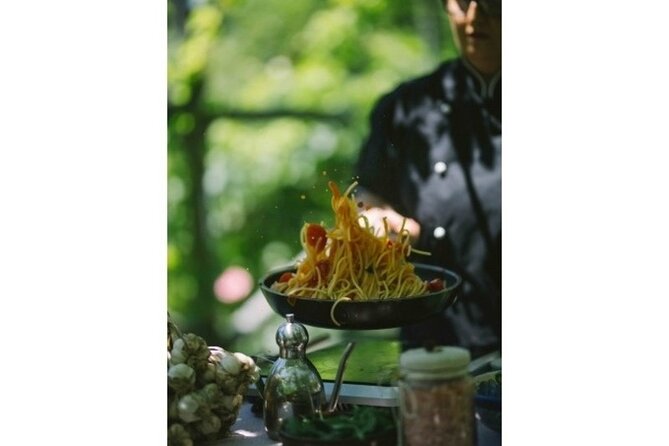
- Farm-garden start, not a kitchen desk: you collect seasonal ingredients directly in the garden before any cooking happens.
- You learn pasta by hand: you’ll get guided instruction for gnocchi or tagliatelle, then put it into practice.
- Aniello and Chef Raffaella run the show: you’ll work with Aniello during the gathering and Chef Raffaella in the kitchen.
- Your ingredients drive the courses: the same seasonal items you pick show up in more than one dish.
- Wine is part of the table experience: lunch is paired with superb wine during the meal.
- Private group setup: only your group participates, so the pace feels personal rather than rushed.
Arriving at Agriturismo Il Tintore with Tramonti valley views
The experience begins on the Amalfi side of the region, with the meeting point listed at B&B Il Tintore in Capitignano (Via Vitagliano, 25). The tour is scheduled to start at 11:00 am, though the flow on the day I read about starts with a late-morning arrival and then a welcome right after you settle in. Either way, plan to arrive with a little buffer so you’re not rushing through the first hello.
The setting is the point. Agriturismo Il Tintore is set up for real farm life, not a studio class. When you step in, you’ll be greeted and offered a small welcome drink, then handed over to the routine of the day. You also get that familiar, local atmosphere that makes the whole meal feel less like a performance and more like you’re joining someone’s lunch prep.
This is a good choice if you like the kind of travel that smells like food and feels like a routine you can learn. The view over the Tramonti valley isn’t just scenery to admire from a distance. It sets the tone: you’re outdoors first, then you cook, then you eat together.
One practical tip: wear comfortable shoes you can stand in for a while. You’re outdoors gathering and then moving between garden and kitchen, so flip-flops and fancy sandals don’t add up here.
You can also read our reviews of more tours and experiences in Amalfi.

Garden basket gathering: seasonal ingredients and eggs included
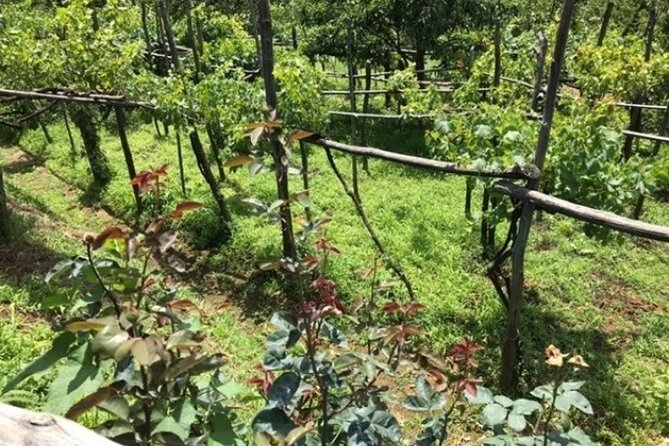
Before anyone touches dough, you’ll walk in the garden with Aniello. The method is simple: you receive baskets to collect seasonal products straight from the farm. It’s not a quick photo stop. You’ll actually gather ingredients that will land in your cooking later.
A standout detail is that you’re not limited to vegetables. The experience also includes collecting eggs from the farm. That matters, because eggs make the meal feel grounded in place. When you crack an egg at the table, you’re not picturing it from a supermarket carton. You remember the farm moment that led to it.
The garden walk also teaches you what the word seasonal means in real life. Instead of cooking based on whatever is easiest to buy, you cook based on what’s available right then. That’s at the heart of a Mediterranean-style approach: keep it simple, use what’s fresh, and build flavor from real ingredients rather than heavy shortcuts.
When you’re done collecting, the ingredients get taken to the kitchen and the cooking begins. For you, this is where the class becomes more than a lesson. You’re building a lunch with an origin story you can explain in one sentence.
If you’re sensitive to farm conditions (heat, bugs, outdoor smells), prepare for the outdoors part. It’s short, but it’s real.
Making pasta by hand: gnocchi or tagliatelle with measured guidance
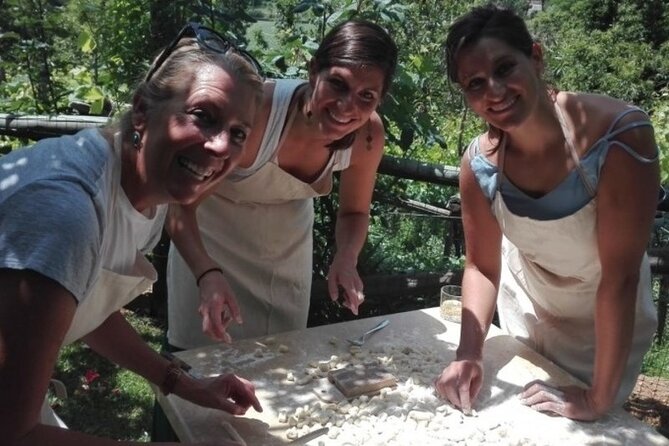
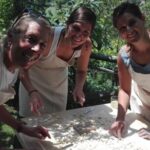
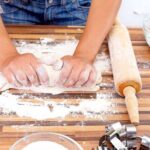
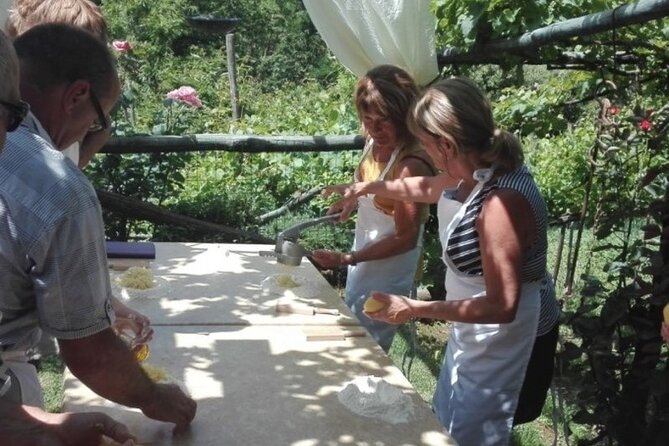
Now for the kitchen step: pasta by hand. Chef Raffaella leads this part, starting with a clear explanation of how pasta is made, including details about quantities of ingredients. This is the section where you’ll likely feel the most “teacher-led” structure. You’re not just free-form cooking; you’re learning a method.
The class focuses on gnocchi or tagliatelle. Which one happens depends on how the session is planned, but either way, you’ll work with the dough directly. The goal isn’t speed. It’s understanding texture and technique, the kind of skill you can repeat later at home.
You’ll first be shown how the pasta is made, then the class transitions into preparing the rest of the meal. In a good cooking class, this handoff is what keeps you from feeling stuck. Here, the process flows: you learn pasta, then you move into making the sauce.
This is one of the more valuable parts of the experience because hand pasta is one of the clearest ways to understand Mediterranean home cooking. It’s not about fancy tools. It’s about timing, dough feel, and using good ingredients well.
A small caution: dough work takes a little focus. If your brain is still on vacation mode, give yourself permission to slow down. You’ll get better results when you treat it like a craft, not like a multitasking chore.
Cooking your sauce and building two courses from what you picked
Once the pasta foundation is underway, you’ll prepare the sauce using what you collected in the garden. This is where the class becomes very “you’re in it.” You’re actively cooking, not just standing nearby while someone else does the work.
The sauce is tied to your ingredients, so the flavor profile reflects the day’s harvest. That’s one reason this experience feels authentic. It’s hard to fake that connection. Even if you’ve cooked before, you’ll probably notice how much the ingredient quality (and freshness) affects the final outcome.
After pasta and sauce, you’ll move to a second dish using the same products. That’s a smart choice for a class like this. Instead of one big wow dish and then going home, you see how ingredients can be used across courses, which gives you a better understanding of how local kitchens think.
Then comes the best part: Tutti a tavola, everyone sits down together. You’re there to eat what you made, not what someone else prepared earlier. That shared table time is where the class shifts from activity to celebration.
The wine is part of the meal experience as well. The setup includes superb wine paired with your lunch, and it’s described as ongoing during the tasting. So yes, expect the kind of leisurely pace where you eat, talk, and savor rather than rush through courses.
If you like meals that feel slow and human, you’ll enjoy this format.
Wine, lunch, and what Mediterranean diet means on a real farm table
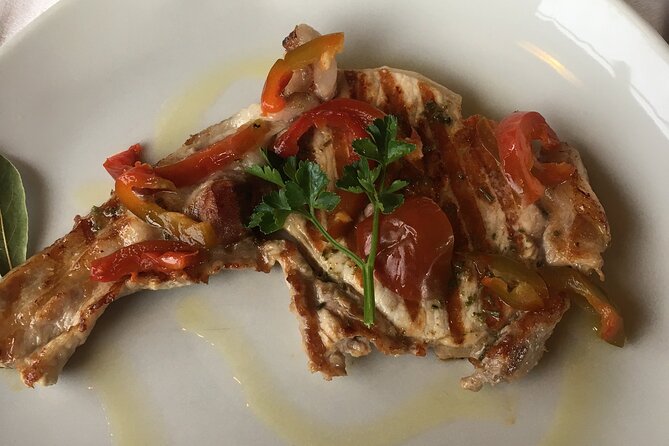
This is billed around traditional dishes of the Mediterranean diet, but it doesn’t come across as a lecture. It comes across as behavior: use what grows nearby, keep the cooking grounded, and let simple ingredients carry the flavor.
In practical terms, you’ll see the Mediterranean diet in the way the meal is structured:
- you gather seasonal produce first
- you make pasta from scratch
- you build sauce from the farm’s harvest
- you repeat ingredients across more than one course
That’s the part I’d suggest you pay attention to, even if you’re only here for a good meal. The class gives you a model for thinking about food at home: less overcomplication, more intention with ingredients.
The view over the Tramonti valley also changes the tone. You’re eating in a place that looks out over the landscape, and that helps the whole meal feel like a destination moment rather than an everyday restaurant lunch.
One more real-world note: since you’re cooking, you’ll likely work up an appetite. By the time lunch lands, you’re not just tasting. You’re judging your own decisions. Did the sauce taste right? Was the pasta right? That feedback is a big part of why cooking classes can be more memorable than restaurant meals.
This one also has the advantage of being private. You’re not competing for attention in a large group, and Chef Raffaella can keep the lesson moving without a constant shuffle of strangers.
Price and what $243.10 per person really covers
At $243.10 per person for about 4 hours, you’re paying for more than a meal. You’re paying for:
- an in-person welcome and farm start
- guided hands-on instruction for pasta
- ingredient collection with baskets and farm inputs
- preparation and tasting of multiple courses built from what you gathered
- a wine-paired lunch experience
- a setting (Agriturismo Il Tintore) that supports the whole farm-to-table flow
Is it cheap? No. But cooking classes that include real ingredient gathering, hand pasta instruction, and an all-in-lunch format tend to cost more because the labor and time are real. You’re also getting a skill component, not just a feeding experience.
If you’re the type who values learning over sightseeing checklists, the cost makes more sense. If your idea of vacation is minimizing effort, then you may compare it to a restaurant lunch and feel it’s steep. For many people, though, paying for the chance to make the meal yourself is what turns it from pricey to fair.
Tip for deciding: think about your likely use of the skills. If you’ll actually try making gnocchi or tagliatelle later, the class becomes a longer-term value.
How long it takes, who it suits, and what to bring
The duration is listed at about 4 hours. That time window fits the full flow: welcome, garden gathering, pasta instruction, sauce cooking, then sitting down together to eat. The class is structured, but not rushed.
This experience suits you if you want:
- a hands-on food day on the Amalfi Coast
- a Mediterranean-diet themed meal that starts with seasonal ingredients
- a small, private group setting where you can participate
- a cooking lesson led by Chef Raffaella with support from Aniello
You might hesitate if you don’t enjoy active cooking. There’s dough work, sauce work, and a farm walk. You’ll be standing and moving more than in a pure tasting tour.
What to bring is mostly common sense: comfortable shoes and clothes that can handle farm air and kitchen splashes. Also bring patience with the pace. Traditional cooking doesn’t work on a stopwatch.
Logistics-wise, you’ll have a mobile ticket, and the meeting point is near public transportation. Service animals are allowed, too, which helps for travelers who need that support.
Should you book this Mediterranean diet cooking class?
I’d book it if you want an Amalfi Coast experience that feels like local life: garden to kitchen to table. The strongest reason to choose it is the combination of farm picking (including eggs) plus real instruction from Chef Raffaella on making pasta by hand, then eating two courses built from your harvest.
I’d skip it if you’re mainly chasing scenic views but don’t want to get your hands involved. This isn’t a passive show.
For most food-focused travelers and anyone who enjoys cooking, it’s a solid value for a full half-day that teaches you something you can use again.
FAQ
Where does the cooking class meet?
The meeting point is B&B Il Tintore, Via Vitagliano, 25, 84010 Capitignano SA, Italy.
What time does the experience start?
The start time is listed as 11:00 am.
How long is the experience?
It lasts about 4 hours.
Is this a private tour or shared group?
It’s private, meaning only your group participates.
What happens when you arrive?
You’ll get a greeting and a small welcome drink, then you’ll receive baskets for collecting seasonal products in the garden.
Do you cook pasta during the class?
Yes. You’ll be taught how to make pasta by hand, with options including gnocchi or tagliatelle.
Do you cook using the ingredients you gather?
Yes. The seasonal products you collect are taken to the kitchen and used for the dishes, including the sauce and a second course.
Is wine included with the meal?
Your lunch is accompanied by wine during the tasting and meal.
Is there any cancellation flexibility?
Yes. Free cancellation is available up to 24 hours in advance for a full refund.
Are service animals allowed?
Service animals are allowed. The meeting point is also noted as near public transportation.