REVIEW · NAPLES
Walking-tour of Naples hystorical Centre
Book on GetYourGuide →Operated by GRAND TOURS ITALY · Bookable on GetYourGuide
Neapolitan stone tells stories fast. This walking tour threads together centuries of cultures in just a few square kilometres, where Greek walls, church legends, and everyday Naples traditions sit steps apart. I especially like how it puts San Gregorio Armeno (the cribs street) at the center of the experience, and how the tour ends with major church architecture that helps you read the city instead of just passing it.
One thing to consider: it packs a lot into 2.5 hours. If you prefer slower browsing and long photo breaks, you may feel the pace a bit.
In This Review
- Key points worth planning for
- Walking the UNESCO heart: what this tour really does
- Piazza Dante and Vanvitelli’s Convitto Nazionale: starting with a landmark that sets the tone
- From Port’Alba into the historic centre: where early pizzerias fit in
- Piazza Bellini and the Greek walls of Neapolis: seeing the ancient city in plain sight
- Via dei Tribunali: Pulcinella and the Church of the Souls in Purgatory crypt
- San Gregorio Armeno: the cribs street where workshops make tradition visible
- Santa Chiara Monumental Complex: Gothic style in southern Italy
- Piazza del Gesù Nuovo: finishing at the Jesuit façade
- Price and value: what $55 buys you in 2.5 hours
- Group size, radios, and timing: how to make the tour feel smooth
- Who this tour suits best (and who might want something else)
- Should you book this Naples historical centre walking tour?
- FAQ
- Where is the meeting point for the tour?
- What time do the English and Spanish tours start?
- How long is the walking tour?
- Is there a live guide, and what languages are offered?
- Is the tour wheelchair accessible?
- Is radio included during the tour?
- Which key places does the tour include?
- Is pay later available?
- Is free cancellation available?
Key points worth planning for
- San Gregorio Armeno cribs street: see how local artisans’ workshops make the nativity scenes
- Piazza Bellini Greek walls: ancient Neapolis walls are still visible in the modern city
- Via dei Tribunali legends: Pulcinella and the Church of the Souls in Purgatory, including a mysterious crypt
- Santa Chiara Monumental Complex: a Gothic-style highlight from southern Italy
- Piazza del Gesù Nuovo: the impressive Jesuit-era façade of the church of the same name
- Radio for bigger groups: helps you keep up on tight streets
Walking the UNESCO heart: what this tour really does
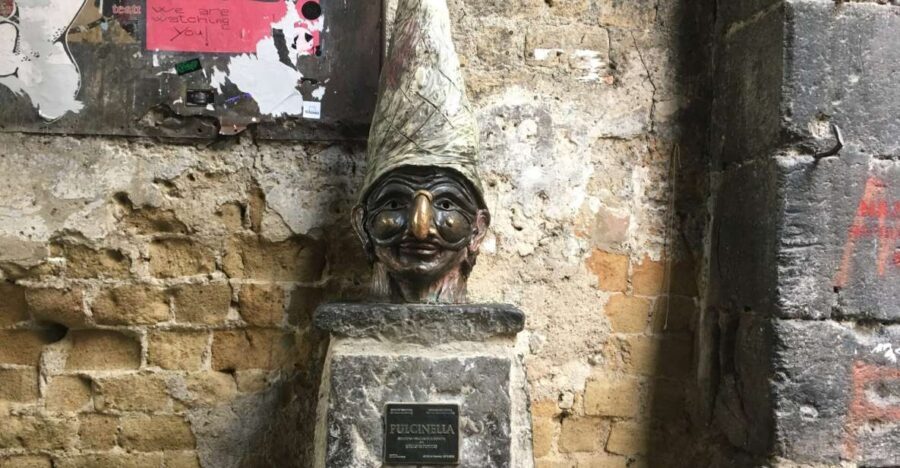
This is a guided history-and-folklore walk through Naples’ Historic Centre, a UNESCO human heritage site since 1995. The big promise is not just seeing famous buildings—it’s learning how different eras of Naples overlap in the streets you’re walking on now.
The tour’s structure makes that easy. You start at Piazza Dante, move through the historic centre via Port’Alba, then hit the areas tied to pizzerias, Greek remains, theatre-style Neapolitan characters, and church legends. You also end with two of the city’s most emblematic church settings, so you finish on visual impact and stronger context than you had at the start.
At $55 per person for a 2.5-hour experience with a live guide (plus radio if the group is large), this is about value for time and meaning. You’re paying for someone to connect the dots—why a statue matters, what a crypt legend hints at, and how a street like San Gregorio Armeno became a known Naples destination.
You can also read our reviews of more walking tours in Naples


Piazza Dante and Vanvitelli’s Convitto Nazionale: starting with a landmark that sets the tone
The tour meets at Piazza Dante, and you’ll spot the guide holding an open white umbrella under the Dante statue in the middle of the square. It’s a simple meeting point, but it matters in Naples, where squares can feel like a maze if you arrive late.
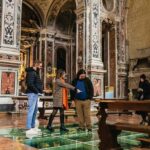
From there, you admire the Convitto Nazionale, designed by architect Vanvitelli. Even if you don’t know architecture terms, this is a useful “orientation” stop. It anchors you in a major public landmark before you slip into the older, tighter lanes of the historic centre.
Think of this first stretch as getting your bearings. Once you see a clear reference point like Piazza Dante, the rest of the walk feels more like a route than random wandering.
From Port’Alba into the historic centre: where early pizzerias fit in
Next you enter the historic centre from Port’Alba. This is one of those transitions that changes how you experience a city: the space tightens, the past feels closer, and the walk shifts from broad views to street-level details.
Right after crossing into the historic core, the tour heads toward the “oldest pizzeria in the city” area. The tour doesn’t just say pizzerias exist—it frames them as part of how Naples developed its identity. When you place food traditions next to historic architecture, Naples stops being a list of sights and starts becoming a living story.
If you’re the type who likes travel that makes you understand what you’re looking at—this stop helps a lot. If you’re only after big monuments, you might consider the pizzeria-related moments a lighter-weight segment, but they’re still part of the city’s cultural pattern.
Piazza Bellini and the Greek walls of Neapolis: seeing the ancient city in plain sight
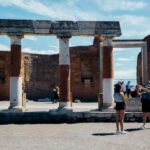
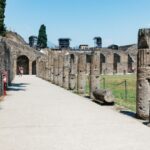
At Piazza Bellini, you get one of the most satisfying “proof points” of Naples’ age: ancient Greek walls of Neapolis are still visible. That’s not a museum-only type of history—you’re looking at remains built long before today’s street plan.
This stop is valuable because it gives you a scale reference. Greek Naples isn’t a distant chapter; it’s built into the setting. Once you notice those walls, you’ll likely look at nearby architecture differently—thinking about how later periods reused, modified, and built around what was already there.
The guided portion here matters. Greek walls are easy to miss if you’re just passing through. With a guide, you know what you’re seeing and why it’s meaningful.
Via dei Tribunali: Pulcinella and the Church of the Souls in Purgatory crypt
The tour continues toward Via dei Tribunali, a street that’s famous not only for its historic feel but also for its stories. This is where the personality of Naples comes through.
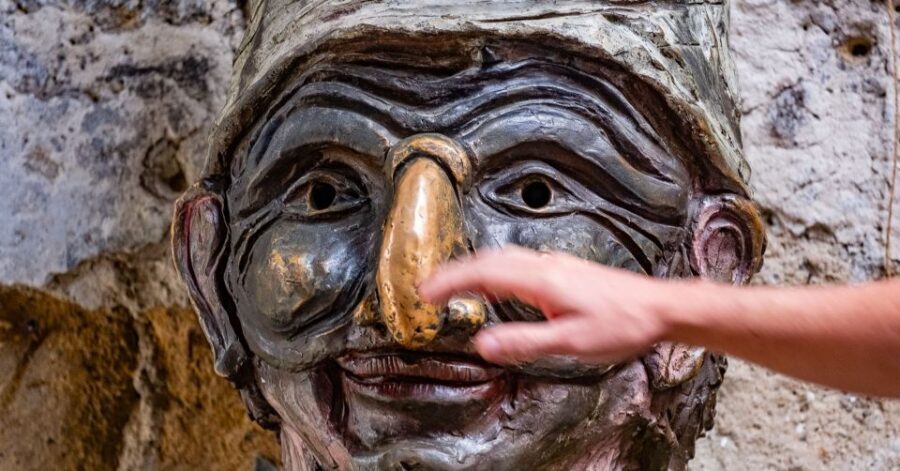
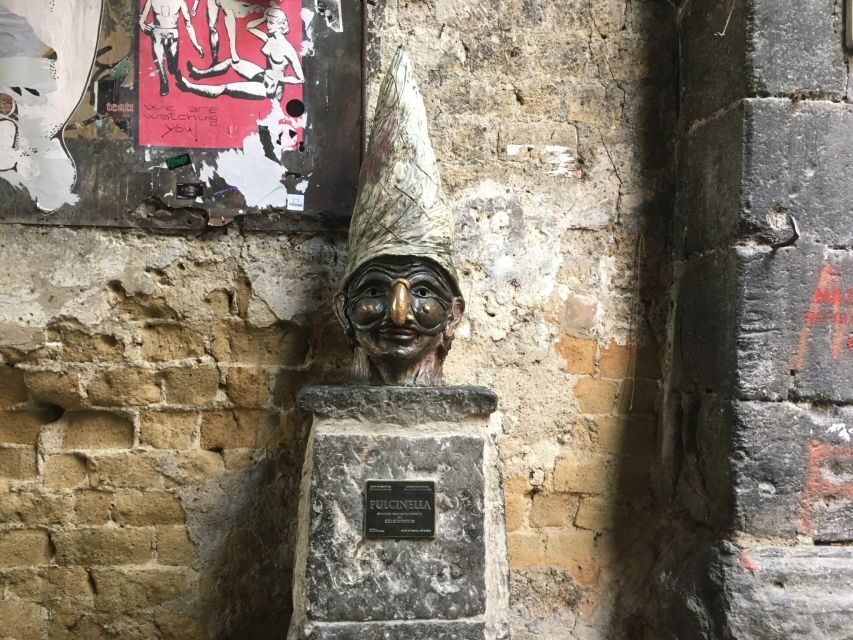
You’ll hear about the famous statue of Pulcinella, and the tour also references the Church of the Souls in Purgatory, which hides a mysterious crypt. Even without going deep into technical details, you get the key idea: Naples folklore and religious symbolism are tangled together, and the city’s architecture often acts like a container for those legends.
Practical tip for this segment: slow down for photos, but don’t get stuck. This is a “listen first” area. If you try to do everything—listen, photograph, and read every surface—you’ll lose one of the three. Aim to understand the story first, then take your pictures.



San Gregorio Armeno: the cribs street where workshops make tradition visible
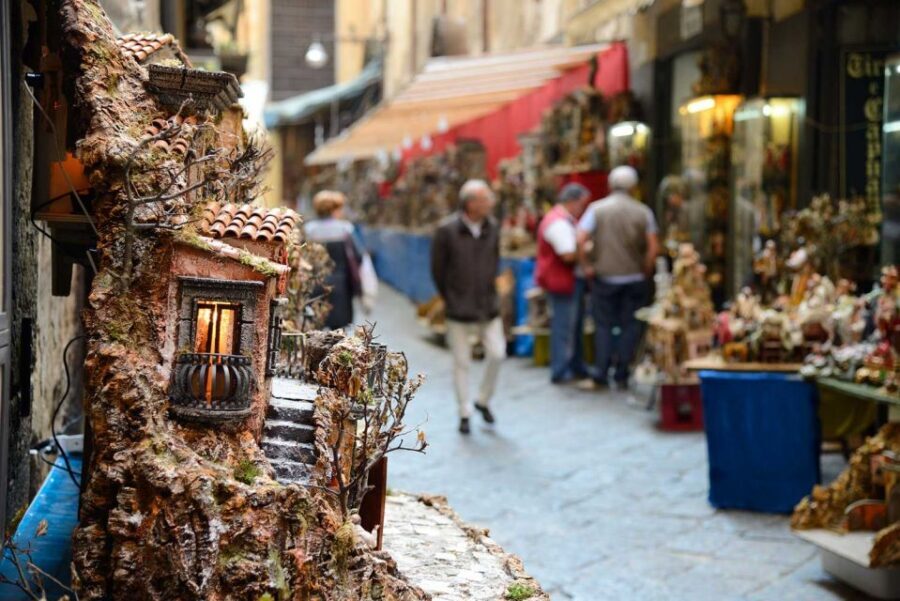
No Naples historic-centre walk feels complete without Via San Gregorio Armeno. This is the street of cribs, and the tour focuses on the nativity scenes made by local artisans in workshops.
This is one of the best parts of the tour because it’s still hands-on culture. You’re not only looking at churches and ruins; you’re seeing a tradition that lives through craft. That makes it a strong choice if you want Naples beyond monuments.
Also, this stop tends to work well for different travel styles. If you love art and handmade objects, you’ll likely linger at workshop displays. If you’re more into street atmosphere, you’ll still get value because the guide connects the cribs street to the city’s wider traditions and identity.
Santa Chiara Monumental Complex: Gothic style in southern Italy
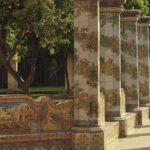
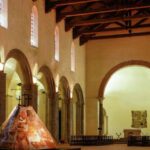
You then visit Santa Chiara Monumental Complex, described as a perfect example of Gothic style in southern Italy. This is a shift from folklore into a heavier architectural mood, and it’s a good balance after Via San Gregorio Armeno.
A complex like Santa Chiara rewards attention. Gothic features can look similar across places until you learn what to look for—proportions, lighting, and how design elements guide your eye. Having a guide here helps you avoid the common problem of treating big churches like photo backdrops only.
If you’re pressed for time and want one church stop to justify the whole tour, this is one of the strongest candidates. The setting feels like it belongs to Naples’ sense of drama, not just its long timeline.
Piazza del Gesù Nuovo: finishing at the Jesuit façade
The tour concludes at Piazza del Gesù Nuovo, with the impressive façade of the church of the same name built by the Jesuits in the 15th century.
Ending here is smart. You get a clean “wrap-up image” that helps everything you saw earlier make more sense. The churches you visited earlier weren’t just landmarks; they were part of Naples’ cultural and religious evolution. Finishing at Gesù Nuovo gives that evolution a strong final note.
If you want to keep exploring after the tour, this is a convenient place to do it. You’re left in a historic square with major presence, not at a random back street.
Price and value: what $55 buys you in 2.5 hours

At $55 per person, you’re paying for a focused 2.5-hour guided walk that includes radio support if the group is large. You also get a private-group setup, and the tour is wheelchair accessible.
The value comes from how the stops connect:
- You see UNESCO-era context without needing to research beforehand.
- You get both “big sight” energy (major churches) and “everyday identity” moments (the cribs street and early pizzeria area).
- You’re not just reading plaques; you’re hearing legends like Pulcinella and the purgatory crypt story.
To decide if it’s worth it for you, ask one question: Do you want Naples explained while you walk? If yes, this price makes sense. If you’re happy self-guiding with a map and a phone app, you may feel you could recreate part of this route on your own.
Group size, radios, and timing: how to make the tour feel smooth
This tour runs about 2.5 hours, with a guided portion listed as 2 hours 15. That tight window means the guide has to keep things moving through narrow areas.
A couple of timing details matter:
- English starts at 10:45 a.m.
- Spanish starts at 11:00 a.m.
- You should arrive at the meeting point at least 10 minutes early
Because it’s a walking route with multiple stops, arriving late isn’t just inconvenient—it can throw off your guide’s pacing.
If the group is large, you’ll be using radios, which is genuinely helpful on streets where sound carries weirdly. It makes it easier to hear explanations without constantly turning your head.
Who this tour suits best (and who might want something else)
This walk is a strong fit if you want Naples history and folklore tied directly to where you’re standing. It’s especially good for:
- First-time visitors who want a structured route through the historic centre
- People who enjoy legends alongside architecture
- Travellers who like food culture as part of the city’s identity, not as an afterthought
- Anyone who appreciates a church visit with guided meaning, not just a quick look from the sidewalk
You might choose a different option if:
- You dislike guided pacing and want to linger freely for long periods
- You’re only interested in one or two headline monuments
- You prefer audio-only or self-paced tours
Should you book this Naples historical centre walking tour?
I’d book it if you like your travel with a story engine. The best moments come from how the guide links Greek remains at Piazza Bellini, street legends on Via dei Tribunali, artisan craft on Via San Gregorio Armeno, and the Gothic drama of Santa Chiara into one coherent walk.
The price isn’t “cheap,” but it’s reasonable for a guided 2.5-hour route that includes radio support when needed and ends on two major church settings. And even with one booking described as just average, the overall rating sits at 4.4 from 4 reviews, which suggests most people find the structure and stops work.
If you’re on the fence, consider this simple test: can you enjoy Naples for what it is—layers of different eras stacked on top of each other? If yes, this tour is an efficient way to get there.
FAQ
Where is the meeting point for the tour?
The meeting point is in Piazza Dante. The guide will wait under the Dante statue with an open white umbrella in the middle of the square.
What time do the English and Spanish tours start?
The English tour starts at 10:45 a.m., and the Spanish tour starts at 11:00 a.m.
How long is the walking tour?
The tour lasts about 2.5 hours, with a guided portion of 2 hours 15.
Is there a live guide, and what languages are offered?
Yes, it’s a live tour with an English and Spanish guide.
Is the tour wheelchair accessible?
Yes, the tour is wheelchair accessible.
Is radio included during the tour?
A radio is included if there are a large number of participants.
Which key places does the tour include?
You’ll visit Piazza Bellini, Via dei Tribunali, Via San Gregorio Armeno, Santa Chiara Monumental Complex, and Piazza del Gesù Nuovo, starting from Piazza Dante.
Is pay later available?
Yes. You can reserve now and pay later.
Is free cancellation available?
Yes. You can cancel up to 24 hours in advance for a full refund.