REVIEW · NAPLES
Walking Tour of Herculaneum with Local Guide
Book on Viator →Operated by Worldtours · Bookable on Viator
Two hours in Herculaneum feels surprisingly full. This walking tour keeps things efficient, using a prebooked entry ticket and a licensed local guide so you can get right to the best-preserved highlights instead of lingering at the gate. It’s a smart fit if you want a high-value archaeological hit without surrendering your whole day.
I especially like the tight route. You bounce between small, focused stops—like the Roman boat display and a museum of objects—then move into standout houses and public spaces. I also love how the pacing stays “just long enough,” with quick windows into places such as Casa dei Cervi and the Terme Del Foro.
My only real drawback is pacing and language variability. The tour runs as an active walk with short visits, and if you’re depending on a specific language, you’ll want to double-check what’s confirmed for your date. Think comfortable shoes and a flexible mindset, not a slow, long museum stroll.
In This Review
- Key Highlights You’ll Appreciate
- Why This Herculaneum Walk Works So Well
- Price and Value: Is $48.16 a Smart Buy?
- Timing and Meeting Point: The 2:00 pm Start
- What the Group Size Really Changes (Up to 20 People)
- Stop-by-Stop: Salone della Barca di Ercolano (The Ancient Roman Boat)
- Stop-by-Stop: Antiquarium di Ercolano (Furnishings, Furniture, and Jewelry)
- Stop-by-Stop: Casa dei Cervi (A Patrician Villa Preserved Well)
- Stop-by-Stop: Casa del Rilievo di Telefo (A Second Villa Snapshot)
- Stop-by-Stop: Grande Taberna (Roman Fast Food, Literally)
- Stop-by-Stop: Vestibolo della Palestra (Gymnasium and Pool)
- Stop-by-Stop: Partem Domus lignea (Wooden Doors and Beams)
- Stop-by-Stop: Terme Del Foro (Thermal Baths)
- Stop-by-Stop: Casa di Nettuno e Anfitrite (A Standout Mosaic)
- Language, Expectations, and the Real Pace of the Tour
- Weather and Comfort: Dress for the Site
- Should You Book This Herculaneum Walking Tour?
- FAQ
- How long is the Herculaneum walking tour?
- What’s included in the ticket price?
- Where does the tour start?
- What time does the tour begin?
- Is the tour offered in English?
- Does the tour run in bad weather?
- Can I cancel for a refund?
Key Highlights You’ll Appreciate
- Prebooked Herculaneum admission helps you start seeing things faster
- An English-speaking licensed guide keeps the route meaningful (and not just photo stops)
- Small-group feel with up to 20 people
- A tight 2-hour plan that covers major sites without dragging on
- A route built around variety: boat display, museum finds, villas, baths, and mosaics
Why This Herculaneum Walk Works So Well
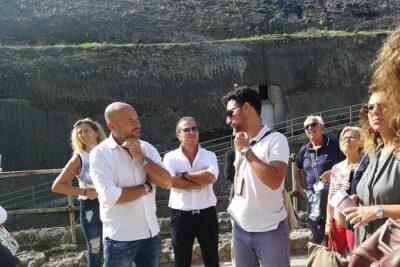
Herculaneum is the kind of place where a guide makes a real difference. Without context, you can end up wandering from one wall to the next with lots of questions and not many answers. With this tour, you get a guided sequence that’s designed to help you see the story in motion—from objects to homes to public life—without taking over your day.
The “express” format matters. The tour is about 2 hours and focuses on the highlights, so you can fit it between other Naples plans. If you’re the type who hates standing in line or reading signs one by one, this format is built for you.
You’ll also appreciate the practical structure: short stops, included entries at each stop, and clear movement through the site. That combination keeps things from turning into a logistics headache. It’s the kind of itinerary that helps you keep your feet moving while your understanding grows.
You can also read our reviews of more tours and experiences in Naples.

Price and Value: Is $48.16 a Smart Buy?
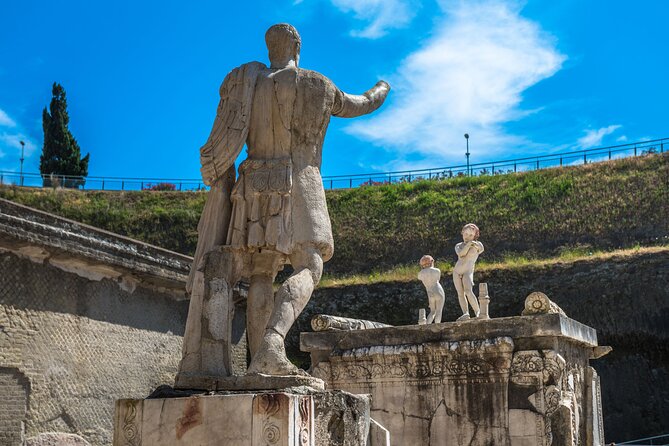
At $48.16 per person, the headline price is easy to compare. The better question is what you’re paying for: an entrance ticket, a licensed guide, and a guided walk inside the archaeological site, all tied together into one plan.
You’re not paying extra to separately buy admission and then try to find your way once you arrive. Prebooking the Herculaneum entry ticket is a big part of the value, because it saves you time and reduces friction at the start. And the guide isn’t a “wave at you and go” situation—this is an organized walk through specific highlights.
If you’d rather spend your time looking at things instead of solving timing problems, this kind of packaged tour usually makes sense. For many visitors, paying for the guide feels like buying focus. Your money turns into fewer delays and more time spent inside the places that matter most.
Timing and Meeting Point: The 2:00 pm Start
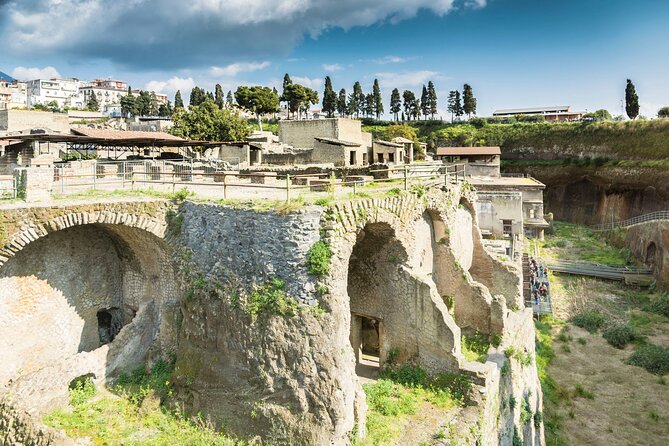
This tour starts at 2:00 pm and meets at the Herculaneum Ticket Office, 80056 Ercolano (Metropolitan City of Naples), Italy. It ends back at the meeting point, which is helpful because you don’t have to guess how to finish your afternoon.
It’s also described as near public transportation, which is useful if you’re building a day around getting there from Naples. Since the tour is only about two hours, you’ll want to plan your arrival a bit early so you’re not rushing at the beginning.
One more practical note: it’s designed for moderate physical fitness. You’ll be walking around inside an archaeological area, so comfortable footwear isn’t optional. If you prefer slow, step-by-step sightseeing with long breaks, you might find this route a bit brisk—but the trade-off is you’ll see more of the site’s highlights in less time.
What the Group Size Really Changes (Up to 20 People)
The tour caps at 20 travelers. That size tends to keep things manageable: you can usually hear the guide, and you’re not stuck in a huge crowd where everyone disappears into the back row.
There’s also a minimum group size requirement (4 people). If your travel dates are flexible, it can help to book earlier, especially since this tour is commonly reserved about 18 days in advance. That lead time often matters for popular afternoons.
Stop-by-Stop: Salone della Barca di Ercolano (The Ancient Roman Boat)
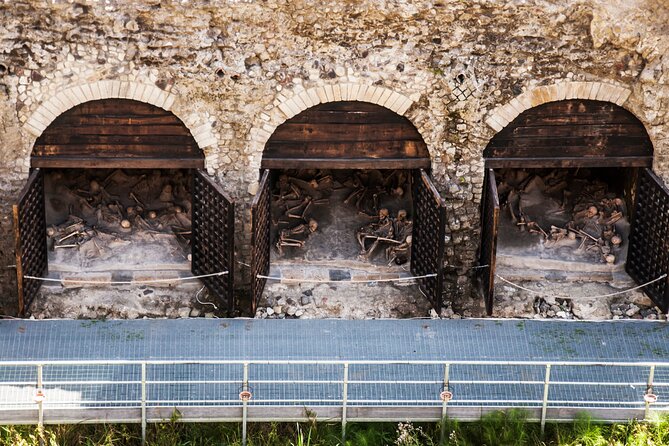
Your first stop is the Salone della Barca di Ercolano. This is a small museum space where an ancient Roman boat is displayed in excellent condition. It’s a quick introduction that instantly changes the way you think about daily life—because you’re not just looking at buildings. You’re seeing objects that connect to work, travel, and practical routines.
This stop runs about 10 minutes and includes admission. The museum format makes it a nice warm start: you’re inside, the focus is clear, and you don’t have to commit a long time before the rest of the itinerary begins.
The value here is momentum. You start with something concrete and unusual, so the rest of the walk feels less like wandering and more like discovery.


Stop-by-Stop: Antiquarium di Ercolano (Furnishings, Furniture, and Jewelry)
Next comes the Antiquarium di Ercolano, roughly 20 minutes. This exhibition focuses on furnishings, furniture, and jewels found during the city excavations. It’s one of those stops that can turn “Roman ruins” into “Roman households,” because personal items tell a different kind of story than public walls do.
What I like about this stop is the way it supports everything you’ll see later. When you look at homes after viewing domestic objects, you start noticing the connections: storage, work surfaces, and the feel of daily routines. Even if you’re not a museum person, this stop is short enough to stay enjoyable.
The included entry ticket is also a plus. Instead of squeezing in one more ticket line, you’re moving straight from one highlight to the next.
Stop-by-Stop: Casa dei Cervi (A Patrician Villa Preserved Well)
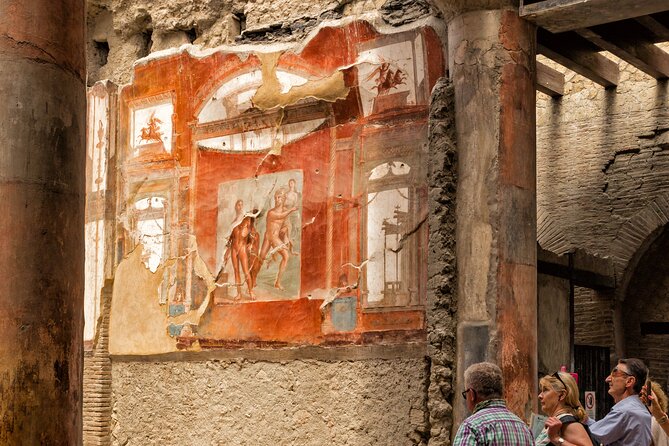
Then you’ll enter Casa dei Cervi, about 15 minutes. This is described as one of the best preserved buildings in Herculaneum—a patrician villa. In plain terms, this is where the site shifts from “interesting remains” to “wow, that’s how a home functioned.”
Why this stop matters: it’s one of the main anchors of the tour. A patrician villa gives you scale—how space might have been organized for living, hosting, and status. If you want the feel of elite domestic life, this is the place that helps you picture it faster than reading a few signs ever could.
Keep in mind the time is limited. You’ll likely see the essential parts and get guided context, but you won’t have an hour to study every corner. That’s normal for an express format.
Stop-by-Stop: Casa del Rilievo di Telefo (A Second Villa Snapshot)
After that, there’s a shorter visit to Casa del Rilievo di Telefo for about 5 minutes. This patrician villa adds another angle, letting you compare how different homes were shaped and decorated.
This stop is brief by design. It works best if you’re comfortable with the idea that the tour is a highlights circuit. You won’t leave with everything memorized, but you’ll have enough guided impressions to make the site feel coherent.
If you like photographing details, this is the kind of stop where you’ll want to keep your eyes up and your camera ready. Even a five-minute window can show you a lot when you’re pointed in the right direction.
Stop-by-Stop: Grande Taberna (Roman Fast Food, Literally)
One of the most fun stops is Grande Taberna, about 5 minutes. It’s described as the ancient thermopylae, essentially a Roman fast-food space. Even with minimal time, the idea helps you break away from thinking of Herculaneum only as “homes and fancy villas.”
This stop is valuable because it adds variety. You start connecting private life with public routines: eating, buying, and moving through everyday spaces that were meant for people, not for display.
Since it’s short, you’ll want to pay attention to the guide’s explanation here. The setting is compact, so the meaning lives in the context you’re given on the spot.
Stop-by-Stop: Vestibolo della Palestra (Gymnasium and Pool)
Next is the Vestibolo della Palestra, another 5-minute stop. This area connects to fitness and leisure: a gymnasium and a swimming pool in the ancient city. It’s a quick way to see how public life wasn’t just about work or commerce. It also included exercise and social routines.
Why I like it: it keeps the tour from being one-note. When you see a workout-and-water space on a short circuit tour, it makes the city feel more human.
You won’t have time for long lingering here, but you’ll come away with the key takeaway: public facilities shaped daily habits in multiple ways.
Stop-by-Stop: Partem Domus lignea (Wooden Doors and Beams)
Then you’ll visit Partem Domus lignea – Casa del Tramezzo di Legno, about 10 minutes. This Roman house segment is noted for preserved wooden doors and beams. The presence of wood is a big part of what makes this stop intriguing—because many archaeological settings focus on stone, while here you get a glimpse of materials that feel more tactile and “alive.”
This is the kind of stop that helps your brain lock onto specific details. When you’re shown the preserved wooden elements with guidance, the site stops feeling like a pile of ruins and starts feeling like structures that once had function and form.
Don’t rush yourself inside this stop. Give your eyes a moment. The value is in noticing what’s actually preserved.
Stop-by-Stop: Terme Del Foro (Thermal Baths)
Your next highlight is Terme Del Foro, about 10 minutes. Thermal baths are an easy way to understand how communities used space for relaxation, routine, and social time.
This stop is a strong mid-to-late highlight because baths tend to have clear visual structure. You can usually follow how people might have moved through different zones. And with a guide’s help, you’ll connect the layout to daily use rather than treating it as architecture-only.
The included entry matters here too. It keeps the tour moving efficiently and reduces start-and-stop delays.
Stop-by-Stop: Casa di Nettuno e Anfitrite (A Standout Mosaic)
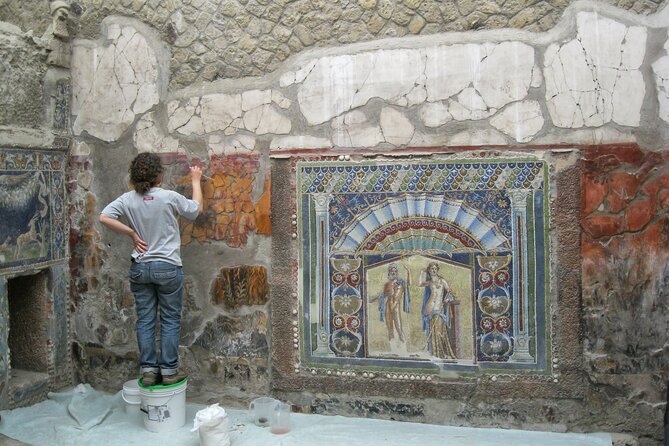
The final main stop is Casa di Nettuno e Anfitrite, about 5 minutes. This house is famous here for one of the most beautiful mosaics from the excavations. Even in a short time, a mosaic can give you a huge emotional hit because it’s detailed and expressive compared to many other elements you’ll see.
If mosaics are your thing, this stop is worth leaning into. Spend your brief window looking for patterns and figuring out what scene you’re seeing. The guide will likely point out the most important visual cues, and that helps you appreciate more than just the surface beauty.
Language, Expectations, and the Real Pace of the Tour
The tour is offered in English and is also described as bilingual. That’s great when it lines up with what you need. The key thing is to recognize that group composition can affect how smoothly languages work during the walk.
So here’s my practical advice: if language is a must-have for you, don’t assume it will be perfect on every departure. Use the confirmation you receive at booking time as your best clue, and if you’re planning to understand every nuance, consider choosing dates where English is confirmed as the main language.
As for pace: this is an express tour. The individual stops are short—many are around 5 to 10 minutes—so you’ll only get a focused look at each highlight. That’s not a problem if you like efficient sightseeing. If you prefer slow museum-style time, you might wish for more minutes in the places that capture you.
Weather and Comfort: Dress for the Site
The tour operates in all weather conditions, so you should dress appropriately. At the same time, the cancellation info notes that the experience requires good weather. Translation: plan for rain gear, but expect you’ll have options if conditions are truly unsafe or unpleasant.
Your best move is simple: bring a light layer, wear shoes with good grip, and carry something small for weather changes. Since it’s a walk inside the site, you’ll feel weather fast.
Should You Book This Herculaneum Walking Tour?
If you want an efficient, guided Herculaneum highlights walk that saves time on admission and gives context as you go, I think this tour is a good fit. The price makes sense when you account for included entry tickets, a licensed guide, and a route that stays focused within about two hours.
Book it if:
- you like structured sightseeing with short stops
- you want English guidance and a clear route through the archaeological highlights
- you’re visiting Naples and want Herculaneum without a full-day commitment
Skip or rethink it if:
- you need a very slow pace with lots of free time at each stop
- you’re extremely sensitive to language mismatch on mixed groups
- you’d rather spend your money on a longer, more open-ended exploration
One last helpful note: if you’ve heard good things about a particular guide—like Mr Raphael being singled out for making the site click—keep your expectations aligned with that kind of guided clarity. This tour is built for that experience: clear direction, quick understanding, and a route that keeps you moving.
FAQ
How long is the Herculaneum walking tour?
It’s approximately 2 hours.
What’s included in the ticket price?
You get the Herculaneum entrance ticket, a licensed expert tour guide, and a walking tour inside the archaeological site.
Where does the tour start?
It starts at the Herculaneum Ticket Office, 80056 Ercolano, Metropolitan City of Naples, Italy.
What time does the tour begin?
The start time is 2:00 pm.
Is the tour offered in English?
Yes, it’s offered in English.
Does the tour run in bad weather?
It operates in all weather conditions, but if it’s canceled due to poor weather, you’ll be offered a different date or a full refund.
Can I cancel for a refund?
Yes. Free cancellation is available up to 24 hours before the experience starts for a full refund.