REVIEW · NAPLES
Street art tour of the Spanish Quarters & Maradona idol
Book on GetYourGuide →Operated by GRAND TOURS ITALY · Bookable on GetYourGuide
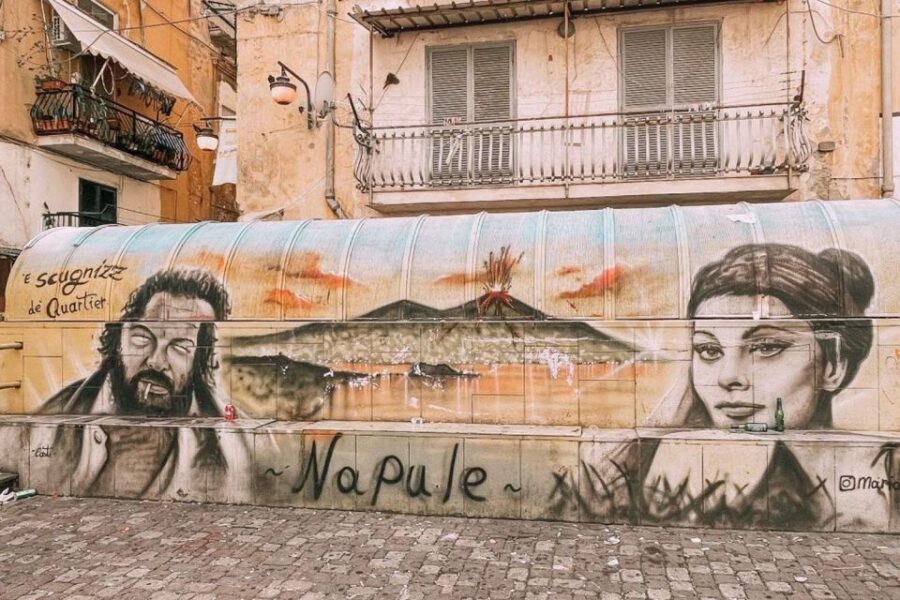
Maradona worship starts on a wall. This 2-hour walk through the Spanish Quarters turns street art into a street-level map of Naples icons, from theater and culture to soccer legend Diego Armando Maradona. It’s part art tour, part cultural storytelling, and part pilgrimage vibes around Piazza Maradona.
I especially like how the guide connects the murals to real Neapolitan figures like Totò and Eduardo De Filippo, plus specific artists such as Cyop&Kaf. And I like the way you get built-in photo stops in the Quartieri Spagnoli and then again around the Maradona mural area, so you leave with images and context, not just pretty walls.
The main thing to consider is that this is an outdoor neighborhood stroll, so rain can cut the time short, and crowds in the narrow streets can make it feel tighter than a museum visit.
In This Review
- Key Things I’d Focus On
- Street Art in Naples, Where the Walls Tell Soccer Stories
- Starting at Piazzetta Matilde Serao and Getting Oriented Fast
- Quartieri Spagnoli: The About-200 Mural Stretch
- Reading the Icons: Totò, De Crescenzo, De Filippo, and More
- Veiled Isis and the Art Tradition Hint You Might Miss
- Maradona at the Center: Piazza Maradona and Trophy Memories
- Price, Timing, and What You’re Really Paying For
- Guides, Multilingual Support, and the Human Touch
- Who Should Book This Street Art and Maradona Tour
- Should You Book It?
- FAQ
- How long is the Spanish Quarters & Maradona street art tour?
- How much does the tour cost?
- Where does the tour start and end?
- What areas do you visit?
- About how many murals will I see?
- Who leads the tour?
- What languages are available?
- Is food included?
- What should I bring?
- Is it wheelchair accessible?
Key Things I’d Focus On
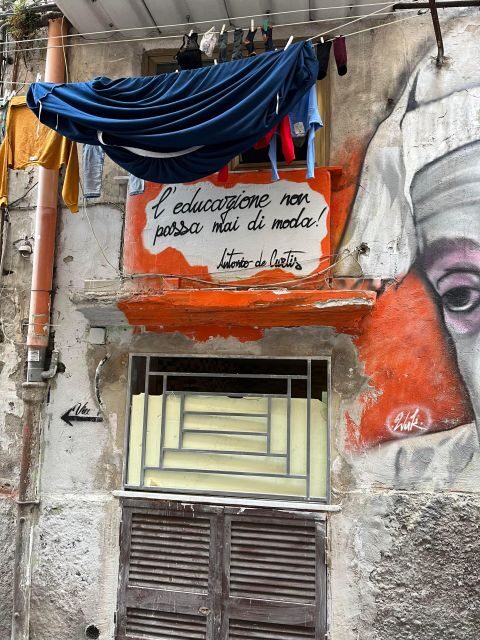
- About 200 murals across the Quartieri Spagnoli, so you see the neighborhood’s visual identity up close
- Maradona murals in multiple spots, centered on Piazza Maradona and tied to major trophy moments
- Cyop&Kaf street-art project murals, with bright color and a very local feel
- Icon portraits of Neapolitan culture, including Totò, De Crescenzo, Eduardo De Filippo, and Eleonora Pimentel Fonseca
- A religious-art reference in the Veiled Isis motif that echoes the Veiled Christ tradition
- Guides that handle the experience live, with multilingual support (Italian, English, Spanish, French)
Street Art in Naples, Where the Walls Tell Soccer Stories
Neaples has a way of treating icons like family. This tour helps you read that instinct through paint—because in the Spanish Quarters, street art isn’t decoration. It’s memory. It’s pride. It’s the neighborhood speaking in faces, nicknames, trophies, and symbols.
You start in the area where Naples feels most lived-in, then you work your way through streets packed with murals. The Spanish Quarters were planned in the 16th century by Spanish viceroy Don Pedro de Toledo, and that long history still shapes the feel of the walk: small streets, close walls, and constant references to who the city thinks matters. That’s exactly why the tour works. You’re not just looking at art—you’re learning how Naples turns culture into a daily ritual.
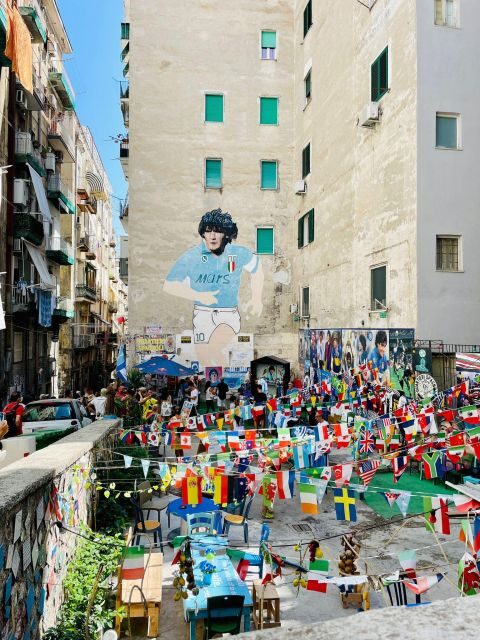
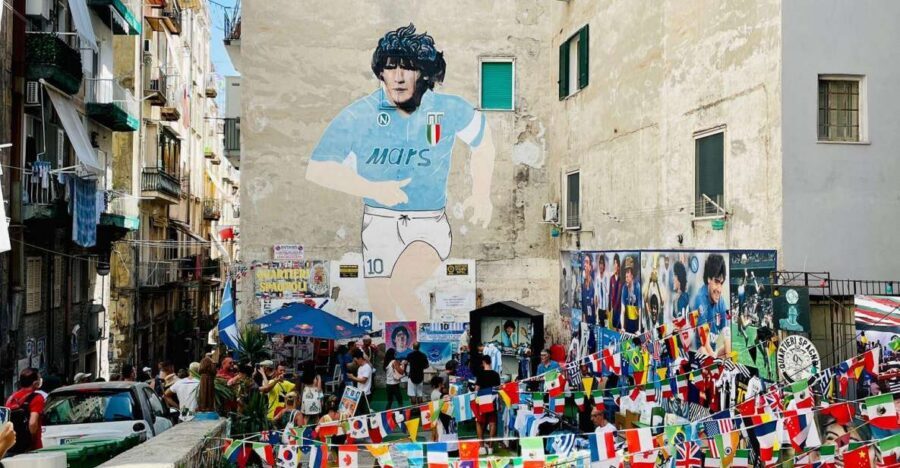
And then comes Maradona, the axis of the whole story. The myth of the Pibe de oro shows up like a living thread: large murals, smaller scenes around the neighborhood, and a pilgrimage pull to Piazza Maradona. If you already love football, you’ll get the emotional shorthand fast. If you’re not a die-hard, you’ll still come away understanding why Maradona isn’t simply a player here—he’s an identity.
You can also read our reviews of more tours and experiences in Naples

Starting at Piazzetta Matilde Serao and Getting Oriented Fast
The meeting point is Piazzetta Matilde Serao, 2, in the Spanish Quarters zone, and the tour runs for about two hours total. That matters, because you’re not spending half the day commuting across Naples just to reach the art.
From there, the walk links up with the bigger flow of the city—Via Toledo is one of the main arteries used to reach the Quartieri Spagnoli. Even if you’re only there briefly, this routing helps you understand where the neighborhood sits in Naples rather than treating it as a bubble. It’s also practical: you’ll get oriented early, then move into the denser mural streets where the experience really clicks.
You can expect a photo stop and guided time right after the start as you enter the Quartieri Spagnoli area. This is one of those tours where your camera choice matters. Street art is all about color, angle, and small details—so I’d come with a phone you like using and enough battery for the full loop.
If you want value, this pacing is key. You’re not rushing to a single mural for one photo and calling it done. You’re getting the “how to look” lesson before you start collecting images.
Quartieri Spagnoli: The About-200 Mural Stretch
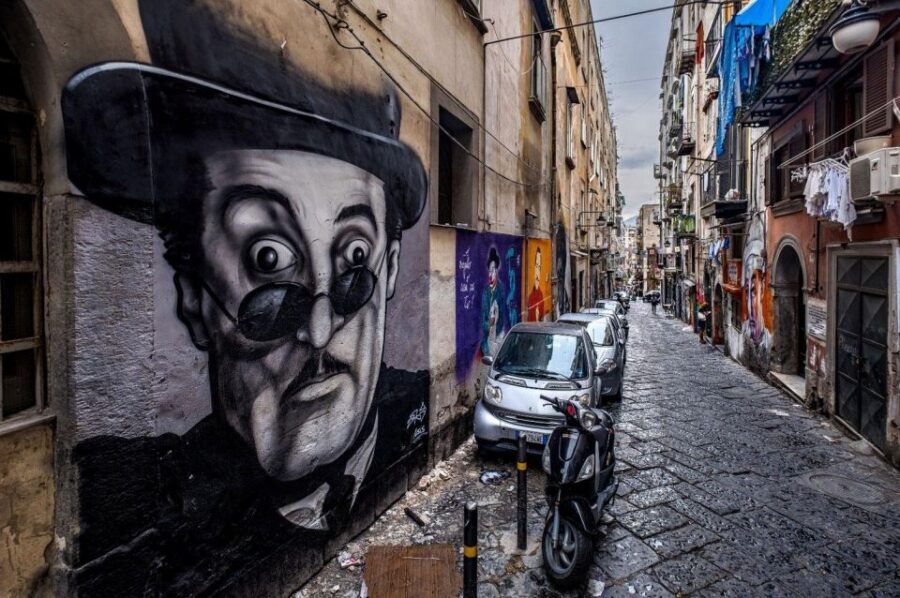
The heart of the tour is the Spanish Quarters, where you’ll see approximately 200 murals scattered around the neighborhood. That number is the whole point: Naples doesn’t treat this as one big gallery wall. It’s dispersed. The message follows you down the street.
In this first hour (after the initial stop), you’re seeing how different mural styles and themes work together. Some pieces connect directly to a named Neapolitan icon. Others reference artistic traditions. And some are tied to the specific street-art project linked to Cyop&Kaf, two young street artists known for their bright, distinct colors.
This is where you start to notice a pattern. Naples murals often act like shortcuts through local knowledge. You see a face or a symbol, and the guide fills in the backstory: who the person was, why people still talk about them, and how Naples holds onto memory. That’s what turns street art into something more than a photo hunt.
A practical caution: the streets are narrow and busy, so plan to keep your attention on where you’re walking, not just what’s on the wall. The art is right there, but you’ll still want to manage your footing and your space in the crowd.
Reading the Icons: Totò, De Crescenzo, De Filippo, and More
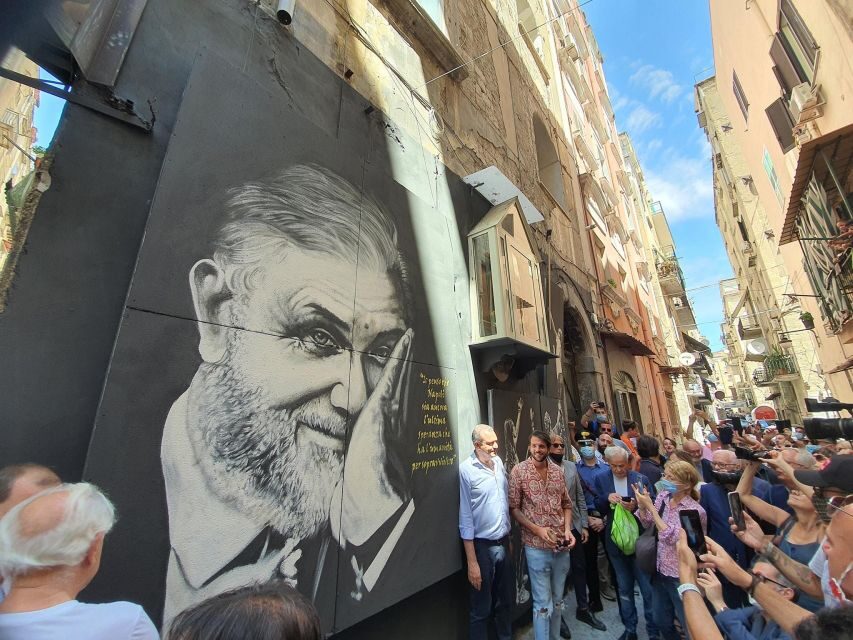
One of the best parts of this tour is how it treats Naples’ famous people as part of the same system of meaning as Maradona. You’ll encounter murals connected to big cultural names—Totò, Luciano De Crescenzo, Eduardo De Filippo, Eleonora Pimentel Fonseca, and more. These aren’t random celebrity cameos. They’re part of the identity of the city: theater, poetry, culture, and storytelling.
What I like about this approach is that it gives your photos a second life. You’ll recognize a face later, but you’ll also remember why that person mattered in Naples. That changes the experience from aesthetic to personal. Even if you’re visiting for the first time, you start understanding the city’s language.
You’ll also see how the street art blends different worlds: entertainment figures sit alongside sacred references and soccer symbolism. Naples doesn’t separate them neatly. The tour reflects that reality by moving through murals that overlap in theme—humor, devotion, pride, and community memory.
If you’re the type of traveler who hates “just look at this” tours, this is the kind where the guide’s explanations make the walk cohere. And if you’re traveling with friends who only want photos, they’ll still benefit because the stories help you notice details you’d otherwise pass by.
Veiled Isis and the Art Tradition Hint You Might Miss
Not every mural is just a person or a trophy. Some reference older art traditions, and one of the standout examples in the tour is the Veiled Isis motif. It recalls a sculptural group found in the San Severo Chapel, and it belongs to the same genealogy of the Veiled Christ tradition.
That might sound abstract, but it becomes clear when you’re standing in front of it. You start seeing that the Spanish Quarters murals aren’t only about Naples modern icons. They’re also in conversation with art history—through symbols people recognize, even if they don’t immediately know the name.
This is a great moment for visual travelers. You don’t need a museum background to get it. The guide’s role here is to point out the connection so the mural becomes more than a cool image. It turns into a clue about how artists draw from older traditions and rework them in a street context.
If you like learning by spotting patterns, take your time here. Slow down for a minute. Let the details come into focus—like the posture, the veil-like idea, and the way the mural version echoes the sculpture reference.



Maradona at the Center: Piazza Maradona and Trophy Memories
Then you reach the Maradona section, where the neighborhood’s soccer devotion becomes impossible to ignore. The tour’s second stop focuses on Maradona murals, including the larger mural tied to the 1990 trophy victory and the surrounding minor murals in different corners of the Spanish Quarters.
Maradona’s story is presented as ongoing. The tour highlights the idea of continuous pilgrimages by visitors from around the world making their way to Piazza Maradona in the Quartieri Spagnoli. And it also connects the admiration to recent events—after the third national victory in May 2023, the city’s focus on the team and Maradona intensified again.
This part of the tour feels like a shared ritual. You’ll see altars, murals, and photos connected to the Pibe de oro. It’s not just fandom; it’s a neighborhood habit of honoring its hero in public space.
What I’d keep in mind: if you’re expecting the tour to be a perfect timeline, it won’t feel like that. Instead, it feels like a living tribute. The murals act like stations. You move between them, and the guide ties each one back to the city’s emotional map.
If your camera roll is already full, this is still worth it. The Maradona murals tend to have a strong visual impact, and the context helps you frame the shots beyond the obvious face or name.
Price, Timing, and What You’re Really Paying For
This tour costs $53 per person and runs about 2 hours. For Naples, that’s a reasonable price when you factor in a certified live guide, the walk through an art-saturated neighborhood, and the specific Maradona-focused storytelling that many visitors come to Naples for.
You’re also not paying for transportation in the listed value. The experience is a neighborhood walk with guidance. That’s good value if you like to see cities on foot and you enjoy learning as you go.
What’s not included is food and drinks, so you may want to schedule this earlier in your day or plan a snack break after. Also bring a camera—street art rewards you when you can take your time with photos.
Duration is fixed, so if you’re prone to getting easily distracted, set a pace. You don’t want to miss the Maradona section because you lingered too long on the first set of murals.
Wheelchair accessible is listed, which matters for planning. Still, you should expect some typical walking-mobility challenges of a dense old neighborhood, so if you have any limitations, bring that into your planning early.
Guides, Multilingual Support, and the Human Touch
One reason I think this tour earns strong ratings is the guides themselves. Specific guide names show up in feedback: Miri, Roberta, Barbara, and Virginia. And the common thread is clear—people feel looked after and guided through the streets with energy and humor.
There’s also an important human side. If someone in the group falls ill, you’ll likely see the guide respond with care. In one case, a guide reportedly stayed with a person, contacted an ambulance, and then kept the communication going afterward. That’s not the kind of thing you plan for, but it’s reassuring to know the tour isn’t run like a script where the guide disappears the moment something goes off track.
Language-wise, you can choose among Italian, English, Spanish, and French, which makes a difference in a place like Naples. Street art meaning lives in small cultural references. Being able to ask a quick question in your language helps you connect the dots.
Who Should Book This Street Art and Maradona Tour
This is a great match if you:
- want more than sightseeing photos and prefer stories that explain why Naples does what it does
- love football culture, especially Maradona’s role in the city
- enjoy street art that connects to named Neapolitan icons and local art traditions
- like walking tours where you learn as you go, rather than sitting in one place
It might not be your best fit if:
- you hate walking in tight streets or you dislike outdoor tours that depend on the weather
- you only want one landmark and don’t care about the broader neighborhood mural trail
If you fall somewhere in the middle, don’t worry. The first section gives you cultural grounding, and the second section delivers the Maradona focus that most people come for.
Should You Book It?
Yes, if you want Naples in its most personal form: murals tied to culture, and a city that turns soccer into public myth. The price makes sense for a guided two-hour experience centered on about 200 murals and a Maradona payoff around Piazza Maradona.
If weather worries you, plan to pack light rain protection and bring a camera strap you can trust in crowded streets. And if you’re someone who wants structured museum-style info only, you might prefer a more indoor-focused day. But for many visitors, this street-level Naples is the moment that sticks.
FAQ
How long is the Spanish Quarters & Maradona street art tour?
It lasts about 2 hours.
How much does the tour cost?
The price is $53 per person.
Where does the tour start and end?
It starts at Piazzetta Matilde Serao, 2 and returns to the same place.
What areas do you visit?
You spend time in Quartieri Spagnoli (Spanish Quarters) and then around Murales Maradona.
About how many murals will I see?
The tour focuses on about 200 murals in the neighborhood.
Who leads the tour?
A certificated live guide leads the experience.
What languages are available?
The guide is available in Italian, English, Spanish, and French.
Is food included?
No. Food and drinks are not included.
What should I bring?
Bring a camera.
Is it wheelchair accessible?
Wheelchair accessibility is listed as available.