REVIEW · SORRENTO
Sorrento through the eyes of a local
Book on GetYourGuide →Operated by Caluga House · Bookable on GetYourGuide
Sorrento changes fast when you follow a local. This 2-hour walking tour is built for real street-level moments, with free limoncello and stops you usually miss. I love the unhurried pace that still keeps things moving. One possible drawback: the walk is active, and the route ends with a climb up toward the Mills Valley.
What makes it work is the guide. On my favorite versions, guides like Camilla (and also Alessandra, in other groups) bring Sorrento to life with specific details—like where the old carriages squeezed through on the Pity Road, and how the town’s famous inlay is made. If you’re after only big standalone attractions, you might find the focus more on stories and texture than on major ticket sights.
In This Review
- Key highlights at a glance
- Sorrento through a local: what makes this walk different
- Starting at Piazza Tasso and the statue of Torquato Tasso
- The Pity Road: tiny ancient street energy and carriage history
- Sorrento Cathedral and the 800s nativity inside
- Inside O’ Parruchiano: the garden and its famous Italian pergola
- Villa Fiorentino from the outside and Sedil Dominova’s meeting legacy
- Limoncello stop: the taste break that actually fits the route
- Piazza della Vittoria and the St Francis cloister graffiti surprise
- Comunal Villa, St Antonino church, and the walk up to Mills Valley
- Price and value: what $30 buys in real experience time
- Who should book this Sorrento local-walk
- Practical tips so your 2 hours go smoothly
- Should you book this Sorrento through a local walk?
- FAQ
- Where do we meet for the tour?
- How long is the tour?
- How much does it cost?
- Is the tour guided and in English?
- What is included in the price?
- Can I see the O’ Parruchiano garden if I’m not a restaurant guest?
- What tastings are offered during the walk?
- What major sights are part of the route?
- Is the tour wheelchair accessible?
- What should I do if I’m late?
Key highlights at a glance
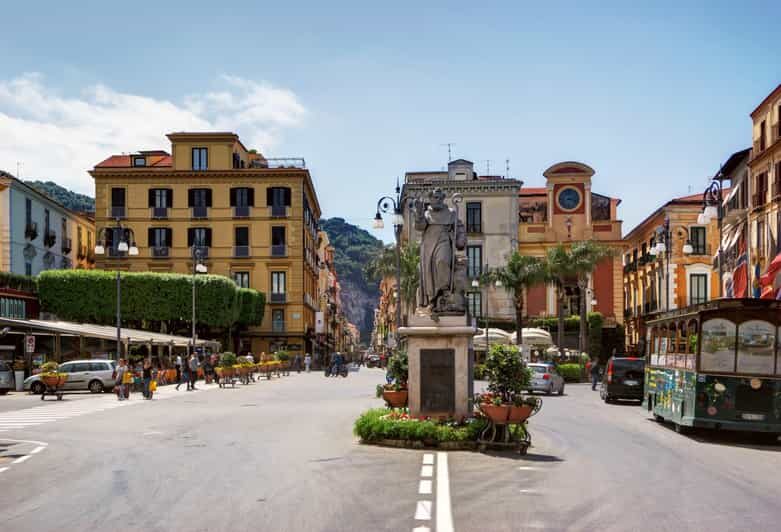
- Piazza Tasso start at the statue of Torquato Tasso, right by Bar Fauno
- Pity Road walk on an ancient, very narrow lane used by carriages
- Sorrento inlay seen in a old deconsecrated church setting
- Cathedral + 800s nativity you can see inside
- O’ Parruchiano garden access with the Italian pergola you’d miss otherwise
- Panoramas and small surprises from Piazza della Vittoria to St Francis cloister graffiti
Sorrento through a local: what makes this walk different

A good Sorrento tour doesn’t just point at views. It helps you understand why Sorrento looks the way it does—how the town’s streets, churches, and craft traditions fit together in everyday life.
This one stays small and intentional. You’ll move from the main center to quiet corners, with a real sequence of places that feel connected instead of random stops. The payoff is that you end with a mental map of Sorrento—plus a couple of tastes and photo spots that feel earned, not forced.
And yes, you’ll get the fun stuff: a free limoncello break and local sweets. Those aren’t just a gimmick. In Sorrento, food and drink are part of the culture, not an add-on.
You can also read our reviews of more tours and experiences in Sorrento.
- Sorrento Farm and Food Experience including Olive Oil, Limoncello, Wine tasting
★ 5.0 · 2,524 reviews



Starting at Piazza Tasso and the statue of Torquato Tasso
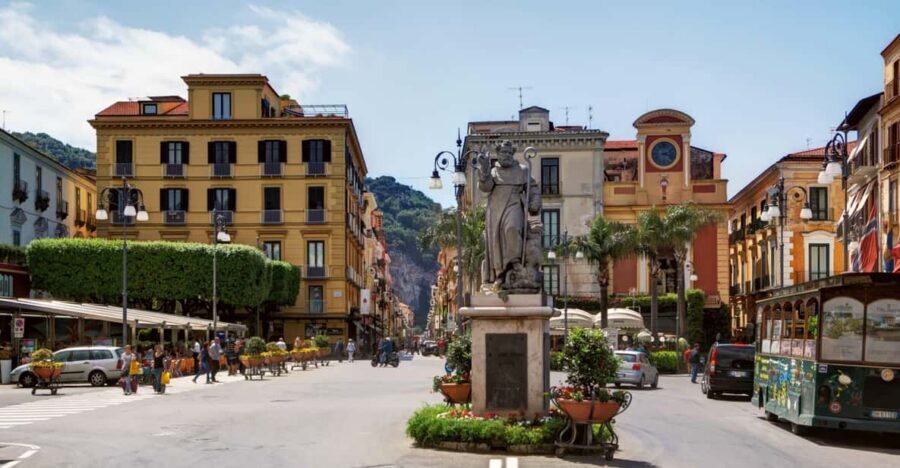
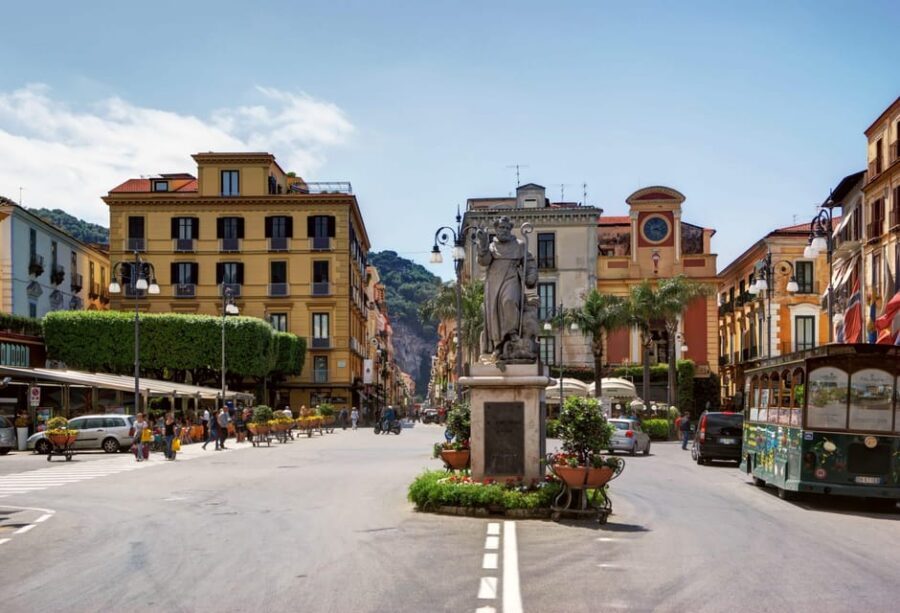
You begin at the statue of Torquato Tasso in Piazza Tasso, in front of Bar Fauno. It’s a smart starting point because it’s central and easy to orient from. Once you’re there, your guide explains the history of the main plaza and what the statue represents, so you’re not just staring at stone while the rest of the town passes you by.
This first segment matters. Sorrento has layers—Roman-era traces here, medieval structures there, and craft traditions running through it all. When the guide sets the context right at Piazza Tasso, the rest of the walk clicks into place.
If you like photos, this is also where you can get your bearings fast. You’re starting from a visual anchor, so later, when you’re wandering narrower lanes and climbing for viewpoints, you’ll actually understand where you are.
The Pity Road: tiny ancient street energy and carriage history
Next comes the Pity Road, an ancient and very narrow passage where, long ago, people used carriages to get through. Even if you already know Sorrento is hilly and old, it’s different to stand on a street that forces the town’s past into your body—small space, tight turns, and a very real sense of how people moved.
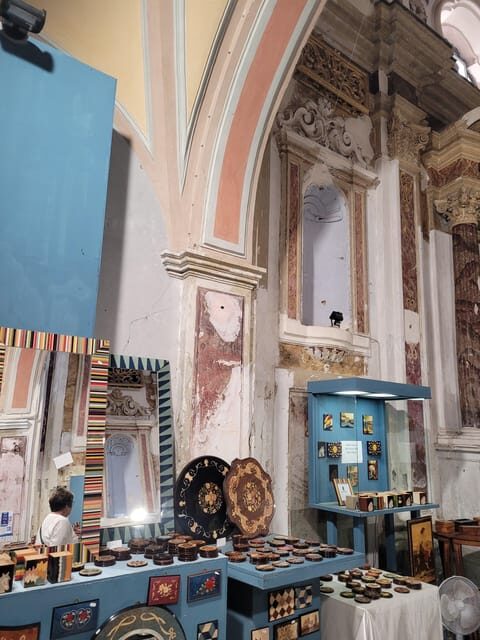
From there you also look at how Sorrento inlay is made, in an old deconsecrated church setting. This is one of the tour’s best “wait, really?” moments because you’re not just told Sorrento is known for craft—you see the kind of workshop atmosphere that makes it feel plausible and grounded. Inlay work is slow, detailed, and patient, like the town itself.
If you’re the kind of traveler who hates being rushed through shops, this section can be a relief. It’s framed as part of the town’s story, not a sales pitch.
Sorrento Cathedral and the 800s nativity inside
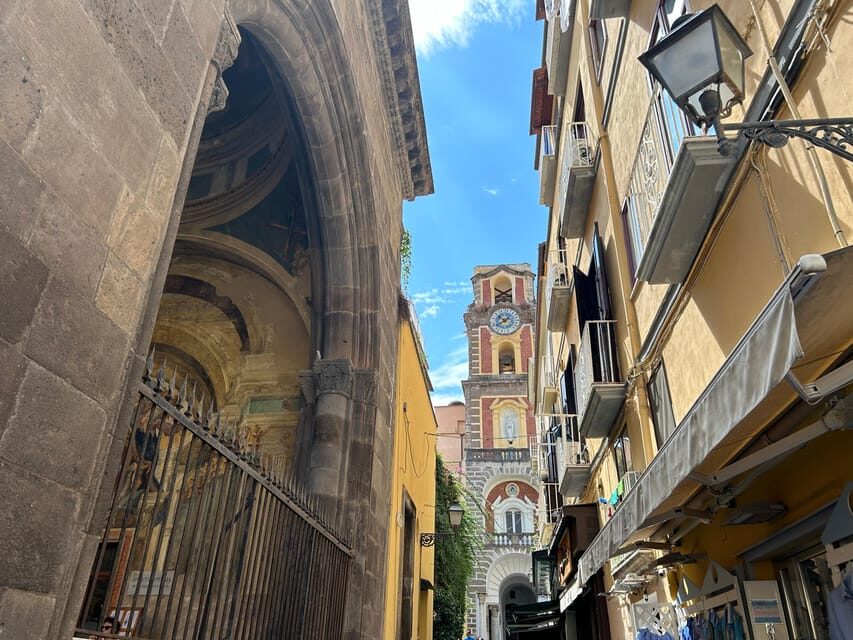
Then you’ll head to the Sorrento Cathedral, where you can see a nativity from the 800s inside. That detail is a big deal. It means you’re not only walking past impressive buildings—you’re seeing a specific cultural object tied to the long rhythm of Sorrento’s religious traditions.
Cathedrals can feel like stop-and-go tourism if you walk in without any context. With a guide, the cathedral becomes a pause point where you understand what you’re looking at: where the nativity fits in, why that kind of display matters, and how it relates to the way Sorrento lives season to season.
Practical note: treat this stop like a breather. Let yourself slow down for the interior viewing, and don’t plan to sprint for photos right after.
Inside O’ Parruchiano: the garden and its famous Italian pergola
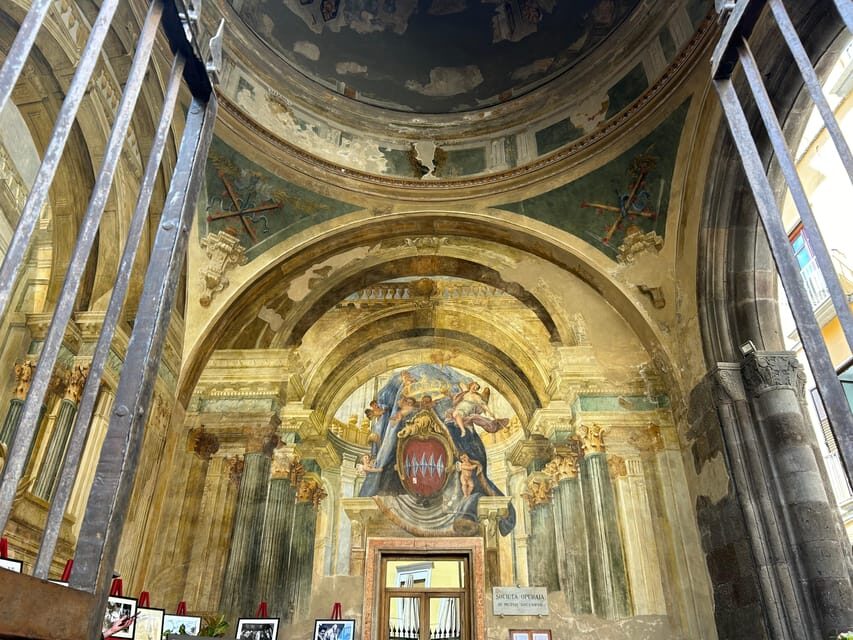
Now for one of the most memorable parts of the whole experience: a special walk in the garden of the O’ Parruchiano restaurant. The tour goes into a space that you’d likely miss if you’re not already a guest—so you get that feeling of access without needing to hunt for it yourself.
This garden also features the famous Italian pergola. Even if you’re not a gardening person, it’s a visual treat because it’s functional. Pergolas create shade, shape sightlines, and make outdoor spaces feel like a room. In Sorrento’s bright light, that changes the entire mood of the area.
If you care about atmosphere more than monuments, you’ll probably rank this as a top stop. It’s calm, photogenic, and it makes the town feel inhabited rather than staged.
- Sorrento Farm and Food Experience including Olive Oil, Limoncello, Wine tasting
★ 5.0 · 2,524 reviews



Villa Fiorentino from the outside and Sedil Dominova’s meeting legacy
After that, you’ll see Villa Fiorentino from the outside. The guide explains that the building often hosts art exhibitions, including famous paintings associated with artists like Dalì and Picasso.
Even though you’re not going inside on this walk, you still get value. The point is learning how Sorrento connects to wider art culture, not just local seaside life. Looking at the building with context turns it from a backdrop into a reference point.
Then you’ll head toward Sedil Dominova, an old meeting point in the heart of Sorrento. This is the kind of stop that helps you feel how public life worked. Meeting points tell you where conversation happened, where news traveled, and where people naturally gathered.
Limoncello stop: the taste break that actually fits the route
At a refresh stop, you’ll try local Sorrento limoncello, and the experience includes free tasting of local sweets too. This is a smart timing choice because it gives you a reset right before panoramas and viewpoints.
Also, the free tasting is more than a perk. It reinforces what you’re learning about Sorrento’s identity. Limoncello isn’t something you have to “figure out.” You taste it, and suddenly the lemon theme makes sense across craft, hospitality, and everyday souvenirs.
If you’re thinking ahead: take a moment to sip slowly. This is the one stop where you can just be a person in a place, not a person collecting stamps.
Piazza della Vittoria and the St Francis cloister graffiti surprise
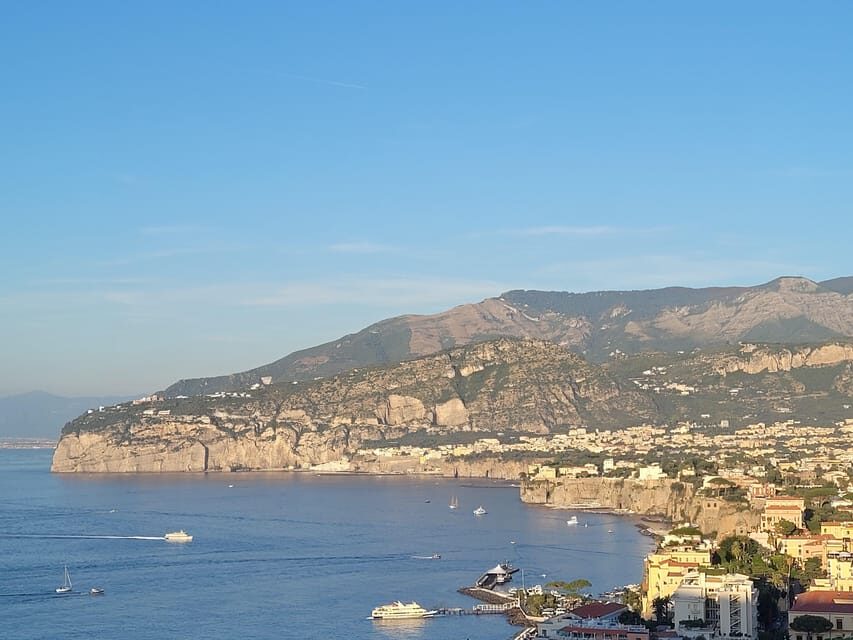
Next up: Piazza della Vittoria for a beautiful panorama. You’ll see Sorrento in a wider view, the coastline stretching and the town’s topography making sense all at once.
Then you go to the cloyster of St. Francis, where you’ll spot modern graffiti art from a famous singer. That blend—ancient religious space plus contemporary street art—creates a memorable contrast. It’s also a reminder that Sorrento isn’t frozen in time. Creative expression keeps happening, even in places with old walls.
If you love finding visual stories that don’t feel museum-only, you’ll appreciate this stop. It gives you something unexpected without breaking the tour’s flow.
Comunal Villa, St Antonino church, and the walk up to Mills Valley

The next stage is about viewpoints and deeper local layers.
You’ll visit Comunal Villa, where you can look out over the whole Sorrento coast. This is where you connect earlier streets to the bigger geography. Once you’ve seen the sea, it’s easier to understand why Sorrento’s town center sits where it does and how people have used these edges for generations.
After that, you’ll go to St. Antonino church and visit the cripta. This is another stop where the guide’s storytelling matters. A church and crypt can feel like just another interior unless you’re given a reason to pay attention to what makes it special.
Finally, the tour ends with a walk up to the Mills Valley, where you say goodbye. Ending with a climb is a common way to structure a walking tour in Sorrento—cap the experience with movement and a final stretch that feels like you earned the last views.
If your legs are sensitive, plan for that upward finish and take it steady.
Price and value: what $30 buys in real experience time
At around $30 per person for a 2-hour guided walk, the value comes from three things you can’t easily replicate on your own:
- A local guide who connects the dots. This is what turns separate sites into one story. Based on guide-led experiences (including Camilla and Alessandra), the best moments are the ones where history, craft, and everyday life line up in your mind.
- Free tasting included. Limoncello and sweets are part of the experience, not an extra expense you have to hunt down.
- Access to the O’ Parruchiano garden. You’re seeing a space you wouldn’t naturally stumble into as a non-guest. That alone can justify the price because it’s a specific, tangible benefit.
This isn’t a long tour aimed at covering everything. It’s designed to be compact and quality-focused. If you want a short, high-impact first or mid-trip walk, this is a strong fit.
Who should book this Sorrento local-walk
You’ll likely enjoy this tour if you:
- want Sorrento context instead of just photo stops
- like walking at a pace that doesn’t feel rushed
- enjoy small surprises, like the inlay workshop setting and the St Francis cloister graffiti
- care about craft and food as part of local life
You might want to choose something else if you:
- only want major, ticket-heavy attractions
- dislike active walking with an uphill finish
- prefer self-guided museum time over street-level stories
Practical tips so your 2 hours go smoothly
- Arrive a few minutes early for the meeting at the statue of Torquato Tasso in Piazza Tasso, right by Bar Fauno.
- Wear comfortable shoes. The route includes an uphill finish toward Mills Valley, so don’t plan this right after a long travel day without thinking.
- If you’re running late, message the guide. They specifically ask you to let them know if you’re delayed.
- Bring a camera, but also put the phone away briefly at the garden and viewpoints. The best moments are often the ones you remember without zooming.
Should you book this Sorrento through a local walk?
I think this tour is a smart booking if you want Sorrento to feel personal instead of generic. For $30 and two hours, you get a guided sequence that ties together piazzas, churches, craft, and panoramas—plus a free limoncello tasting and access to the O’ Parruchiano garden.
Book it if you’re the type of traveler who likes your destinations explained while you’re still walking around them. Skip it if you want a slower, purely scenic tour with fewer stops. Either way, if your goal is to see Sorrento as locals experience it day to day, this walk is built for that.
FAQ
Where do we meet for the tour?
You’ll meet in front of the statue of Torquato Tasso in Piazza Tasso, right near Bar Fauno.
How long is the tour?
The tour lasts 2 hours.
How much does it cost?
It’s listed at $30 per person.
Is the tour guided and in English?
Yes. It’s a live guided walking tour in English.
What is included in the price?
The tour includes a guided walking tour, a free tasting of limoncello, and access to a special garden area at the O’ Parruchiano restaurant.
Can I see the O’ Parruchiano garden if I’m not a restaurant guest?
The tour includes a special walk in that garden that you otherwise wouldn’t see if you’re not a guest.
What tastings are offered during the walk?
You’ll be able to try local Sorrento limoncello for free, and you’ll also try local sweets for free.
What major sights are part of the route?
The route includes stops such as Sorrento Cathedral (with a nativity from the 800s), Piazza della Vittoria, the cloyster of St. Francis, St. Antonino church with the cripta, and the walk up toward Mills Valley.
Is the tour wheelchair accessible?
Yes, it’s listed as wheelchair accessible.
What should I do if I’m late?
If you’re late, you should send a message to the guide.
You Might Also Enjoy



More Tour Reviews in Sorrento
- Sorrento Farm and Food Experience including Olive Oil, Limoncello, Wine tasting
★ 5.0 · 2,524 reviews