REVIEW · SORRENTO
Sorrento: Pompeii & Herculaneum Tour with Skip-the-Line
Book on GetYourGuide →Operated by TUI Italia · Bookable on GetYourGuide
Two Roman towns in one day.
This full-day Sorrento excursion takes you to the ruins left by Vesuvius’s 79 AD eruption, with skip-the-line entry and a guide-led walk through streets and buildings you can still picture as real workplaces and homes. I especially like Herculaneum’s survival of daily life (timbers, pots, and the carbonized furniture story), and the way guides such as Tony or Fabian can turn the sites into something you understand, not just something you look at.
Plan for a long, physical day.
You’ll cover a lot of uneven ground in heat, and the schedule is tightly packed—several visitors note you may not get as long in each location as you’d like, especially at Pompeii. If you’re sensitive to walking, sun, and crowds, you’ll want to bring water and wear shoes you trust.
In This Review
- Key takeaways before you go
- Why Pompeii and Herculaneum from Sorrento feels worth the effort
- The meet-up and how to start the day without stress
- Getting from Herculaneum to Pompeii: what the pacing really means
- Herculaneum: Roman streets preserved under volcanic mud
- What you’ll see in the House areas and public buildings
- Pompeii: the Forum, temples, and the big-city feel
- Crowds and timing you should expect
- Comfort tip that really matters
- The included lunch: small break, real energy
- Skip-the-line tickets: where the time savings actually show up
- Views of Vesuvius: why they’re more than a photo stop
- What this tour does best (and where it may fall short)
- Who should book this Sorrento Pompeii and Herculaneum tour
- Should you book this tour or choose something else?
- FAQ
- What towns does this tour visit?
- How long is the tour?
- What time is the meeting point in Sorrento?
- Is the tour guided and in English?
- Is lunch included?
- Does it include skip-the-line tickets?
- Is it refundable if plans change?
Key takeaways before you go
- Skip-the-line tickets help you avoid wasting the morning in ticket queues at two major sites
- Herculaneum’s preservation means you can walk streets and see details like original timbers and clay pots
- The House of the Argus and public baths give you standout examples of Roman domestic and civic life
- Carbonized furniture and an intact marital bed are the kind of details that stick with you
- Pompeii’s scale vs Herculaneum’s calm creates a great one-day contrast, even if Pompeii feels crowded
Why Pompeii and Herculaneum from Sorrento feels worth the effort
Pompeii gets most of the headlines, but I like doing both in one day because you get a sharper story. Pompeii shows a famous city caught mid-chaos. Herculaneum shows something different: a town preserved so well that daily routines feel close to the surface.
This tour is built for a “big picture with real specifics” day. You get an English-speaking guide, entrance fees to both sites, and a light lunch to keep you fueled. In plain terms, it’s the kind of day that works best when you don’t want to research ruins yourself for hours before you go.
You’ll also get a bonus sensory payoff: Mount Vesuvius views show up in the background of the experience, making the disaster feel less abstract.
You can also read our reviews of more tours and experiences in Sorrento.
- Sorrento Farm and Food Experience including Olive Oil, Limoncello, Wine tasting
★ 5.0 · 2,524 reviews



The meet-up and how to start the day without stress
Your departure is timed to get you moving early. You meet at 08:30 AM at the Achille Lauro parking area, opposite Europa palace hotel, and the tour runs for 8 hours (you check availability for starting times, but the listed day trip departs at 09:00). From there, you’re taken out toward Naples and then on to Herculaneum.
A detail worth taking seriously: pickup can involve multiple hotel stops. One common hiccup is that it’s easy to misunderstand when you’re expected to be ready if you’re told to arrive a set time before the coach arrives. My advice is simple: confirm your first pickup timing and don’t plan on a relaxed morning routine at your hotel.
The good news is that the coach experience tends to be comfortable. Multiple comments mention air conditioning and punctual, careful driving—huge plus in summer.
Getting from Herculaneum to Pompeii: what the pacing really means
The day is structured around two guided site visits plus built-in breaks. Herculaneum comes first, then you head to Pompeii after a coffee pause.
That order matters. Starting with Herculaneum helps you calibrate what “preserved” looks like before Pompeii’s scale overwhelms you. Then Pompeii feels like the famous follow-up: larger, louder, more crowded, and more spread out.
In terms of time on the ground, you should expect roughly around 1–2 hours per site depending on the day and crowd levels. Some visitors mention just under two hours in Pompeii and a bit over an hour in Herculaneum, while others report closer to two hours at each. Either way, it’s enough time for a guided introduction to key areas—not enough time for a slow, photography-only wander unless you plan to come back later.
Herculaneum: Roman streets preserved under volcanic mud
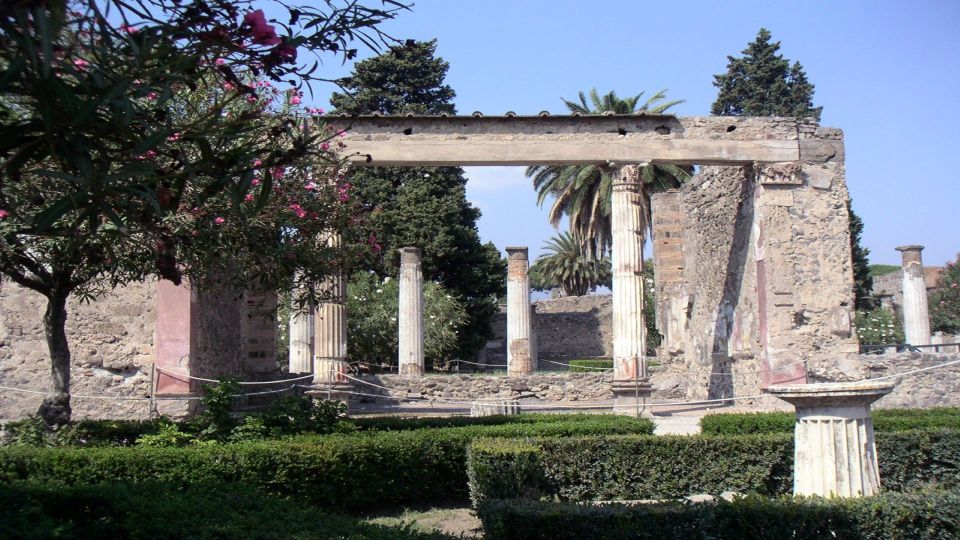
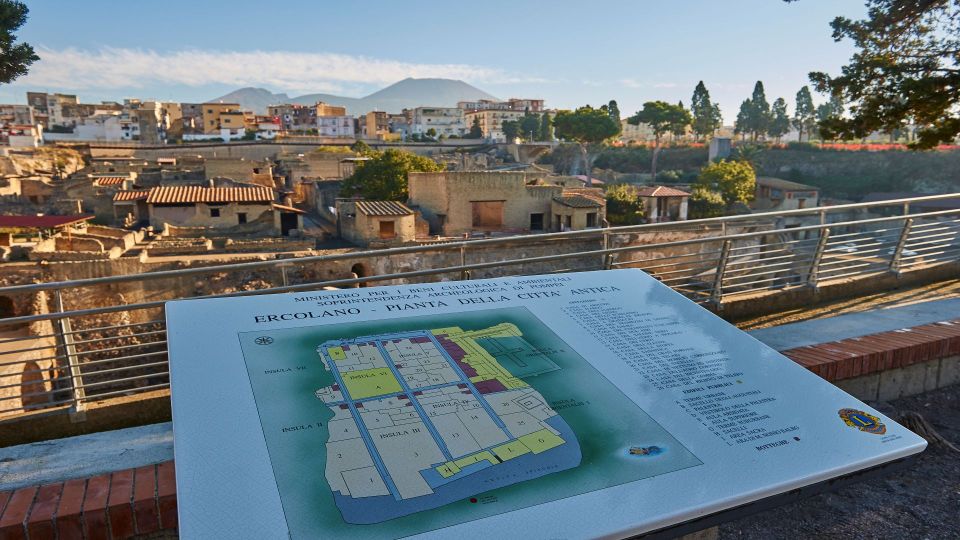
Herculaneum is the star of this itinerary if you like seeing the texture of daily life. The town was buried by volcanic mud during the 79 AD eruption of Mount Vesuvius, and that coverage is why the ruins survived with so many recognizable details.
During your arrival, you get a 1-hour guided tour. The standout theme here is “walkable Rome.” You can move along streets and building spaces with the feeling that the town is not just a ruin, but a place that’s still legible—doorways, courtyards, and room shapes are all part of the story.
What you’ll see in the House areas and public buildings
The tour takes in several memorable stops, including:
- the courtyard of the grand House of the Argus
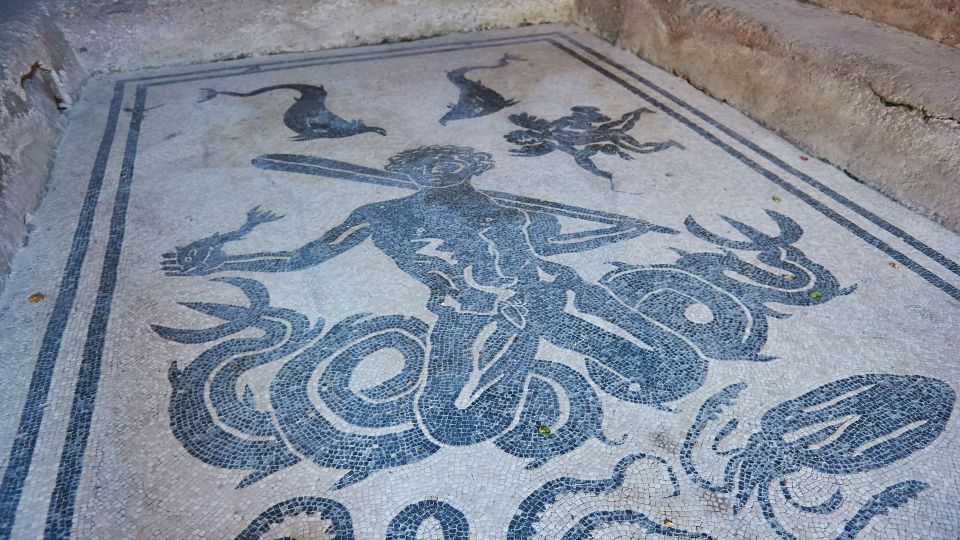
- the public baths, with well-preserved frescoes and mosaics
- the house of carbonized furniture, where an almost intact marital bed remains
Two things I’d underline for your planning:
1) You’ll notice building materials. Original timbers are mentioned as part of what you can see, and that’s a huge deal because it grounds the site in construction reality, not only in decoration.
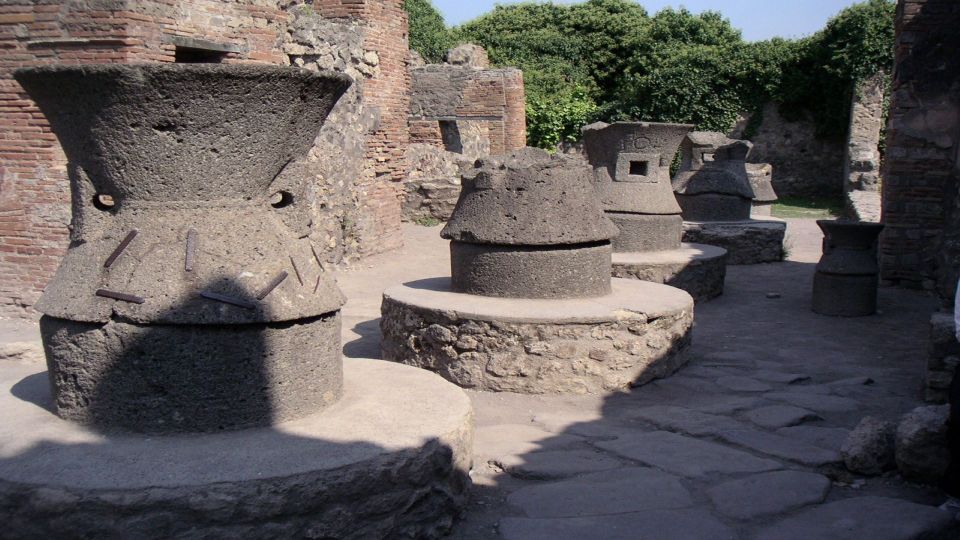
2) You’ll see everyday objects in context. The tour references clay pots stored as they would have been at the time of the eruption. Small details like this are what make Herculaneum feel less like a museum and more like a scene.
After the guided portion, you get a window of free time for a coffee before heading to Pompeii. Use it wisely. Even if you’re not a coffee person, this is your chance to reset your legs and hydrate before the longer stretch through Pompeii.
- Sorrento Farm and Food Experience including Olive Oil, Limoncello, Wine tasting
★ 5.0 · 2,524 reviews



Pompeii: the Forum, temples, and the big-city feel
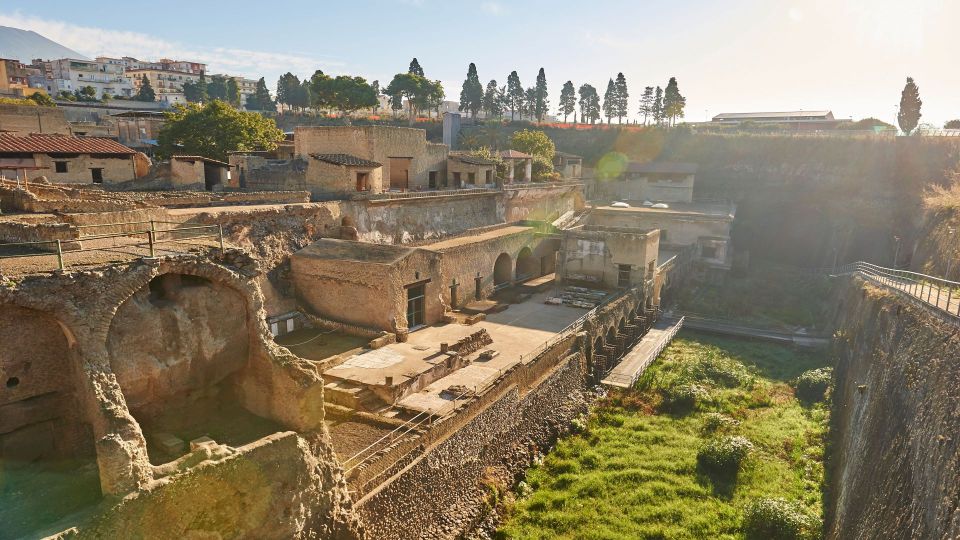
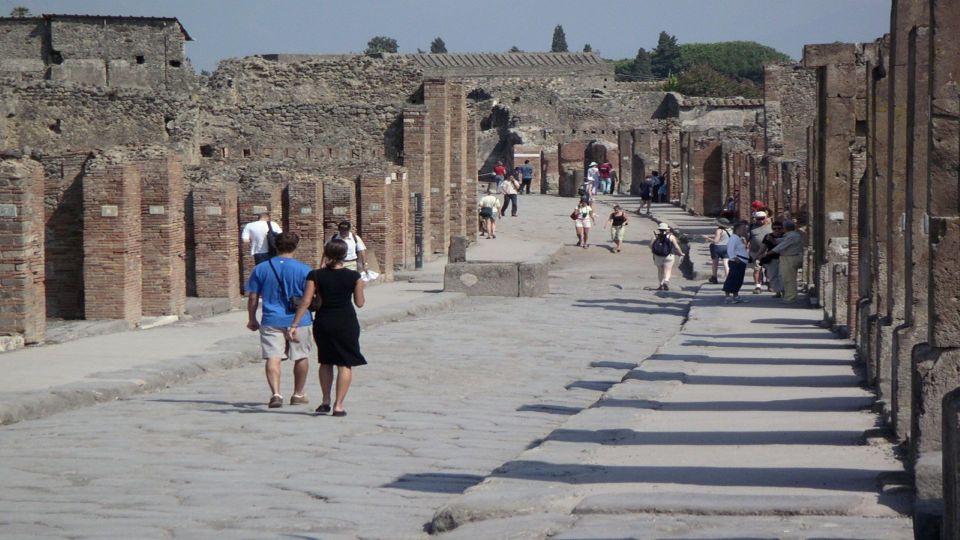
Pompeii is massive, and that’s exactly why a guide helps. Even with skip-the-line tickets, the real challenge is orientation: you can walk for ages and still wonder what you’re looking at. With a guide, you get a curated route that hits the big anchors of Roman urban life.
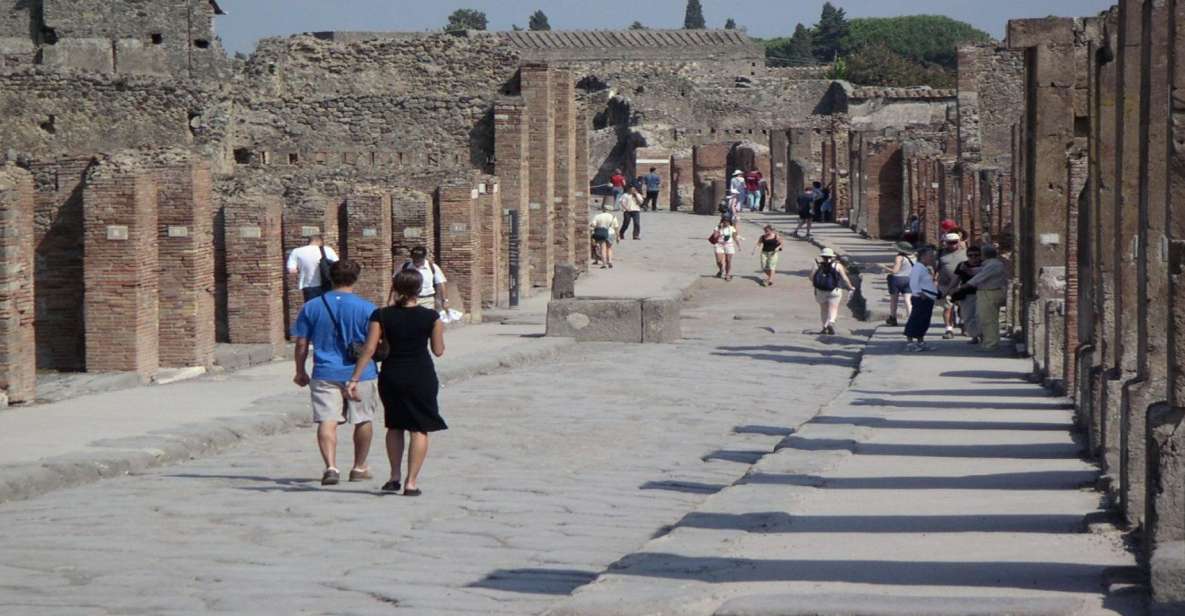
You’ll wander through stone-paved streets with your guide pointing out the structure of the city—houses, temples, the Forum, and theaters. The goal is to experience Pompeii in a way that feels chronological and functional: where people shopped, socialized, worked, and gathered.
Crowds and timing you should expect
Pompeii is one of the most visited archaeological sites in the world, and it shows. Even with skip-the-line entry, the site can feel dense once you’re inside.
A practical takeaway from other days on this tour: if your group is large, you may sometimes be spread out while the guide talks near a point of interest. That can make it harder to hear or see what’s being explained at every moment, especially inside specific structures. It’s not a reason not to go—it’s a reason to be okay with a “guided highlight walk” instead of a slow, one-on-one museum tour.
Comfort tip that really matters
Wear shoes you can trust. Uneven paving is part of the terrain, and you’ll also be doing long stretches of walking. If the day is hot, add hydration to your mental checklist. Pompeii and Herculaneum both punish bad footwear and forgetful water habits.
The included lunch: small break, real energy
The tour includes a light lunch, and multiple accounts describe it as more than a token snack. One recurring theme is that lunch is a three-course meal served at a hotel near Pompeii, and some lunches include a glass of wine.
This matters because your day is front-loaded with walking. If you’re hoping for a relaxed lunch with downtime, you’ll appreciate that it’s part of the package rather than something you have to hunt down across the area.
Also note that the bus rides are described as air-conditioned, which helps you bounce back after the sites. That combo—real food and a cool-down—makes the packed schedule feel more manageable.
Skip-the-line tickets: where the time savings actually show up
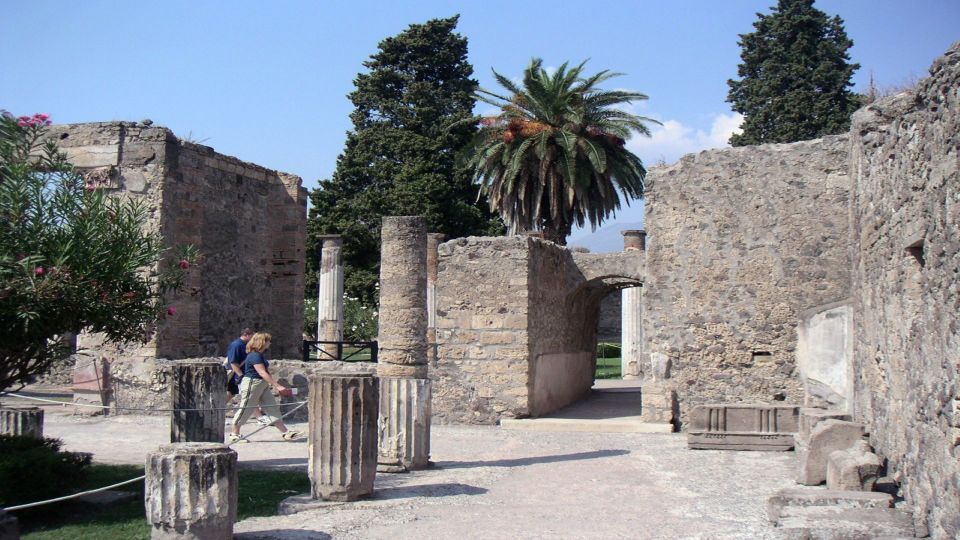
Skip-the-line is one of those features that can mean a lot or a little depending on the day. Here, it matters because you’re visiting two top sites in one outing. When you remove even part of the waiting, you protect the hours you actually need for the guided route.
You still shouldn’t expect instant freedom inside the ruins. Pompeii can be crowded once you arrive, and Herculaneum has its own flow and navigation. But skip-the-line keeps your day from turning into a queue day, which is the last thing you want for a once-a-day itinerary.
If you’re trying to match this tour with other plans, also remember the day runs about 8 hours, with travel time between Sorrento, Naples, Herculaneum, and Pompeii, plus the lunch stop and the coffee break.
Views of Vesuvius: why they’re more than a photo stop
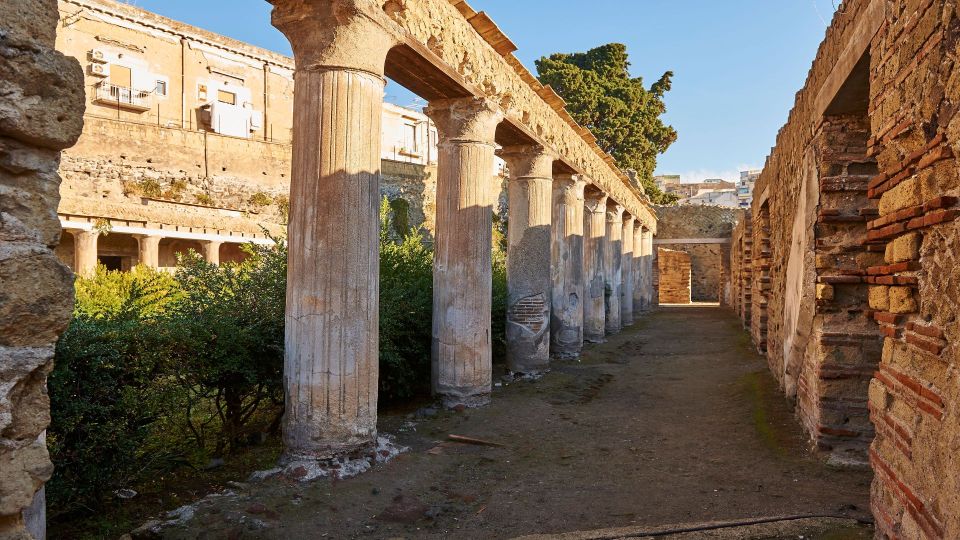
It’s easy to treat Vesuvius as background. In reality, seeing it while you’re walking the places it affected makes the eruption feel real in a different way.
The tour highlights include fantastic views of Mount Vesuvius, and you’ll likely connect those sightlines to what you’re seeing in the ruins. Herculaneum’s preservation and Pompeii’s famous destruction both make more sense when you can picture the volcano as part of the everyday geography that shaped the towns.
This is one of those “small detail, big meaning” parts of the day that makes you feel like you’re on-site, not just checking off a list.
What this tour does best (and where it may fall short)
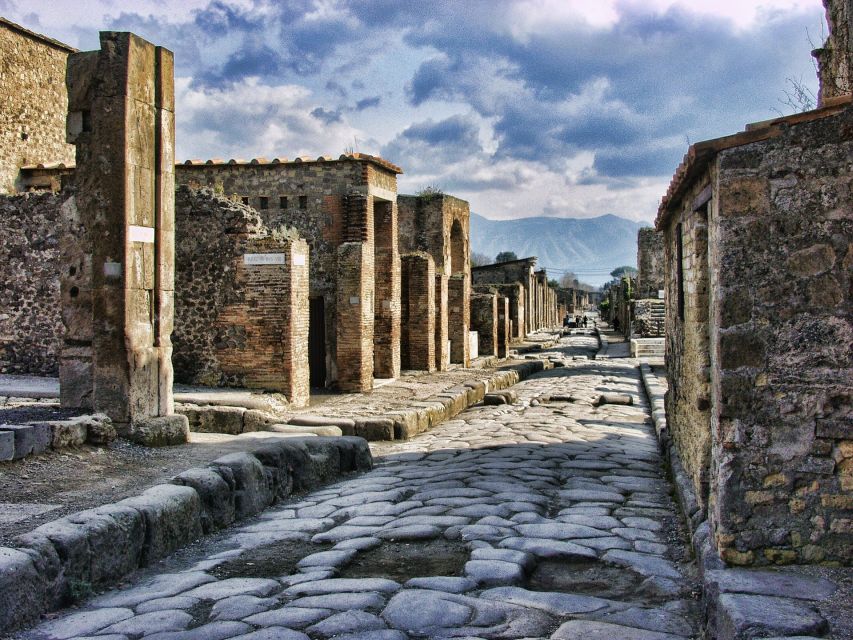
I think this tour is strongest as an introduction with strong guidance. You’re not left guessing. You’re given key points, and you see the visual anchors that most people come for—baths mosaics, frescoes, the carbonized furniture story, and the major Pompeii highlights like the Forum and theaters.
Where it may feel short is time. Even though the tour is well paced for an all-in-one day, you may wish you had more room to linger in your favorite spots. A couple of comments suggest that time in Pompeii can feel a bit rushed, and that the overall group size can limit how fully everyone can see when the guide steps inside a building to explain something.
So, if you’re a slow walker, a big museum reader, or someone who loves long photography sessions, you might finish the day wanting more. If that’s your style, consider a return visit later—Pompeii especially rewards patience.
Who should book this Sorrento Pompeii and Herculaneum tour
This one is a good fit if you:
- want skip-the-line entry and a structured guide-led route
- like getting the key highlights without planning logistics yourself
- enjoy contrasts in ruins: preserved Herculaneum vs large-scale Pompeii
- are traveling with limited time in the region and still want both sites
It’s also a particularly smart choice if you know you’ll enjoy Herculaneum more than Pompeii. More than one comment points out that Herculaneum is smaller and can feel calmer, which helps you see details without constantly being pushed along.
Should you book this tour or choose something else?
Book it if you want a high-value day that covers both Pompeii and Herculaneum with an English-speaking guide, entrance fees, and lunch included. At $168.79 per person for an 8-hour outing, you’re paying for the convenience: transportation from Sorrento, guided time at both sites, and the entrance components that would take real effort to organize on your own.
Skip or consider another option if you’re easily overwhelmed by crowds, you hate uneven walking, or you’re sure you want long, unscheduled time inside the ruins. This tour is built for highlights and first impressions.
If you want one calm recommendation: put your comfort first—good shoes, water, sun protection—and let the guide do the heavy lifting. Then you’ll come away with that rare combo: the shock of Pompeii and the intimate, almost startling preservation of Herculaneum.
FAQ
What towns does this tour visit?
This tour visits Pompeii and Herculaneum, two Roman towns destroyed by the eruption of Mount Vesuvius in 79 AD.
How long is the tour?
The tour lasts 8 hours.
What time is the meeting point in Sorrento?
The start meeting time is 08:30 AM at the Achille Lauro parking area, opposite Europa palace hotel.
Is the tour guided and in English?
Yes. The tour includes a local English-speaking guide.
Is lunch included?
Yes. A light lunch is included.
Does it include skip-the-line tickets?
Yes. The tour includes skip-the-line entry.
Is it refundable if plans change?
You can cancel up to 24 hours in advance for a full refund.
You Might Also Enjoy

More Tour Reviews in Sorrento
- Sorrento Farm and Food Experience including Olive Oil, Limoncello, Wine tasting
★ 5.0 · 2,524 reviews