REVIEW · SORRENTO
Skip-the-Line Pompeii Guided Tour from Sorrento
Book on Viator →Operated by IAMME IA! - Gray Line Amalfi Coast · Bookable on Viator
Skip-the-line keeps Pompeii from eating your morning. I like the air-conditioned coach from Sorrento and the skip-the-line entry that gets you inside quickly, with a guide and clear audio using headphones. It’s a tight, guided way to understand what you’re seeing, from public life in the Forum to everyday street scenes.
One thing to plan for: Pompeii is uneven. You’ll be walking on old stones with steps and inclines, and the pace is set for the group, so if you need slow, careful movement, this is worth thinking through first.
In This Review
- Key reasons this Pompeii tour works well
- Pompeii in about five hours: what you’re really buying
- Sorrento pickup: easy meeting point and comfortable ride
- Skip-the-line entry: why it changes the whole day
- The Forum and Temple of Jupiter: where the city ran
- Macellum and the market logic you can still feel
- Via dell’Abbondanza: the main street that still sounds loud
- Stabian Baths: public bathing as a daily ritual
- Lupanar: a frank look at Roman social life
- House of the Faun and the Alexander Mosaic: luxury you can walk through
- Basilica and Teatro Grande: power and performance in one city
- Timing: morning vs afternoon, and why heat matters
- Value check: is $90.70 fair for what’s included?
- Walking notes: uneven stones, steps, and group pace
- Who should book this Pompeii tour from Sorrento
- Should you book this tour?
- FAQ
- How long is the Skip-the-Line Pompeii guided tour from Sorrento?
- Where is the meeting point in Sorrento?
- Are there morning and afternoon departure options?
- Is the tour offered in English?
- Does the price include admission to Pompeii and skip-the-line access?
- Will I be able to hear the guide clearly?
- Is food or drinks included?
- How large is the group?
Key reasons this Pompeii tour works well
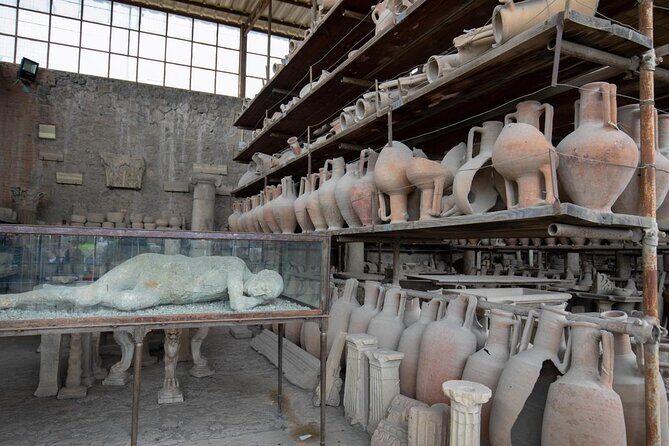
- Air-conditioned round-trip coach from central Sorrento, meeting at IAMME IA! in Piazza Torquato Tasso
- Skip-the-line admission + mobile ticket, so you don’t waste time at entry
- Official guide with headphones in Pompeii for groups larger than 10
- A focused route through big-name spots like the Forum, Baths, Lupanar, and Teatro Grande
- Short photo-friendly stops at places like Via dell’Abbondanza and the Stabian Baths
- Morning departures usually feel smarter if you want fewer crowds and less heat later
Pompeii in about five hours: what you’re really buying
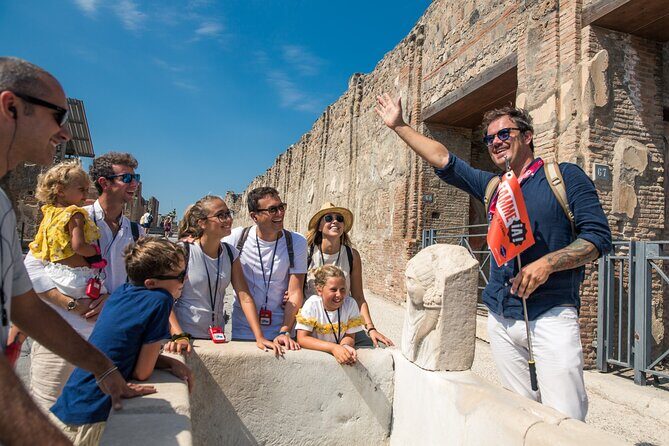
This tour is built for people who want Pompeii to make sense fast. You’re not just roaming lost in a huge archaeological park. You’re following a route with a guide who links places together: politics in the Forum, commerce near the markets, social life on the main street, and daily routines in public baths.
The other big value is time. Pompeii’s size is intimidating, and the easiest trap is spending your limited hours figuring out where to go next. Here, the route is planned, admission is included, and the skip-the-line access means you spend more energy looking and less time waiting. You’re looking at a “great hits” visit rather than trying to cover everything.
You’ll be in Pompeii for roughly two hours on the main guided portion, plus shorter stops for specific highlights. That’s enough to leave with a clear picture of the city, not just scattered photos.
You can also read our reviews of more guided tours in Sorrento


Sorrento pickup: easy meeting point and comfortable ride
The tour starts at IAMME IA! – Gray Line Amalfi Coast in central Sorrento, at Piazza Torquato Tasso, 16. That matters more than it sounds. When meeting points are vague or far from town, you end up stressed before you even reach Pompeii.
Transportation is round-trip and air-conditioned, which is a real plus in warm months. The ride also gives you a buffer: you’re not instantly thrown into walking, stairs, and heat. If you like having your day organized, this model is your friend.
One practical tip: show up a bit early. Even with a scheduled pickup, you want time to check in calmly and get oriented so you can board without racing.
Skip-the-line entry: why it changes the whole day
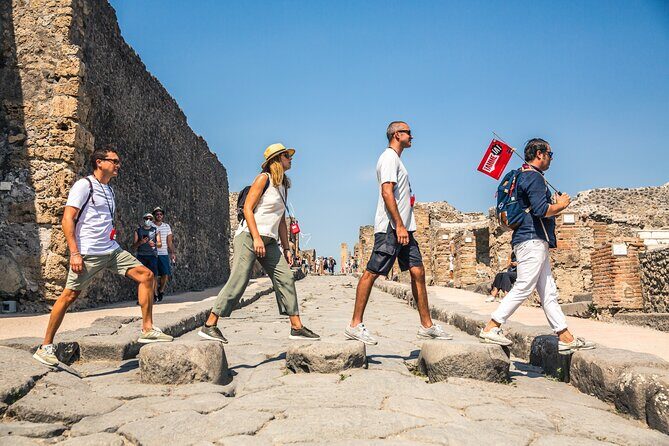
Getting into Pompeii is the part that can turn a good plan into a frustrating morning. Here, you get skip-the-line admission access, and admission to the Pompeii Archaeological Site is included in the ticket.
What you feel on the ground is simple: you start seeing things sooner. Instead of standing around while the crowd builds, you can head into the ruins while your group energy is still high. That also helps for photos. In the first stretch of the visit, you tend to have better chances for cleaner shots before places get packed.
Also, you’ll have a mobile ticket. That reduces the “Where’s my paper voucher” panic. You still should keep your phone charged and accessible, since you’re using it for entry.
The Forum and Temple of Jupiter: where the city ran
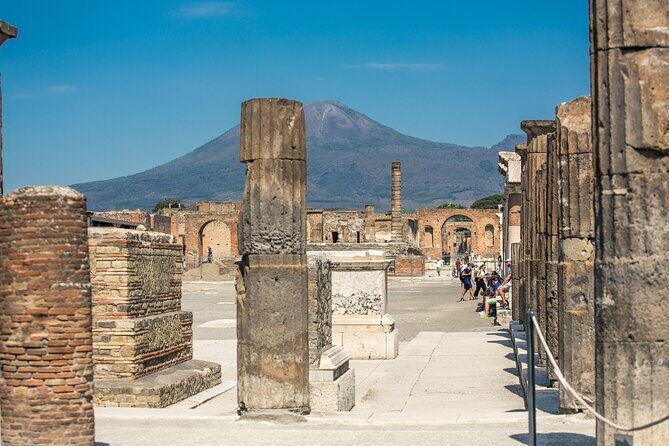
Your first major focus is the Archaeological Park of Pompeii, with the big public center soon taking over your imagination. This is where Pompeii’s daily life and decision-making lived.
In the Forum area, you’ll see the Civil Forum, the focal hub for administration, justice, business, trade, and worship. Think of it as Pompeii’s combined town hall, marketplace, and civic stage. The guide’s job here is to connect the physical layout to how people actually moved and interacted.
Then comes the Temple of Jupiter, set on the north side of the Forum. What makes it interesting is the renovation story tied to when the colony was founded. The temple became a Capitolium-style space, with cult statues of Jupiter, Juno, and Minerva. And Mount Vesuvius rising in the background isn’t just scenery; it’s part of the dramatic setting that you can’t fully recreate from a screen.
If you only do one Pompeii zone, this is usually the one to anchor everything else. It’s also where your guide can most clearly explain how Rome shaped local life.
Macellum and the market logic you can still feel
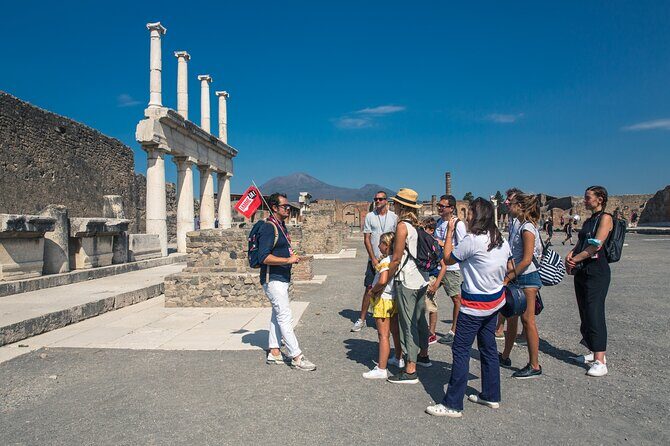
Right near the Forum you’ll also encounter the Macellum, which is tied to food, commerce, and ritual. It’s described as a tuff quadriporticus with an elevated worship hall aligned with the entrance. The building isn’t just storage or shopping. It mixes buying, social life, and religious influence.
As you walk, look for the statue niches and the evidence of imperial cult links. You’ll see mentions of copies of marble statues and a fragment likely connected to emperors such as Titus or Vespasian. Even if you’re not a Roman art detective, it helps to understand why statues mattered: they signaled power and identity in everyday spaces.
And then there’s the practical angle. To one side you have a space that may have served meetings for a sacred board, while another area includes a masonry counter that suggests fish sales. That combination is Pompeii’s special trick: the ruins aren’t only dramatic; they’re functional.
You can also read our reviews of more tours and experiences in Sorrento


Via dell’Abbondanza: the main street that still sounds loud
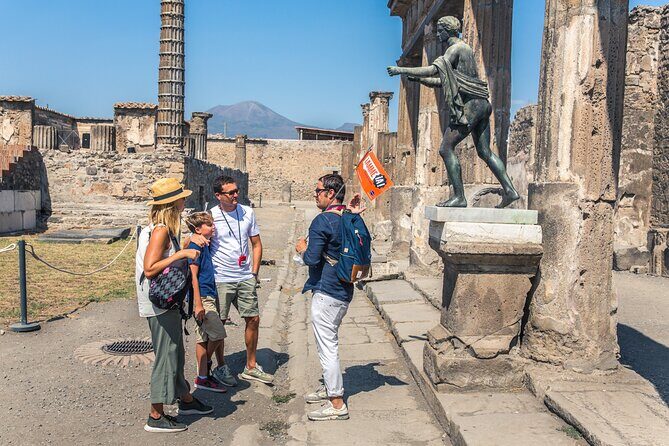
One of the best “you can almost picture it” stops is Via dell’Abbondanza. This was the ancient main street, a decumanus maximus running east-west from the Forum area toward Porta Sarno. In other words: this was where people went when they needed to be seen, shop, trade, eat, and gossip.
You’ll see the street’s role in the city’s rhythm: shops, workshops (officinae), cafés, snack-bars, and restaurants. It’s not hard to imagine the noise and energy because the street shape and density are still there in the plan.
The tour gives you a short window here (about 10 minutes), which is enough for photos and a quick orientation. If you love street-level life and want to understand how Romans spent their free time as much as their civic time, this stop is one of the most satisfying.
Stabian Baths: public bathing as a daily ritual
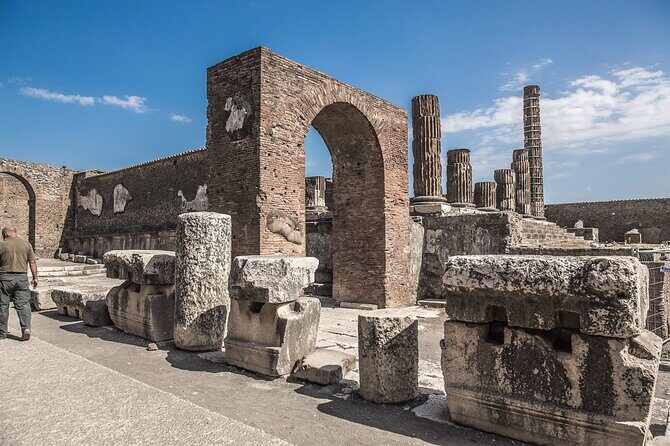
Next, you head to the Stabian Baths (Terme Stabiane). This is one of those Pompeii locations that makes you stop and think, because it’s so human. People weren’t just living in houses. They went to public bathing spaces the way we go to gyms, spas, or community pools.
These baths date to shortly after the colony was founded, and the description includes separate entrances for women and men. Inside, the tour area connects rooms that matched different temperatures: apodyterium (dressing room), tepidarium for medium heat, frigidarium for cold baths, and calidarium for hot baths.
Even the damage story matters. Like many Pompeian structures, the baths were heavily damaged during the earthquake of 62 AD. So you’re not just seeing the “perfect ruin.” You’re seeing how a real place changed after a major shock.
You only have around 10 minutes here, so go in with a plan: look for the layout of the temperature sequence and picture the walk from room to room.
Lupanar: a frank look at Roman social life
Then comes the Lupanar, Pompeii’s famous official brothel. It’s a narrow two-story stone building with purpose-built rooms and built-in masonry beds. If you’ve seen Roman erotic frescoes in museums, this is one of the rare places where you can see the setting that made that imagery functional as a kind of visual menu.
What makes the Lupanar compelling is the blend of formal design and raw human traces. The building had five rooms on the ground floor, with well-preserved erotic frescoes above doorways. And there are hundreds of graffiti marks left by visitors, giving a blunt view of language and attitudes among ordinary people.
It can be a heavy topic, and the tour keeps it to a short stop (about 10 minutes). If you’re squeamish, you might not love this part. But if you want Pompeii to feel like lived life instead of just “ancient architecture,” this stop pulls its weight.
House of the Faun and the Alexander Mosaic: luxury you can walk through
Your route then includes the House of the Faun (Casa del Fauno), one of Pompeii’s largest and most luxurious residences. This is where the city’s class difference becomes obvious fast. The house takes up an entire city block, with peristyle gardens and intricate mosaics.
The big draw here is the Alexander Mosaic, named for its scene of the battle between Alexander the Great and Darius III. It’s the kind of artwork that makes you pause because the setting feels both grand and surprisingly approachable once you see it in context.
What’s also useful is the architecture reference: the house reflects Roman architecture with Hellenistic influence. Even if you don’t know the difference by name, you’ll feel it in how the space is arranged for status, leisure, and display.
This isn’t a “quick look at a wall” stop. It gives you a window into how elite Pompeians wanted their world to be seen.
Basilica and Teatro Grande: power and performance in one city
After you’ve absorbed daily life and elite space, the tour brings you back to civic and cultural structures.
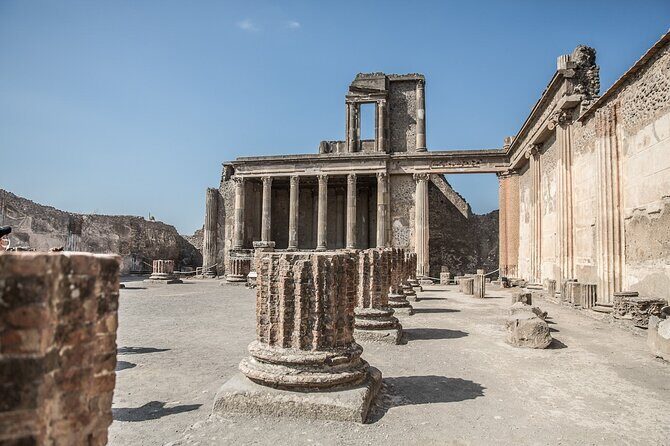
The Basilica in the Forum area is described as the most sumptuous building of the Forum, with an extension of about 1,500 square meters. This space handled business and administration of justice. It’s a reminder that Roman power wasn’t hidden. It was staged in huge, public structures built to host daily decisions.
Then you move toward entertainment with the Teatro Grande. This theater is built on a slope using the natural depression of the hill, which allowed for a major auditorium divided into sectors. If you’ve ever wondered why ancient cities invested so hard in performance spaces, this is part of the answer. They weren’t side quests. They were central to city culture.
The theater typically hosted tragedies connected to Greco-Roman traditions. Even with the ruin scale, you can still grasp the purpose: people gathered here to watch stories and ideas unfold together.
Timing: morning vs afternoon, and why heat matters
The tour offers morning or afternoon departure times, and your choice affects the vibe inside Pompeii. Early in the day, you’re more likely to get in while conditions are cooler and crowd pressure is lower. The difference becomes obvious as the hours pass: more people, more waiting around corners, more friction.
One review noted early morning worked well compared with an afternoon visit. I’d treat that as common sense. Pompeii is open-air and stone-heavy. Heat and crowds turn “walk and learn” into “walk and sweat,” even when the tour is excellent.
If your day schedule allows, I’d lean toward the morning option. You’ll feel less rushed, and photos are easier when it’s not wall-to-wall humanity.
Value check: is $90.70 fair for what’s included?
At about $90.70 per person, this isn’t the cheapest way to visit Pompeii. But it’s also not just a ticket price. You’re getting:
- Round-trip air-conditioned coach from Sorrento
- Official guide in Pompeii
- Skip-the-line access
- Pompeii admission included
- Headphones for groups larger than 10
- A structured route through major sites
For many people, the main value is that Pompeii becomes legible. Without a guide, you can absolutely wander and see stunning ruins. But it’s also easy to end up with a pile of interesting walls and no clear story. This tour is designed to prevent that.
The other practical value: your time is protected. Two hours in Pompeii plus short highlight stops means you won’t spend your day guessing where the next must-see is. In a limited time window, that’s worth money.
Food and drinks are not included, so budget time and money for a snack elsewhere on your own.
Walking notes: uneven stones, steps, and group pace
Here’s the reality check section. Pompeii’s terrain is uneven. You should expect steps and inclines, and the tour is built around a guided group moving together.
One piece of accessibility context from actual guest experience: the tour description may state wheelchairs are not allowed but strollers are okay. I’d treat that as a key planning detail. Even when strollers are allowed, the site is still rough underfoot, so anyone pushing a stroller over ancient paving should be ready for jostling.
Also note this: some people mention getting tripped up when they fall behind. If you know you move slower, you may want to choose a departure time when you can keep up comfortably and take brief pauses when the group allows it.
A practical hack: wear supportive shoes with grip. Save your fragile soles for Amalfi views, not Pompeii stairs.
Who should book this Pompeii tour from Sorrento
This tour fits you best if you want:
- A guided overview that connects Forum life, markets, baths, and elite homes
- Skip-the-line entry so the day starts inside the site
- A structured route rather than hours of navigation
It may be less ideal if:
- You need lots of solo time to explore without following a schedule
- You struggle with uneven terrain and a group pace
- You prefer a slower, more comprehensive walk through every corner (this is not that kind of visit)
On the guide front, several guide names show up in real bookings, including Luisa (LuLu), Lucio, Nello, Roberta, and Patricia, with an emphasis on friendly, humorous storytelling and keeping the group moving.
Should you book this tour?
If you’re doing Pompeii as a one-day priority, yes, I’d book it. The combination of air-conditioned transport, skip-the-line admission, and a structured route is exactly what makes a short visit feel satisfying instead of chaotic.
Book early in the day if you can. Wear shoes you can trust on old stone. And accept that you’re getting a highlights route: brilliant for understanding the city, not for wandering every street.
One last quick note for planning peace of mind: you can cancel up to 24 hours in advance for a full refund, so it’s low-stress to hold your spot while your schedule firms up.
FAQ
How long is the Skip-the-Line Pompeii guided tour from Sorrento?
It runs for about 5 hours (approx.).
Where is the meeting point in Sorrento?
You meet at IAMME IA! – Gray Line Amalfi Coast, Piazza Torquato Tasso, 16, 80067 Sorrento.
Are there morning and afternoon departure options?
Yes, the tour offers either morning or afternoon departure times.
Is the tour offered in English?
Yes. The tour is offered in English.
Does the price include admission to Pompeii and skip-the-line access?
Yes. Pompeii Archaeological Site admission is included, and you get skip-the-line access.
Will I be able to hear the guide clearly?
Yes. Headphones are provided in Pompeii to help you hear the guide clearly for groups bigger than 10 passengers.
Is food or drinks included?
No. Food and drinks are not included.
How large is the group?
The tour has a maximum of 29 travelers.
You Might Also Enjoy


More Guided Tours in Sorrento


More Tours in Sorrento





More Tour Reviews in Sorrento
- Sorrento Farm and Food Experience including Olive Oil, Limoncello, Wine tasting
★ 5.0 · 2,524 reviews