REVIEW · NAPLES
Private Walking Tour through the Historical City of Herculaneum
Book on Viator →Operated by Guide Centre Sorrento · Bookable on Viator
Herculaneum’s ruins feel personal. This private walking tour takes you through a carefully planned loop of homes, baths, and small museums in the Archaeological Park of Herculaneum, where lots of the city still lies buried underground. I especially like the unhurried pace: each stop is timed so you can actually understand what you’re looking at instead of sprinting from one photo spot to the next. I also like the human touch you get with a licensed guide in English, and you can see that in how guides such as Martina, Carmine, Francesca, and Annalisa are praised for clear explanations and patience.
One consideration: the tour lasts about 2 hours, so it’s not trying to cover every corner of the park. And you’ll still need to budget the Archaeological Park entrance ticket (16€ per person; free under 18 with the right document), even though the guide and tour time are included.
In This Review
- Key highlights worth planning for
- Herculaneum’s buried city: why this walk beats a rushed checklist
- Private tour logistics that keep you comfortable (and on track)
- Terme del Foro: Roman baths, gym spaces, and warm rooms
- Houses in sequence: wood, mosaics, deer, and painted rooms
- Partem Domus lignea: the charred wood furniture moment
- Casa del Tramezzo connects to status through design
- Casa di Nettuno e Anfitrite: the mosaic you’ll remember
- Casa dei Cervi: polychrome marble and the view factor
- Casa Sannitica: early decoration and the first Pompeian style
- The Black Hall and the Augustales: public myth in fresco form
- College of the Augustales: mythological frescoes in a public temple
- Casa del Salone Nero: fresco state of conservation on the main street
- Salone della Barca and the Antiquarium: charred boat plus optional museum time
- Salone della Barca di Ercolano: charred boat in a small museum
- Antiquarium di Ercolano: choose your museum time
- Price and value: what you’re really paying for at €102.12
- Who should book this Herculaneum private walk
- Should you book it
- FAQ
- How long is the private walking tour of Herculaneum?
- Is this tour private or shared?
- What language is the guide?
- Where does the tour start and end?
- Do I need to buy the entrance ticket to the Archaeological Park?
- What is included in the tour price?
- What should I bring for the walk?
- What if my plans change?
Key highlights worth planning for
- Private family-and-friends pacing with time for questions instead of crowd pressure
- A stop-by-stop route that hits high-impact areas like the baths, mosaics, and public temple frescoes
- Strong guide performance in English, with names like Martina, Carmine, and Alessandro showing up again and again
- Good photo-and-understanding stops (charred wood furnishings, a famous mosaic, and a charred Roman boat)
- Flexibility at the end if you want to add museum time in the Antiquarium
- Comfort-focused advice like sunglasses, hat, and good walking shoes for an outdoor park
Herculaneum’s buried city: why this walk beats a rushed checklist
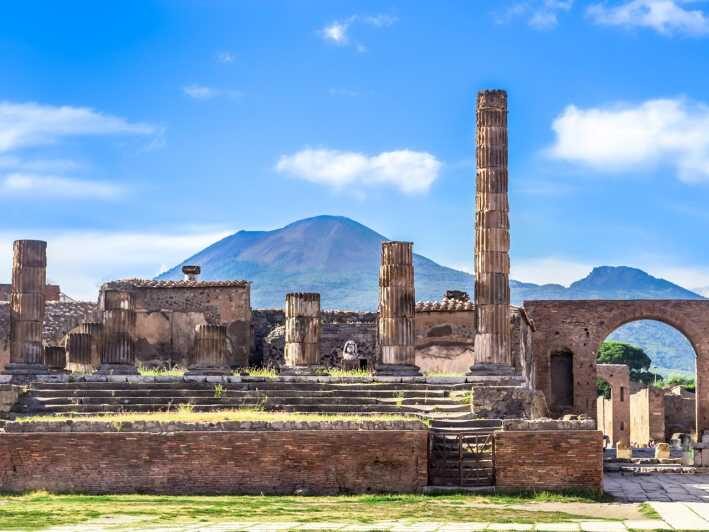
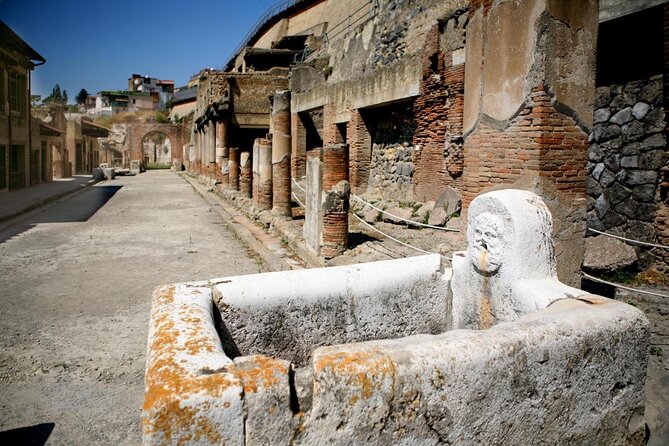
Herculaneum is one of those places where you feel the ruins more than you simply “see” them. Archaeologists have uncovered only part of the ancient city, so much of it remains underground. That changes the vibe right away: instead of a huge sprawl where you try to cover everything, you’re guided through the most visitable fragments—private houses from the imperial age and a handful of public spaces that help you connect daily life to what’s still standing.
This private format matters because the park can feel overwhelming if you don’t know what you’re looking at. With a guide, you get a pathway through the site: the route moves you from Roman baths to wealthy homes, then toward public religious buildings, and finally to a small museum area and the Antiquarium option. That structure is what makes the time feel efficient.
And because the tour is private, you’re not stuck waiting for a big group to shuffle forward. In the feedback, you’ll notice how often people mention that guides adapt to real needs—extra time for elderly parents, help with strollers, and a relaxed tempo that doesn’t treat you like a stopwatch problem. That’s a big reason to choose this over a general admission wander.
You can also read our reviews of more tours and experiences in Naples.

Private tour logistics that keep you comfortable (and on track)
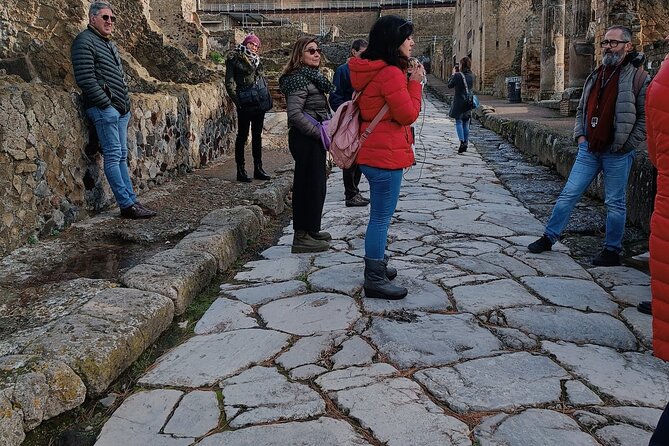
The experience is a private walking tour (only your group participates) in English, usually lasting about 2 hours. You start and end at the Archaeological Park of Herculaneum on Corso Resina, 187, 80056 Ercolano NA, Italy. It’s also near public transportation, so you’re not forced into one single transport plan.
A practical note: the itinerary is designed as a sequence of short stops—most are around 10 to 15 minutes. That’s not a flaw, but it helps you understand the style of the tour. Your guide is using the limited time to point out the key features at each location (the bath layout, the mosaic story, the wood evidence, the painted rooms). If you want deep time at one specific house, you’ll likely get it by asking at the moment it matters.
What to bring is simple and useful: sunglasses, a hat, and comfortable walking shoes. The park is outdoors, and the heat can be a real factor. One guide (Ernesto, in the feedback) is even noted for bringing a water spray to cool people down along the way—small thing, big relief.
Terme del Foro: Roman baths, gym spaces, and warm rooms
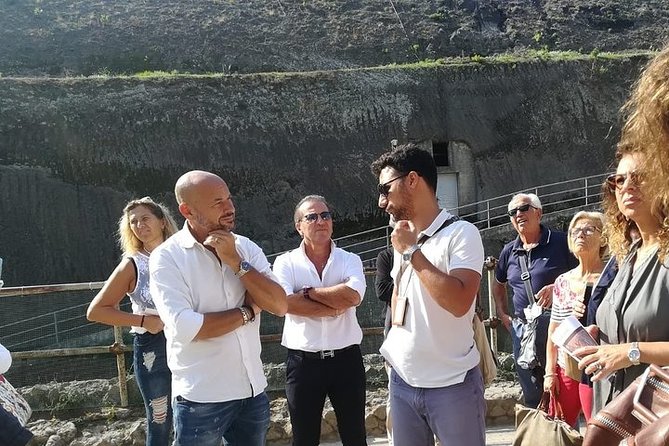
Your first meaningful stop is Terme del Foro. This is the typical Roman thermal setup in Herculaneum, and the key word here is preservation. You’re not just looking at broken columns—you can get a sense of how the system worked because the spaces are still readable.
The tour focuses on the practical parts of the routine: the gym area, the changing rooms, and the warm bath rooms. Even if you’ve read about Roman baths before, seeing the preserved layout makes the whole thing click. You also get a better feel for why baths weren’t just about cleanliness—they were social spaces with a physical routine built in.
A possible drawback: because the stop is around 15 minutes, you won’t have time to absorb every detail on your own. This is where your guide’s pace helps. If you want to slow down, ask right away what to look for in the walls and entrances so you can make the time count.
Houses in sequence: wood, mosaics, deer, and painted rooms
After the baths, the tour moves through a series of houses that show how varied wealthy life could be in Herculaneum—down to furniture made from charred wood, floor art, and decorative wall styles.
Partem Domus lignea: the charred wood furniture moment
One of the most memorable stops is Partem Domus lignea – Casa del Tramezzo di Legno. The house is famous for its charred wood furniture. That detail is more than dramatic trivia. It gives you a rare chance to see that “everyday” objects and household goods can survive in astonishing ways—so you can imagine how a room looked and functioned, not just how it was built.
If you love material culture—things people actually used—this stop tends to land well because it anchors the story in objects, not only architecture.


Casa del Tramezzo connects to status through design
The “tramezzo di legno” element (a wooden partition concept) helps you understand how spaces were organized. You’re learning the layout of domestic life: where boundaries were, how rooms might have separated work and leisure, and how design could signal comfort and wealth.
Casa di Nettuno e Anfitrite: the mosaic you’ll remember
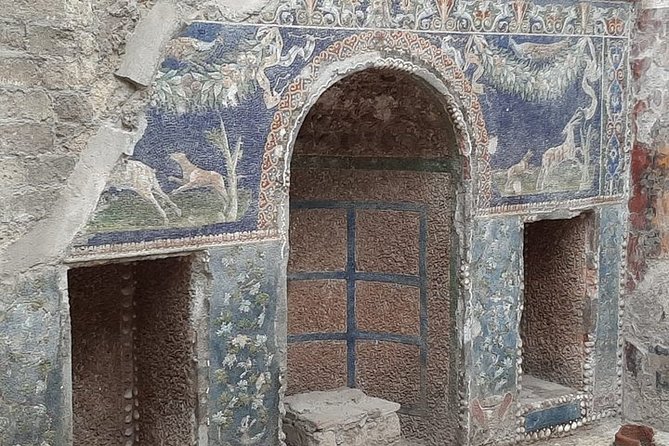
Next comes Casa di Nettuno e Anfitrite, a symbolic house with one of the standout mosaics among the Vesuvian sites. A mosaic like this works like a visual caption for the whole home—myth themes, wealth, taste, and the kind of education or cultural exposure elite households liked to display.
The value of having a guide here is pacing your attention. A mosaic can become just a pretty floor unless someone helps you read the imagery in context. That’s exactly what you’re paying for.
Casa dei Cervi: polychrome marble and the view factor
Casa dei Cervi is often described as the deer house, and it sits in a spectacular panoramic position between the Gulf of Naples and Capri. The interior focus is polychrome marble, which matters because the colors are part of the message. This isn’t architecture trying to whisper; it’s decoration doing the talking.
Two layers to this stop:
- The visual impact inside (the marble)
- The idea of location outside (the view)
If you’re a person who likes to link art to lifestyle, this is a strong one. You’re learning why someone would build and live here, not just when.
Casa Sannitica: early decoration and the first Pompeian style
Casa Sannitica is among the oldest houses in Herculaneum and is known for pictorial decoration in the first Pompeian style. Even if you don’t know the style terms in advance, a good guide will translate what “first Pompeian style” means in plain language—how the wall painting imitates architecture and how the style signals taste and era.
Possible drawback: if you’re expecting a long museum-style lecture, remember the tour runs on a tight schedule. This stop is shorter (around 10 minutes), so it’s best for giving you a strong starting point. If you want to keep learning after the tour, the museum time at the end can help.
The Black Hall and the Augustales: public myth in fresco form
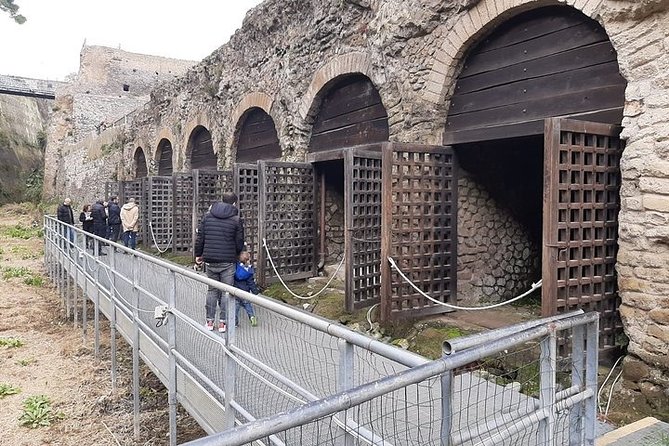
As the tour progresses, you move from domestic rooms to spaces with a public or civic feel.
College of the Augustales: mythological frescoes in a public temple
College of the Augustales is one of the few public temples excavated that you can actually visit here. The highlight is mythological frescoes. That matters because frescoes aren’t just decoration—they carry stories, beliefs, and the kind of messaging a community expected to see.
This stop is a good reminder that Herculaneum wasn’t only private life behind walls. People gathered, looked at art tied to myth, and lived under the social rhythm of public institutions.
Casa del Salone Nero: fresco state of conservation on the main street
Next is Casa del Salone Nero, the house of the black hall. It overlooks the main street of Herculaneum and reflects the Vitruvian model. Vitruvian references help explain how Roman architecture thought about planning and proportions. And for this stop, the guide will likely spend time on one of the key practical points: the state of conservation of its frescoes.
That conservation piece is important at Herculaneum. Because the preservation can be exceptional, you can sometimes see paint and surfaces that would be gone elsewhere. A guide helps you interpret what you’re seeing and why it’s rare.
Salone della Barca and the Antiquarium: charred boat plus optional museum time
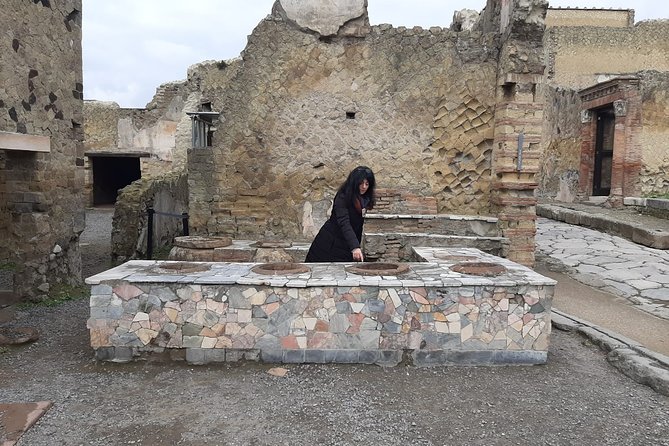
Two of the most unique pieces come near the end: a charred Roman boat and an optional museum stop where you can shape the tour toward your interests.
Salone della Barca di Ercolano: charred boat in a small museum
Salone della Barca di Ercolano is outside the main archaeological area in a small museum. Here you can admire an ancient charred Roman boat and other finds. This stop has a different feel because it’s more museum-like—less “walk through a house,” more “stand and focus on objects.”
That shift is a win, especially if your feet or attention want a break. It also gives you a strong closing image: Herculaneum isn’t only architecture. It includes the everyday evidence of travel, transport, and the material world people relied on.
Antiquarium di Ercolano: choose your museum time
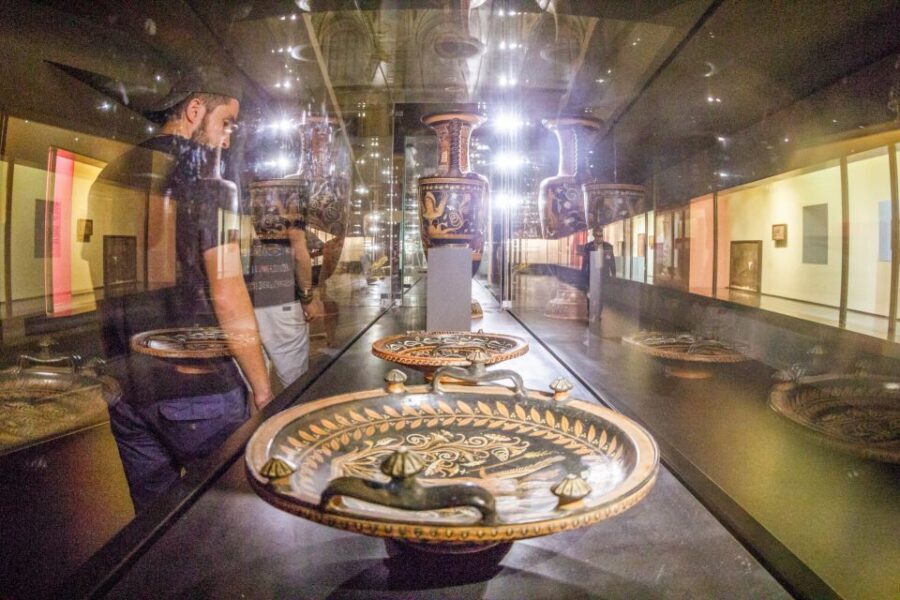
Finally, you reach Antiquarium di Ercolano. At the customer’s discretion, you can visit the museum’s permanent and temporary exhibitions, where you might see jewelry, everyday objects, and charred wood furnishings.
This is where you can tailor your tour without changing the guide plan. If you’re itching to see artifacts up close, use the time here. If you’re running low on energy, you can keep moving without feeling forced into a full museum marathon.
A practical tip: even with a guide, museums are still self-paced once you’re inside. If you want to get the most value from that time, tell your guide what kind of objects you’re most interested in—jewelry, household items, wood furnishings—and they can point you toward what to look for first.
Price and value: what you’re really paying for at €102.12
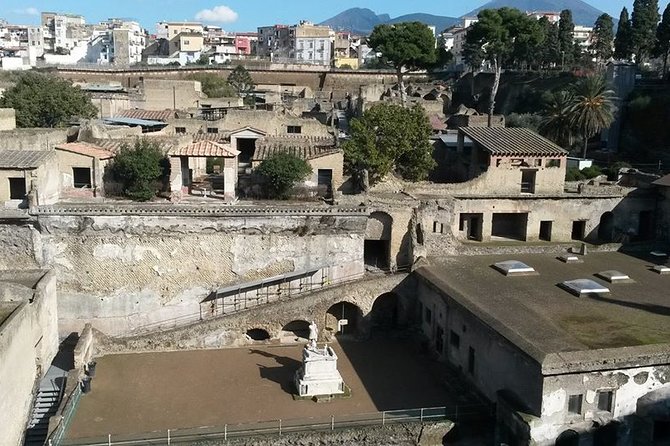
The listed price is $102.12 per person for a private 2-hour English walking tour, plus taxes. The guide is licensed and focused on archaeology, which matters here because Herculaneum is full of detail that’s hard to interpret without help.
The main cost “gotcha” is the entrance ticket: the Archaeological Park of Herculaneum is 16€ per person (free under 18 with document). The itinerary’s stops are designed around visits within the park and museum areas, but the park entrance itself is separate.
So how is this still good value?
- You’re paying for time with a guide who can explain why each house and bath matters, not just where it is.
- You’re paying for a route that avoids feeling random or rushed.
- You’re paying for private pacing, which can be a big deal if anyone in your group needs extra time (strollers, mobility limits, or elderly parents).
If you’re comparing to a self-guided ticket and audio app, the difference is interpretation. Herculaneum rewards people who ask questions. With a guide, you can ask questions as you walk instead of guessing later from a brochure.
One more value point: group discounts are offered. If you have a tight group of family and friends, private can feel less “splurge” and more like the smartest way to see the site together.
Who should book this Herculaneum private walk
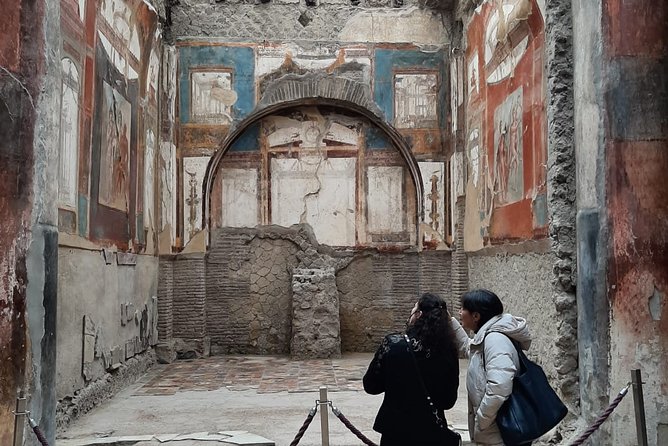
This tour is a strong fit if you:
- Want a private experience where your group can move at your pace
- Prefer an English guide with time for questions
- Like archaeology when it’s explained through daily life: baths, household decoration, mosaics, and public frescoes
- Are choosing between Herculaneum and Pompeii and want the sense that Herculaneum can feel more intact with smaller crowds
It’s also ideal for mixed groups. In the feedback, guides are praised for adapting to elderly parents who need extra time and families with strollers. If your group has even one person who struggles with long, uncontrolled wandering, private is usually the better match.
If you’re the type who only wants a quick highlight loop with zero questions, you might not need a guide. But if you like learning as you go, this tour’s structure matches that style.
Should you book it
I’d book this tour if you want Herculaneum to make sense fast. The itinerary hits major visual categories—thermal baths, decorated houses, public temple frescoes, and a museum add-on—and the private pacing helps you actually absorb what you’re seeing in about two hours.
Skip (or consider a lighter plan) if you’re trying to maximize the number of sites at all costs. This is a curated route, not an all-day completion mission. You get depth through explanation, not breadth through sprinting.
If you’re going from Naples and want one focused plan on the archaeological side, this is also a clean choice because the starting point is clearly at the park entrance area on Corso Resina. You’ll know where you’ll meet and where you’ll end—then you can decide what to do next.
FAQ
How long is the private walking tour of Herculaneum?
It’s about 2 hours.
Is this tour private or shared?
It’s a private tour. Only your group participates.
What language is the guide?
The tour is offered in English.
Where does the tour start and end?
It starts at the Archaeological Park of Herculaneum, Corso Resina, 187, 80056 Ercolano NA, Italy, and it ends back at the meeting point.
Do I need to buy the entrance ticket to the Archaeological Park?
Yes. The Archaeological Park entrance fee is 16€ per person and is not included. Entry is free under 18 with a document.
What is included in the tour price?
A licensed tour guide with archaeology expertise, the private tour format, and taxes are included. The park entrance fee is not included.
What should I bring for the walk?
The tour recommends sunglasses, a hat, shoes, and comfortable clothing.
What if my plans change?
Free cancellation is available. You can cancel up to 24 hours in advance for a full refund.