REVIEW · NAPLES
Private Pompeii, Herculaneum and Winery Tour from Naples
Book on Viator →Operated by city & tour soc coop arl · Bookable on Viator
Pompeii and Herculaneum in one day is a lot.
This private tour is built for that challenge: you get an air-conditioned ride between sites, plus live commentary from an English-speaking driver so the ruins don’t feel like random stones. I like the plan because it gives you time at your own pace once you’re on the ground, instead of being marched through like a conveyor belt.
Two things I especially like here: the stops are the big-ticket areas—Pompeii Forum and Herculaneum’s mosaics and baths—and the day includes a real breather with a winery visit on the Vesuvius slopes. One consideration: entrance fees are not included, and you’ll need your ID card to enter the sites, so you’ll want to plan that before the day starts.
In This Review
- Key highlights to know before you go
- Why this Pompeii + Herculaneum combo works in a day
- Getting there from Naples: AC comfort, live commentary, and a driver who fills the gaps
- Pompeii Archaeological Park: what to focus on (and how to pace it)
- Pompeii Forum: the city’s power center
- House of the Vettii: frescoes and luxury details
- Pompeii Amphitheater: gladiator-era entertainment
- Lupanar: daily life at its most uncomfortable
- Stabian Baths: hot and cold life
- Theater: Teatro Grande
- The big Pompeii “don’t get stuck” items
- Parco Acheologico di Ercolano (Herculaneum): why this city feels clearer
- House of Neptune and Amphitrite: mosaics you can’t ignore
- Central Baths: the daily rhythm of public bathing
- House of the Deer: a luxurious residence to round out the story
- A quick pacing thought
- The Vesuvius winery break: what you gain beyond the ruins
- Time and comfort: 8 hours that feel more realistic than a rushed sprint
- Price and value: is $349.21 per person a smart deal?
- Who this tour suits best (and who might want to DIY)
- If you’re coming from Rome: a realistic one-day plan
- Should you book this private Pompeii, Herculaneum and winery day?
- FAQ
- Do I need to bring an ID to enter Pompeii and Herculaneum?
- Are the entrance fees included?
- Will I have a guide walking with me inside the ruins?
- Is there a wine stop included, and is it in the Vesuvius area?
- What’s the total duration of the tour?
- Where does the tour start and end?
- Can I cancel for a full refund?
Key highlights to know before you go

- Air-conditioned private vehicle between Pompeii, Herculaneum, and the wine stop
- Live commentary on board from your English-speaking driver/guide
- At-your-own-pace exploring once you arrive at each archaeological park
- Main Pompeii sights like the Forum, House of the Vettii, Amphitheater, and Stabian Baths
- Herculaneum’s preservation shown through mosaics, luxury homes, and public baths
- Vesuvius-area wine break, so the day isn’t only ruins and walking
Why this Pompeii + Herculaneum combo works in a day

If you’re choosing between Pompeii and Herculaneum, you’re really choosing between scale and clarity. Pompeii is huge and dramatic. Herculaneum is smaller and—thanks to how the city was buried—often easier to read like a “complete” snapshot of Roman life.
This tour’s value is that it doesn’t ask you to pick only one side of the story. You’ll see Pompeii’s main public-and-home highlights, then switch gears to Herculaneum’s extraordinary preservation. And because the tour is private, you can manage your pace better if you’re slower with photos, or if you want to linger somewhere specific.
There’s also a practical benefit: you’re using one day and one transport plan. No switching buses, no confusing multi-leg routes, and no trying to coordinate timing across two major archaeological sites.
You can also read our reviews of more private tours in Naples



Getting there from Naples: AC comfort, live commentary, and a driver who fills the gaps
The day runs from Naples with pick-up and drop-off from designated meeting points, and you travel in a deluxe air-conditioned vehicle. That matters more than people think. Pompeii and Herculaneum are outdoors, and the drive between them usually eats into your energy. AC keeps you fresh for walking, not just for getting there.
A helpful twist: you get live commentary on board. The tour doesn’t rely on you to figure everything out solo before you step into the ruins. In past versions of this experience, drivers like Carmine and Francesco have been praised for sharing context about the area and history between stops. So you’re not only looking—you’re getting the why behind what you see.
One more logistics detail that’s genuinely important: this is driver only, meaning there’s no separate guide escorting you through the archaeological areas. You’re responsible for your own exploration once you’re dropped off, which can be great if you like control, but less ideal if you want a constant, in-depth guide right beside you.
Pompeii Archaeological Park: what to focus on (and how to pace it)
Pompeii is the star for a reason. In a short window, you want to see the city’s structure: where people governed, prayed, entertained themselves, and went about daily life. This tour’s plan hits those zones, and you get about 2 hours at the Pompeii site.
Pompeii Forum: the city’s power center
The Pompeii Forum is described as the political, economic, and religious heart. That’s the big concept to remember here. When you look around the Forum, you’re seeing the “gravity” of the city—where official life and public life intersected. The Forum is also surrounded by major buildings like the Temple of Jupiter and the Basilica, which help you understand how ceremonies and business worked in the Roman world.
Pacing tip: spend a bit of time orienting yourself first. If you start with houses or back streets, you can feel lost fast.
House of the Vettii: frescoes and luxury details
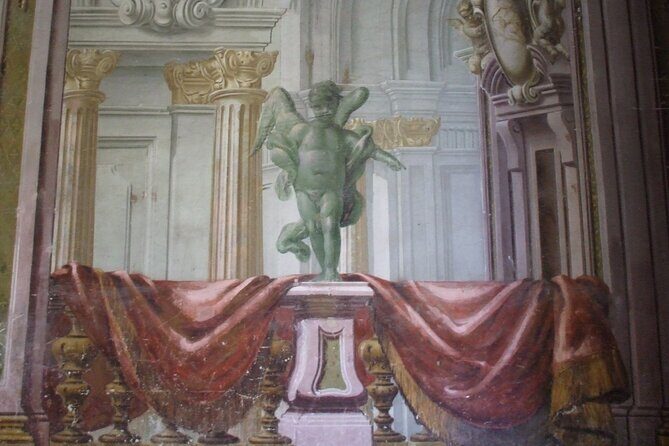
Next up is the House of the Vettii, one of the best preserved homes, known for refined frescoes and luxurious decoration. This stop is where Pompeii turns from “big public city” into “real family life,” even though you’re still looking at a preserved snapshot.
The value here is contrast. Pompeii’s public spaces are about performance and status. A home like this shows what people decorated their private rooms with—and that’s where the ruins start feeling personal.
You can also read our reviews of more wine tours in Naples

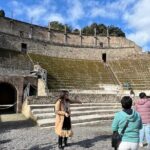




Pompeii Amphitheater: gladiator-era entertainment
The Pompeii Amphitheater dates to 70 BC. You’ll also hear how gladiator fights worked as mass entertainment in Roman culture. Even if you’re not a gladiator nerd, you’ll understand the crowd energy just by standing in the space and imagining events.
Practical note: amphitheater areas can have uneven walking and sun exposure, so comfortable shoes matter.
Lupanar: daily life at its most uncomfortable
The Lupanar is the ancient brothel with erotic frescoes. It’s not “fun,” but it is part of what makes Pompeii so revealing: the site documents the full range of everyday behavior, not only the grand and respectable.
If you’re visiting with kids or prefer to keep the mood light, you can choose how much time to spend here. The tour gives you time, not a script.
Stabian Baths: hot and cold life
The Stabian Baths show how public bathing worked, including pools and rooms for hot and cold bathing. This is one of those stops that helps you understand that Roman leisure wasn’t just “games”—it was routine social life.
Theater: Teatro Grande
You’ll also see Teatro Grande (the tour listing mentions it as part of the Pompeii highlights). The theater spaces help tie everything together—how cities entertained, staged events, and gathered crowds.
The big Pompeii “don’t get stuck” items
Two things to plan before you arrive:
1) Entrance fees are not included.
2) You need your identity card to enter, so bring it.
The tour also warns you to coordinate your Pompeii entrance time with their office before buying tickets. That’s worth taking seriously. Pompeii can be timed-entry and busy, and you don’t want your day’s schedule to break because of ticket timing.
If you feel you want more context, the tour notes that you can hire a Pompeii guide on site. That’s a good option if you want the structure of a guide but still prefer control over the pacing.
Parco Acheologico di Ercolano (Herculaneum): why this city feels clearer

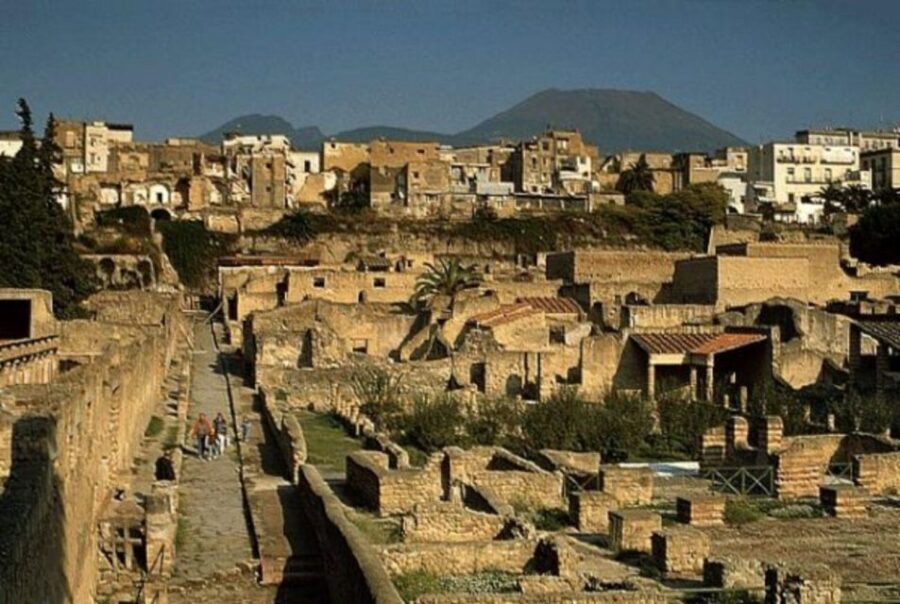
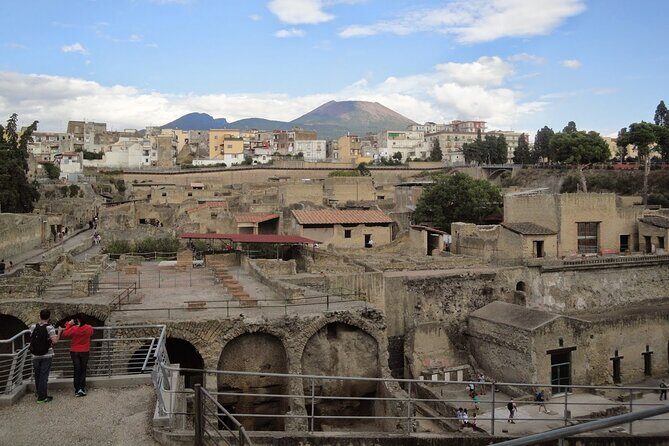
Herculaneum is often the surprise win. Pompeii is famous, but Herculaneum can feel easier to “read” because so many objects and spaces survived in volcanic mud flow. The tour highlights that the city was sealed during the 79 AD eruption, which is the reason the preservation here can be extraordinary.
You’ll have about 2 hours at Parco Acheologico di Ercolano, and the tour focuses on a few high-impact areas.
House of Neptune and Amphitrite: mosaics you can’t ignore
The House of Neptune and Amphitrite is singled out for its mosaics, including a depiction of Neptune and Amphitrite. This is the kind of detail that makes people stop walking just to look closer.
It’s also described as having a luxurious nymphaeum decorated with shells and colored glass tiles. This is exactly why Herculaneum can feel more intact than Pompeii. You’re not just seeing ruins—you’re seeing decorative ambition.
Central Baths: the daily rhythm of public bathing
The Central Baths are described as well preserved, with changing rooms, tubs, and mosaics. Roman baths weren’t only about hygiene; they were social hubs. If you want a “how did they live” stop, baths are one of the best ways to understand it.
House of the Deer: a luxurious residence to round out the story
The House of the Deer is listed as one of the most sumptuous residences. Even without spending the entire day inside, it gives you a sense of how wealthy residents decorated and used space.
A quick pacing thought
With only about two hours, you’ll get the highlights rather than full coverage. That’s fine. The sweet spot in Herculaneum is picking a few places and spending enough time to notice details—mosaic work, layout, and how rooms connect.
The Vesuvius winery break: what you gain beyond the ruins
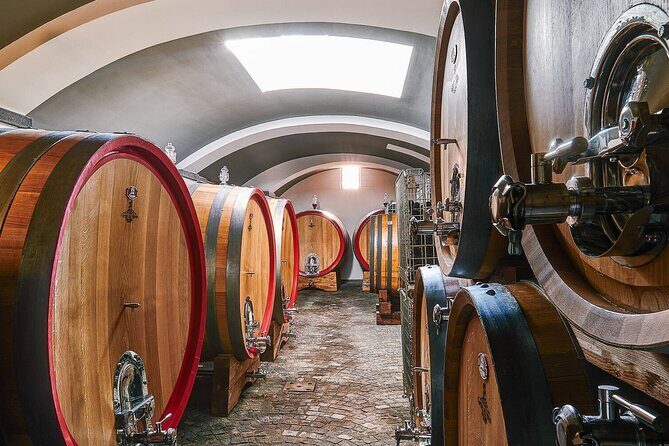
After archaeology, you get a wine break built around a vineyard grown on the slopes of Vesuvius. The tour doesn’t list the winery name here, but it does make the intent clear: you’re not just drinking wine. You’re connecting the terroir of this volcanic landscape to the food-and-drink culture of the region.
This stop can do a lot for the day:
- It gives your feet a rest and resets your headspace.
- It turns the Vesuvius story from geology into taste.
- It breaks up the emotional intensity of seeing what happened in 79 AD.
Two practical tips for making the winery stop work:
- Bring an extra layer if the day turns cooler later, since you’ll still be outside for parts of the experience.
- Since lunch isn’t included, you might want to plan for how you’ll eat before or after, so you don’t feel stuck later in the day.
Time and comfort: 8 hours that feel more realistic than a rushed sprint
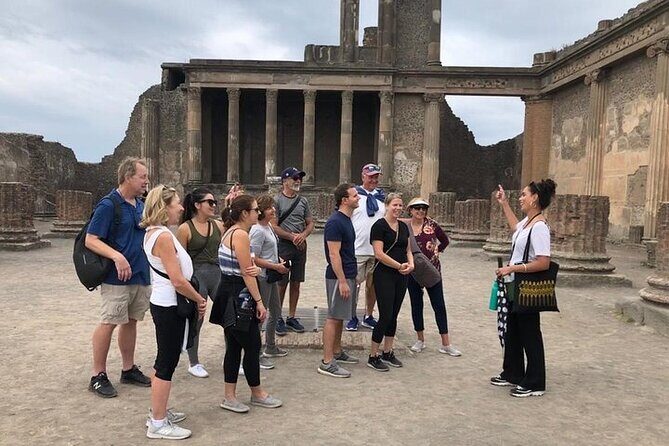
The whole tour is listed at about 8 hours, including the drive time between Naples and the two archaeological parks. That length is a good middle ground: long enough to see major Pompeii and major Herculaneum, but not so long that you’re exhausted beyond enjoyment.
Comfort is where you feel the design choices. You’re in a deluxe air-conditioned vehicle, you’ll get commentary during transitions, and you’re not spending your entire day trying to figure out transport.
Also check the note about timing: the operator says they’ll ensure your timely return to your port if you’re arriving by cruise. So if you’re on a ship, this plan has a “finish line” built in.
One thing I appreciate in the fine print: they’re not responsible for lost personal items or valuables left in vehicles during transport or while you’re away visiting. In practice, that means bring a small day bag, keep your essentials with you, and don’t leave anything you’d miss behind.
Price and value: is $349.21 per person a smart deal?
At $349.21 per person, this isn’t a budget outing. So the question is value, not just cost.
Here’s where it can be worth it:
- Private tour with only your group participating (the day is built around you, not a mixed crowd shuffle).
- AC transportation plus all the operational costs like tolls, parking, petrol, and taxes.
- Pick-up and drop-off from designated meeting points.
- Live commentary on board, which adds real meaning to the transitions.
- Two major sites in one day, rather than having to plan a second trip.
The catch is that you still pay entrance fees separately, and you’ll likely want to budget for meals since lunch isn’t included. Also, because you won’t have a guided escort inside the sites, you’re relying on your own exploration inside Pompeii and Herculaneum. If you love museums and want constant interpretation, you might consider hiring a site guide for Pompeii when available.
My practical take: if you value convenience, comfort, and control over pacing, the price can feel fair. If you’re trying to travel as cheaply as possible and don’t mind DIY planning, you’ll find other options.
Who this tour suits best (and who might want to DIY)
This tour fits best if you want:
- A structured day that covers Pompeii and Herculaneum without transport headaches
- An AC ride and a driver who explains the region between stops
- The freedom to linger at the areas you care about most
It may not be perfect if you:
- Want a constant professional guide inside every exhibit space
- Don’t like timed coordination, especially because you need to coordinate Pompeii entrance time and bring ID
- Prefer a fully guided tour where you never have to think about where to go next
A small bonus: casual dress is allowed, and it operates in all weather conditions, so you’ll want to bring a hat or rain layer depending on the forecast.
If you’re coming from Rome: a realistic one-day plan
If you’re starting in Rome, the tour suggests catching the Freccia Rossa Fast Train from Rome Termini at 7:35 am to Naples Centrale at 8:45 am. Then you’ll be picked up from the Naples train station for the tour. At the end of the day, you’ll drive back in Naples so you can take a train back; the suggestion is a 6:30 pm departure from Naples.
This kind of schedule is ideal for people who don’t want an overnight Naples stay. It’s also a good reminder that you should keep your day tight. The better you are at showing up on time, the smoother the day runs.
Should you book this private Pompeii, Herculaneum and winery day?
Book it if you want a comfortable, efficient day that hits Pompeii’s headline sights, then gives you time to experience Herculaneum’s better-preserved Roman details, and then caps the day with Vesuvius wine. The private setup and the live in-vehicle commentary are the big reasons this feels like more than a basic transfer.
Think twice if you’re mainly looking for a full guided walkthrough inside the archaeological areas. Since it’s driver only during visits, your enjoyment will depend on whether you like exploring and reading signs at your own pace. Also double-check that you’re ready for ID requirements and separate entrance fees.
If you can handle that, this is a smart way to spend one day in the Naples area without turning it into a stressful logistics test.
FAQ
Do I need to bring an ID to enter Pompeii and Herculaneum?
Yes. The tour notes that an identity card is required to enter the site, so bring your ID on the day of the tour.
Are the entrance fees included?
No. Entrance fees are not included where applicable, so you’ll need to plan to buy tickets separately.
Will I have a guide walking with me inside the ruins?
No. The tour is described as driver only, with live commentary on board. You’ll explore the archaeological areas on your own during visits.
Is there a wine stop included, and is it in the Vesuvius area?
Yes. The tour includes a wine break with a visit to a vineyard grown on the slopes of Vesuvius.
What’s the total duration of the tour?
The tour duration is listed as about 8 hours.
Where does the tour start and end?
It starts in Naples, Metropolitan City of Naples, Italy, and ends back at the meeting point.
Can I cancel for a full refund?
The tour offers free cancellation. You can cancel up to 24 hours in advance for a full refund. If you cancel less than 24 hours before the start time, the amount paid isn’t refunded.