REVIEW · NAPLES
Private Herculaneum for Families: Kids Archaeology Adventure
Book on Viator →Operated by Leisure Italy · Bookable on Viator
Herculaneum hits different when kids are part of the plan. This private family tour makes the ancient town feel like a real place, not a textbook, using a Blue Badge–accredited guide, hands-on style games, and story-led stops kids can actually follow. I especially love the way the guide turns small details into big moments, like children spotting preserved wood and wall art that adults often miss. My other favorite part is how the tour keeps you moving through the site at a family pace, so you’re not stuck watching adults drift from plaque to plaque. The main drawback to plan for is walking: even with a smart route, you may want to bring extra water and a hat on warm days.
What makes this experience work for families is the setup. You get a keepsake site map and an Herculaneum4Kids package, and the tour commentary is designed to hold attention without turning into baby talk. In a couple of guides I saw highlighted, like Antonella and Paola, the history came with little challenges and prompts that helped both older and younger kids stay engaged. Still, you should know Herculaneum is a real archaeology site with uneven surfaces in places, so wear good shoes and don’t plan on breezing through if your child needs frequent breaks.
If you’re also doing Pompeii, this is a smart pairing. Herculaneum shows the daily life side of Rome in a more compact, easier-to-navigate setting, and the eruption story lands emotionally once you’ve seen the preserved rooms, everyday tools, and human shelter remains. You’ll walk away with a stronger sense of how people lived here before Vesuvius changed everything.
In This Review
- Key points before you go
- Reading Herculaneum like a neighborhood, not a ruin
- The Parco Acheologico di Ercolano: why the setting matters first
- Antiquarium: charred wood clues your kids will remember
- Boat Pavilion and Vesuvius views: making the coast make sense
- House highlights your kids can picture: from courtyards to mosaics
- Casa dei Cervi and the art of status
- Casa di Nettuno e Anfitrite and mosaic craftsmanship
- Casa del Bicentenario and preserved wood with a human detail
- Casa del Tramezzo di Legno: when a folding screen becomes a wow moment
- Casa dello Scheletro: the mystery element that helps kids remember
- Roman routines for all ages: baths, the gym, and street food
- Palestra: the ancient gymnasium social scene
- Women’s Baths: engineered comfort and conversation
- Thermopolium: the street-food counter moment
- The ad cucumas wine sign: commerce as wall art
- Shoreline shelter and Sacello Augustali: the town’s emotional side
- Price and value: what you’re really paying for at $221.70 per person
- Getting there smoothly: pickup, walking pace, and what to pack
- Should you book this family Herculaneum archaeology adventure?
- FAQ
- How long is the Private Herculaneum for Families tour?
- Is the admission ticket included?
- Does the tour include pickup from Naples?
- Is this tour private or shared with other groups?
- What language is the tour in?
- What should we bring for comfort during the visit?
Key points before you go
- Blue Badge family-focused guidance that keeps kids engaged while staying accurate for adults
- Preserved Roman material you can’t get anywhere else: wood, fresco fragments, mosaics, and everyday objects
- A town-within-walking-distance feel, so you can actually picture neighbors and routines
- Seaside and volcano context that helps children connect the mountain to the ruins
- Kid-friendly “spotting” moments like the Thermopolium counters and painted shop ads
- A keepsake Herculaneum4Kids package plus a site map to extend the learning after the tour
Reading Herculaneum like a neighborhood, not a ruin
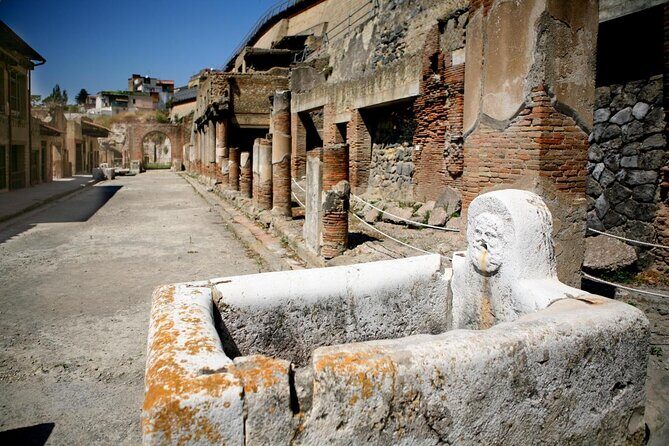
Herculaneum feels intimate. Unlike bigger sites where you’re constantly orienting yourself, this one lets you picture street life fast. The streets are close together and the buildings sit near enough that your brain starts doing the most useful thing in travel: imagining where people stood and what they would have seen.
The guide’s job here is translation. You’re not just walking past walls and floors. You’re being taught how to read them: what doors were like, how rooms were laid out, why certain artifacts survived, and how the town functioned day to day. That’s why the “family” angle matters. Kids are great at noticing small visual clues, and the tour uses that talent on purpose.
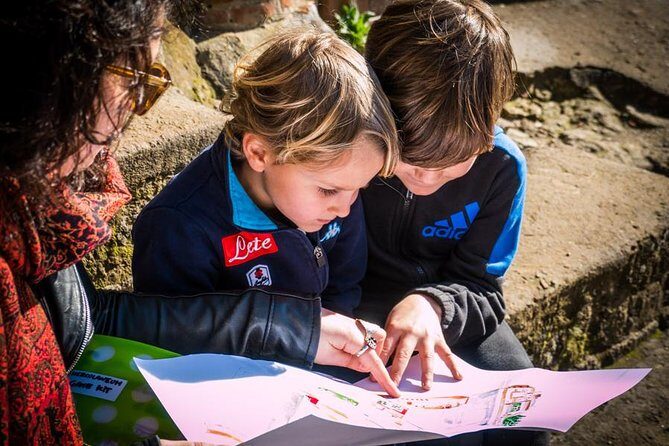
If you want a win with your group, look for a tour that doesn’t treat children as spectators. This one is built to keep them participating—through short activities, clear explanations, and frequent visual payoffs.
You can also read our reviews of more private tours in Naples



The Parco Acheologico di Ercolano: why the setting matters first
Your visit starts in the Parco Acheologico di Ercolano, and that’s the right move. Before you even hit the indoor exhibits, you need the big-picture why. Herculaneum survived because it was buried under thick volcanic material from the eruption of Vesuvius in 79 AD. That cover acted like a protective blanket, which is why so much remains: wooden doors and furniture, colorful fresco traces, mosaics, and even food residues.
This first stop is also where the site becomes emotionally real. The contrast between the modern area above and the ancient town below is instant. For kids, it often turns into a simple connection: the mountain you can see relates to the place you’re standing in. That matters because it makes the story coherent, not scary for the wrong reasons.
One practical note: expect a walk. Even though the route is family-appropriate, you’ll still move through multiple zones. If you’re traveling with toddlers, plan short breaks and bring small snacks. Older kids usually thrive here because they can “collect” details like a scavenger hunt.
Antiquarium: charred wood clues your kids will remember
Next comes the Antiquarium, and it’s not just a room of objects. It’s a set of clues. You’ll see items linked to daily routines—jewelry, coins, writing tools, household objects, and children’s belongings. The surprise is how familiar a lot of it feels once someone gives you the right prompts.
The star for many families is the preserved charred wood. When volcanic heat carbonized organic materials, it didn’t turn everything to ash. Instead, wood survived in a blackened-but-recognizable form. Kids love the idea that what looks like dark debris is actually real wood, nearly two thousand years old. That one detail gives them a mental hook that makes later outdoor rooms easier to understand.
Adults get a different kind of payoff. Seeing writing tools and everyday household items helps you connect the dot between the big Roman story and what families actually did—work, shopping, decorating, and running a home.
Boat Pavilion and Vesuvius views: making the coast make sense
A great family tour doesn’t just show you artifacts. It helps you understand geography. On the way to the archaeological area, you often get views toward the Parco Nazionale del Vesuvio region, with Vesuvius’s distinctive profile creating a strong visual reference point for kids.
Once you reach the Boat Pavilion, that geography clicks. You’ll see a preserved Roman boat that once sailed in the Bay of Naples, plus tools and equipment connected to sailors. The boat’s wooden hull is darkened by time, but it’s still remarkably intact. Adults appreciate the preservation story. Kids typically focus on the hull shape and the idea of traveling by sea instead of by road.
This stop adds balance. Herculaneum wasn’t just houses and religion. It was a community connected to trade and movement. When you understand that, the rest of the town feels less like a museum and more like a real place with jobs, travel, and supply chains.
House highlights your kids can picture: from courtyards to mosaics
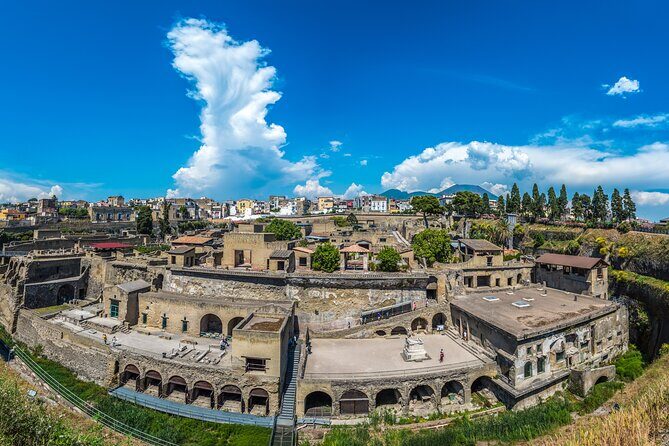
One reason families like Herculaneum is that the town reads like a set of homes you can almost walk into. The guide helps you see what you’re looking at, so the buildings stop being confusing shells.



Casa dei Cervi and the art of status
Casa dei Cervi is known for an elegant courtyard and marble statues of stags being attacked by hunting dogs. It’s the kind of scene kids can process quickly, because it’s visual and active. For adults, it’s a reminder that Roman homes were also displays—of wealth, taste, and identity.
Casa di Nettuno e Anfitrite and mosaic craftsmanship
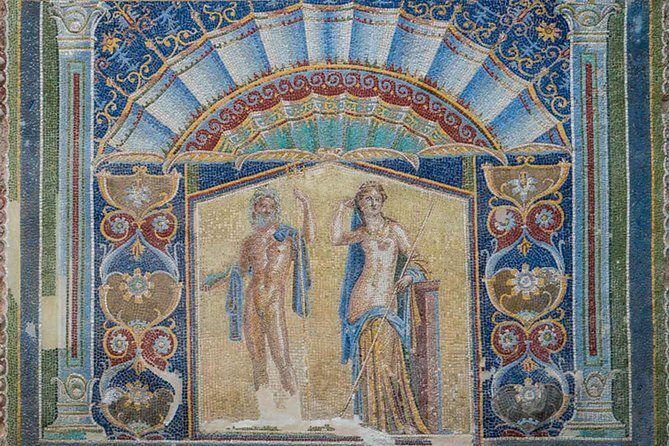
Casa di Nettuno e Anfitrite focuses on a famous mosaic of Neptune and Amphitrite. The mosaic is made from tiny glass tesserae, and the image holds up surprisingly well after nearly two millennia. Kids often pause because the colors stay strong. Adults tend to linger because the craftsmanship feels both delicate and confident.
If your kids get restless easily, this is one of the best areas to lean on because the mosaics and figures invite close looking. That’s where the guide’s timing matters: short, guided prompts prevent the “just pass by it” problem.
Casa del Bicentenario and preserved wood with a human detail
Casa del Bicentenario brings a powerful mix: refined residential layout around a central courtyard, fragments of frescoes, and charred wooden elements that survived underground. One fascinating angle you might hear about here is the discovery of wooden writing tablets containing court records—proof that paperwork and bureaucracy existed in Roman daily life, even in an ancient town you’re visiting for fun.
Casa del Tramezzo di Legno: when a folding screen becomes a wow moment
Casa del Tramezzo di Legno has one of the most memorable preserved wooden features: a large folding screen that once separated areas of the house. It retains its shape and decorative details in a darkened, preserved form. For kids, it’s weird in the best way—like seeing an ancient prop that still looks solid. For adults, it shows how homes were organized socially, with reception spaces and private zones.
Casa dello Scheletro: the mystery element that helps kids remember
Casa dello Scheletro gets its name from a skeleton found there during early excavations. Today, you’ll still explore the rooms and see wall paintings and architectural features that help reconstruct how people lived. That single naming story gives younger visitors a “character” they can remember later when you’re talking about daily life.
Roman routines for all ages: baths, the gym, and street food
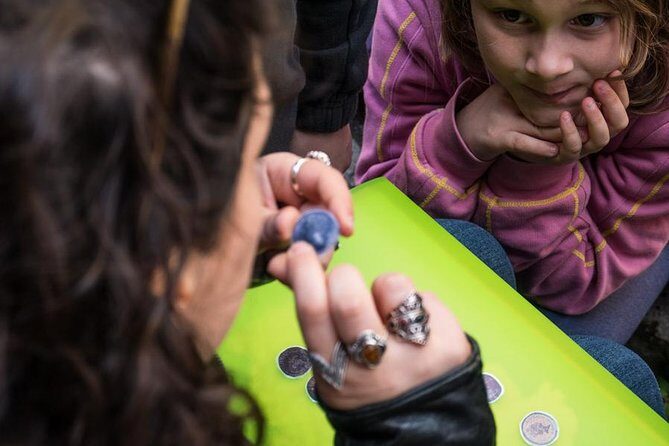
After the houses, you get daily-life Rome in a way that feels surprisingly modern.
Palestra: the ancient gymnasium social scene
The Palestra, or ancient gymnasium, shows how young Romans trained and socialized. There’s a courtyard layout for physical activity, with porticoes that offered shaded space for resting and discussing. Kids often imagine teenagers running and wrestling, which makes the scale of time feel less distant.
Parents usually appreciate the connection the guide makes: fitness, education, and civic life were tied together in Roman culture, not treated as separate tracks.
Women’s Baths: engineered comfort and conversation
The Women’s Baths reveal how Romans combined cleanliness, relaxation, and social life. You move through changing rooms, warm rooms, and hot rooms, and you can spot mosaic floors, marble benches, and an engineered heating system hidden under the floors.
For families, this works because it’s practical. Kids understand the idea of a bath routine. Adults see the architecture as a real system that cared about comfort and function.
Thermopolium: the street-food counter moment
At the Thermopolium, you’ll encounter something kids recognize instantly as a concept: a Roman street-food counter. Large terracotta jars set into a decorated countertop held hot meals, and painted signs helped customers know what was available.
This stop is fun because it’s a sensory bridge. Even if you can’t smell the food, the preserved jars and layout help you understand the rhythm of urban life—quick meals, social chatter, and daily stops that weren’t only for home cooks.
The ad cucumas wine sign: commerce as wall art
One charming surprise is the Ad Cucumas wine advertisement painted on a shop façade. It’s basically ancient marketing on a wall, with symbols and images that would have told passersby what to buy. Kids enjoy guessing the meaning; adults get a small laugh at how familiar the idea of promotions feels.
Shoreline shelter and Sacello Augustali: the town’s emotional side
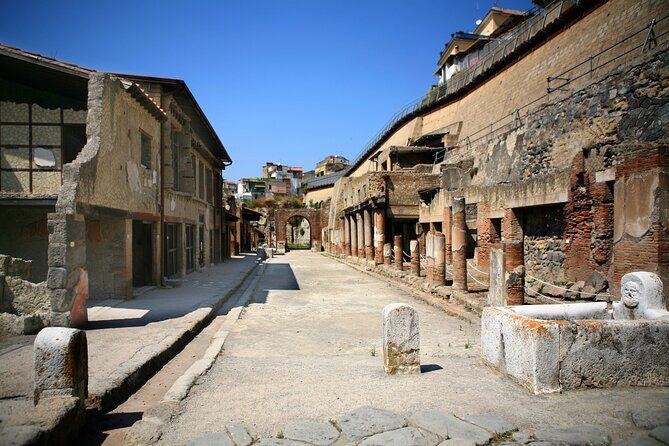
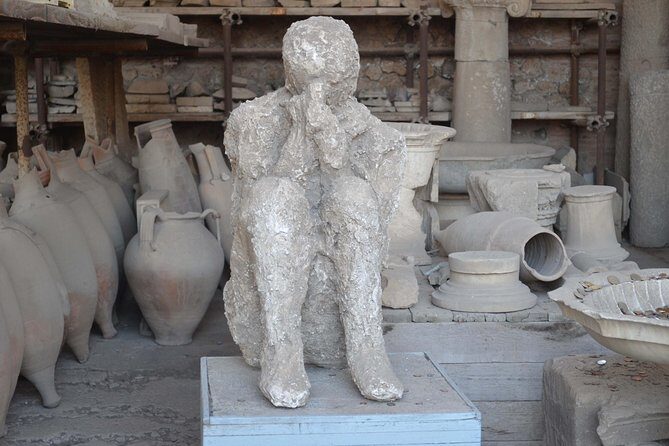
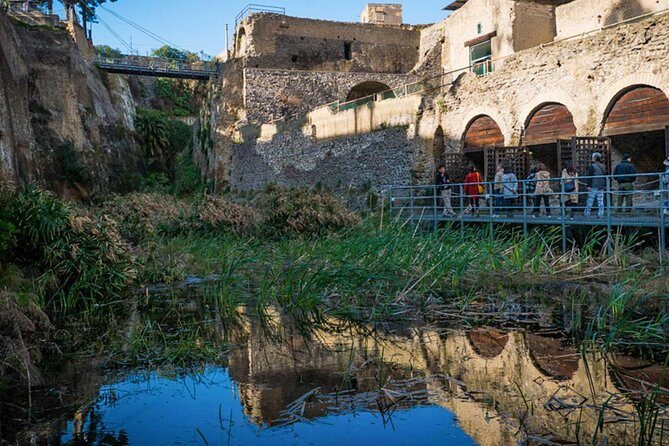
Eventually you reach the shoreline area, which can be the most moving stop. Here you’ll look into vaulted chambers where hundreds of skeletons were found. The story connects to people seeking shelter during the eruption, when superheated gases swept over the town.
This is one of those moments where the guide’s tone matters. A family tour should handle it with sensitivity while still honoring the archaeological reality. When it’s done well, it doesn’t scare kids; it helps them understand that history is about real people, not just objects.
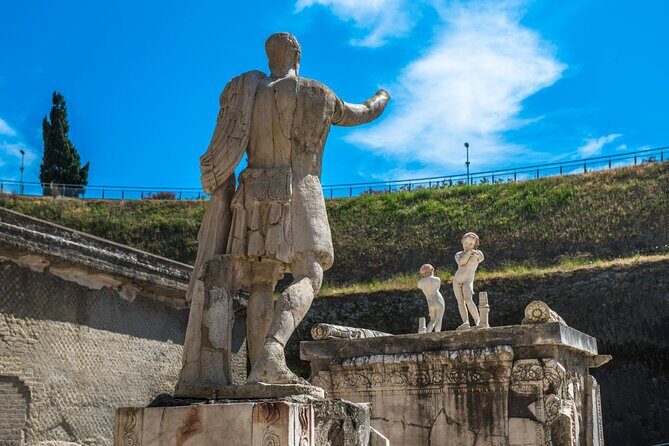
Close by, the Sacello Augustali offers a different emotional register: religion and civic identity. You can admire statues and finely decorated panels that once formed a backdrop for rituals linked to the imperial cult—honoring the emperor as a symbol of unity and prosperity. Kids often identify mythological figures, and adults can see how worship and politics overlapped in everyday Roman life.
Price and value: what you’re really paying for at $221.70 per person
At $221.70 per person, this is not a budget excursion. But it’s also not just you paying for access to ruins. You’re paying for a private, family-focused Blue Badge guide who keeps the group on track and makes the site readable.
Here’s the value that actually matters:
- Private attention: your guide can slow down for tired legs and still keep kids engaged.
- Kid-centered interpretation: games and prompts cut down on the usual family problem—kids disengage, adults stop caring, everyone gets cranky.
- Time efficiency: you see a lot of the key stops without wandering randomly.
- Included admission for the archaeological site (at least for the main start point), which reduces the hassle load.
If you’re comparing options, think in terms of outcomes. The best result is not seeing every corner. The best result is leaving with a clear picture of how people lived, ate, trained, shopped, bathed, and believed—before the eruption.
Getting there smoothly: pickup, walking pace, and what to pack
This tour offers pickup offered, with flexible meeting point options. Pickup is included in the premium option, so check what you’re selecting when you book. It ends back at the meeting point.
You should also plan around practical realities:
- Wear appropriate shoes. The site involves walking on uneven ground in places.
- From May to September, bring sun gear, especially for kids.
- Bring water. Warm days can make even an easy pace feel longer.
- Moderate physical fitness helps. The tour is family-friendly, but it’s still a real outing with real steps.
- Service animals are allowed, and the meeting area is near public transportation.
In real life, one of the most common family friction points is energy. A younger child may need more pauses than you expect. When you plan for that with snacks and breaks, the whole experience gets easier.
Should you book this family Herculaneum archaeology adventure?
Book it if you want Herculaneum to feel like a living place for your kids, not just a few quiet ruins. This is especially worth it when you care about guided storytelling that sticks, and when you like the idea of your children actively spotting clues—like preserved charred wood, mosaics, the street-food counter layout, and Roman seaside life.
Skip it (or adjust expectations) if your group needs very minimal walking or if your kids get overwhelmed by emotional content. The shoreline portion is powerful, and while a good guide handles it carefully, it’s still part of the true story.
If you’re doing both Herculaneum and Pompeii, I’d strongly consider this before Pompeii. You’ll learn how everyday Roman life looked when things were preserved well, and then you’ll recognize details later in the broader region.
FAQ
How long is the Private Herculaneum for Families tour?
It runs about 2 to 4 hours, depending on how the group moves and how long you spend at the main stops.
Is the admission ticket included?
Admission is included for the Parco Acheologico di Ercolano portion of the tour.
Does the tour include pickup from Naples?
Pickup is offered, and pickup is included in the premium option. You can share where you want to meet, and the meeting point is flexible.
Is this tour private or shared with other groups?
It’s private. Only your group participates.
What language is the tour in?
The tour is offered in English.
What should we bring for comfort during the visit?
Wear appropriate shoes. If you’re visiting from May to September, bring sun gear. It also helps to bring water, especially on warm days.