REVIEW · NAPLES
Pompeii private tour from Naples. The best choice for cruisers
Book on Viator →Operated by Nino Pezzullo · Bookable on Viator
Pompeii can feel like a sprint. This private Pompeii tour from Naples is built for a half-day plan: you start at Stazione Marittima, see the main highlights with included entry, and return to the same meeting point about 5 hours later. I really like two things: the cruise-friendly door-to-door pickup and the admission tickets included as you move from stop to stop.
One thing to consider: the schedule is tight. Many sites are only around 10 to 20 minutes, so you get a strong overview, not a slow stroll—and it does require good weather to run smoothly.
In This Review
- Key things that make this Pompeii tour work
- From Stazione Marittima to Pompeii: a Cruise-Friendly Half-Day
- Getting In Smoothly: Porta Marina, Prepped Tickets, and Early Starts
- Forum, Basilica, and Apollo: Where Daily Life Meets Worship
- Markets, Baths, and Two Great Houses: What Wealth Looks Like
- Theatre, Amphitheatre, and Via dell’Abbondanza: Public Shows and Shopping
- Bakeries in Pompeii: Popidio Prisco and Bread Making
- Price, Comfort, and Your Guide’s English Explanations
- Should you book this Pompeii private tour from Naples?
- FAQ
- How long is the Pompeii private tour from Naples?
- How much does the tour cost?
- Where is the meeting point in Naples?
- Does the tour end back at the same place?
- Is this a private tour?
- What language is the tour offered in?
- Are Pompeii admission tickets included?
- What transport is used from Naples to Pompeii?
- What happens if weather is bad or I need to cancel?
Key things that make this Pompeii tour work
- Cruise terminal start and finish at Stazione Marittima so you’re not guessing transit times
- Private group only (just you and your party), which keeps the pace sane
- Admission tickets are included across the main planned stops, so less time waits
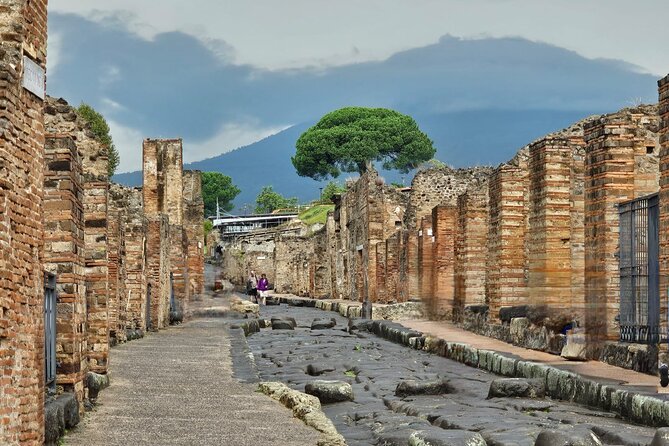
- A clear route through the big monuments: Porta Marina, Forum, theatre, amphitheater
- English guidance plus a mobile ticket to keep everything simple
- Comfort-focused transport in a Peugeot 3008 (with larger vehicles by request)
From Stazione Marittima to Pompeii: a Cruise-Friendly Half-Day
If you’re coming from Naples by cruise, logistics matter. This tour is designed to start right at Stazione Marittima (Napoli) and end back there. That matters because Pompeii is popular, and timing can go sideways fast when you’re working around ship schedules.
Plan on about 5 hours total. That includes the transfer and walking between major areas—so you’ll get enough time to feel you did Pompeii, without it eating your whole day. It’s also offered Monday through Friday within the stated hours (8:30 AM to 5:00 PM), so choose your excursion date carefully if your sailing is on a weekend.
You’ll go as a private group, which is a big deal in Pompeii. With just your party, you can ask questions, adjust pacing, and stop briefly if something catches your eye—without trying to keep 20 people moving as one.
Transport is handled in a 2014 Peugeot 3008. If your group needs a bigger vehicle, larger cars or mini vans are available on request (with a supplement). For many groups of 3 to 5, that’s a comfortable sweet spot: easy to manage with luggage and simple for getting in and out of traffic.
You can also read our reviews of more tours and experiences in Naples.

Getting In Smoothly: Porta Marina, Prepped Tickets, and Early Starts
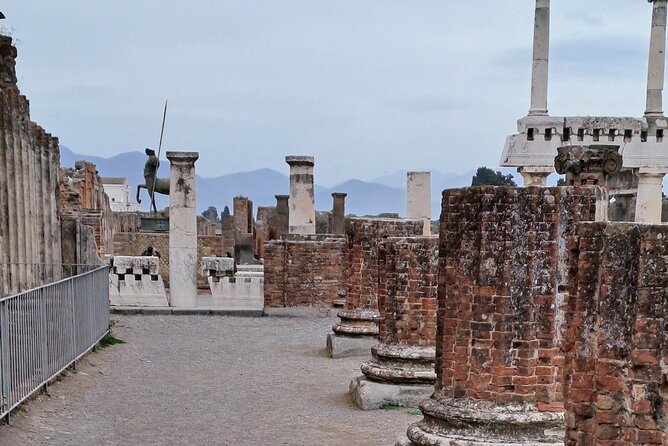
You begin Pompeii at Porta Marina, the most impressive of the seven gates. Starting there helps you orient fast. Pompeii is spread out, and the right first gate can make the whole walk feel less confusing, even on your first visit.
One practical bonus: the tour includes entry for the planned stops, and some groups have had tickets prepared in advance. That tends to mean less time dealing with long lines and more time actually looking at the ruins. It won’t turn Pompeii into a quiet museum, but it can cut down on the most annoying delays.
Early timing also helps. On at least one departure, Nino encouraged getting started early to avoid holiday crowd pressure. Even if you’re not there for a holiday, the core idea stays the same: earlier means you see more with less pushing and fewer bottlenecks.
As you walk in, your guide’s job is to connect what you see to how Pompeii worked day to day. You’re not just watching stones. You’re learning where people entered, where public life happened, where commerce ran, and what kinds of buildings reflect different social classes.
Forum, Basilica, and Apollo: Where Daily Life Meets Worship
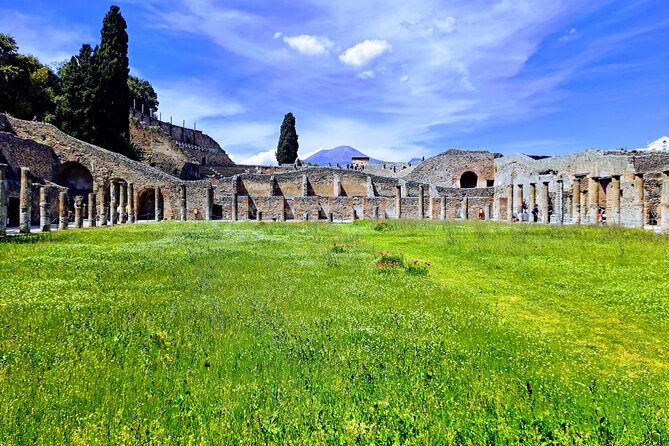
After Porta Marina, the route focuses on the Forum of Pompeii, the civil center where much of daily life played out. This is where you’ll see how the city arranged its public spaces: major buildings facing onto the Forum, with civic and commercial energy packed into a walkable core.
One of the most useful parts of a short stop like this is what your guide points out. The Forum isn’t only about big ruins; it’s about understanding purpose. The Forum area is also where the Basilica fits in later on the plan. Even if you only have around 15 minutes in that stop, it helps to think of the Basilica as the city’s administrative heart—where business and justice were carried out.
Next comes the Santuario di Apollo. This sanctuary sits in an early worship setting, and the choice of Apollo connects to Greek and Etruscan influence in Campania. If you’re the type who likes to understand why things were built, this stop gives you the cultural logic behind the site, not just a label.
A quick reality check: you won’t have time to read every inscription on-site. But with included context and a route that hits the big “meaning” structures, you leave with a clearer picture of how religion, civic life, and city planning overlapped.
Markets, Baths, and Two Great Houses: What Wealth Looks Like
Pompeii’s private life shows up in building details—who owned what, how people worked, and how they spent downtime. This tour hits those signals in a sequence that makes sense.
First, the Macellum, the city market. Here you’re looking at a marketplace courtyard where a circular structure was used for selling and cleaning fish. That’s a sharp clue that the market wasn’t just decoration; it was built for the messy realities of food supply and trade.
Then the route moves to the Suburban Baths. These are different from other thermal facilities because they were private, and the changing-room walls include erotic subject imagery advertising what went on upstairs. It’s a reminder that Pompeii had a whole spectrum of social behavior—some of it uncomfortable by modern standards—so keep it respectful and focus on the architectural and historical meaning.
Now for the “wow” factor: the homes. You’ll visit Casa del Fauno, one of the largest houses in Pompeii. From the street, the wealth and social standing of the owner were already visible—so you can read status in the exterior presence.
Next is Casa dei Vettii, one of the richest and most famous houses. This one is tied to prosperity imagery through Priapus, god of prosperity, and the rooms were richly decorated. Even with only about 15 minutes, this stop tends to land well because it gives you a clear contrast to the market and baths: a view into the private luxury side of the same city.
This is also where your guide matters most. A good explanation turns short visits into real understanding. If you want to feel like you got more out than just photos, the houses and baths are where that happens.
Theatre, Amphitheatre, and Via dell’Abbondanza: Public Shows and Shopping
Pompeii wasn’t quiet. Public entertainment and public movement were part of everyday life, and this plan shows that.
You start the entertainment section with Teatro Grande, built around the middle of the 2nd century BC. It hosted Greco-Roman comedies and tragedies. The payoff here isn’t only in the age of the structure; it’s in imagining the crowd behavior and staging style that would have made these performances feel like major community events.
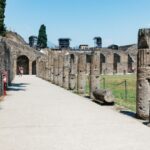
Then you hit the big one: Anfiteatro Romano, built in 70 BC. It’s described as the oldest amphitheater in the Roman world, with a capacity of up to 20,000 spectators. When you stand in or near the amphitheater, it’s hard not to get a feel for the scale—people packed in for spectacle, with an infrastructure built for mass viewing.
Between theatres and amphitheater stops, you also walk Via dell’Abbondanza, one of Pompeii’s most important streets and essentially the city’s shopping corridor. This is where you shift from “public performance” to “public commerce.” You’ll see the idea of a street economy: shops and activity laid out along a main route.
That shopping street stop is especially useful if you’re visiting in a short window. It helps you connect the ruins to how people actually moved through the city for purchases, errands, and social visibility.


Bakeries in Pompeii: Popidio Prisco and Bread Making
Pompeii was a working city, not a theme park. That’s why I like that this tour includes Panificio di Popidio Prisco, a bakery stop. You’ll get an explanation of how bread was produced, which turns a handful of stones into a sense of daily food production.
Bread matters because it’s basic and constant. When you understand bread-making, you start seeing the city’s infrastructure differently. People needed food every day, and Pompeii had systems to produce it locally.
The plan also includes the Basilica as part of the Forum cluster. Together, these stops give you a working loop: civic space, administrative function, then everyday needs like bread production. Even though each stop is timed, the sequence helps your brain connect the dots.
Finally, note that the tour includes admission tickets as you go through these major areas, so you’re not juggling separate entries while your guide is trying to keep you on schedule.
Price, Comfort, and Your Guide’s English Explanations
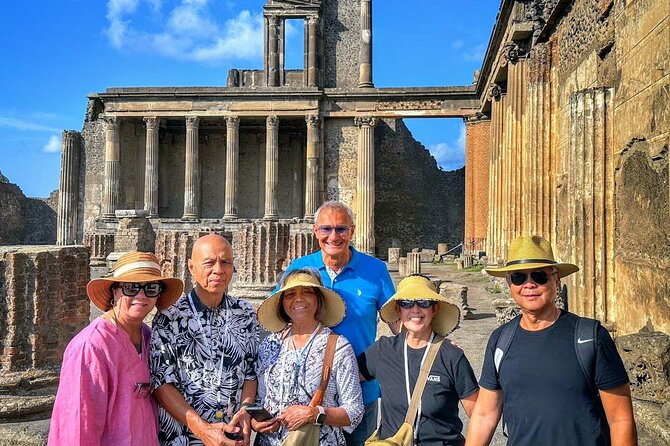
Let’s talk value. The price is $216.27 per person, for a roughly 5-hour private tour. That sounds like a lot until you add what’s included: private transport from Naples, English guidance, and admission tickets included for the planned stops. For families and small groups, this can work out better than paying for separate tickets plus separate transfers plus a generic guide.
Comfort also counts on a day trip. You’re riding in a Peugeot 3008 (2014 model), which keeps the trip manageable from the cruise terminal area. If your group is bigger, you can request a larger vehicle (with a supplement). That flexibility is worth remembering.
The guide experience seems to be a standout. The tour provider is Nino Pezzullo, and the tone from past participants is that Nino is friendly, communicates clearly in English, and makes the visit fit the group. In one case, a guide named Carmen handled pickup and had strong archaeology credentials—she studied archaeology in Naples and worked on a dig in Pompeii. Either way, you’re not just getting a script. You’re getting someone who can connect what you see to how Pompeii functioned.
One more practical perk from real-world experience: guides often use tools to help you find them quickly at the port and keep timing smooth. For example, there’s mention of WhatsApp contact and location sharing ahead of time. In cruise season, that kind of coordination saves stress.
Weather is the other reality. The experience requires good weather, and if it’s canceled due to poor conditions, you’ll be offered a different date or a full refund. Plan your cruise day with that in mind, and keep your alternatives mentally ready.
Should you book this Pompeii private tour from Naples?
Book it if you want Pompeii without the scramble. This is the right choice when you’re working with cruise timing, care about clear English explanations, and like a plan that hits the core sights in about 5 hours. The private group format is also a big quality-of-life upgrade in Pompeii.
Skip it or pair it with extra time if you’re the type who wants to linger in a single house or read every label slowly. The stops are short by design. You’ll get the overview, but you won’t get a slow, deep, by-the-book archaeology seminar in one afternoon.
FAQ
How long is the Pompeii private tour from Naples?
It runs for about 5 hours.
How much does the tour cost?
The price is $216.27 per person.
Where is the meeting point in Naples?
The tour starts at Stazione Marittima, 80133 Napoli NA, Italy.
Does the tour end back at the same place?
Yes, it ends back at the meeting point.
Is this a private tour?
Yes. Only your group participates.
What language is the tour offered in?
The tour is offered in English.
Are Pompeii admission tickets included?
Yes, admission tickets are included for the planned stops.
What transport is used from Naples to Pompeii?
Transport is carried out in a 2014 Peugeot 3008. Larger cars or mini vans are available on request with a supplement.
What happens if weather is bad or I need to cancel?
The experience requires good weather. If it’s canceled due to poor weather, you’ll be offered a different date or a full refund. You can cancel up to 24 hours in advance for a full refund.