REVIEW · SORRENTO
Pompeii Guided Walking Tour with Ticket
Book on Viator →Operated by JOE BANANA LIMOS & TRAVEL S.R.L. · Bookable on Viator
Pompeii can overwhelm you fast. This guided walk keeps the focus tight, with a licensed guide leading you through the big highlights, including plaster death casts, public squares, and the more surprising corners of an ancient town. You also get skip-the-line Pompeii tickets, which matters a lot at a site that draws crowds.
I especially like how the route mixes major civic spaces with everyday life. You’ll move through the Forum area, a main theatre space, market-related spots, and Roman bathing areas, so Pompeii feels like a place people lived—not just a pile of stones.
One thing to consider: at 2 hours 30 minutes, you won’t linger. Several stops are brief, and the brothel visit is time permitting, so plan to enjoy it in the moment rather than expecting long wandering.
In This Review
- Quick take: what makes this Pompeii tour work
- Pompeii is huge. This tour gives you a map you can feel
- Starting at Ristorante Bar Sgambati (10:30) and walking back the same way
- The Pompeii Archaeological Park portion: death casts, baths, theatre, and the private shock of it all
- Forum of Pompeii: the commercial, political, and religious center in one square
- Teatro Grande: how plays from Greek-Roman tradition shaped public life
- Granai del Foro (Forum Granary): market space plus thousands of artefacts
- Stabian Baths and Macellum: cleaning up and shopping down the main road
- The Lupanar brothel: erotic wall art and a time-permitting reality check
- Skip-the-line tickets: why this price can make sense
- What to bring, what to expect, and how to pace your 2.5 hours
- Who this tour suits best (and who might want a different pace)
- Should you book this Pompeii guided walking tour?
- FAQ
- How long is the Pompeii guided walking tour?
- What time does the tour start, and where do we meet?
- Does the tour include Pompeii entrance tickets?
- Is the group limited to a small size?
- Which major sights are included during the walk?
- Do I get to see the ancient brothel?
- Are food and drinks included?
- Where does the tour end?
- What is the cancellation policy?
Quick take: what makes this Pompeii tour work
- Skip-the-line entry keeps your time for ruins instead of queues.
- Small group (max 15) helps you actually get answers, not just follow along.
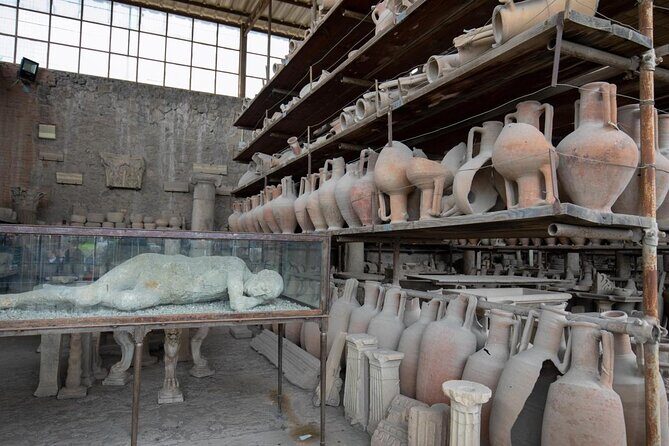
- Plaster death casts add emotional weight to the “eruption” story.
- Forum Granary stop is a practical, surprise-filled stop with thousands of artefacts.
- Stabian Baths and Macellum show daily routines like cleaning and shopping.
- Lupanar (brothel) is included if time allows, with wall art still visible.
Pompeii is huge. This tour gives you a map you can feel
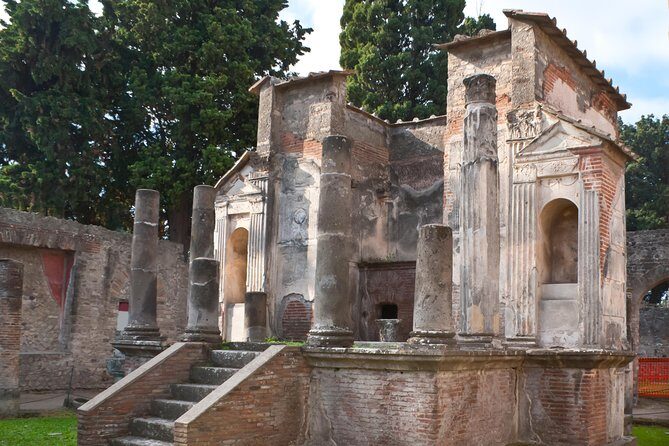
Pompeii can be intimidating in person. The park is wide, the streets look similar after a while, and it’s easy to miss what makes a place meaningful. This tour helps by threading you through the essentials with a licensed guide who explains what you’re looking at while you’re walking.
I like that you’re not just seeing showy landmarks. You’re guided through a chain of spaces tied to how people worked, shopped, watched performances, and used public baths. That mix makes the ruins easier to understand, even if your Roman history is rusty.
The other practical win is the skip-the-line setup. When you arrive at a major site, time spent standing can steal your energy. With tickets included and the group entering together, you get moving faster and stay in the ruins longer.
You can also read our reviews of more tours and experiences in Sorrento



Starting at Ristorante Bar Sgambati (10:30) and walking back the same way
This tour starts at 10:30 am at Ristorante Bar Sgambati, Via Villa dei Misteri, 1, 80045 Pompei NA, Italy. You’ll return to the same meeting point at the end, which keeps your day simple.
It’s also described as near public transportation. That’s a real advantage in this area, because you can adjust your timing if trains or buses don’t line up perfectly. For your planning, aim to arrive a bit early so you’re not stressed about finding the meeting point.
You’ll want comfortable shoes. The tour is listed for moderate physical fitness, which usually means a solid walking pace on uneven ground is part of the deal. Bring bottled water, since you’ll be outside for hours.
The Pompeii Archaeological Park portion: death casts, baths, theatre, and the private shock of it all

The heart of this experience is the walk through Pompeii Archaeological Park, supported by your guide for about 2 hours 30 minutes with admission included. This is where you connect the dots between the public spaces and the more human, personal details.
The standout here is the mention of plaster death casts. These casts turn Pompeii’s tragedy into something concrete, not abstract. When you pair that with the guide’s explanations, you’re not only looking at remains—you’re seeing how the eruption changed an entire city.
This stop also includes access to major ruins you’ll probably hear about anyway: houses, baths, and theatres, plus a brothel area later on. The benefit of having it bundled is that you don’t have to re-plan your route mid-day. Your guide keeps you on a sensible path, which helps you actually absorb what you’re seeing.
Forum of Pompeii: the commercial, political, and religious center in one square
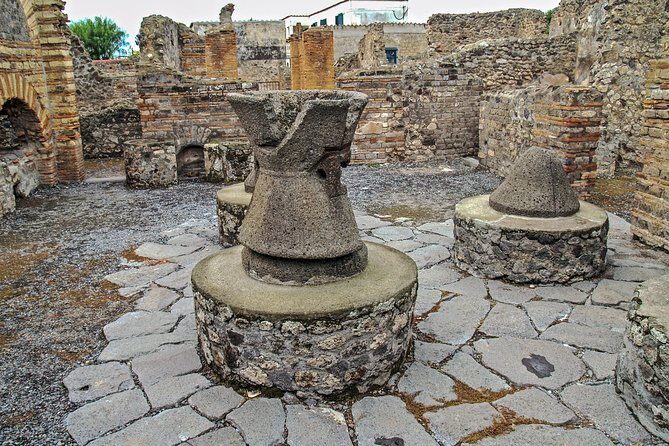
One of your early stops is the Foro de Pompeya. The Forum is described as the main square of a Roman town, and the tour frames it as the commercial, political, and religious centre.
This matters because it changes how you read the space. Instead of treating the Forum like one big “ruins photo” spot, you can understand it as a place where multiple parts of civic life overlapped. A square like this isn’t only about politics; it’s where people likely gathered to conduct business and participate in public life.
Time at this stop is short, about 15 minutes. That’s not a problem if you let your guide steer what you focus on. It’s just a reminder: you’re getting an introduction, not an all-day seminar.
Teatro Grande: how plays from Greek-Roman tradition shaped public life
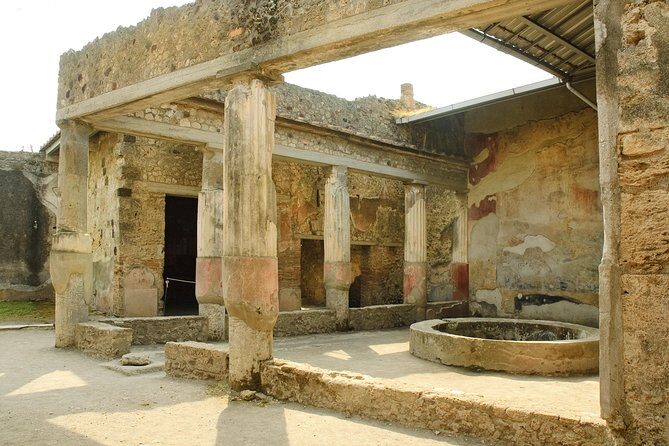
Next up is Teatro Grande, the main theatre of Pompeii. The tour notes that plays from the Greek-Roman tradition were represented here.
A theatre stop can feel like a “nice extra” on some tours. Here, it’s tied to how the city functioned socially. Even in a short visit of about 10 minutes, the theatre’s purpose becomes clearer when your guide explains what audiences would have come to see and why this kind of venue mattered.
If you’re the type who loves performance spaces, you’ll likely appreciate this stop more than you expect. If theatre history isn’t your thing, keep your eye on how public buildings were built for people to gather and watch.
You can also read our reviews of more walking tours in Sorrento





Granai del Foro (Forum Granary): market space plus thousands of artefacts
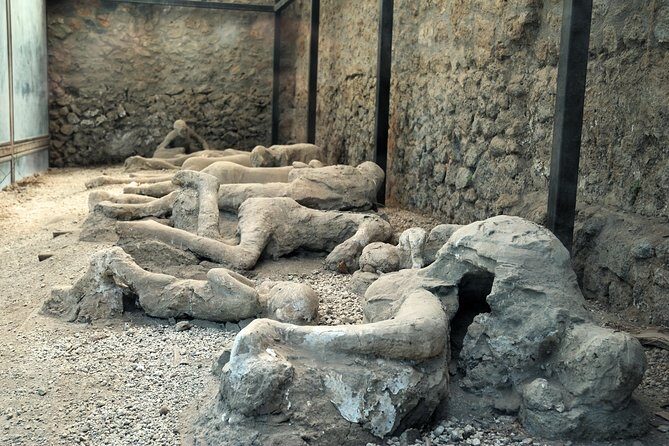
The Granai del Foro (Forum Granary) is one of the most interesting stops on paper because it’s not only about buildings. It’s about what the site tells you about daily life and what survived to be collected.
The tour describes it as used for the fruit and vegetable market. Today, it houses more than 9,000 artefacts, including everyday cooking items like pots and pans, and household objects like jugs and bottles. It also mentions marble tables and baths for fountains that adorned entrances of houses.
Then comes the powerful contrast: this area includes casts of victims from the eruption, as well as casts of a dog and a tree. That’s the kind of detail that changes the emotional temperature of a visit. It’s not just commerce and architecture; it’s the human cost that interrupted ordinary routines.
Your time here is about 15 minutes. That can feel quick, but it also means you’ll leave with a grounded sense of how Pompeii functioned as a working city, not only as a dramatic ruin.
Stabian Baths and Macellum: cleaning up and shopping down the main road
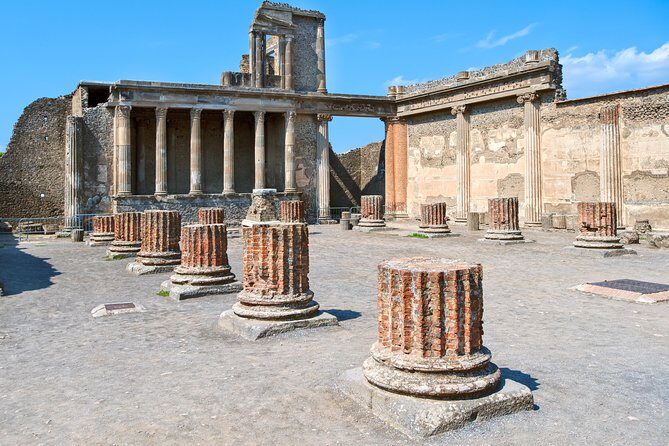
Next, you’ll visit the Stabian Baths (Terme Stabiane), listed as among the oldest Roman baths we know of in the Roman world. Baths weren’t only about hygiene; they were social infrastructure. Even with limited time (about 10 minutes), the framing helps you see why these buildings mattered.
After the baths, you’ll move to the Macellum, described as shops located on the main road. This stop ties your understanding back to how people ate, bought supplies, and moved through a commercial corridor.
These two stops together are smart for first-timers. A lot of Pompeii tours over-focus on the most dramatic public buildings. Here, you get a quick but meaningful look at the “daily rhythm” side—bathing, shopping, and moving through spaces designed for routine.
The Lupanar brothel: erotic wall art and a time-permitting reality check
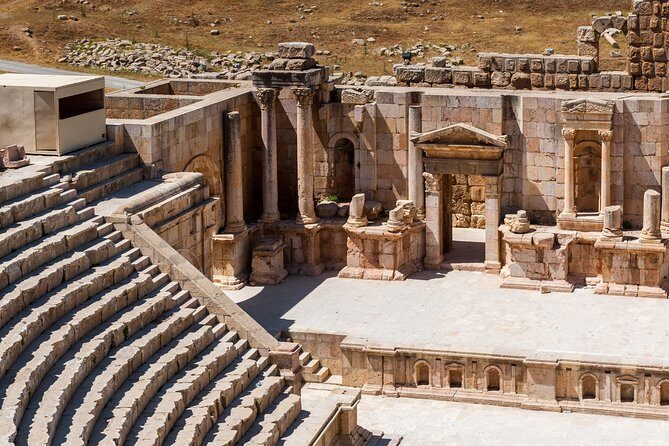
If you have time left, you’ll visit the Lupanar, Pompeii’s ancient brothel. The tour notes that erotic paintings used to advertise the services offered, and that some of the wall art is still visible.
This stop can feel oddly modern. It’s street-level marketing from the past, communicated through images you can still interpret. If you’re comfortable with the frank side of history, you’ll probably appreciate how this detail rounds out the city’s social portrait.
The catch is timing. It’s listed as 15 minutes (time permitting), meaning it’s not guaranteed in the same way the longer anchor stop is. If you’re especially interested in this part of Pompeii, keep your expectations flexible and let your guide handle the pacing so the rest of the sites don’t get rushed.
Skip-the-line tickets: why this price can make sense
This tour costs $112.35 per person and includes skip-the-line Pompeii entrance tickets plus an official tour guide and a small group of 15 or fewer.
On its face, that’s not a bargain price. But you’re paying for two things that are hard to replicate well on your own: guided interpretation and guaranteed time savings at entry. For a site like Pompeii, those two pieces often matter more than you’d expect.
If you’re arriving when lines are long, skip-the-line access can protect your day. And with a smaller group, the guide can answer your questions in context rather than rushing everyone along.
What to bring, what to expect, and how to pace your 2.5 hours
For a smooth experience, plan around the practical facts: you’ll be walking outside, moving from stop to stop, and spending most of your time in ruins. The tour explicitly recommends comfortable walking shoes and bottled water, and it notes a moderate physical fitness level.
Because the schedule includes multiple short stops, your best strategy is mental, not physical. Let the guide tell you what to look for at each place, then take a few minutes to absorb it yourself before moving on. If you try to slow down too much, you’ll feel the stress of the timeline.
Also, be ready for emotional swings. A site that includes plaster death casts and victim casts alongside market items and baths can hit hard, then lighten into daily-life details. That contrast is part of what makes Pompeii stick with you.
Who this tour suits best (and who might want a different pace)
This tour is a strong fit if you want a “best-of” path with guidance and skip-the-line tickets. The small group size is ideal if you like asking questions and want a guide who can explain without turning the visit into a slideshow.
It also suits people who enjoy both public buildings and everyday places. With stops tied to the Forum, theatre, market-related spaces, Roman baths, shops, and the brothel, you get a fuller picture than a purely monumental route.
If you prefer to spend long stretches lingering at one location, you may find the brief stop lengths frustrating. For that style of travel, a slower self-guided approach or a longer private tour might feel more comfortable.
Should you book this Pompeii guided walking tour?
I’d book it if you want Pompeii in one focused day without the headache of ticket lines and route planning. The combination of licensed guide, small group size, and skip-the-line admission is a practical win, especially for first-timers who need help turning ruins into a story.
I’d think twice if you’re hoping for a slow, pick-your-mood kind of visit. This tour is built for movement and key stops, so time to linger is limited, and the brothel visit is time permitting.
If you like your history with clear context—public life, daily routines, and the difficult parts included—this is a solid way to spend a morning in Pompeii.
FAQ
How long is the Pompeii guided walking tour?
It lasts about 2 hours 30 minutes.
What time does the tour start, and where do we meet?
The start time is 10:30 am, and the meeting point is Ristorante Bar Sgambati, Via Villa dei Misteri, 1, 80045 Pompei NA, Italy.
Does the tour include Pompeii entrance tickets?
Yes. Skip-the-line Pompeii entrance tickets are included.
Is the group limited to a small size?
Yes. The tour has a maximum of 15 travelers.
Which major sights are included during the walk?
The tour includes Pompeii Archaeological Park plus stops at the Forum (Foro de Pompeya), Teatro Grande, Granai del Foro, Stabian Baths, Macellum, and the Lupanar if time allows.
Do I get to see the ancient brothel?
You may visit the Lupanar (brothel) if time permits, and the tour notes that erotic wall paintings are still visible.
Are food and drinks included?
No. Food and drinks are not included.
Where does the tour end?
The activity ends back at the meeting point.
What is the cancellation policy?
The experience is non-refundable and cannot be changed for any reason. If you cancel or ask for an amendment, the amount you paid will not be refunded.
You Might Also Enjoy


More Tickets in Sorrento
More Tours in Sorrento






More Tour Reviews in Sorrento
- Sorrento Farm and Food Experience including Olive Oil, Limoncello, Wine tasting
★ 5.0 · 2,524 reviews