REVIEW · NAPLES
Pompeii and Amalfi Coast Unique Experience Private Tour
Book on Viator →Operated by city & tour soc coop arl · Bookable on Viator
One day, two famous worlds of Italy. This private Pompeii and Amalfi Coast tour pairs big Roman ruins with cliffside seaside towns. I like that you ride in an air-conditioned Mercedes with live English commentary, so the long day stays comfortable instead of stressful.
Two things I really like: you get structured sightseeing at Pompeii and then real time to slow down in Positano and Amalfi. And because it’s private, your schedule can stay sensible even when the coast gets crowded—your driver can help you adjust as you go.
The main drawback to consider is that you’ll be doing a lot of walking on uneven ground, especially at Pompeii, and entrance logistics and fees aren’t fully handled for you. Bring your ID, coordinate your Pompeii entry time, and wear solid shoes.
In This Review
- Key highlights to know before you go
- A Private 8-Hour Route That Actually Feels Manageable
- Why the Mercedes Ride Changes the Day (Comfort Plus Real Time)
- Pompeii: Forum Energy, Theatre Views, Baths, and the Lupanar
- Pompeii Forum: the city’s nerve center
- Amphitheatre: one of the oldest still recognizable
- Teatro Grande: a theatre plus a built-in viewpoint
- Teatro Piccolo: the quieter sibling
- Lupanar: uncomfortable, specific, and historically revealing
- Stabian Baths: hot rooms, cold rooms, and the idea of wellness
- How much time do you really get?
- Positano: Colorful Houses, Two Beach Moods, and Real-Time Choices
- Spiaggia Grande: the main beach and the people-watching spot
- Chiesa di Santa Maria Assunta: the majolica dome and the Black Madonna icon
- Spiaggia di Fornillo: quieter pace with a panoramic walk
- Amalfi Coast Stop: Duomo, Cloister, Paper Museum, and a Sea Break
- Duomo di Sant’Andrea: Arab-Norman style and a dramatic staircase
- Chiostro del Paradiso: intertwined arches with Arab influence
- Museo della Carta: how Amalfi paper became famous
- Marina Grande and the Lungomare: finish with a sea view
- Tickets, ID, and Getting Into Pompeii on Time
- Pace, Walking, and How to Keep the Day from Getting Tiring
- Price and Value: Is It Worth $352.27 Per Person?
- Final Verdict: Should You Book This Pompeii and Amalfi Coast Tour?
- FAQ
- How long is the Pompeii and Amalfi Coast private tour?
- Is pickup included, and where does the tour start?
- What’s included in the price, and what isn’t?
- Do I need an ID to enter Pompeii?
- Do I need to buy Pompeii tickets or coordinate entry time?
- What if I need to cancel?
Key highlights to know before you go
- Private Mercedes with live commentary so you’re not stuck piecing together the day on your own
- Pompeii stops built around the Forum, theatres, baths, and more for a fast but meaningful overview
- Positano time with both major and quieter beach options for how you want to spend the hour
- Amalfi focus on the Duomo, cloister, paper museum, and Marina Grande instead of just driving past
- Driver-led day, with no escort inside the sights (you explore Pompeii/Amalfi/Positano on your own)
- Smart weather flexibility thanks to a driver who can shift the plan when conditions change
A Private 8-Hour Route That Actually Feels Manageable

This tour is built for one clear goal: get you out of Naples and into two of the most in-demand places on the Amalfi Coast, without turning the day into a chaotic puzzle. You start in Naples, then head straight toward Pompeii, and later move along the coast with stops for Positano and Amalfi. The whole thing runs about 8 hours, so it’s long enough to matter but not so long you feel destroyed by dinner.
The “private” part matters more than you might think. With only your group in the car, the driver can keep things efficient—especially on a route where traffic and narrow roads can make shared tours feel rushed. You can also shape the day to your pace: if you want extra minutes soaking in a viewpoint, you can usually ask for it.
You can also read our reviews of more private tours in Naples



Why the Mercedes Ride Changes the Day (Comfort Plus Real Time)
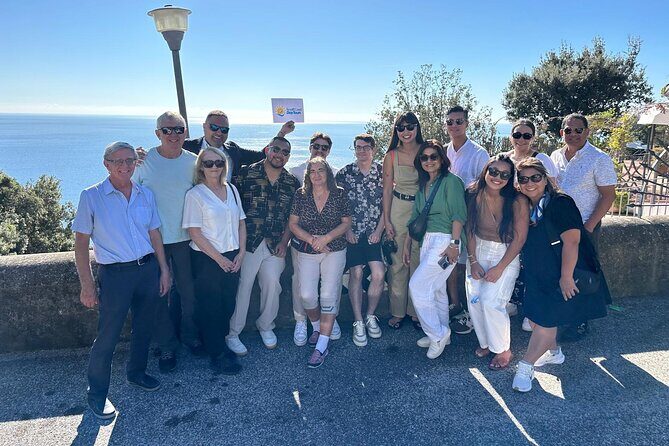
You’re in a luxury, air-conditioned Mercedes with a driver who provides live commentary in English during the ride. That’s a big deal on this route, because you’re looking at long stretches of travel between stops. Cooling off in the car also buys you energy for the walking parts.
A practical bonus: this experience is designed to run in all weather conditions. If you hit rain or hail, you’ll want to trust the day’s setup over your plan to wander. The driver can help shift things on the fly, rather than leaving you to handle delays alone.
One more thing I like: the tour includes all tolls, parking, petrol, and taxes, so you don’t end up doing math in the middle of your day. You’re paying for transportation and commentary as a package, not for a pile of small add-ons.
Pompeii: Forum Energy, Theatre Views, Baths, and the Lupanar
Pompeii can overwhelm you fast. The best way to enjoy it is to focus on places that explain how the city functioned and how people actually lived. This tour does that with a clear set of stops spread across the site.
Pompeii Forum: the city’s nerve center
The Pompeii Forum is where political, economic, and religious life happened. You’ll see the remains of key structures such as the Temple of Jupiter, the Basilica, and the Macellum (the marketplace). Even if you don’t know Roman terms, you’ll quickly grasp the purpose: this is the public engine of the city.
If you’re trying to connect ruins to daily life, start here. The Forum makes the rest of Pompeii click.
Amphitheatre: one of the oldest still recognizable
Next is the Pompeii Amphitheatre, dating to around 80 BC. It’s famous as one of the oldest Roman amphitheatres, and it was used for shows and gladiator fights. Standing in the open space where crowds once packed in gives you a feeling for scale that photos can’t.





Teatro Grande: a theatre plus a built-in viewpoint
You’ll also visit Teatro Grande, where you get a splendid view of Vesuvius. This matters because Vesuvius isn’t just a background volcano in Pompeii—it’s part of why the ruins exist. If you only take in one dramatic sight of the volcano, make it that one.
Teatro Piccolo: the quieter sibling
The tour also includes Teatro Piccolo, another well-preserved theatre. It’s a reminder that Pompeii wasn’t only about public spectacles—there was also regular cultural life and performances.
Lupanar: uncomfortable, specific, and historically revealing
The Lupanar is the ancient brothel of Pompeii. It’s small, and it’s detailed, including frescoes that point to what was offered. This stop isn’t for everyone, and it can feel intense. But if you want a fuller picture of Roman-era life—including what people didn’t talk about politely—this is one of the clearest places in Pompeii to see that reality.
Stabian Baths: hot rooms, cold rooms, and the idea of wellness
Finally, you’ll hit the Stabian Baths, one of the oldest thermal complexes in Rome. Pompeii’s bath rooms included spaces for hot and cold baths and saunas. It helps you understand the city’s rhythm: social time, hygiene, relaxation, and gossip all in one place.
How much time do you really get?
Pompeii time on this format is about 2 hours, with the tour focusing on the major highlights rather than every street corner. That’s ideal if you want a strong overview without getting stuck in a long self-guided maze. If you’re a detail person, you can hire a Pompeii guide on site for extra depth.
Positano: Colorful Houses, Two Beach Moods, and Real-Time Choices
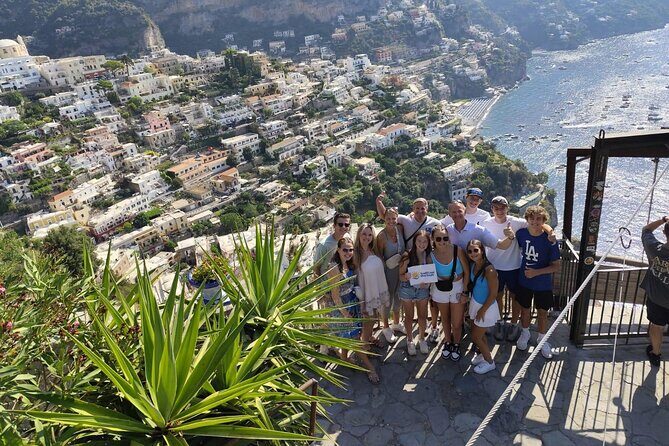
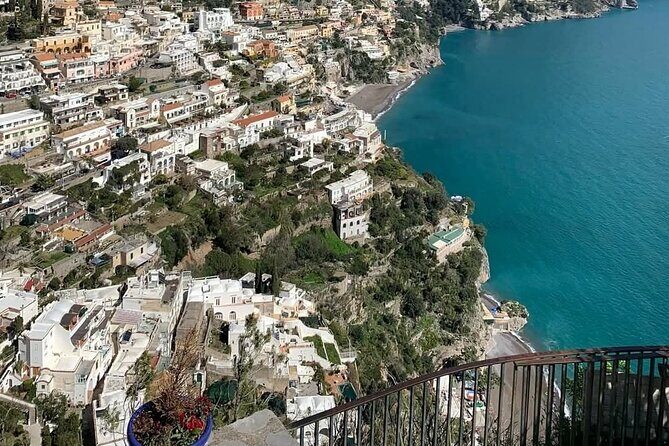
Positano is where the Amalfi Coast starts to feel like a movie set—houses stacked along the cliffs, narrow streets, and sea views that keep popping up around corners. This tour gives you about 1 hour here, which means you won’t “do everything,” but you will get to feel the place.
Spiaggia Grande: the main beach and the people-watching spot
Spiaggia Grande is the main beach. It’s the place for bars, restaurants, and the busier energy. If you want sea views with motion around you, this is your spot.
Chiesa di Santa Maria Assunta: the majolica dome and the Black Madonna icon
A key stop is the Chiesa di Santa Maria Assunta, known for its colorful majolica dome. Inside, you can see the Byzantine icon of the Black Madonna, kept within. This gives Positano more than postcard beauty; it connects the town to faith and regional identity.
Spiaggia di Fornillo: quieter pace with a panoramic walk
You’ll also have the option of Spiaggia di Fornillo, which is typically quieter than Spiaggia Grande. It’s reached by a panoramic walk, so expect some stairs or uphill walking. If your group wants a calmer, slower hour, this is the better match.
The biggest practical takeaway: with only an hour, you should decide early whether you want the main-beach atmosphere or the quieter Fornillo walk. Don’t try to chase both unless you move fast.
Amalfi Coast Stop: Duomo, Cloister, Paper Museum, and a Sea Break

Amalfi is the heart of the coast for history, culture, and dramatic views. Here you get another about 1 hour, focused on meaningful sights instead of random stops.
Duomo di Sant’Andrea: Arab-Norman style and a dramatic staircase
The Duomo di Sant’Andrea is the symbolic cathedral of Amalfi. Look for the spectacular Arab-Norman façade and the scenic staircase leading up to it.
Inside, there’s also the crypt with relics of Sant’Andrea. Even if you’re not a cathedral person, the combination of exterior style and interior relics gives you a strong sense of how layered Amalfi is.
Chiostro del Paradiso: intertwined arches with Arab influence
Next to the Duomo you’ll find the Chiostro del Paradiso, a 13th-century cloister. The arches reflect Arab influence, and the atmosphere feels calmer than the street outside. It’s a good reset point after walking and crowds.
Museo della Carta: how Amalfi paper became famous
Amalfi is known for its paper-making tradition, and the Museo della Carta is set in an old paper mill. You’ll see historic machinery and the process of making Amalfi paper. If you like craft and practical history, this stop hits the sweet spot.
Marina Grande and the Lungomare: finish with a sea view
You’ll also spend time around Marina Grande and the Lungomare, Amalfi’s main beach area for a swim or an aperitif with a sea view. This is the payoff moment: after ruins and churches, you get to just enjoy the coastline.
Tickets, ID, and Getting Into Pompeii on Time
This tour is clear about one thing: you need your ID to enter Pompeii. Without it, you can’t get in. So pack your passport or identity card where you can reach it quickly.
Entrance fees matter too. Pompeii has an entrance fee (listed as 18 euros per person), and it’s not included. You also need to coordinate your Pompeii entrance time with the office so you can buy tickets in the right window.
This is one reason I suggest planning to arrive early and stay calm. Pompeii runs on timed access and capacity limits, and your day will feel smooth only if you don’t treat entry like a casual walk-up.
Also note: you can hire a Pompeii guide on site. The driver handles transportation and live commentary during transit, but inside the attractions you explore on your own.
Pace, Walking, and How to Keep the Day from Getting Tiring
With Pompeii, Positano, and Amalfi all in one day, the pace is active by design. The tradeoff is fewer “wandering hours” and more structured highlights. That’s great if you like efficiency and hate waiting around.
Wear good walking shoes. Pompeii’s ground can be uneven, and you’ll also deal with hills and stairs in places like Positano (especially if you choose Fornillo). Dress in smart casual clothing, and bring a layer because weather along the coast can change fast.
One practical note from real-world experience: the driver has been described as helpful when weather shifts, including switching plans during hail and rain. Still, your own best friend is preparation—rain gear and comfortable footwear.
Price and Value: Is It Worth $352.27 Per Person?
At $352.27 per person, this isn’t a budget day trip. But you’re paying for a private Mercedes with air-conditioning, live English commentary, and the costs that often surprise people: tolls, parking, petrol, and taxes are included.
Here’s how I think about the value:
- If you try to book separate transfers and then figure out timing between Pompeii and the Amalfi Coast, you can lose hours.
- If you’re traveling in a group where a private car is already the sensible option, this price starts to look more reasonable.
- You also avoid the headache of coordinating multiple legs yourself, which is a major deal on the Amalfi Coast, where roads and traffic can be a time sink.
The potential “value gap” is that entrance fees and Pompeii guide upgrades are extra, and you only get about 2 hours in Pompeii. If you want a deep, slow Pompeii experience with expert narration inside the site, you may need additional help through a guide on site.
Final Verdict: Should You Book This Pompeii and Amalfi Coast Tour?
Book it if you want a single, well-paced day that hits the big names—Pompeii, Positano, and Amalfi—without forcing you to juggle transport and schedules in real time. I think this format is especially good for first-timers who want the highlights but still want comfort in transit.
Skip it (or plan upgrades) if you’re hoping for a long, detailed Pompeii guide-led walk. With driver-only support during stops, you’re responsible for exploring on your own once you’re there, and Pompeii’s depth may call for a guide.
If your goal is: see a lot, stay comfortable, and keep the day flowing, this is a strong pick.
FAQ
How long is the Pompeii and Amalfi Coast private tour?
The experience runs for about 8 hours.
Is pickup included, and where does the tour start?
Pickup is offered. The tour starts in Naples and ends back at the meeting point in Naples.
What’s included in the price, and what isn’t?
Included features are a Mercedes air-conditioned vehicle, an English-speaking driver/guide with live onboard commentary, and all tolls, parking, petrol, and taxes. Not included: Pompeii entrance fees (listed as 18 euros per person) and any Pompeii guide you choose to hire on site.
Do I need an ID to enter Pompeii?
Yes. An identity card is required to enter the site, so bring your ID on the day of the tour.
Do I need to buy Pompeii tickets or coordinate entry time?
Yes. You’ll need to coordinate with the office entrance time in Pompeii before buying tickets.
What if I need to cancel?
You can cancel for a full refund if you cancel at least 24 hours before the experience’s start time. If you cancel less than 24 hours before, the amount paid is not refunded.