REVIEW · PAESTUM
Paestum: Temples and Museum Tour with Archaeologist Guide
Book on GetYourGuide →Operated by Grand Tour Experience · Bookable on GetYourGuide
Paestum makes you slow down. This tight, private tour is all about seeing the big moments of Greek architecture in Paestum and getting clear context from an archaeologist guide. I especially liked the way the guide brings the Doric temples (Neptune and Ceres) to life in plain language, then backs it up with museum objects that make the site feel real.
I also like that the time is well paced: you don’t just look, you understand. One possible drawback is the schedule is compact (about 2 hours total), so you won’t have hours to wander on your own like you might at larger, self-guided sites.
In This Review
- Key things to know before you go
- Paestum temples and museum: why this combo works
- Where you’ll start at Via Magna Graecia
- The Archaeological Park walk: Neptune, Ceres, and the Basilica
- What the guide actually changes for your visit
- Museum time: temple fragments, painted tombs, and the Tomb of the Diver
- Skip-the-line tickets: small thing, big effect
- How much you’re really paying—and why it can still be good value
- Practical considerations: what isn’t included
- Who this tour suits best (and who might want something else)
- Should you book this Paestum temples and museum tour?
- FAQ
- How long is the Paestum temples and museum tour?
- Where do we meet for the tour?
- What’s included in the price?
- What’s not included?
- What languages are available for the live guide?
- Is free cancellation available?
Key things to know before you go
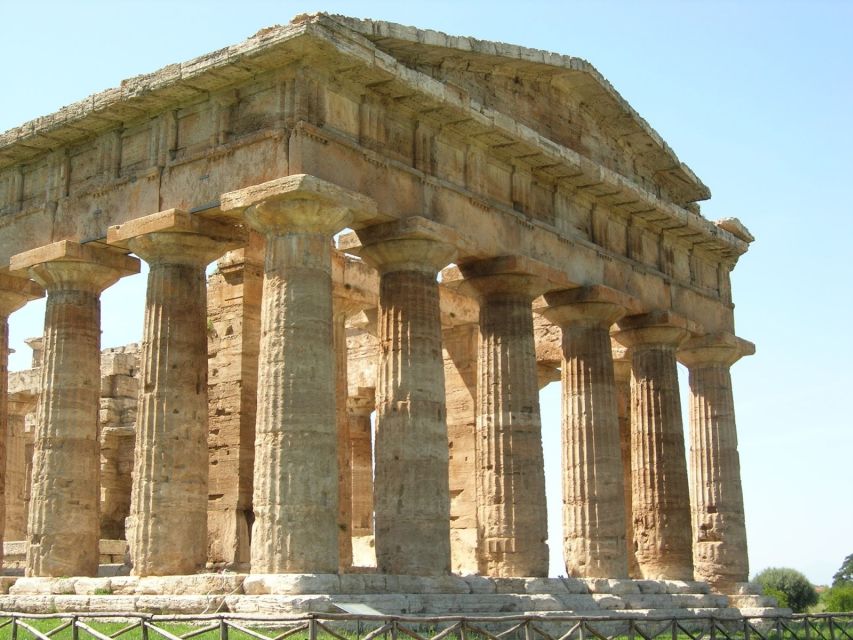
- Three standout Doric temples in one visit, including the Temple of Neptune and the Temple of Ceres
- A guided walk through the Archaeological Park, with photo stops built in
- National Archaeological Museum of Paestum included, so you see temple art and funerary finds together
- Museum highlights like painted tombs of Campania, including the Tomb of the Diver
- Skip-the-line entrance tickets, which helps you start sightseeing faster
- Private group with a live guide speaking English, Italian, Spanish, or French
Paestum temples and museum: why this combo works
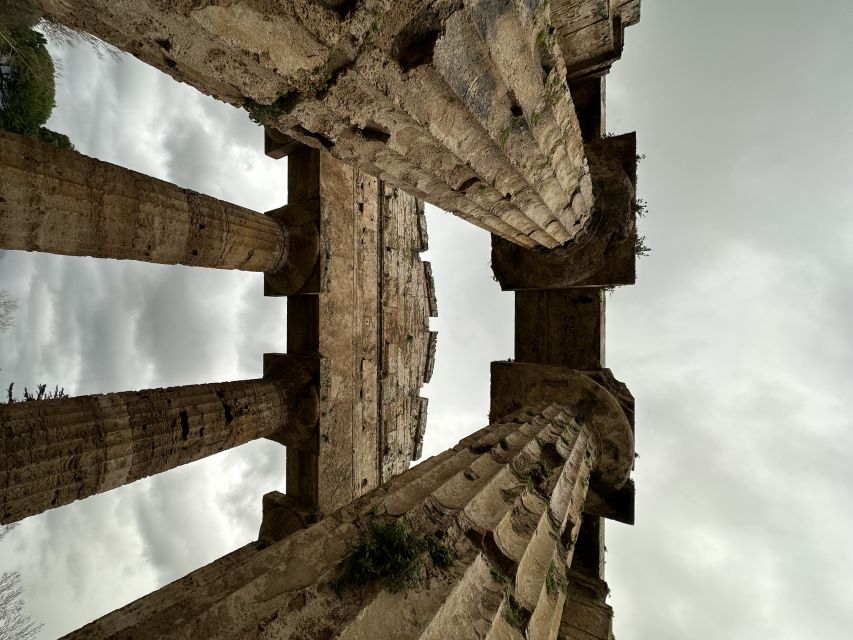
Paestum is one of those rare places where you can look at ancient stone and actually picture how it functioned. The Archaeological Park gives you the architecture at full size. Then the National Archaeological Museum helps you connect what you see outside with what’s been preserved from the temples.
This tour keeps the story focused. In about two hours, you move through the park, then shift indoors to see the objects that explain the religious and artistic world behind the temples. If you’ve ever walked through a site and thought, I’m seeing it, but I don’t fully get it yet, this kind of guided structure is the antidote.
The biggest value here is not volume. It’s clarity—getting the key details about the Doric style and what the temples were used for, without turning your visit into a marathon.
You can also read our reviews of more tours and experiences in Paestum.
Where you’ll start at Via Magna Graecia
You meet at the entrance to the Archaeological Museum of Paestum, located at Via Magna Graecia, 917. That matters more than it sounds. Starting where the museum is means the day doesn’t feel chopped up, and you’re not spending time trying to figure out meeting points while your brain is already in sightseeing mode.
From the start, your guide handles the “what to pay attention to” part. You’ll have a photo stop built into the park portion, so it’s not just a blur of walking and listening. This is especially helpful in Paestum, where the temples can look similar at first glance if you don’t know what to look for.
The Archaeological Park walk: Neptune, Ceres, and the Basilica
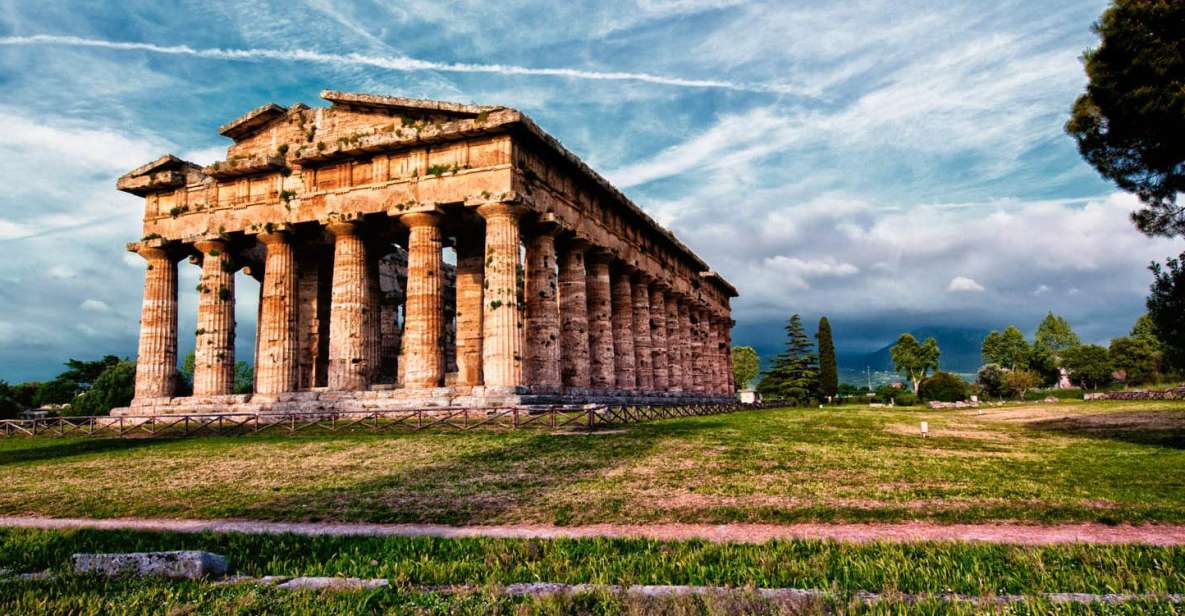
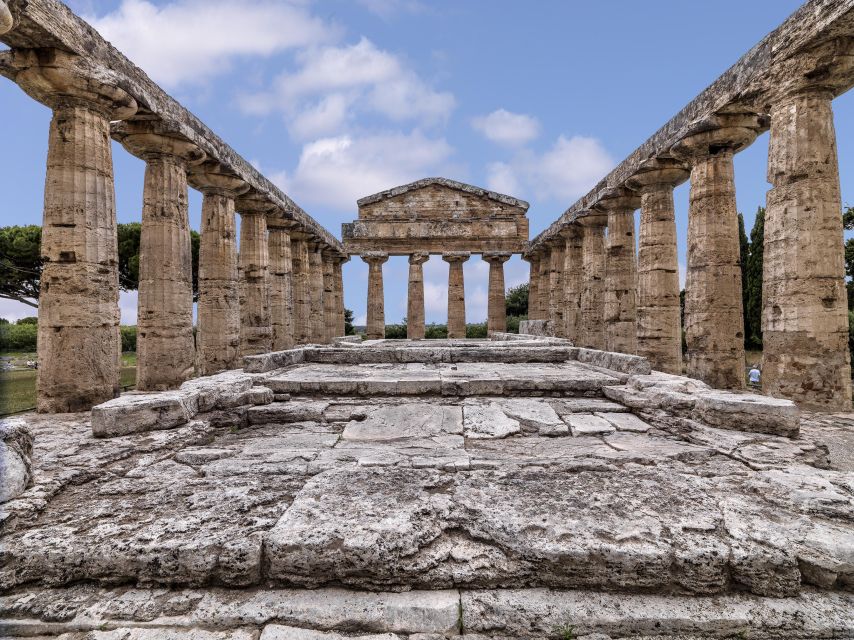
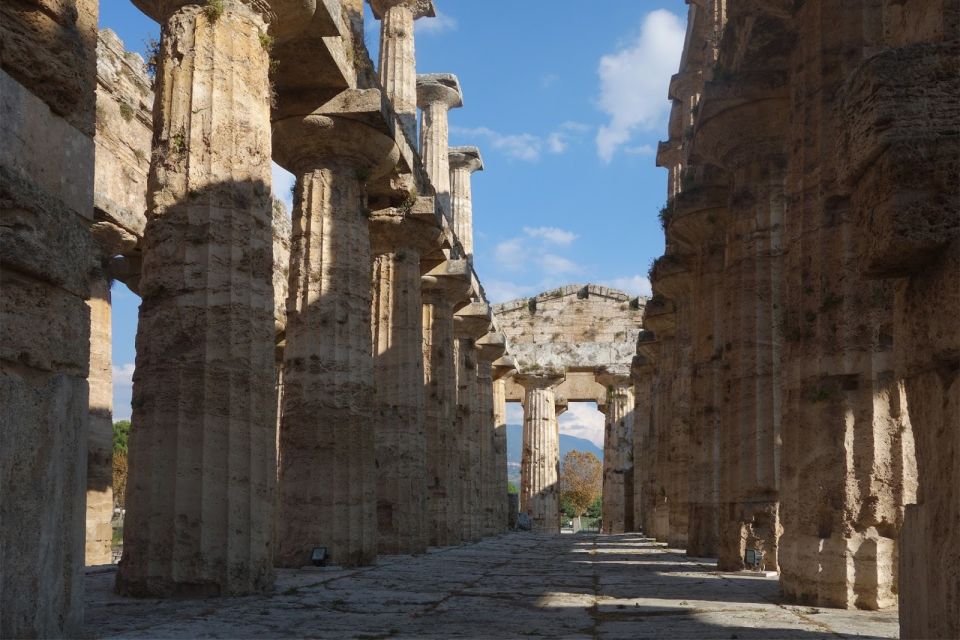
The heart of the experience is your visit to the Archaeological Park of Paestum. This is where the site’s Greek architecture shows up at full scale, and where you get to see why Paestum is considered one of Southern Italy’s best-preserved temple zones.
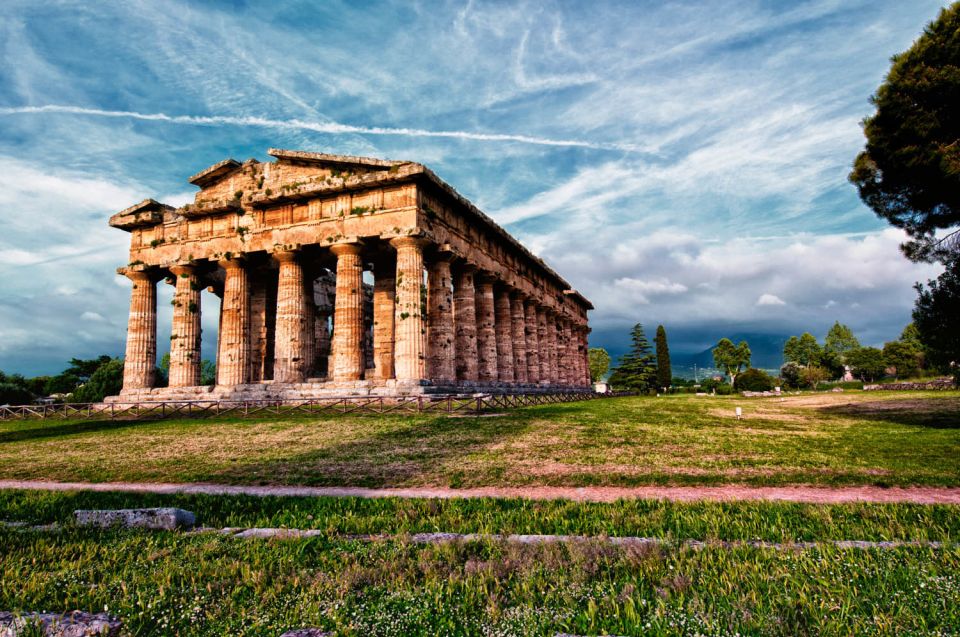
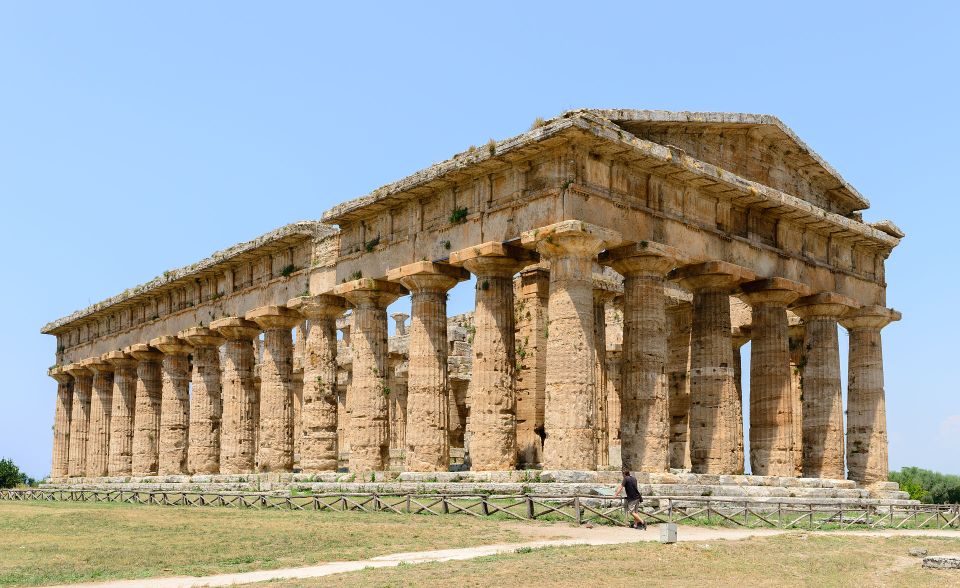
Your guide focuses on the major structures, including three key Doric buildings: the Temple of Neptune, the Temple of Ceres, and the Basilica. Even if you don’t have a classics background, the guide approach helps you separate what you’re seeing (columns, layout, design features) from what it meant to the people who built it.
Here’s why this stop is such a strong use of time:
- You’re walking among 2,500-year-old religious architecture, not just reading about it.
- The guide connects architectural choices to the cultural purpose of the temples.
- The park visit is structured enough that you don’t miss the biggest features.
A small practical note: outdoor sites can be hot or bright, depending on the season. If you’re sensitive to sun, you’ll want a hat and a bottle of water since your tour is concentrated and you’ll be outside for the park segment.
What the guide actually changes for your visit
This tour leans hard on the live, archaeologist-style guide, and that’s the main reason it feels more satisfying than a basic sightseeing ticket. The best guides here don’t just list facts—they give you a mental model fast.
In guide experiences tied to this tour format, people often praise guides by name—Angelo, Angela, and Luciana—for pacing and for making the explanations easy to follow. You can expect a similar approach: clear context, answers to questions, and enough movement that you don’t feel stuck listening for too long at once.
What you gain is simple: you start noticing details you’d otherwise miss.
- You learn how to read the Doric style rather than just admiring it.
- You get help understanding why these particular temples matter.
- You leave with a coherent story instead of a pile of impressions.
That’s also why this is a good choice for first-timers. Paestum is famous, but it can still feel overwhelming if you arrive without a plan. A guide turns your time into understanding.
Museum time: temple fragments, painted tombs, and the Tomb of the Diver
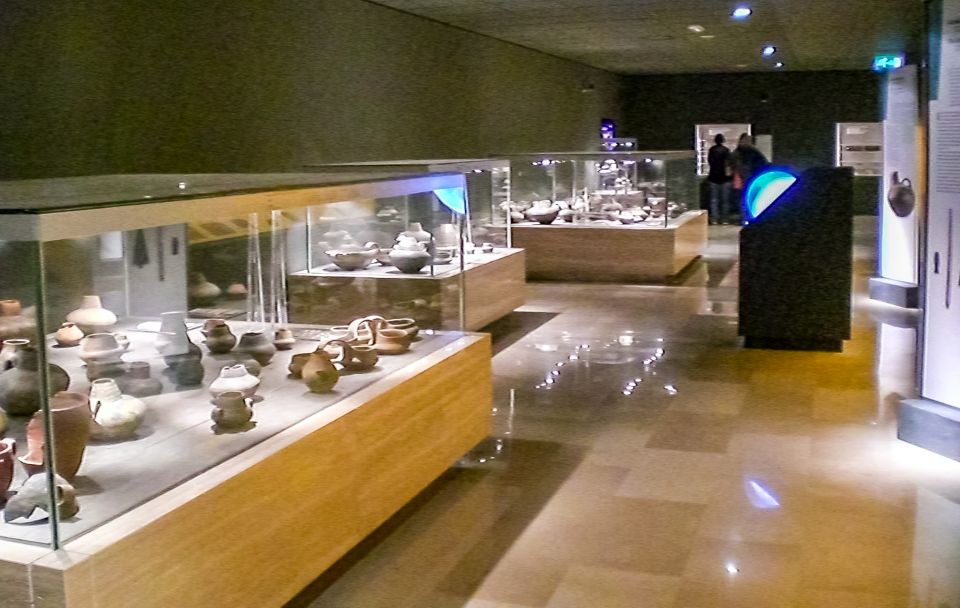
After the park, you’ll head to the National Archaeological Museum of Paestum for a guided tour. This is where the visit stops being only architectural and starts becoming more human—artifacts that once decorated temples and objects tied to burial traditions.
The museum includes important examples of Greek art, plus pieces that served as decorations for the temples. That connection is huge. Outside, you see the temples as structures. Inside, you get a sense of how they were adorned and what kind of artistic world sat behind them.
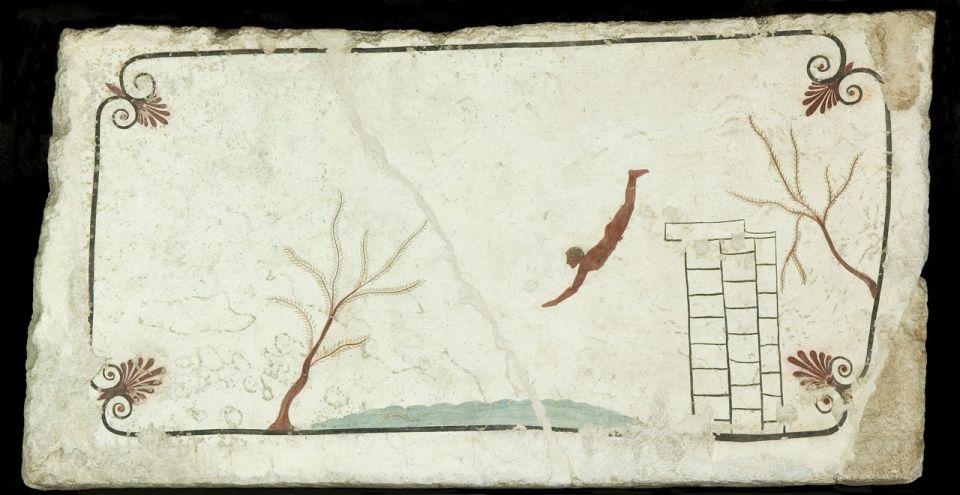
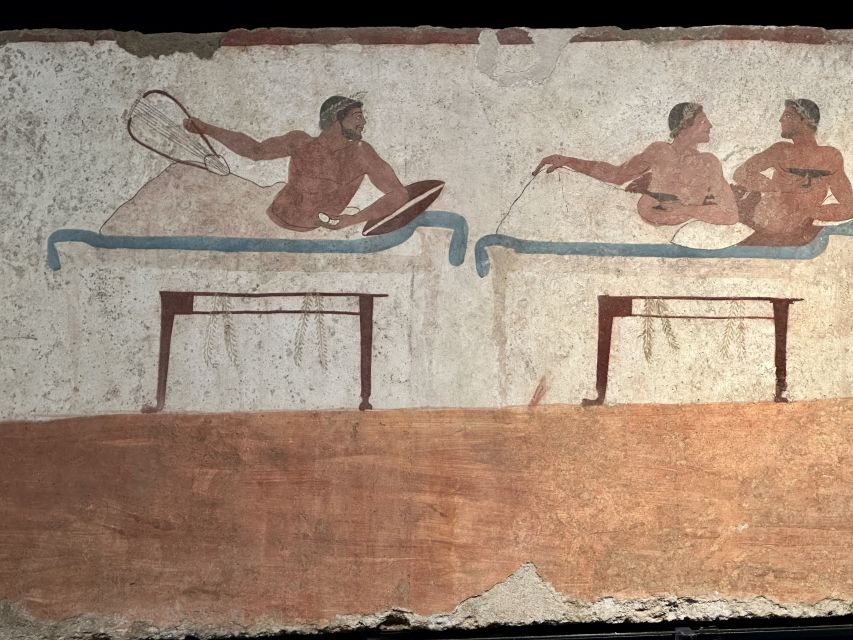
One of the standout museum elements is the Tomb of the Diver, kept in perfect condition. It’s famous for the painted scene, and it draws enormous attention from visitors each year—so when your guide points out what you’re actually looking at, the object stops being just a name and becomes a real visual experience.
If you like museums, this stop will feel worth it rather than like an add-on. If you’re not usually a museum person, the guided format still helps because you’re not wandering—you’re seeing specific connections to what you just viewed at the park.
Skip-the-line tickets: small thing, big effect
The tour includes skip-the-line entrance tickets. That’s one of those perks that seems minor until you’re standing outside with your phone out, trying to estimate how long it’ll take. Paestum visits often happen when you’re already in motion—arriving, parking, walking—so saving time at the entry point keeps the whole outing smoother.
Also, a private tour format means your guide can keep the group moving without waiting around. In a compact 2-hour experience, you want every minute working for you, not bleeding away at the entrance.
How much you’re really paying—and why it can still be good value
The price is $260.56 per group up to 1, and the tour lasts about 2 hours. On paper, that’s not a “budget day.” But it’s private, and it includes both the guide service and skip-the-line tickets.
Here’s how I think about value for this kind of experience:
- You’re paying for a live guide to interpret complex architecture and museum objects quickly.
- You’re not paying for transportation or meals (so plan on those separately).
- You’re getting an efficient blend of outdoor site + indoor context, which reduces the risk of feeling lost.
If you’re traveling solo, the private cost can feel like a premium you have to justify. For me, the justification comes down to time and clarity. When a guide helps you understand what you’re looking at, the “payoff” is immediate—you don’t need a second day to piece things together.
If you’re traveling as a duo or with a group, the math depends on whether you can find shared-timing options elsewhere. But based on this specific private setup (up to 1 person per group), it’s best when you want your own direct guidance and don’t want to fit into someone else’s pace.
Practical considerations: what isn’t included
Transportation isn’t included, and food and drinks aren’t included either. That means you should plan for getting to Via Magna Graecia, 917 on your own, and bring water or plan a stop afterward depending on your schedule.
Because the duration is only about 2 hours, I’d treat this as a “core experience” and add food around it. If you try to stack too much into the day, you’ll feel rushed—especially at the outdoor park portion.
Also, bring the usual good-site basics: comfortable shoes for walking around the park and camera space if you’re planning photos. The tour includes at least one photo stop, so you’ll want to be ready.
Who this tour suits best (and who might want something else)
I think this tour is a great fit if:
- you want a guided introduction to Paestum that gets to the point fast
- you enjoy archaeology explanations that connect architecture and artifacts
- you’d rather spend time understanding rather than covering everything on your own
It may not be ideal if:
- you want a long, self-directed wandering day through Paestum and the museum
- you’re trying to do a full-day program without adding your own break time for food and transportation gaps
For most people, the sweet spot is someone who wants meaningful context without spending the whole day tied to an itinerary.
Should you book this Paestum temples and museum tour?
Yes, if you want Paestum to make sense quickly. The combination of the Archaeological Park and the National Archaeological Museum is what turns the experience from sightseeing into understanding. With skip-the-line entry and a live guide in English, Italian, Spanish, or French, it’s also a clean way to manage a short visit.
I’d book it especially if you care about the Doric temples and the story behind what you’re seeing in both places. If you’re someone who learns best with direct interpretation—and you like getting answers instead of guessing—this tour is a strong match.
FAQ
How long is the Paestum temples and museum tour?
It lasts about 2 hours.
Where do we meet for the tour?
You meet at the entrance to the Archaeological Museum of Paestum, located at Via Magna Graecia, 917. The tour ends back at the meeting point.
What’s included in the price?
Included are the guide’s services and skip-the-line entrance tickets.
What’s not included?
Transportation and food and drinks are not included.
What languages are available for the live guide?
The guide is available in English, Italian, Spanish, and French.
Is free cancellation available?
Yes. You can cancel up to 24 hours in advance for a full refund.