REVIEW · PAESTUM
Paestum: 2-Hour Greek Temples & Archaeological Museum
Book on GetYourGuide →Bookable on GetYourGuide
Three Doric temples, and you see them fast. Paestum is one of Italy’s most striking ancient sites because the ruins are so readable: you walk the same kind of sacred and civic space Greek colonists built, then you spot Roman layers too. I especially like the chance to focus on the Temple of Neptune area and the other 6th-century BC Doric temples without getting stuck in long entry lines.
In a tight schedule, you also get the National Archaeological Museum of Paestum, where the showstopper is the Tomb of the Diver. This is a solid choice if you want meaning, not just photos. One drawback: the whole park visit is short, so if you love lingering and taking lots of slow, detailed photos, you’ll need to work a bit to keep up with the walking pace.
In This Review
- Key highlights worth building your day around
- Paestum’s Greek roots (Poseidonia) and Roman reuse in one walk
- Meeting point near the Neptune temple and your guided start
- Paestum Archaeological Park: city walls, civic spaces, and the temples
- The three Doric temples (Temple of Neptune, Temple of Ceres, and the basilica)
- What you’ll notice beyond the columns
- How the 2-hour pace feels in real life
- National Archaeological Museum of Paestum: what 30 minutes gives you
- The Tomb of the Diver: the museum’s top moment
- Skip-the-line entry and a certified archaeologist guide
- Price and value: is $189.75 per person reasonable?
- Language options and who this tour suits best
- Best way to plan your Paestum day around this tour
- Should you book this Paestum tour?
- FAQ
- How long is the tour?
- Where does the tour start?
- Does the tour include tickets?
- Is hotel pickup or drop-off included?
- What is included with the guided portion?
- Which languages are offered for the live guide?
- Is this a private group tour?
- Is the tour suitable for wheelchairs or limited mobility?
- What’s the museum highlight?
Key highlights worth building your day around
- Skip-the-line tickets so you spend time seeing, not waiting
- Certified archaeologist guide who can connect temples, walls, and Roman reuse
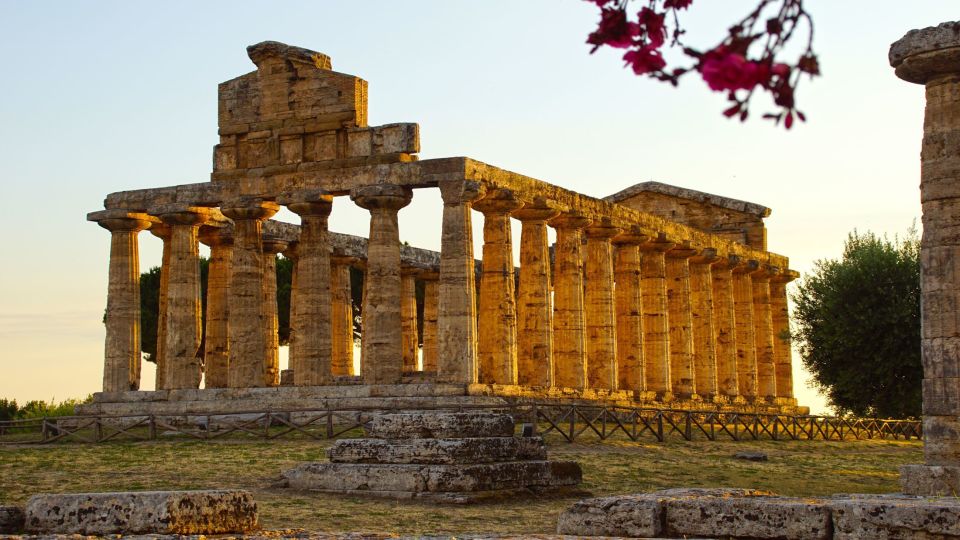
- Three standout Doric temples from the 6th century BC in one compact route
- Paestum’s civic Roman layers like the amphitheater and the forum/markets area
- The Tomb of the Diver as the museum highlight, plus Magna Graecia finds
Paestum’s Greek roots (Poseidonia) and Roman reuse in one walk
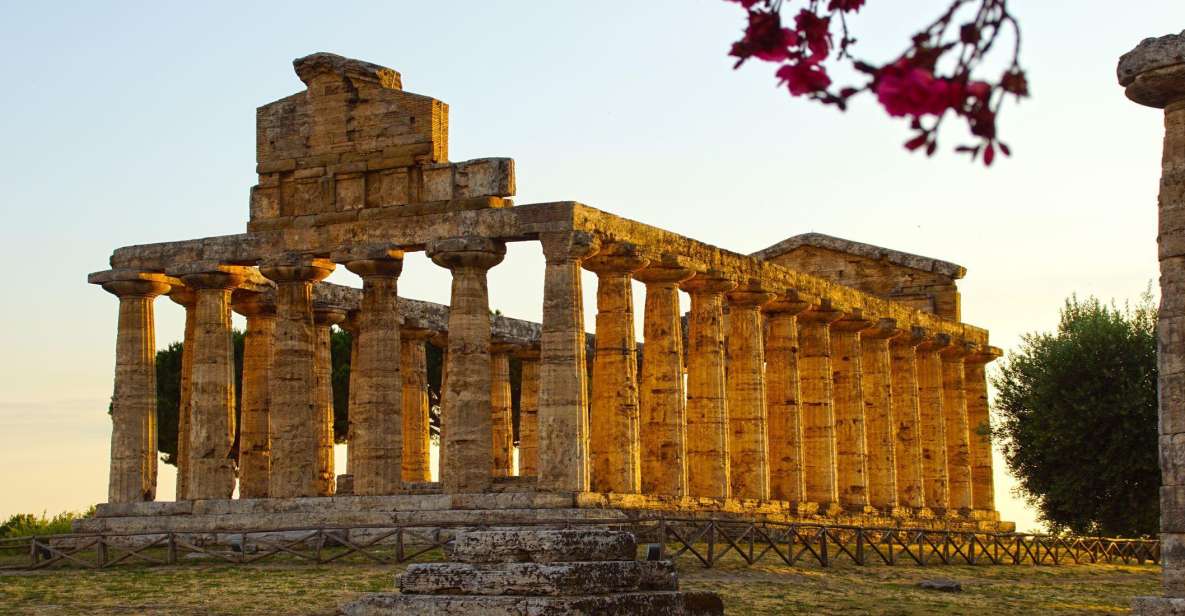
Paestum sits in the northern part of Italy’s Cilento region, not far from the river Sele and along the Tyrrhenian Sea coast. The place starts as a Greek colony—Poseidonia—and becomes a major city within Magna Graecia, before later Roman chapters add their own buildings and function.
That mix matters because Paestum isn’t just “pretty stones.” You’re looking at a city plan where sacred and public spaces sit side by side. With a guide, those pieces start to connect: temples are never just temples here; they sit inside a wider story of how people lived, gathered, and governed.
Meeting point near the Neptune temple and your guided start
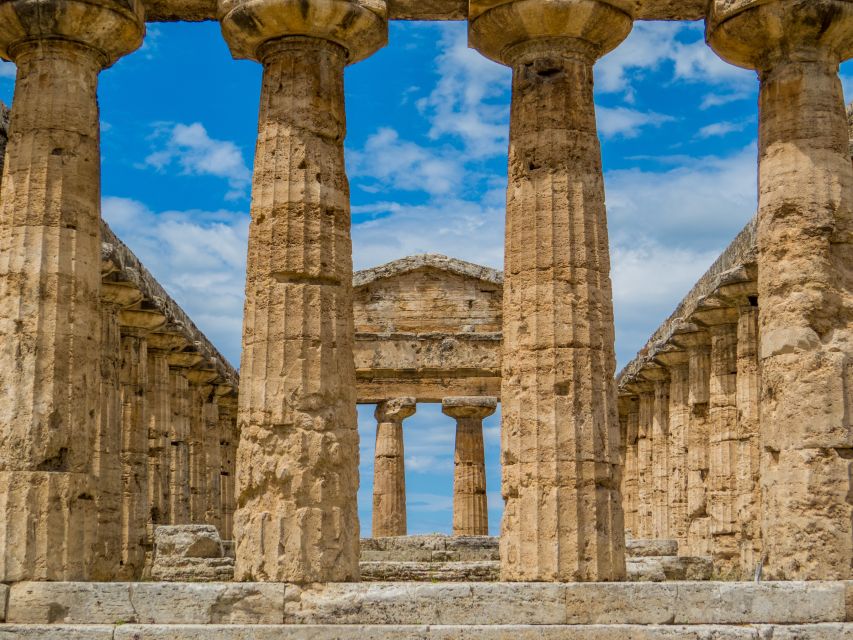
You meet your guide at the entrance area of the Neptune temple, with a sign that shows your name so you can find the right person quickly. The tour ends back at the meeting point near Tempio di Hera II, so you don’t have to worry about getting lost after the museum portion.
This is a practical setup for a short, high-impact day. You’re not playing guess-the-route. You’re also in good shape for photos because you’ll start at a core landmark, not an unspecified parking area.
Paestum Archaeological Park: city walls, civic spaces, and the temples
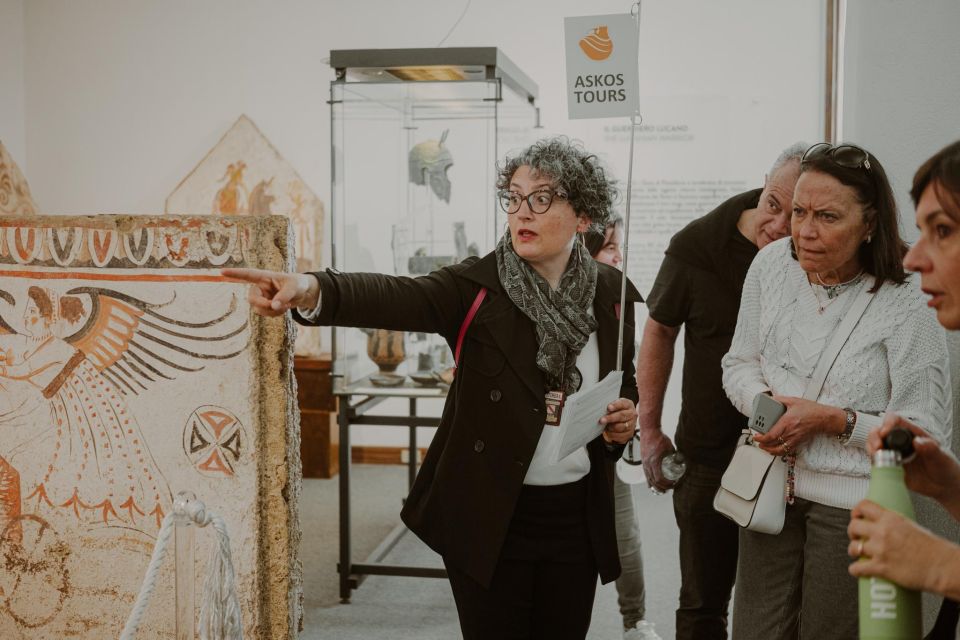
The heart of your experience is a guided walk through the Archaeological Park of Paestum. In about 2 hours, you cover the essentials: the three Greek temples, plus the Roman-era structures that show how the city kept evolving.
You’ll get a guided pass through the parts of the site that make Paestum feel unusually “complete” compared with many ruins. The tour includes looking at the city walls, and then key civic and entertainment zones like the amphitheater and the forum/markets area. You’ll also see the comitium, described as a political assembly hall—one of those details that makes ancient Rome’s government feel less abstract.
The three Doric temples (Temple of Neptune, Temple of Ceres, and the basilica)
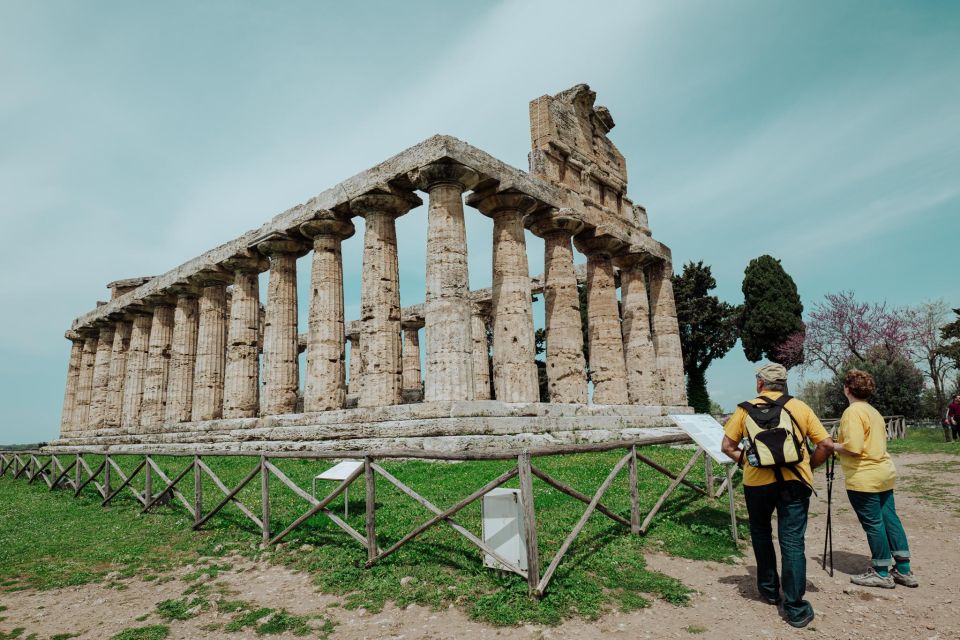
If you care about Greek architecture, this is the main event. The tour highlights the three best-known Doric temples dating back to the 6th century BC:
- Temple of Neptune (the big anchor for many visitors, and your meeting-area landmark)
- Temple of Ceres and basilica, including the basilica-like structure connected to the complex
- The third Doric temple in the cluster (often grouped with the others as the core “temple trio” that defines Paestum’s skyline)
What I like about this approach is that it’s not a random sweep. Your guide points out what makes these temples special in terms of style and preservation. Doric columns are one thing; tall, elegant, well-preserved ruins where you can still read the proportions is another.
What you’ll notice beyond the columns
Even if you’re not an architecture nerd, you’ll pick up patterns fast. These temples sit inside a city layout that includes walls and Roman reuse. So, as you walk, you’re basically training your eye: sacred space first, then civic space, then entertainment and governance.
That’s why Paestum can feel more satisfying than sites where ruins are scattered across a huge map. Here, the guide helps you keep the big picture while still making time for key details.
How the 2-hour pace feels in real life
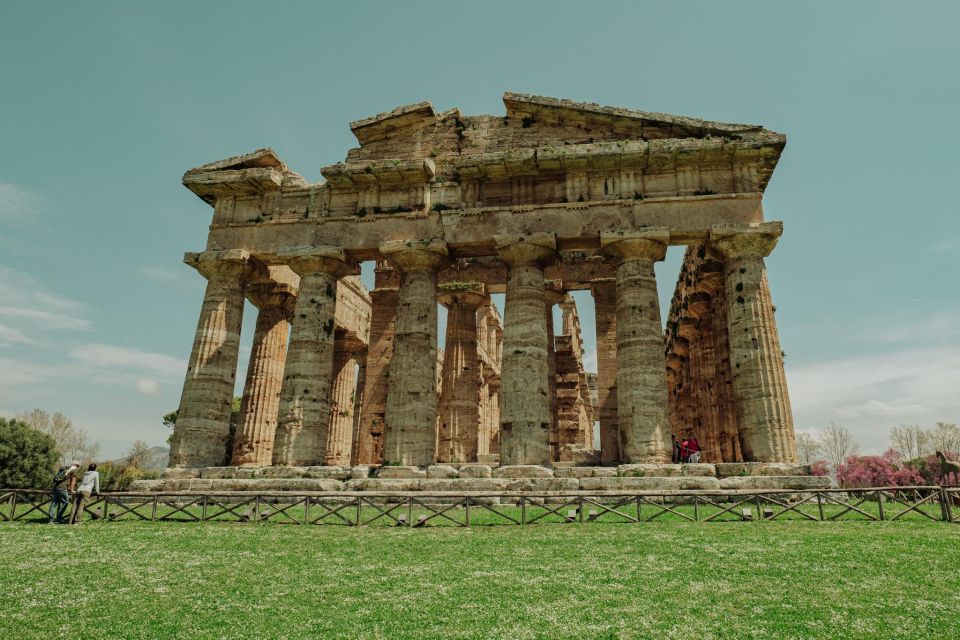
The park portion is guided for about 2 hours. That’s long enough to understand the layout, but short enough that you won’t have the luxury of disappearing for 20 minutes to find the “perfect” angle of every column.
This is where you should be honest with your own style. If you like to move, ask questions, and keep your photos moving, the pacing works well. If you want slow strolling and lots of waiting for light, you may feel a bit compressed—especially in the temple cluster where everyone wants the same iconic viewpoints.
A smart strategy: prioritize the temple exterior shots you care about most, then let the guide’s explanations shape the rest of your stops. You’ll leave with context, not just images.
National Archaeological Museum of Paestum: what 30 minutes gives you
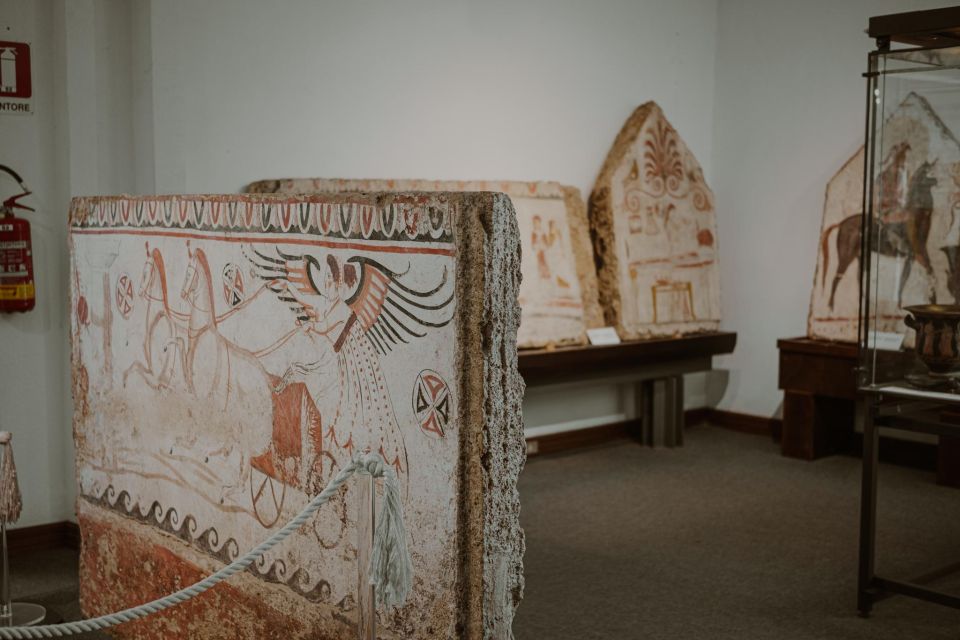
After the ruins, you head to the National Archaeological Museum of Paestum for a guided visit of about 30 minutes. The museum focuses on local Greek artworks from the 7th century BC, tied to the Magna Graecia world that Paestum helped represent.
Even in a short museum stop, there’s a clear logic to what you’ll see: the ruins are your “architecture and city” layer, and the museum is your “objects and culture” layer. You start matching what you noticed outdoors with what’s preserved inside.
The Tomb of the Diver: the museum’s top moment
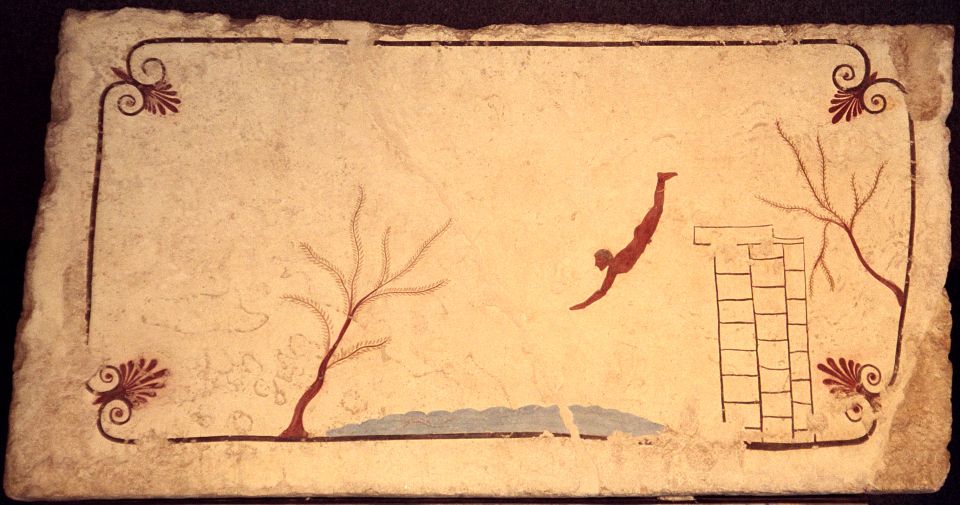
The undisputed highlight is the Tomb of the Diver. This is the kind of piece that changes how you think about ancient life: it’s not only about buildings; it’s about story, symbolism, and what people valued enough to preserve.
With only about 30 minutes, the museum visit works best if you go in expecting a “guided hit,” not a full museum crawl. You’ll get the main points and the big object, then you can decide later if you want more time on your own.
Skip-the-line entry and a certified archaeologist guide
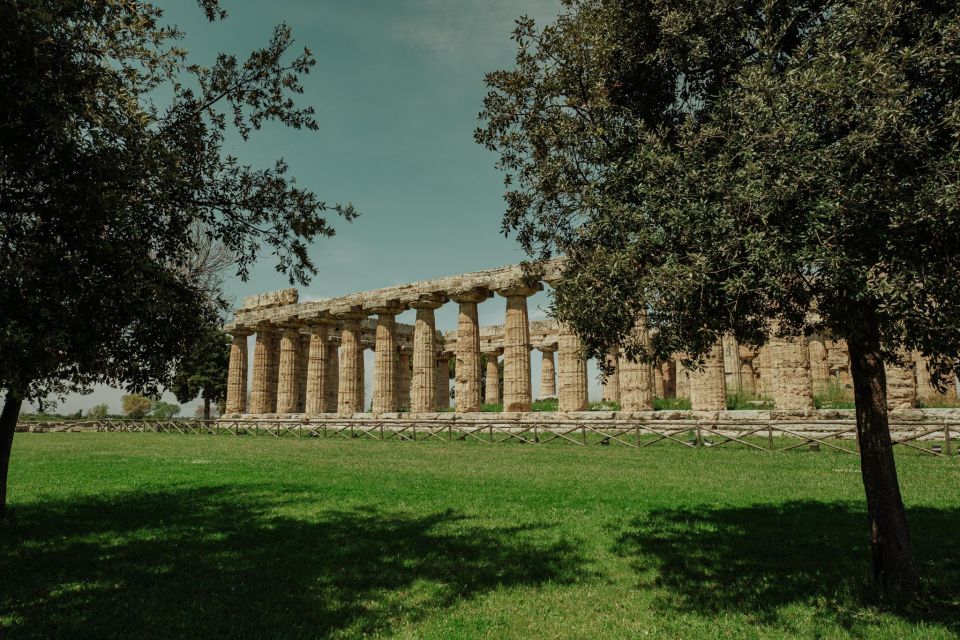
This tour includes skip-the-line tickets and guidance for the entire experience by a certified archaeologist guide. That combination matters for value.
Skip-the-line saves time, sure. But the bigger benefit is what the time buys you: you can stay present for the whole route instead of reacting to delays. And an archaeologist guide turns what you might see as “Greek ruins” into a more specific read—temple function, city layout, Roman additions, and why the site is considered one of the best-preserved Graeco-Roman city areas.
You also get a private group setup, which can make a short tour feel less like a race. It usually means more room for questions and fewer awkward moments when you’re trying to hear over a crowd.
Price and value: is $189.75 per person reasonable?
At $189.75 per person for about a 2-hour experience (plus the museum portion), you’re paying for three things: expert interpretation, included ticket handling, and a short time window that delivers a lot of core highlights.
Here’s what’s included:
- Certified archaeologist guide for the full duration
- Skip-the-line tickets
- All taxes
What’s not included:
- Hotel pickup and drop-off
- Food and drinks
So the value question comes down to your priorities. If you’re the type who wants your time in Paestum to be guided and structured—temples, key civic ruins, then the museum’s headline artifact—this pricing can make sense. If you’re the type who enjoys wandering without explanations and can tolerate queues, you might not need a guide.
Language options and who this tour suits best
The tour runs with live guide support in multiple languages: Spanish, English, French, German, and Italian. That’s genuinely useful in Paestum, where the site terminology can be confusing if you’re trying to translate on the fly.
This is a good fit if you:
- Have limited time but still want the temple trio and the museum highlight
- Like structured guidance and clear explanations
- Prefer not to spend your day managing ticket lines
It’s also important to know it’s not suitable for people with mobility impairments and wheelchair users, so plan an alternative if accessibility matters for you.
Best way to plan your Paestum day around this tour
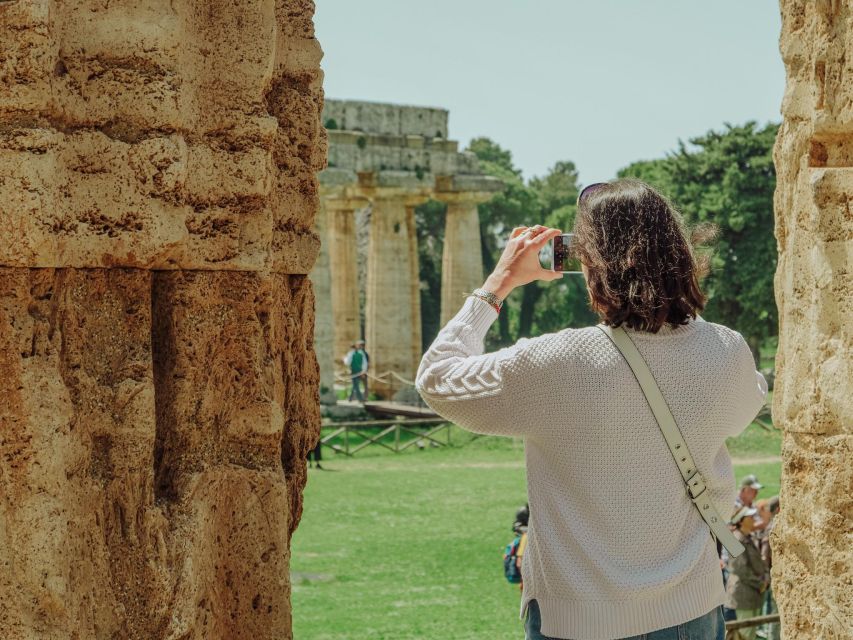
Because the schedule is tight and the museum stop is brief, you’ll get more out of it if you show up ready to walk. Wear comfortable shoes and keep your phone battery charged. If you’re visiting during warmer months, bring water from outside the tour (food and drinks aren’t included).
Also, don’t treat this like a “stand here forever” museum experience. Instead, treat it like a guided orientation to Paestum’s main story: Greek temples first, then Roman civic life, then Greek art in museum form.
Should you book this Paestum tour?
Book it if you want a focused, high-value introduction to Paestum’s three Doric temples plus the National Archaeological Museum and the Tomb of the Diver—all with skip-the-line help and a certified archaeologist guide. This is the kind of tour that works well when you’re balancing other sights in the Cilento area and don’t want to waste time figuring things out.
Skip it if you know you want hours and hours of independent wandering, or if your schedule depends on flexible pacing. The route is designed to cover the essentials, and it stays efficient.
FAQ
How long is the tour?
The tour is about 2 hours total, with the archaeological park portion guided as part of that time, and a guided museum stop listed as 30 minutes.
Where does the tour start?
Your guide meets you at the entrance of the Neptune temple holding a sign with your name on it.
Does the tour include tickets?
Yes. It includes skip-the-line tickets.
Is hotel pickup or drop-off included?
No. Hotel pickup and drop-off are not included.
What is included with the guided portion?
You get guidance and assistance for the entire duration from a certified archaeologist guide, plus included skip-the-line tickets and taxes.
Which languages are offered for the live guide?
The live tour guide is available in Spanish, English, French, German, and Italian.
Is this a private group tour?
Yes. The tour is listed as a private group.
Is the tour suitable for wheelchairs or limited mobility?
No. It is not suitable for people with mobility impairments or wheelchair users.
What’s the museum highlight?
The museum’s undisputed highlight is the Tomb of the Diver.