REVIEW · NAPLES
Naples: Veiled Christ & Santa Chiara Cloister Small Group Tour
Book on Viator →Operated by Askos Tours · Bookable on Viator
Naples has a way of pulling you in fast. This tour is a tight route through some of the city’s most meaningful church art and monastery spaces, with a live guide explaining the layers you’d otherwise miss. I especially like the small-group feel (max 30) and how the route mixes big sights like the Veiled Christ with street-level Naples along Spaccanapoli.
Two things I like a lot: the included admissions to Cappella Sansevero and the Santa Chiara cloister, and the way guides such as Maria, Eduardo, Carlos, Nicoletta, and Roberto turn the stops into stories you can remember later. One drawback to plan around: photos inside the Sansevero Chapel are forbidden, so if you love documenting every angle, you’ll need to rely on your eyes and notes instead.
In This Review
- Key highlights worth your time
- A 2.5-hour Naples intro with tickets built in
- Starting at Chiesa del Gesù Nuovo: the UNESCO old core
- Piazza del Gesù Nuovo and Chiesa del Gesù Nuovo: church fronts with street energy
- Santa Chiara monastery church: Gothic bones, Baroque shine
- Spaccanapoli: the spine of old Naples in one long line
- Piazza St. Gaetano and San Domenico Maggiore: squares with deep roots
- Santa Chiara cloister with majolica tiles: quiet after the street
- Cappella Sansevero and Cristo Velato: the reason people book
- Duomo di Napoli: baroque faith and the Miracle of San Gennaro
- Photo rules, pets, and pacing tips that save you stress
- Price and logistics for this small-group Naples walk
- Should you book this Naples tour?
- FAQ
- FAQ
- How long is the Naples Veiled Christ and Santa Chiara tour?
- Is the tour in English?
- What’s included in the ticket price?
- Is Santa Chiara cloister always open on this tour?
- Can I take photos inside Sansevero Chapel?
- Can I bring a pet into the churches and cloister?
Key highlights worth your time

- Cristo Velato at Cappella Sansevero: a veil-like marble effect and the legend behind it
- Santa Chiara cloister gardens: peaceful tiled majolica work after the street noise
- Spaccanapoli in two directions: old Naples split by a single long spine
- Neapolitan faith in action: the Duomo of San Gennaro and the miracle tradition
- Good guide stories: local customs and superstition-style details from guides like Maria and Nicoletta
A 2.5-hour Naples intro with tickets built in
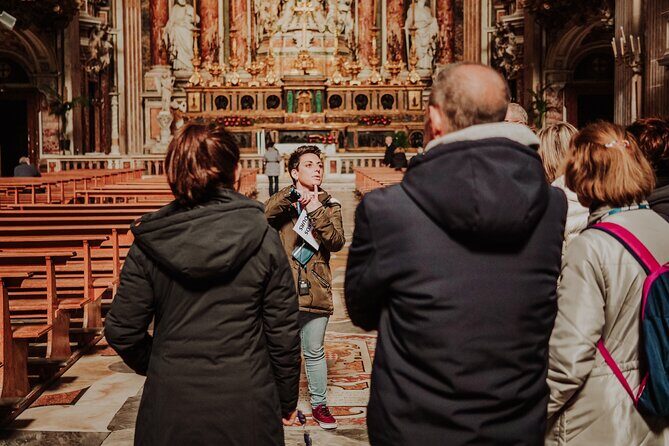
This is the kind of tour that works when you have limited time but still want the heart of Naples old town. At about 2 hours 30 minutes, you’ll cover a compact set of landmarks without feeling like you’re wandering alone and guessing what matters.
The value comes from the mix of guided interpretation plus paid entry. You don’t just walk past places; you go inside for the two big-ticket cultural stops: Cappella Sansevero (home to Cristo Velato) and the Santa Chiara cloister. That matters because these are exactly the sites where a guide can help you notice the details that would otherwise blur together.
Price-wise, it’s priced like a mid-range city tour, but it stays fair because entry fees are included. Meals and drinks are not, so build in time to pause on your own—Naples is more fun that way anyway.
You can also read our reviews of more tours and experiences in Naples.

Starting at Chiesa del Gesù Nuovo: the UNESCO old core
Your tour begins at the Piazza del Gesù Nuovo area by Chiesa del Gesù Nuovo (Piazza del Gesù Nuovo, 2). This spot is a great “arrive and orient” point because it sits in the historic center where Naples feels layered, not staged.
One neat detail you’ll see right away: a UNESCO plaque marking the historical center of Naples as one of the world’s listed sites and among the oldest and richest historical centers in Europe. You don’t need a history degree to appreciate this—it’s a visual reminder that you’re in a place that has been evolving for ages.
If your guide is Maria, Eduardo, Carlos, or another of the frequent guides on this route, expect the first stretch to set the tone: where you are, what to look for, and what to ignore so you don’t get overwhelmed.
Piazza del Gesù Nuovo and Chiesa del Gesù Nuovo: church fronts with street energy

Next comes a classic Naples move: you’re near major religious architecture, but the surrounding streets stay alive and noisy. That’s a feature, not a bug. Naples doesn’t treat churches like museum islands; faith and everyday life sit next to each other.
You’ll visit Chiesa del Gesù Nuovo, a XVI-century church often described as one of the best-looking in Naples. The guide will point out what makes this stop more than a pretty façade—why the style matters, how it fits into the city’s Christian timeline, and how this area connects to what comes next.
Practical tip: wear comfortable shoes. This is a walking-and-standing itinerary, with enough time inside that you’ll be moving fairly steadily from stop to stop.
Santa Chiara monastery church: Gothic bones, Baroque shine
The itinerary brings you to the Complesso Monumentale di Santa Chiara, starting with the monastery church of Saint Chiara. The church’s story is the kind that explains Naples in one building: Gothic structure, later Baroque decoration (18th century) that gives it that rich, almost dramatic look.
Why I love this stop: it shows Naples as a city that keeps adding chapters. You’re not looking at one “finished” design—you’re seeing a building that changed with taste, power, and devotion over time.
The time inside here is short, so you won’t get a deep restoration lecture. But with a local guide, you’ll still leave knowing what to focus on: the style shift and why that shift feels so Naples.
Spaccanapoli: the spine of old Naples in one long line

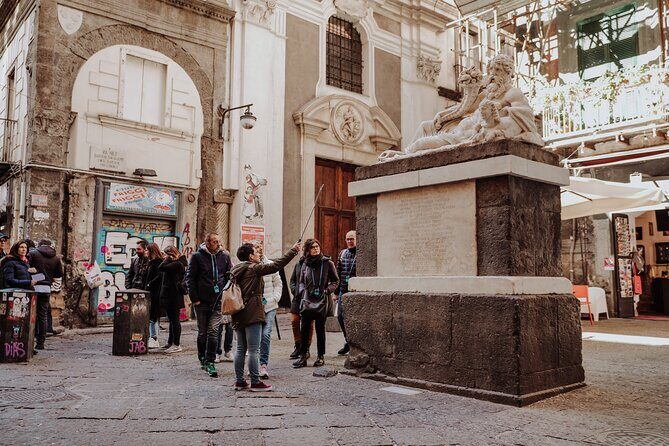
After the churches, you’ll move through the streets along Spaccanapoli, the famous long and narrow street that divides old Naples into two halves. Think of it like a living corridor: shops, restaurants, and alleyways push in close on both sides.
This is one of those parts where you get two experiences at once:
- You’re seeing a major urban landmark.
- You’re also absorbing everyday Naples texture.
Along the way, you may spot the Statua del Dio Nilo, an ancient Roman marble statue linked to the Nile river, likely dating from the 2nd–3rd century. It’s an example of how antiquity keeps showing up under the surface in Naples, even when you’re walking through modern streets.
You’ll also pass near San Gregorio Armeno, known for nativity scene workshops. If you’re traveling around Christmas or you just love craftsmanship, this is the kind of street you’ll want to look at twice—even if you’re not shopping.


Piazza St. Gaetano and San Domenico Maggiore: squares with deep roots
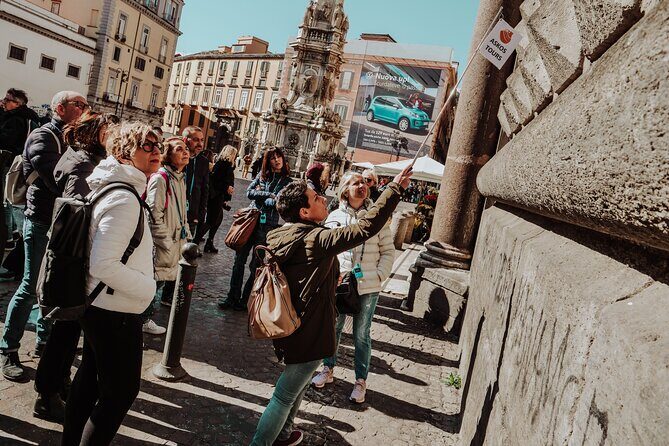
The tour continues with time around older public spaces, including Piazza St. Gaetano, described as the oldest square in the city. The guide will explain how this area was the Greek Agora and later turned into a Roman forum. In other words: same location, different civilizations using the same gravity.
You’ll also pass by San Domenico Maggiore square, where architecture layers in overlapping styles catch the eye. These squares work well for first-time visitors because they’re open enough to see the street pattern, but historic enough to feel like you’re stepping into a timeline.
If you’ve never been to Naples before, these stops help you understand the city’s shape. Later, when you explore on your own, you’ll have a mental map instead of a blur.
Santa Chiara cloister with majolica tiles: quiet after the street
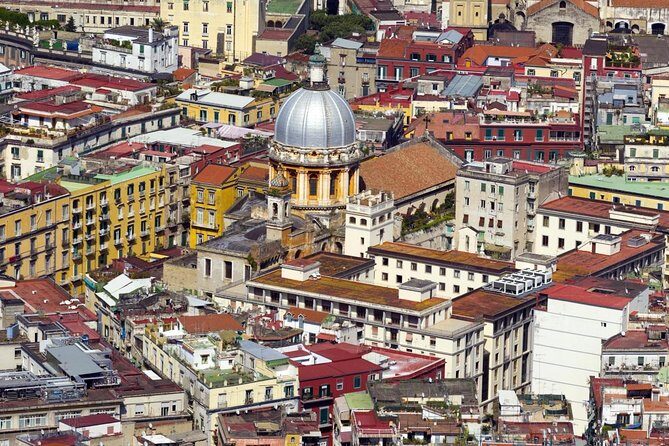
The Santa Chiara cloister is the calm reset. The focal point is the courtyard-like space with the famous majolica artwork—colorful tiled work that feels peaceful in a way the busy streets don’t.
This is also where timing matters. The cloister is closed on Sunday afternoons. If you’re booking for a Sunday, check your option carefully—there’s an alternative approach focused on the Sansevero Chapel when the cloister isn’t available.
What to expect in practice: the stop is not long, so you’ll get the key view and highlights, not a slow wander. That said, even a short visit here can change your whole Naples mood. Street noise fades. Details sharpen. You see why a cloister matters as much as a famous statue.
Cappella Sansevero and Cristo Velato: the reason people book
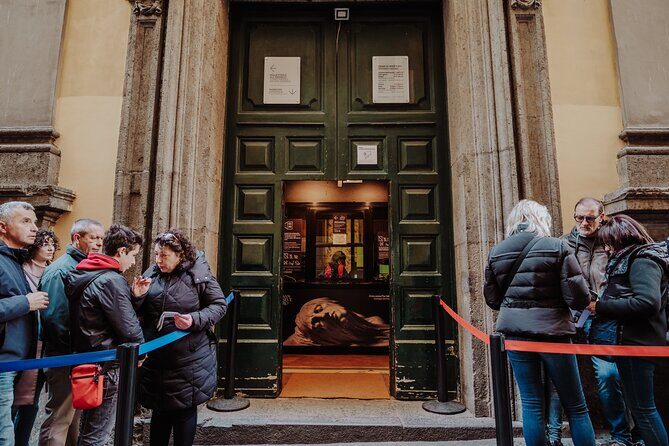
Now we reach the star stop: Museo Cappella Sansevero and the statue Cristo Velato by Giuseppe Sanmartino. This is the masterpiece people talk about because it represents a dead Christ covered by a veil, and the effect is so convincing it feels like trickery.
The guide will bring you the legend: an alchemist taught the sculptor how to convert real veil into marble veil. You don’t have to believe the story literally to appreciate what it signals—this statue was made to create emotion, not just admiration.
Important rule: photos inside Cappella Sansevero are forbidden. Plan for that before you arrive. I’d treat it like a theater experience—watch closely, then take notes in your phone’s notes app (no photos needed). You’ll remember more if you don’t spend half the stop photographing.
Also, be aware that the statue is usually the focus, so if you love broader chapel decoration, ask your guide what to look for beyond Cristo Velato.
Duomo di Napoli: baroque faith and the Miracle of San Gennaro
The tour ends at Duomo di Napoli (also known as the Cathedral of Saint Gennaro), at the heart of Neapolitan faith. The cathedral is baroque, but its roots stretch back to the 13th century.
Here’s the core story the guide connects to the building: the blood of Saint Gennaro is preserved, and it becomes liquid during the Miracle of St. Gennaro tradition. That detail helps explain why local devotion feels so serious—this isn’t just a church you admire; it’s a church that matters to people.
Even if you’re not religious, you’ll feel the atmosphere because the ritual tradition is part of Naples’ social fabric. And your guide will help you connect the dots between religious milestones and the art you saw earlier in the tour.
Photo rules, pets, and pacing tips that save you stress
This route mixes outdoor walking with short indoor stops, so your comfort setup matters.
A few practical points from the tour rules:
- No animals are allowed inside Sansevero Chapel and Santa Chiara cloister. You’ll need to wait outside with a pet during the visits.
- No photos inside the Sansevero Chapel, so don’t plan on a full photo set.
- The tour is designed so most travelers can participate, but it still involves walking in an old-city layout.
Pacing-wise, it’s usually smooth because the stops are timed. Still, Naples streets can be slower than you expect due to crowds and narrow lanes. Give yourself a small buffer before your start time so you don’t feel rushed hunting the meeting point.
Price and logistics for this small-group Naples walk
Let’s talk value with real numbers and real tradeoffs.
- Price: $58.65 per person
- Duration: about 2 hours 30 minutes
- Group size: max 30 travelers per guide
- Included: local expert guidance, Cappella Sansevero admission, Santa Chiara cloister admission
- Not included: meals and drinks
- Ticket method: mobile ticket
- Language: English
For many first-timers, the biggest value is not just the entrances. It’s getting someone local to translate the meaning of the places quickly. In Naples, the difference between seeing and understanding can be the difference between a pleasant walk and a trip you remember.
Logistics are straightforward:
- Start: Chiesa del Gesù Nuovo / Piazza del Gesù Nuovo, 2
- End: Duomo di Santa Maria Assunta, Via Duomo, 147
That end point is handy. You’ll finish in an area where it’s easy to keep exploring without backtracking.
Should you book this Naples tour?
Book it if you want a smart first pass through old Naples—church art, monastery calm, and Spaccanapoli street life—without spending your day figuring out tickets and priorities. It’s also a good choice if you like guided storytelling and you want the Cristo Velato stop handled with care (since the photo restriction makes attention-by-eye important).
Skip it or choose carefully if your perfect tour day includes lots of inside photography, long unscheduled wandering, or you’re traveling on a Sunday afternoon and the Santa Chiara cloister timing affects your plans.
FAQ
FAQ
How long is the Naples Veiled Christ and Santa Chiara tour?
The tour lasts about 2 hours 30 minutes.
Is the tour in English?
Yes, it is offered in English.
What’s included in the ticket price?
Your price includes local expert guidance, admission to Cappella Sansevero (including the Cristo Velato statue), and admission to the Santa Chiara Cloister.
Is Santa Chiara cloister always open on this tour?
No. The Santa Chiara cloister is closed on Sunday afternoon, and there’s an option focused on entrance to the Sansevero Chapel instead.
Can I take photos inside Sansevero Chapel?
No. Photos inside Sansevero Chapel are forbidden.
Can I bring a pet into the churches and cloister?
No. Animals are not allowed inside Sansevero Chapel and Santa Chiara Cloister, so you’ll need to wait outside during those visits.