REVIEW · NAPLES
Naples Stress-Free Tour: Between Mystery, Legends & History
Book on Viator →Operated by Stress Free Tours - Guided Tours and drivers in Rome and Italy · Bookable on Viator
Naples has a story for every corner. This 2-hour, English-guided stroll through Naples’ UNESCO-listed historic center is built around legends and landmark moments you can actually see as you walk. I like how it strings together big-name stops (hello, Duomo di Napoli) with smaller oddities that make the city feel personal.
I also like the practical pace: about 10–20 minutes at each stop, plus time for photos, so you are not sprinting for “the next photo.” The main consideration is guide variability—some people have felt the explanations can be too shallow or that English can be hard to catch when it is spoken with a strong Italian accent. If you want very deep, tightly structured history, plan to ask questions and keep expectations realistic for a 15-person walking tour.
In This Review
- What makes this Naples walk feel stress-free
- The 4:00 pm start: when timing matters in Naples
- Duomo di Napoli: Saint Gennaro and why the legend sticks
- Jorit’s street art and San Gennaro on the walls
- Spaccanapoli: narrow lanes, fast memories, and the Dolls Hospital
- Via San Gregorio Armeno: presepi artisans and real craft
- Via dei Tribunali: pizza street vibes (and when to order)
- Santa Maria delle Anime del Purgatorio ad Arco: skulls, legend, and unease (in a good way)
- Pulcinella and the photo moment you’ll actually remember
- Port’Alba and finishing in Piazza del Gesù Nuovo
- Guide quality: the upside and the one thing to watch
- Price and value: is $54.01 fair for this route?
- What to wear and how to prep for the walk
- Should you book this Naples Stress-Free Tour?
- FAQ
- How long is the Naples Stress-Free Tour?
- What does the tour cost?
- Where do I meet and where does the tour end?
- What language is the tour offered in?
- Is there an admission fee for the Duomo stop?
- What if the weather is bad or I need to cancel?
What makes this Naples walk feel stress-free

- A tight 2-hour route through key UNESCO sights, with short stops that keep energy up
- Duomo di Napoli + Saint Gennaro’s story, including the famous blood-liquefaction legend
- Spaccanapoli on foot, plus the Dolls Hospital and Ospedale delle Bambole side of Naples
- San Gregorio Armeno for presepi craft, where nativity scenes are the real street business
- Church of skulls stop at Santa Maria del Purgatorio ad Arco, with the legend tied to the artifacts
- Finish in Piazza del Gesù Nuovo, so you end in a lively historic square instead of nowhere
The 4:00 pm start: when timing matters in Naples
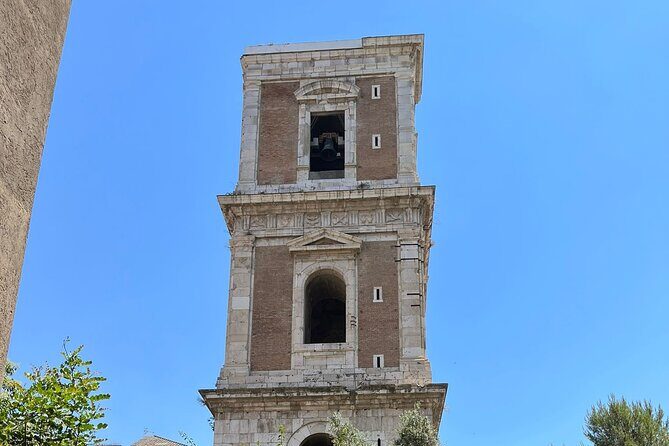
This tour starts at 4:00 pm and runs about 2 hours. In Naples, that late-afternoon window can be kinder than midday walking, especially if you are catching the historic center after a lighter morning.
You meet at Duomo di Santa Maria Assunta (Via Duomo, 147) and end at Piazza del Gesù Nuovo. There is no hotel pickup, so you’ll want to arrive a few minutes early and start on time—this is a walk-with-a-route plan, not a slow “see what happens” stroll.
The group is capped at 15 travelers, which usually helps you keep moving while still getting guide attention at the key moments. You’ll also get a mobile ticket, and the tour is offered in English.
One more practical note: you will be visiting the Duomo, and you must cover your shoulders to enter. Wear comfortable walking shoes, because this area is made for pedestrians, but the lanes can still feel tight underfoot.
You can also read our reviews of more historical tours in Naples



Duomo di Napoli: Saint Gennaro and why the legend sticks
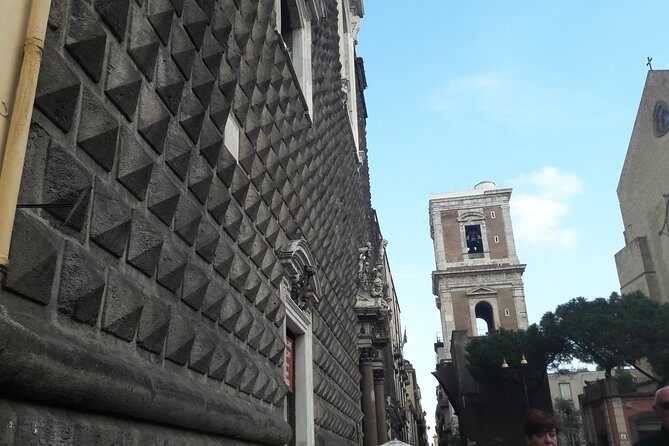
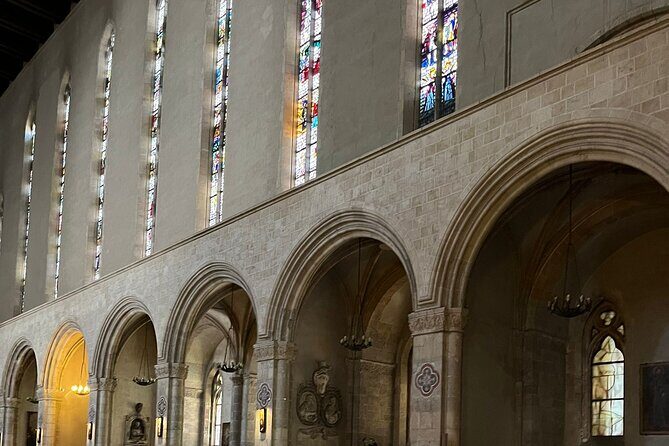
Your first stop is the Duomo di Napoli, the city’s main cathedral. Plan on about 20 minutes here, and the admission ticket is listed as free for this tour.
What makes this stop more than architecture is the story you hear at the doorways and along the way. You’ll learn about the miracle tied to Saint Gennaro’s blood liquefaction, a tradition deeply rooted in Naples’ religious identity. Even if you do not lean religious, it helps you understand why Naples people treat certain dates, objects, and rituals with real intensity.
Architecturally, the Duomo is a big anchor for the historic center. Practically, it’s also a smart early pause: you start with a major landmark, get your bearings, and then the rest of the route feels like it is unfolding outward from the center of gravity.
Jorit’s street art and San Gennaro on the walls
Next comes a quick stop tied to Neapolitan street art: San Gennaro di Jorit Agoch. The tour budget time here is short (around 10 minutes), and that makes it a good fit if you love street art but do not want an all-day gallery format.
The value is in the context. You learn what Jorit Agoch is doing as an artist and why this kind of work connects to local identity even when the artist has worked internationally. It is also an easy way to break the pattern of stone-and-church stops before you head into the older street maze.
If you are the type who likes details, take a moment to look closely at the artwork before you move on. With only 10 minutes, your best payoff comes from careful looking rather than trying to read everything at once.
Spaccanapoli: narrow lanes, fast memories, and the Dolls Hospital
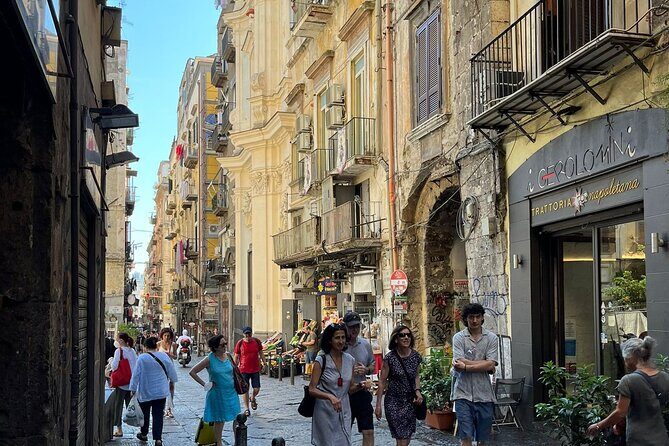
Then you move into the most Naples-feeling part of the walk: Spaccanapoli. This is one of the city’s oldest, most atmospheric streets, and the tour gives you about 10 minutes to walk its character-filled stretch.
What sets this stop apart is the detour into a very specific Naples idea: the Dolls Hospital, along with a visit to Ospedale delle Bambole. The tour frames it as part of Naples’ creative, caring spirit—broken dolls and toys get repaired instead of thrown out.
This is also where you’ll feel the difference between “walking past sights” and “walking with a reason.” The guide’s job here is not just pointing—you’re meant to hear the origin of why this exists, and that makes the whole scene click. Even if you do not buy into the sentiment, it’s a charming reminder that Naples can be funny and practical at the same time.
Practical tip: this is a quick stop, so if you want photos, plan your angles fast. In tight lanes, you can lose time just finding a spot to stand still.
Via San Gregorio Armeno: presepi artisans and real craft
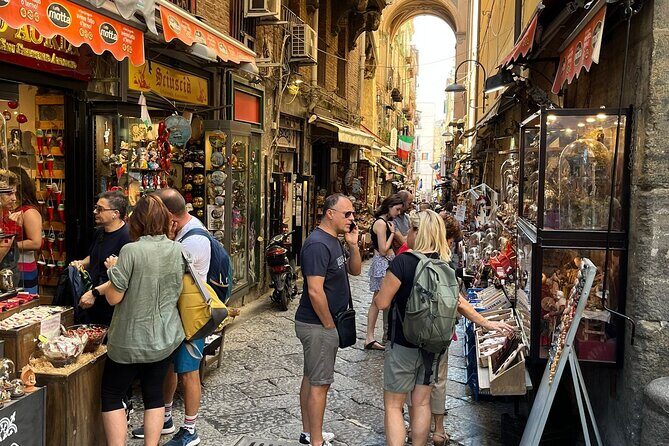
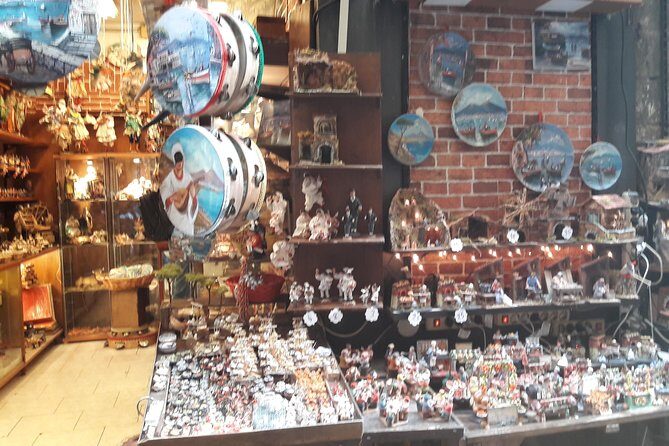
Your next longer stop is Via San Gregorio Armeno (about 20 minutes). This is the street where skilled craftsmen create intricate nativity scenes—locally called presepi.
The tour’s value here is how it turns shopping energy into cultural understanding. You’ll see the craftsmanship up close and hear why this tradition has lasted for centuries in Naples. If you’ve only ever seen nativity scenes in museums or holiday displays, this is the chance to see the real workshop mindset: careful work, local style, and an entire street organized around seasonal storytelling.
If you want to buy something, this is likely your best timing. You have enough time to browse without feeling rushed, but not so much that you disappear into shops for an hour.



Via dei Tribunali: pizza street vibes (and when to order)

From there you follow Via dei Tribunali, a lively thoroughfare known for culinary energy. The tour time here is about 5 minutes, so think of it as a “taste of the vibe,” not a food tour.
This is also where the group angle matters: you’re close to some of Naples’ well-known pizzerias, and the guide points you toward what makes Neapolitan pizza so famous worldwide. Even with only a short stop, you’ll leave knowing where the local reputation is coming from and how to plan an actual meal afterward.
If you get hungry mid-walk, don’t panic. Use the walking momentum to spot a place that looks good, then decide when you have time. Food choices go better when you are not making them five minutes before everything closes.
Santa Maria delle Anime del Purgatorio ad Arco: skulls, legend, and unease (in a good way)
One of the most unusual stops is the Complesso Museale Santa Maria delle Anime del Purgatorio ad Arco, the church and museum tied to the famous skulls—often linked in legend as the souls of purgatory. You’ll have about 10 minutes here.
This stop works because it is not just spooky objects. You also hear the folk legend connected to the skulls and the history behind why this site exists. The result is a moment of Naples that feels different from the street-art and craft stops—more eerie, more emotional, and very human in its symbolism.
If you are sensitive to macabre themes, go in with eyes open. But if you like cultural oddities that explain how people think about life, death, and memory, this is one of the strongest parts of the route.
Pulcinella and the photo moment you’ll actually remember
Near the end, you meet the Neapolitan mask icon: Pulcinella. The tour stop includes time at the Busto di Pulcinella sculpture, with about 20 minutes for pictures.
What makes this stop fun is it is practical, not just “pose and move.” You get a moment for photos, and the tour also mentions a drink idea: Limonata a cosce aperte (open legs lemonade). If you want something refreshing, this is the kind of spot where the local label helps you pick the experience that matches the character of the street.
Pulcinella also ties the whole walk together. You started with religious legend (Saint Gennaro), moved through street culture and craft, and ended with a cultural symbol that feels like Naples itself—quirky, theatrical, and proud.
Port’Alba and finishing in Piazza del Gesù Nuovo
You then get a brief history ping at Port’Alba, an old gate from the Roman age. The time here is short (about 5 minutes), so treat it as a marker that reminds you Naples isn’t only medieval and Renaissance. Even a quick stop like this can help your mental map.
Finally, the tour ends in Piazza del Gesù Nuovo (about 10 minutes at the stop). The guide explains hidden narratives and historical events associated with the church of Gesù Nuovo and the surrounding area.
Ending in a square matters more than you might think. A lot of city walks end on a random side street where your options feel limited. Here, you finish in an iconic historic center space, which makes it easier to keep exploring on your own right away.
Guide quality: the upside and the one thing to watch
The tour format relies heavily on the guide. When the guide is on form, this walk feels like a story you can step through: Duomo legend, Spaccanapoli weirdness, craft street pride, and skull-site folklore all click into a single Naples narrative.
Some people have specifically praised the historical storytelling of a guide named Ludovica. The tradeoff is that others have found her English pronunciation hard to understand at times, and some feedback has pointed out that the explanations can feel too shallow.
So what should you do? If you care about depth, arrive ready to ask for specifics—like how one legend connects to another part of the city. A good guide can’t fix every time constraint of a 2-hour walk, but strong questions help you get more out of what is there.
Price and value: is $54.01 fair for this route?
At $54.01 per person for about 2 hours, you’re paying for several things at once: an English-speaking guide, a route that hits major sights in the historic center, and planning that saves you time from figuring out which streets connect naturally.
You also get free admission listed for the Duomo di Napoli stop, and the rest of the route is framed as included sight visits and guided explanations (not an all-day museum binge with extra ticket costs you didn’t plan for). That matters in Naples, where getting the right order can save you energy.
The group size cap of 15 travelers is another value lever. In crowded areas, a smaller group can help you actually hear the guide instead of only catching them in passing.
If you are the type who likes to wander without structure, this might feel like a lot of stops for the time. If you want a guided path through the most memorable historic center moments, it is priced like a focused afternoon activity rather than a half-day commitment.
What to wear and how to prep for the walk
This is a walking-heavy tour, even with short stops. Wear comfortable walking shoes. The Duomo entry requirement is clear: cover your shoulders.
If you need mobility support, the tour description says most travelers can participate, and it also allows service animals. Still, the historic center streets can be uneven and narrow, so it helps to plan for real walking time rather than thinking it is only “museum steps.”
Bring a phone that can handle photos and a mobile ticket. You will want both when your “photo minute” shows up.
Should you book this Naples Stress-Free Tour?
Book it if you want a high-impact, short Naples afternoon. You get key historic center stops, strong legend ingredients (Saint Gennaro’s blood story and the skull-site lore), and a mix of styles—cathedral, street art, craft street, and Roman relics—without needing to design a route yourself.
Skip or be cautious if you are traveling specifically for extremely detailed history lessons and you dislike “quick stop” pacing. There are indications that some guides may not hit the depth you want, and English clarity can vary.
If you are flexible and curious, though, this tour is a smart way to get your bearings. By the time you finish in Piazza del Gesù Nuovo, you’ll have a clearer mental map of Naples—and a list of places you’ll want to return to on your own.
FAQ
How long is the Naples Stress-Free Tour?
It lasts about 2 hours.
What does the tour cost?
The price is listed as $54.01 per person.
Where do I meet and where does the tour end?
You start at Duomo di Santa Maria Assunta, Via Duomo, 147, 80138 Napoli and end in Piazza del Gesù Nuovo, 80134 Napoli.
What language is the tour offered in?
The tour is offered in English, and you’ll have an English-speaking guide.
Is there an admission fee for the Duomo stop?
The Duomo di Napoli stop is listed with an admission ticket free entry for this tour.
What if the weather is bad or I need to cancel?
The experience requires good weather. If it’s canceled due to poor weather, you’ll be offered a different date or a full refund. You can also cancel up to 24 hours in advance for a full refund.