REVIEW · NAPLES
Naples: Culture & Street Food with a Local Guide
Book on GetYourGuide →Operated by IAMME IA! - Gray Line Amalfi Coast · Bookable on GetYourGuide
Naples tastes better when someone local leads you. This 3–4 hour street-food and culture walk strings together the big sights and the everyday lanes, with an official guide and real Neapolitan snacks that feel aimed at travelers, not just passersby. I especially love the food stops built into the route, from tarallo to pizza to dessert. One thing to keep in mind: you’ll cover a lot on foot, and some back streets can look worn or dirty, so go in with realistic expectations and comfy shoes.
The guide experience is a big part of the value. In the past, guides such as Loona and Roberta have been highlighted for keeping a calm walking pace and explaining how Naples works—history, local quirks, and what you’re actually looking at. If you want a street-food tour that also helps you understand the city’s myths and symbols, this is the right style. If you’re expecting a perfectly clean postcard route the whole time, you may feel disappointed.
In This Review
- Key reasons this Naples street-food tour works
- Price and time: what $70 gets you in real-world value
- Starting at the Duomo: a smart way to get your bearings
- Via dei Tribunali and Tarallo: street food you actually eat, not just watch
- San Gregorio Armeno: the nativity street and the story behind it
- Spaccanapoli: walking Naples’ old-city spine
- Piazza del Gesù Nuovo and the Guglia dell’ Immacolata
- Piazza del Plebiscito: big square, big stories, Bourbon statues
- Via Toledo and the pizza moment: Piazza Portafoglio
- Dessert: sfogliatella or babà and a Neapolitan espresso
- Walking pace, comfort, and what to expect in the streets
- Languages, group size, and how to choose your comfort level
- Who should book this Naples culture and street food walk
- Should you book this Naples street-food tour?
- FAQ
- What is the meeting point for the Naples street food and culture tour?
- How long is the tour?
- What street food and desserts are included?
- Do you visit San Gregorio Armeno?
- Are there dress requirements for churches?
- Is the tour wheelchair accessible?
Key reasons this Naples street-food tour works
- Duomo meet-up, easy start: You begin right at the Cathedral area, so you’re not hunting for a hidden corner.
- Tarallo + hot savory bites in the middle of real neighborhoods: Snacking doesn’t happen in a tourist bubble.
- San Gregorio Armeno nativity street: You get context and time to browse the shops, not just a quick pass.
- Spaccanapoli street-culture walk: This is the spine of old Naples, with plenty to see while you move.
- Piazza del Gesù Nuovo to Teatro San Carlo: Art and architecture show up along the way, not at the very end.
- Dessert built in: You finish with sfogliatella or babà, plus Neapolitan espresso.
Price and time: what $70 gets you in real-world value
For about $70 per person, you’re not just paying for a guide and a couple of samples. You’re paying for a timed route through central Naples, with multiple tastings and the kind of context that helps you read the city while you walk.
The included food list is the clearest “value proof”:
- Tarallo Napoletano (spicy salted cookie), with you choosing your flavor
- Babà or sfogliatella with Neapolitan espresso
- Pizza “wallet” (Piazza Portafoglio) or fried Piazza, plus a bottle of water
- A corno napoletano (lucky charm) connected to the San Gregorio Armeno district
On a normal day, buying several separate snacks and drinks plus a guided walk through major sights would add up fast. Also, the tour runs 3–4 hours, which is long enough to feel like you’ve actually learned something, but short enough that you’re still free to explore independently afterward.
You can also read our reviews of more food & drink experiences in Naples


Starting at the Duomo: a smart way to get your bearings
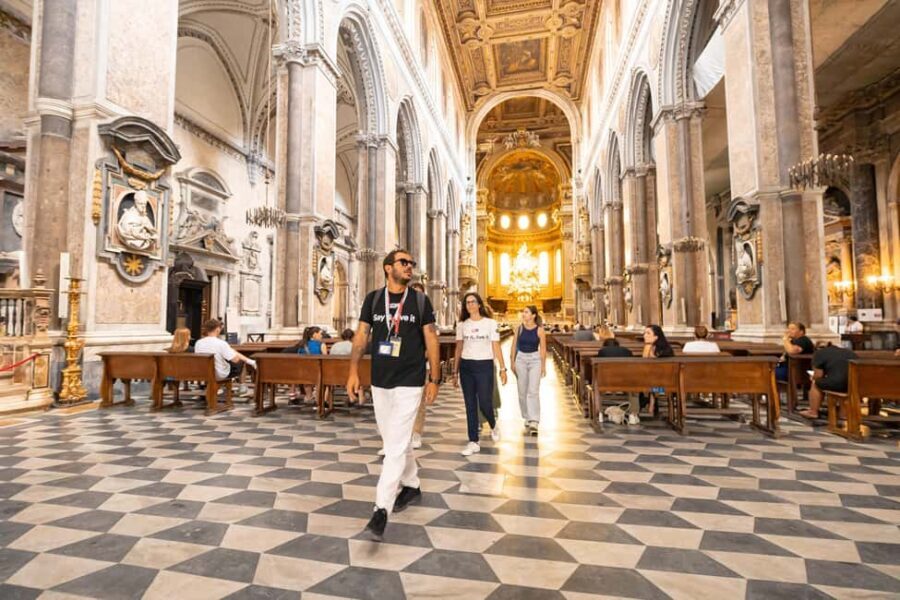
The meeting point is outside the Cathedral of Naples in Via Duomo, at the Cattedrale di Santa Maria Assunta. Locals often call it the Duomo of San Gennaro, because the church is dedicated to Naples’ patron saint.
That matters more than it sounds. Naples is a maze, and it helps to start at a landmark that locals and maps both recognize. You’ll also see the guide holding a board with the Iamme Ia! logo, which makes the first 2 minutes less stressful.
From here, you don’t get stuck in a “sit and listen” format. Instead, you begin moving into Via dei Tribunali, one of the most character-filled corridors of old Naples. If you’re the type who likes to understand a place with your feet, this start gives you momentum right away.
Via dei Tribunali and Tarallo: street food you actually eat, not just watch
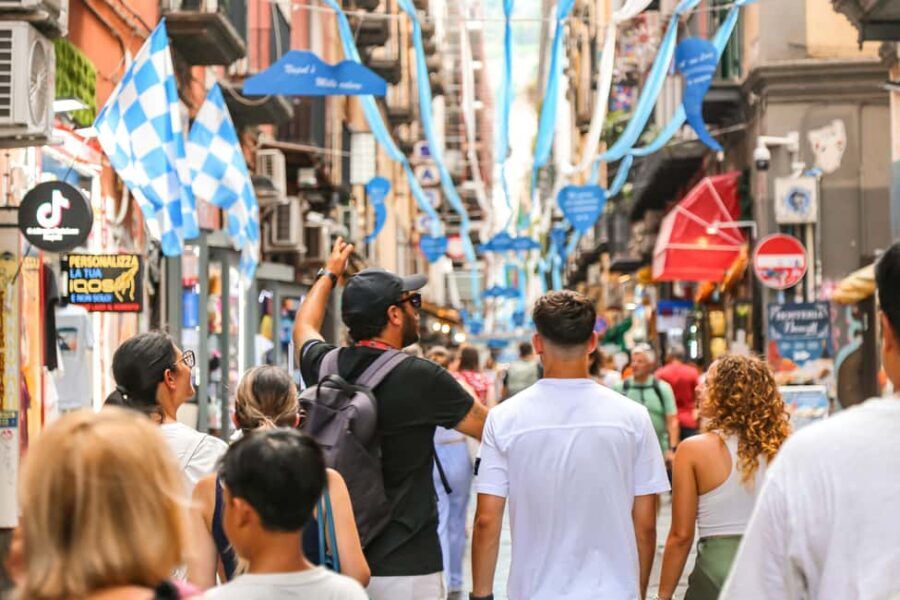
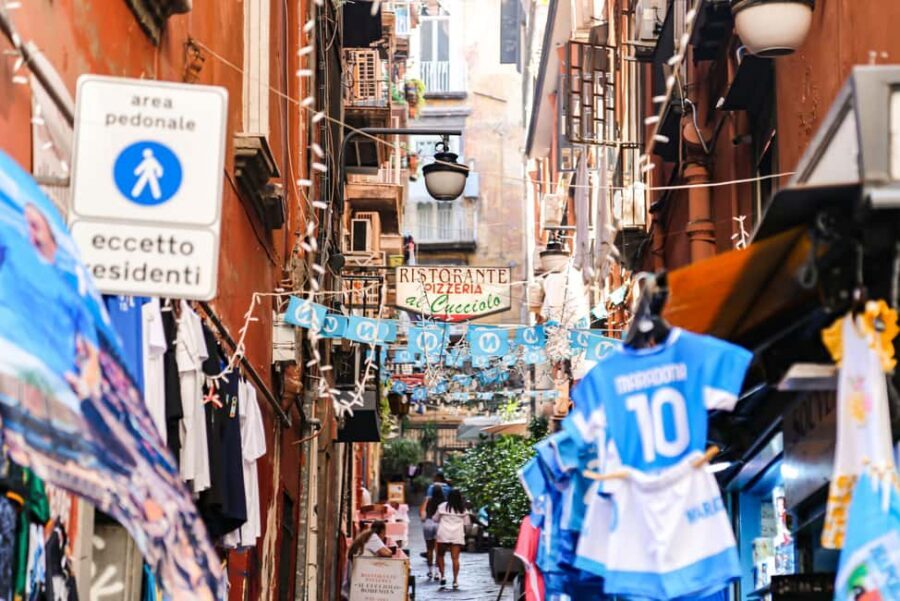
Via dei Tribunali is where you’ll feel that classic Naples rhythm—tight streets, lots of people, everyday life happening alongside historic walls. It’s not the slow “museum stroll.” It’s Naples doing Naples.
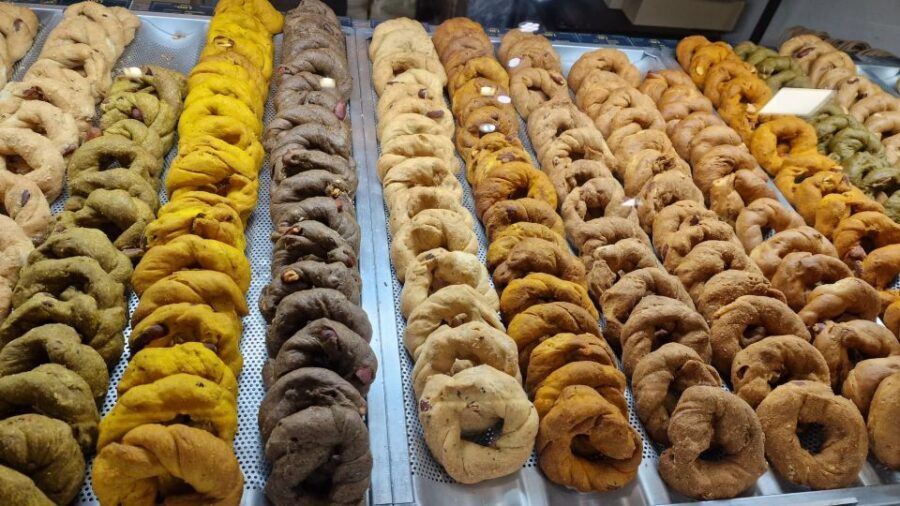
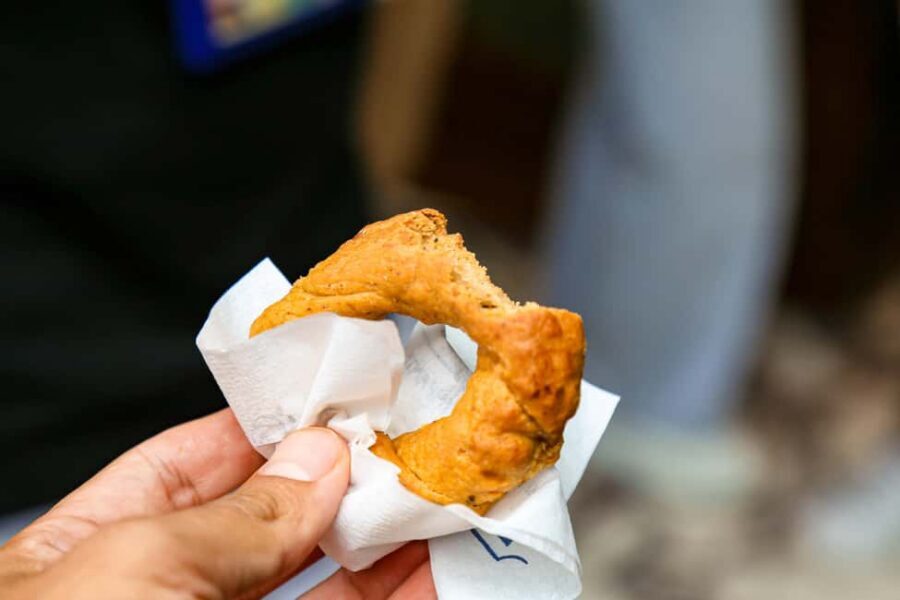
This is also where the first snack fits in: Tarallo Napoletano, a spicy salted cookie. You get to pick your favorite flavor, which turns the tasting into something personal instead of a single cookie handed to everyone.
Why that’s good: tarallo is quick, portable, and very Neapolitan. You can taste it while you walk, then immediately connect flavors to the neighborhood you’re in. It’s an easy “bridge” between culture and food.
San Gregorio Armeno: the nativity street and the story behind it
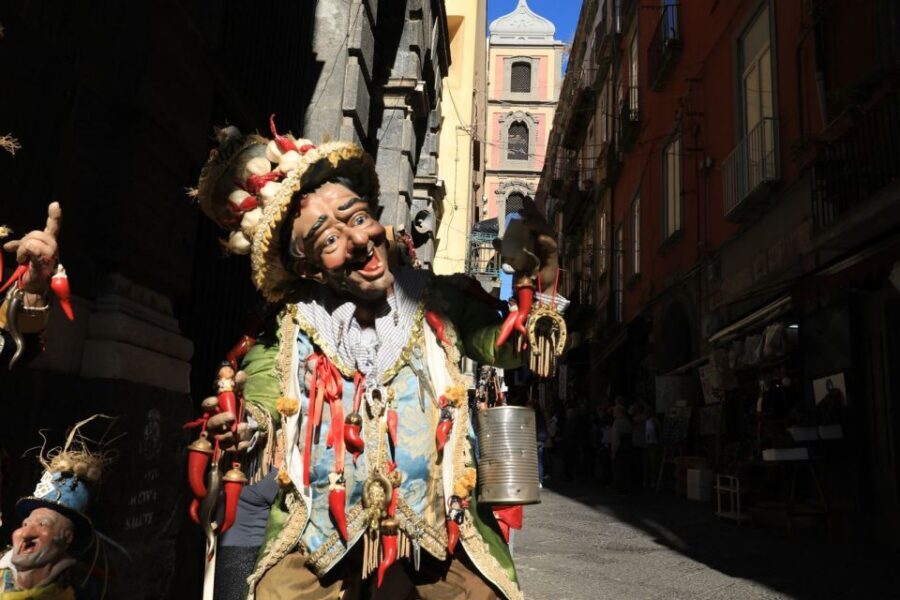
San Gregorio Armeno is famous for one thing: nativity scenes. The alley is often called la strada dei presepi, and it’s known for creative shopfronts and figurines in all styles.
This stop is special because it’s not just scenery. It’s a living craft tradition. You’ll have time to admire the shops and see the range of figurines, from classic looks to playful interpretations.
You’ll also receive a corno napoletano (a lucky charm) connected to this district. That’s a tangible souvenir that matches the theme of the area: tradition, superstition, and everyday symbols all mixed together.
If you like shopping that has meaning—things tied to local life rather than generic tourist manufacturing—this is one of the strongest parts of the itinerary.
Spaccanapoli: walking Naples’ old-city spine
Spaccanapoli is the straight, narrow street that cuts through the historic center. It’s often described as dividing Naples into two, and even if you don’t track the geometry precisely, you’ll feel the “through-line” of the city’s layout.
This section keeps the tour moving while still giving you time to stop and notice details. The guide helps turn the street-level visuals into a bigger picture—how old Naples is structured, why certain neighborhoods feel distinct, and how everyday scenes fit into the city’s identity.
Food returns again here, so you’re not only looking. You’re tasting and walking at the same time, which keeps energy up even if the day runs warmer.
You can also read our reviews of more tours and experiences in Naples




Piazza del Gesù Nuovo and the Guglia dell’ Immacolata
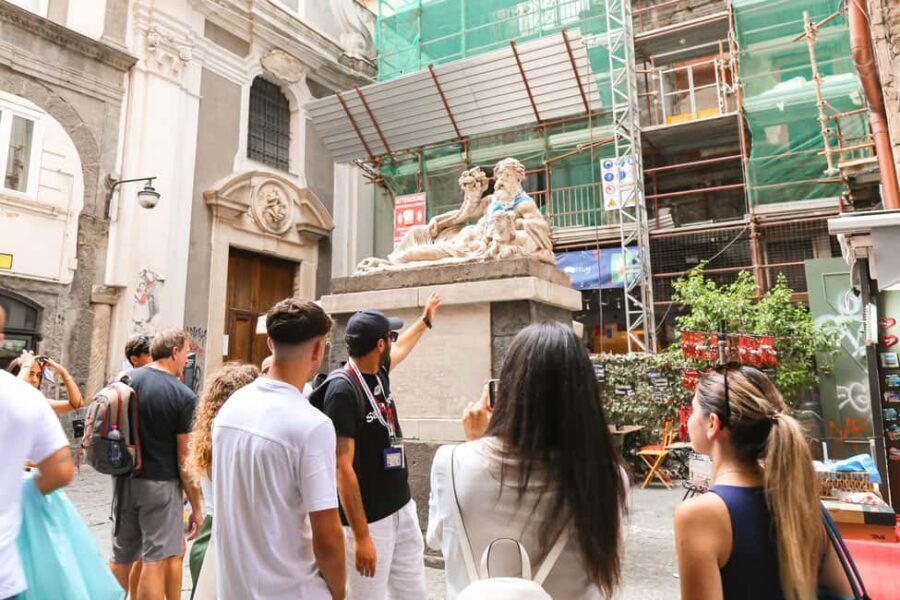
Next up is Piazza del Gesù Nuovo, one of Naples’ prettier squares. It’s anchored by the Church of Gesu Nuovo, known for a façade that doesn’t follow the neatest “pretty pattern,” and by a striking sculpture: the Guglia dell’ Immacolata.
That pinnacle is the kind of detail you might miss if you were walking on your own. On this tour, you don’t just pass by it. You get oriented to what you’re looking at and why it’s considered visually important.
From there, you can also see your way toward Teatro San Carlo, described as the oldest opera house in the world still working. You get a photo-friendly path without the day turning into a long lecture.
Piazza del Plebiscito: big square, big stories, Bourbon statues
Piazza del Plebiscito is one of Italy’s showpiece squares. It’s a noble semicircular space with a colonnade designed on the model of Rome’s Pantheon—so you get a sense of Naples borrowing grander architectural language.
In front of the church you’ll find two equestrian statues, representing Ferdinand I of Bourbon and Charles III of Bourbon. The statues are associated with Antonio Canova, and they’re one of those “stand still and look” moments that break up the walking pace.
This is also a good reality check stop. Naples can feel chaotic and close-quarters in the old streets. Then you suddenly step into a wide, airy plaza. That contrast is part of the city’s charm, and it helps you understand why Naples has such strong artistic output. Big spaces and big symbolism sit next to small alleys and street food.
Via Toledo and the pizza moment: Piazza Portafoglio
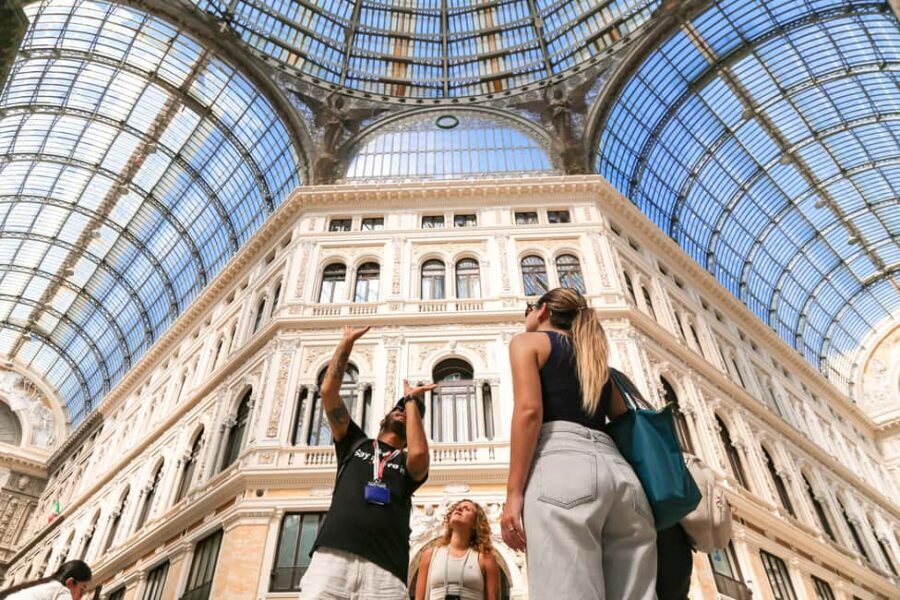
Via Toledo has long been considered the most important avenue of Naples. It connects the decumani area (the historic core) to Piazza del Plebiscito. In other words, it’s the “main artery” that ties different parts of your walk together.
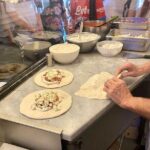
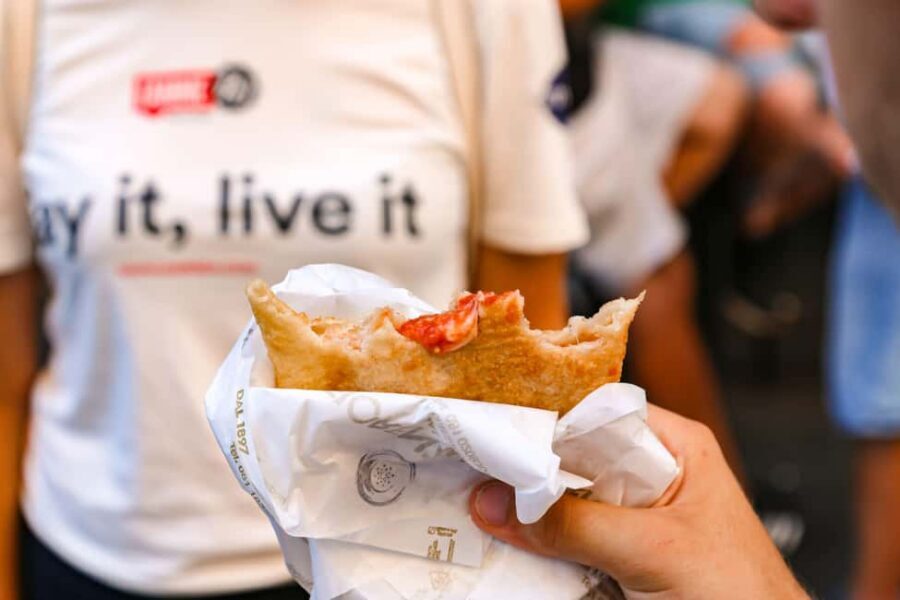
Here’s where the tour feeds you again: time for pizza. The highlight is Piazza Portafoglio, a pizza folded on itself—portafoglio means wallet in Italian, and that shape is exactly the visual clue.
This is the snack I’d plan for even if I weren’t on a tour. It’s easy to eat while walking, and the folded style makes it feel made for street life. Plus, it’s the kind of food that tastes better when you’re surrounded by the place that invented it.
Practical note: if you’re sensitive to spice or oily foods, pace yourself. Naples pizza on the street is delicious, but it’s still pizza.
Dessert: sfogliatella or babà and a Neapolitan espresso
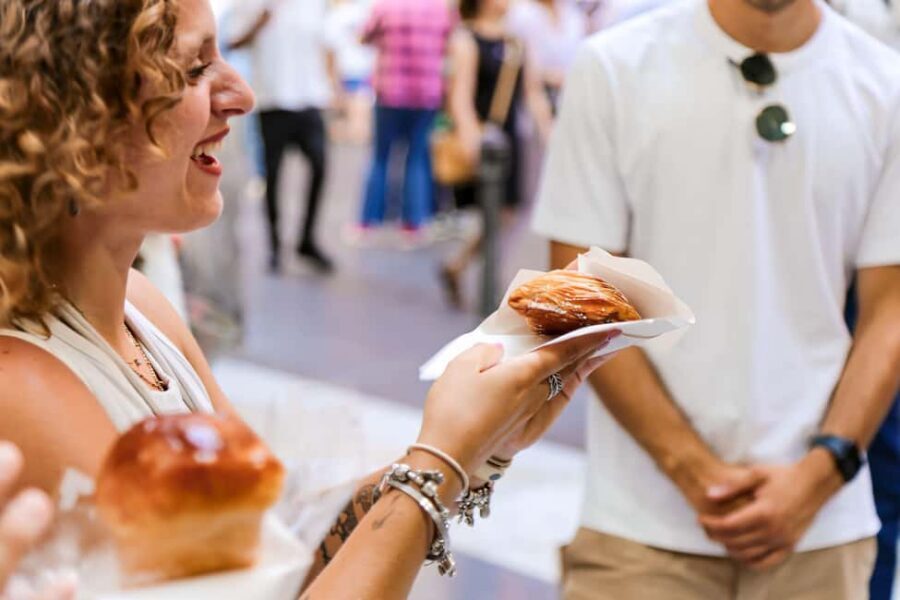
The final leg leans into dessert, with a clear choice: sfogliatella or babà, plus a Neapolitan espresso. This is a satisfying way to end the tour because you’re tasting something that feels distinctly Neapolitan rather than generic gelato-and-biscuit tourist options.
Sfogliatella is all about layers and texture. Babà leans more toward a soaked, tender style. Either way, the espresso ties it together and keeps the final hour from dragging.
It also helps that the tour duration is designed so you don’t leave still hungry. You’ll likely be ready to explore on your own afterward, rather than stopping for a second meal.
Walking pace, comfort, and what to expect in the streets
You should assume you’ll walk quite a bit in 3–4 hours, often through narrow streets and lively corridors. The tour style supports a steady pace, not a racing sprint. That matters if you want to talk, stop for photos, and let the guide explain details without you feeling rushed.
Come prepared:
- Wear comfortable shoes
- Bring your camera
- Plan for some streets that may look gritty or uneven, especially in older neighborhoods
One past participant described a day that felt rough due to dirty back streets and an overall sense of discomfort. That’s not a reason to avoid Naples, but it is a reason to go in with eyes open. If you’re easily put off by litter or peeling building exteriors, mentally file this tour under real-city walking, not curated-clean streets.
Also note: churches require knees and shoulders covered. If you show up in short shorts and tank tops, you’ll need to adjust before you go in.
Languages, group size, and how to choose your comfort level
The guide speaks English, Spanish, French, or German. If you want the cultural context explained clearly while you eat, that language support is a real plus.
The tour can run as private or small groups. One group experience mentioned a group of 8, which suggests you may be small enough to ask questions without being lost in a crowd. If you prefer a quieter experience and more back-and-forth, ask for the smaller-group option when available.
If you’re traveling solo, this can also be a comfortable way to get local guidance without committing to a full-day plan.
Who should book this Naples culture and street food walk
Book it if you want:
- A street food tour with multiple tastings, not a token sample
- Central Naples highlights connected by walking and explanation
- A guide who helps you make sense of the city’s traditions and symbols
- Dessert and espresso included, so you can end the experience satisfied
Skip it or adjust expectations if:
- You hate walking a lot
- You need ultra-clean, staged environments
- You want only major monuments, not a mix of alleys, churches, and everyday streets
Also, it’s not suitable for wheelchair users, so plan an alternative if mobility is a concern.
Should you book this Naples street-food tour?
I think it’s a strong choice if you’re visiting Naples for the first time and you want to taste the city’s food culture while learning how the pieces fit together. The included snacks are varied and genuinely Neapolitan—tarallo, pizza Portafoglio, then sfogliatella or babà with espresso—and that alone makes the price easier to justify.
The only reason not to book is if you strongly prefer clean, controlled environments or you’re not up for older, sometimes scruffy street conditions. Naples is a real working city. This tour doesn’t hide that. It helps you understand it, and it feeds you along the way.
If that sounds like your kind of day, go for it.
FAQ
What is the meeting point for the Naples street food and culture tour?
You meet the guide outside the Cathedral of Naples (Cattedrale di Santa Maria Assunta) in Via Duomo. The guide holds a board with the Iamme Ia! logo.
How long is the tour?
The experience runs for about 3 to 4 hours.
What street food and desserts are included?
Included tastings include Tarallo Napoletano (spicy salted cookie), babà or sfogliatella with Neapolitan espresso, and pizza (Piazza Portafoglio, the folded pizza wallet style, or fried Piazza), plus a bottle of water.
Do you visit San Gregorio Armeno?
Yes. You’ll walk through San Gregorio Armeno, known for nativity scenes (la strada dei presepi), and you’ll also receive a corno napoletano lucky charm connected to that district.
Are there dress requirements for churches?
Yes. Knees and shoulders must be covered to enter churches.
Is the tour wheelchair accessible?
No, it isn’t suitable for wheelchair users.