REVIEW · NAPLES
Naples: City and Lapis Museum Tour with an Archaeologist
Book on GetYourGuide →Operated by Grand Tour Experience · Bookable on GetYourGuide
Naples keeps its secrets underground. This small-group tour strings together Greek, Roman, medieval, and WWII layers in one walk, including the Roman Cistern Museum route at LAPIS. You start in the city’s big public squares, then go 40 meters down into tunnels that helped people survive and hide.
Two things I like a lot: you get a professional archaeologist guiding the story, and you also move through real built features like cisterns carved into stone and water-collection tanks, not just photos. Past groups have praised guides such as Riccardo and Theresa for being enthusiastic and patient with questions, which makes the history click.
One drawback to think about: parts of the route are down in enclosed spaces, and the tour is not suitable for wheelchair users. If you’re sensitive to tight underground passages or heights above a glass floor, plan around that before you book.
In This Review
- Key things to know before you go
- Walking the Layers of Naples: From Piazza San Gaetano to the Underground World
- Piazza San Gaetano and the Street Clues You Might Miss
- Basilica di San Lorenzo Maggiore and the Church-on-Older-Ruins Effect
- Down 40 Meters: Santa Maria Maggiore and the Doorbell Descent
- Greek Cisterns and Roman Water Tanks: Why Naples Built Underground
- Medieval Secret Passage and 1943 Air-Raid Use
- The WWII Shelters Museum Part: History You Can Stand Inside
- The Walk Itself: Timing, Pace, and Where You’ll Feel It
- Group Size and Guide Quality: Why Small Matters Underground
- Price and Value: Is $53 Worth It?
- What I’d Pair This With on Your Naples Day
- Should You Book the Naples City and Lapis Museum Tour?
- FAQ
- How long is the tour?
- Where does the tour start and where does it end?
- How big is the group?
- Who leads the tour?
- What admissions are included?
- Is this tour wheelchair accessible?
- What should I bring?
Key things to know before you go
- Greek cisterns and Roman water tanks in the same underground route, so you see how practical needs shaped the city
- LAPIS Museum path as the main focus, with guided time inside the Roman Cistern Museum
- A guided walk that starts at Piazza San Gaetano and ends at Piazza Bellini
- WWII shelters museum access added to the same underground story line
- Small group size, limited to 10 participants, which helps you ask questions
Walking the Layers of Naples: From Piazza San Gaetano to the Underground World
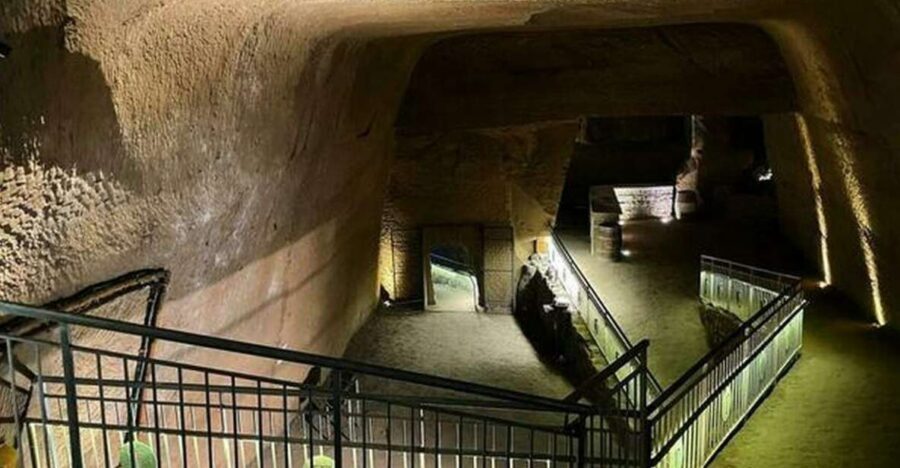
Naples feels like a city that never stopped talking. The surface has churches, squares, and street life, but the real plot twist is what’s under your feet. This tour links those layers so you can understand why the city grew the way it did, then why people later reused and repurposed the same underground spaces.
You’ll get a mix of classic Naples sights and then a serious shift into subsurface history. Expect stairs, corridors, and museum time, all guided by a local lead plus a professional archaeologist. The pacing is designed for a 2-hour window, so it moves at a steady walk pace rather than a slow museum crawl.
Because the group is limited to 10, you’ll get more chances to ask questions—something that matters a lot when the guide is pointing out details in stone, layout, and architecture. English and Italian are offered, so you can match your comfort level for explanations.
You can also read our reviews of more city tours in Naples



Piazza San Gaetano and the Street Clues You Might Miss
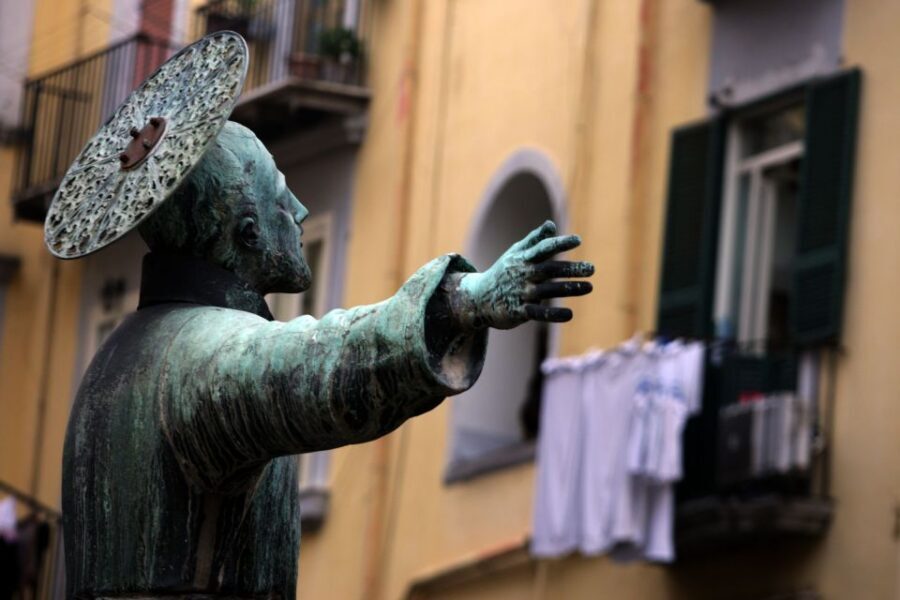
The tour begins in Piazza San Gaetano, at the foot of the statue. It’s an easy place to find, and you’ll look for the guide holding a Grand Tour Experience sign. From there, you walk along streets that quickly show you Naples isn’t only “old” but repeatedly rebuilt.
Early on, you’ll pass through Via dei Tribunali, a street that helps you get your bearings fast. Then you’re guided into major church spaces tied to earlier periods. That’s the point: you’re learning how Naples layers religion, politics, and everyday life over the same physical ground.
One especially cool moment is a gothic church area where you can peer through a glass floor at remains of an earlier ancient mosaic. It’s the kind of detail you’d normally step over without a guide. With the archaeologist’s context, that floor becomes evidence—proof of who was there before the current walls.
Basilica di San Lorenzo Maggiore and the Church-on-Older-Ruins Effect
After the initial square and streets, you head to Basilica di San Lorenzo Maggiore for a guided stop. This is where the tour’s theme becomes concrete: Naples keeps building, and later builders often reuse what already exists.
You’re not just looking at religious architecture. You’re being coached to spot structural clues—how Roman materials and earlier foundations show up inside later church settings. For me, that’s one of the strongest ways to understand southern Italy cities: the present is literally stitched to the past.
The good part here is that the guide helps you read the buildings instead of only admiring them. If you like architecture and “how did they build this” questions, this stop will feel like the warm-up act before the underground sections.
Down 40 Meters: Santa Maria Maggiore and the Doorbell Descent
The experience shifts gears when you go 40 meters below the crowds of Naples. You’ll enter through a doorbell in Santa Maria Maggiore, one of the older churches in the city. That entry detail matters because it sets up what the tour really is: a real access point into real underground spaces.
The church sits on top of earlier Roman remains, including a pagan temple dedication to Diana. From there, the tour keeps moving downward until you reach the carved stone spaces that connect to the Greek period.
This is also where you should pay attention to footwear and steady footing. Underground routes are on stone surfaces that can feel cooler and slightly slick depending on the day. Comfortable shoes aren’t optional here, because you’re doing real walking, not just short museum steps.
Greek Cisterns and Roman Water Tanks: Why Naples Built Underground
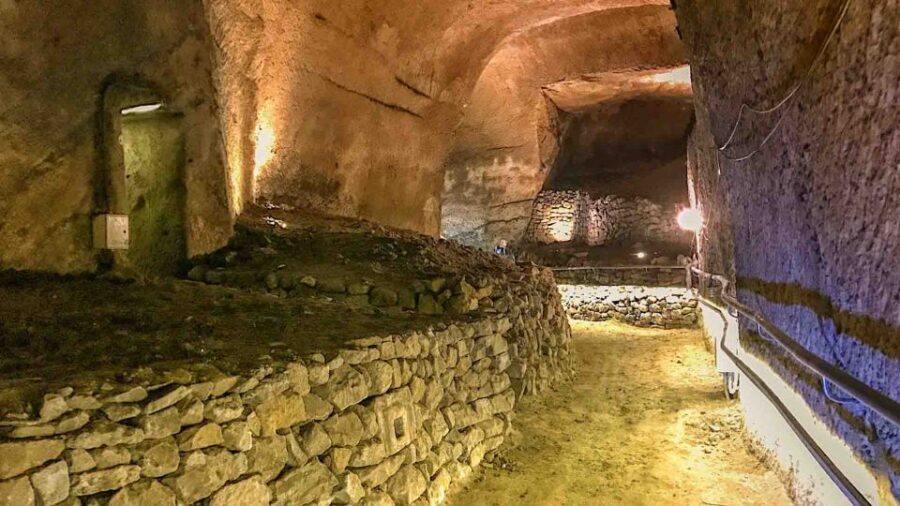
Once you reach the cistern areas, you’ll see Greek cisterns carved into hard stone. The guide’s explanations help you connect the city’s water needs with its later uses. Even if you don’t consider yourself a history person, water infrastructure is the kind of topic that makes ancient life practical and understandable.
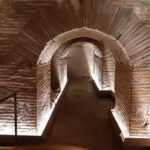
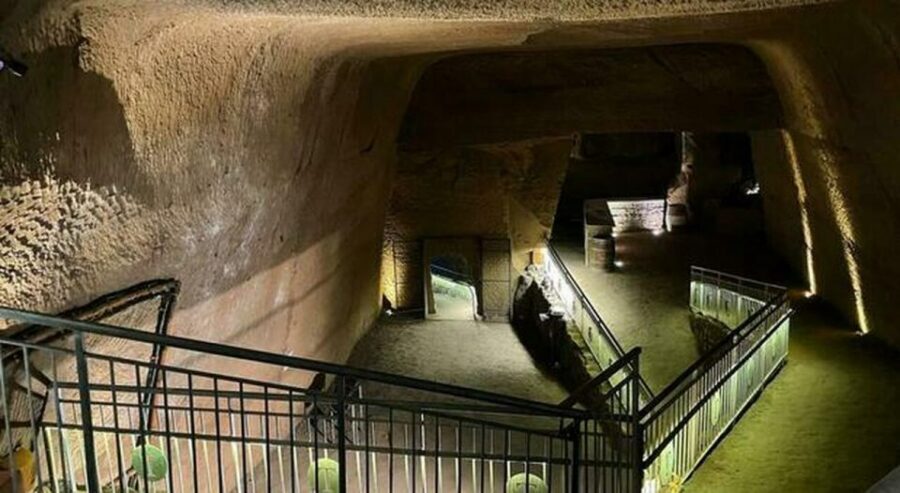
At the lowest point of the route, you walk through tunnels to reach tanks used for collecting water in Roman times. These spaces were built for survival needs—then later generations kept using and reshaping the same underground system.
This section is also where you start appreciating why the tour calls the route a major subterranean pathway. Naples has an underground network spread across the city, and the fact that a large portion is practically empty means the story isn’t overcrowded with renovations or modern distractions. You’re seeing older structures still in place.
You can also read our reviews of more museum experiences in Naples





Medieval Secret Passage and 1943 Air-Raid Use
What makes this tour memorable is that it doesn’t treat the underground like a single time period. After the Roman and Greek layers, the route also connects to medieval and WWII uses.
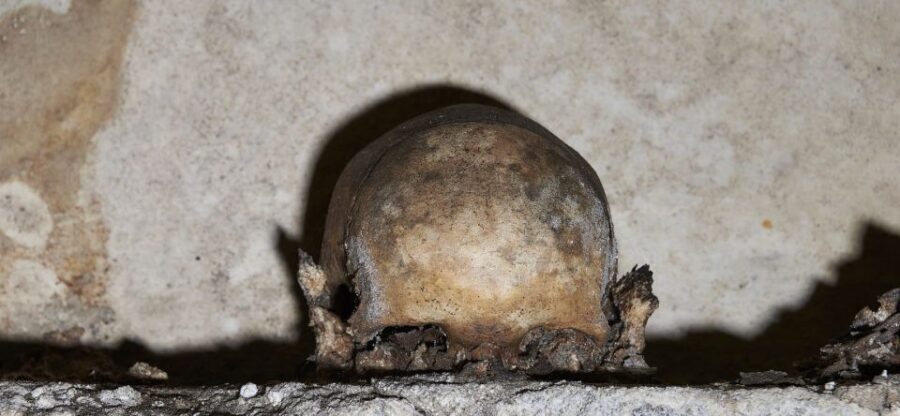
The trail was used in medieval times as a secret passage by the Templar Knights, and in 1943 it served as an airplane retreat during WWII. Those are big claims, but the tour presentation is designed to help you understand how tunnels and storage spaces can be repurposed when the city’s needs change.
Inside the underground zones linked to the WWII story, you may still find preserved details like bathrooms, kitchens, and memorabilia. Even if those items aren’t the main focus of every guided explanation, seeing preserved domestic and survival elements is what makes the WWII context hit harder than dates on a slide.
The WWII Shelters Museum Part: History You Can Stand Inside
Beyond the Roman cistern route, the tour includes admission to the WWII Shelters Museum. This helps you connect the older underground infrastructure to the modern wartime reality.
Instead of feeling like two separate visits, the shelters museum is framed as a continuation. When you’ve already walked through tunnels used for water and movement, it becomes easier to understand why shelters could fit into the same subterranean logic: protection, access, and the ability to move unseen.
If you’re a visual learner, this section is where it tends to click. You can look at the space and imagine how people stored supplies, sheltered from raids, and stayed organized underground.
The Walk Itself: Timing, Pace, and Where You’ll Feel It
This is a 2-hour tour, so you need to expect a real walking rhythm. You’ll move between multiple stops and then spend guided time underground. There’s no indication of long downtime, so plan to keep your energy steady.
A few practical tips based on the route style:
- Bring comfortable shoes. Stone steps and corridors add up fast.
- Bring a camera, because the glass-floor mosaic moment and underground tank/cistern areas are photo-friendly.
- Wear weather-appropriate clothing. Underground spaces can feel cooler than the street.
You’ll also want to think about your tolerance for stairs and confined spaces. The tour is not suitable for wheelchair users, and that’s a good signal that movement is part of the experience, not an optional add-on.
Group Size and Guide Quality: Why Small Matters Underground
With group size limited to 10, you’re not stuck listening from the back while everyone else blocks your view of the stone details. The guide can slow down when questions come up, and the archaeologist can explain the “why” behind the structures.
Guide passion is a real theme here. Past groups have highlighted guides like Riccardo and Theresa for strong subject drive and for answering questions patiently, even when the group asked lots of smaller follow-ups. If you like interactive tours—questions, clarifications, and concrete explanations—this format tends to work well.
Also, the tour starts and ends in central areas. You finish at Piazza Bellini, which is helpful if you want to keep exploring afterward without trekking across town.
Price and Value: Is $53 Worth It?
At $53 per person for a 2-hour experience, the value comes from three things that often cost extra separately:
- A guide plus a professional archaeologist
- Admission included for the Roman Cistern Museum (LAPIS)
- Admission included for the WWII Shelters Museum
When those are bundled into one small-group visit, you’re paying for guidance that connects the sites into one story. You’re not just buying entry tickets and wandering. You’re getting someone to explain how cisterns, water tanks, and shelter spaces fit together across time.
So yes, $53 isn’t the cheapest thing on your Naples list. But it’s also not just a walking tour with no access. It’s a focused, guided underground experience where the admissions matter and the guide role matters just as much.
One thing to keep in mind: there’s at least one record of the organizer canceling a tour in the past. That’s not something you can predict, but you can reduce stress by monitoring your confirmation details as your date approaches.
What I’d Pair This With on Your Naples Day
If you want the underground story to land, pair it with a bit of Naples surface time. Do the tour earlier in your day, then use the rest of your hours for street scenes and church exteriors. You’ll understand what you’re looking at much better afterward.
You’ll also be in a good position to explore around Piazza Bellini after the tour ends. It’s an easy place to transition from history underground to everyday Naples above ground.
Should You Book the Naples City and Lapis Museum Tour?
Book this tour if you want more than “old stones.” You want a guided chain from Greek cisterns to Roman water tech, then to medieval reuse and WWII shelter life—all in a single route with real access and included admissions.
Skip it or think twice if you have mobility limits in stairs or confined spaces, since it’s not suitable for wheelchair users. Also consider whether underground walking is your thing; this isn’t a short peek. It’s an actual walk-and-learn experience through tunnels.
If you like small groups, strong guiding, and concrete details like mosaics under glass and tanks carved into the past, you’ll likely feel it was money well spent.
FAQ
How long is the tour?
The tour lasts about 2 hours.
Where does the tour start and where does it end?
It starts at Piazza San Gaetano (at the foot of the statue) and finishes at Piazza Bellini.
How big is the group?
The tour is a small group limited to 10 participants.
Who leads the tour?
You get a local guide plus a professional archaeologist, with live guidance in English and Italian.
What admissions are included?
Admission tickets are included for the Roman Cistern Museum (LAPIS) and the WWII Shelters Museum.
Is this tour wheelchair accessible?
No, it is not suitable for wheelchair users.
What should I bring?
Bring comfortable shoes, a camera, and weather-appropriate clothing. The tour info also suggests bringing a packed lunch and having cash and a credit card.